
Alaska
Alaska Self-Defense Laws: Stand Your Ground & Castle Doctrine (2026)
Independently fact-checked against primary sources (last audited August 17, 2026). · Reviewed by the RecordingLaw editorial team. · Law checked current as of August 17, 2026. How we verify our legal content

Alaska is a stand-your-ground state. Under AS 11.81.335(b)(5), a person who is in any place where they have a right to be has no duty to leave the area before using deadly force in self-defense. That provision took effect on September 18, 2013, following enactment of HB 24 by Governor Sean Parnell. Before that date, Alaska imposed a conditional duty to retreat in public spaces; the exceptions were limited to one's home, workplace, and a few other specific circumstances.
Information last verified on June 1, 2026.
Jurisdiction scope: This article covers Alaska state law only, specifically AS 11.81.330, AS 11.81.335, and AS 09.65.330. It does not address federal law or the law of other states. For a 50-state comparison, see self-defense laws by state.
Is Alaska a Stand-Your-Ground State?
Yes. Alaska enacted stand-your-ground protection through HB 24, signed into law by Governor Parnell on June 20, 2013, and effective for crimes occurring on or after September 18, 2013.
The governing statute is AS 11.81.335(b). Under subsection (b), a person generally may not use deadly force if they know they can leave the area with complete personal safety to themselves and others being defended. However, subsection (b)(5) creates an exception that swallows the general rule for most real-world situations: the duty to leave the area does not apply when the defendant is in any other place where the defendant has a right to be.
Because any law-abiding person in any public space has a right to be there, this exception effectively eliminates the duty to retreat for the vast majority of encounters. A person standing on a public street, in a parking lot, at a park, or at a friend's home has no obligation to flee before defending themselves with deadly force, provided all other elements of AS 11.81.335(a) are satisfied.
Prior to the 2013 amendment, Alaska's law required retreat in public if it could be done with complete personal safety. The numbered exceptions at the time covered only specific locations: the home, the workplace, and situations involving peace officers or the protection of children and household members. The 2013 change added the broad "any place where a person has a right to be" exception, aligning Alaska with the majority of states that have eliminated the public-space retreat requirement.
Castle Doctrine in Alaska: Home and Workplace
Before the 2013 stand-your-ground expansion, Alaska's self-defense framework already contained location-specific no-retreat rules that function as its castle doctrine. These provisions remain in AS 11.81.335(b) as separate enumerated exceptions.
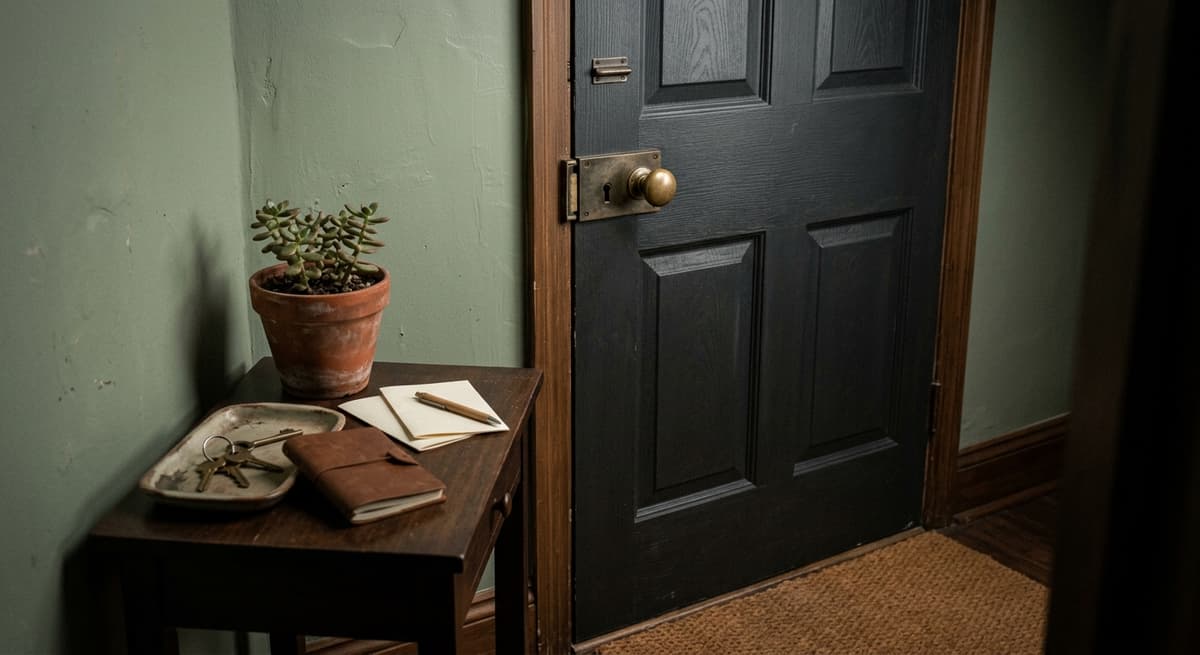
The home exception covers any premises the person owns or leases, any residence where the person lives temporarily or permanently, and any place where the person is present as an authorized guest or agent of the owner or resident. This means a person who is lawfully staying in a hotel room, a friend's house, or a rented cabin is covered on the same basis as a homeowner.
The workplace exception covers any building where the person works in the ordinary course of employment. A person who is attacked at their job site has no duty to leave before using deadly force, provided the other requirements of AS 11.81.335(a) are met.
There is no statutory presumption attached to either of these locations. Alaska law does not presume that a person who uses force against an intruder in their home was acting reasonably. The prosecution retains the burden of disproving self-defense beyond a reasonable doubt, but the defender cannot rely on a legal presumption in their favor simply because the confrontation occurred inside the home.
Alaska's castle doctrine also does not expressly cover vehicles. A person inside their car has a right to be there under general principles, so the stand-your-ground rule in AS 11.81.335(b)(5) applies. However, there is no separate statute creating a vehicle-specific castle-doctrine presumption comparable to the residential-structure provisions found in Florida or Michigan.
When Deadly Force Is Justified: AS 11.81.335
The two-part structure of AS 11.81.335 is important. Subsection (a) sets the justification standard; subsection (b) governs the duty to leave the area.
Under subsection (a), a person who is already justified in using nondeadly force under AS 11.81.330 may use deadly force when and to the extent they reasonably believe deadly force is necessary to defend against:
- death or serious physical injury;
- kidnapping, except for custodial interference in the first degree;
- sexual assault in the first or second degree;
- sexual abuse of a minor in the first degree; or
- robbery in any degree.
Both parts of the test must be satisfied. A person must first be justified in using nondeadly force at all, meaning the other person has used or is about to use unlawful force. Then, deadly force is only authorized when a reasonable person in the same situation would believe it necessary to prevent one of the listed harms.
The reasonable belief standard is objective. Alaska courts assess what a reasonable person with the same knowledge and in the same circumstances would have believed at the moment force was used. Good-faith but unreasonable mistakes do not establish justification.
The aggressor rule interacts with both subsections. Under AS 11.81.330(a), a person who provoked the other person's conduct with intent to cause physical injury, was the initial aggressor, or used force in mutual combat not authorized by law generally cannot claim the protection of AS 11.81.335. The specific intent to cause physical injury is part of the provocation bar, so merely starting an argument or behaving obnoxiously does not trigger it. AS 11.81.330(b) restores the justification only if that person has withdrawn from the encounter and effectively communicated the withdrawal to the other person, and the other person persists in continuing the incident by the use of unlawful force.
Civil Immunity Under AS 09.65.330
Alaska provides civil immunity for people who use force in defense of themselves or others. Under AS 09.65.330, a person who uses force as permitted under AS 11.81 is not liable in a civil lawsuit for the death of or injury to the person against whom the force was directed.

Three categories of persons are excluded from this immunity. The immunity does not apply if the person against whom force was used was a peace officer, whether on or off duty, engaged in the performance of official duties; a fire fighter, emergency medical technician, or paramedic engaged in official duties; or medical personnel or other first responders in an emergency situation.
When a court finds that the defendant is not liable under AS 09.65.330, it must also award the defendant reasonable attorney fees, court costs, compensation for lost income, and all other expenses incurred in defending the civil action. This fee-shifting provision gives plaintiffs a practical reason to evaluate the merits of a civil lawsuit before filing.
This civil immunity is separate from any immunity or defense available in a criminal proceeding. A person who uses justified force may still face criminal charges, though they can raise the justification defense under AS 11.81.335 in that proceeding as well.
When Self-Defense Fails in Alaska
Alaska's self-defense justification is not available in every situation. Several circumstances can defeat a claim.
Initial aggressor, provocation, or mutual combat. A person who provoked the other person's conduct with intent to cause physical injury, was the initial aggressor, or used force in mutual combat not authorized by law cannot invoke the justification provisions unless they have withdrawn from the encounter and effectively communicated the withdrawal to the other person, and that person persists in continuing the incident by the use of unlawful force.
Armed felony, drug-transaction, and rival-retaliation conduct. Alaska has no general rule stripping self-defense from anyone engaged in unlawful activity, and no test asking whether a defendant's own criminal conduct caused the confrontation. AS 11.81.330(a)(4) is narrow and every element must be present: the force used must have been the result of using a deadly weapon or dangerous instrument the person possessed while (A) acting alone or with others to further a felony criminal objective, (B) participating in, or in immediate flight from, a felony drug transaction or purported transaction under AS 11.71, or (C) acting in revenge for, retaliation for, or response to actual or perceived conduct by a rival or perceived rival, where the person or the group they act for has a history or reputation for violence among civilians. An unarmed person who happens to be committing an unrelated offense keeps the full self-defense justification. The withdrawal exception in AS 11.81.330(b) does not reach this ground; it applies only to the mutual-combat, provocation, and initial-aggressor bars.
Ability to retreat safely. While the 2013 amendment eliminated the duty to retreat for most situations, the general rule in AS 11.81.335(b) still applies to persons who do not fall into any of the enumerated exceptions and who know they can leave the area with complete personal safety to themselves and all others being defended. In practice, this residual rule matters only for the unusual case where no exception applies.
Excessive force. Deadly force is only available to counter threats of death, serious physical injury, kidnapping, sexual assault, or robbery. Using deadly force to counter a minor physical threat, or continuing to use force after the threat has ended, is not justified.
Unreasonable belief. If a person's belief that deadly force was necessary was not reasonable under the circumstances, the justification fails even if the person genuinely held that belief.
Legal disclaimer: This article provides general legal information about Alaska self-defense law. It is not legal advice and does not create an attorney-client relationship. Use-of-force situations involve serious criminal and civil stakes and turn on specific facts. Laws can change. If you are involved in or anticipate a self-defense situation, consult a licensed Alaska criminal-defense attorney. Do not rely on this article as a substitute for individualized legal counsel.

Last updated: June 1, 2026. Alaska statutes verified at akleg.gov and courts.alaska.gov as of June 1, 2026.
For laws in other states, see self-defense laws by state.
For related Alaska property law, see Alaska squatters rights and adverse possession.
More Alaska Laws
Frequently Asked Questions
Is Alaska a stand-your-ground state?
Yes. Alaska enacted stand-your-ground protection in 2013. Under AS 11.81.335(b)(5), a person who is in any place where they have a legal right to be has no duty to leave the area before using deadly force in self-defense. This provision applies to crimes occurring on or after September 18, 2013.
Do I have a duty to retreat in Alaska?
Not if you are somewhere you have a right to be. AS 11.81.335(b)(5) removes the duty to leave the area in those circumstances. A residual duty to leave can still arise in rare situations where none of the enumerated exceptions apply and a person knows they can retreat with complete personal safety, but in practice this applies to almost no ordinary encounter.
Does Alaska's castle doctrine cover my car?
Not through a specific castle-doctrine statute. Alaska's statutory castle-doctrine exceptions cover homes, residences, and workplaces. A vehicle is not listed as a separate protected location. However, a person inside their car is generally in a place where they have a right to be, so the stand-your-ground rule in AS 11.81.335(b)(5) eliminates any duty to retreat. There is no statutory presumption of reasonableness attached to vehicles in Alaska.
Does Alaska presume a person acted reasonably when defending their home?
No. Alaska has no statutory presumption of reasonable fear tied to the home or any other location. Unlike Florida or Michigan, Alaska law does not presume that force was reasonable just because an intruder entered a dwelling. The prosecution still has the burden of disproving self-defense beyond a reasonable doubt, but the defender cannot rely on a legal presumption of reasonableness.
Can I be sued after using force in self-defense in Alaska?
A civil lawsuit is possible, but AS 09.65.330 provides immunity from civil liability for anyone who uses force as permitted under AS 11.81. If the court finds you are not liable under that statute, it must also award you attorney fees and other defense costs. The immunity does not apply if the person harmed was a peace officer, firefighter, EMT, or medical personnel engaged in official duties.
What was the law before Alaska's 2013 stand-your-ground change?
Before September 18, 2013, Alaska required a person to leave the area before using deadly force in public if they knew they could do so with complete personal safety to themselves and others. Exceptions existed for the home, workplace, peace officers, and the protection of children or household members, but there was no broad no-retreat rule for public spaces.
Does Alaska's self-defense law protect a person who fires first?
Generally no. AS 11.81.335(a) requires a reasonable belief that deadly force is necessary for self-defense against death, serious physical injury, kidnapping, sexual assault, or robbery. The subsection itself does not use the word immediate or the word imminent; Alaska's imminence requirement comes from case law interpreting the justification, not from the text of the statute. A person who fires preemptively because they feel vaguely threatened, without a reasonable basis for believing one of those specific harms is imminent, is not acting in justified self-defense under Alaska law.
Updates
Corrected the disqualifier section to match the text of AS 11.81.330: the provocation bar requires intent to cause physical injury, the felony bar applies only to a person using a deadly weapon they possessed while furthering a felony objective, in a felony drug transaction, or retaliating against a rival, and a withdrawal must be effectively communicated; also removed an immediacy element wrongly attributed to AS 11.81.335(a).
Independently fact-checked against the cited primary sources; governing law re-checked for recent changes
Governing law re-checked for recent changes
Reviewed and approved by an editor
The Law Behind This Article
This article rests on the statutory provisions below, held in our own legal record and retrieved from the official source. Tap a section to read the operative text.
Alaska Statutes, Title 11. Criminal Law, Chapter 81. General Provisions
§ 11.81.335Justification: Use of deadly force in defense of selfIn force
(a) Except as provided in (b) of this section, a person who is justified in using nondeadly force in self-defense under AS 11.81.330 may use deadly force in self-defense upon another person when and to the extent the person reasonably believes the use of deadly force is necessary for self-defense against (1) death; (2) serious physical injury; (3) kidnapping, except for what is described as custodial interference in the first degree in AS 11.41.320; (4) sexual assault in the first degree; (5) sexual assault in the second degree; (6) sexual abuse of a minor in the first degree; or (7) robbery in any degree.
Official text (excerpt) · last checked 2026-09-01 · Read the full text in our law library · Verify at akleg.gov
Cited in 33 court opinionsMost recently applied by a court: 2022
In the courts (editorial summary, independently checked):AS 11.81.335 requires an actual and reasonable belief that deadly force was necessary. Weston v. State (1984) held the trial court erred in refusing a self-defense instruction supported by some evidence; Marquinn Jones-Nelson v. State of Alaska (2022) held an instruction directing retroactive assessment of the force used was incorrect.
Leading cases:
- Weston v. State (Alaska Supreme Court 1984, 682 P.2d 1119)✓Weston cut the throat of a man who had charged him with a knife and whom he then pinned down; applying AS 11.81.335, the court held he offered some evidence of both a reasonable and an actual belief that deadly force was needed, so refusing a self-defense instruction was error.
- Folger v. State (Court of Appeals of Alaska 1982, 648 P.2d 111)✓Folger stabbed in the stomach a larger man he said was advancing to beat him and take his beer; the court held that even an extremely weak self-defense claim under AS 11.81.335 met the some-evidence standard, so the refused instruction required reversal.
- Brown v. State (Court of Appeals of Alaska 1985, 698 P.2d 671)✓Brown took a rifle to a club to confront a man he said had earlier threatened him with a .44, then shot him; the court held that arming oneself and seeking a talk does not alone make a person an initial aggressor under AS 11.81.335(a)(1), so the defense had to go to the jury.
Identified automatically from the court opinions citing this section — not a ranking of which case controls.
Search our full record of US law — 2.1 million sections, every state + federal →
Sources and References
- Alaska Stat. §§ 11.81.330, 11.81.335, 09.65.330 (Alaska Legislature)(akleg.gov)
- Alaska Criminal Pattern Jury Instruction 11.81.335 (Alaska Court System)(courts.alaska.gov)
- Cornell LII: Overview of self-defense law(law.cornell.edu)
- Alaska Stat. 11.81.330 (nondeadly force in self-defense), 11.81.335 (deadly force in self-defense), and 11.81.340 (defense of a third person), Alaska State Legislature(akleg.gov)