
Canada
Impaired Driving Laws in Canada: The Federal Rules
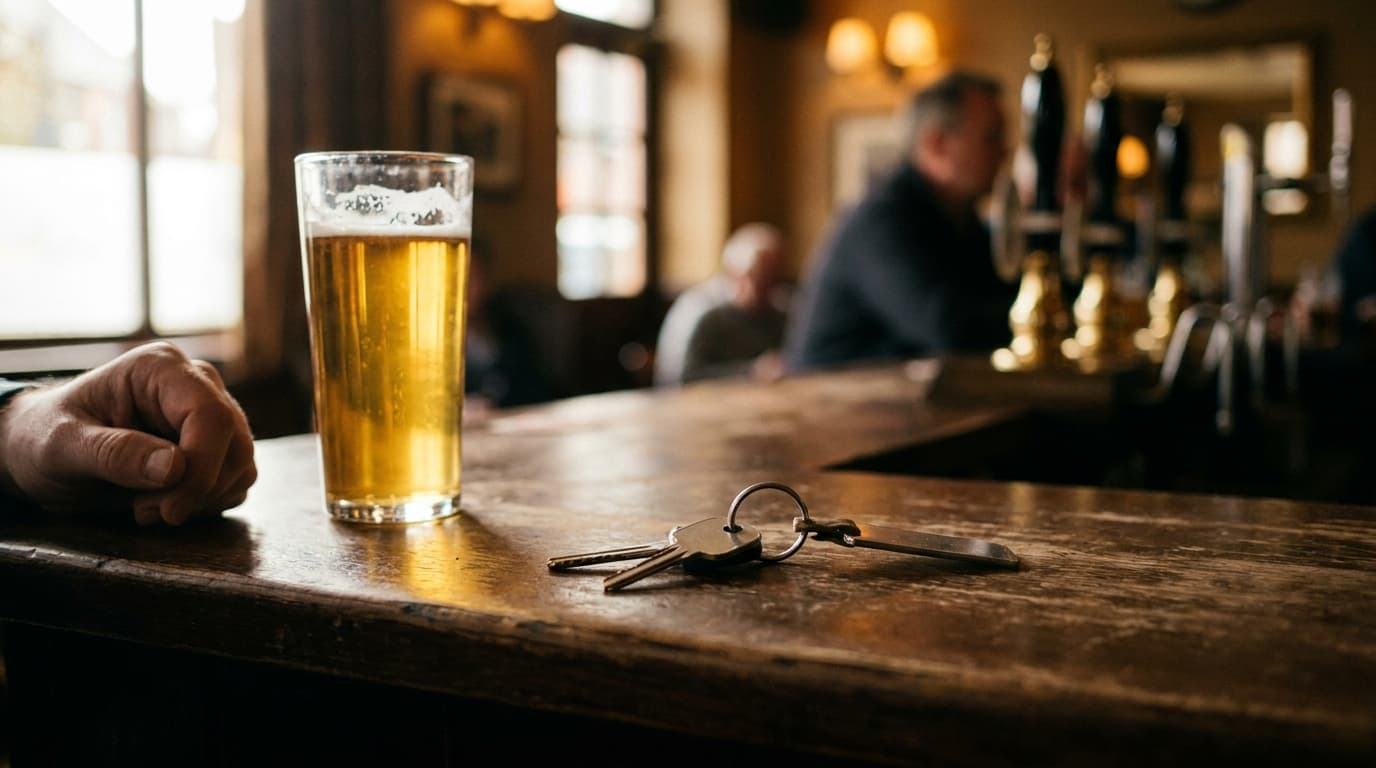
Impaired driving in Canada is defined and punished under the federal Criminal Code, so the core offence and its minimum penalties are the same whether you are pulled over in Halifax, Winnipeg, or Kelowna.
Impaired Driving Is a Federal Offence, Not a Provincial One
Unlike speeding or parking rules, impaired driving is set out entirely in the federal Criminal Code, in Part VIII.1 (sections 320.11 to 320.36). Parliament, not the provincial legislatures, decides what counts as impaired driving and what the minimum sentence is.
That federal framework applies uniformly from coast to coast. What differs by province is what happens to your driver's licence administratively, on top of the criminal charge, which is covered later in this article and in more detail on our DUI penalties in Canada page.
Three Ways to Be Charged
Criminal Code section 320.14 creates three distinct routes to an impaired driving charge, and police only need to prove one of them.
Impairment by ability. Section 320.14(1)(a) makes it an offence to operate a vehicle while your ability to do so is impaired "to any degree" by alcohol, a drug, or a combination of the two. This is proven with evidence such as erratic driving, poor coordination on field sobriety tests, or an officer's observations, regardless of the exact chemical reading.
Blood alcohol concentration ("over 80"). Section 320.14(1)(b) makes it a separate offence to have 80 mg or more of alcohol per 100 mL of blood within two hours of driving. This is a strict, numbers-based offence. It does not matter whether you seemed impaired; the reading alone is enough.
Drug concentration limits. Section 320.14(1)(c) and (d) set blood drug concentration limits by regulation, most notably for THC. A driver can also be charged under section 320.14(4) for a lower THC reading that falls short of the higher threshold but still exceeds the baseline set by regulation.
Mandatory Alcohol Screening: No Suspicion Required
Since December 18, 2018, Criminal Code section 320.27(2) has allowed a police officer who has an approved screening device with them to demand a roadside breath sample from any driver they have lawfully stopped, such as at a checkstop, without needing any reason to suspect that driver has consumed alcohol. This is known as mandatory alcohol screening, and it is a significant departure from the older rule, still found in section 320.27(1), which requires "reasonable grounds to suspect" alcohol or a drug is present in the driver's body before a demand can be made.
Mandatory alcohol screening has been challenged in court as an unreasonable search and an arbitrary detention under the Charter of Rights and Freedoms. Several provincial courts, and at least one provincial Court of Appeal, have found that it does technically limit Charter rights but ruled that the limit is justified as reasonable in a free and democratic society. The Supreme Court of Canada has so far declined to hear a further appeal, leaving those rulings in place across the country.
Federal Penalties: Fines, Jail, and Driving Prohibitions
Section 320.19 sets out mandatory minimum penalties that climb quickly with each subsequent offence and with a higher blood alcohol reading.
| Offence | Minimum penalty | Maximum penalty |
|---|---|---|
| First offence (standard reading) | $1,000 fine | 2 years less a day (summary) or 10 years (indictable) |
| First offence, BAC 120 to 159 mg | $1,500 fine | Same as above |
| First offence, BAC 160 mg or higher, or refusal | $2,000 fine | Same as above |
| Second offence | 30 days imprisonment | 10 years (indictable) |
| Third or subsequent offence | 120 days imprisonment | 10 years (indictable) |
On top of a fine or jail time, section 320.24 requires the court to impose a mandatory driving prohibition: at least one year (up to three) for a first offence, at least two years (up to ten) for a second, and at least three years for a third or subsequent offence, each running in addition to any time actually served in custody. Causing bodily harm or death while impaired is punished far more severely under sections 320.14(2) and (3).
Provincial Licence Suspensions Stack on Top
The federal charge is only half the story. Every province also has its own administrative licence suspension scheme, run separately from the criminal court process, that can take your licence away at the roadside the same day you are stopped.
| Province | "Warn range" result | "Fail" reading or refusal |
|---|---|---|
| Ontario | 7-day (first), 14-day (second), then 30-day immediate suspension (third) | Immediate 90-day Administrative Driver's Licence Suspension (ADLS) plus 7-day vehicle impoundment |
| Alberta | 3-day suspension and vehicle seizure, escalating to 15 and 30 days for repeats | Immediate 90-day suspension, then a further 12-month (first), 36-month (second), or lifetime (third) suspension under the Immediate Roadside Sanctions program (interlock-eligible) |
| British Columbia | 3, 7, or 30-day Immediate Roadside Prohibition (IRP) for repeat "Warn" readings | 90-day IRP plus a 30-day vehicle impound for a "Fail" reading |
| Quebec | Not tiered the same way; any impaired driving arrest can trigger a suspension | Immediate 90-day SAAQ licence suspension from the date of arrest |
These administrative suspensions apply regardless of the eventual outcome of the criminal case, and they run independently of it. A driver can be back on the road once a provincial suspension ends even while criminal charges are still pending, or conversely can lose driving privileges for months through the administrative process alone if charges are later withdrawn. Each province's transportation authority, not the criminal court, controls this side of the process.
Cannabis and Drug-Impaired Driving
Impairment by drugs, including cannabis, is prosecuted the same way as alcohol impairment under section 320.14(1)(a): proof that your ability to drive was actually affected. Separately, federal regulations set specific blood drug concentration (BDC) limits.
For THC, a reading of 2 to 5 nanograms per millilitre of blood is a summary conviction offence, while 5 nanograms or more is a more serious hybrid offence that can proceed by indictment. A combination of THC at 2.5 nanograms or more together with alcohol at 50 mg or more per 100 mL of blood is also a hybrid offence, reflecting the compounding effect of mixing the two. Provinces including British Columbia and Ontario publish their own driver guidance on cannabis and driving, but the underlying offence and its BDC limits come from the federal regulations, not provincial law.
Impaired vs. "Over 80": Why the Distinction Matters
These are legally two different paths to the same underlying offence category, and understanding the difference matters if you are trying to follow a news story or a court decision. A driver can be convicted of "impaired driving" from officer observations and field sobriety evidence alone, even with no breath or blood sample at all, such as when a driver refuses testing or none was administered. A driver can also be convicted purely on an "over 80" reading even if their driving looked completely normal to onlookers. Crown prosecutors will often charge both routes together and let the evidence determine which one sticks. For a broader look at how impaired driving compares to other serious driving offences, see our page on careless driving vs. dangerous driving.
What Happens After You Are Charged
Once charged, a driver typically faces the immediate provincial administrative suspension described above within hours, followed by a separate criminal court process that can take months. A conviction adds the mandatory federal fine or jail term, the driving prohibition, and in most provinces a further licence reinstatement process that can include an ignition interlock condition, a remedial education or treatment program, and a reinstatement fee before driving privileges are fully restored. For the specific penalty tiers and reinstatement steps, see DUI penalties in Canada. For a full picture of how the rest of Canada's driving and licensing framework works, start at our Canada driving laws hub.
Province-by-Province Guides
The administrative consequences (roadside suspensions, warn ranges, interlock, review deadlines) differ sharply by province, so see the guide for where you were stopped:
- Impaired driving consequences in Ontario
- Impaired driving consequences in British Columbia
- Impaired driving consequences in Alberta
- Impaired driving consequences in Saskatchewan
- Impaired driving consequences in Manitoba
- Impaired driving consequences in Quebec
- Impaired driving consequences in Nova Scotia
- Impaired driving consequences in New Brunswick
- Impaired driving consequences in Prince Edward Island
- Impaired driving consequences in Newfoundland and Labrador
- Impaired driving consequences in Yukon, the Northwest Territories, and Nunavut
Disclaimer: This article provides general legal information about Canadian impaired driving law and is not a substitute for advice from a licensed lawyer in your province.
Frequently Asked Questions
What is the legal blood alcohol limit for driving in Canada?
The federal Criminal Code sets 80 mg of alcohol per 100 mL of blood as the criminal 'over 80' limit under section 320.14. Every province also enforces a lower administrative 'warn range,' generally around 50 to 79 mg, which triggers a short roadside licence suspension even though it is not a criminal charge.
Can police make me blow into a breathalyzer without suspecting I have been drinking?
Yes. Under mandatory alcohol screening (Criminal Code section 320.27(2)), a police officer with an approved screening device at hand can demand a breath sample from any driver they have lawfully stopped, with no requirement to suspect alcohol or drug use first. Courts have found this technically limits Charter rights but have upheld it as a justified limit.
What is the difference between 'impaired driving' and 'over 80'?
'Impaired driving' is proven by evidence that your ability to drive was actually affected, such as erratic driving, slurred speech, or failed coordination tests, regardless of the exact reading. 'Over 80' is a separate offence proven purely by a blood alcohol concentration at or above 80 mg per 100 mL within two hours of driving, whether or not you appeared impaired.
What are the penalties for a first impaired driving conviction in Canada?
A first conviction carries a mandatory minimum $1,000 fine (rising to $1,500 or $2,000 at higher blood alcohol levels) and a mandatory driving prohibition of one to three years. Courts can also impose up to two years less a day on summary conviction, or up to ten years on indictment, depending on the circumstances.
Is driving while high on cannabis illegal in Canada?
Yes. Federal regulations set blood drug concentration limits for THC: 2 to 5 nanograms per millilitre is a summary offence, 5 nanograms or more is a more serious hybrid offence, and combining as little as 2.5 nanograms of THC with 50 mg of alcohol is also a hybrid offence. These apply on top of the general 'impaired to any degree' offence.
Will my licence be suspended even before I am convicted?
In most provinces, yes. Being charged, failing a roadside test, or refusing to provide a sample triggers an immediate administrative licence suspension, commonly 90 days for a 'fail' reading, imposed by the province regardless of how the criminal case eventually turns out.
The Law Behind This Article
This article rests on the statutory provisions below, held in our own legal record and retrieved from the official source. Tap a section to read the operative text.
Criminal Code
s. 320.14Operation while impairedIn forcecited in 8 of our articles
(1) Everyone commits an offence who (a) operates a conveyance while the person’s ability to operate it is impaired to any degree by alcohol or a drug or by a combination of alcohol and a drug; (b) subject to subsection (5), has, within two hours after ceasing to operate a conveyance, a blood alcohol concentration that is equal to or exceeds 80 mg of alcohol in 100 mL of blood; (c) subject to subsection (6), has, within two hours after ceasing to operate a conveyance, a blood drug concentration that is equal to or exceeds the blood drug concentration for the drug that is prescribed by regulation; or (d) subject to subsection (7), has, within two hours after ceasing to operate a conveyance, a blood alcohol concentration and a blood drug concentration that is equal to or exceeds the blood alcohol concentration and the blood drug concentration for the drug that are prescribed by regulation for instances where alcohol and that drug are combined. (2) Everyone commits an offence who commits an offence under subsection (1) and who, while operating the conveyance, causes bodily harm to another person.
Official text (excerpt) · last checked 2026-08-12 · Read the full text in our law library · Verify at laws-lois.justice.gc.ca
Cited in 7 court opinions in our collectionLatest citing opinion in our collection: 2026
Opinions citing this section in our collection:
- R. v. Singer (Supreme Court of Canada 2026, 2026 SCC 8)
- R. v. Rousselle (Supreme Court of Canada 2025, 2025 SCC 35)
- R. v. Larocque (Supreme Court of Canada 2025, 2025 SCC 36)
Identified automatically from the court opinions citing this section — not a ranking of which case controls.
Also relied on in: Canadian Driving & Traffic Laws by Province, DUI Penalties in Canada: Fines, Jail Time, and Bans, Graduated Licensing in Canada: New Driver Rules by Province
s. 320.19PunishmentIn forcecited in 8 of our articles
(1) Every person who commits an offence under subsection 320.14(1) or 320.15(1) is guilty of (a) an indictable offence and liable to imprisonment for a term of not more than 10 years and to a minimum punishment of, (i) for a first offence, a fine of $1,000, (ii) for a second offence, imprisonment for a term of 30 days, and (iii) for each subsequent offence, imprisonment for a term of 120 days; or (b) an offence punishable on summary conviction and liable to a fine of not more than $5,000 or to imprisonment for a term of not more than two years less a day, or to both, and to a minimum punishment of, (i) for a first offence, a fine of $1,000, (ii) for a second offence, imprisonment for a term of 30 days, and (iii) for each subsequent offence, imprisonment for a term of 120 days. (2) Everyone who commits an offence under subsection 320.14(4) is liable on summary conviction to a fine of not more than $1,000.
Official text (excerpt) · last checked 2026-08-12 · Read the full text in our law library · Verify at laws-lois.justice.gc.ca
Cited in 1 court opinions in our collectionLatest citing opinion in our collection: 2025
Opinions citing this section in our collection:
- Douhaya v. Canada (Citizenship and Immigration) (Federal Court 2025, 2025 FC 874)
Identified automatically from the court opinions citing this section — not a ranking of which case controls.
Also relied on in: Alberta Hit and Run Laws: Duties, Penalties & MVAC, Careless Driving vs Dangerous Driving in Canada
s. 320.24Mandatory prohibition orderIn forcecited in 4 of our articles
(1) If an offender is found guilty of an offence under subsection 320.14(1) or 320.15(1), the court that sentences the offender shall, in addition to any other punishment that may be imposed for that offence, make an order prohibiting the offender from operating the type of conveyance in question during a period to be determined in accordance with subsection (2). (2) The prohibition period is (a) for a first offence, not less than one year and not more than three years, plus the entire period to which the offender is sentenced to imprisonment; (b) for a second offence, not less than two years and not more than 10 years, plus the entire period to which the offender is sentenced to imprisonment; and (c) for each subsequent offence, not less than three years, plus the entire period to which the offender is sentenced to imprisonment. (3) If an offender is found guilty of an offence under subsection 320.14(4), the court that sentences the offender may, in addition to any other punishment that may be imposed for that offence, make an order prohibiting the offender from operating the type of conveyance in question during a period of not more than one year.
Official text (excerpt) · last checked 2026-08-12 · Read the full text in our law library · Verify at laws-lois.justice.gc.ca
Cited in 2 court opinions in our collectionLatest citing opinion in our collection: 2026
Opinions citing this section in our collection:
- R. v. Wolfe (Supreme Court of Canada 2024, 2024 SCC 34)
- R. v. Calderon (Court Martial Appeal Court of Canada 2026, 2026 CMAC 2)
Identified automatically from the court opinions citing this section — not a ranking of which case controls.
s. 320.27Testing for presence of alcohol or drugIn forcecited in 2 of our articles
(1) If a peace officer has reasonable grounds to suspect that a person has alcohol or a drug in their body and that the person has, within the preceding three hours, operated a conveyance, the peace officer may, by demand, require the person to comply with the requirements of either or both of paragraphs (a) and (b) in the case of alcohol or with the requirements of either or both of paragraphs (a) and (c) in the case of a drug: (a) to immediately perform the physical coordination tests prescribed by regulation and to accompany the peace officer for that purpose; (b) to immediately provide the samples of breath that, in the peace officer’s opinion, are necessary to enable a proper analysis to be made by means of an approved screening device and to accompany the peace officer for that purpose; (c) to immediately provide the samples of a bodily substance that, in the peace officer’s opinion, are necessary to enable a proper analysis to be made by means of approved drug screening equipment and to accompany the peace officer for that purpose.
Official text (excerpt) · last checked 2026-08-12 · Read the full text in our law library · Verify at laws-lois.justice.gc.ca
Cited in 3 court opinions in our collectionLatest citing opinion in our collection: 2026
Opinions citing this section in our collection:
- R. v. McColman (Supreme Court of Canada 2023, 2023 SCC 8)
- R. v. Breault (Supreme Court of Canada 2023, 2023 SCC 9)
- R. v. Singer (Supreme Court of Canada 2026, 2026 SCC 8)
Identified automatically from the court opinions citing this section — not a ranking of which case controls.
Search our full record of Canadian federal law — every consolidated Act, in English and French →
Sources and References
- Criminal Code, RSC 1985, c C-46, s 320.14 (Operation while impaired)(laws-lois.justice.gc.ca).gov
- Criminal Code, RSC 1985, c C-46, s 320.19 (Punishment)(laws-lois.justice.gc.ca).gov
- Criminal Code, RSC 1985, c C-46, s 320.24 (Mandatory driving prohibition order)(laws-lois.justice.gc.ca).gov
- Criminal Code, RSC 1985, c C-46, s 320.27 (Testing for presence of alcohol or a drug)(laws-lois.justice.gc.ca).gov
- Department of Justice Canada, Impaired Driving Laws(justice.gc.ca).gov
- Canada Gazette, Blood Drug Concentration Regulations, SOR/2018-148(gazette.gc.ca).gov
- Government of Ontario, Impaired Driving(ontario.ca).gov
- Government of Alberta, Impaired Driving Penalties(alberta.ca).gov
- RoadSafetyBC, Alcohol and Drug Related Driving Prohibitions and Suspensions(gov.bc.ca).gov
- SAAQ, Sanctions for Driving with Impaired Faculties(saaq.gouv.qc.ca).gov