
Canada
Window Tint Laws in Nova Scotia: The Absolute Front-Window Ban
Independently fact-checked against primary sources (last audited August 16, 2026). · 4 primary sources cited on this page. How we verify our legal content

Nova Scotia does not use a percentage at all: the Standards of Vehicle Equipment Regulations ban any light-reducing film on the windshield or the front side windows outright, and only factory-tinted glass is exempt.
Information last verified on 2026-08-16. This article has not yet been reviewed by a licensed lawyer.
The Rule Everyone Cites Is the Wrong Section
Search for Nova Scotia's window tint law and most results point to section 184 of the Motor Vehicle Act. That section does not set a tint rule. Read in full, section 184 requires a rear-view mirror and a windshield, bans a sign, poster, or other nontransparent material on the windshield, side wings, side windows, or rear window, and separately bans a forward-facing television screen visible to the driver. None of that is a percentage-of-light rule for tint film, and none of it mentions tint by name.
The provision that actually governs tint film is section 3(2) of the Standards of Vehicle Equipment Regulations, N.S. Reg. 51/85, made under section 200 of the Motor Vehicle Act. It reads, in substance, that no person shall operate a vehicle on a highway where the windshield or a window directly to the right or left of the driver's seat has been sprayed, coated, or covered with any substance that reduces or is intended to reduce the amount of light passing through it. For how Nova Scotia's absolute ban compares with the rest of Canada's mix of outright bans and percentage standards, see window tint laws in Canada.
An Absolute Ban, Not a Percentage
There is no VLT figure anywhere in section 3(2). Nova Scotia does not ask how dark a film is; it asks whether a light-reducing substance has been applied to the windshield or the two front side windows at all. Any application that reduces light transmission through those specific panes is prohibited outright, however light or dark it might be.
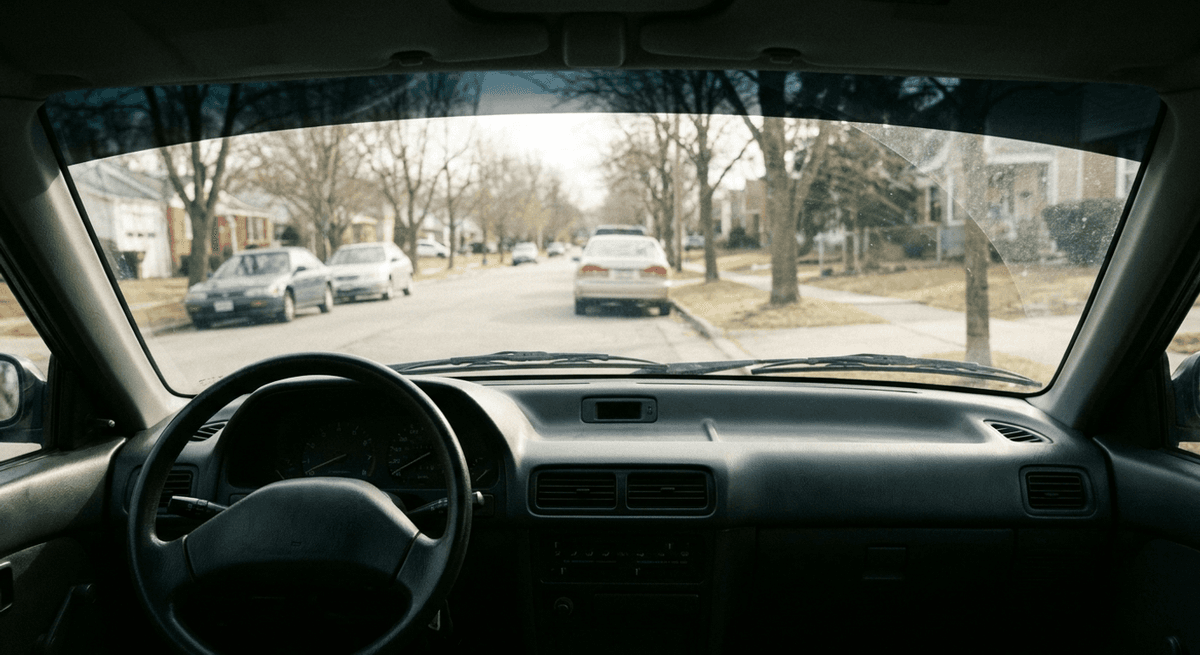
The regulation also does not carve out a strip allowance along the top of the windshield. Section 3(3) confirms the ban covers all or any part of the windshield and front side windows, so the narrow sun-strip exception common in several other provinces' regulations has no equivalent here.
Rear side windows and the rear windshield sit outside this rule. Section 3(2) names only the windshield and the windows to the direct right or left of the driver's seat, so tint on the back windows is not restricted by this section.
The Only Exceptions: Factory Tint and Frost Shields
Section 3(4) exempts glass that was tinted during the manufacture of the glass itself. A factory-tinted windshield or front window, the kind that comes built into certain vehicle trims, is not caught by the ban. Anything applied afterward, at any shop, at any darkness, is.
Section 3(5) separately exempts clear, untinted frost shields. Section 3(1) requires that glass not be broken, damaged, or discoloured to an extent that impairs the driver's vision, which functions as a related but distinct requirement from the tint-specific ban in 3(2).
No medical exemption was found. Some provinces run a formal process letting a driver with a diagnosed light-sensitivity condition apply for permission to install darker film. Nova Scotia's regulation contains no such clause; its two enumerated exceptions are factory tint and frost shields, and medical use is not among them. A search for a Nova Scotia government exemption page or application form turned up nothing, only third-party tint-shop sites making the same unsupported claim or vaguely suggesting a driver contact the Registry of Motor Vehicles. Until a genuine government exemption process turns up, a Nova Scotia driver should treat the front-window ban as applying regardless of a medical reason for wanting darker glass.
Fines: Unconfirmed, So None Are Stated Here
A reliable current dollar figure for a section 3(2) violation could not be confirmed for this article. Nova Scotia's fine schedule for Motor Vehicle Act offences runs through a Summary Offence Ticket booklet, and the copies available did not extract cleanly enough to state a specific amount with confidence. Figures for Nova Scotia tint tickets circulate on tint-shop and forum sites, but this article does not repeat any of them, because none could be matched cleanly to section 3(2) against an authoritative schedule. A driver who wants the current amount should confirm it directly with Access Nova Scotia or a licensed lawyer rather than relying on a number found online.

A Recodification Is Coming, but Not Yet in Force
Nova Scotia's Legislature passed a new Traffic Safety Act in October 2025, intended to eventually replace the Motor Vehicle Act. As of this writing, it has not been proclaimed into force, and the province's own guidance instructs drivers to keep following the Motor Vehicle Act and its regulations until the new Act takes effect. That means the rule described in this article, the absolute ban in section 3(2) of the Standards of Vehicle Equipment Regulations, is the live law today. Whether the eventual Traffic Safety Act regulations preserve this same absolute ban or move Nova Scotia toward a percentage standard like most other provinces is not yet known. This article will be updated once the new Act and its regulations take effect.
Related Resources
For how Nova Scotia's roadside impaired-driving suspensions work, a separate but related area of the same Motor Vehicle Act framework, see DUI and impaired driving in Nova Scotia. For how the rest of the country's tint rules compare, including the provinces that use a percentage standard instead of an outright ban, see window tint laws in Canada. For contesting a ticket generally, see fighting a traffic ticket in Canada, and for the separate rules on recording while driving, see dash cam laws in Canada.
Disclaimer
This article is informational only and is not legal advice. Nova Scotia's front-window tint ban is absolute, with no percentage threshold and no windshield-strip carve-out, and applies regardless of a medical reason for wanting darker glass, since no medical exemption was found. The exact current fine for a violation could not be confirmed and is deliberately not stated here. Nova Scotia's Traffic Safety Act has passed but was not in force as of this writing, so the rule described applies only until that Act and its regulations are proclaimed. Confirm current fees, requirements, and any change in the governing Act directly with Access Nova Scotia or a licensed lawyer.
Frequently Asked Questions
What is the actual legal basis for Nova Scotia's window tint law?
Section 3(2) of the Standards of Vehicle Equipment Regulations, N.S. Reg. 51/85, made under the Motor Vehicle Act. Section 184 of the Motor Vehicle Act, often cited for tint, actually covers opaque stickers, posters, and dashboard televisions, not tint film.
Is there a legal tint percentage in Nova Scotia?
No. Nova Scotia does not use a VLT percentage. Section 3(2) bans any light-reducing substance applied to the windshield or the front side windows outright, regardless of how light or dark it is.
Can I get a windshield strip or factory-tinted windows in Nova Scotia?
The regulation carves out no separate windshield-strip allowance; the ban covers all or any part of the windshield and front side windows. The only exception is glass tinted during manufacture of the glass itself, which is exempt outright.
Is there a medical exemption for window tint in Nova Scotia?
No medical exemption was found in the regulation or in Nova Scotia government sources. The only two exceptions written into the rule are factory tint and clear frost shields.
Are rear windows restricted by Nova Scotia's tint rule?
No. Section 3(2) applies only to the windshield and the windows directly to the right or left of the driver's seat. Rear side windows and the rear windshield fall outside this section.
How much is the fine for illegal tint in Nova Scotia?
A reliable current figure could not be confirmed for this article. Confirm the current amount with Access Nova Scotia or a licensed lawyer rather than relying on figures circulating on tint-shop or forum sites.
Is Nova Scotia's tint law about to change?
A new Traffic Safety Act passed the Legislature in October 2025 and is expected to eventually replace the Motor Vehicle Act, but it has not been proclaimed into force. The Motor Vehicle Act and its Standards of Vehicle Equipment Regulations remain the live law until then.
Updates
Independently fact-checked against the cited primary sources
Sources and References
- Motor Vehicle Act, R.S.N.S. 1989, c. 293 (consolidated text)(nslegislature.ca).gov
- Standards of Vehicle Equipment Regulations, N.S. Reg. 51/85(novascotia.ca).gov
- Nova Scotia Summary Offence Ticket Booklet(novascotia.ca).gov
- Changes to Traffic Safety legislation, Government of Nova Scotia(novascotia.ca).gov