
Canada
Car Seat Laws in Canada by Province (2026 Guide)
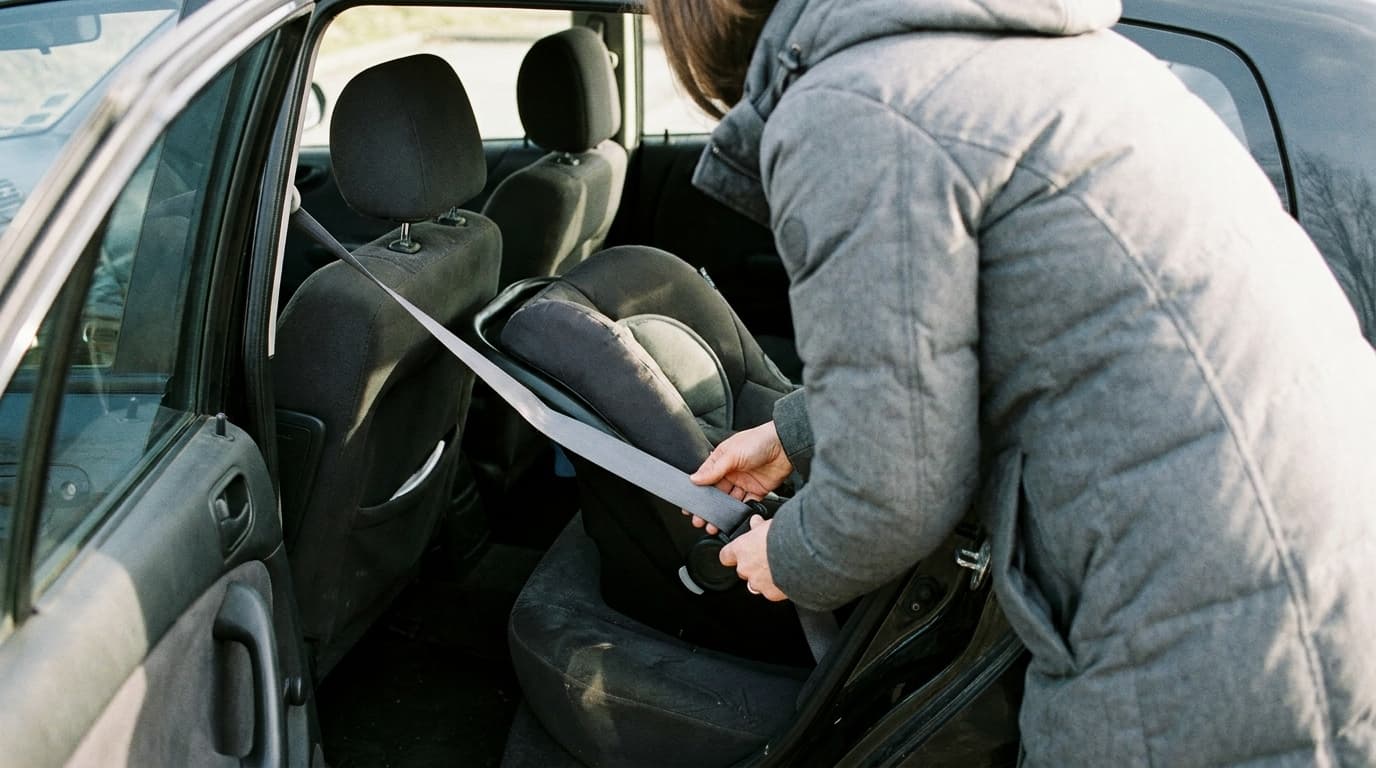
In Ontario, a child needs a booster seat until they turn 8, reach 36 kg (80 lb), or reach 145 cm tall, whichever happens first, but every Canadian province sets its own car seat and booster rules, so the exact thresholds change once you cross a provincial border.
The Four Stages of Child Car Seats in Canada
Every Canadian province builds its car seat rules around the same basic progression, even though the exact numbers differ. Understanding the four stages makes it easier to figure out where your child falls, no matter which province you live in or are driving through.
Stage 1: Rear-facing infant seat. Newborns and infants ride in a rear-facing seat from birth. Provinces set a minimum weight before a child can move to the next stage (commonly around 9 kg or 20 lb in Ontario and BC), but Transport Canada and pediatric groups recommend staying rear-facing well past that minimum, ideally to the maximum weight or height the seat's manufacturer allows.
Stage 2: Forward-facing seat with a five-point harness. Once a child outgrows the rear-facing seat, they move to a forward-facing seat that still uses a full harness rather than the vehicle's seat belt. This stage typically runs from roughly 9 to 18 kg (20 to 40 lb), though the exact upper limit depends on the seat model.
Stage 3: Booster seat. A booster raises a child up so the vehicle's own lap and shoulder belt fits properly across the hips and chest instead of the stomach and neck. This is the stage where provincial rules diverge the most, both in the age/weight/height thresholds and in whether a booster is legally mandatory at all.
Stage 4: Seat belt alone. Once a child meets their province's exit criteria for the booster stage, usually a combination of age, weight and height, they can use the adult seat belt without a booster, provided it fits properly across the shoulder and hips.
Ontario Car Seat and Booster Laws
Ontario's rules, set out under the Highway Traffic Act and Ontario Regulation 613, are the most detailed in the country and are a useful baseline even for readers in other provinces.
- Rear-facing: required from birth until the child weighs at least 9 kg (20 lb); best practice is to stay rear-facing until the seat's maximum rear-facing weight or height limit.
- Forward-facing with harness: available once the child is over 9 kg (20 lb), continuing until at least 18 kg (40 lb). Regulation 613 s.6(b) expressly permits keeping a child rear-facing past 9 kg where the seat manufacturer allows it.
- Booster seat: required for a child who is under 8, weighs 18 to under 36 kg (40 to under 80 lb) AND is under 145 cm, all three at once; the requirement ends when the child turns 8, OR reaches 36 kg (80 lb), OR reaches 145 cm (4'9") in height, whichever of the three happens first.
- Seat belt alone: permitted once any one of the three booster exit conditions above is met, provided the belt fits properly (shoulder belt across the chest, not the neck; lap belt low across the hips, not the stomach).
Ontario Regulation 613 sets out the specific weight, height and age bands. A driver who fails to properly restrain a child can face a fine and demerit points under the Highway Traffic Act, on top of the real safety risk an improperly restrained child faces in a crash.
Province Comparison Table
| Province | Rear-facing minimum | Booster required until | Legal booster mandate? |
|---|---|---|---|
| Ontario | 9 kg (20 lb) | Age 8 OR 36 kg (80 lb) OR 145 cm, whichever first | Yes |
| British Columbia | 9 kg (20 lb) | Age 9 OR 145 cm, whichever first | Yes |
| Alberta | Recommended to age 2 or seat's max limit | Not legally mandated; recommended until belt fits properly (typically age 8-12 or 145 cm) | No (recommended only) |
| Quebec | Not specified in statute; SAAQ recommends rear-facing to about age 2 | Under 9 OR under 145 cm requires a restraint; ends only once BOTH are cleared (replaced the old 63 cm sitting-height rule in 2019) | Yes |
This table is a starting point, not a substitute for checking your own province's current regulation. Numbers get updated periodically, and territories and the remaining provinces (Manitoba, Saskatchewan, the Atlantic provinces) each have their own specific rules not covered in depth here.
For a quick answer specific to your province or territory, the Canada Car Seat Checker shows which restraint the law requires for a child's exact age, weight and height, along with the rule and penalty that apply.
British Columbia
BC's Motor Vehicle Act Regulations, enforced through ICBC and RoadSafetyBC guidance, follow a similar four-stage structure to Ontario's but land on slightly different numbers. A rear-facing seat is used from birth to at least one year and 9 kg (20 lb), moving to a forward-facing harnessed seat once the child is at least one year old AND at least 9 kg (20 lb); Division 36 sets no further condition.
A booster seat becomes an option once a child reaches 18 kg (40 lb); the regulation sets no minimum age for the booster stage, and it remains required until the child turns 9 or reaches 145 cm (4'9"), whichever comes first. BC also recommends, but does not require, keeping children in the back seat until age 12, particularly in vehicles with front passenger airbags.
Alberta
Alberta's approach is narrower than Ontario's or BC's. The Traffic Safety Act requires a child under 6 years old who weighs 18 kg (40 lb) or less to ride in an approved child safety seat. Once a child is over that threshold, drivers must ensure the child wears a seat belt; Alberta does not have a standalone legal mandate requiring a booster seat the way Ontario, BC and Quebec do.
That does not mean boosters are unnecessary in Alberta. Alberta Health and road safety advocates strongly recommend a booster seat until a child is tall enough (commonly cited as around 145 cm) for the adult seat belt to fit properly across the chest and hips rather than the neck and stomach, typically somewhere between ages 8 and 12. Alberta also recommends rear-facing until at least age 2, and installing rear-facing seats in the back seat because of front-airbag force.
Quebec
Quebec's Highway Safety Code, enforced by the SAAQ, changed its booster rule in April 2019. Before that date, a child could leave a booster once their seated torso-and-head height reached 63 cm. Quebec replaced that measurement with an age-and-height test that runs in the OPPOSITE direction from BC’s: a restraint or booster is required for any child under 9 OR under 145 cm, and the requirement ends only once the child clears both, whichever comes last. In BC a child exits at the first threshold reached; in Quebec, at the last. A driver who does not comply can face a fine and demerit points under Quebec's rules.
Quebec’s statute works differently from Ontario’s and BC’s: article 397 of the Highway Safety Code sets no rear-facing or forward-facing weight thresholds at all. The law imposes a single test, a child restraint or booster for any child under 145 cm OR under 9 years old, which ends only once the child is BOTH 145 cm or taller AND at least 9, and the familiar stage progression (rear-facing to about age 2, then a harnessed seat) is SAAQ guidance, not statute.
Province-by-province guides
Each guide covers the exact stage thresholds and their statutory logic, who is liable, taxi and rideshare exemptions, verified penalties, and what safety bodies recommend beyond the legal minimum:
- Ontario car seat laws
- British Columbia car seat laws
- Quebec car seat laws
- Alberta car seat laws
- Saskatchewan car seat laws
- Manitoba car seat laws
- Nova Scotia car seat laws
- Prince Edward Island car seat laws
- New Brunswick car seat laws
- Newfoundland and Labrador car seat laws
- Yukon, NWT and Nunavut car seat laws
Federal Standards vs Provincial Rules: Who Regulates What
It helps to separate two different layers of car seat law in Canada, because readers often assume one level of government controls everything.
Transport Canada regulates the seat itself. Under the Motor Vehicle Safety Act and the Canada Motor Vehicle Safety Standards (CMVSS), Transport Canada sets the crash-test and manufacturing standards every car seat and booster cushion sold in Canada must meet before it can legally be sold or used. This is a national, uniform standard; a certified seat is certified everywhere in Canada.
Provinces regulate how the seat must be used. Each province's highway traffic legislation, not federal law, sets the age, weight and height thresholds for which stage of seat a child must be in, and the penalties for non-compliance. This is why the numbers in the table above differ from province to province even though every seat sold nationwide meets the same federal safety standard.
Transport Canada does publish safety guidance and recommendations, including keeping children rear-facing as long as possible and in the back seat until at least age 13, but these are recommendations layered on top of, not a replacement for, whatever your specific province legally requires.
Beyond the Legal Minimum: National Safety Guidance
The legal minimums in every province are just that, minimums. Transport Canada, the Canadian Paediatric Society and provincial road safety agencies consistently recommend going further than the law requires:
- Stay rear-facing longer than required. A rear-facing seat protects a young child's head, neck and spine far better than a forward-facing seat in a crash. Keep a child rear-facing until they hit the seat's maximum rear-facing weight or height limit, not just the province's legal minimum.
- Keep the harness snug and properly positioned. Loose straps or a chest clip positioned too low significantly reduce a harness's effectiveness.
- Keep children in the back seat until at least age 13. This applies across the country regardless of whether a province's booster law has already ended by that age.
- Check installation. Many communities have certified car seat technicians who will check an installation for free; a seat that is not installed correctly cannot do its job in a crash.
Car Seats, Traffic Stops and Your Rights
If you are stopped for a suspected child restraint violation, the officer is checking compliance with your province's highway traffic legislation, similar to how they would check for graduated licensing compliance for a new driver. If you are also recording the interaction on a dash cam or phone, Canadian one-party consent recording law generally allows this; see our overview of Canada's recording laws for the audio-consent rules that apply during any recorded traffic stop.
Disclaimer: This article provides general information about car seat and booster seat laws across Canada and is not legal advice. Requirements change over time and vary by province and territory; always confirm current rules with your provincial transport ministry or ICBC/SAAQ before making decisions about your child's car seat.
Frequently Asked Questions
At what age can a child stop using a booster seat in Ontario?
In Ontario, a child can stop using a booster seat once they meet any ONE of three conditions: they turn 8 years old, they reach 36 kg (80 lb), or they reach 145 cm (4'9') in height, whichever happens first. The seat belt must also fit properly once the booster is no longer used.
Is a booster seat legally required in Alberta?
No. Alberta law requires a child safety seat under age 6 and 18 kg (40 lb), and a seat belt after that, but Alberta does not have a standalone legal booster seat mandate the way Ontario, BC and Quebec do. Road safety authorities still strongly recommend a booster until the adult belt fits properly, usually around age 8 to 12 or 145 cm.
Did Quebec change its car seat law?
Yes. Before April 2019, Quebec's rule was based on a child's seated torso-and-head height reaching 63 cm. Since April 2019, Quebec requires a booster seat until a child turns 9 or reaches 145 cm, whichever comes first, matching the standard British Columbia uses.
Does Transport Canada set the age and weight rules for car seats?
No. Transport Canada sets the national manufacturing and crash-test standard (CMVSS) that every car seat sold in Canada must meet. The age, weight and height thresholds for how long a child must use each stage of seat are set by each province's own highway traffic legislation, which is why the numbers differ across the country.
How long should a child stay rear-facing in a car seat?
Provincial law sets only a minimum, usually until about 9 kg (20 lb). Transport Canada and pediatric safety groups recommend going well beyond that minimum and keeping a child rear-facing until they reach the maximum weight or height limit set by the specific car seat's manufacturer, generally around age 2 or later.
Until what age should a child sit in the back seat?
Across Canada, safety authorities including Transport Canada recommend keeping children in the back seat until at least age 13, regardless of whether their province's booster seat law has already stopped applying to them by that age.
Sources and References
- Ontario: Choosing a Child Car Seat(ontario.ca).gov
- Transport Canada: Child Car Seat Safety(tc.canada.ca).gov
- Transport Canada: Stage 1, Rear-Facing Seats(tc.canada.ca).gov
- Transport Canada: Safety Standards for Child Car Seats(tc.canada.ca).gov
- ICBC: Choosing a Child Car Seat or Booster Seat(icbc.com)
- BC Laws: Motor Vehicle Act Regulations(bclaws.gov.bc.ca).gov
- Alberta.ca: Child Seats(alberta.ca).gov
- SAAQ: Child Safety Seats, What the Law Says(saaq.gouv.qc.ca).gov