
British Columbia
British Columbia Car Seat Laws: Rear-Facing, Booster and Fine Rules
Independently fact-checked against primary sources (last audited August 14, 2026). · 7 primary sources cited on this page. How we verify our legal content
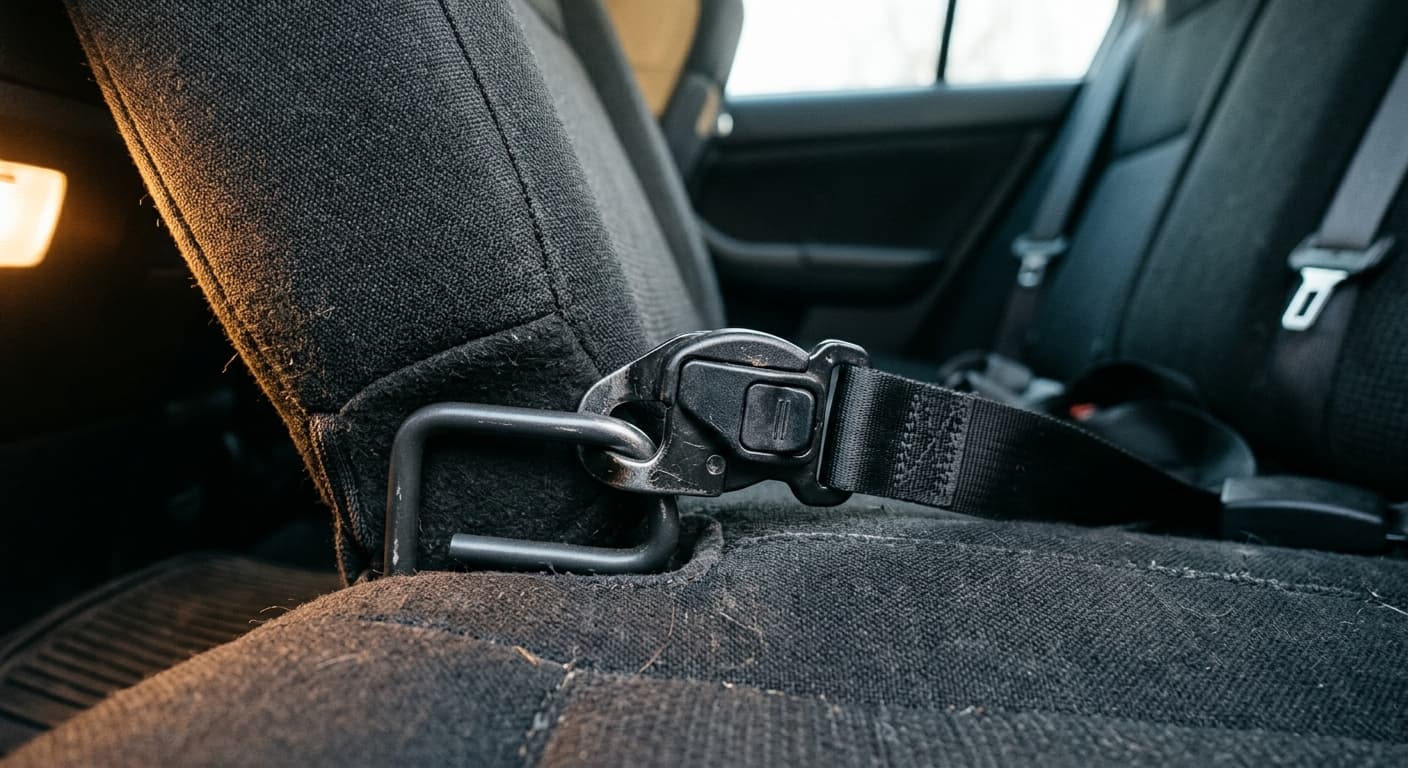
British Columbia requires children to ride rear-facing until they turn 1 AND weigh at least 9 kg, forward-facing until they weigh at least 18 kg, and in a booster seat until they reach 145 cm tall, a requirement that ends in practice at age 9 regardless of height, all under Division 36 of the Motor Vehicle Act Regulations.
What British Columbia's Law Requires
British Columbia's child car seat rules live in Division 36, «Child Seating and Restraint Systems,» of the Motor Vehicle Act Regulations, B.C. Reg. 26/58 (sections 36.01 through 36.09), made under the Motor Vehicle Act, RSBC 1996, c. 318. Section 36.02 carves children out of the general adult seat belt rule in Motor Vehicle Act section 220(6) and (7) and routes them instead into Division 36's own staged age, weight and height requirements.
Section 36.03 sets the actual duty: a driver must ensure a child is securely fastened in a designated seating position, using the restraint system that matches the child's current stage. Division 36 defines «child» as a person under age 9, a definition that quietly does a lot of work later in how the booster stage actually ends. The obligation is written as a driver's duty, not a parent's, and applies regardless of the driver's relationship to the child.
The Four Stages: Exact Age, Weight and Height Thresholds
The regulation moves a child through four stages, and each stage's exit point is written as a specific, testable number rather than a general guideline.
The Canada Car Seat Checker runs those exact numbers for you, taking a child's age, weight and height to show which BC restraint stage currently applies and the penalty for getting it wrong.

| Stage | What's required | Threshold to move on | Section |
|---|---|---|---|
| Rear-facing infant seat | Rearward-facing infant restraint | Both age 1 and 9 kg must be reached; hitting only one does not end this stage | s. 36.04 |
| Forward-facing seat | Forward-facing restraint with harness | Weighs at least 18 kg | s. 36.05 |
| Booster seat | Manufacturer-appropriate booster for the child's height and weight | Reaches 145 cm tall | s. 36.06 |
| Seat belt alone | Upper torso plus pelvic restraint, or pelvic restraint alone if no upper torso restraint is fitted | Final stage | s. 36.07 |
A rear-facing seat cannot be installed in a seating position with an active front airbag, under section 36.04(3). Section 36.08 lets a child under 1 who weighs under 9 kg and has special needs use a manufacturer-appropriate infant restraint designed for that purpose instead, and lets a child age 1 or older weighing 9 kg or more with a mobility impairment use a restraint system built for disabled passengers.
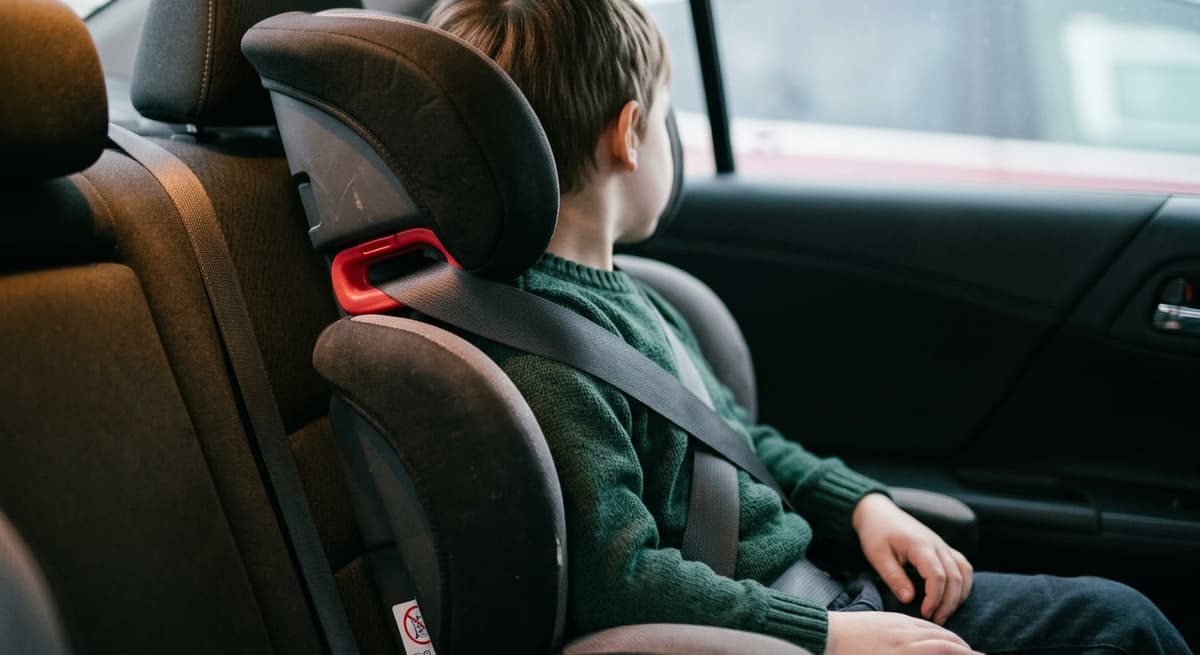
BC's booster requirement is usually described as running «until age 9 or 145 cm, whichever comes first,» and that description matches how the law actually works in practice. It is still worth being precise about the mechanism. Section 36.06 itself, read on its own, sets only the height figure: a booster is required until the child reaches 145 cm. The age 9 cutoff does not come from a second clause inside 36.06. It comes from section 36.01's definition of «child» as «a person under age 9.» Because Division 36 only regulates «children» as that term is defined, a 145 cm-tall 8-year-old is still covered by the booster rule, but a shorter child who turns 9 falls outside the Division's scope entirely, regardless of height. The practical result is the same threshold parents already hear about; the legal mechanism behind it is two separate provisions working together, not one combined test.
Who Is Responsible, and Who Is Exempt
The legal duty runs to the driver, not to «the parent» as a general matter. Section 36.03 is written as an obligation on «a driver,» so a grandparent, family friend, carpool driver or rideshare driver behind the wheel carries the same restraint obligation a parent would.
Section 36.09 lists BC's exemptions from Division 36, and one distinction in it is worth stating plainly because it catches people out: a conventional taxi is exempt, but a ride-hailing vehicle operating under a transportation network services (TNS) authorization, the category that covers services like Uber and Lyft, is specifically carved back out of that exemption and must comply with Division 36. The other listed exemptions cover a vehicle licensed outside Canada whose driver is complying with that jurisdiction's own restraint laws; a peace officer performing official duties; a driver holding a medical practitioner's certificate that the child cannot physically be secured in any available restraint system; a vehicle that was not required to have seat belts when it was built and has not since been modified to add them; emergency vehicles; and buses, except a bus with a model year of 1994 or later and a gross vehicle weight rating under 4,536 kg, which is not exempt.
One related point is genuinely unresolved rather than settled: section 36.09's out-of-jurisdiction exemption is worded for vehicles licensed outside Canada. On the plain text, it does not appear to cover a Canadian-plated vehicle visiting from another province, meaning an out-of-province family driving in BC would, on a literal reading, need to meet BC's own thresholds rather than their home province's. That reading has not been independently confirmed against a government source addressing interprovincial visitors specifically, so treat it as a plain-text inference rather than a stated rule.
Fines and Demerit Points
Contravening the restraint duty is an offence under Motor Vehicle Act section 220(10). What this article will not do is state a current dollar figure for a Division 36 ticket, because one could not be verified. A BC government news release from July 2008, announcing the booster-seat law change that created the current 9 kg, 18 kg and 145 cm thresholds, states a $109 fine applied to violations at the time. That figure is 18 years old. A $167 figure circulates widely online for this violation, but it does not trace back to a primary BC government source, and this article does not repeat it as fact. If you are contesting or paying an actual ticket, confirm the current amount directly with ICBC or against BC's Violation Ticket Administration and Fines Regulation, not against either number here.
Whether a Division 36 violation carries driver's licence penalty points, and if so how many, also could not be confirmed one way or the other. Do not assume it carries points, and do not assume it carries none.
Enforcement in Practice
RoadSafetyBC's public data page publishes multi-year fatality trends, alcohol-related collision data, intersection camera statistics and driving-prohibition figures. It does not publish seat belt or child-restraint compliance or ticketing statistics, and no current BC-specific enforcement figure for Division 36 was found anywhere else in government sources either. That is a real gap in public data, not evidence about how often the law is or isn't enforced.
The injury statistics that do circulate for BC come from the same 2008 announcement that produced the $109 fine figure: an estimated 860 children aged 5 through 9 were seriously injured in BC motor vehicle collisions each year at that time, and a properly used booster seat was credited with cutting fatality risk by 71 percent and serious injury risk by 67 percent compared with a seat belt alone. ICBC's current consumer brochure repeats the 71 and 67 percent figures nearly verbatim without restating a newer source, which suggests they are still treated as the standing numbers rather than replaced ones, though a more recent BC-specific study behind them was not located.
Beyond BC's Minimum: What Transport Canada Recommends
BC's thresholds are legal minimums, not safety targets, and Transport Canada is explicit that the two are different things. Its guidance is to keep a child rear-facing until they reach the specific car seat's own weight or height limit, frequently well above BC's 9 kg and age 1 legal minimum, and its general principle is to keep a child in each stage as long as possible rather than moving up as soon as a seat is technically outgrown.
Transport Canada's own consumer guidance describes forward-facing eligibility starting at roughly 10 kg, a slightly different number from BC's own 9 kg legal threshold in section 36.05. That is not a contradiction. Transport Canada's page is general, Canada-wide guidance aimed at parents choosing a seat, not a restatement of BC's specific regulation, so the two figures serve different purposes: BC's 9 kg is the legal floor, and Transport Canada's roughly 10 kg is general best-practice framing layered on top of it. For the booster stage, Transport Canada's guidance of at least 18 kg lines up with BC's own 18 kg threshold for exiting the forward-facing stage. Transport Canada also notes that the point a child can safely use a seat belt alone, without any booster, varies by province, and recommends not rushing that transition even once a province's legal booster requirement has technically ended.
The Federal Layer: National Safety Mark, US-Bought Seats and Expiry
Car seat design and manufacturing are federally regulated. Every child restraint system, infant seat and booster seat sold for use in Canada has to meet Transport Canada's motor vehicle safety standards and carry the National Safety Mark showing that compliance. That is a different layer of regulation from BC's Division 36, which governs how a seat has to be used on a specific trip; the federal layer governs what can legally be manufactured, imported, advertised or sold in the first place.
This matters directly for a seat bought in the United States. Transport Canada's own guidance for parents states that a restraint system bought outside Canada, including online from a non-Canadian seller, is unlikely to meet Canada's Motor Vehicle Restraint Systems and Booster Seat Safety Regulations and applicable Canadian standards, and so will not carry the National Safety Mark. Health Canada's regulations separately bar a non-compliant seat from being imported, advertised or sold in Canada by anyone, individual or business. Transport Canada's stated position is that a seat certified only to US standards should not be treated as legal to use in any Canadian province or territory, not just that it cannot be sold here. A parent using one also loses the practical protection of a Canadian recall notice if the seat is later recalled, since the manufacturer or retailer may have no way to contact a buyer who purchased it outside Canada's own distribution and registration system.
Car seat expiry dates are not a BC or federal legal requirement. Transport Canada confirms this directly: an expiry or useful-life date is not required by regulation, but nearly every seat sold in Canada carries one anyway, set by the manufacturer, and Transport Canada recommends following the manufacturer's own instructions and warnings for that specific model rather than treating the date as optional.
What's at Stake Beyond a Ticket
An unresolved fine amount and no published compliance statistics do not make this a low-stakes rule. The injury numbers behind BC's 2008 law change, an average of 860 seriously injured children aged 5 through 9 a year, and a booster's documented reduction in fatality and serious-injury risk, describe the reason the staged system exists in the first place, independent of whether any given trip results in a ticket. A low or unmeasured ticket count is not evidence that the underlying risk is low, and meeting BC's bare legal minimum, the first age or weight number at which each stage is technically allowed to end, is the floor the law sets, not the point Transport Canada or BC's own safety guidance considers safest.
Information last verified on 2026-08-14, drawn directly from the Motor Vehicle Act Regulations, B.C. Reg. 26/58, Division 36, the Motor Vehicle Act, RSBC 1996, c. 318, and Transport Canada's own guidance pages. This article has not yet been reviewed by a licensed lawyer.
Related Resources
- Car Seat Laws in Canada by Province
- British Columbia Demerit Points
- Canadian Driving & Traffic Laws by Province
Last updated: 2026-08-14.
Frequently Asked Questions
At what age can a child in BC move from a rear-facing to a forward-facing car seat?
Not until both conditions in section 36.04 are met: the child has turned 1 year old AND weighs at least 9 kg. Reaching either one alone does not end the rear-facing requirement.
When is a booster seat required instead of a full harness seat in BC?
Once a child weighs at least 18 kg and exits the forward-facing harness stage under section 36.05, BC requires a booster seat, appropriate for the child's height and weight, until the child reaches 145 cm tall under section 36.06.
Until what age is a booster seat legally required in BC?
In practice, until age 9 or 145 cm, whichever comes first. Section 36.06 itself only states the 145 cm height figure; the age 9 cutoff comes from section 36.01's definition of «child» as a person under age 9, which limits who Division 36 covers in the first place.
Are taxis exempt from BC's car seat law?
A conventional taxi is exempt under section 36.09(b). A ride-hailing vehicle operating under a transportation network services (TNS) authorization, the category covering services like Uber and Lyft, is specifically excluded from that exemption and must comply with Division 36.
What is the fine for a car seat violation in BC?
The current amount could not be verified against BC's live ticket-fine schedule. A 2008 government news release cites a $109 fine at that time; the $167 figure commonly repeated online has no primary government source. Confirm the current amount with ICBC or BC's Violation Ticket Administration and Fines Regulation before relying on either number.
Is it legal to use a car seat bought in the United States in BC?
Transport Canada's position is that a seat certified only to US standards, without the National Safety Mark, should not be treated as legal to use in any Canadian province or territory, and that importing or selling a non-compliant seat is separately barred under federal regulations.
Do car seats have an expiry date in BC?
Not as a legal requirement. Transport Canada confirms expiry dates are not required by regulation, but almost every seat sold in Canada carries a manufacturer-set expiry or useful-life date, and Transport Canada recommends following it.
Who is legally responsible for securing a child in BC, the driver or the parent?
The driver. Section 36.03 places the duty on «a driver,» so anyone driving with a child in the vehicle, not only a parent, carries the same legal obligation to secure them correctly.
Updates
Independently fact-checked against the cited primary sources
Sources and References
- Motor Vehicle Act Regulations, B.C. Reg. 26/58, Division 36, Child Seating and Restraint Systems (ss. 36.01-36.09)(bclaws.gov.bc.ca).gov
- Motor Vehicle Act, RSBC 1996, c. 318, s. 220 (seat belt offence provision)(bclaws.gov.bc.ca).gov
- ICBC, Child Car Seats brochure(icbc.com)
- RoadSafetyBC, Data(www2.gov.bc.ca).gov
- Government of British Columbia news release, New Booster Seat Law Protects B.C. Children (2008)(archive.news.gov.bc.ca).gov
- Transport Canada, Choosing a Child Car Seat or Booster Seat(tc.canada.ca).gov
- Transport Canada, Expiry Dates for Child Car Seats and Booster Seats(tc.canada.ca).gov
- Transport Canada, Child Car Seat Cross-Border Shopping: What Parents and Caregivers Should Know(tc.canada.ca).gov