Nova Scotia
Nova Scotia Car Seat and Booster Seat Laws (2026 Guide)
Independently fact-checked against primary sources (last audited August 14, 2026). · 5 primary sources cited on this page. How we verify our legal content
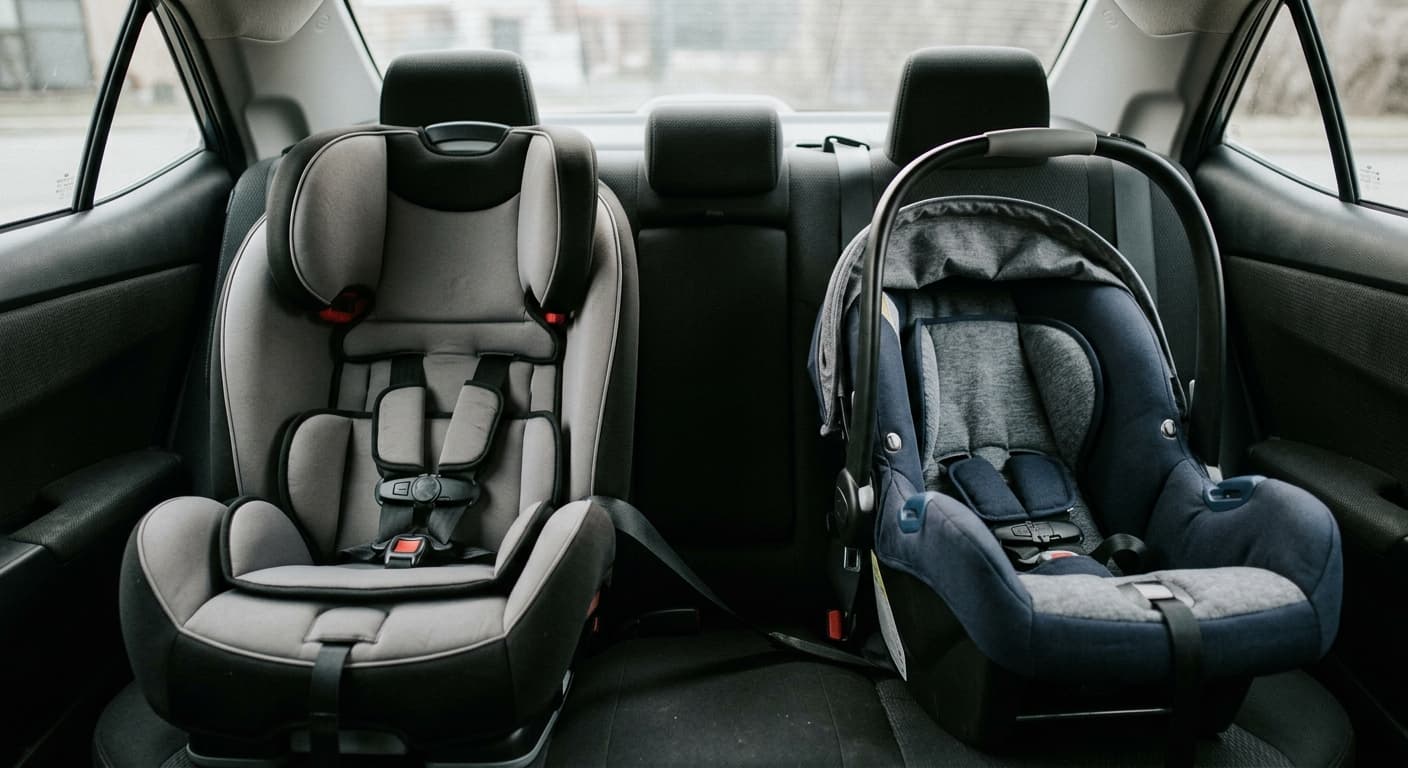
Nova Scotia requires a booster seat for a child who is under 9 years old, weighs at least 18 kg (40 lb), and is less than 145 cm (57 in) tall, and the requirement ends the moment any one of those three conditions is no longer met.
What the Law Requires
Nova Scotia's child restraint rules sit in the Seat Belt and Child Restraint System Regulations, made under the Motor Vehicle Act, R.S.N.S. 1989, c. 293. The regulations took effect January 1, 2007, and made Nova Scotia the third province in Canada to adopt booster seat rules, according to the province's own December 2005 announcement of the change.
The Three Stages and Exact Thresholds
Section 4(1) of the regulation sorts children into three classes, each with its own restraint requirement and its own logic for when it applies.
| Class | Threshold, exactly as written | Required restraint |
|---|---|---|
| Infant | Under 1 year of age, OR weighs under 10 kg (22 lb). Either condition alone qualifies. | Rearward-facing system meeting CMVSS 213.1 or 213.5 |
| Young child | At least 1 year old, AND at least 10 kg (22 lb), AND under 18 kg (40 lb). Both the age and weight floor must be met. | Forward-facing or convertible system meeting CMVSS 213, 213.1, 213.3, 213.4 or 213.5 |
| Older child | Under 9 years old, AND at least 18 kg (40 lb), AND under 145 cm (57 in) tall. All three must hold at once. | Booster cushion meeting CMVSS 213.2 or another listed standard |
| Seat belt only | Any one of the older-child conditions above is exceeded | Ordinary seat belt |
Because the "older children" class is defined as an AND of three separate conditions, a child leaves the booster requirement the moment any single one of them flips: turning 9, or reaching 145 cm, ends the requirement on its own. Weight in this class only sets a floor, at least 18 kg, so it does not itself trigger an exit the way age and height do. Nova Scotia's own 2005 announcement summarized the rule the same way, less formally: a booster is required if a child is younger than nine years of age and less than 145 cm tall. A rearward-facing restraint also may not be used in a seating position with an active frontal air bag.
For a straightforward answer, the Canada Car Seat Checker takes a child's age, weight and height and shows which restraint Nova Scotia law requires, along with the rule and penalty.
Who Is Liable, and What's Exempt
The regulation places responsibility on the driver, not the child or a parent riding elsewhere in the vehicle. Three specific exemptions appear in the sections of the regulation available for review:

- Buses, school buses and transit buses, when no manufacturer-installed child-restraint-capable seating position is available (s.8A(2)).
- A medical exemption, available with a letter from a physician or nurse practitioner (s.9).
- Prisoner-transport vehicles (s.10).
Secondary sources describe a general Motor Vehicle Act exemption letting taxi drivers skip seat-belt requirements for hire passengers, but that clause covers ordinary seat belts, not child restraints specifically, and a child-restraint-specific taxi exemption does not appear in the sections of the regulation available for review. Treat that point as unresolved rather than confirmed either way.
Penalties
Figures such as $157.50 and 2 demerit points circulate widely for a Nova Scotia child-restraint violation, but they come from secondary aggregator pages, not from a primary Nova Scotia fine schedule that could be located and read directly. This page does not publish a dollar figure or demerit count for that reason. If you are facing an actual ticket, confirm the amount with the court information on the ticket itself or with Nova Scotia's Summary Offence Tickets Regulations schedules.
Enforcement in Practice
The most substantial enforcement-adjacent data point for Nova Scotia is a compliance study, not a ticketing record. Dalhousie University and the IWK Health Centre's Child Safety Link program ran roadside seat checks across 33 Nova Scotia communities between May and November 2024, examining 1,005 child passengers in roughly 700 vehicles. Results were published September 25, 2025, and reported by Global News and CBC.
- 84% of rear-facing and forward-facing car seats had at least one error.
- 80% of car seats and booster seats overall were being used incorrectly.
- About one-third of vehicles checked were not using a required seat at all.
- The 2025 misuse rate is higher than a comparable 2012 study, which found a 73% misuse rate.
Common errors included loose harnesses, seats that were not securely attached to the vehicle, moving a child to the next stage too early, and moving a child into a booster before reaching 18 kg or into a seat belt before meeting the booster exit conditions. Reporting on the same study also describes Nova Scotia RCMP as unlikely to issue tickets for incorrect car seat or booster use, leaning instead toward inspection clinics and education through Child Safety Link. No RCMP or municipal police news release reporting actual Nova Scotia child-restraint ticket counts could be located.
Beyond the Minimum: What Safety Bodies Recommend
Nova Scotia's legal floor allows a child to move to a forward-facing seat at 1 year and 10 kg, but Transport Canada and Canadian pediatric guidance recommend staying rear-facing well beyond that minimum, generally to the maximum height or weight the specific seat's manufacturer allows. The 2025 Dalhousie and IWK findings make the same point from a different angle. With roughly a third of vehicles not using a required seat at all and four out of five seats showing at least one error, actual practice in Nova Scotia often falls short of even the legal minimum, not just the safety recommendation above it.

The Federal Layer
Transport Canada, not the province, sets the manufacturing and certification standard every car seat and booster sold in Canada must meet, marked with the National Safety Mark. Transport Canada's own advisory on cross-border shopping states plainly that a seat bought in the United States "cannot be used legally in any province or territory," because a US-only certified seat does not meet the Canadian standard that Nova Scotia's regulation cross-references. Expiry dates on car seats are not set by Nova Scotia or by federal regulation; Transport Canada confirms they are set by the manufacturer, and recommends following the manufacturer's instructions for each specific seat.
What This Means Beyond a Ticket
Nova Scotia's low observed ticketing has nothing to do with how safe an incorrectly restrained child actually is. The 2025 study's own findings, most seats checked had at least one real error, describe injury risk in a crash, not enforcement risk. A driver who is never stopped can still be transporting a child in a seat that would not protect them the way it was designed to.
This article summarizes Nova Scotia's Seat Belt and Child Restraint System Regulations and related guidance for general information only; it is not legal advice. Regulations and enforcement practices can change, and the fine amount referenced on this page could not be independently confirmed. Confirm current requirements with Nova Scotia's Department of Justice or Access Nova Scotia before making decisions about your child's car seat.
Frequently Asked Questions
At what age can a child stop using a booster seat in Nova Scotia?
A child in Nova Scotia's booster-eligible class must be under 9 years old, weigh at least 18 kg (40 lb), and be under 145 cm (57 in) tall, all at the same time. The booster requirement ends the moment the child turns 9 or reaches 145 cm, whichever happens first.
Is Nova Scotia's booster rule based on age, weight, or height?
All three, but they work differently. Age and height can each end the requirement on their own once the child turns 9 or reaches 145 cm. Weight only sets the floor for entering the booster stage, at least 18 kg, it is not used to end the requirement.
What is the fine for not using a car seat or booster in Nova Scotia?
This is unverified. Figures like $157.50 and two demerit points circulate on secondary websites, but no primary Nova Scotia fine schedule confirming that amount could be located and read directly. Confirm the actual amount from the ticket itself or Nova Scotia's official fine schedules.
What did the 2025 Nova Scotia car seat study find?
A Dalhousie University and IWK Health Centre study, published September 25, 2025 and based on roadside checks of 1,005 children across 33 communities between May and November 2024, found 80% of car and booster seats in use had errors, and about a third of vehicles were not using a required seat at all, a higher misuse rate than a comparable 2012 study.
Can I use a car seat I bought in the United States in Nova Scotia?
No. Transport Canada states that a car seat purchased in the United States cannot legally be used in any Canadian province or territory, including Nova Scotia, because it does not meet the Canadian safety standard and does not carry the required National Safety Mark.
Is there a taxi exemption from Nova Scotia's child restraint rules?
This is unresolved. The sections of Nova Scotia's Seat Belt and Child Restraint System Regulations available for review list exemptions for certain buses, a medical exemption, and prisoner transport, but not a child-restraint-specific taxi exemption. A general seat-belt (not child-restraint) exemption for taxi drivers has been reported elsewhere but was not independently confirmed.
Updates
Independently fact-checked against the cited primary sources
Sources and References
- Nova Scotia Seat Belt and Child Restraint System Regulations (N.S. Reg. 221/2005)(novascotia.ca).gov
- Nova Scotia: New Seatbelt Regulations Will Help Protect Children (December 21, 2005)(news.novascotia.ca).gov
- Global News: Car seats being used incorrectly across Nova Scotia, study finds (September 25, 2025)(globalnews.ca)
- CBC News: Car seats being used incorrectly, IWK and Dalhousie University study finds(cbc.ca)
- Transport Canada: Child Car Seat Cross-Border Shopping, What Parents and Caregivers Should Know(tc.canada.ca).gov
- Transport Canada: Expiry Dates for Child Car Seats and Booster Seats(tc.canada.ca).gov
- Transport Canada: Safety Standards and Regulations That Apply to Child Car Seats and Booster Cushions(tc.canada.ca).gov