
Newfoundland and Labrador
Newfoundland and Labrador Car Seat Laws: Thresholds and the No-Taxi-Exemption Gap
Independently fact-checked against primary sources (last audited August 14, 2026). · 6 primary sources cited on this page. How we verify our legal content
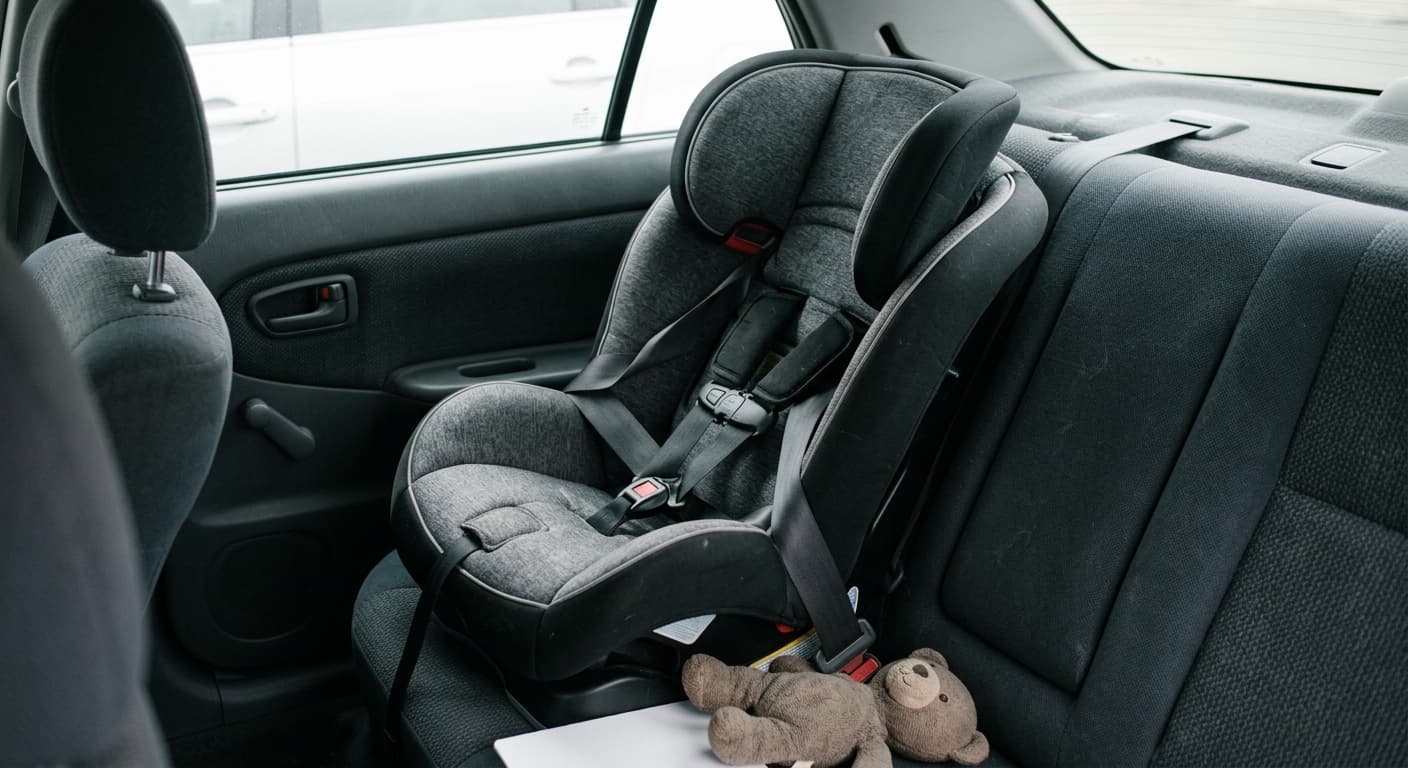
In Newfoundland and Labrador, a child 8 years of age or under must ride in a weight-appropriate car seat or booster under Section 178.1 of the Highway Traffic Act, and unlike New Brunswick, there is no taxi exemption at all.
What Newfoundland and Labrador's Law Requires
Newfoundland and Labrador's child restraint rule is Section 178.1, «Child seat restraint systems,» in Part VI of the Highway Traffic Act, RSNL 1990, Chapter H-3. The section was added by the Statutes of Newfoundland and Labrador 2007, Chapter 23, and its verbatim thresholds below come from that original enacting text.
Section 178.1 has been amended several times since 2007 (the statute’s own endnote lists amendments in 2009, 2019, 2023 and twice in 2024). The thresholds stated below were read from the current consolidated text itself, not inferred from the 2007 original, so they reflect the law as it stands today; the most recent amendment reviewed in detail (SNL 2024, c.17) changed only a pronoun in subsection 178.1(4)(b).
The Stages, With Exact Thresholds
Section 178.1(2) applies to child passengers 8 years of age or under, meaning the restraint mandate as a whole ends at age 9. Within that scope, the section sets three weight-based stages:
| Class | Threshold | Required restraint |
|---|---|---|
| Infant | Under 9 kg | Rearward-facing infant car seat (CMVSS 213.1), per manufacturer's instructions |
| Toddler | 9 kg up to 18 kg | Child car seat (CMVSS 213) or infant car seat, per manufacturer's specs |
| Booster | 18 kg up to 37 kg, AND standing height under 145 cm | Booster seat (CMVSS 213.2) with a complete seat belt, or a child car seat, per manufacturer's specs |
The booster class is an AND of three conditions at once: 8 years of age or under, AND 18 to 37 kg, AND under 145 cm. A child exits the booster requirement the moment any one of those flips, turning 9, or reaching 37 kg, or reaching 145 cm, whichever comes first, and moves to an ordinary seat belt.
The Canada Car Seat Checker tracks those three exit conditions automatically, so entering a child's current age, weight and height shows which restraint Newfoundland and Labrador law requires right now.
A rearward-facing infant car seat must not be used in a seating position equipped with an active frontal air bag (s.178.1(3)).
One genuine cross-province difference worth flagging: Newfoundland and Labrador's rear-facing weight floor is 9 kg, lower than the 10 kg floor used in Nova Scotia and Prince Edward Island's own regulations. That is a real statutory difference, not a rounding error or a typo.
Who Must Comply, and Who Is Exempt, and the One Big Gap
The duty runs to the person operating the vehicle. Section 178.1(4) through (6) set out the exemptions:
- Medical exemption: a certificate from a qualified medical practitioner or a nurse practitioner stating that the child cannot be secured in a child seat restraint system, either for medical reasons for the period stated in the certificate or because of size, build or another physical characteristic (s.178.1(4)(a)).
- Peace officer emergency exemption: a peace officer transporting a child in an emergency (s.178.1(4)(b)).
- Bus exemption (booster stage only): under s.178.1(5), the booster-stage requirement in s.178.1(2)(c) does not apply to transporting a child of that stage in a bus or school bus that has not been equipped with a seat belt assembly. There is no bus exemption for the infant or toddler stages. Under s.178.1(6), the operator of a passenger vehicle designed to carry 6 or fewer passengers in addition to the operator, carrying children to and from school and school-related activities under a contract with the Crown or a school board (or an agent of either), must still comply.
- No taxi exemption anywhere in Section 178.1. Based on the subsections actually read for this page, covering only medical, peace-officer, and bus scenarios, Newfoundland and Labrador's child restraint law does not carve out taxicabs at all.
That last point is the sharpest cross-province difference in this dossier. New Brunswick exempts taxicabs outright and, since 2020, extended that exemption to rideshare drivers as well. Newfoundland and Labrador does neither: a parent taking a taxi in St. John's needs a car seat for their child where one taking a taxi in Moncton does not.
Fines: What We Could Confirm, and What We Could Not
A commonly repeated secondary figure circulates online for a Section 178.1 violation, but it could not be confirmed against a primary Newfoundland and Labrador government penalty schedule during research for this article, so this page does not publish a specific dollar amount. If you need the current, official fine, contact your local court office or the RNC or RCMP detachment for your area.
Enforcement in Practice: A Documented Gap
No Royal Newfoundland Constabulary or RCMP news release with actual child restraint ticket counts or checkpoint data was located for Newfoundland and Labrador, despite multiple targeted searches. That is stated here plainly as a genuine research gap: nothing was found, not that nothing exists. It should not be read as evidence that the law goes unenforced, and it should not be read as a reason to treat the requirement as optional.
Beyond the Legal Minimum
Section 178.1's thresholds are the legal floor, not a safety endorsement. Transport Canada, the federal safety-standards authority, recommends that parents and caregivers follow the specific manufacturer's instructions and warnings for their own car seat or booster model, rather than switching stages the moment a jurisdiction's legal minimum would technically allow it. A seat's own rear-facing weight or height limit is frequently well above 9 kg, and using it for as long as the manufacturer's instructions support is a common safety recommendation independent of what the statute itself requires as a floor.
The Federal Layer: Certification, the Safety Mark, and Expiry
Transport Canada, not the province, sets and certifies the safety standards a car seat or booster must meet before it can be sold in Canada, under the CMVSS 213 family of standards. That federal layer governs manufacture, certification, and import or sale. It does not govern whether a specific child is properly secured on a specific trip, which is Newfoundland and Labrador's own Highway Traffic Act's job.
A seat certified only to the equivalent US standard, FMVSS 213, does not meet Canada's CMVSS requirements. Transport Canada's own cross-border guidance states that such a seat must not be imported, advertised, or sold in Canada, and cannot be used legally in any province or territory, including Newfoundland and Labrador, even if a parent buys it while travelling in the United States.
Expiry dates are not a Newfoundland and Labrador statutory requirement. Transport Canada confirms that although not required by regulation, most car seats and booster seats sold in Canada carry a manufacturer expiry or useful-life date, and it recommends following the manufacturer's own instructions for that specific seat.
What's at Stake Beyond a Ticket
The absence of published enforcement data in Newfoundland and Labrador is not a safety opinion, and it is not a reason to treat the requirement as unenforced or unimportant. The requirement exists because a correctly used, age- and size-appropriate restraint measurably reduces injury risk to a child in a crash, a rationale that does not depend on whether a driver happens to be stopped by police on a given trip.
This page does not cover, and cannot confirm, whether a Section 178.1 violation carries separate consequences beyond a ticket, such as an effect on an insurance claim after a collision. A parent with a specific concern about that scenario should ask a Newfoundland and Labrador-licensed lawyer or their insurer directly.
Information last verified 2026-08-14, drawn directly from Section 178.1 of the Highway Traffic Act, RSNL 1990, Chapter H-3, its 2007 enacting text (SNL 2007, c.23), and its most recent amendment, SNL 2024, c.17, all on assembly.nl.ca. This article has not yet been reviewed by a licensed lawyer.
Related Resources
Last updated: 2026-08-14.
Frequently Asked Questions
What are Newfoundland and Labrador's car seat law thresholds?
Under Section 178.1 of the Highway Traffic Act, a child under 9 kg needs a rearward-facing infant car seat, a child 9 to 18 kg needs a child car seat or infant car seat, and a child 18 to 37 kg AND under 145 cm tall needs a booster seat with a complete seat belt, or a child car seat, per the manufacturer's instructions. The requirement covers children 8 years of age or under, and the booster stage ends when the child turns 9, or reaches 37 kg, or reaches 145 cm, whichever comes first.
Is there a taxi exemption in Newfoundland and Labrador's car seat law?
No. Section 178.1 has no taxi exemption at all, only medical, peace-officer emergency, and limited bus exemptions. This is a sharp contrast with New Brunswick, which exempts both taxis and, since 2020, rideshare drivers. A parent taking a taxi in St. John's needs a car seat for their child where one in Moncton does not.
What is the fine for a car seat violation in Newfoundland and Labrador?
This page does not publish a specific dollar figure. A commonly repeated secondary figure could not be confirmed against a primary Newfoundland and Labrador penalty schedule during research. Contact your local court office or the RNC or RCMP detachment for your area for the current, official amount.
Is there a medical exemption from Newfoundland and Labrador's car seat law?
Yes. Section 178.1(4)(a) exempts a child from the requirement with a certificate from a qualified medical practitioner or a nurse practitioner. There is also a peace-officer emergency exemption and a limited exemption for booster-stage children riding in a bus or school bus without seat belts, but no taxi exemption.
How much enforcement data is available for Newfoundland and Labrador's car seat law?
Very little. No RNC or RCMP news release with actual child restraint ticket counts or checkpoint data was located despite repeated, targeted searches. That is reported here as a genuine research gap, not as evidence that the law goes unenforced.
Can I use a car seat bought in the United States in Newfoundland and Labrador?
No. Transport Canada's own guidance states that a seat certified only to the US standard (FMVSS 213) does not meet Canada's CMVSS requirements and cannot legally be used in any Canadian province or territory, including Newfoundland and Labrador.
Updates
Corrected the bus exemption: under s.178.1(5) of the Highway Traffic Act it covers only booster-stage children on a bus or school bus without seat belts, not infants or toddlers, and s.178.1(6) requires small contracted school vehicles (6 or fewer passengers) to comply.
Independently fact-checked against the cited primary sources
Sources and References
- Highway Traffic Act, RSNL 1990, Chapter H-3 (table of contents, Part VI, Section 178.1)(assembly.nl.ca).gov
- Statutes of Newfoundland and Labrador 2007, Chapter 23 (original enacting text of Section 178.1)(assembly.nl.ca).gov
- Statutes of Newfoundland and Labrador 2024, Chapter 17 (most recent amendment touching Section 178.1)(assembly.nl.ca).gov
- Transport Canada, Safety regulations and standards that apply to child car seats and booster cushions(tc.canada.ca).gov
- Transport Canada, Child car seat cross-border shopping: what parents and caregivers should know(tc.canada.ca).gov
- Transport Canada, Expiry dates on child car seats and booster seats(tc.canada.ca).gov