
Ontario
Ontario Car Seat Laws: Weight Stages, Fines and the Rideshare Exemption
Independently fact-checked against primary sources (last audited August 14, 2026). · 10 primary sources cited on this page. How we verify our legal content
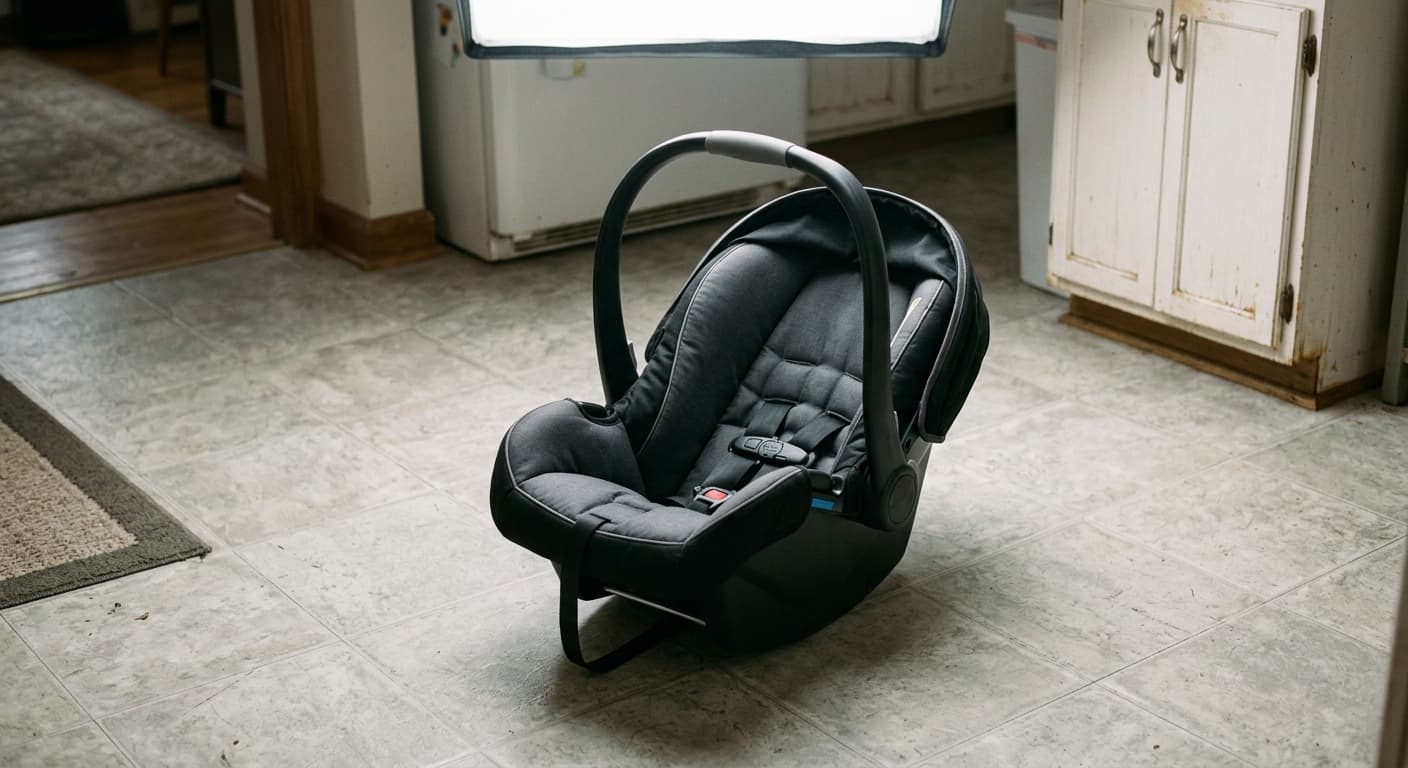
Ontario requires the driver to secure a child under 9 kg in a rear-facing seat, a child from 9 kg up to 18 kg in a forward or rear-facing child restraint, and a child from 18 kg up to 36 kg who is also under 145 cm tall and under 8 years old in a booster seat, under Highway Traffic Act section 106 and Regulation 613.
What Ontario's Law Requires
Ontario's child car seat rules start in the Highway Traffic Act, R.S.O. 1990, c. H.8, at section 106, titled «Seat belts.» The actual staged weight and height requirements live in a regulation made under that section: R.R.O. 1990, Regulation 613. Despite being titled «Seat Belt Assemblies,» not «child restraint systems,» sections 8 and 8.1 of Regulation 613 are where Ontario's infant, toddler and booster-seat rules actually sit.
The version in force now has applied since June 30, 2021, following an amendment, O. Reg. 431/21, that changed both the taxi and rideshare exemption and the school-transport carve-back discussed below. The exact filing date of that amendment was not independently confirmed and is not asserted here; what is confirmed is that the June 30, 2021 text is the current, in-force version.
Regulation 613 does not label its classes «infant,» «toddler» and «booster» as section headings. Instead, section 8(1) classifies any passenger under 8 years old into one of three groups by weight, and for the oldest group, by height as well.
The Three Weight Classes and Their Exact Thresholds
| Class | Threshold (Reg. 613 s. 8(1)) | Restraint required | Section |
|---|---|---|---|
| Infant | Weighs less than 9 kg | Rearward-facing restraint meeting Standard 213.1, or Standard 213.5 for a child with special needs | s. 8(5), 8(5.1) |
| Toddler | 9 kg or more but less than 18 kg | Forward or rearward-facing restraint meeting Standard 213 or 213.4; may stay in the rear-facing infant seat past 9 kg if the manufacturer's specifications permit it at that weight | s. 8(6) |
| Pre-school to primary grade | 18 kg or more but less than 36 kg, AND less than 145 cm tall, AND under 8 years old, all three together | Booster seat with the vehicle's complete lap and shoulder belt, a lap belt alone where that's all the seating position has, or the toddler-style restraint from section 8(6) if the manufacturer's specs allow it at that weight | s. 8(7), 8(7.1) |
Two permissive clauses in the regulation are easy to miss and worth knowing about. Section 8(6)(b) lets a toddler-class child stay in the rear-facing infant seat past 9 kg, rather than switching to a forward-facing restraint, if the seat manufacturer's own specifications permit that weight. Section 8(7)(c) does the mirror version for the next stage: a pre-school-class child can stay in a toddler-style restraint rather than moving to a booster, again if the manufacturer's specs allow it at that weight. Neither clause is a requirement; both are options the regulation's own text builds in.
Section 8(7.1) gives a separate route for a toddler or pre-school-class child with a mobility impairment or a developmental disability: a restraint meeting Standard 213.3, built specifically for passengers with disabilities, can be used instead of the standard progression. Under section 8(8), a pre-school-class child cannot be placed in a seating position with an active front air bag that has not been turned off, a rule that in most vehicles pushes that age group into the back seat.
A child leaves Regulation 613's coverage entirely, and can use the adult seat belt alone, once any one of three separate conditions is met: turning 8 years old, reaching 36 kg (about 80 lb), or reaching 145 cm (about 4'9"), whichever happens first. That is a genuinely different kind of test from how a child enters the booster class in the first place. Entry requires the weight, height and age conditions together; exit requires only one of three. The regulation does not print this three-way exit test as a single sentence; it falls out of the boundaries set in section 8(1). Ontario's own plain-language guidance for parents states it directly as a rule of thumb, and it matches the regulation's boundaries exactly.
The Canada Car Seat Checker applies that same entry-and-exit logic automatically: enter a child's age, weight and height and it shows which Ontario restraint stage currently applies, along with the rule and penalty.
Who Is Liable
Section 106(4) puts the legal duty on the person driving, not on a parent or guardian specifically: «No person shall drive on a highway a motor vehicle in which there is a passenger who is under 16 years old unless» the passenger is wearing the applicable seat belt or «is required by the regulations to be secured by a child seating system or child restraint system, and is so secured.»
Nothing in the Act or Regulation 613 varies that duty based on the driver's relationship to the child. Ontario's own plain-language guidance confirms the same point directly: in Ontario, all drivers, including visiting drivers, must make sure children under 16 wear a seat belt and children under 8 are properly secured in the correct car seat or booster. A grandparent, babysitter, family friend or rideshare driver operating outside the exemption below carries the identical statutory duty a parent would.
Exemptions: Taxis, Rideshare, Ambulances and Medical Routes
Regulation 613 defines «taxicab,» for exemption purposes, two ways: a vehicle licensed as a cab by a municipality, or a passenger vehicle carrying one to nine people operating under a U10 permit, the commercial permit class used for transportation network company, or rideshare, vehicles. That second branch was added by O. Reg. 431/21. As of the current version, both a traditional taxi and a rideshare vehicle like Uber or Lyft are exempt from the driver's duty to secure an infant, toddler or pre-school-class child under sections 8(2) through (4), while transporting a passenger for hire. An ambulance driver carries the same exemption.
The same amendment narrowed that exemption in one specific way: a taxicab is not exempt while transporting children to or from school if the taxicab is operated by, or under contract with, a school board or another authority in charge of a school. So a taxi or rideshare vehicle under a school-transport contract has to meet the normal child-restraint rules for those trips, even though the same vehicle is exempt carrying an ordinary paying passenger.
For comparison, British Columbia exempts a conventional taxi from its own child-restraint rules but specifically excludes ride-hailing vehicles from that exemption; Ontario's 2021 amendment moved the other way, folding rideshare into its exemption rather than carving it out.
A driver holding a medical certificate under section 106(6) and (7), signed by a physician and stating the child cannot for medical or physical reasons be secured, is exempt from the wearing duty for that child. Section 8(7.1), described above, is the regulation's dedicated route for a child with a mobility impairment or developmental disability. Where a seating position only has a lap belt, a pre-school-class child can be secured by that lap belt alone under section 8(7)(b), since a booster needs a lap-and-shoulder combination to function.
No explicit exemption for recreational vehicles or motorhomes appears in Regulation 613 or in Ontario's plain-language guidance for parents. Do not assume one exists.
Penalties: The $200 Set Fine, the $240 Figure, and Demerit Points
Ontario Court of Justice Schedule 43, the province's list of set fines for Highway Traffic Act offences, lists item 284, «Drive while child passenger not properly secured,» charged under section 106(4)(b), at a $200 set fine.
| Item | Offence | HTA section | Set fine |
|---|---|---|---|
| 282 | Passenger under 16 fails to occupy a position with a seat belt | 106(4)(a)(i) | $200.00 |
| 283 | Passenger under 16 fails to properly wear a seat belt | 106(4)(a)(ii) | $200.00 |
| 284 | Child passenger not properly secured | 106(4)(b) | $200.00 |
A $200 set fine is what a driver pays by not disputing the ticket; it is not necessarily the full amount owed. Ontario.ca's own guidance for parents and Peel Regional Police's road-safety page both separately state a driver can face a $240 fine for this offence, along with 2 demerit points. Neither source itemizes the arithmetic between $200 and $240; the most likely explanation is the mandatory Provincial Offences Act victim fine surcharge added on top of the set fine, but that exact composition was not confirmed in a primary source, so it is reported here as two real, non-contradictory figures rather than as confirmed math.
The 2 demerit points are confirmed directly on Ontario's own «Understanding demerit points» page, which lists «driver failing to ensure infant or child passenger is properly secured in an appropriate child restraint system or booster seat» among its 2-point violations, alongside related seat belt items.
Enforcement in Practice
No current, Ontario-police-sourced statistics on how often this law is actually enforced, such as blitz ticket counts or car-seat clinic inspection failure rates, could be found for this article. The search covered the Ontario Provincial Police, Toronto Police Service, Peel Regional Police and York Regional Police; none publish that kind of figure in a form that could be independently verified. That is a real gap in what is publicly available, not evidence about how strictly or loosely the law is actually enforced day to day.
Beyond the Minimum: What Safety Bodies Recommend
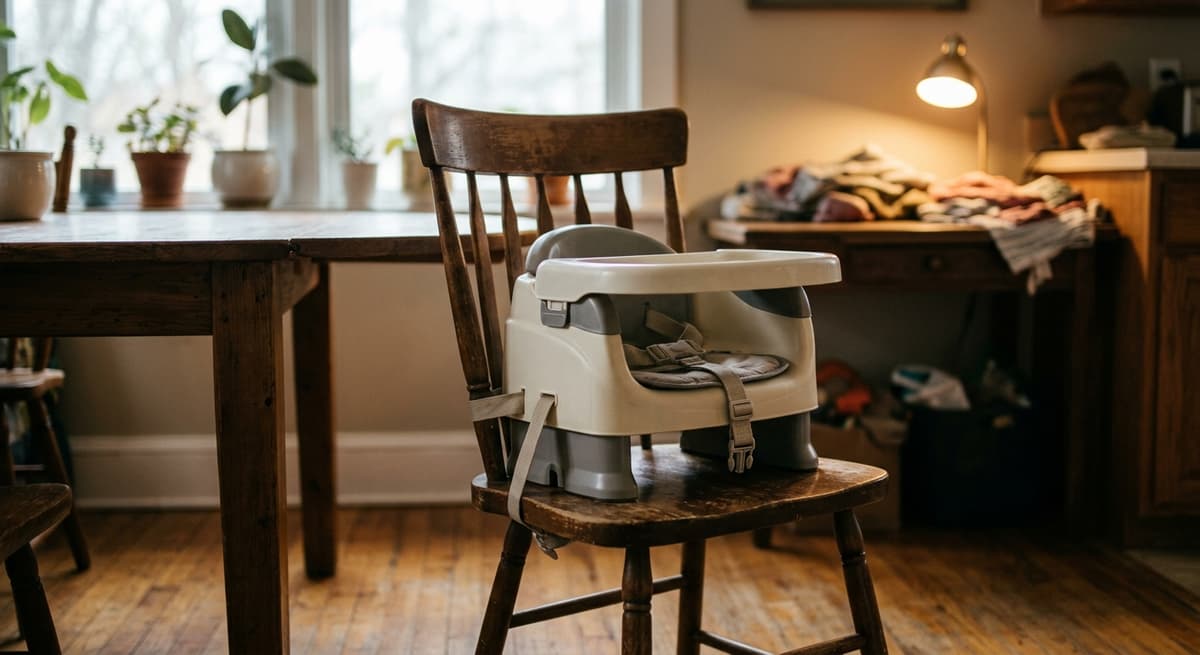
Everything in this section is a recommendation, not a legal requirement in Ontario. The Canadian Paediatric Society's consumer guidance recommends keeping a child rear-facing well past Regulation 613's 9 kg legal floor, commonly to age 2, 3 or even 4, as long as the child still fits the seat's own limits. It recommends keeping a child in a forward-facing harness until at least 18 kg, sometimes age 4, 5 or 6, again longer than the point Ontario's law allows a child to move into the booster class. And it recommends staying in a booster until a child safely fits the adult seat belt on its own, typically age 9 to 12, well past Ontario's legal floor of age 8, 36 kg or 145 cm, whichever comes first.
Ontario's thresholds are minimums, not safety targets. A driver moving a child to the next stage the moment a threshold is technically met is not breaking the law. Transport Canada and the Canadian Paediatric Society's shared position is that later is safer at every one of those transitions; that guidance carries no legal force in Ontario, but it is the standard both bodies recommend over the legal floor.
The Federal Layer: US-Bought Seats, the National Safety Mark, and Ontario's Narrow Exception
Car seat design and certification are federally regulated; how a seat has to be used on a given trip is provincial. Transport Canada's own guidance states plainly that it is illegal to import and use in Canada a seat that does not comply with Canadian standards, and that a seat purchased outside Canada, including online from a non-Canadian seller, is unlikely to carry the National Safety Mark or meet Canada's Motor Vehicle Restraint Systems and Booster Seat Safety Regulations. Provincial and territorial law is what makes that unusable on the road; Transport Canada's own framing is that the federal government sets manufacturing and import standards while «seat belt and child seat use» is regulated provincially and territorially, and it is a province's own police who enforce it.
A seat carrying only a US FMVSS 213 certification, without the Canadian National Safety Mark, is generally not legal to use on an Ontario road for an Ontario-plated vehicle, regardless of who is driving.
Regulation 613 does carve out one narrow exception, and it is genuinely narrow. Section 8(11) states that the driver of a motor vehicle registered in a US state is deemed to have complied with the applicable Canadian standard if the child is secured in a restraint meeting US Federal Motor Vehicle Safety Standard 213, used the way the manufacturer recommends. Read against Transport Canada's general rule, the exception is keyed to the vehicle's own registration, not to the driver's residence or where the seat was bought: a US visitor driving their own US-plated car into Ontario does not need to swap in a Canadian-certified seat just to drive through. Whether a Canadian resident with an Ontario-plated vehicle who buys a seat while physically in the US gets any version of that exception is not addressed by the regulation's text and was not confirmed elsewhere; the safer reading, given that section 8(11) is tied to the vehicle's registration rather than the seat's origin, is that no such exception applies.
Expiry dates are not an Ontario or federal legal requirement. Transport Canada confirms that an expiry or useful-life date is not required by regulation, though nearly every seat sold in Canada carries a manufacturer-set one anyway, and recommends following the manufacturer's own instructions for that specific model.
What's at Stake Beyond a Ticket
An unmeasured enforcement record and a fine that tops out around $240 do not make this a low-stakes rule. The staged weight and height system, the front-airbag restriction, and the disability-specific restraint route all exist because of what happens in an actual crash, independent of whether any given trip results in a ticket. A low or unpublished ticket count is not evidence the underlying risk is low, and meeting Ontario's bare legal minimum, the first weight, height or age point at which each stage is technically allowed to end, is the floor the law sets, not the point the Canadian Paediatric Society or Transport Canada consider safest.
Information last verified on 2026-08-14, drawn directly from the Highway Traffic Act, R.S.O. 1990, c. H.8, R.R.O. 1990, Regulation 613, Ontario Court of Justice Schedule 43, and Transport Canada's own guidance pages. This article has not yet been reviewed by a licensed lawyer.
Related Resources
Last updated: 2026-08-14.
Frequently Asked Questions
What are the car seat weight thresholds in Ontario?
Ontario's Regulation 613 sets three classes for children under 8: infants under 9 kg in a rear-facing seat, toddlers from 9 kg to under 18 kg in a forward or rear-facing restraint, and pre-school to primary grade children from 18 kg to under 36 kg who are also under 145 cm and under 8 years old in a booster seat.
When can a child in Ontario move from a booster seat to an adult seat belt alone?
Once any one of three conditions is met: turning 8 years old, reaching 36 kg, or reaching 145 cm, whichever happens first. That is different from the AND-based test that puts a child into the booster class, which requires the weight, height and age conditions together.
Are taxis and Uber or Lyft drivers exempt from Ontario's car seat law?
Yes, both are exempt from the child-restraint duty while transporting a passenger for hire, under Regulation 613 section 8.1 as amended by O. Reg. 431/21, which extended the taxi exemption to rideshare vehicles operating under a U10 permit. The exemption does not cover a taxi or rideshare vehicle under contract with a school board to transport students.
What is the fine for a car seat violation in Ontario?
The set fine under section 106(4)(b) is $200, per Ontario Court of Justice Schedule 43. Ontario.ca and Peel Regional Police separately state a driver faces $240 in total along with 2 demerit points; the exact composition of that $240 figure was not confirmed in a primary source.
Does a car seat ticket in Ontario come with demerit points?
Yes. Ontario's own Understanding Demerit Points page lists failing to properly secure an infant or child passenger in an appropriate restraint system or booster seat as a 2-point violation.
Who is legally responsible for securing a child in Ontario, the driver or the parent?
The driver. Section 106(4) places the duty on the person driving, not specifically on a parent, so a grandparent, babysitter or rideshare driver carries the identical legal obligation.
Is it legal to use a car seat bought in the United States in Ontario?
Generally no. Transport Canada's guidance states it is illegal to use a seat in Canada that does not meet Canadian standards and carry the National Safety Mark. Regulation 613 has one narrow exception: a vehicle registered in a US state is deemed compliant if the child is secured in a seat meeting US FMVSS 213 per the manufacturer's instructions, but that exception is tied to the vehicle's own registration, not to the seat's origin or the driver's residence.
Does Ontario publish statistics on how often the car seat law is enforced?
No current, verifiable statistics, such as blitz ticket counts or car-seat clinic failure rates, could be found from the OPP, Toronto Police, Peel Regional Police or York Regional Police.
Does Ontario law require rear-facing car seats past age 1?
No, only past 9 kg by weight, and only permissively past that: Regulation 613 section 8(6)(b) allows, but does not require, staying rear-facing past 9 kg if the seat manufacturer's specifications allow it. The Canadian Paediatric Society recommends staying rear-facing well past that legal floor, commonly to age 2 to 4, as a safety recommendation rather than a legal requirement.
Updates
Independently fact-checked against the cited primary sources
Sources and References
- Highway Traffic Act, R.S.O. 1990, c. H.8, section 106 (Seat belts)(ontario.ca).gov
- R.R.O. 1990, Regulation 613, Seat Belt Assemblies (child restraint provisions, ss. 5-8.1, current since O. Reg. 431/21)(ontario.ca).gov
- Ontario.ca, Choosing a child car seat(ontario.ca).gov
- Ontario.ca, Seatbelt safety(ontario.ca).gov
- Ontario Court of Justice, Schedule 43 (Highway Traffic Act set fines)(ontariocourts.ca).gov
- Ontario.ca, Understanding demerit points(ontario.ca).gov
- Peel Regional Police, Road Safety: Car Seats(peelpolice.ca).gov
- Transport Canada / Health Canada, Child car seat cross border shopping: what parents and caregivers should know(tc.canada.ca).gov
- Transport Canada, Federal, Provincial and Territorial Government Responsibilities(tc.canada.ca).gov
- Transport Canada, Expiry Dates for Child Car Seats and Booster Seats(tc.canada.ca).gov
- Canadian Paediatric Society, Caring for Kids: Car seat safety(caringforkids.cps.ca)