
Quebec
Quebec E-Scooter Laws: The ATPM Pilot, Extended to 2028
Independently fact-checked against primary sources (last audited August 14, 2026). · 9 primary sources cited on this page. How we verify our legal content
Quebec allows e-scooters under a single pilot regulation, the ATPM rules (C-24.2, r. 39.1.002), which was extended on July 18, 2026, about eight weeks before it would have lapsed, and now runs through July 20, 2028.
What's Legal Now: The ATPM Pilot, Extended to 2028
Quebec does not regulate e-scooters through permanent legislation. It regulates them through a ministerial pilot regulation made under the Highway Safety Code (Code de la securite routiere), currently C-24.2, r. 39.1.002, the pilot project covering appareils de transport personnel motorises (ATPM). This is the only regulation in force today. Two earlier scooter-specific rules, r. 39.1.2 (2018 to 2023) and its companion rental regulation r. 39.1.3, were repealed on July 20, 2023 and no longer apply, even though older sources still describe them.
The current pilot took effect July 20, 2023, dropping the minimum age to 14 with no licence requirement and covering a broader family of devices than its predecessor. It was amended twice after that, by A.M. 2024-17 and A.M. 2025-10 (the latter set today's 36 kg weight cap). Then, on July 18, 2026, just weeks before this article was researched, the pilot was extended again, this time to July 20, 2028, with several substantive changes covered below.
Because this is a pilot and not a permanent law, Quebec's Ministry of Transport and Sustainable Mobility (MTMD) has said publicly that it expects to eventually move these rules into the Highway Safety Code itself through actual legislation. Ministry spokesperson Nicolas Vigneault put it this way: at the end of these two years, the ministry will have no choice but to pursue a legislative measure to eventually fold the rules permanently into the Code de la securite routiere. Until that happens, Quebec's e-scooter law can change again with the stroke of a ministerial order, the way it just did.
The Near-Miss: How Close E-Scooters Came to Becoming Illegal Again
This is worth stating plainly, because it very nearly did not happen. As late as April 16, 2026, roughly three months before the pilot's original expiry, a second MTMD spokesperson, Louis-Andre Bertrand, told the newspaper Le Soleil that the extension was still only proposed, not confirmed. In his words, translated from the original French: without such an extension, starting in July 2026, these devices would once again fall under the Highway Safety Code, which prohibits the use of electric scooters.
In other words, had the extension not gone through, e-scooters would have reverted to being illegal on Quebec roads the same month the pilot instead grew broader in scope. The renewal cleared with roughly eight weeks to spare before the original deadline. Anyone relying on older reporting about Quebec's scooter rules, including reporting from as recently as spring 2026, should treat it as superseded.
The Amending Order: Arrete Numero 2026-10
The July 2026 amendment is Arrete numero 2026-10 du ministre des Transports et de la Mobilite durable, dated June 29, 2026, published in full in the Gazette officielle du Quebec, Partie 2, July 3, 2026, no. 26A, pages 3493A to 3494A, and in force roughly 15 days after publication (about July 18, 2026). The Highway Safety Code's own pilot-authorising provision, article 633.1, caps a ministerial pilot at three years with a possible two-year extension by the minister. Arrete 2026-10 uses exactly that maximum extension, replacing the pilot's original three-year sunset clause (article 52) with the fixed date of July 20, 2028.
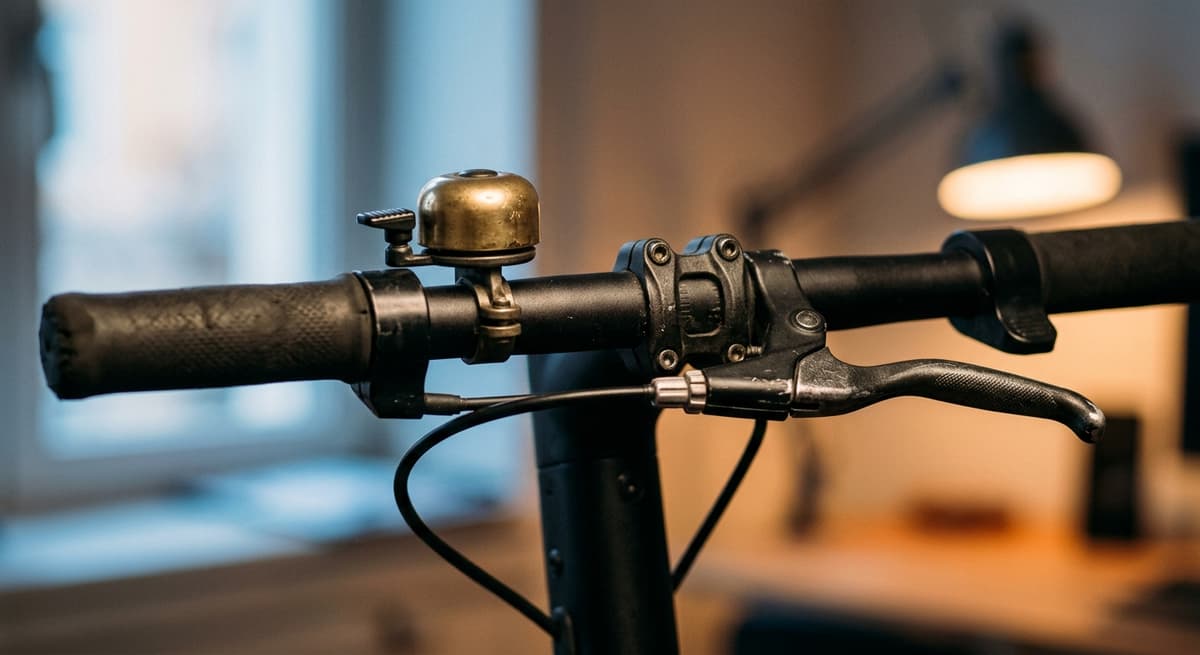
Beyond the extension itself, the order added a new article 3.1 extending the pilot to private roads and shopping-centre grounds open to public traffic, added a new article 19.1 capping riders themselves at 25 km/h as a matter of conduct (distinct from the device's own motor cutoff, covered below), and restructured the fine schedule (covered in Penalties, further down this page). LegisQuebec's codified consolidation of the regulation had not caught up to this amendment as of this writing, still stamped current only to April 1, 2026, so a reader checking the statute directly there will not yet see these changes reflected.
What Counts as an ATPM
The regulation defines an ATPM as an electrically powered, people-carrying device with at least one wheel and no enclosed cabin. That excludes motorcycles, mopeds, power-assisted bicycles, motorized mobility aids, toy vehicles and off-road vehicles.
Current specifications, as read from the amending order and described on SAAQ's pilot page:
- Motor assist must cut off at 25 km/h. The July 2026 amendment replaced the device-power article entirely: the earlier 500 W motor ceiling no longer appears in the operative text, leaving the 25 km/h cutoff as the governing motor requirement.
- Maximum weight, including the battery, is 36 kg (set by amendment A.M. 2025-10; the earlier limit could not be confirmed).
- Each wheel must be at least 190 mm in diameter.
- Each wheel needs a brake capable of stopping the device quickly on dry pavement (gyroscopic devices need at least two independently actuated braking systems, one of them mechanical).
- Reflectors are required, rear and side, and night riding requires a white front light and red rear light visible from at least 150 metres. Reflective clothing or a wearable light can substitute for device-mounted equivalents.
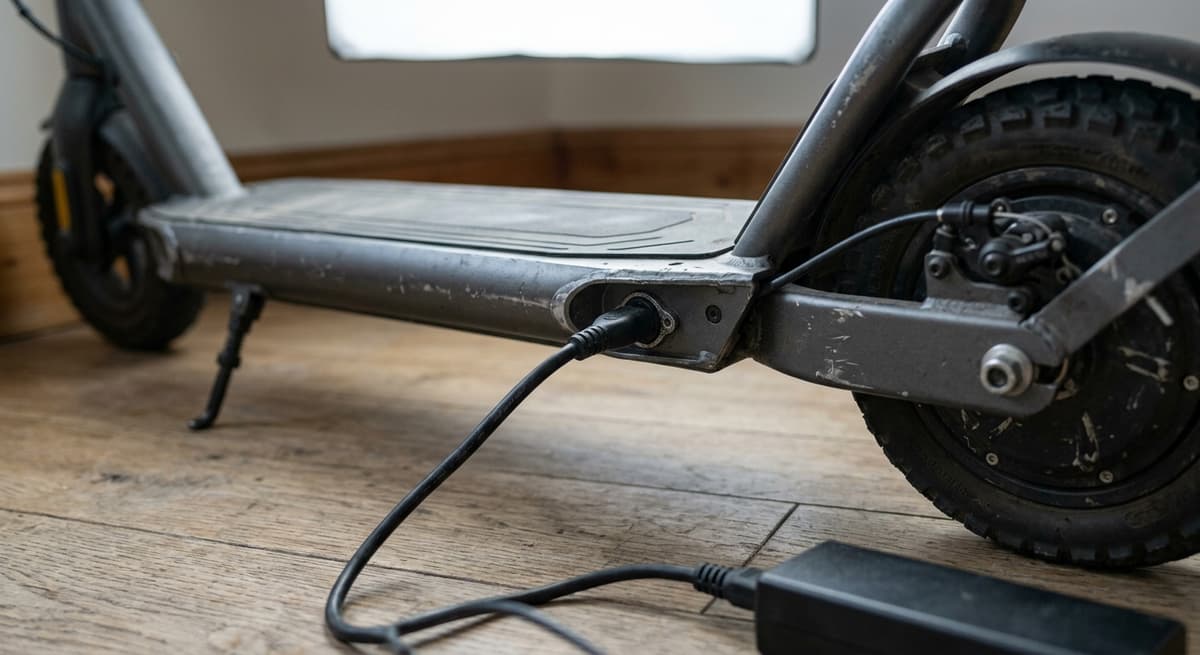
The July 2026 amendment removed the 500 W motor ceiling. Arrete 2026-10, s. 2 replaced article 4 of the pilot wholesale, and the new article 4 contains a single requirement: motor assist must cut out at no more than 25 km/h. No wattage figure survives in the operative text, which is why SAAQ's summary of mandatory characteristics no longer lists one. The 25 km/h cutoff, the 36 kg weight limit and the 190 mm minimum wheel diameter are now the governing device limits. Older guides still quoting a 500 W cap are describing the pre-July 2026 version of the rule.
One change does stand out. Montreal police (SPVM) confirm the ATPM category now includes devices with a seat and three-wheeled devices. The pre-2023 regulation required a standing device with no seat, and that restriction is gone. That makes Quebec unusual among Canadian provinces: Ontario, British Columbia, Prince Edward Island and Saskatchewan all still exclude seated devices from their own e-scooter rules.
Where You Can Ride
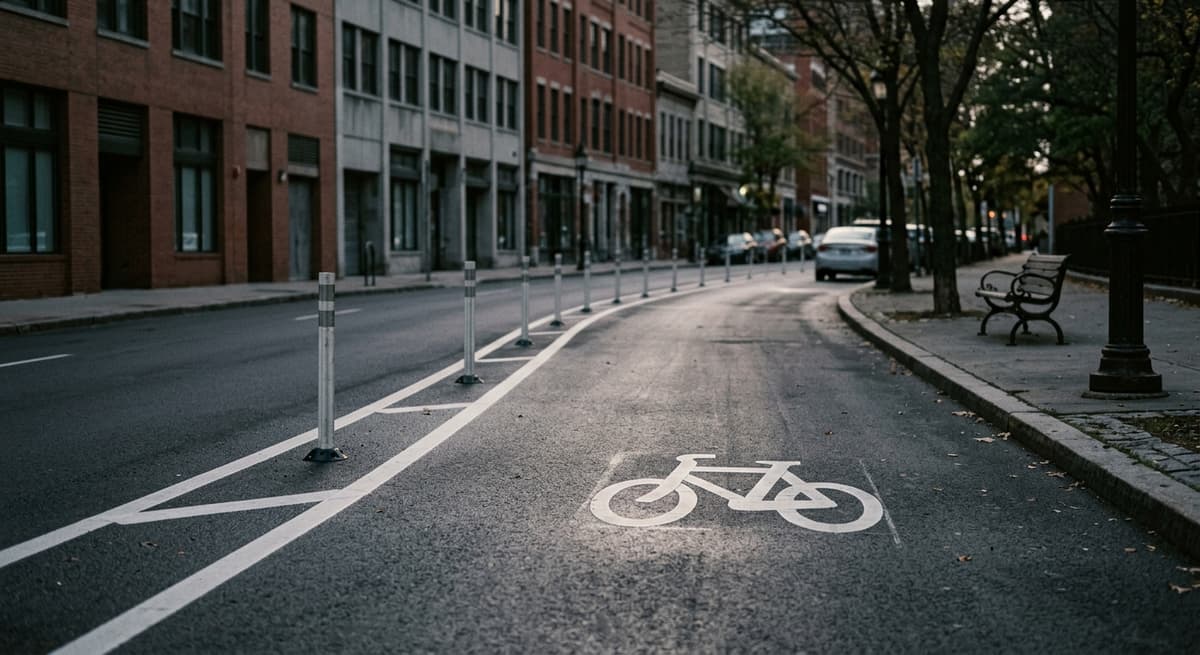
- Roads posted at 50 km/h or less: allowed. Riding is prohibited on roads posted above that limit, with narrow exceptions to cross at an intersection, use a roundabout connecting two qualifying roads, or use a bike lane that is physically separated from the roadway.
- Bike lanes: allowed. ATPM riders are treated like cyclists for most Highway Safety Code purposes.
- Off-street bike paths: according to the Ville de Quebec, the pilot does not regulate these at all. That city page still describes the pilot as a three-year project with no mention of the 2026 extension, so treat its duration language as outdated, even though its statement about off-street paths appears to stand on its own.
- Sidewalks: the two main police-facing sources disagree, and this page flags that rather than picking one. The Ville de Quebec's page says sidewalk riding is prohibited «sauf en cas de necessite» (except in case of necessity), after which a rider must go at a prudent speed and yield to pedestrians. The SPVM (Montreal police) states flatly that sidewalk riding is prohibited, with no exception mentioned. Do not assume a necessity exception applies everywhere in the province.
- Private property open to public traffic, new since July 18, 2026: a new article 3.1, added by Arrete 2026-10, explicitly extends the pilot to private roads, parking lots and shopping centre grounds where the public is allowed to circulate, including parks. The Ville de Blainville describes non-compliance there as carrying a minimum $100 fine plus costs.
Rider Rules
- Riders may not exceed 25 km/h, a rule added by the July 2026 amendment (new article 19.1) that caps the rider's own conduct, separate from the requirement that the device's motor cut off at that speed. Going faster than the cutoff, for example freewheeling downhill, can now be ticketed under this new conduct rule even if the motor itself is compliant.
- Minimum age 14, no licence required. That is a significant drop from the 2018 to 2023 regime, which required riders to be 18, or 16 with a moped licence. Riders must carry and produce proof of age if a peace officer asks.
- Helmet mandatory for every rider, no exception by age. It must be a rigid-shell, padded helmet with a chinstrap, correctly fitted and fastened, with no structural damage (repainting or adding reflective material is allowed).
- Extra protective gear (elbow pads, knee pads, hand or wrist protection, closed-toe shoes) is required only on gyroscopic devices or any ATPM with no handhold.
- No passengers, no towing, and no clinging to a moving device.
- Turn signals required, given continuously and with advance notice, unless it would be unsafe to do so.
- Phones and headphones are banned while riding, apart from a securely mounted display showing only trip-relevant information. Both may only be used once stopped, off the roadway.
- Not registered or insured as a road vehicle. The regulation excludes ATPMs from the Code's definition of a road vehicle. That has a real consequence for insurance, covered further down this page.
No Demerit Points, Even With a Ticket
This is a genuinely unusual feature of Quebec's pilot. Article 43 of r. 39.1.002 disapplies Quebec's demerit-point system to ATPM users entirely, overriding the Code's general points provision. A ticket under this regulation is a pure fine. It never adds points against a rider's driver's licence, even if that rider also holds one. No seizure or impoundment provision was found in the regulation itself; the research looked specifically and found none, though that is not proof a separate municipal bylaw power could not exist.
Penalties
The July 2026 amendment restructured the equipment and conduct fine schedule. As it now stands:
| Violation | Fine |
|---|---|
| Device exceeds the 36 kg mass limit (article 5) | $200 |
| Rider exceeds the 25 km/h speed conduct cap, new article 19.1 | $200 |
| Motor assist does not cut out at 25 km/h (article 4, as replaced in July 2026) | $200 |
| Other equipment non-compliance: wheel size, brakes, lights, reflectors (articles 6 to 15) | $100 |
| A minor rides underage with a responsible adult's knowledge | $100 |
| Rider breaches helmet, circulation, no-passenger, phone or signalling rules | $100 |
| Letting someone cling to or be towed by a moving ATPM | $100 |
| A motor-vehicle driver who fails to yield to an ATPM rider | $200 to $300 |
| A cyclist who fails to yield to an ATPM rider | $100 |
Two of those rows run the opposite direction from what most riders expect: the regulation also fines drivers and cyclists for failing to yield to an ATPM rider. That is a duty owed to the rider, not by the rider, and it is worth knowing if a driver or cyclist causes a collision with you. For context, the repealed 2018 to 2023 regime fined riders a flat $200 to $300 for most violations. Current rider-side equipment fines are lower, at $100, with $200 reserved for the mass limit, the motor-cutoff requirement and the new rider speed-conduct rule, while the driver-fails-to-yield range is unchanged.
Enforcement in Practice
Evidence of active, on-the-ground enforcement is real but thin, and this page states exactly what is and is not confirmed.
- Quebec City (SPVQ): the police service runs targeted enforcement operations on bike paths and has reported a rise in infraction notices to ATPM users. No published count and no reliable date were found for these operations; treat the timing as unverified.
- Therese-De Blainville region: the intermunicipal police force RIPTB reportedly launched an enforcement and awareness campaign called Projet Voltage covering Boisbriand, Lorraine, Rosemere and Sainte-Therese starting summer 2026, targeting ATPM and power-assisted bicycle riders over rising risky behaviour. This was found through search; the source page itself was not independently opened, so treat it as reported rather than confirmed.
- Radar enforcement: since the July 2026 amendment, police can now set up radar operations specifically checking the 25 km/h cap at a municipality's request, according to MTMD spokesperson Nicolas Vigneault.
- Fatalities: the Bureau du coroner du Quebec has recorded 10 deaths of e-scooter users province-wide since 2020, according to Drummond-district coroner Yvon Garneau speaking to a reporter. Victims ranged from age 32 to 69, and roughly half were not wearing a helmet. That age range cuts against the assumption that this is mainly a youth safety problem. The underlying coroner's report was not located at a stable public URL, so this figure is attributed to the coroner's public statement rather than to a document this page can link to directly.
- No formal MTMD or SAAQ evaluation report on the pilot's outcomes has been located, and INSPQ injury data was not researched for this page. Both are open gaps, not confirmed absences.
The Municipal Layer: Montreal and Quebec City
Montreal. Privately owned and on-street riding follow the provincial ATPM pilot; the SPVM restates the province's rules and adds two enforcement priorities of its own, no sidewalk riding and no riding while impaired. Montreal ran a shared e-scooter and e-bike pilot with Lime and Uber's Jump e-bikes in 2019, drawing over 370,000 trips between late June and mid-November, but the city shut it down in February 2020, describing it as a failed experiment: only about 20% of scooters were being parked in designated areas, and the city cited poor cohabitation with pedestrians. Montreal police issued 324 tickets at $60 each for missing helmets during that pilot. These 2019 to 2020 figures come from press reporting, not a located City of Montreal communique. Montreal has not brought a citywide dockless rental service back since.
The one exception is Parc Jean-Drapeau, where the park authority runs a contained Lime scooter service: up to 200 scooters across 12 stations, confined entirely to the park, minimum age 16 (a rental-contract term higher than the province's 14), mandatory helmets, a single rider per device, a 15 km/h cap in the park's slow zone, and hours of 6 a.m. to 11 p.m. This is a park-only arrangement, not a relaunch of citywide shared scooters in Montreal.
Rental and free-floating shared devices follow the exact same ATPM rules as privately owned ones. There is no separate legal track for rental fleets under the current pilot, unlike 2018 to 2023, when a companion regulation governed rentals separately.
Quebec City. The SPVQ's own page restates the provincial rules and states that off-street bike paths are unregulated by the pilot (see above). The city has no shared or dockless scooter service and, according to press reporting from April 2026 citing the mayor's spokesperson, no plans to add one. The city's stated priority is expanding its own aVelo bike-share system amid ongoing tramway construction. A former city transportation lead reportedly rejected adding shared scooters in spring 2024, citing other cities' parking and cohabitation problems.
What a Ticket Does Not Cover: The Insurance Gap
This is the finding that matters most for anyone actually riding, whether or not they ever see a ticket.
Quebec's public no-fault auto insurance plan, run by SAAQ, does not cover a solo e-scooter accident. SAAQ's own page listing what the plan does not cover states plainly that it excludes accidents involving devices like scooters, skateboards and similar motorized personal transportation devices, «except when that accident involves a moving vehicle covered by the plan» (translated from the original French). In practice, that means:
- A rider who falls, hits a curb, or loses control alone, with no other vehicle involved, is not covered by the no-fault plan. That rider is on their own for medical costs, disability, and lost income, falling back on personal health coverage, disability insurance, or an ordinary civil claim.
- A rider who is struck by a car, truck or other vehicle that the plan does cover is covered on the same no-fault basis as a pedestrian or cyclist hit by a vehicle.
This follows directly from the regulation itself. Because article 3 excludes ATPMs from the definition of a road vehicle, an e-scooter is never treated as a vehicle the plan covers, so a solo fall sits entirely outside the no-fault net that protects drivers, passengers and even cyclists in a vehicle collision. Outside that no-fault plan, ordinary civil liability under article 1457 of the Civil Code of Quebec applies by default, meaning a rider, or someone injured by a rider, generally has to establish fault to recover damages through the courts, a slower and less certain path than a no-fault claim.
Riding Where It's Not Allowed Does Not Make It Safe
Even where enforcement is thin or unproven, as several of the sections above make clear, riding somewhere the rules do not permit, or without a helmet, or without insurance coverage in mind, is not a low-risk choice just because a ticket is unlikely on a given day. A rider stopped tomorrow is charged under the law as written, not the law as it is usually enforced. And as the insurance section above shows, the biggest risk in Quebec is not the fine at all. It is a solo fall that no-fault coverage will not pay for, regardless of whether anyone was watching.
Related Resources
Last updated: 2026-08-13.
Frequently Asked Questions
Are e-scooters legal in Quebec?
Yes, under a provincial pilot regulation, the ATPM rules (C-24.2, r. 39.1.002), extended on July 18, 2026 to run through July 20, 2028. It is a pilot, not a permanent law, and its scope has changed twice already.
How old do you have to be to ride an e-scooter in Quebec?
You must be at least 14, with no licence required. Riders must be able to prove their age to a peace officer on request.
Do I need a helmet to ride an e-scooter in Quebec?
Yes. Every rider must wear a properly fitted, undamaged helmet with a chinstrap, regardless of age.
Does an e-scooter ticket put points on my licence in Quebec?
No. Article 43 of the pilot regulation specifically exempts ATPM riders from Quebec's demerit-point system. Violations are fines only.
Is an e-scooter accident covered by Quebec's no-fault auto insurance (SAAQ)?
Only if another vehicle covered by the plan is involved. A solo fall or crash with no other vehicle is not covered, according to SAAQ's own list of what its no-fault plan excludes.
Can I ride an e-scooter on the sidewalk in Quebec?
Generally no. Quebec City's own materials describe a narrow necessity exception, while Montreal police describe sidewalk riding as flatly prohibited with no exception. Do not assume an exception applies without confirming locally.
Can I ride an e-scooter in a mall parking lot or park in Quebec?
Since July 18, 2026, the ATPM rules extend to private roads, parking lots and shopping centre grounds open to public traffic, including parks, with a minimum $100 fine plus costs for violations there.
Updates
Independently fact-checked against the cited primary sources
Sources and References
- SAAQ, Projet pilote: trottinettes electriques et autres appareils de transport personnel motorises (pilot page, updated July 17, 2026)(saaq.gouv.qc.ca).gov
- SAAQ, Ce qui n'est pas couvert par le regime public d'assurance automobile (updated June 2, 2026)(saaq.gouv.qc.ca).gov
- Gazette officielle du Quebec, Partie 2, 3 juillet 2026, no 26A, pp. 3493A-3494A, Arrete numero 2026-10 (full text of the amending order)(publicationsduquebec.gouv.qc.ca).gov
- LegisQuebec, C-24.2, r. 39.1.002, Projet pilote relatif a l utilisation des appareils de transport personnel motorises (current ATPM pilot regulation)(legisquebec.gouv.qc.ca).gov
- LegisQuebec, C-24.2, r. 39.1.2, Projet pilote relatif aux trottinettes electriques (repealed July 20, 2023)(legisquebec.gouv.qc.ca).gov
- Ville de Quebec, Trottinette electrique et autres appareils de transport personnel motorise(ville.quebec.qc.ca).gov
- Service de police de la Ville de Montreal (SPVM), Trottinettes electriques et autres appareils de transport personnel motorises(spvm.qc.ca).gov
- Ville de Blainville, Trottinettes electriques et autres ATPM: nouvelles mesures en vigueur depuis le 18 juillet(blainville.ca).gov
- Societe du parc Jean-Drapeau, Trottinettes electriques au parc Jean-Drapeau(parcjeandrapeau.com).gov
- Le Soleil, "Pas un X definitif" sur les trottinettes electriques a Quebec (April 16, 2026)(lesoleil.com)
- Journal Express, Trottinette electrique: le coroner Yvon Garneau souhaite une sensibilisation continue au projet pilote(journalexpress.ca)