
Canada
Window Tint Laws in Ontario: Two Standards, Not One Percentage Rule
Independently fact-checked against primary sources (last audited August 16, 2026). · 5 primary sources cited on this page. How we verify our legal content
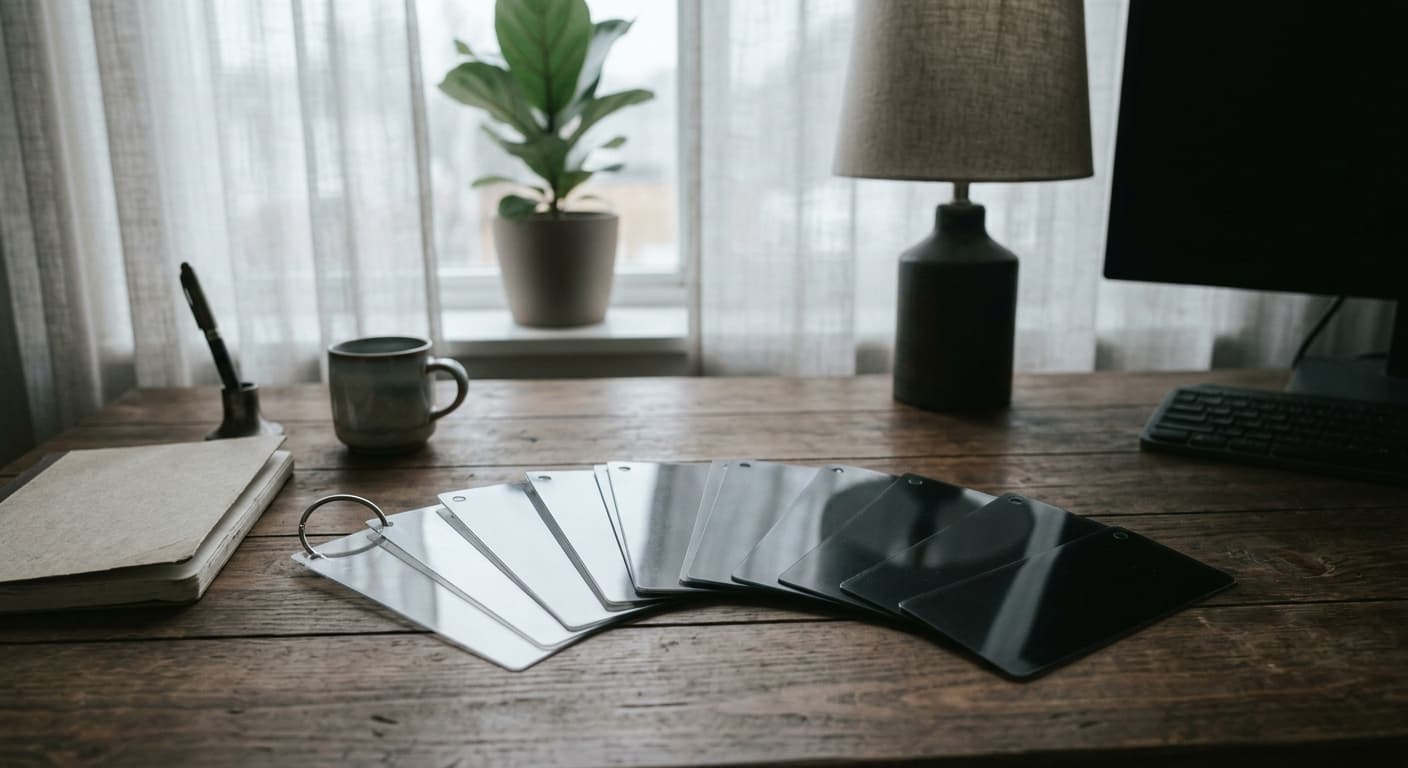
Ontario's Highway Traffic Act never states a tint percentage anywhere in its text. The moving offence in section 73 is a qualitative "obstructs" or "substantially obscures" test, and the 70% light-transmittance figure most people associate with Ontario tint law actually lives in the Ministry of Transportation's vehicle inspection standard, which governs Safety Standards Certificate inspections rather than a roadside stop.
Information last verified on 2026-08-16. This article has not yet been reviewed by a licensed lawyer.
A Qualitative Statute, a Numeric Inspection Standard
Ontario's tint law is not one rule but two, layered on top of each other, and confusing the two is the single most common mistake in circulating tint-shop advice. The Highway Traffic Act itself, R.S.O. 1990, c. H.8, never uses the word tint anywhere in its current consolidated text. What it prohibits, in section 73, is obstructive or obscuring material on a window, described qualitatively rather than measured in percent. Separately, the Ministry of Transportation's own vehicle inspection standard states a 70% light-transmittance figure, but that standard governs Safety Standards Certificate inspections, the kind required for a used-vehicle sale, an out-of-province registration, or a post-collision rebuild, not a number an officer reads off a meter at a traffic stop. For how Ontario's two-layer approach compares with the rest of Canada, see window tint laws in Canada.
The Moving Offence: Section 73
Section 73(1) bans driving with any non-transparent sign, poster, or object placed on the windshield or any window, or any object hung or attached inside the vehicle, in a way that obstructs the driver's view of the highway. Section 73(2) separately bans driving where the windshield or any window has been coated with colour spray or other colour coating that obstructs the driver's view. Section 73(3) is the subsection usually behind a tint ticket: it bans driving a vehicle where the windshield or a window directly to the left or right of the driver's seat has been coated with colour spray or coloured or reflective material that substantially obscures the interior of the motor vehicle when viewed from outside. Section 73(4) exempts signs, markers, or equipment the Act or its regulations otherwise require. None of these four subsections contains a percentage. The charge an officer lays is always this qualitative language, an assessment of whether the interior is substantially obscured from the outside, not a metered reading.
Windows to Afford Clear View: Section 74, Not 73(2)
A second section, immediately following section 73, is sometimes mislabeled as part of it. It is its own section, 74, titled Windows to afford clear view. Section 74(1) requires the windshield and the windows on either side of the driver's compartment to give the driver a clear view to the front and side, and the rear window to give a clear view to the rear. Section 74(2) is the provision that explains why Ontario's rear window carries no tint darkness limit at all: it switches off the rear-window clear-view duty entirely once the vehicle carries mirrors positioned to give the driver an equivalent rearward view. A rear window tinted to any darkness, factory or aftermarket, does not violate section 74 as long as the vehicle has functioning side mirrors, which is why the inspection standard described next has no darkness test for the rear window either.

Where the 70% Figure Actually Lives
The only place in Ontario law or regulation that states a percentage is the Ministry of Transportation's Passenger/Light-Duty Vehicle Inspection Standard, a reference handbook incorporated by reference into Regulation 611 (Safety Inspections) under the Highway Traffic Act. A commonly repeated but incorrect citation names Regulation 596 as the source of the tint rule. Regulation 596 is titled General and its content is entirely about headlamps, beam aim, and high and low beam switching, with nothing about glass or tint. The inspection standard is what a Safety Standards Certificate mechanic checks, at a used-vehicle sale, an out-of-province vehicle brought into Ontario, or after a rebuild, not what a patrol officer measures at a routine stop.
The 2017 Manufacture-Date Split
The inspection standard splits by the vehicle's manufacture date, not the date tint was applied or purchased. For a vehicle manufactured January 1, 2017 or later, the windshield fails inspection if it carries any aftermarket window tint at all, regardless of how light. For a vehicle manufactured before that date, windshield tint passes if it holds at least 70% light transmittance and extends no more than 75 mm from the top of the windshield or beyond the AS line. Front side windows, the windows directly to the left or right of the driver, follow the same date split for the numeric standard: on a 2017-plus vehicle, they must hold at least 70% light transmittance to pass inspection. The standard lists no separate darkness reject condition for front side windows on pre-2017 vehicles; those fall back on section 73's qualitative obstruct or substantially obscures test alone, with no inspection-standard percentage backing it up.
Rear Windows: No Restriction
The inspection standard's rear-window item lists only two reject conditions, a broken or sharp-edged pane and improper glass marking. There is no tinting or darkness item at all for the rear window, consistent with section 74(2)'s mirror carve-out above. A rear window tinted to any darkness does not fail either the Act's qualitative test or the inspection standard's numeric one, as long as the vehicle's side mirrors are in working order.
Roadside Enforcement: What Actually Gets Charged
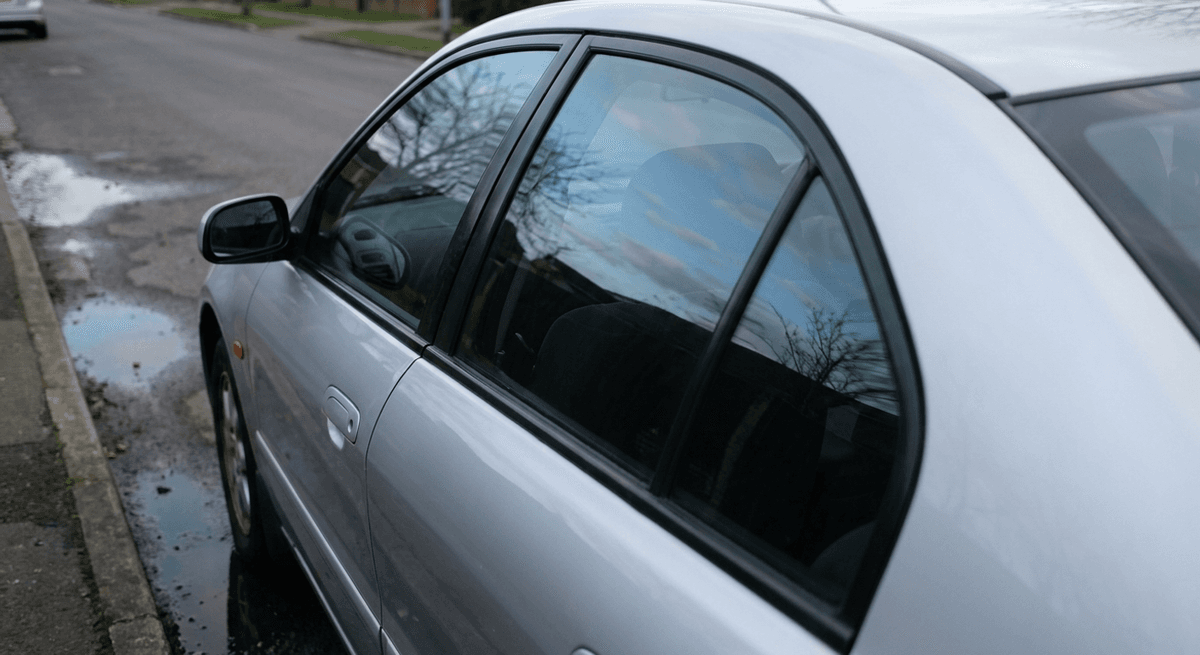
Because the percentage figure lives in an inspection standard rather than the Act, the practical reality is that a roadside stop is charged under section 73's qualitative language, an officer's assessment of whether the interior is substantially obscured from outside the vehicle, not a metered percentage reading. One secondary source consistent with this reading states plainly that the inspection standard's 70% figure is not roadside enforceable and that no charge exists under the Act based on a percentage for any window covering. This could not be independently confirmed from a primary Ministry of Transportation or police statement, so treat it as a reasonable inference from the statute's own silence on percentages rather than an official policy statement. Whether any Ontario police service actually carries handheld tint meters for roadside use was not confirmed either way and should not be assumed.
Fines: $85 to Resolve, a Real $1,000 Ceiling at Trial
Every subsection of section 73, obstructed window, obstructed windshield, an obstructing object, coated window or windshield, and colour coating obscuring the interior, carries the same $85.00 set fine under the Ontario Court of Justice's Schedule 43, the amount that resolves a ticket without a court appearance. That figure does not include the Provincial Offences Act's victim fine surcharge or court costs, which are added on top and are not specific to tint tickets. If a case goes to trial instead of being resolved by set fine, section 214(1)'s general penalty applies, since section 73 has no penalty of its own: a fine of not less than $60 and not more than $1,000. The $1,000 figure is the real statutory ceiling. A $500 figure circulates on tint-shop marketing sites; it does not appear in the Act, the set-fines schedule, or anywhere else checked for this article, and should be treated as incorrect.
No Medical Exemption in Ontario
Tint-shop marketing sites widely describe a medical exemption process for Ontario, a doctor's note submitted to the Ministry of Transportation resulting in a permit for darker tint, citing conditions like lupus, albinism, and photosensitivity. No such process exists anywhere in the Highway Traffic Act, Regulation 611, or the MTO inspection standard. A full-text search of the Act for medical turns up licensing-related medical reports and a seatbelt medical exemption, an entirely separate provision for seatbelts, not windows, but nothing tied to tint or glass. No official ontario.ca or MTO consumer page describing a tint permit process was found either. The documented finding for Ontario is that no formal medical exemption exists, not that one exists but is hard to find.
Related Resources
For the province that uses a straightforward percentage standard with no manufacture-date split, see window tint laws in Quebec. For an overview of every province's tint structure, see window tint laws in Canada. For the province's impaired-driving suspension rules, see DUI and impaired driving in Ontario; for how demerit points work here, see Ontario demerit points. For fighting a ticket generally, see fighting a traffic ticket in Canada, and for dash cam rules, see dash cam laws in Canada.
Disclaimer
This article is informational only and is not legal advice. Several points in this article rest on incomplete confirmation: whether Ontario police services actually carry handheld tint meters for roadside use was not confirmed either way, and the characterization of the inspection standard's 70% figure as not roadside enforceable rests on a single secondary source rather than a direct Ministry of Transportation or police statement, though it is consistent with the Act's own text. The Provincial Offences Act's victim fine surcharge and court costs added on top of the $85 set fine were not quantified here. Confirm current fees and requirements directly with the Ministry of Transportation or a licensed lawyer before relying on any figure in this article.
Frequently Asked Questions
Does Ontario's window tint law state a percentage?
No. The Highway Traffic Act's section 73 is a qualitative test, obstructing or substantially obscuring the driver's view or the vehicle's interior. The 70% light-transmittance figure lives separately in the Ministry of Transportation's inspection standard, which applies at Safety Standards Certificate inspections, not as a number stated in the Act.
What is the actual light transmittance standard in Ontario?
At least 70% light transmittance for the windshield (pre-2017-manufactured vehicles only) and for front side windows (2017-plus manufactured vehicles), per the Ministry of Transportation's Passenger/Light-Duty Vehicle Inspection Standard, incorporated by Regulation 611. It is not stated in the Highway Traffic Act itself.
Is there a manufacture date that changes the windshield tint rule?
Yes. For a vehicle manufactured on or after January 1, 2017, any aftermarket windshield tint fails inspection, regardless of darkness. For a vehicle manufactured before that date, windshield tint passes if it holds at least 70% light transmittance and stays within 75 mm of the top of the windshield or the AS line.
Can I tint my rear window as dark as I want in Ontario?
Yes. Neither the Highway Traffic Act nor the MTO inspection standard sets a darkness limit for the rear window, because section 74(2) removes the rear-window clear-view duty once the vehicle has functioning side mirrors.
How much is an Ontario window tint ticket?
Every section 73 sub-offence carries an $85 set fine under Schedule 43, resolving a ticket without a court date. If a case goes to trial, the statutory range under section 214(1) is $60 to $1,000. The $500 ceiling that circulates online does not appear in the Act or the set-fines schedule.
Is there a medical exemption for darker tint in Ontario?
No formal medical exemption process was found in the Highway Traffic Act, Regulation 611, or the MTO inspection standard, and no official government page describing one exists. The tint-shop claim that the Ministry of Transportation issues medical tint permits has no primary-source support.
Will police measure my tint with a meter at a traffic stop in Ontario?
This was not confirmed either way in primary sources. A secondary source states the inspection standard's percentage is not roadside enforceable and that charges are always laid under section 73's qualitative language rather than a metered reading, which is consistent with the Act's own text but not independently confirmed as official policy.
What is the difference between HTA section 73 and section 74?
Section 73 prohibits obstructive material, coloured coating, and reflective material that obscures the vehicle from outside view. Section 74, titled Windows to afford clear view, is a separate section requiring a clear view for the driver, and its subsection (2) is what removes the rear window's darkness restriction when mirrors are fitted.
Updates
Independently fact-checked against the cited primary sources
Sources and References
- Highway Traffic Act, R.S.O. 1990, c. H.8 (current consolidation)(ontario.ca).gov
- R.R.O. 1990, Regulation 611 (Safety Inspections)(ontario.ca).gov
- Ministry of Transportation, Passenger/Light-Duty Vehicle Inspection Standard Reference Handbook(ontario.ca).gov
- Ontario Court of Justice, Provincial Offences Set Fines, Schedule 43 (Highway Traffic Act)(ontariocourts.ca).gov
- R.R.O. 1990, Regulation 596 (General) - headlamp standard, not the tint regulation(ontario.ca).gov