
Canada
Window Tint Laws in Prince Edward Island: A Ban That Reaches Even Clear Film
Independently fact-checked against primary sources (last audited August 16, 2026). · 2 primary sources cited on this page. How we verify our legal content

Prince Edward Island's Highway Traffic Act bans placing any transparent, translucent, or opaque material on the windshield or the front side windows, the broadest wording of any Atlantic province, with no VLT percentage anywhere in the section and no medical exemption.
Information last verified on 2026-08-16. This article has not yet been reviewed by a licensed lawyer.
Section 138: An Outright Ban, No Percentage
Prince Edward Island's tint rule lives directly inside the Highway Traffic Act itself, R.S.P.E.I. 1988, c.H-5, section 138, titled "Window glazing, front and side," rather than in a separate equipment regulation the way Alberta or Nova Scotia structure theirs. For how PEI's rule fits against the rest of the country's mix of percentage standards and outright bans, see window tint laws in Canada.
Section 138(1) states that no person shall place or install in a motor vehicle a transparent, translucent, or opaque material on or in the place of the windshield glazing, or side window glazing that is beside or forward of the driver. Nowhere in the section does a VLT percentage appear. PEI does not tell drivers how dark is too dark, the way Manitoba, Ontario, Quebec, or New Brunswick do with a numeric standard. Instead, the front windshield and the two front side windows are simply off limits to any added material, dark or not.
Section 138(6) makes it an offence to operate a vehicle on a highway carrying material the section prohibits, so both installing the film and continuing to drive with it already installed are captured.
The Broadest Wording in Atlantic Canada
What separates PEI from Nova Scotia, New Brunswick, and Newfoundland and Labrador, the other three Atlantic provinces, is a single word: transparent. Nova Scotia's equivalent regulation bans a substance that "reduces or is intended to reduce" light transmission, which targets darkening film specifically. PEI's section 138(1) instead bans "transparent, translucent or opaque material" without qualification, capturing any added material regardless of whether it darkens the glass at all.
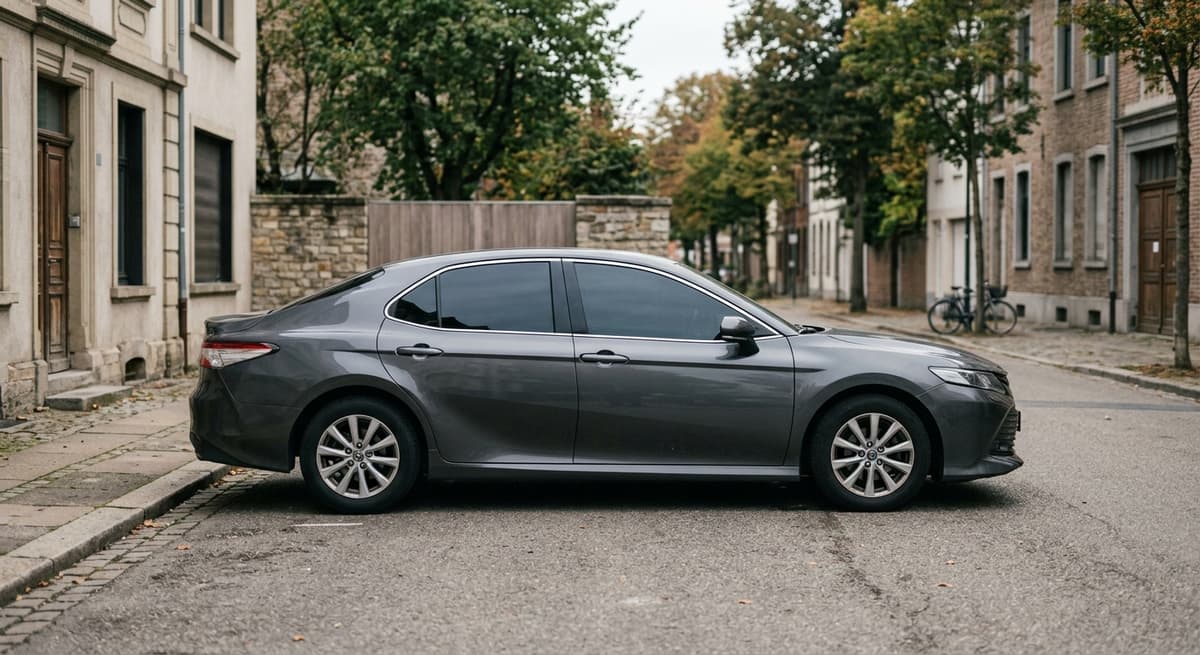
Read literally, that wording could reach a clear UV-blocking film that does not reduce visible light in any meaningful way, not just tinted film. No enforcement guidance, government interpretation bulletin, or court decision confirms how PEI actually applies this language in day-to-day roadside stops, so a driver should not assume a truly clear film is safe simply because it does not darken the glass. The statute's plain text supports the broader reading, and this article states that reading directly rather than softening it into familiar tint-shop language about "how dark is legal," a framing that does not fit PEI's actual rule.
Rear Windows: Permitted Only With Both Mirrors
Section 138(1) names only the windshield and the side windows beside or forward of the driver, so the rear side windows and the rear windshield fall outside its scope entirely. Section 138(2) then sets a separate condition for the rear glass: material of any darkness is permitted there, but only if the vehicle is equipped with outside rear-view mirrors on both the left and right side. A vehicle without dual exterior mirrors cannot rely on this allowance, regardless of how the rear glass is tinted.
Three Exceptions, No Medical Carve-Out
Section 138(3) lists exactly three exceptions to the front-window ban:
- Glazing that is an equivalent factory-installed replacement for the original
- Clear, untinted frost shields
- Window stickers that do not impair the driver's field of vision
Section 138(4) requires that any frost shield used under the second exception stay free of discoloration, scratches, or damage that would impair vision through it.
No medical or light-sensitivity exemption appears anywhere in section 138. This is a genuine, confirmed absence rather than a research gap: the section enumerates its exceptions specifically, and a medical carve-out is not one of them. A driver who needs reduced light exposure for a medical reason should not assume PEI has an application process comparable to Alberta's; based on the statute's own text, it does not.
An Independent Ban on Opaque Material, Elsewhere in the Act
Separate from section 138, section 214(a) of the Highway Traffic Act bans driving with non-transparent material on the windows, windshield, or similar surfaces of a vehicle, language that echoes similar provisions in Nova Scotia and New Brunswick's own statutes. This gives PEI two independent bases for the same underlying conduct, one specific to window glazing, one a more general prohibition on opaque coverings, so a charge is not necessarily limited to section 138 alone.
Section 138(5) adds a third, unrelated basis: it bans window material that casts a glare at other vehicles from sunlight or headlights, regardless of whether that material would otherwise be legal under the transparency rules above.
Fines: No Figure Could Be Confirmed
A reliable current dollar figure for a section 138 violation could not be confirmed against a cleanly extracted official fine schedule for this article. PEI's summary-offence fine schedule, attached to the Highway Traffic Act, is a PDF table, and the section of it covering sections 137 through 141 and 213 through 214 shows a page-wide row-misalignment problem: labels and dollar figures do not line up cleanly with the Act's own section text across that entire range, not just on one isolated row. One consequence of that misalignment is visible in the schedule's own labelling of section 214, which the schedule pairs (a), (b), and (c) to descriptions that do not match the Act's actual text for those three paragraphs.
Because the table itself cannot be read reliably against the Act it is meant to describe, this article does not assert a specific dollar figure for a section 138 violation. Figures circulating on third-party tint-shop sites should be treated as unverified rather than repeated as fact. Confirm the current amount directly with PEI's court services or a licensed lawyer before relying on it for a specific ticket.
Factory Glass vs Aftermarket Film
PEI's exceptions draw the same factory-versus-aftermarket line used across most of Canada: glass that came tinted from the manufacturer, or an equivalent factory replacement, is exempt outright. Anything added to the front windshield or front side windows after the vehicle left the factory, regardless of how light or dark, falls under the ban unless it fits one of the three narrow exceptions above.
Related Resources
For how PEI's rule compares with the rest of Canada's mix of percentage standards and outright bans, see window tint laws in Canada. For what happens if you are stopped and ticketed for illegal tint, see fighting a traffic ticket in Canada. Dash cams sit on the windshield in the same general area these rules govern; see dash cam laws in Canada for how PEI and other provinces treat a windshield-mounted device. For PEI's impaired driving rules, see DUI laws in Prince Edward Island.
Disclaimer
This article is informational only and is not legal advice. No fine figure is stated for a section 138 violation: PEI's PDF fine schedule shows a page-wide row-misalignment problem across the section range that would cover it, so no dollar amount could be confirmed against a cleanly extracted official source, and this article deliberately does not repeat the figures circulating on third-party tint-shop sites. Whether PEI enforcement in practice reaches a genuinely clear, non-darkening film under section 138(1)'s "transparent" wording is also unconfirmed; no enforcement guidance or court decision addressing that question was located. Confirm current fees and enforcement practice directly with PEI's Highway Safety Division or a licensed lawyer before making a decision based on this article.
Frequently Asked Questions
Is any window tint legal on the front windshield or front side windows in Prince Edward Island?
Generally no. Section 138(1) of PEI's Highway Traffic Act bans placing any transparent, translucent, or opaque material on the windshield or on a side window beside or forward of the driver, with no VLT percentage exception. The only carve-outs are an equivalent factory-installed replacement, a clear untinted frost shield, and non-obstructive stickers.
Does PEI have a legal tint percentage for front windows?
No. Unlike Manitoba, Ontario, Quebec, or New Brunswick, PEI's Highway Traffic Act does not set a VLT percentage anywhere in section 138. The front windshield and front side windows are simply off limits to added material, regardless of how light or dark it is, subject only to the three exceptions in section 138(3).
Can I tint the rear windows of my car in PEI?
Rear side windows and the rear windshield fall outside section 138(1)'s ban and may carry material of any darkness under section 138(2), but only if the vehicle has outside rear-view mirrors on both the left and right side. Without both exterior mirrors, that allowance does not apply.
Is there a medical exemption for window tint in Prince Edward Island?
No medical or light-sensitivity exemption appears anywhere in section 138 of the Highway Traffic Act. The section lists exactly three exceptions, factory-equivalent replacement glazing, clear frost shields, and non-obstructive stickers, and a medical carve-out is not among them.
What is the fine for illegal window tint in Prince Edward Island?
A reliable current figure could not be confirmed against a cleanly extracted official schedule for this article. PEI's PDF fine schedule shows a page-wide row-misalignment problem across the section range that would cover a section 138 violation, so no specific dollar figure is asserted here. Confirm the current amount with PEI's court services or a licensed lawyer.
Updates
Independently fact-checked against the cited primary sources
Sources and References
- Highway Traffic Act, R.S.P.E.I. 1988, c.H-5 (consolidation)(princeedwardisland.ca).gov
- Highway Traffic Act Motor Vehicle Inspection Regulations(princeedwardisland.ca).gov