Canada
Window Tint Laws in Yukon, the Northwest Territories, and Nunavut
Independently fact-checked against primary sources (last audited August 16, 2026). · 7 primary sources cited on this page. How we verify our legal content
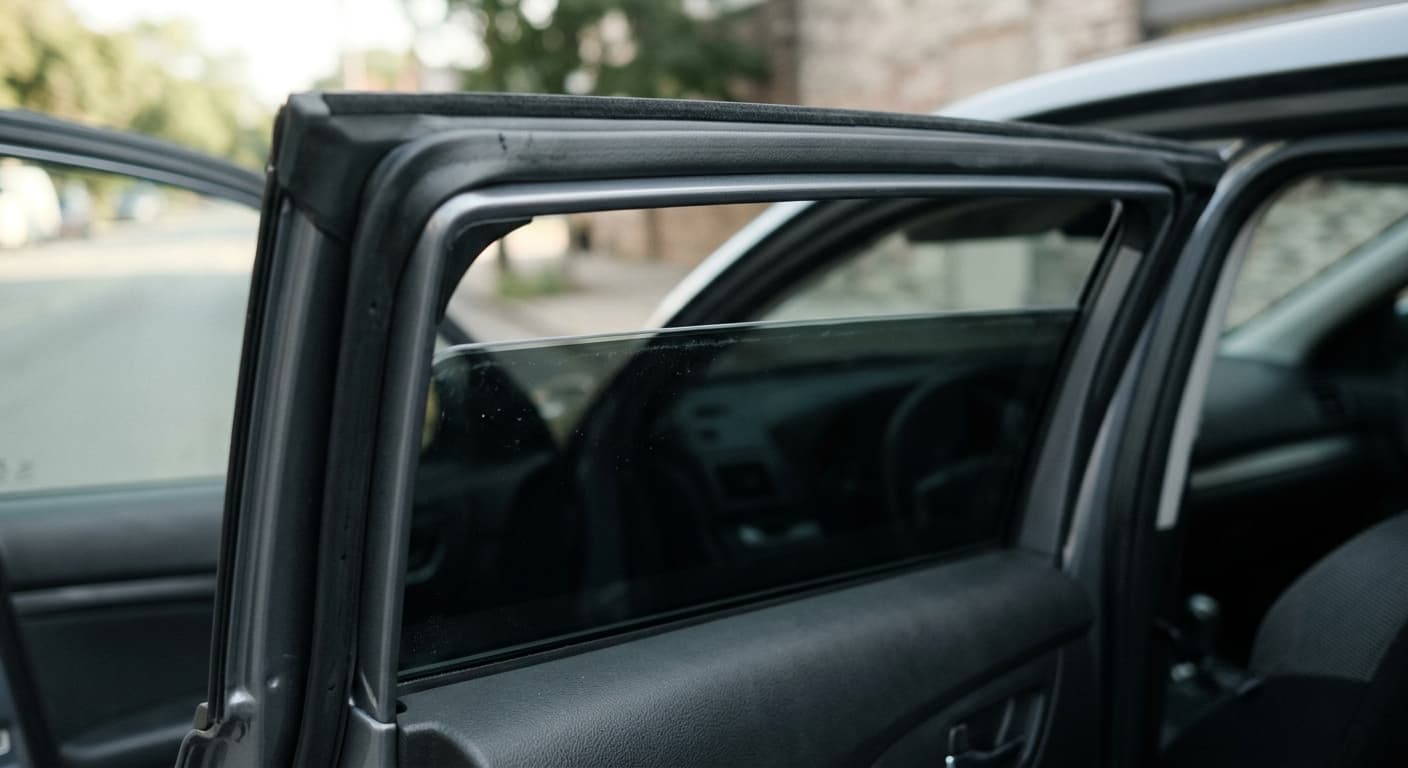
Yukon publicizes and actively enforces a 70% VLT standard for window tint, but no codified aftermarket-tint provision was found anywhere in its Motor Vehicles Act or its Equipment Regulations, making that number enforcement policy rather than a written law, while the Northwest Territories and Nunavut both codify an identical outright ban on windshield and front-window coatings with no percentage at all.
Information last verified on 2026-08-16. This article has not yet been reviewed by a licensed lawyer.
Yukon: An Enforced Standard With No Statute Behind It
Yukon is the outlier among all the jurisdictions in this cluster. Its Motor Vehicles Act, RSY 2002, c.153, was searched in full for any mention of window obscuring or tint, and the only relevant provision found is section 190, titled "Obscured windshield." That section says no person shall drive a vehicle if the view through the windshield or windows is so obscured by mud, frost, steam, or any other thing as to make driving hazardous or dangerous. This is a qualitative, condition-based standard written for weather and dirt, not a VLT percentage, and it was not written with aftermarket tint film in mind, though its open-ended "or any other thing" language is broad enough that enforcement could in theory stretch it to cover tint.
Yukon's Motor Vehicles Equipment Regulations were also searched in full. Section 24, the windshield provision, governs only original and replacement glass conforming to prescribed standards at the time of sale or manufacture. It does not address aftermarket film application at all. For how the territories fit into the rest of Canada's mix of approaches, see window tint laws in Canada. A full-text search of this regulation for the vocabulary every other Canadian jurisdiction in this cluster uses for its own tint clause, sunscreen, reflective, coating, spray, shade, or film, returned zero hits.
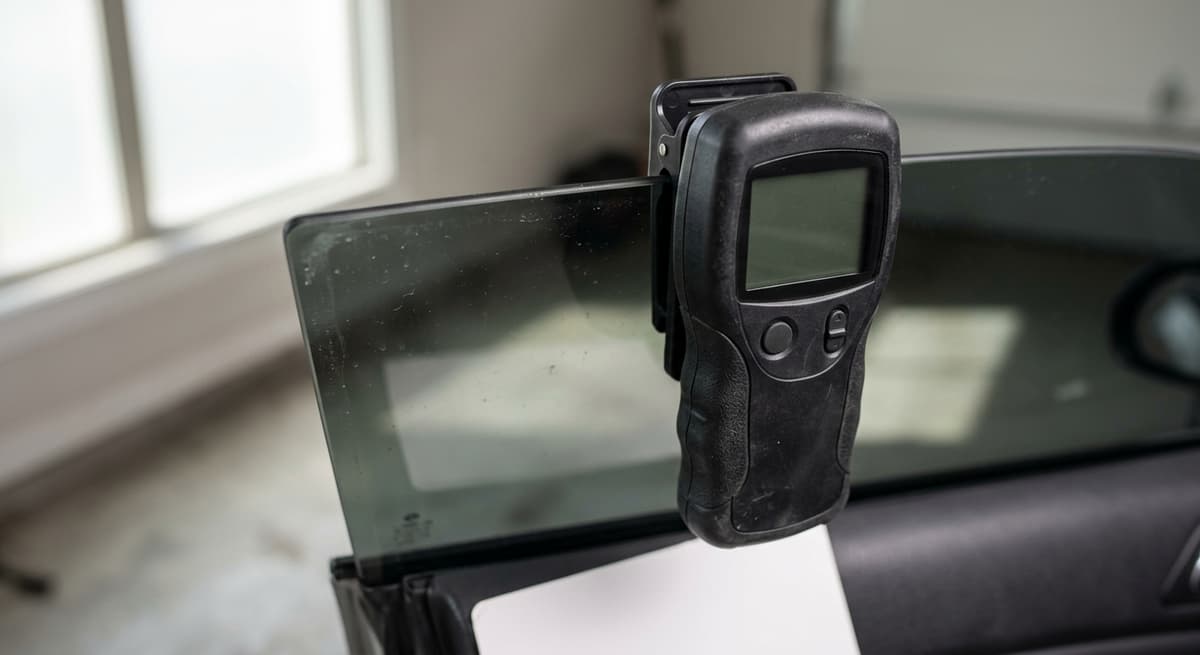
Despite that, the Government of Yukon's own public-facing page, titled with the tagline "Dark Tint. Not a flex," states plainly that in Yukon, at least 70% of the light outside a car must be able to filter through the windshield, the driver side window, and the front passenger side window. The page also says the Motor Vehicles office has a tint meter for checking compliance, and that illegal tint may lead to fines or an order to remove it. What the page does not do, anywhere in its text, is cite a statute or regulation section for the 70% figure.
Read together, the most defensible conclusion is that Yukon administers a 70% threshold as departmental policy and enforcement practice, most likely applied through section 190's general hazardous-or-dangerous standard using the tint meter to make that judgment concrete, rather than through a standalone numeric law. This article states Yukon's enforced standard exactly as the government itself publishes it, while being explicit that, unlike every other jurisdiction in this cluster, no underlying statutory or regulatory provision setting that number could be located. The 70% figure should not be cited as a regulation, because based on the research behind this article, it is not written into one.
Yukon is also drafting a Traffic Safety Act, Bill 044, to replace its current Motor Vehicles Act, so this framework should not be assumed to be permanent. No numeric tint standard in the bill itself was confirmed for this article.
Northwest Territories: An Absolute Ban, Codified
Unlike Yukon, the Northwest Territories does codify its tint rule, in section 58 of the Motor Vehicle Equipment Regulations, R.R.N.W.T. 1990, c.12 (Supp.), made under the Motor Vehicles Act. The section states that no person shall operate a vehicle unless the windshield and front passenger side windows are free from a coating of sunscreen or reflective material other than that applied by the vehicle manufacturer. This is an absolute ban with no VLT percentage anywhere in the text, and the only exception is coating applied by the manufacturer at the factory.
The phrase "front passenger side windows" is worth flagging directly rather than glossing over. Read one way, it means the front windows beside the passengers generally, both the driver's and the front passenger's side windows, the reading every comparable provision in this cluster uses and the reading this article assumes. Read more literally, it could mean only the window next to the front passenger specifically, excluding the driver's own window. No other clause in the regulation resolves this, and no secondary Northwest Territories government guidance page comparable to Yukon's was found to settle it in plainer language. This article flags the ambiguity rather than resolving it either way.
Rear side windows and the rear windshield are outside section 58's scope, since only the windshield and front passenger side windows are named, so rear glass is unrestricted by this section. The section also applies to trailers, not only motor vehicles in the ordinary sense; it is not among the sections the regulation's own exemption list carves out for trailers.
No medical or light-sensitivity exemption was found anywhere in the regulation.
Nunavut: The Same Ban, an Outdated Consolidation
Nunavut inherited the Northwest Territories' law at the 1999 division, and the tint provision is functionally identical today. Nunavut's own Motor Vehicle Equipment Regulations still contain a section 58 that reads, in substance, the same way as the Northwest Territories' version: the windshield and front passenger side windows must be free of a sunscreen or reflective coating other than what the manufacturer applied, an absolute ban, factory coating the only exception, no VLT percentage. The same wording ambiguity around "front passenger side windows" applies here as well, and is equally unresolved.
What is distinctly Nunavut's own finding is a currency problem. Nunavut's parent Act was renamed from the Motor Vehicles Act to the Traffic Safety Act by a 2017 amending law, and the government's own consolidated-law listing page confirms the rename. But the equipment regulation containing the tint rule is still headed "Motor Vehicles Act" in the document itself, and the government's own page for that regulation states it is current only to December 30, 2018 and is "not up to date." Separately, the Traffic Safety Act's own consolidation page lists outstanding amendments as recent as 2026 that are not yet folded into the public text. This article cannot rule out that one of those unincorporated amendments touched the tint provision; the regulation actually opened for this research is, on its face, a stale document.
No medical or light-sensitivity exemption was found anywhere in Nunavut's regulation either, matching the Northwest Territories exactly.
No Medical Exemption Anywhere
Across all three territories, no medical or light-sensitivity tint exemption process was located, whether in a statute, a regulation, or a government guidance page. This holds even for Yukon, where a public guidance page exists for the general tint standard but does not mention a medical exemption anywhere in it. A driver in any of the three territories who needs a tint exemption for a medical reason should not assume a process comparable to Alberta's exists; nothing found during research supports one.
Fines: Ceilings Confirmed, Ticket Amounts Are Not
The Northwest Territories and Nunavut share an identical statutory penalty structure. A $500 minimum fine applies only to a short list of specific offences that does not include section 58, so that minimum does not apply here. Every other Act or regulation offence, including section 58, instead falls under the general ceiling: a fine not exceeding $5,000, or imprisonment not exceeding 6 months, or both. That is a statutory maximum, not the actual roadside ticket amount. The specific per-offence dollar figure for a section 58 ticket lives in a separate fine schedule regulation in each territory, and neither was opened directly during the research behind this article, so this article does not state a specific dollar figure for either territory.
Yukon's situation is different again, since section 190's obscured-windshield offence is the closest provision to a tint rule that Yukon has. A circulating figure of "up to $500" is tied to that general offence in third-party summaries, but this was not independently confirmed against Yukon's own penalty section for this article.
How the Three Territories Compare
| Yukon | Northwest Territories | Nunavut | |
|---|---|---|---|
| Codified tint rule | Not found in the Act or Equipment Regulations | Yes, section 58, absolute ban | Yes, same wording as NWT, absolute ban |
| VLT percentage | 70% enforced as policy, not written into law | None; outright ban instead | None; outright ban instead |
| Factory exception | Not applicable, no codified rule to except from | Yes, factory-applied coating only | Yes, factory-applied coating only |
| Rear windows | Unrestricted, by omission from the 70% guidance | Unrestricted, outside section 58's scope | Unrestricted, outside section 58's scope |
| Medical exemption | None found | None found | None found |
| Consolidation currency | Current per the documents opened | Amended through 2014 | Flagged stale by the government's own page, current only to 2018, still headed under the old Act name |
Related Resources
For how the territories fit into Canada's wider mix of percentage standards, outright bans, and federal cross-references, see window tint laws in Canada. For what to expect after a ticket, see fighting a traffic ticket in Canada. For windshield-mounted dash cams, which sit in the same general area these glazing and tint rules govern, see dash cam laws in Canada. For each territory's impaired driving rules, see DUI and impaired driving laws in Yukon, the Northwest Territories, and Nunavut.
Disclaimer
This article is informational only and is not legal advice. Several points here rest on genuine, documented gaps rather than assumptions: the single largest is that Yukon's actively enforced 70% VLT standard could not be traced to any statute or regulation despite reading both of Yukon's relevant primary documents in full, so that figure should be treated as enforcement policy, not codified law. The meaning of "front passenger side windows" in the Northwest Territories' and Nunavut's shared section 58 is also genuinely unresolved, as is the specific roadside ticket amount for a section 58 violation in either territory and Yukon's own general obscured-windshield fine. Nunavut's regulation is confirmed by the government's own page to be an outdated consolidation, current only to 2018, so a newer, unincorporated amendment cannot be ruled out. Confirm current requirements directly with the relevant territorial motor vehicles office or a licensed lawyer before making a decision based on this article.

Frequently Asked Questions
Is there a legal tint percentage in Yukon?
The Government of Yukon publicly states and enforces a 70% VLT standard for the windshield and both front windows, using a tint meter to check compliance. But no codified statute or regulation setting that percentage was found anywhere in Yukon's Motor Vehicles Act or its Equipment Regulations. The 70% figure appears to be enforcement policy rather than a written law.
Is window tint banned outright in the Northwest Territories and Nunavut?
Yes, for the windshield and front side windows. Both territories codify an absolute ban in section 58 of their respective Motor Vehicle Equipment Regulations, with no VLT percentage at all. The only exception is a coating applied by the vehicle manufacturer at the factory.
Can I tint the rear windows of my vehicle in any of the three territories?
In all three, the rear side windows and rear windshield fall outside the front-window rule. The Northwest Territories' and Nunavut's section 58 names only the windshield and front passenger side windows, and Yukon's 70% guidance also names only the windshield and front windows, so rear glass is unrestricted in each case.
Is there a medical exemption for window tint in Yukon, the Northwest Territories, or Nunavut?
No. No medical or light-sensitivity tint exemption process was found in any statute, regulation, or government guidance page in any of the three territories.
What is the fine for illegal window tint in the territories?
Specific ticket amounts are unconfirmed for all three. The Northwest Territories and Nunavut share a general statutory ceiling of a $5,000 maximum fine or up to 6 months imprisonment for a section 58 violation, but the actual per-offence fine schedule was not located in either territory. Yukon's circulating figure of up to $500 for its general obscured-windshield offence was also not independently confirmed.
Is Nunavut's window tint law up to date?
The regulation containing Nunavut's tint rule is confirmed stale by the government's own listing page, which states the consolidation is current only to December 30, 2018 and is not up to date. The document is also still headed under the old Motor Vehicles Act name, even though the parent Act was renamed the Traffic Safety Act in 2017.
Updates
Independently fact-checked against the cited primary sources
Sources and References
- Yukon Motor Vehicles Act, RSY 2002, c.153 (consolidation)(laws.yukon.ca).gov
- Yukon Motor Vehicles Equipment Regulations, O.I.C. 1987/086(laws.yukon.ca).gov
- Government of Yukon - Window tint standard(yukon.ca).gov
- Northwest Territories Motor Vehicle Equipment Regulations, R.R.N.W.T. 1990, c.12 (Supp.)(justice.gov.nt.ca).gov
- Northwest Territories Motor Vehicles Act, RSNWT 1988, c.M-16 (consolidation)(justice.gov.nt.ca).gov
- Nunavut Motor Vehicle Equipment Regulations (consolidation)(nunavutlegislation.ca).gov
- Nunavut Motor Vehicles Act (consolidation)(nunavutlegislation.ca).gov