
Canada
Dash Cam Laws in Canada: Rules, Audio Consent, Evidence
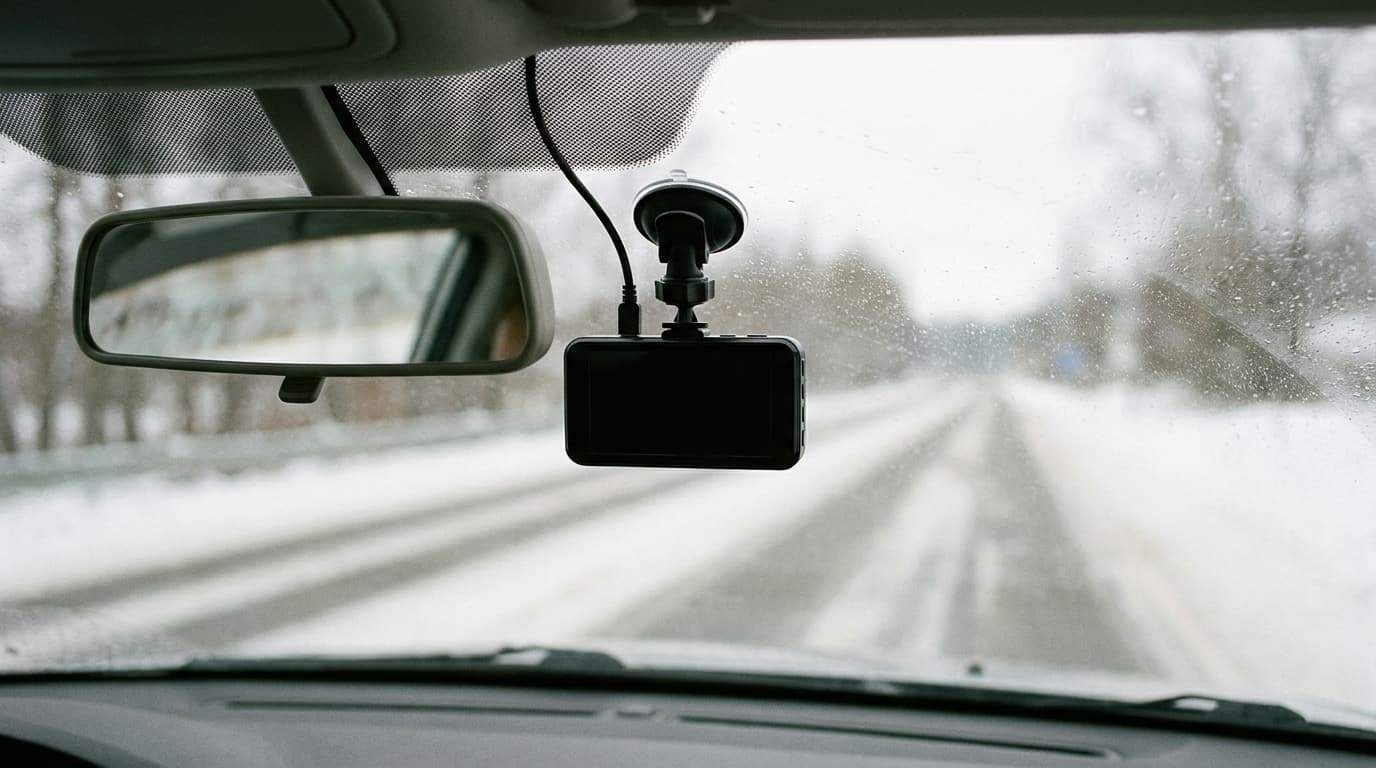
Dash cams are legal to install and use in every Canadian province and territory, but each province regulates where you can mount one on your windshield and, if the camera records audio, a separate federal consent rule applies.
Is It Legal to Use a Dash Cam in Canada?
Yes. No Canadian province, territory, or federal law prohibits installing a dash-mounted camera in a personal vehicle. Dash cams are treated the same way as a phone mount or a GPS unit: legal equipment, subject to ordinary rules about not blocking the driver's view and not distracting the driver.
What changes from province to province is not whether you can have one, but exactly how it can be mounted and, in a few cases, whether a screen on the device can be visible to the driver while the vehicle is moving. Those rules come from each province's highway traffic legislation, not from any dash-cam-specific statute. Nobody has to register a dash cam or apply for permission to use one.
Windshield Mounting Rules: What 'Obstruction' Actually Means
Every province bans driving with anything that blocks the driver's forward or side view through the windshield. These laws were written long before dash cams existed, aimed at stickers, hanging air fresheners, and cracked glass, but they apply equally to a camera mounted in the wrong spot.
Ontario. Sections 73 and 74 of the Highway Traffic Act prohibit driving with a sign, poster, or other non-transparent material on the windshield, and separately require the windshield and front side windows to give the driver a clear view of the road. A dash cam is not named in the statute, but an officer can cite either section if the unit blocks a meaningful part of the driver's sightline.
Alberta. The Vehicle Equipment Regulation under the Traffic Safety Act bans covering the windshield or the side windows beside or forward of the driver with material that impairs visibility, and separately bans anything that reflects glare into another driver's eyes. As in Ontario, a dash cam itself is not named, but a unit mounted low and centrally is treated as compliant in practice.
British Columbia. The Motor Vehicle Act Regulations (Division 7, windshields and windows) prohibit driving when the driver's view of the highway is unduly obstructed by anything affixed to the windshield or window. ICBC and RoadSafetyBC both note that a dash cam placed in the space between the rear-view mirror mount and the top of the windshield is treated as compliant, since it sits inside glass area the mirror already occupies.
Quebec. Article 442 of the Code de la sécurité routière bars driving when a passenger, animal, or object is positioned so as to obstruct the driver's view or interfere with operating the vehicle. The SAAQ treats a dash cam the same way as any other windshield-mounted device: legal if it does not block the driver's sightline.
| Province | Governing law | Rule in practice |
|---|---|---|
| Ontario | Highway Traffic Act, ss. 73 to 74 | No opaque material blocking the windshield view |
| Alberta | Vehicle Equipment Regulation (Traffic Safety Act) | No windshield covering that impairs visibility or causes glare |
| British Columbia | Motor Vehicle Act Regulations, Division 7 | View through the windshield must not be unduly obstructed |
| Quebec | Code de la sécurité routière, art. 442 | No object placed so as to obstruct the driver's view |
Across all four, and in the remaining provinces and territories, the practical safe zone is the same: mount the camera directly behind the rear-view mirror, or low and centred on the dash below the sightline, and keep the housing small enough that it does not create a new blind spot. A camera with a screen should have that screen off, folded away, or non-visible while the vehicle is moving, both to avoid a distracted-driving citation and to stay inside windshield-obstruction rules.
The Audio Recording Nuance: Where Dash Cams Meet Recording Law
A dash cam that only shoots video of the road raises no consent issue at all: you are filming a public street, not a private conversation. The nuance appears the moment a dash cam's microphone is on and it is picking up audio inside the cabin, especially with passengers or during a conversation with a police officer at a stop.
Canada's wiretap law is federal and uniform across every province. Criminal Code s 184(1) makes it an offence to wilfully intercept a private communication with a device. Section 184(2) then carves out the exception that makes ordinary recording lawful: if you are a participant in the conversation, or any one party to it consents, the recording is legal. This is the same one-party consent rule covered in depth on our Canada recording laws page.
Applied to a dash cam, that means recording your own conversation with a passenger, or your own exchange with an officer during a traffic stop, is lawful everywhere in Canada, since you are a party to it. What the law does not authorize is placing a device to capture a private conversation between other people that you are not part of, such as leaving the recorder running to capture a conversation happening entirely between passengers in the back seat without your involvement. That scenario can implicate the same interception rules that apply to any hidden recorder, regardless of the fact that the device happens to be mounted on a dashboard.
Posting Dash Cam Footage Online: Privacy and Defamation
The federal private-sector privacy law, PIPEDA, generally does not apply to an individual's strictly personal, non-commercial use of a dash cam. Recording your own commute for your own records, or to have footage available if you are ever in a collision, sits outside PIPEDA's scope. That exemption narrows quickly once commercial use enters the picture: an employer that installs cabin cameras in a commercial fleet vehicle, for example, does have PIPEDA obligations toward the employees it records, as the Office of the Privacy Commissioner has confirmed in its own investigation findings.
Posting dash cam footage publicly is a separate question from recording it. Once you upload video that clearly identifies another driver, their licence plate, or a bystander's face, and post it publicly with commentary blaming them for a collision or bad driving, you have moved from private recording into publication. That can expose the poster to a defamation claim if the commentary is false and damaging, and it raises its own privacy considerations for the people shown, independent of whether the original recording was lawful. Blurring faces and plates before posting, and describing events factually rather than accusing a named party of wrongdoing, meaningfully reduces that exposure.
Using Dash Cam Footage as Evidence: Traffic Court and Insurance Claims
Dash cam footage is regularly accepted in Canadian traffic courts and by insurers, but acceptance is not automatic. The footage generally needs to be:
- Authentic and unaltered. The person presenting it should be able to say who recorded it, when, and confirm it has not been edited.
- Clear and relevant. Blurry, out-of-focus, or off-point footage carries little weight even if it is genuine.
- Properly timestamped, matching the date and time of the incident being disputed.
Insurers use dash cam video the same way police and courts do: as one piece of evidence toward fault determination, not as an automatic win. A driver who submits footage that actually shows their own vehicle following too closely, or entering an intersection late, can end up hurting their own claim rather than helping it. It is also worth remembering a dash cam's limits: most units only face forward, so a collision from the side or rear may not appear on the recording at all, and a driver should not rely on a single camera angle to reconstruct an entire incident.
Parking Mode and Continuous Recording
Many dash cams include a parking mode that keeps recording, or starts recording on motion or impact, while the vehicle is parked and unattended. This is legal everywhere in Canada for the same reason ordinary driving footage is legal: it is capturing a public or semi-public space (a street, a parking lot, a driveway) rather than intercepting a private conversation.
The practical caution is the same one that applies to any home security camera: a parking-mode unit that happens to be angled toward a neighbour's window or private yard, continuously, raises privacy concerns even though no single criminal provision squarely bans it. Aiming the camera at the road and your own vehicle rather than at a neighbour's property avoids the issue entirely.
Related Reading
If a dash cam already caught your incident on video and you are now dealing with a citation, see our guide to fighting a traffic ticket in Canada. For the underlying consent rule that governs any audio recording in Canada, including inside a vehicle, see Canada recording laws. For the broader set of driving and traffic topics on this site, start at the Canada driving laws hub.
Disclaimer: This article provides general legal information about dash cam use in Canada and is not legal advice. Laws vary by province and change over time; consult a licensed lawyer in your province for advice about your specific situation.
Frequently Asked Questions
Are dash cams legal in Canada?
Yes. No province or territory bans dash cams. Each province's highway traffic law just requires that the camera not obstruct the driver's view through the windshield.
Where is the safest place to mount a dash cam in Canada?
Directly behind the rear-view mirror, or low and centred on the dashboard below the driver's normal sightline. This placement is treated as compliant across Ontario, Alberta, British Columbia, and Quebec.
Is it legal for my dash cam to record audio in my car?
Yes, if you are a party to the conversation being recorded. Criminal Code s 184(2) allows recording where you are a participant or one party consents. Recording a private conversation between other people that you are not part of is where the legal risk starts.
Can I post my dash cam footage online?
Generally yes for your own footage, but posting video that identifies another person along with accusations of wrongdoing can expose you to a defamation claim if the accusation is false, and raises separate privacy considerations for the people shown.
Will a court or my insurance company accept dash cam footage as evidence?
Usually, provided the footage is authentic, unaltered, timestamped, and clearly relevant to the incident. Footage that undermines your own account of events can also be used against you.
Does parking mode recording break any privacy law?
Parking mode that records the street or parking area around your vehicle is legal. Persistently aiming a parking-mode camera at a neighbour's window or private property, rather than at the road, is the scenario that raises privacy concerns.
The Law Behind This Article
This article rests on the statutory provisions below, held in our own legal record and retrieved from the official source. Tap a section to read the operative text.
Highway Traffic Act (Ontario)
s. 73Signs, objects, etc.In force
(1) No person shall drive a motor vehicle upon a highway, (a) with any sign, poster or other non-transparent material or object placed on the windshield or on any window of such motor vehicle; or (b) with any object placed in, hung on or attached to the motor vehicle, in a manner that will obstruct
Official text (excerpt) · last checked 2026-08-13 · Read the full text in our law library · Verify at ontario.ca
Criminal Code
s. 184InterceptionIn forcecited in 55 of our articles
(1) Every person who, by means of any electro-magnetic, acoustic, mechanical or other device, knowingly intercepts a private communication is guilty of (a) an indictable offence and liable to imprisonment for a term of not more than five years; or (b) an offence punishable on summary conviction. (2) Subsection (1) does not apply to (a) a person who has the consent to intercept, express or implied, of the originator of the private communication or of the person intended by the originator thereof to receive it; (b) a person who intercepts a private communication in accordance with an authorization or pursuant to section 184.4 or any person who in good faith aids in any way another person who the aiding person believes on reasonable grounds is acting with an authorization or pursuant to section 184.4;
Official text (excerpt) · last checked 2026-08-12 · Read the full text in our law library · Verify at laws-lois.justice.gc.ca
Cited in 5 court opinions in our collectionLatest citing opinion in our collection: 2023
Opinions citing this section in our collection:
- X (Re) (Federal Court 2017, 2017 FC 1047)
- Canada (Information Commissioner) v. Canada (Transportation Accident Investigation and Safety Board) (Federal Court 2005, 2005 FC 384)
- Morgan v. Alta Flights (Charters)Inc. (Federal Court 2005, 2005 FC 421)
Identified automatically from the court opinions citing this section — not a ranking of which case controls.
Also relied on in: Canadian Law by Province: Federal and Provincial Guide, Workplace Privacy and Employee Monitoring in Canada, Canada Privacy Law: PIPEDA, Provincial Acts, and Recording Rules
Search our full record of US law — 2.1 million sections, every state + federal →
Sources and References
- Highway Traffic Act, R.S.O. 1990, c. H.8, ss. 73-74 (windshield obstruction)(ontario.ca).gov
- Vehicle Equipment Regulation, Alta Reg 122/2009 (windshield and window obstruction)(kings-printer.alberta.ca).gov
- Motor Vehicle Act Regulations, B.C. Reg. 26/58, Division 7 (windshields and windows)(bclaws.gov.bc.ca).gov
- Code de la sécurité routière, RLRQ c C-24.2, art. 442 (obstruction de la vue)(legisquebec.gouv.qc.ca).gov
- Criminal Code, R.S.C. 1985, c. C-46, s. 184 (interception of private communications)(laws-lois.justice.gc.ca).gov
- Office of the Privacy Commissioner of Canada, PIPEDA requirements in brief (personal-use exemption)(priv.gc.ca).gov
- Office of the Privacy Commissioner of Canada, PIPEDA Findings #2022-006 (Trimac dash camera investigation)(priv.gc.ca).gov