
Canada
Workplace Privacy and Employee Monitoring in Canada
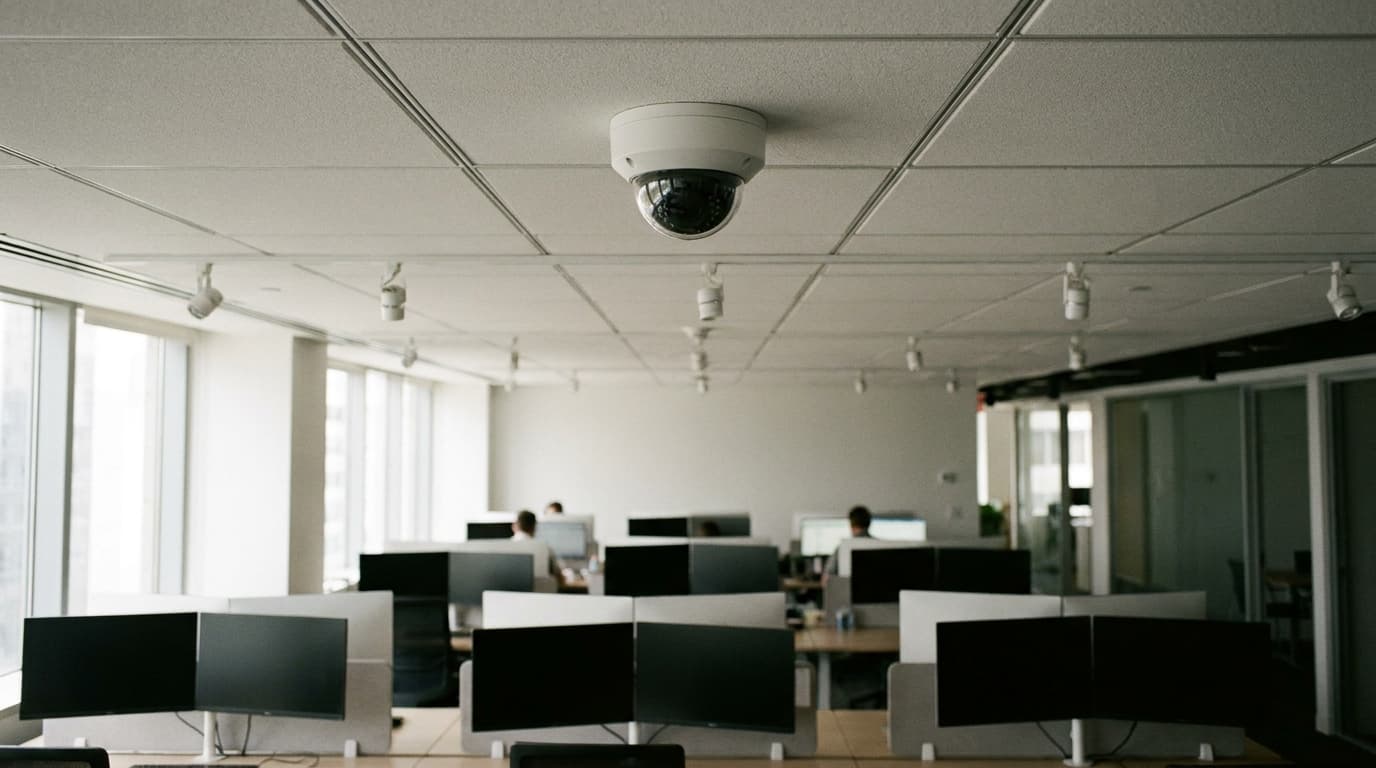
Many Canadian employees assume that anything happening on the job, from a monitored email account to a hallway security camera, sits outside legal protection. That is only partly true. Workplace privacy in Canada is not governed by one national law. Which rules apply depends on whether the employer is federally or provincially regulated, and which province the work is in.
This guide covers the private-sector laws that reach the employee-employer relationship, what monitoring employers can and cannot do, whether an employee can record their own workplace conversations, and how courts, arbitrators, and privacy commissioners decide if surveillance was reasonable. For other workplace topics, see Canada employment law, and for province-specific rules generally, see Canadian law by province.
Which Privacy Law Applies to Your Workplace
Two questions decide which law covers an employee's personal information. First, is the employer federally regulated? The Personal Information Protection and Electronic Documents Act, known as PIPEDA, applies to federal works, undertakings, and businesses such as banks, airlines, telecommunications carriers, and interprovincial transportation companies. For those employers, PIPEDA covers employee information directly, including attendance, email, keystroke, and video or audio records.
Second, for an ordinary provincially regulated employer, which province is it in? PIPEDA's commercial-activity rules were never built to reach a typical provincial employment relationship. Only three provinces have filled that gap with a private-sector privacy law recognized as substantially similar to PIPEDA that explicitly covers employee information: Alberta's Personal Information Protection Act, British Columbia's Personal Information Protection Act, and Quebec's Act respecting the protection of personal information in the private sector, modernized by Law 25. In these provinces, an employer needs a purpose a reasonable person would consider appropriate before collecting, using, or disclosing employee information, and notice is expected even where consent is not strictly required.
Everywhere else, including Ontario, Manitoba, Saskatchewan, the Atlantic provinces, and the territories, no stand-alone private-sector privacy statute governs the ordinary employer-employee relationship. Privacy protection there rests mainly on common law, the reasonable-expectation-of-privacy concept, employment contract terms, human rights legislation, and, in unionized workplaces, the collective agreement. For the general privacy statutes summarized here, see Canada data privacy laws.
Ontario's Written Electronic Monitoring Policy
Ontario has legislated a specific transparency rule worth understanding precisely. Since 2022, Part XI.1 of the Employment Standards Act has required employers with 25 or more employees in Ontario on January 1 of a given year to have a written policy on electronic monitoring, ready before March 1 starting in 2023. The policy must state whether monitoring occurs and, if so, describe how, in what circumstances, and for what purposes the information may be used, and it must be dated.
The important limit is that this is purely a disclosure obligation. Ontario's own guidance is explicit that it does not establish a right for employees not to be electronically monitored and does not create any new privacy right. An employer can disclose that it monitors email, GPS location, or computer activity and still use that information broadly, as long as the policy describes the practice. It tells employees what is happening. It does not limit whether it can happen.
Recording Conversations at Work: Canada's One-Party Consent Rule
A separate question from employer monitoring is whether an employee can record their own conversations at work, such as a meeting with a manager or a call with human resources. Section 184(1) of the Criminal Code makes it an offence to wilfully intercept a private communication using a recording or listening device. Section 184(2)(a) then carves out an exception for a person who has the consent, express or implied, of the originator of the communication or of the person the originator intended to receive it.
In practice, this makes Canada a one-party consent jurisdiction. An employee who is actually part of a conversation, whether in person or by phone, can lawfully record it without telling the other participants or getting their agreement. That rule applies uniformly across every province and territory. It does not extend to recording a conversation an employee is not part of, planting a device in a room they have left, or intercepting someone else's messages or voicemail. For the general recording rules that apply outside the workplace too, see Canada recording laws.
Being lawful under the Criminal Code does not mean a secret recording is risk-free for an employee's job. Two Canadian appellate decisions show how differently this can play out. In Shalagin v. Mercer Celgar Limited Partnership, 2023 BCCA 373, the British Columbia Court of Appeal upheld a finding that an employee's extensive, ongoing covert recording of colleagues and supervisors, discovered only after his dismissal, amounted to after-acquired just cause, because it destroyed the trust the employment relationship depends on. In Teljeur v. Aurora Hotel Group, 2024 ONCA 213, by contrast, the Ontario Court of Appeal upheld a decision that relied on an employee's secret recording of his own termination meeting as evidence of the employer's bad faith conduct during that meeting. Context, purpose, and scope decide the outcome far more than the recording's basic legality.
Reasonable Expectation of Privacy and the Public-Private Divide
Canadian courts often ask whether a person had a reasonable expectation of privacy, and the leading workplace case is R. v. Cole, 2012 SCC 53. A high school teacher had a work laptop for teaching duties, and the school's policy permitted incidental personal use. A technician found personal photos on it during a routine check, and the matter reached police, who searched the device without a warrant.
The Supreme Court held the teacher had a reasonable, though diminished, expectation of privacy in his personal use of the laptop, based on the totality of the circumstances, including that personal use was permitted and the data was password protected. Because that expectation existed, the warrantless police search breached his rights under section 8 of the Charter of Rights and Freedoms.
The caveat is that Cole is a Charter case, and the Charter restrains government action, not private companies. It applies directly where the employer is a public body, such as a school board or Crown corporation. A private-sector employee cannot invoke the Charter against a private employer the way Cole could against a search enabled by his public one, though the reasonable-expectation-of-privacy reasoning still informs how arbitrators and commissioners assess privacy more broadly.
When Is Employer Surveillance Reasonable?
Whether the setting is a union grievance, a civil claim, or a complaint to a privacy commissioner, the recurring question is whether monitoring was reasonable. Canada's federal, provincial, and territorial privacy commissioners describe this as requiring monitoring limited to purposes that are specific, targeted, and appropriate, using the least privacy-invasive measure available, weighing the sensitivity of the information, whether less invasive alternatives existed, and whether the loss of privacy is proportional to the benefit sought.
Labour arbitrators apply a related two-part test for covert investigation, most often video surveillance used to support discipline for suspected sick-leave abuse. First, was it reasonable in all the circumstances to resort to surveillance at all? Arbitrators expect an employer to try less intrusive steps first, such as confronting the employee or offering modified work, before hidden cameras or investigators. Second, was the surveillance carried out reasonably, meaning proportionate, limited in scope and duration, and never in genuinely private spaces such as washrooms or break rooms? Surveillance failing either branch risks exclusion as evidence or a finding of unjustified invasion of privacy.
What to Do if You Think You Are Being Watched
Start by checking the employment contract and any workplace policy for a description of what is monitored and why. Ontario's electronic monitoring policy, or an equivalent notice from a federally regulated, Alberta, BC, or Quebec employer, may already answer that.
If a privacy statute applies, a complaint can generally go to the Office of the Privacy Commissioner of Canada or the applicable provincial commissioner. In a unionized workplace, monitoring disputes are typically grieved through the collective agreement, where an arbitrator applies the reasonableness test above. Where no specific privacy statute applies, options can include a human rights complaint, a common law claim, or an Employment Standards Act complaint if an Ontario employer skipped its required policy.
Disclaimer
This article provides general information about workplace privacy and employee monitoring law in Canada. It is not legal advice. Privacy and employment law can vary by province, by whether an employer is federally or provincially regulated, and by the specific facts of a workplace situation. Anyone facing a real dispute about monitoring, surveillance, or a recording made at work should consult a lawyer licensed in the relevant province or contact the appropriate privacy commissioner's office.
Frequently Asked Questions
Can my employer record me at work in Canada?
Often yes. Employers covered by PIPEDA, Alberta PIPA, BC PIPA, or Quebec's private-sector law need a legitimate purpose, must limit what they collect, and must give notice. Elsewhere there is no dedicated statute, so common law reasonableness, and in unionized workplaces the arbitral reasonableness test, tend to govern instead.
Can I legally record a conversation with my boss or coworkers?
Yes. Section 184(2)(a) of the Criminal Code makes Canada a one-party consent country, so anyone actually part of a conversation, including a meeting with a supervisor, can lawfully record it without telling the others present.
Can I be fired for secretly recording a workplace conversation even though it is legal?
Potentially. Legal under the Criminal Code does not make a recording discipline-proof. In Shalagin v. Mercer Celgar Limited Partnership, 2023 BCCA 373, extensive covert recording of colleagues was just cause for dismissal because it destroyed workplace trust. In Teljeur v. Aurora Hotel Group, 2024 ONCA 213, an employee's secret recording of his own termination meeting instead supported his case. Scope and purpose matter more than basic legality.
Does my employer have to tell me if I am being monitored?
It depends where you work. Ontario employers with 25 or more employees must have a written electronic monitoring policy, though this is a transparency requirement only and does not limit monitoring. Employers under PIPEDA, Alberta PIPA, BC PIPA, or Quebec's law have a separate, ongoing duty to give meaningful notice.
Does the Charter of Rights and Freedoms protect my privacy at work?
Only if your employer is a government body, since the Charter restrains state action, not private companies. In R. v. Cole, 2012 SCC 53, the Supreme Court found a public school teacher had a reasonable, if diminished, expectation of privacy in his work laptop. A private-sector employee cannot invoke the Charter against a private employer, though Cole's reasoning still informs how tribunals assess privacy generally.
What can I do if I think my employer is monitoring me unreasonably?
Check your employment contract and any written monitoring policy first. If a privacy statute applies, you can complain to the Office of the Privacy Commissioner of Canada or the relevant provincial commissioner. Unionized employees can grieve through their collective agreement, and an Ontario employee whose employer skipped its required policy can raise an Employment Standards Act complaint.
The Law Behind This Article
This article rests on the statutory provisions below, held in our own legal record and retrieved from the official source. Tap a section to read the operative text.
Criminal Code
s. 184InterceptionIn forcecited in 55 of our articles
(1) Every person who, by means of any electro-magnetic, acoustic, mechanical or other device, knowingly intercepts a private communication is guilty of (a) an indictable offence and liable to imprisonment for a term of not more than five years; or (b) an offence punishable on summary conviction. (2) Subsection (1) does not apply to (a) a person who has the consent to intercept, express or implied, of the originator of the private communication or of the person intended by the originator thereof to receive it; (b) a person who intercepts a private communication in accordance with an authorization or pursuant to section 184.4 or any person who in good faith aids in any way another person who the aiding person believes on reasonable grounds is acting with an authorization or pursuant to section 184.4;
Official text (excerpt) · last checked 2026-08-12 · Read the full text in our law library · Verify at laws-lois.justice.gc.ca
Cited in 5 court opinions in our collectionLatest citing opinion in our collection: 2023
Opinions citing this section in our collection:
- X (Re) (Federal Court 2017, 2017 FC 1047)
- Canada (Information Commissioner) v. Canada (Transportation Accident Investigation and Safety Board) (Federal Court 2005, 2005 FC 384)
- Morgan v. Alta Flights (Charters)Inc. (Federal Court 2005, 2005 FC 421)
Identified automatically from the court opinions citing this section — not a ranking of which case controls.
Also relied on in: Canadian Law by Province: Federal and Provincial Guide, Dash Cam Laws in Canada: Rules, Audio Consent, Evidence, Canada Privacy Law: PIPEDA, Provincial Acts, and Recording Rules
Search our full record of Canadian federal law — every consolidated Act, in English and French →
Sources and References
- Office of the Privacy Commissioner of Canada, Privacy in the Workplace(priv.gc.ca).gov
- Office of the Privacy Commissioner of Canada, Questions and Answers regarding the application of PIPEDA, Alberta and British Columbia's Personal Information Protection Acts(priv.gc.ca).gov
- Government of Ontario, Written policy on electronic monitoring of employees (Employment Standards Act guide)(ontario.ca).gov
- Criminal Code, RSC 1985, c C-46, section 184 (interception of private communications and consent exception)(laws-lois.justice.gc.ca).gov
- R v Cole, 2012 SCC 53(canlii.org)
- Government of Alberta, Personal Information Protection Act – Overview(alberta.ca).gov
- LegisQuébec, Act respecting the protection of personal information in the private sector, CQLR c P-39.1(legisquebec.gouv.qc.ca).gov
- Shalagin v Mercer Celgar Limited Partnership, 2023 BCCA 373(canlii.org)
- Teljeur v Aurora Hotel Group, 2024 ONCA 213(canlii.org)