
Canada
DUI in British Columbia: IRP, ADP, and Roadside Prohibition Penalties
Independently fact-checked against primary sources (last audited August 16, 2026). · 6 primary sources cited on this page. How we verify our legal content
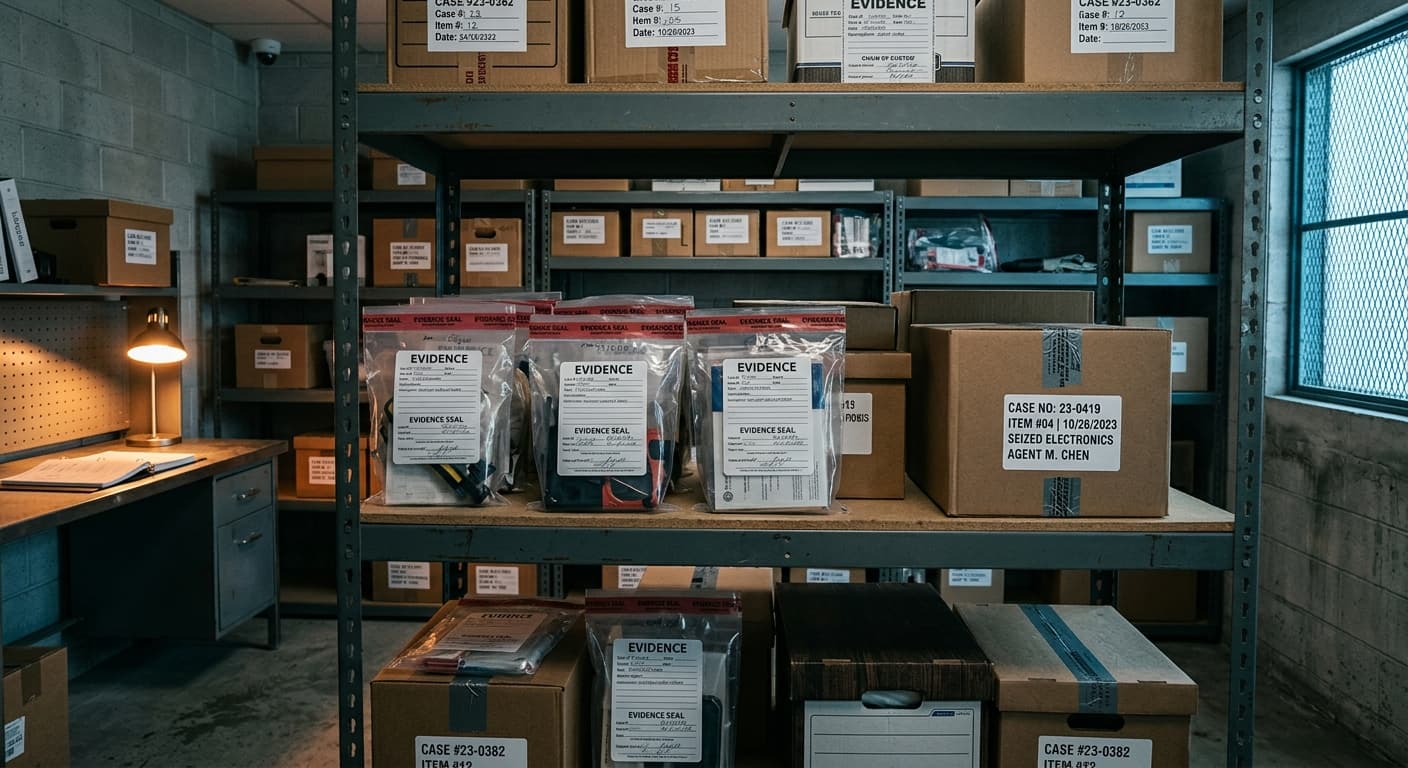
British Columbia layers two separate administrative schemes onto the uniform federal Criminal Code impaired driving offence: the Immediate Roadside Prohibition, with warn tiers of 3, 7, and 30 days and a 90-day fail or refusal tier, and the Administrative Driving Prohibition, a flat 90 days. Whichever one a driver receives, the deadline to apply for a review is 7 days.
Information last verified on 2026-08-15. This article has not yet been reviewed by a licensed lawyer.
Two Schemes on Top of the Criminal Code: IRP and ADP
British Columbia's Motor Vehicle Act, RSBC 1996, c 318 ("MVA"), layers two distinct administrative prohibition schemes on top of the federal Criminal Code impaired driving offence. The Immediate Roadside Prohibition (IRP), set out in MVA Part 3, sections 215.41 through 215.51, is triggered by a roadside approved screening device reading. The Administrative Driving Prohibition (ADP), set out in sections 94.1 through 94.6, is triggered by an evidentiary-quality breath or blood analysis, a blood-drug concentration reading, or a Drug Recognition Expert evaluation, and typically follows a formal Criminal Code demand or arrest rather than a roadside screening device.
These two schemes are mutually exclusive on the same stop. The Act itself bars a police officer from serving a notice under one section if a notice was already served under the other for the same incident (MVA sections 215.41(7) and 94.1(4)).
Immediate Roadside Prohibition: the Warn and Fail Tiers
The IRP scheme uses two screening-device readings, both defined directly in the Act (MVA s.215.41(2)). A "warn" reading is a blood alcohol concentration (BAC) of not less than 50 milligrams of alcohol per 100 millilitres of blood (0.05). A "fail" reading is a BAC of not less than 80 milligrams per 100 millilitres of blood (0.08), the same threshold used in the Criminal Code offence itself.
A warn-range prohibition escalates by how many prior IRP warn-range prohibitions the driver has had in the last 5 years (MVA s.215.43(1), (4)):
| Occurrence (5-year look-back) | Prohibition length |
|---|---|
| 1st warn | 3 days |
| 2nd warn | 7 days |
| 3rd or later warn | 30 days |
A fail reading, or a refusal or failure without reasonable excuse to comply with the screening demand, brings a flat 90-day prohibition regardless of prior history (MVA s.215.43(2.1)).
On either a warn or a fail reading, the driver has the right to a second analysis, forthwith, on a different device; the lower of the two readings governs (MVA s.215.42).
Vehicle impoundment tracks the prohibition length but is not identical to it. At the 3-day and 7-day warn tiers, impoundment is discretionary; a police officer "may" order it. At the 30-day warn tier and the 90-day fail tier, impoundment is mandatory (MVA s.215.46). RoadSafetyBC's own penalty table, however, caps the impoundment period at 30 days even for a 90-day fail prohibition, so impoundment length does not track prohibition length one-to-one at the top tier.
RoadSafetyBC publishes an official cost table for all four IRP outcomes, last updated June 11, 2026:
| Warn, 1st | Warn, 2nd (within 5 years) | Warn, 3rd (within 5 years) | Fail or refuse | |
|---|---|---|---|---|
| Driving prohibition length | 3 days | 7 days | 30 days | 90 days |
| Vehicle impoundment length | 3 days | 7 days | 30 days | 30 days |
| Impound and towing fee (10 km tow, standard vehicle) | $150 and up | $230 and up | $680 and up | $680 and up |
| Administrative penalty | $200 | $300 | $400 | $500 |
| Licence reinstatement fee | $250 | $250 | $250 | $250 |
| Total (before tax, before remedial program fees) | $600 | $780 | $1,330 | $1,430 |
RoadSafetyBC notes these figures assume a 10-kilometre tow of a standard-size vehicle, that greater distances or oversized vehicles cost more, that the totals do not include any resulting increase in insurance premiums, and that a driver may also be referred to a remedial program with its own separate fees.
The administrative penalty itself is capped by statute at $500 (MVA s.215.44(2)); the Act does not print the tiered dollar figures directly, those are set by regulation and reproduced in RoadSafetyBC's table above.
On a fail reading specifically, police have a choice: serve the 90-day IRP, serve an ADP instead, or lay Criminal Code impaired driving charges. ICBC's own driver-prohibitions page confirms that criminal charges "may be laid separately" from either an IRP or an ADP.
Administrative Driving Prohibition (ADP)
ADP is triggered by a more formal, evidentiary-quality result than a roadside screening device (MVA s.94.1(1)): a breath or blood analysis showing a BAC of 80 milligrams per 100 millilitres of blood or more, taken within 2 hours of driving; a blood-drug concentration, or a combined alcohol-and-drug concentration, at or above a level prescribed in the Motor Vehicle Act Regulations; a Drug Recognition Expert evaluation under Criminal Code s.320.28(2)(a) finding impairment by drug or by alcohol and drug together; or a failure or refusal, without reasonable excuse, to comply with a Criminal Code breath or blood demand.

Unlike IRP, ADP has no warn or fail tier structure. It is a single, flat 90-day prohibition (MVA s.94.2(1)).
Timing differs depending on what triggered it. A breath-based ADP takes effect immediately on service (MVA s.94.2(2)). A blood-based or drug-based ADP instead functions as a 7-day temporary driver's licence, with the 90-day prohibition only starting once that 7 days runs out (MVA s.94.2(3)), because blood and Drug Recognition Expert results are not available at the roadside the way a screening-device reading is.
RoadSafetyBC's prescribed blood-drug concentrations for ADP purposes include: THC at 5 nanograms per millilitre or more; any detectable level of LSD, psilocybin, psilocin, PCP, monoacetylmorphine, ketamine, cocaine, or methamphetamine; GHB at 5 milligrams per litre or more; and a combined alcohol-and-THC threshold of 50 milligrams of alcohol per 100 millilitres of blood together with 2.5 nanograms of THC per millilitre.
If a driver is criminally charged after an ADP, RoadSafetyBC states the driver must still attend court, that a conviction brings additional criminal-conviction driving prohibitions on top of the ADP already served, and that the driver must also pay ICBC's Driver Risk Premium (covered below).
Zero Tolerance for New and Novice Drivers: the 12-Hour Suspension
British Columbia's Graduated Licensing Program carries its own, separate zero-tolerance rule. Under MVA s.25(10.1) and (10.101), the Lieutenant Governor in Council can impose a licence condition prohibiting a Learner or Novice (N) driver from operating a vehicle with any alcohol, or a prescribed drug, in their body at all.
The enforcement mechanism for that condition is not the IRP scheme. It is a separate 12-hour roadside suspension under MVA sections 90.3 and 90.4. A peace officer who gets a "fail" reading from a driver holding a GDL zero-tolerance condition must serve a notice, which automatically suspends the licence for 12 hours (MVA s.90.3(5)). Driving while under that suspension is itself a separate offence (MVA s.90.4).
RoadSafetyBC confirms the practical consequences directly: licence surrender, restarting the 24-month Novice (N) period, or having to retest if the driver still holds a Learner's licence. Critically, RoadSafetyBC states in plain language that "12-hour suspensions can't be reviewed," a real and verified gap, not an oversight in this article, unlike every other tier described above. A driver who disagrees with a 12-hour suspension is directed to talk to the police detachment named on the Notice of Driving Prohibition, not to file for a formal review.
If a GDL driver's reading is 0.05 or higher, or they are drug-affected beyond the GDL zero-tolerance threshold, RoadSafetyBC states they face the consequences of a fully licensed driver instead, meaning the ordinary IRP or ADP tiers described above apply on top of, not instead of, the GDL rule.
Commercial Drivers: an Unconfirmed Gap
This article could not confirm a distinct, named zero-tolerance BAC threshold for commercial-class licence holders in British Columbia, comparable to the GDL rule above. MVA s.25(10.1) is written broadly enough to let the Lieutenant Governor in Council impose a zero-alcohol condition "on the drivers' licences of persons who hold a licence to drive a motor vehicle of a specified category," which could in principle extend to a commercial licence class by regulation. No such regulation, and no RoadSafetyBC or ICBC page naming a commercial zero-tolerance rule, was located during research for this article. Treat the absence of a distinct commercial rule as unconfirmed rather than as a settled fact, and confirm directly with RoadSafetyBC or a commercial carrier's own compliance department before relying on it.
Remedial Programs: the Responsible Driver Program and Ignition Interlock
RoadSafetyBC refers many drivers who receive an alcohol or drug-related prohibition to the Responsible Driver Program (RDP), under MVA ss.25.1, 25.2, and 233(7). RoadSafetyBC's official RDP page states the program costs $1,200 and has three components: a telephone assessment, either an 8-hour (Level 1) or a 16-hour (Level 2) workshop depending on the assessment, and a mandatory 6-month follow-up meeting. RoadSafetyBC also describes a "No Barriers Financial Assistance Plan," which reduces the total $1,200 program cost by 29% to $852.50 for drivers who qualify, and a separate "Affordability Payment Plan" that spreads the standard fee into installments rather than lowering it; ask RoadSafetyBC directly about eligibility for either plan.
The Ignition Interlock Program (IIP), under MVA ss.25.1 and 25.2, charges a $150 administration fee as of an April 1, 2024 service contract with Smart Start Canada, with no separate charge for installing or removing the device itself. RoadSafetyBC also describes an Affordability Plan (weekly payments, no interest) and a No Barriers Financial Plan offering a 50 percent reduction on basic installation and monitoring fees for up to 5 percent of participants. This article could not confirm a specific recurring monthly device rental or monitoring fee from RoadSafetyBC's published page text, and does not state one; RoadSafetyBC describes the IIP generally as a "user-pay program."
Requesting a Review: the 7-Day Deadline
Whether the prohibition is an IRP or an ADP, the deadline to apply to the Superintendent of Motor Vehicles for a review is 7 days from the date of service, and RoadSafetyBC states plainly that late applications are not accepted. This figure is confirmed by two independent sources: the Motor Vehicle Act's own text (IRP: s.215.48(1); ADP: s.94.4(1)) and RoadSafetyBC's plain-language guidance, which states, "You must apply to RoadSafetyBC within seven days of receiving your prohibition. We do not accept late applications."
The Superintendent of Motor Vehicles, through RoadSafetyBC, decides most reviews on the documentary record. An oral hearing is available only for a 30-day or 90-day prohibition, and only if the driver requests one and pays the hearing fee (MVA s.215.48(5)). Filing for a review does not pause or stay the prohibition while it is pending (MVA s.215.48(4)). The Superintendent's written decision must go out within 21 days of the date the notice was served, though that can be extended at the Superintendent's discretion with notice to the driver (MVA s.215.5(6) to (9)).
The 12-hour GDL suspension described above has no review right at all, the one real exception to the 7-day pattern, so do not assume every roadside sanction in British Columbia is reviewable.
A separate 24-hour roadside prohibition also exists under the Act, distinct from both IRP and ADP, and RoadSafetyBC's guidance states it also carries a 7-day review right, on narrower grounds such as not being the driver, no care or control of the vehicle, or police failing to administer a requested test. This article did not independently verify the 24-hour prohibition's full statutory mechanics beyond RoadSafetyBC's plain-language description.
Licence Reinstatement and ICBC's Driver Risk Premium
RoadSafetyBC's official IRP cost table lists a $250 licence reinstatement fee as part of every IRP tier's total. The Motor Vehicle Act's general reinstatement-fee section, s.97.2, appears on its face to exclude a GDL 12-hour suspension or a s.215 prohibition from that particular mechanism, a wording tension this article was not able to fully reconcile against RoadSafetyBC's own table. Treat the $250 reinstatement figure itself as confirmed, since it comes directly from RoadSafetyBC, but do not assume s.97.2 is its exact and only statutory basis without checking further.
Insurance consequences run through ICBC's Driver Risk Premium (DRP), and the key point for a driver with a single roadside prohibition is this: one IRP or ADP alone does not trigger it. ICBC states the DRP applies once a driver has at least one of: one or more driving-related Criminal Code convictions; one or more 10-point Motor Vehicle Act convictions; one or more excessive speeding convictions; two or more roadside suspensions or prohibitions; or two or more convictions over a 3-year period for using an electronic device while driving. A Criminal Code impaired driving conviction triggers the DRP on the first occurrence; a roadside IRP or ADP only counts toward the DRP once there are two or more within the assessed window.
ICBC's own dollar table for the DRP is dated to amounts "as of October 1, 2021," and that date should be treated as current only until a driver confirms otherwise directly with ICBC. As published, sample Criminal Code conviction-count premiums are $1,108 for 1 conviction, $4,602 for 2 convictions, and $9,988 for 3 convictions, plateauing at $29,376 per year from 5 or more Criminal Code convictions within the 3-year window. The roadside-suspension-count premiums are separate and lower: $453 at the 2nd occurrence, $526 at the 3rd, rising to $1,383 at the 10th occurrence. The DRP is billed separately from regular Autoplan premiums, even to a driver who owns no vehicle. Giving up a driver's licence for the entire DRP billing period can eliminate the charge, and giving it up for at least 30 days reduces it, per ICBC's own page.
The Criminal Code Track
An IRP, an ADP, or a 12-hour GDL suspension is entirely separate from a Criminal Code impaired driving charge, and none of them is a substitute for prosecution. The Act itself keeps the two tracks independent (a driver cannot be served both an IRP and an ADP for the same stop, but either administrative notice can run alongside a criminal charge), and ICBC's own driver-prohibitions page confirms criminal charges "may be laid separately." The Criminal Code's mandatory-minimum fines, jail terms, and driving prohibition ranges are covered in full on impaired driving in Canada and DUI penalties in Canada; this page covers only British Columbia's administrative layer.
Related British Columbia Driving Topics
A prohibition or suspension under any of the schemes above does not itself add demerit points, but a related conviction can; see British Columbia demerit points. For the process of disputing a related traffic ticket rather than a prohibition itself, see fighting a traffic ticket in Canada. For how the Graduated Licensing Program's own timelines work outside of the zero-tolerance rule above, see graduated licensing in Canada. For how a related criminal charge shows up afterward, see court records in British Columbia, criminal record checks in Canada, and, for anyone who also needs to cross the border afterward, travelling with a criminal record and what counts as a felony in Canada. Alberta, British Columbia's neighbour, uses a differently structured scheme with its own tier names; see DUI in Alberta.
Disclaimer
This article is informational only and is not legal advice. It has not yet been reviewed by a licensed lawyer. Several figures here are genuinely unresolved by any primary source found during research and are stated as such rather than guessed: whether British Columbia has a distinct zero-tolerance blood alcohol threshold for commercial-class drivers; the exact reduced dollar amounts under the Responsible Driver Program's No Barriers and Affordability plans; the Ignition Interlock Program's recurring monthly device rental or monitoring fee; and the precise statutory reconciliation between Motor Vehicle Act s.97.2 and RoadSafetyBC's $250 IRP reinstatement fee line. ICBC's Driver Risk Premium dollar table is dated to October 1, 2021 and may have changed since. The deadline to apply for a review of an Immediate Roadside Prohibition or an Administrative Driving Prohibition is 7 days from the date of service, and it is not extended for a late application. Confirm current fees, thresholds, and deadlines directly with RoadSafetyBC or ICBC, and speak with a lawyer promptly after any roadside suspension, prohibition, or criminal charge.
Frequently Asked Questions
What is the difference between an Immediate Roadside Prohibition and an Administrative Driving Prohibition in BC?
An IRP is triggered by a roadside approved screening device reading and escalates through 3-day, 7-day, and 30-day warn tiers, or a flat 90-day fail tier. An ADP is triggered by a more formal evidentiary breath, blood, or drug recognition result, typically after arrest, and is always a flat 90 days. The two cannot both be served for the same stop.
How long do I have to request a review of a BC driving prohibition?
7 days from the date the prohibition notice is served, for both an IRP and an ADP. RoadSafetyBC does not accept late applications, and filing a review does not pause the prohibition while it is pending.
Can I appeal a 12-hour roadside suspension in BC?
No. RoadSafetyBC states directly that 12-hour suspensions issued to Graduated Licensing Program drivers under the zero-tolerance rule cannot be reviewed. A driver who disagrees is directed to speak with the police detachment named on the notice instead.
Does a single roadside prohibition raise my ICBC insurance premiums?
Not on its own. ICBC's Driver Risk Premium requires two or more roadside suspensions or prohibitions within the assessed window, though a Criminal Code impaired driving conviction triggers it after just one occurrence. ICBC's published dollar figures for the Driver Risk Premium are dated to October 1, 2021.
Is there a zero-tolerance rule for commercial drivers in BC?
This could not be confirmed. British Columbia's Motor Vehicle Act is written broadly enough to allow a zero-tolerance condition for a specified licence category, but no statute, regulation, or official RoadSafetyBC or ICBC page naming a distinct commercial zero-tolerance threshold was found. Confirm directly with RoadSafetyBC or a carrier's compliance department.
How much does it cost to get my licence back after an Immediate Roadside Prohibition?
RoadSafetyBC's official cost table lists a $250 reinstatement fee at every IRP tier, on top of the administrative penalty ($200 to $500 depending on tier) and any impound and towing costs, with additional fees if RoadSafetyBC refers the driver to a remedial program such as the Responsible Driver Program or the Ignition Interlock Program.
Updates
Independently fact-checked against the cited primary sources
Sources and References
- Motor Vehicle Act, RSBC 1996, c 318, Part 3 ss.215.41-215.51 (Immediate Roadside Prohibition)(bclaws.gov.bc.ca).gov
- Motor Vehicle Act, RSBC 1996, c 318, ss.94.1-94.6 (Administrative Driving Prohibition)(bclaws.gov.bc.ca).gov
- Motor Vehicle Act, RSBC 1996, c 318, s.25(10.1) (Graduated Licensing Program zero-tolerance condition)(bclaws.gov.bc.ca).gov
- RoadSafetyBC - Alcohol and drug related driving prohibitions and suspensions(gov.bc.ca).gov
- RoadSafetyBC - The Responsible Driver Program(gov.bc.ca).gov
- RoadSafetyBC - The Ignition Interlock Program(gov.bc.ca).gov
- ICBC - Driver prohibitions(icbc.com)
- ICBC - Driver Risk Premium(icbc.com)