
Alberta
Alberta E-Scooter Laws: Legal Status, Rules and Penalties
Independently fact-checked against primary sources (last audited August 14, 2026). · 4 primary sources cited on this page. How we verify our legal content
Alberta has no law that makes it legal to own or ride a personal e-scooter, and the province classifies them as a "Prohibited Miniature Vehicle" that is not allowed on any highway, including sidewalks. Calgary and Edmonton's shared rental scooters are legal only because the province grants their licensed vendors a special exemption, a distinction that does not extend to a privately owned scooter.
Is it legal to ride an e-scooter in Alberta?
No. Alberta's Traffic Safety Act (RSA 2000, c T-6) and the Use of Highway and Rules of the Road Regulation (AR 304/2002) do not define "e-scooter," "motorized scooter," or "miniature vehicle" anywhere in the current consolidation. There is no provincial pilot program and no regulation that authorizes personal use.
Alberta Transportation settles the question in its own fact sheet, "Owning and Operating a Small Vehicle in Alberta":
"These vehicles are motor vehicles as defined in the Traffic Safety Act, but are considered 'miniature vehicles', which are not permitted on a highway in Alberta, including sidewalks alongside the roadway. They may only be operated on private property... Prohibited miniature vehicles include: personal transporter, pocket bikes, go carts, electric scooters and golf carts."
The only exception the fact sheet lists is a special permit granting authority to operate on a highway. The PDF itself carries a June 2009 date, but it remains the government's current, live-hosted classification document, and both Calgary's and Edmonton's program pages describe the same underlying rule today.
How Calgary and Edmonton run legal rental programs anyway
Given that flat prohibition, the shared e-scooters parked on downtown Calgary and Edmonton streets look like a contradiction. They are not. Alberta Transportation issues a special permit or exemption to a municipality's licensed rental vendors, and that exemption, not any change to the Traffic Safety Act, is what makes the rentals lawful. Edmonton says this outright: "Shared e-scooters are permitted because the province allowed the City of Edmonton an exemption for approved and licensed vendors."
That means the legal status of a scooter in Calgary or Edmonton depends on who owns it, not what it is. A Bird or Lime rental parked at a downtown Edmonton corner is operating under the province's exemption. A personally owned scooter that looks identical, ridden by someone who bought their own, is not covered by that exemption and remains a prohibited miniature vehicle under the Traffic Safety Act.
What counts as an e-scooter under Alberta's rules
Alberta's regulations do not set a formal wheel size, weight, or seat threshold for an "electric scooter." The category exists only inside the prohibited miniature vehicle catch-all in Alberta Transportation's fact sheet, not as a defined term in the Act or the Regulation.
The one adjacent category Alberta does define is the "Power Bicycle": electric, 500 watts or less, capable of no more than 32 km/h, with no weight restriction. A power bicycle is a permitted class of vehicle. An electric scooter, regardless of its specifications, is not treated the same way; it falls into the prohibited category by name, not by measurement.
Where you can ride, and who decides
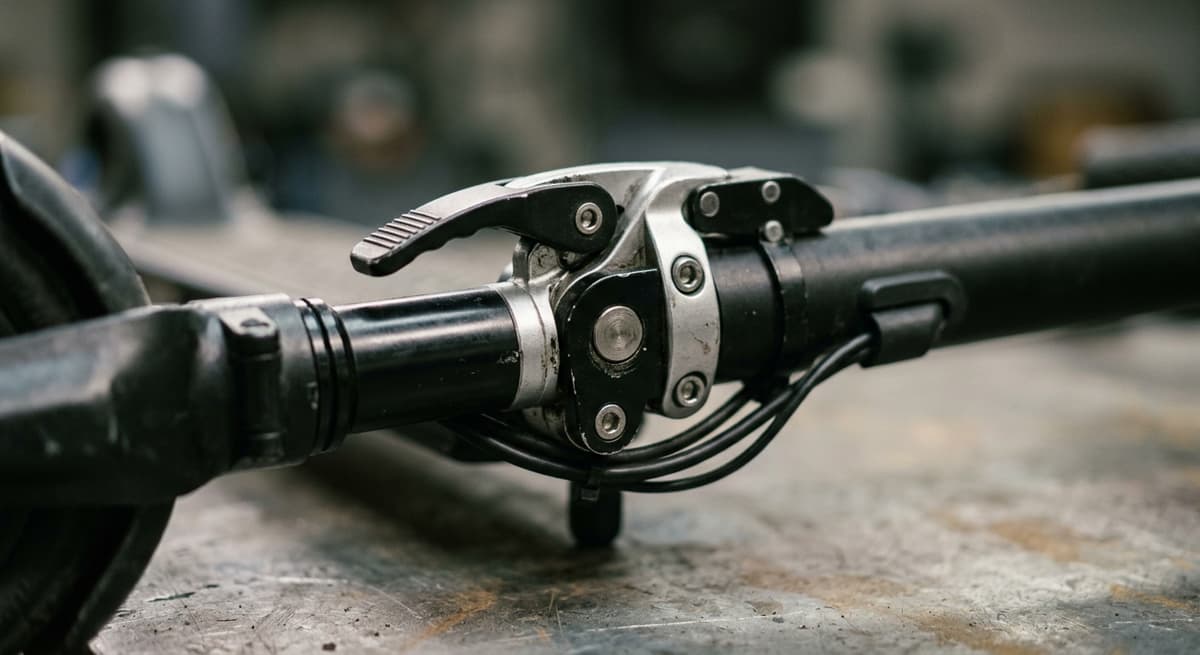
The province sets the default: no highway, no sidewalk, private property only, unless a special permit applies. Within that framework, Calgary and Edmonton each decide where their exempted rental fleets may operate, and the two cities have drawn different lines.
Calgary permits shared e-scooters on bike lanes, the city's 900+ km paved pathway network, "quiet" sidewalks with a furniture zone and 2 metre clearance, and low-traffic roads, under Traffic Bylaw 26M96 and the Parks and Pathways Bylaw. Busy roadways such as Macleod Trail, and the Bow River pedestrian pathways, are off limits.
Edmonton permits shared e-scooters on shared pathways, bike lanes, and roads posted 50 km/h or under. Sidewalks and non-City park trails are prohibited, and a geofenced exclusion zone on Whyte Avenue between 112 and 97 Street slows scooters to 10 km/h before stopping them entirely.
Calgary's possible exception for personally owned scooters (unconfirmed)
Calgary's electric scooter program page is reported to state that personally owned e-scooters may operate on the pathway network under the Parks and Pathways Bylaw, separate from the shared rental program. If accurate, that would be a real carve-out: a municipal pathway may not meet the Traffic Safety Act's definition of a "highway," so a Parks bylaw could govern personal e-scooters on pathways independently of the province's highway ban.
This has not been confirmed against the text of Bylaw 26M96 or the Parks and Pathways Bylaw itself, so it should be treated as an open question rather than settled law. Anyone in Calgary relying on it to ride a personal e-scooter should read the bylaw directly, or contact the City, before assuming pathway use is permitted.
Rider rules for the shared programs
Because private e-scooters cannot legally be ridden at all, Alberta has no rider rules (age, helmet, licence, insurance) for personal use. The fact sheet's table for prohibited miniature vehicles simply marks every column, licence, age, registration, insurance, helmet, with "IT IS PROHIBITED TO OPERATE THESE VEHICLES ON ROADWAYS OR SIDEWALKS" rather than populating it.
The rider rules that do exist apply to the exempted shared programs:
- Calgary: riders must be 18 or older. Helmets are encouraged but not mandatory. Maximum speed is 20 km/h, reduced to 15 km/h in Slow Speed Zones covering the downtown core, Mission, Inglewood, and Kensington.
- Edmonton: riders must be 18 or older, one rider per scooter. Helmets are not mandatory; the City "strongly recommends" one and notes there are "no current provisions through the Traffic Safety Act for e-scooter users."
Penalties
No confirmed statutory penalty exists for operating a prohibited miniature vehicle on a highway or sidewalk in Alberta. General Traffic Safety Act or Provincial Offences Procedure Act exposure has been suggested in secondary sources, but it has not been verified against the actual penalty schedule, so no dollar figure or maximum sentence appears here.
Penalties do exist for misuse of the shared programs themselves:
- Calgary: $400 for reckless operation or causing a collision, $75 for carrying a passenger.
- Edmonton: $250 fine under the Public Spaces Bylaw.
Enforcement in practice
No Calgary Police Service or Edmonton Police Service ticket counts or enforcement data for e-scooters have been published. A search of both departments' media pages, and both cities' program pages, turned up penalty amounts but no counts of citations actually issued.
Edmonton has said its Peace Officers keep a "focus on education rather than ticketing" when enforcing the shared program's rules, which is the closest thing to a documented enforcement posture found for either city.
The only injury data available is national, not Alberta-specific: Canadian pediatric surveillance reported that 10 children died in 2025 from e-scooter and e-bike injuries nationwide, with 57 severe pediatric injuries, and riders aged 10 to 15 accounting for 42% of cases. That figure describes Canada as a whole, not Alberta.
What being widely ridden doesn't change
That personal e-scooters are common on Calgary and Edmonton streets despite the ban does not make riding one safe from consequence, and it is not a defence. A rider stopped tomorrow is judged against the Traffic Safety Act as written, not against how often it has gone unenforced.
Because a personal e-scooter cannot be registered or insured in Alberta as a motor vehicle, an owner involved in a collision can be personally exposed for the other party's losses, without a policy behind them the way a licensed driver would have. Legal-press coverage has reported on a 2026 Alberta Court of King's Bench decision, cited as Le Prieur v Aviva Insurance Company of Canada, 2026 ABKB 452, in which an insurer denied no-fault Section B benefits to a rider struck by a car in an Edmonton bike lane, on the basis that his e-scooter met the definition of an "automobile" under the Insurance Act, excluding him from those benefits. That reporting has not been confirmed against the judgment itself, so it should be treated as a reported outcome rather than a settled precedent, but the underlying risk it illustrates, that insurance products built for drivers and cyclists may not cover an e-scooter rider either way, does not depend on that one case being confirmed.
Beyond insurance, a rider involved in a collision faces ordinary civil liability for any injury or property damage they cause. No general provincial impoundment power specific to e-scooters was documented in this research. None of that turns on whether police happen to be watching.
The policy gap is not settled
Alberta Municipalities and the Rural Municipalities of Alberta have both passed resolutions asking the province to modernize the Traffic Safety Act for personal e-scooter use. That is evidence the current gap between a provincial ban and everyday use in two major cities is viewed as a live policy problem by the municipalities living with it, not a settled position anyone is defending.
Frequently Asked Questions
Is it legal to own a personal e-scooter in Alberta?
No. Alberta's Traffic Safety Act and its regulations classify e-scooters as Prohibited Miniature Vehicles, not permitted on any highway or sidewalk. They may only be used on private property, unless the province has granted a special permit.
Why are Bird and Lime rental scooters legal in Calgary and Edmonton if e-scooters are banned?
Alberta Transportation grants a special exemption to each city's licensed rental vendors. That exemption covers the shared fleet, not privately owned scooters, so an identical personally owned scooter remains unlawful to ride.
What is the fine for riding an e-scooter illegally in Alberta?
No confirmed statutory penalty for operating a prohibited miniature vehicle has been verified. Fines that are confirmed apply to the shared programs' own rules: up to $400 in Calgary for reckless operation, and $250 in Edmonton under the Public Spaces Bylaw.
Can I ride my own e-scooter on Calgary's pathways?
Calgary's program page is reported to describe a carve-out for personally owned e-scooters on the pathway network under the Parks and Pathways Bylaw, but this has not been confirmed against the bylaw text. Anyone relying on it should read the bylaw directly, or contact the City, before assuming it applies.
Do police actually enforce Alberta's e-scooter ban?
No Calgary or Edmonton enforcement data, such as ticket counts, has been published. Edmonton has said its Peace Officers focus on education rather than ticketing for the shared program's rules, but that is not evidence about how the underlying provincial ban on personal e-scooters is enforced.
Is my e-scooter covered by insurance if I'm in a collision?
Personal e-scooters cannot be registered or insured as motor vehicles in Alberta, and legal-press reporting describes a 2026 Court of King's Bench case in which an insurer denied a rider's no-fault benefits because the e-scooter was found to meet the definition of an automobile. That reporting is unconfirmed against the judgment, but the coverage gap it points to is a real risk for any rider in a collision.
Updates
Independently fact-checked against the cited primary sources
Sources and References
- Use of Highway and Rules of the Road Regulation, AR 304/2002 (Alberta King's Printer, current consolidation)(kings-printer.alberta.ca).gov
- Owning and Operating a Small Vehicle in Alberta (Alberta Transportation fact sheet)(transportation.alberta.ca).gov
- Electric Scooters, City of Calgary(calgary.ca).gov
- Bike and E-Scooter Sharing, City of Edmonton(edmonton.ca).gov