
Canada
DUI and Impaired Driving Laws in Ontario: Suspensions, Impoundment, and Interlock
Independently fact-checked against primary sources (last audited August 16, 2026). · 5 primary sources cited on this page. How we verify our legal content
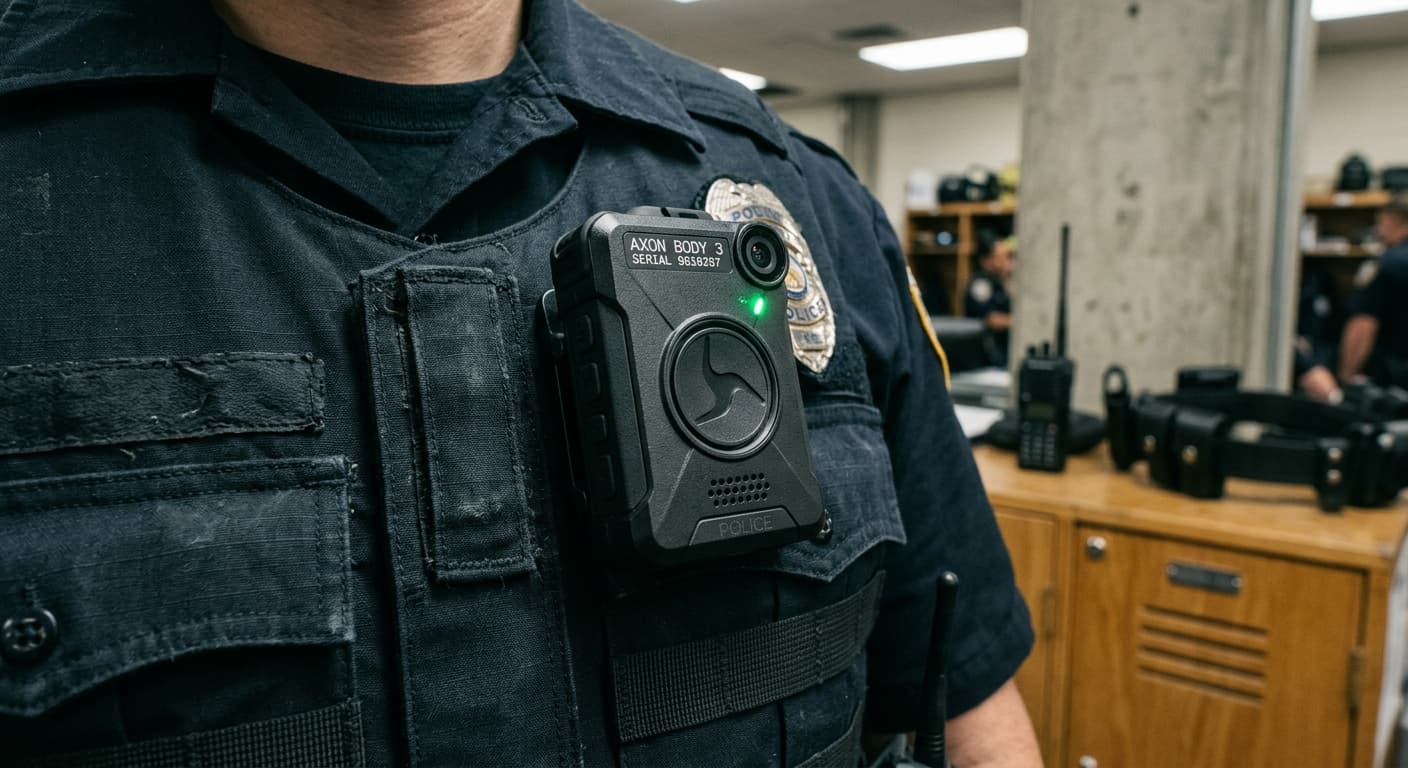
Ontario suspends a driver's licence at the roadside, before any court date, on two separate tracks: an escalating 7/14/30-day suspension for a warn-range breath test of 0.05 to 0.079, and a flat 90-day suspension with a 7-day vehicle impoundment for a reading of 0.08 or higher or a refusal to test, with a further set of consequences layered on afterward if a Criminal Code conviction follows.
Information last verified on 2026-08-15. This article has not yet been reviewed by a licensed lawyer.
The Two Roadside Suspensions
Ontario's Ministry of Transportation (MTO) suspends a driver's licence at the roadside, immediately, without waiting for a criminal charge or conviction. There are two separate tracks, and they trigger on different breath-test results.
Warn range (BAC 0.05 to 0.079) applies to every driver, not just novices or commercial drivers, and escalates by occurrence:
| Occurrence | Roadside suspension | Program requirement | Penalty |
|---|---|---|---|
| 1st | 7 days | 8-hour education course | $250 |
| 2nd | 14 days | 16-hour treatment program | $350 |
| 3rd | 30 days | 16-hour treatment program, plus ignition interlock condition for 6 months | $450 |
A relearn about this ladder is worth stating plainly, because a different figure circulates: the general-public warn-range ladder is 7, 14, then 30 days, not 3, 7, and 30 days. The 3-day figure is real, but it belongs to commercial drivers on a separate, flat scale (below), not to the general escalating ladder.
Administrative suspension (BAC 0.08 or higher, or refusal to comply with testing or evaluation) also applies to every driver, and it does not escalate the way the warn-range suspension does:
| Occurrence | Roadside suspension | Vehicle impoundment | Program requirement | Penalty |
|---|---|---|---|---|
| 1st | 90 days | 7 days | 8-hour education course | $550 |
| 2nd | 90 days | 7 days | 16-hour treatment program | $550 |
| 3rd | 90 days | 7 days | 16-hour treatment program, plus ignition interlock condition for 6 months | $550 |
A licence reinstatement fee applies every time either suspension ends. This scheme is often referred to informally as the Administrative Driver's Licence Suspension, or ADLS, a label well established in older Ministry handbook material and third-party summaries; the current public page describing it does not itself use that acronym, so treat 'ADLS' as accurate shorthand rather than a quotation from the live government page.
Vehicle Impoundment: Three Different Regimes
Ontario's vehicle impoundment rules are easy to conflate, and doing so overstates or understates what actually happens to a specific driver's vehicle. There are three separate impoundment triggers:
- The roadside 0.08-or-refusal suspension carries a 7-day vehicle impoundment. This impoundment is not appealable, according to the Ministry's own vehicle-impoundment page.
- A Criminal Code conviction for impaired driving, or for failing to remain at the scene of a collision, carries a separate, longer minimum 45-day impoundment. Only this impoundment can be appealed, through the Licence Appeal Tribunal, and even then the appeal is limited to recovering towing and storage costs rather than reversing the impoundment itself.
- Violating an ignition interlock condition triggers a third, distinct impoundment: 45, 90, or 180 days for a first, second, or third Criminal Code-stream offence, or 7 days on the administrative-suspension stream.
These are three different clocks tied to three different triggers, and a driver can encounter more than one of them across a single incident and its aftermath.
Back on Track: Ontario's Remedial Program
Ontario's mandatory remedial measures program is called Back on Track. It is run by CAMH (the Centre for Addiction and Mental Health) and administered through the program's own portal, remedial.net.

The program's own published fee is $894 for a Criminal Code impaired-driving conviction and $344 for an administrative suspension (2 or more warn-range or administrative suspensions within 10 years). A conviction requires three components: an assessment of about an hour, then either an 8-hour education workshop or a 16-hour group treatment workshop depending on what the assessment assigns, then a 6-month follow-up interview; the whole process can take up to 11 months. An administrative-suspension participant completes only the workshop portion, education after 2 suspensions or treatment after 3 or more, within up to 90 days. Registration is required within 7 days of the conviction or suspension, per the program's own instruction.
Ignition Interlock Program
Ontario's standard Ignition Interlock Program is mandatory after a Criminal Code impaired-driving conviction, or after 3 or more administrative suspensions within 10 years. The device is set to trigger at a BAC of 0.02.
Standard minimum condition periods, on the Criminal Code stream, are 1 year for a first offender, 3 years for a second offender, and 6 years for a third offender (following a minimum 10-year suspension). On the administrative-suspension stream, the minimum condition is 6 months after the suspension period ends. Failing the device or violating program conditions extends these periods further: 3-month or 6-month extensions for BAC failures, and 6-month, 18-month, or 3-year extensions for tampering or other violations, escalating with each additional violation.
The device itself is installed and maintained at the driver's own cost, through one of two approved providers, Smart Start Canada or Alcolock Canada. The Ministry does not publish a fixed fee schedule for either provider; its own page defers pricing questions to the providers directly. Treat any specific installation or monthly fee figure as something to confirm with the provider, not a government-published number.
A rule change took effect July 1, 2026. A new early-installation track, layered on top of the standard program rather than replacing it, rewards a driver who installs the device within 30 days of reinstatement and complies with the program: a first-time offender's device condition drops to 9 months (from the standard 1 year), and a second-time offender's drops to 2 years (from the standard 3 years). At the same time, a new minimum 6-month zero-alcohol, zero-drug 'P' condition now attaches automatically once a Criminal Code-stream driver's interlock condition is removed. Both of these apply where the underlying offence date is on or after July 1, 2026; offences before that date are not subject to the new P condition.
Reduced Suspension with Ignition Interlock Conduct Review Program
A separate program, the Reduced Suspension with Ignition Interlock Conduct Review Program, lets an eligible driver shorten their suspension in exchange for a longer interlock commitment. It runs three streams, labelled A, B, and D on the government's own page (there is no Stream C):
- Stream A (first-time offender, meeting tighter timing requirements): suspension reduced to a minimum of 3 months, interlock extended to a minimum of 9 months, versus the standard 1-year suspension and 1-year interlock.
- Stream B (first-time offender not meeting Stream A's timing requirements): suspension reduced to a minimum of 6 months, interlock extended to a minimum of 12 months.
- Stream D (second-time offender): suspension reduced to a minimum of 9 months, interlock extended to a minimum of 18 months, versus the standard 3-year suspension.
Eligibility requires a guilty plea and sentencing within 90 days of the offence date for Streams A and D, no bodily-harm or death conviction, no recent drive-while-disqualified conviction, and an alcohol-only offence rather than a drug-impaired one. Note that Stream A and the July 2026 early-installation track both land on a 9-month figure for first offenders, but they are separate mechanisms reached by different routes, one by reducing the suspension itself and the other by rewarding early device installation, and should not be treated as the same program.
Zero-Tolerance Drivers and the Post-Conviction 'P' Condition
Ontario applies a zero-alcohol, zero-drug condition to specific classes of drivers, not to the driving public generally:
- Drivers 21 and under, in any licence class.
- Any driver holding a novice licence (G1, G2, M1, or M2), regardless of age.
- Drivers of vehicles requiring an A through F licence class, or a Commercial Vehicle Operator's Registration (CVOR).
- Drivers of road-building machines.
A young or novice driver who fails a zero-tolerance screen faces the same warn-range and administrative-suspension penalty tables described above, plus an additional $60 to $1,000 fine on conviction, plus a further 30- or 90-day suspension or cancellation depending on age and licence class.
Commercial drivers are subject to the same underlying offence structure, but their roadside suspension is flattened to a 3-day immediate suspension at every occurrence, first, second, or third, rather than the general public's escalating 7/14/30-day ladder. This is the accurate source of the '3-day' figure that sometimes gets attached, incorrectly, to the general-public warn-range scheme above.
Separately, as of the July 1, 2026 changes described above, once a Criminal Code-conviction driver's ignition interlock condition is removed, a mandatory minimum 6-month 'P' condition (zero alcohol, zero drugs) attaches automatically, for offences on or after that date.
Post-Conviction Licence Suspension Ladder
A Criminal Code impaired-driving conviction adds its own, separate provincial licence-suspension ladder on top of everything above, under the Highway Traffic Act. As of the July 1, 2026 changes, the ladder runs:
- 1st conviction: licence suspension of at least 1 year, mandatory education or treatment, ignition interlock for at least 1 year, and (new) a minimum 6-month P condition after the interlock is removed.
- 2nd conviction within 10 years: suspension of at least 3 years, the same program stack, interlock for at least 3 years, and a P condition after removal.
- 3rd conviction within 10 years: lifetime suspension, which the Ministry describes as possibly reducible after 10 years for a driver who meets certain criteria, plus mandatory medical evaluation and interlock for at least 6 years, and a P condition after removal.
- 4th conviction within 10 years: lifetime suspension with no possibility of reduction.
- Impaired driving causing death is a separate, harsher tier regardless of how many prior convictions exist: a lifetime suspension the Ministry describes as possibly reducible after 25 years for a driver who meets certain criteria, plus mandatory medical evaluation and interlock for at least 6 years, and a P condition after removal.
This is a four-step ladder plus a distinct, harsher death-causing tier, not a flat three-step 1-year/3-year/lifetime structure; a third conviction and a fourth conviction land in materially different places, and causing a death is worse again than any conviction-count tier.
Reinstating a Suspended Licence
Reinstating a suspended Ontario licence costs $281, per a Ministry of Transportation page. This figure comes from a page last updated in 2024, noticeably older than most of the other pages behind this article, none of which contradicted it, but given how much of this scheme changed on July 1, 2026, confirm the current amount directly before relying on it. The fee does not apply if the suspension was for medical reasons. Re-examination requirements (written and road tests) scale with how long the licence class has lapsed: an eye test only for 1 to 3 years lapsed, written plus eye plus G1/G2 road tests for 3 to 10 years, and re-applying as a new driver entirely for 10 or more years.

Appeals
Appeal rights differ sharply depending on which consequence is at issue, and Ontario's public pages do not describe a uniform appeal route across all of them. The 45-day Criminal Code impoundment can be appealed to the Licence Appeal Tribunal, but only for a refund of towing and storage costs, not to undo the impoundment itself. The 7-day roadside impoundment tied to the 0.08-or-refusal suspension is stated plainly as not appealable. Ontario's published pages do not describe a separate, standalone appeal mechanism for the roadside suspensions themselves (the warn-range ladder or the 90-day administrative suspension), as distinct from appealing impoundment costs; whether such a route exists elsewhere was not confirmed and should not be assumed either way. A driver contesting the underlying stop or test result more often does so through the related criminal proceeding, where one exists, rather than through a distinct administrative appeal of the suspension.
The Criminal Track
Everything above is Ontario's provincial, administrative layer. A Criminal Code charge can still follow the same incident, independent of any roadside suspension, and it is not something an administrative program substitutes for. The federal offence, its mandatory-minimum fines, jail terms, and federal driving prohibitions are covered in full on impaired driving in Canada and DUI penalties in Canada; this page defers to those for the criminal numbers and covers only how they interact with Ontario's own suspension, impoundment, and interlock scheme above.
A Note on Warn-Range Readings
A reading in the 0.05 to 0.079 warn range is not a safe or permitted level to drive at. It is a range Ontario has chosen to penalize immediately, before a driver ever reaches the 0.08 threshold that opens the door to a Criminal Code charge, precisely because impairment below 0.08 is still a real risk. None of the escalating suspensions above should be read as describing a margin of safety.
Getting Help
A roadside suspension changes what a driver is legally allowed to do immediately, at the roadside, before any court process begins. Given how tightly the impoundment, remedial-program, and interlock rules interlock with each other, and how much changed on July 1, 2026, a lawyer should be consulted promptly after any roadside suspension or criminal charge.
For how a related conviction can affect a driver's demerit points, see Ontario demerit points. For contesting a related traffic ticket, see fighting a traffic ticket in Canada. For how graduated licensing intersects with the zero-tolerance rules above, see graduated licensing in Canada. Court records generated by a related charge are covered at Ontario court records. For how a conviction can show up on a background check, see criminal record checks in Canada; for cross-border travel consequences, see travelling with a criminal record and what counts as a felony in Canada.
Ontario's 7/14/30-day warn-range ladder is not the only approach in Central Canada; see DUI laws in Quebec, where the general adult population has no comparable warn-range suspension at all below the 0.08 criminal threshold.
Disclaimer
This article is informational only and is not legal advice. Several points remain genuinely unresolved from Ontario's published pages and are flagged rather than filled in: the bare Highway Traffic Act section numbers behind these programs (Ontario's e-Laws site could not be accessed to confirm them); the exact ignition interlock device installation and monthly provider fees (the Ministry defers these to Smart Start Canada and Alcolock Canada directly); whether a standalone administrative appeal exists for the roadside suspension itself, separate from appealing impoundment costs; and whether $281 remains the current reinstatement fee, given that figure's older source page. Confirm current figures and deadlines directly with the Ministry of Transportation, and consult a lawyer promptly after any roadside suspension or criminal charge.
Frequently Asked Questions
Is Ontario's warn-range suspension 3, 7, and 30 days, or 7, 14, and 30 days?
For the general driving public it is 7 days on a first occurrence, 14 days on a second, and 30 days on a third. The 3-day figure is real but applies only to commercial drivers, who get a flat 3-day suspension at every occurrence instead of an escalating ladder.
How long is a vehicle impounded after a 0.08 reading or refusal in Ontario?
7 days for the roadside administrative suspension itself. That is separate from the minimum 45-day impoundment that follows an actual Criminal Code conviction, and separate again from the 45, 90, or 180-day impoundment for violating an ignition interlock condition.
How much does Ontario's Back on Track program cost?
$894 after a Criminal Code impaired-driving conviction, and $344 after an administrative suspension (2 or more warn-range or administrative suspensions within 10 years), per the program's own published fee schedule.
What changed in Ontario's ignition interlock rules on July 1, 2026?
A new early-installation track lets a driver who installs the device within 30 days of reinstatement and complies cut a first-offence condition to 9 months and a second-offence condition to 2 years. A new minimum 6-month zero-alcohol 'P' condition also now attaches automatically once the interlock condition is removed, for offences on or after July 1, 2026.
Can you appeal a roadside licence suspension in Ontario?
The 7-day roadside impoundment tied to a 0.08 reading or refusal is stated as not appealable. Only the separate 45-day Criminal Code impoundment can be appealed, and only for a refund of towing and storage costs. A standalone appeal route for the suspension itself was not found on Ontario's published pages.
How much does it cost to reinstate a suspended licence in Ontario?
$281, according to a Ministry of Transportation page. That page was last updated in 2024, so confirm the current figure directly, particularly given how much of the surrounding scheme changed on July 1, 2026.
What happens after a third or fourth impaired driving conviction in Ontario?
A third conviction within 10 years brings a lifetime licence suspension that may be reduced after 10 years for a driver who meets certain criteria. A fourth conviction within 10 years brings a lifetime suspension with no possibility of reduction. Impaired driving causing death carries its own lifetime suspension, reducible only after 25 years.
Updates
Independently fact-checked against the cited primary sources
Sources and References
- Ontario.ca - Impaired driving(ontario.ca).gov
- Ontario.ca - Vehicle impoundment for suspended drivers' licences(ontario.ca).gov
- Back on Track remedial measures program (CAMH)(remedial.net)
- Ontario.ca - Ignition Interlock Program(ontario.ca).gov
- Ontario.ca - Reduced Suspension with Ignition Interlock Conduct Review Program(ontario.ca).gov
- Ontario.ca - Reinstate a suspended driver's licence(ontario.ca).gov