
Ontario
Ontario Hit and Run Laws: Penalties & Duties (2026)
Independently fact-checked against primary sources (last audited June 18, 2026). · 11 primary sources cited on this page. How we verify our legal content

Leaving the scene of a collision in Ontario is a federal criminal offence under Criminal Code section 320.16, which requires every driver to stop, give their name and address, and offer assistance to anyone injured. Failing to comply, depending on what the driver knew, can mean up to 10 years in prison, up to 14 years if someone was hurt, or life imprisonment if someone died. Ontario's Highway Traffic Act adds a parallel provincial duty to report any collision where damage exceeds $5,000.
Is Hit and Run a Crime in Ontario?
Yes. Hit and run is a serious criminal offence across all of Canada, including Ontario, under section 320.16 of the Criminal Code of Canada.
Section 320.16 was enacted as part of Bill C-46 (SC 2018, c. 21) and came into force on December 18, 2018. It replaced the former section 252, which has been fully repealed. Any guide or article still citing section 252 as the current hit-and-run law is out of date.
The offence applies to anyone who operates a "conveyance," a term defined in section 320.11 to include a motor vehicle, vessel, aircraft, or railway equipment. In the Ontario context this almost always means a motor vehicle, but the broader definition is worth noting.
The core criminal obligation under section 320.16(1) is straightforward: a driver who knows, or is reckless as to whether, their vehicle has been involved in an accident with a person or another conveyance must stop, give their name and address, and offer assistance if any person has been injured or appears to require assistance. Failing to do any of these things without a reasonable excuse is a criminal offence.
The phrase "reasonable excuse" matters. It is a fact-specific defence that a court assesses on the circumstances. For example, a driver who stopped briefly but was forced to leave a dangerous scene before exchanging information may be able to raise the defence. The excuse must, however, be genuine and proportionate.
One important point about how section 320.16 works: it does NOT contain the automatic presumption of guilt that existed in old section 252(2). Under the former law, failing to stop was treated, in the absence of evidence to the contrary, as proof that the driver intended to escape civil or criminal liability. That presumption was repealed along with section 252. Under the current law, the Crown must independently prove that the driver knew about the accident or was reckless as to whether one had occurred. This is a meaningful protection for drivers who genuinely did not realise a collision had happened.
For a comparison with how other jurisdictions handle this offence, see our guides on Canadian hit and run laws and US hit and run laws.
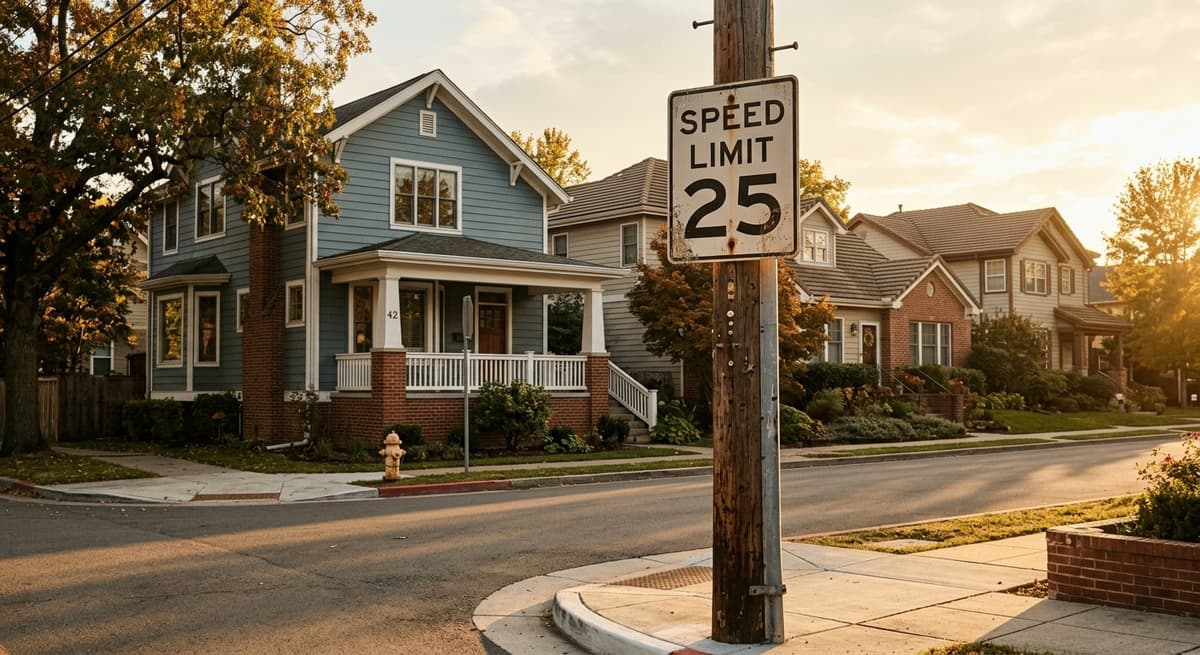
Your Legal Duties at the Scene of a Collision in Ontario
Two separate bodies of law govern your obligations after a collision in Ontario: the federal Criminal Code and the provincial Highway Traffic Act (HTA). Both apply simultaneously.
Under the Criminal Code (federal)
Section 320.16 requires every driver involved in an accident to:
- Stop the conveyance immediately.
- Give their name and address to anyone involved.
- Offer assistance to any person who has been injured or who appears to require assistance.
These duties apply regardless of who caused the collision and regardless of how minor it appears.
Under the Highway Traffic Act (provincial)
Sections 199 and 200 of Ontario's Highway Traffic Act impose additional provincial duties:
- Stop at or near the scene.
- Render all possible assistance.
- Provide your name, address, driver's licence number, vehicle permit details, and insurance information to any person involved in the collision and to any police officer at the scene.
- If the collision results in personal injury, death, or property damage exceeding the prescribed threshold, report it forthwith to a police officer.
The prescribed threshold was raised from $2,000 to $5,000 effective January 1, 2025, by an amendment to Ontario Regulation 596 under the HTA. This means that for collisions involving property damage below $5,000 and no personal injury, the duty to report to police under the HTA does not arise. The Criminal Code duties to stop, identify, and offer assistance always apply if there is any accident involving a person or another vehicle.
Where a driver cannot find the owner of an unattended vehicle they have struck, the HTA requires the driver to leave a written notice with their name, address, and details of the collision in a conspicuous place on or near the damaged property, and to report the accident to police as soon as possible.
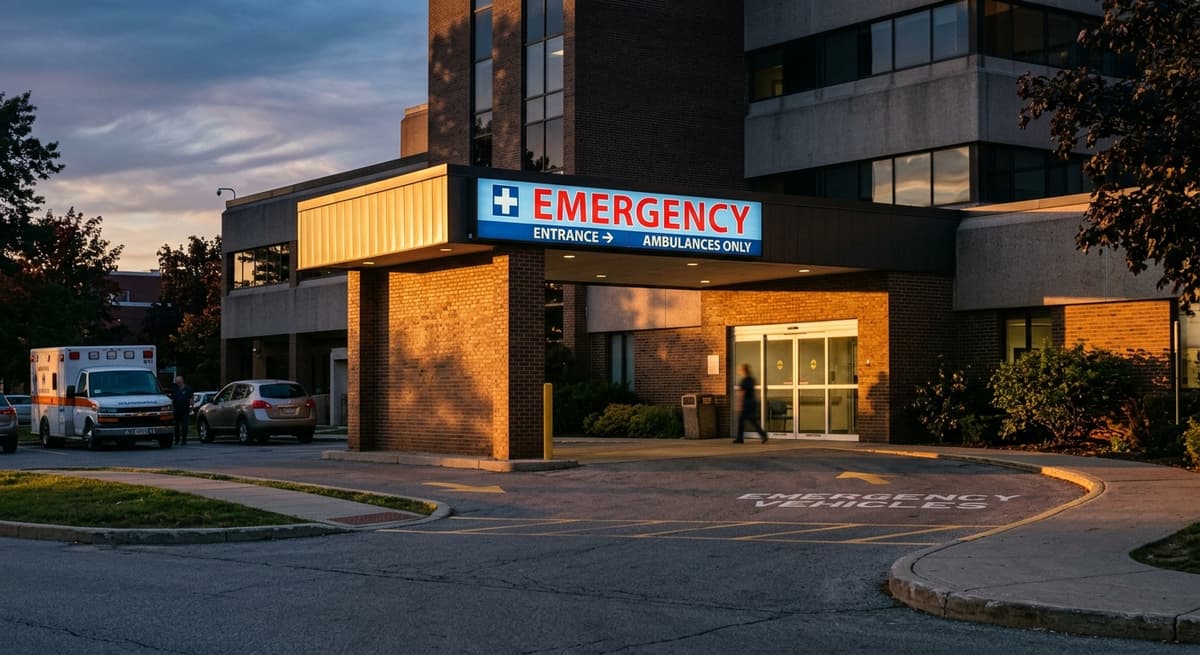
Criminal Penalties Under Section 320.16
Section 320.16 creates three tiers of criminal liability, with penalties escalating based on the harm caused.
Tier 1: No Injury (Section 320.16(1))
The basic offence is failure to stop, identify, or offer assistance where no injury is involved. It is a hybrid offence: the Crown can elect to proceed summarily or by indictment.
Under section 320.19(5), on indictment, the maximum penalty is 10 years imprisonment. On summary conviction, the standard maximum applies (generally up to 2 years less a day). There is no mandatory minimum sentence for this tier.
A criminal conviction carries a permanent criminal record, which can affect employment, professional licences, and travel to other countries.
Tier 2: Bodily Harm (Section 320.16(2))
If the driver knew, or was reckless as to whether, the accident resulted in bodily harm to another person, the enhanced offence under section 320.16(2) applies.
Under section 320.2, on indictment, the maximum penalty is 14 years imprisonment. Mandatory minimums also apply: a $1,000 fine for a first offence, 30 days imprisonment for a second offence, and 120 days imprisonment for subsequent offences. On summary conviction, the maximum is a $5,000 fine or 2 years less a day (with the same mandatory minimums).
Tier 3: Death (Section 320.16(3))
The most serious form of the offence applies where the driver knew, or was reckless as to whether, the accident resulted in the death of another person, or resulted in bodily harm to another person whose death subsequently ensued.
Under section 320.21, this is a straight indictable offence carrying a maximum of life imprisonment, with the same mandatory minimum scale as the bodily harm tier ($1,000 fine for a first offence, 30 days for a second, 120 days for subsequent offences).
Ontario Reporting Requirements and the $5,000 Threshold
Ontario's Highway Traffic Act operates separately from, and in addition to, the Criminal Code. While the Criminal Code deals with serious criminal liability, the HTA creates a provincial reporting framework for routine collisions.
The key figure is $5,000. As of January 1, 2025, Ontario Regulation 596 under the HTA sets the reporting threshold at $5,000 in total property damage. If a collision causes property damage that you reasonably estimate exceeds $5,000, you must report it to a police officer forthwith. If the police cannot attend the scene, Ontario directs drivers to a Collision Reporting Centre.
The $5,000 threshold applies to the reporting duty only. The duties to stop, identify yourself, and exchange information exist independently of the damage amount. Those obligations apply any time you are involved in a collision with another person or vehicle.
Collisions involving personal injury or death must be reported regardless of property damage.
The HTA also addresses situations where a driver strikes an unattended vehicle. In that case, the driver must make reasonable efforts to locate the owner, leave written contact information in a conspicuous place, and report to police as soon as reasonably possible.
Provincial Offences, Demerit Points, and Licence Consequences
Failing to comply with the HTA's accident duties is a provincial offence separate from any Criminal Code charge. A driver can face both simultaneously.
Failure to report a collision: A fine of up to $1,000, plus the provincial victim surcharge. Ontario's demerit point schedule assigns 3 demerit points for failing to report.
Failure to remain at the scene: Also a provincial offence under section 200 of the HTA, carrying a fine and demerit points. In more serious cases, the Registrar of Motor Vehicles may suspend a driver's licence.
Demerit point accumulation: Ontario's demerit system can trigger mandatory licence suspension when a driver accumulates enough points within a two-year period. A fully licenced driver faces a warning interview at 9 points and a mandatory suspension hearing at 15 points. Newly licenced drivers face lower thresholds under the Graduated Licencing System.
Insurance consequences: A hit-and-run conviction, whether criminal or provincial, will be disclosed to your auto insurer on renewal. A criminal conviction under section 320.16 will typically result in significant premium increases or policy cancellation. Ontario's auto insurance market is regulated by the Financial Services Regulatory Authority of Ontario (FSRA).
Driving record: Both criminal driving offences and HTA convictions appear on an Ontario driver's abstract. A section 320.16 conviction is also listed on the National Safety Code driver abstract system used by commercial carriers.
What If the Other Driver Flees? Unidentified Drivers and the MVACF
If you are hit by a driver who leaves the scene and cannot be identified, you still have options for compensation under Ontario law.
The Motor Vehicle Accident Claims Fund (MVACF)
The MVACF is Ontario's insurer of last resort for victims of collisions involving unidentified or uninsured drivers. It is administered by the Ministry of Public and Business Service Delivery and Procurement.
Coverage limits under the MVACF are:
- Bodily injury: Up to $200,000 per accident, including pre-judgment interest and legal costs.
- Property damage: Up to $10,000 per accident, including interest and legal costs, with a $100 deductible. Note: vehicle damage is excluded from the property damage coverage.
To be eligible, you must generally reside in Ontario, have been involved in an accident in Ontario, and be unable to identify the other driver or vehicle. The Fund is explicitly a last resort, meaning you must exhaust any other available insurance before turning to the MVACF.
Your Own Auto Insurance Policy
Standard Ontario auto insurance policies include Uninsured Automobile Coverage, which responds to bodily injury claims arising from collisions with unidentified drivers. This coverage is regulated under the Insurance Act and the standard Ontario Automobile Policy. The SEF 44 Family Protection Endorsement, which many Ontario drivers carry, can top up your compensation to match what a fully insured at-fault driver would have owed.
Steps to take if you are the victim of a hit and run in Ontario:
- Call 911 immediately if anyone is injured.
- Report the collision to police (required for injury or damage over $5,000, and essential in any hit-and-run to create a record).
- Note any details about the fleeing vehicle: licence plate, colour, make, model, and direction of travel.
- Gather contact information from any witnesses.
- Notify your own insurer promptly, as Ontario policies typically require prompt notice of unidentified-driver claims.
- If no other insurance is available, contact the MVACF.
Recent Changes to Ontario Hit and Run Law
January 1, 2025: Reporting threshold raised to $5,000
The most significant recent change is the increase in the HTA collision-reporting threshold from $2,000 to $5,000, effective January 1, 2025. The amendment was made to Ontario Regulation 596 under the Highway Traffic Act. The change reduces the administrative burden on police and drivers for minor collisions while preserving the mandatory reporting duty for more significant property damage and all personal injury collisions.
December 18, 2018: Section 320.16 replaced section 252
Federally, the current criminal hit-and-run provision has been in place since December 18, 2018, when Bill C-46 (SC 2018, c. 21) brought Part VIII.1 of the Criminal Code into force. Section 320.16 replaced the former section 252 in its entirety. Key differences include: the use of the term "conveyance" (broader than the former "vehicle, vessel or aircraft"); the removal of the old section 252(2) evidentiary presumption; and modernised mens rea language requiring the Crown to prove knowledge or recklessness.
Related Canadian Guides
Frequently Asked Questions
Is hit and run a criminal offence in Ontario?
Yes. Leaving the scene of a collision in Ontario is a federal criminal offence under section 320.16 of the Criminal Code when the driver knew, or was reckless as to whether, they were involved in an accident. A conviction results in a criminal record. Minor property-damage collisions may also be prosecuted as a provincial offence under the Highway Traffic Act independently of any criminal charge.
What section of the Criminal Code applies to hit and run in Ontario?
Section 320.16, which came into force on December 18, 2018 as part of SC 2018, c. 21 (Bill C-46). The former section 252 was repealed by the same Act. Any reference to section 252 as the current law is out of date.
What must a driver do after a collision in Ontario?
Under the Criminal Code (s. 320.16), a driver must stop, give their name and address, and offer assistance to anyone injured. Under the Highway Traffic Act (ss. 199-200), a driver must also exchange licence, vehicle permit, and insurance information, and report the collision to police if there is any personal injury, death, or total property damage exceeding $5,000 (the threshold as of January 1, 2025).
What are the penalties for hit and run in Ontario?
Federal criminal penalties under s. 320.16: up to 10 years on indictment where no injury occurred; up to 14 years where bodily harm resulted; up to life imprisonment where death resulted. Provincial penalties under the Highway Traffic Act: fine up to $1,000, 3 demerit points for failure to report, and possible licence suspension. Both sets of penalties can apply simultaneously.
Does Ontario law presume guilt if you flee an accident?
No. The old section 252(2) of the Criminal Code contained an evidentiary presumption that failing to stop was proof of an intent to escape liability. That subsection was repealed in 2018 along with section 252. Under the current section 320.16, the Crown must independently prove that the driver knew or was reckless about the accident. There is no statutory presumption.
What does the $5,000 threshold mean in Ontario?
As of January 1, 2025, drivers in Ontario must report a collision to police if the total property damage is reasonably estimated to exceed $5,000, or if there is any personal injury or death. The threshold (raised from $2,000) applies to the HTA reporting duty only. The Criminal Code duties to stop, identify yourself, and offer assistance apply regardless of the damage amount.
What compensation is available if you are hit by an unidentified driver in Ontario?
Ontario's Motor Vehicle Accident Claims Fund (MVACF) pays up to $200,000 for bodily injury and up to $10,000 for property damage (excluding vehicles) from unidentified or uninsured drivers, as insurer of last resort. Your own auto insurance policy's Uninsured Automobile Coverage also responds to bodily injury from unidentified drivers. A police report is required.
Can you face both a criminal charge and a provincial offence for the same hit and run in Ontario?
Yes. The Criminal Code and the Highway Traffic Act operate independently. If a driver leaves the scene of a collision, they may be charged under federal Criminal Code section 320.16 and also face a provincial HTA offence (with fines and demerit points) for the same incident. The federal charge is more serious and results in a criminal record if convicted.
Updates
Independently fact-checked against the cited primary sources
The Law Behind This Article
This article rests on the statutory provisions below, held in our own legal record and retrieved from the official source. Tap a section to read the operative text.
Highway Traffic Act (Ontario)
s. 199Duty to report accidentIn force
(1) Every person in charge of a motor vehicle or street car who is directly or indirectly involved in an accident shall report the accident immediately to the nearest police officer and provide the officer the information concerning the accident as may be required by the officer under subsection (3)
Official text (excerpt) · last checked 2026-08-13 · Read the full text in our law library · Verify at ontario.ca
Criminal Code
s. 252RepealedRepealedcited in 26 of our articles
Official text (excerpt) · last checked 2026-08-12 · Read the full text in our law library · Verify at laws-lois.justice.gc.ca
Cited in 4 court opinions in our collectionLatest citing opinion in our collection: 2016
Opinions citing this section in our collection:
- R. v. Noël (Supreme Court of Canada 2002, 2002 SCC 67)
- R. v. White (Supreme Court of Canada 1999, [1999] 2 SCR 417)
- Casimiro Santos v. Canada (Citizenship and Immigration) (Federal Court 2013, 2013 FC 425)
Identified automatically from the court opinions citing this section — not a ranking of which case controls.
Also relied on in: Alberta Hit and Run Laws: Duties, Penalties & MVAC, British Columbia Hit and Run Laws: Duties and Penalties, Manitoba Hit and Run Laws: Penalties and MPI Claims
s. 320.16Failure to stop after accidentIn forcecited in 26 of our articles
(1) Everyone commits an offence who operates a conveyance and who at the time of operating the conveyance knows that, or is reckless as to whether, the conveyance has been involved in an accident with a person or another conveyance and who fails, without reasonable excuse, to stop the conveyance, give their name and address and, if any person has been injured or appears to require assistance, offer assistance. (2) Everyone commits an offence who commits an offence under subsection (1) and who at the time of committing the offence knows that, or is reckless as to whether, the accident resulted in bodily harm to another person. (3) Everyone commits an offence who commits an offence under subsection (1) and who, at the time of committing the offence, knows that, or is reckless as to whether, the accident resulted in the death of another person or in bodily harm to another person whose death ensues.
Official text (excerpt) · last checked 2026-08-12 · Read the full text in our law library · Verify at laws-lois.justice.gc.ca
Cited in 2 court opinions in our collectionLatest citing opinion in our collection: 2023
Opinions citing this section in our collection:
- R. v. Tim (Supreme Court of Canada 2022, 2022 SCC 12)
- Shaikh v. Canada (Public Safety and Emergency Preparedness) (Federal Court 2023, 2023 FC 634)
Identified automatically from the court opinions citing this section — not a ranking of which case controls.
Also relied on in: New Brunswick Hit and Run Laws: Penalties and Duties, Newfoundland and Labrador Hit and Run Laws: Penalties, Northwest Territories Hit and Run Laws (2025)
s. 320.21Punishment in case of deathIn forcecited in 22 of our articles
Everyone who commits an offence under subsection 320.13(3), 320.14(3), 320.15(3) or 320.16(3) is liable on conviction on indictment to imprisonment for life and to a minimum punishment of, (a) for a first offence, a fine of $1,000; (b) for a second offence, imprisonment for a term of 30 days; and (c) for each subsequent offence, imprisonment for a term of 120 days.
Official text (excerpt) · last checked 2026-08-12 · Read the full text in our law library · Verify at laws-lois.justice.gc.ca
Cited in 1 court opinions in our collectionLatest citing opinion in our collection: 2021
Opinions citing this section in our collection:
- Lin v. Canada (Citizenship and Immigration) (Federal Court 2021, 2021 FC 1329)
Identified automatically from the court opinions citing this section — not a ranking of which case controls.
Also relied on in: Careless Driving vs Dangerous Driving in Canada, DUI Penalties in Canada: Fines, Jail Time, and Bans, Nunavut Hit and Run Laws (2025)
Search our full record of Canadian federal law — every consolidated Act, in English and French →
Sources and References
- Criminal Code, RSC 1985, c C-46, s 320.16: Failure to stop after accident (current provision, in force 2018-12-18)(laws-lois.justice.gc.ca).gov
- Criminal Code, RSC 1985, c C-46, ss 320.19, 320.2: Punishment provisions for ss 320.16(1) and (2)(laws-lois.justice.gc.ca).gov
- Criminal Code, RSC 1985, c C-46, s 320.21: Punishment in case of death (up to life imprisonment)(laws-lois.justice.gc.ca).gov
- Criminal Code, RSC 1985, c C-46, s 252 (repealed): Former hit-and-run provision, repealed by SC 2018, c 21, s 14(laws-lois.justice.gc.ca).gov
- SC 2018, c 21 (Bill C-46): An Act to amend the Criminal Code (offences relating to conveyances), ss 14-15; in force 2018-12-18(laws-lois.justice.gc.ca).gov
- Criminal Code, RSC 1985, c C-46, s 320.11: Definition of conveyance (motor vehicle, vessel, aircraft, railway equipment)(laws-lois.justice.gc.ca).gov
- Ontario Highway Traffic Act, RSO 1990, c H.8, ss 199-200: Duty at scene of accident; reporting threshold $5,000 (effective January 1, 2025)(ontario.ca).gov
- Ontario Regulation 596 under the Highway Traffic Act: Prescribed threshold for collision reporting(ontario.ca).gov
- Ontario Motor Vehicle Accident Claims Fund: Coverage up to $200,000 bodily injury, $10,000 property damage; insurer of last resort for unidentified/uninsured drivers(ontario.ca).gov
- Justice Canada: Legislative Background, Bill C-46 Part VIII.1 Overview (failure to stop listed as s. 320.16)(justice.gc.ca).gov
- Parliament of Canada: Bill C-46 (42nd Parliament, 1st session) Royal Assent 2018-06-21(parl.ca).gov
- CanLII: SC 2018, c 21 (Bill C-46) full text confirming repeal of s. 252 and enactment of Part VIII.1(canlii.org)