
Ontario
Ontario Demerit Points: How the System Works (2026)
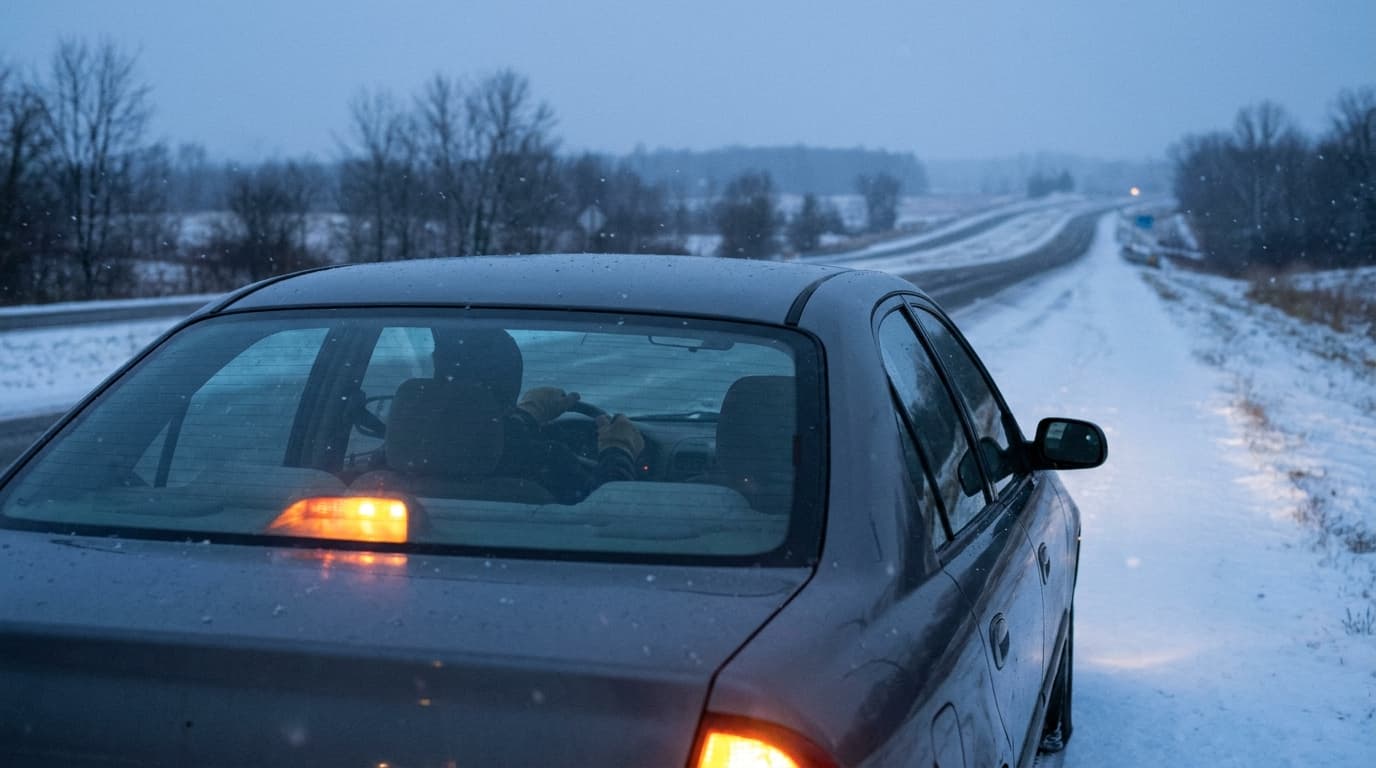
In Ontario, demerit points from a traffic conviction stay on your driving record for two years from the date of the offence, and a fully licensed driver who reaches 15 points faces a 30-day licence suspension while a novice (G1/G2/M1/M2) driver is suspended at just 9 points.
How Ontario's demerit point system works
Ontario tracks driving convictions through a point system set out in the Highway Traffic Act and Ontario Regulation 339/94. Every time you're convicted of a listed offence, whether you pay the ticket by mail or fight it and lose in court, the Ministry of Transportation (MTO) adds a fixed number of points to your driving record.
Those points are not permanent. Each one expires exactly two years after the date the offence happened, not the date you were convicted or the date you paid the fine. That distinction matters if a ticket takes months to work through the courts. A driver who is convicted 18 months after a speeding stop still has that point clear two years from the original stop, not two years from the conviction date.
The system escalates in stages. Ontario sends a warning letter once you reach a certain point total, follows up with a stronger warning (and sometimes an interview) if points keep piling up, and ultimately suspends your licence outright if you cross the top threshold. The thresholds are very different depending on whether you hold a full licence or a novice licence.
Thresholds for fully licensed drivers (G and M)
If you hold a full G or M class licence, the escalation ladder looks like this.
| Points accumulated | What happens |
|---|---|
| 6-8 | Warning letter from the Ministry |
| 9-14 | Second warning letter; the Ministry may require an interview to review your driving record |
| 15 or more | Licence suspended for 30 days |
A driver whose licence is suspended at 15+ points must surrender it to the Ministry. Failing to surrender it on request can extend the suspension for up to two years. Once the 30-day suspension period ends, your point total is not wiped to zero. It drops to 7 points, so a driver who racks up points again quickly can be suspended a second time much sooner than a driver starting fresh.
Thresholds for novice drivers (G1, G2, M1, M2)
Ontario's graduated licensing system holds new drivers to a much stricter standard, on the theory that less experienced drivers pose a higher risk at the same point total.
| Points accumulated | What happens |
|---|---|
| 2-5 | Warning letter |
| 6-8 | Second warning letter; the Registrar may require an interview before a Ministry official |
| 9 or more | Licence suspended |
The suspension length depends on whether it's a first or later suspension. A first novice suspension runs 60 days, or until two years have passed since the date of the suspension, whichever comes first. A second or later suspension runs six months under the same two-year cap. When a novice driver's licence is reinstated, their point total drops to 4, not 7, reflecting the lower novice thresholds.
Offence-by-offence demerit point chart
The number of points a conviction carries depends on how serious the Ministry considers the offence, independent of the fine amount. Some high-risk offences carry heavy points even though the fine itself may be modest, and vice versa.
| Offence | Demerit points |
|---|---|
| Failing to remain at the scene of a collision | 7 |
| Failing to stop for police | 7 |
| Careless driving (HTA s. 130) | 6 |
| Racing or stunt driving | 6 |
| Failing to stop for a school bus | 6 |
| Speeding 50 km/h or more over the posted limit | 6 |
| Speeding 30-49 km/h over the posted limit | 4 |
| Following too closely | 4 |
| Failing to stop at a pedestrian crossover | 4 |
| Speeding 16-29 km/h over the posted limit | 3 |
| Improper passing | 3 |
| Failing to yield, failing to stop at a sign, or disobeying a traffic light | 3 |
| Failing to obey a police officer's directions | 3 |
| Improper turns or failing to signal | 2 |
| Seatbelt or child car seat restraint violations | 2 |
Racing and stunt driving convictions are worth noting on their own, because Ontario treats stunt driving as a much bigger problem than the 6 demerit points alone suggest. A stunt driving charge under the province's street racing law triggers an immediate roadside licence suspension and vehicle impoundment even before the demerit points from a conviction are added. Our companion page on Ontario stunt driving penalties covers the roadside consequences and conviction-stage fines in full.
Handheld devices: points apply, but not for every driver
A common misconception is that using a phone behind the wheel never adds demerit points in Ontario. That was true before January 1, 2019, but the rule changed. For a fully licensed driver, a first distracted driving conviction now carries 3 demerit points along with a fine and a short suspension, and a second or later conviction carries 6 demerit points with a longer suspension and a bigger fine.
Novice drivers face an extra track. A G1, G2, M1, or M2 driver convicted of using a handheld device does not receive demerit points at all, but is suspended instead. That suspension is part of Ontario’s broader Escalating Penalties program, which applies to a novice driver convicted of any graduated-licensing violation or any Highway Traffic Act offence that carries four or more demerit points. Under it, the first qualifying conviction brings a 30-day suspension, the second a 90-day suspension, and the third removal from the graduated licensing program. Because a single qualifying conviction triggers it, a novice does not have to reach the 9-point cumulative threshold to lose their licence: one careless-driving or stunt-driving conviction, at 6 points each, can bring the 30-day escalating suspension on its own.
Careless driving versus dangerous driving
Careless driving under HTA s. 130 is a provincial offence, punished with a fine, demerit points, and in serious cases a short licence suspension or brief jail term. It is a different, more serious matter from dangerous operation of a motor vehicle under the federal Criminal Code, which is a criminal charge carrying a criminal record and the possibility of prison. See our page on careless driving versus dangerous driving for the full comparison, since drivers are often surprised at how differently the two are prosecuted.
Out-of-province and cross-border convictions
Ontario shares data with other Canadian provinces and, through reciprocal agreements, with some US states including New York and Michigan. A speeding or careless driving conviction earned while driving in another province, or in one of those bordering states, is generally reported back and added to your Ontario record at the same point value as an equivalent Ontario offence. A criminal driving conviction, such as impaired operation, carries its own automatic federal driving prohibition on top of any provincial demerit points or suspension.
Demerit points, fines, and insurance are three separate things
It helps to keep three consequences of a traffic ticket distinct. The fine is what you pay the court or pay to settle the ticket out of court. The demerit points are what the Ministry adds to your driving record and what pushes you toward the warning and suspension thresholds above. Insurance impact is a third, separate consequence: insurers pull your driving record (through an MTO abstract) when they price or renew your policy, and a conviction can raise your premium for several years even after the demerit points themselves have expired from the two-year clock. Paying a ticket promptly does not make the points, or the insurance consequence, disappear.
If you want to see where your own record sits against these thresholds, use our Canada demerit points lookup tool to estimate how close you are to a warning or suspension level. For the full picture of driving rules across Canada, start at our Canada driving laws hub.
Disclaimer: This article provides general information about Ontario's demerit point system and is not legal advice. For guidance on a specific ticket, suspension, or driving record, consult a licensed paralegal or lawyer, or contact the Ministry of Transportation directly.
Frequently Asked Questions
How long do demerit points stay on your record in Ontario?
Two years from the date of the offence, not the date of conviction. A point earned in a ticket that takes a year to work through court still clears two years after the original driving incident.
How many demerit points before you lose your licence in Ontario?
A fully licensed (G or M) driver is suspended for 30 days at 15 or more points. A novice driver (G1, G2, M1, or M2) is suspended at just 9 or more points, reflecting the stricter graduated licensing rules.
Do demerit points reset to zero after a suspension?
No. After a suspension ends and the licence is reinstated, the point total drops to 7 for a formerly full-licence suspension or 4 for a novice suspension, not to zero.
Does a handheld phone ticket add demerit points in Ontario?
For a fully licensed driver, yes. A first distracted driving conviction carries 3 demerit points and later convictions carry 6. Novice drivers do not get demerit points for this offence, but instead face longer licence suspensions.
Do demerit points from another province count in Ontario?
Generally yes. Ontario shares conviction data with most other provinces and has reciprocal reporting agreements with some bordering US states, so an out-of-province ticket is usually added to your Ontario record at the equivalent point value.
Is careless driving the same as dangerous driving in Ontario?
No. Careless driving is a provincial Highway Traffic Act offence carrying demerit points and a fine. Dangerous driving is a federal Criminal Code offence carrying a criminal record and possible prison time, and is prosecuted separately from the demerit point system.
Updates
Ontario raised the demerit point and fine penalties for distracted driving with a handheld device, moving from 0 points to 3 points on a first conviction and 6 points on later convictions for fully licensed drivers, while novice drivers were moved to a suspension-only penalty structure.
The Law Behind This Article
This article rests on the statutory provisions below, held in our own legal record and retrieved from the official source. Tap a section to read the operative text.
Highway Traffic Act (Ontario)
s. 130Careless drivingIn forcecited in 3 of our articles
(1) Every person is guilty of the offence of driving carelessly who drives a vehicle or street car on a highway or in a specified place without due care and attention or without reasonable consideration for other persons using the highway or specified place. 2024, c. 27, Sched. 8, s. 11 (1). Penalty
Official text (excerpt) · last checked 2026-08-13 · Read the full text in our law library · Verify at ontario.ca
Also relied on in: Careless Driving vs Dangerous Driving in Canada
Criminal Code
s. 320.13Dangerous operationIn forcecited in 4 of our articles
(1) Everyone commits an offence who operates a conveyance in a manner that, having regard to all of the circumstances, is dangerous to the public. (2) Everyone commits an offence who operates a conveyance in a manner that, having regard to all of the circumstances, is dangerous to the public and, as a result, causes bodily harm to another person. (3) Everyone commits an offence who operates a conveyance in a manner that, having regard to all of the circumstances, is dangerous to the public and, as a result, causes the death of another person.
Official text (excerpt) · last checked 2026-08-12 · Read the full text in our law library · Verify at laws-lois.justice.gc.ca
Cited in 5 court opinions in our collectionLatest citing opinion in our collection: 2026
Opinions citing this section in our collection:
- R. v. Wolfe (Supreme Court of Canada 2024, 2024 SCC 34)
- R. v. Calderon (Court Martial Appeal Court of Canada 2026, 2026 CMAC 2)
- Lin v. Canada (Citizenship and Immigration) (Federal Court 2021, 2021 FC 1329)
Identified automatically from the court opinions citing this section — not a ranking of which case controls.
Search our full record of US law — 2.1 million sections, every state + federal →
Sources and References
- Ontario.ca — Understanding demerit points(ontario.ca).gov
- Ontario.ca — Distracted driving penalties(ontario.ca).gov
- Ontario Regulation 339/94 — Demerit Point System (Highway Traffic Act)(ontario.ca).gov
- Highway Traffic Act, R.S.O. 1990, c. H.8, s. 130 (careless driving)(ontario.ca).gov
- Criminal Code, R.S.C. 1985, c. C-46, s. 320.13 (dangerous operation)(laws-lois.justice.gc.ca).gov