
Canada
Window Tint Laws in British Columbia: The Outright Front-Window Ban
Independently fact-checked against primary sources (last audited August 16, 2026). · 5 primary sources cited on this page. How we verify our legal content
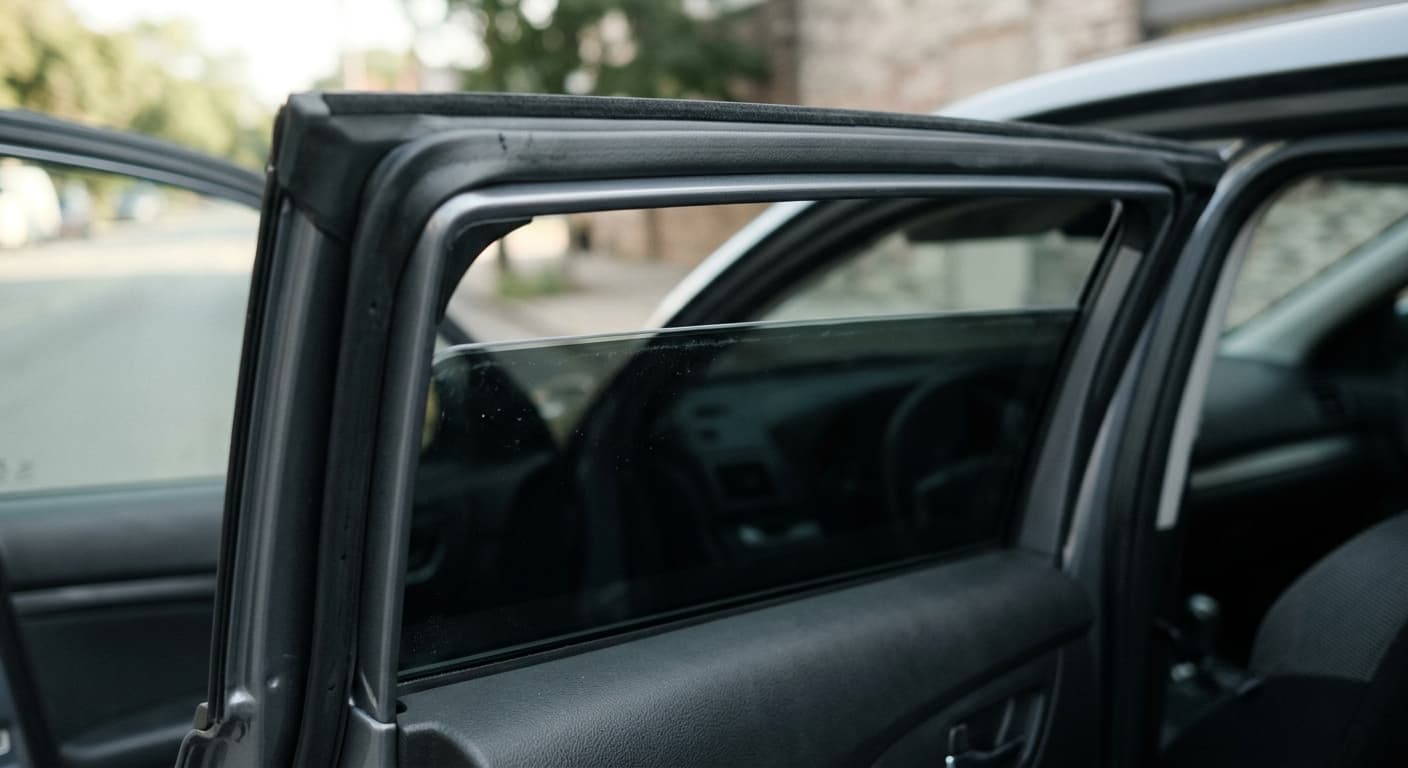
British Columbia bans aftermarket tint film on the front driver and front passenger windows outright, with no visible light transmittance percentage involved at all, while allowing a measured 75 mm strip across the top of the windshield and unrestricted-darkness tint on rear windows once the vehicle has outside mirrors on both sides.
Information last verified on 2026-08-16. This article has not yet been reviewed by a licensed lawyer.
No Percentage Exists for BC's Front Windows
British Columbia's Motor Vehicle Act Regulations, B.C. Reg 26/58 ("MVAR"), Division 7, section 7.05(8), does not set a visible light transmittance percentage for any window in the province. Instead of a darkness threshold, the regulation works by naming the only three locations where any light-reducing material may be placed on a vehicle at all:
- The windshield, but no more than 75 mm below its top edge
- A side window that is behind the driver
- The rear window, if the vehicle has outside rear view mirrors on both sides
The front driver and front passenger windows are absent from that list. Because the regulation is written as a list of allowed locations rather than a darkness limit, leaving a location off the list makes tint there illegal at any darkness, including a barely visible film. A tint shop or search result describing BC's rule with a percentage is describing a different province's law, not BC's. For how the rest of the country handles this same question, see window tint laws in Canada, which lays out the mix of outright bans and percentage standards used province by province.
The 75 mm Windshield Strip
The regulation's own text, quoted directly, prohibits material that reduces light transmitted through the windshield or a window unless it is affixed to the windshield but not more than 75 mm below the top of the windshield, to a side window behind the driver, or to the rear window with dual outside mirrors present. ICBC's own claims-procedure page confirms the same 75 mm figure and cites section 7.05(8) by number. There is no percentage version of this allowance and no reference to the US "AS-1 line" concept anywhere in the regulation.
Front Side Windows: An Outright Ban
Because front side windows are not one of the three permitted locations, no aftermarket film or tint of any darkness may be affixed to the driver or front passenger window. This is corroborated independently by two official sources beyond the regulation text itself: ICBC's claims-procedure page lists the same three allowed locations with the front doors absent, and an RCMP detachment FAQ states plainly that no tint of any kind, including light tint, is permitted on the front side windows. A driver cannot buy their way into legality with a lighter film. The only lawful state for BC's front side windows is no aftermarket film at all.
Rear Side Windows and the Mirror Condition
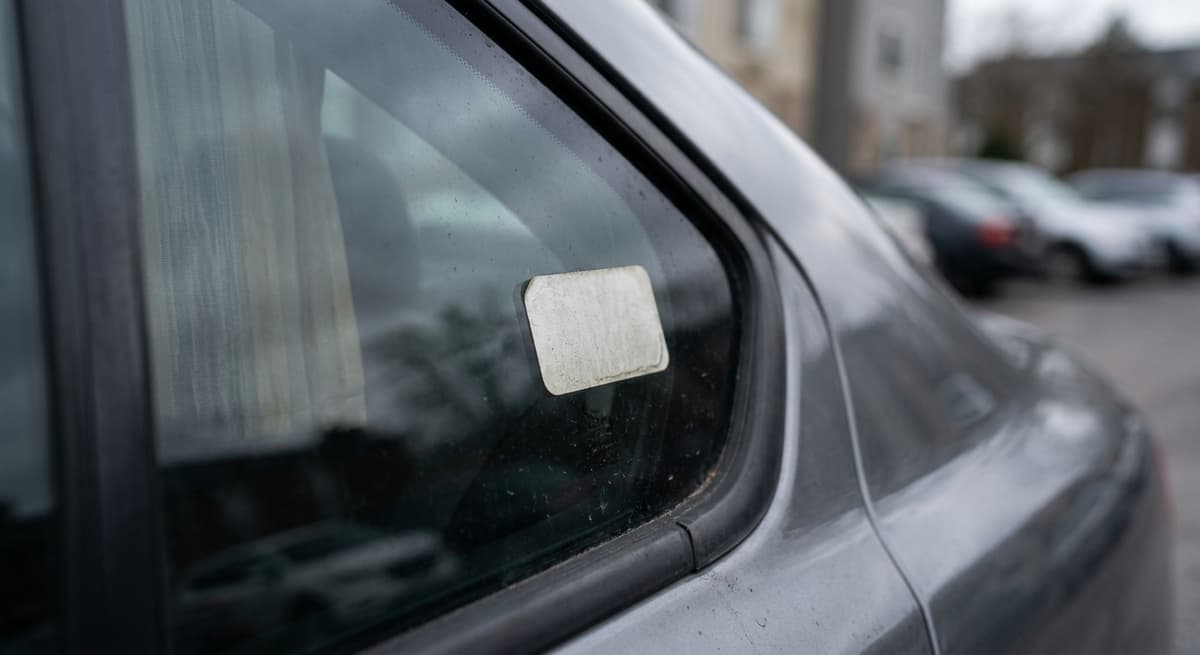
Rear side windows, the windows behind the driver, may carry film of any darkness; the regulation states no percentage limit for them. The rear window is treated the same way, unrestricted darkness, but only if the vehicle is already equipped with outside rear view mirrors on both the left and right sides. Nearly every modern passenger vehicle meets that mirror condition as a matter of course, but the regulation still states it as a legal precondition rather than an assumption, so a vehicle missing one of its exterior mirrors would technically lose the rear-window tint allowance until the mirror is restored.
Reflectivity and Color: What BC Does Not Regulate
Section 7.05 regulates only how much light a material transmits, not how reflective it is. A full search of the equipment division found no reflectivity percentage cap anywhere, and no restriction on film color, no ban on red, amber, or mirrored finishes. Those claims circulate on tint-shop sites but have no support in the regulation text or in either official secondary source checked for this article. Treat any color-restriction claim for BC as unverified.
Factory Glass vs Aftermarket Film
The regulation draws an explicit line between the two. Section 7.05(8) governs film "affixed to or placed on" the glass, the aftermarket case covered above. Section 7.05(9) instead sends factory-tinted glass to a federal standard: if a vehicle contains manufactured glass, the tint built into that glass must meet the minimum light transmittancy requirements under the Canadian Motor Vehicle Safety Standards, rather than BC's own location rule. The specific federal transmittance figure sits outside this article's scope.
Fines: The Schedule Controls, and It Does Not Match the RCMP's Number
The Violation Ticket Administration and Fines Regulation, B.C. Reg 89/97, Schedule 3, ties a section 7.05(1) "windshield or window that impairs driver vision" violation to a specific ticketed amount: $56 if paid within 30 days, or $81 after 30 days, built from a $45 or $70 base fine plus an $11 victim surcharge levy. That schedule entry is the authoritative figure because it is the current, official fine table with the exact offence code matched to the tint provision.
An RCMP Mission Detachment FAQ page states a different number, that a tint stop "typically carries a fine of $109." A search of the entire Motor Vehicle Act block of Schedule 3 for a matching $109 tier found the same dollar figures attached to unrelated offences, such as failing to notify a change of information or failing to deliver an inspection report, but none tied to windshields, windows, or tint. The discrepancy is unresolved in the source material; this article follows the schedule, not the detachment FAQ, and readers should expect the $56 or $81 figures at the roadside rather than $109.
Failing to Comply With a Notice and Order
Enforcement can run on a second track separate from the ticket itself. Under Motor Vehicle Act section 219 and MVAR section 7.08, an officer can order a vehicle to a designated inspection point. RCMP calls this a "Box 2 Notice and Order." Ignoring that order, rather than the original tint, is what triggers the bigger number: Schedule 3 lists a "fail to comply with order" violation under section 25.30(4) at $573 if paid within 30 days, or $598 after, independent of and on top of the original tint ticket. This is the figure the RCMP page's $598 reference actually matches.
No Medical Exemption in BC
British Columbia has no statutory pathway to a darker-than-legal front-window tint for any medical reason. Section 7.05, read in full, contains no exemption clause and no reference to a medical certificate. The regulation's one nearby exemption, for antique and collector vehicles under section 7.01(2), does not extend to the light-transmission subsections. Targeted searches of ICBC's and the provincial government's own sites for a BC-specific medical tint program found none; only other jurisdictions' programs turned up. This is a documented negative, not a research gap: a driver with a genuine light-sensitivity condition has no waiver route inside BC's regulation as written.

Related Resources
For the province next door, where the same location-ban structure exists but the medical-exemption picture is the opposite, see window tint laws in Alberta. For the national picture across all thirteen provinces and territories, see window tint laws in Canada. For how a tint ticket fits into BC's broader impaired-driving and points system, see impaired driving in British Columbia and British Columbia demerit points. For contesting the ticket itself, see fighting a traffic ticket in Canada, and for a related equipment question, see dash cam laws in Canada.
Disclaimer
This article is informational only and is not legal advice. Two figures in this article are genuinely unresolved by the primary sources reviewed: the RCMP Mission Detachment FAQ's $109 initial-ticket figure, which contradicts the current $56/$81 schedule entry and is recorded here as unverified rather than adopted, and the specific Canadian Motor Vehicle Safety Standards light-transmittance figure that governs factory-tinted glass, which was outside this article's scope. Any claim that BC restricts tint film color or reflectivity is also unverified against the regulation text. Confirm current fees and requirements directly with ICBC or a licensed lawyer before modifying a vehicle's windows.
Frequently Asked Questions
Is there a VLT percentage for BC's front windows?
No. British Columbia's Motor Vehicle Act Regulations, section 7.05(8), lists only three locations where light-reducing film may be placed at all, and the front driver and passenger windows are not among them. There is no percentage to cite because the rule is a location ban, not a darkness threshold.
Can I tint my windshield in BC?
Only the top 75 mm, measured down from the top edge of the glass. That is a flat millimetre measurement, not a percentage, confirmed by both the regulation text and ICBC's own claims-procedure page.
What is the actual fine for illegal tint in BC?
The official Violation Ticket Administration and Fines Regulation, Schedule 3, sets $56 if paid within 30 days or $81 after 30 days for a section 7.05(1) violation. A commonly cited $109 figure from an RCMP detachment page does not match any tint-specific line item in the current schedule and should not be treated as authoritative.
Is there a medical exemption for tint in BC?
No. Section 7.05 contains no exemption clause and no reference to a medical certificate, and the regulation's nearby antique-vehicle exemption does not extend to the light-transmission subsections. Searches of ICBC's and the provincial government's own sites found no BC-specific medical tint program.
Can I tint my rear windows in BC?
Yes, with no stated darkness limit. Rear side windows are allowed outright, and the rear window is allowed as long as the vehicle has outside rear view mirrors on both the left and right sides.
What happens if I ignore an officer's order to fix illegal tint?
A separate, larger fine applies. Under MVAR section 25.30(4), failing to comply with an inspection Notice and Order carries a ticketed fine of $573 to $598, on top of the original tint ticket.
Updates
Independently fact-checked against the cited primary sources
Sources and References
- Motor Vehicle Act Regulations, B.C. Reg 26/58, Division 7, section 7.05 (Windshields and windows)(bclaws.gov.bc.ca).gov
- Violation Ticket Administration and Fines Regulation, B.C. Reg 89/97, Schedule 3(bclaws.gov.bc.ca).gov
- Motor Vehicle Act, RSBC 1996 c.318, section 219 (Equipment of motor vehicles)(bclaws.gov.bc.ca).gov
- ICBC - Aftermarket tinting rules (claims procedures)(mdp.partners.icbc.com).gov
- RCMP Mission Detachment - Traffic Services FAQs(rcmp.ca).gov