
Canada
Window Tint Laws in Quebec: The 70% Rule Police Can Measure at the Roadside
Independently fact-checked against primary sources (last audited August 16, 2026). · 4 primary sources cited on this page. How we verify our legal content
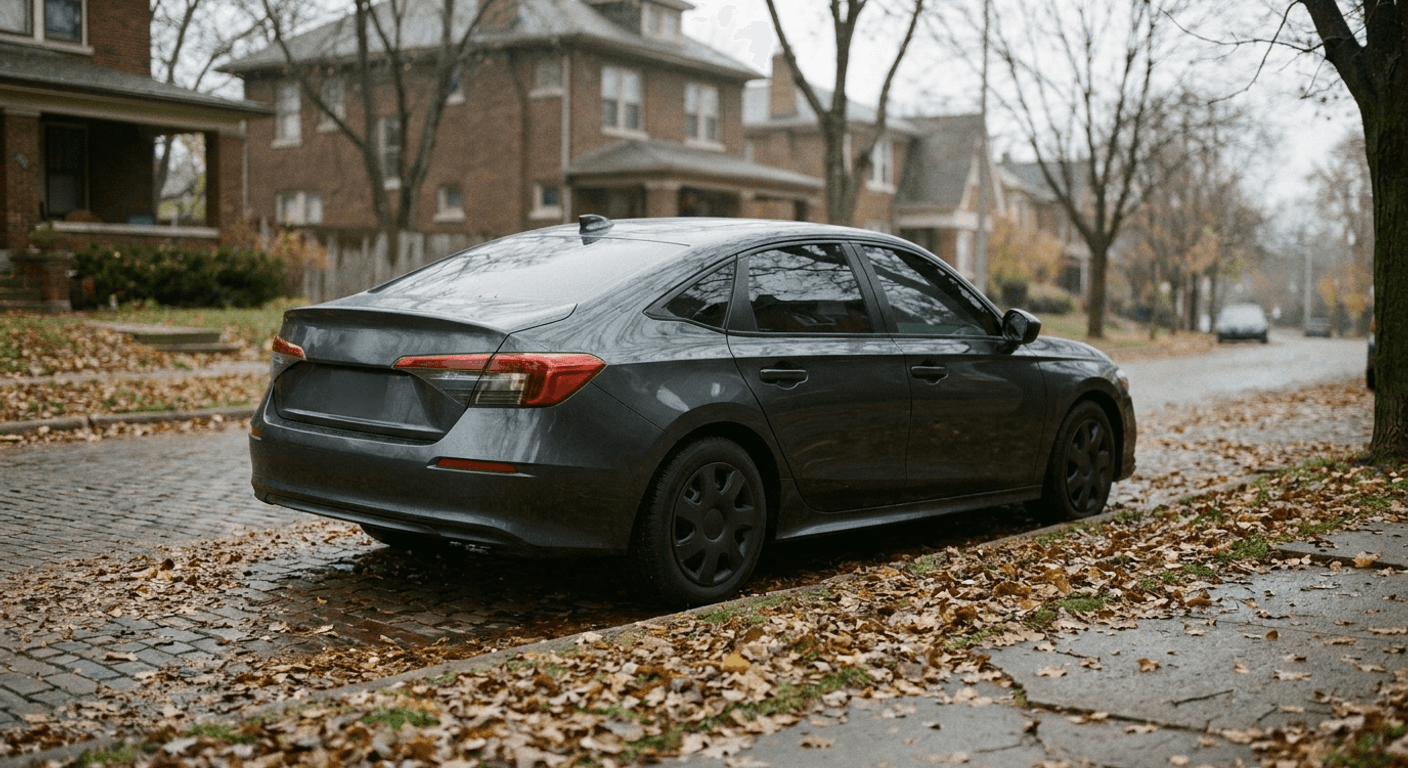
Quebec's Code de la sécurité routière sets a flat 70% light-transmittance floor for the front side windows of every vehicle, with no manufacture-date split, and officers can measure it directly at the roadside with a photometer, a structural difference from provinces where the equivalent percentage only applies at a certificate inspection.
Information last verified on 2026-08-16. This article has not yet been reviewed by a licensed lawyer.
A Qualitative Duty, a Regulated Number
Quebec's Code de la sécurité routière, article 265, sets a qualitative duty: the windshield and windows of a vehicle must conform to standards set by regulation to ensure the driver's visibility, and must be free of any material that could impair that visibility. Like Ontario's equivalent provision, article 265 itself contains no percentage; it delegates the numeric standard to a separate regulation, the Règlement sur les normes de sécurité des véhicules routiers, articles 63 and 64. Unlike Ontario, though, the numeric standard here is not confined to a certificate-inspection handbook. It sits in a regulation that officers enforce directly at the roadside, which changes how the rule plays out in practice. For how Quebec's approach compares with the rest of the country, see window tint laws in Canada.
The Windshield: No Darkening Material, Except a 15 cm Band
Article 64 bans any darkening or opaque material on the windshield outright, with one exception: a band up to 15 cm (150 mm) wide is allowed across the top of the windshield, the same kind of factory sun-strip common on most vehicles. There is no separate percentage test for the windshield itself and no manufacture-date split like Ontario's; the rule is the same for every windshield regardless of the vehicle's model year.
Front Side Windows: 70% or More, Measured by Photometer
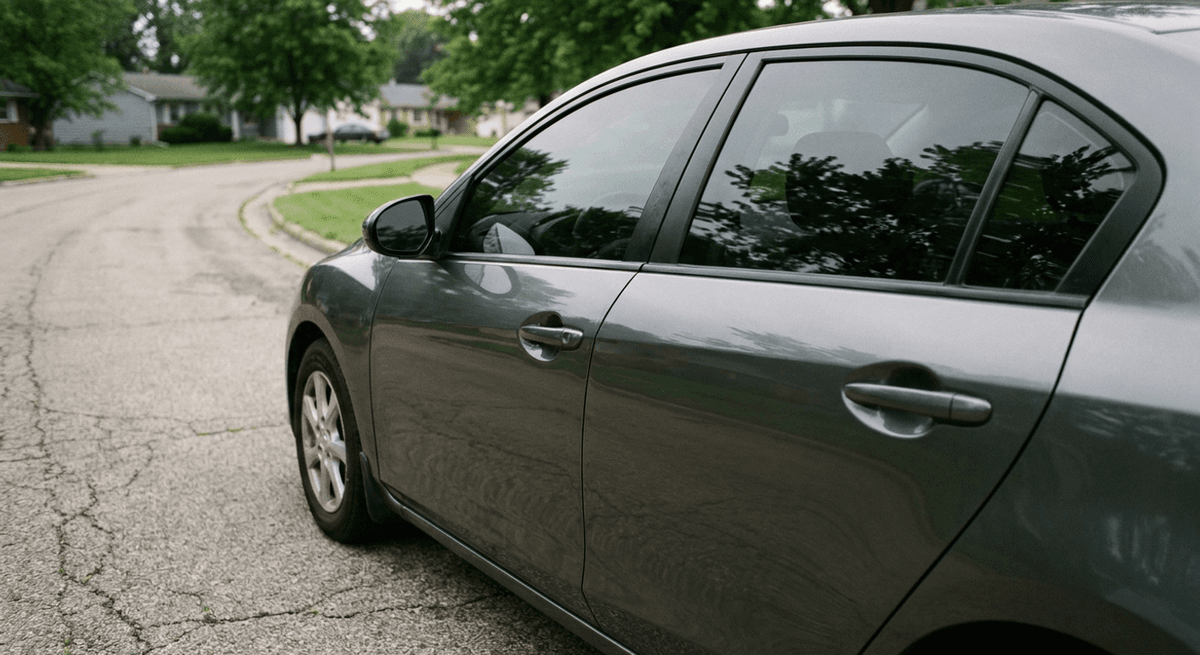
The front side windows, the windows on each side of the driver's compartment, must let through at least 70% of light, measured with a photometer, under the same article 64. This applies uniformly to every vehicle regardless of model year; Quebec has no equivalent to Ontario's January 1, 2017 manufacture-date carve-out. A separate provision, article 63, bans any material with mirror-like reflective properties from being applied to any window of the vehicle at all, a distinct rule from the light-transmittance test and one that is not limited to the front side windows.
Rear Windows: Explicitly Exempted
Both the rear side windows and the rear window itself are exempt from these rules. Regulation 32 contains no article governing their darkness at all, and the SAAQ's own current consumer page on tinted windows states this outright: the rear side windows and the rear window are not subject to these rules. A rear window or rear side window can be tinted as dark as an owner chooses without violating the Code or Regulation 32.
How Enforcement Actually Works: Roadside Photometer or a Verification Notice
Quebec's enforcement mechanism is a genuine structural difference from provinces where the percentage standard lives only in a certificate-inspection handbook. Article 539.1 gives an officer who cannot see through a vehicle's front side windows the power to either measure them directly at the roadside with a calibrated photometer, or issue a notice requiring the owner to bring the vehicle to an SAAQ-authorized inspection agent, a mandataire en vérification de véhicules routiers, for a formal photometric verification within a stated deadline. That verification produces a certificate recording the photometer's serial number and calibration date, the measured result, and the technician's identity, a documented paper trail rather than an officer's informal judgment call. Failing to get the vehicle verified within the deadline is its own separate offence. How commonly officers carry photometers as standard roadside equipment across the province, versus relying more often on the notice-and-verification path, was not confirmed in the sources checked for this article.
Fines: The Base Amount and What You'll Actually Be Charged
The Code's base statutory fine ranges are set out directly in its text:
| Scenario | Base fine (Code text) |
|---|---|
| Passenger-vehicle driver or owner, non-compliant windshield or front side windows | $100 to $200 |
| Heavy-vehicle driver | $90 to $270 |
| Heavy-vehicle owner or operator | $175 to $525 |
| Failing to get a vehicle verified after a notice | $300 to $600, heavy-vehicle driver $350 to $1,050 |
Those base figures do not include the procedural costs Quebec's Code of Penal Procedure adds to all provincial fines. The SAAQ's own current page states the real total a driver is charged, as of the page's stated update date: $154 to $274 for a passenger-vehicle driver or owner who fails a direct roadside photometric reading, and $438 to $865 for failing to get a vehicle verified within the deadline after a notice. Use the SAAQ figures as the amount a driver will actually see on a ticket; the Code articles above are the legal basis and the base amount before procedural costs are added.
The Margin Warning: Factory Glass Is Already Near the Line
SAAQ's own consumer guidance carries a genuinely useful warning: factory front side window glass on most vehicles already sits around 75% light transmittance, close to the 70% floor. Adding any film at all, even one marketed as clear or nearly transparent, typically lowers that figure by about 5 percentage points, which is enough on its own to push a vehicle under the legal minimum with essentially no margin for error.
No Medical Exemption in Quebec
No medical exemption for window tint darkness exists under the Code de la sécurité routière or Regulation 32. A full-text search of the Code for medical-related terms turns up provisions on medical fitness-to-drive reporting, an entirely separate part of the Code, with nothing tied to window tint. Regulation 32 has no medical or exemption language connected to glass or tint either. The SAAQ's own current consumer page on tinted windows describes the 70% rule, the enforcement scenarios, and the margin warning above with no mention of any medical exception or permit process.
Related Resources
For the province that splits its windshield rule by manufacture date and enforces its numeric standard only at certificate inspections rather than the roadside, see window tint laws in Ontario. For an overview of every province's tint structure, see window tint laws in Canada. For the province's impaired-driving suspension rules, see DUI and impaired driving in Quebec; for how demerit points work here, see Quebec demerit points. For fighting a ticket generally, see fighting a traffic ticket in Canada, and for dash cam rules, see dash cam laws in Canada.
Disclaimer
This article is informational only and is not legal advice. A few points here rest on partial confirmation: the exact day Décret 370-2016 came into force is not confirmed, only the year; the primary text of the Code of Penal Procedure mechanism that raises the Code's base fines to the SAAQ page's current charged totals was not located; and how commonly officers carry photometers as standard roadside equipment across the province, versus relying on the notice-and-verification path, was not confirmed. Confirm current fees and requirements directly with the SAAQ or a licensed lawyer before relying on any figure in this article.

Frequently Asked Questions
Does Quebec use a percentage standard for window tint?
Yes. Article 64 of Regulation 32 requires the front side windows to transmit at least 70% of light, measured with a photometer, and this applies to every vehicle regardless of model year, with no manufacture-date split.
What is the rule for the windshield specifically in Quebec?
No darkening or opaque material at all is allowed on the windshield, except a factory-style band up to 15 cm wide across the top. There is no separate percentage test for the windshield itself.
Can police measure my tint at the roadside in Quebec?
Yes. Article 539.1 lets an officer who cannot see through the front side windows either measure them directly with a calibrated photometer at the roadside, or issue a notice requiring a formal verification at an SAAQ-authorized inspection agent within a stated deadline.
Is the rear window regulated in Quebec?
No. The rear side windows and the rear window are explicitly exempted, confirmed both by the absence of any governing article in Regulation 32 and by the SAAQ's own consumer page, which states they are not subject to these rules.
How much is a window tint fine in Quebec?
The Code's base fine is $100 to $200 for a passenger vehicle. The SAAQ's own current page states the real charged total, after procedural costs, at $154 to $274 for a direct roadside failure and $438 to $865 for failing to get verified after a notice.
Is there a medical exemption for tint in Quebec?
No medical exemption for window tint darkness was found in the Code de la sécurité routière or Regulation 32. The SAAQ's own consumer page on tinted windows describes the rule and penalties with no mention of any exemption or permit path.
Is factory tinted glass in Quebec already close to the 70% limit?
Yes. SAAQ's own guidance states factory front side window glass typically sits around 75% light transmittance, and adding even a nominally clear film can lower that by about 5 percentage points, enough to push a vehicle under the 70% floor.
Is mirror-like or reflective tint film banned in Quebec?
Yes, outright. Article 63 bans any material with mirror-like reflective properties on any window of the vehicle, a separate rule from the 70% light-transmittance test and not limited to the front side windows.
Updates
Independently fact-checked against the cited primary sources
Sources and References
- Code de la sécurité routière, RLRQ c. C-24.2 (full text, current consolidation)(legisquebec.gouv.qc.ca).gov
- Règlement sur les normes de sécurité des véhicules routiers, RLRQ c. C-24.2, r. 32(legisquebec.gouv.qc.ca).gov
- SAAQ - Vitres teintées (official consumer guidance page)(saaq.gouv.qc.ca).gov
- SAAQ - Voir clair, une question de sécurité ! (official brochure)(saaq.gouv.qc.ca).gov