
Quebec
SAAQ Accident Claims in Québec: The No-Fault Scheme and the Bar on Suing for Bodily Injury
Independently fact-checked against primary sources (last audited September 24, 2026). · 4 primary sources cited on this page. How we verify our legal content
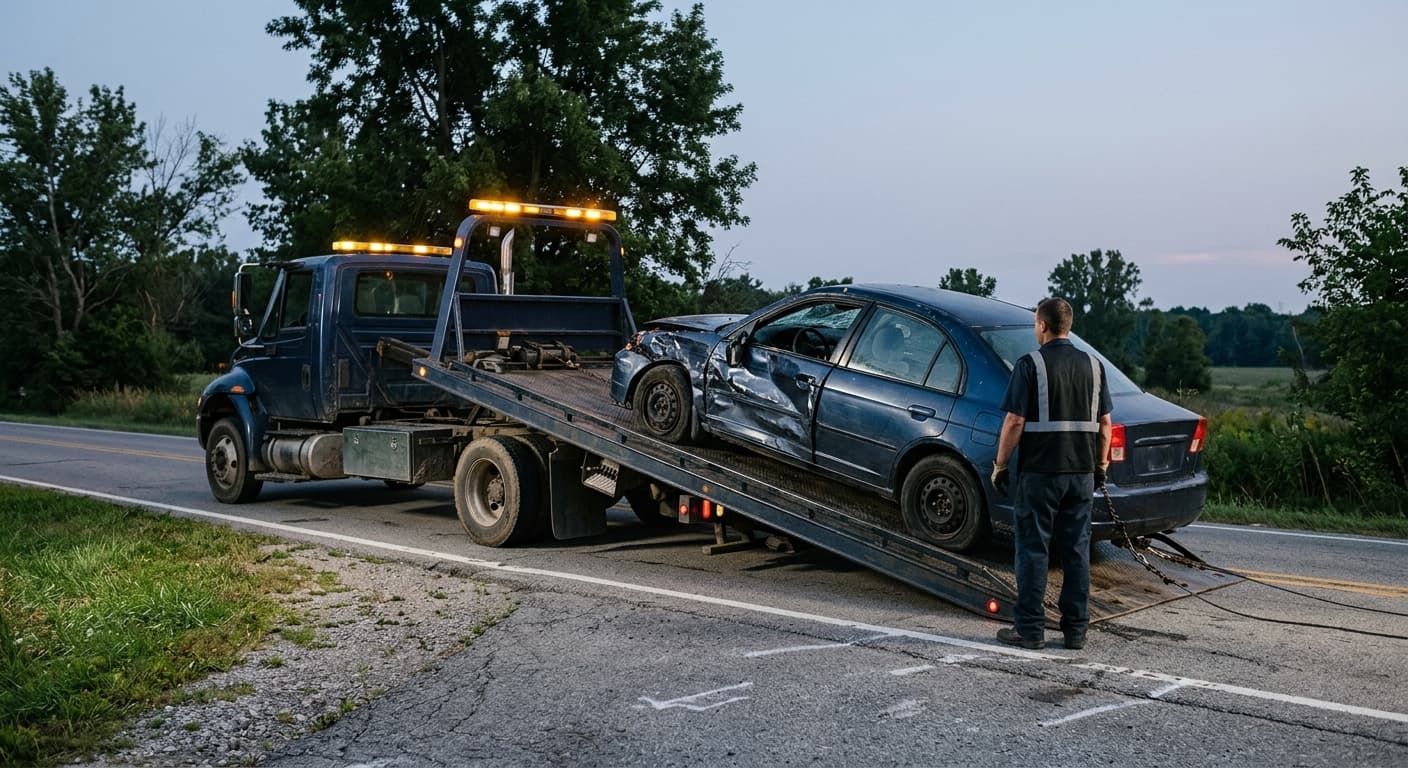
Québec runs a pure no-fault automobile insurance scheme administered by the Société de l'assurance automobile du Québec (SAAQ), and for an accident in Québec the Loi sur l'assurance automobile bars suing anyone for bodily injury caused by a car accident, with compensation coming only through the SAAQ's own indemnities.
Information last verified on 2026-09-24. This article has not yet been reviewed by a licensed lawyer.
This article addresses Québec's no-fault automobile accident indemnity scheme under the Loi sur l'assurance automobile, CQLR c A-25. It does not address any other province's insurance model; for a side-by-side comparison of every Canadian province and territory, see Car Accident Claims and Auto Insurance Across Canada. Quoted French statutory text is the official wording; the English rendering that follows each quote is an unofficial translation for the reader's convenience, not an official version of the law.
No-Fault, and an Absolute Bar on Suing for Bodily Injury
Québec's scheme starts from a single principle: compensation for a car accident does not depend on who caused it.
«Les indemnités accordées par la Société de l'assurance automobile du Québec en vertu du présent titre le sont sans égard à la responsabilité de quiconque.» (Loi sur l'assurance automobile, art. 5)
Unofficial rendering: indemnities granted by the SAAQ under this title are granted without regard to anyone's liability.
The scheme's other half is what sets it apart from the tort-based provinces covered on this site, which let an injured person sue subject to a threshold, a cap or a deductible: it is not just no-fault, it is also no-suit, and there is no carve-out for a severe injury.
«Les indemnités prévues au présent titre tiennent lieu de tous les droits et recours en raison d'un préjudice corporel et nulle action à ce sujet n'est reçue devant un tribunal.» (Loi sur l'assurance automobile, art. 83.57)
Unofficial rendering: the indemnities provided under this title stand in place of all rights and remedies for bodily injury, and no court will receive an action on that subject.
This is an absolute bar. A Québec resident injured in a Québec car accident cannot sue the at-fault driver for pain and suffering, medical costs, or lost income, regardless of how severe the injury is. That is a documented negative, not an assumption: the statutory text itself closes the door, and no severity-based exception like Ontario's threshold appears anywhere in the provisions creating the bar. The only route to compensation for bodily injury is the SAAQ's own no-fault indemnity.
The bar has a territorial limit. For an accident outside Québec, article 83.59 lets the person entitled to an SAAQ indemnity keep a lawsuit for the amount above it:
«La personne qui a droit à une indemnité prévue au présent titre à la suite d'un accident survenu hors du Québec peut bénéficier de celle-ci tout en conservant son recours pour l'excédent en vertu de la loi du lieu de l'accident.» (Loi sur l'assurance automobile, art. 83.59)
Unofficial rendering: a person entitled to an indemnity under this title following an accident that occurred outside Québec may receive it while keeping their remedy for the excess under the law of the place of the accident. Under article 83.60, the SAAQ is also subrogated to that person's rights and can recover what it pays from a liable non-resident. This is a rule about where the accident happened, not a severity exception: inside Québec, the bar applies to every injury.
What the Bar Does Not Touch
The bar on lawsuits is specific to court actions for bodily injury against another party in relation to the accident. It leaves two things untouched.

First, a private insurance policy. Article 83.58 is direct about this:
«Rien dans la présente section ne limite le droit d'une personne de réclamer une indemnité en vertu d'un régime privé d'assurance, sans égard à la responsabilité de quiconque.» (Loi sur l'assurance automobile, art. 83.58)
Unofficial rendering: nothing in this section limits a person's right to claim an indemnity under a private insurance plan, regardless of anyone's liability. A private disability policy, for example, is not affected by the SAAQ bar.
Second, a narrow route exists for a non-resident injured in a Québec accident. Article 9 gives a non-resident victim indemnity only in proportion to their own non-fault share, and preserves a right to go to court specifically to dispute the SAAQ's own fault determination against them, within 180 days of that decision. This is not a general right to sue the other driver; it is a dispute over how the SAAQ itself apportioned fault for calculating a non-resident's reduced indemnity.
Coordination-of-benefits provisions with Québec's workplace injury compensation board (CNESST) and crime-victims compensation also appear in the Act, but these are administrative offset rules between government schemes, not exceptions that allow a lawsuit against another driver.
Income Replacement: 90% of Net Income, Capped
The income replacement indemnity is set at a fixed percentage of net income.
«L'indemnité de remplacement du revenu d'une victime visée au présent chapitre est égale à 90% de son revenu net calculé sur une base annuelle.» (Loi sur l'assurance automobile, income-replacement chapter)
Unofficial rendering: the income replacement indemnity for a victim covered by this chapter equals 90% of their net income, calculated on an annual basis. Net income here means gross annual employment income up to the maximum insurable amount, minus income tax, Employment Insurance premiums, and Québec Parental Insurance Plan premiums.
That maximum insurable amount is confirmed directly on the SAAQ's own consumer page:
«Elle représente 90 % du revenu annuel net, calculé sur la base d'un revenu brut annuel qui ne peut dépasser 102 500 $.» (SAAQ, "Remplacement du revenu après un accident de la route")
Unofficial rendering: it represents 90% of net annual income, calculated on the basis of gross annual income that cannot exceed $102,500. That ceiling is the maximum annual insurable amount. Article 54 of the Act set it at $38,000 for 1989 and recalculates it every year from Statistics Canada average weekly earnings data for Québec, applying each new figure from January 1; the SAAQ page states that the maximum indemnity amount «est indexé chaque année» (is indexed every year). The $102,500 shown is the figure on the SAAQ page as last modified on December 22, 2025, so check the SAAQ's current page for the year of your accident.
Income replacement also does not start on day one. Article 83.20 provides that the indemnity is not due before the seventh day after the accident, and the SAAQ page states that no income replacement indemnity is paid for the first 7 days following the accident.
If a victim returns to a lower-paid job, the benefit is reduced by 75% of the net income earned from the new position, rather than dollar for dollar.
The Three-Year Claim Deadline
Québec gives a longer window to claim than some other provinces on this site, and it is important not to confuse the two.
«Le droit à une indemnité visée au présent titre se prescrit par trois ans à compter de l'accident ou de la manifestation du préjudice et, dans le cas d'une indemnité de décès, à compter du décès.» (Loi sur l'assurance automobile, on prescription of the right to an indemnity)
Unofficial rendering: the right to an indemnity under this title is extinguished three years from the accident or from when the injury manifests, or, for a death benefit, three years from the death. The SAAQ's own page confirms the same figure in consumer-facing terms: a maximum of three years from the date of the accident, the appearance of the injury, or the death to make a claim. This is three years, not two. A writer or reader carrying over Ontario's two-year limitation period into a Québec claim would be applying the wrong province's deadline. The three years is not absolutely final either: under the second paragraph of article 11, the SAAQ may allow a claimant to act after the deadline if, for serious and legitimate reasons («pour des motifs sérieux et légitimes»), they could not act sooner. Do not count on that discretion; claim within three years.
Requesting a Review, and Appealing to the Tribunal administratif du Québec
A person who disagrees with an SAAQ decision has two further steps available, each on its own clock.
The first is an internal review, called a demande de révision:
«une personne qui se croit lésée par une décision rendue par un fonctionnaire peut, dans les 60 jours de la notification de la décision, demander par écrit à la Société la révision de cette décision.» (Loi sur l'assurance automobile, on the right to request a review)
Unofficial rendering: a person who believes they have been wronged by a decision made by an official may, within 60 days of being notified of the decision, ask the SAAQ in writing to review that decision. Article 83.46 lets the SAAQ accept a late review request on the same serious and legitimate reasons test. The SAAQ generally has 90 days to decide the review, though that period can be extended if a medical examination or additional documents are needed; if the SAAQ misses the 90 days, the claimant may go directly to the Tribunal.
The second step, if the review decision is still unsatisfactory, is an appeal to the Tribunal administratif du Québec:
«Une personne qui se croit lésée par une décision rendue par la Société ou par une décision rendue en révision peut, dans les 60 jours de sa notification, la contester devant le Tribunal administratif du Québec.» (Loi sur l'assurance automobile, on the right to contest before the Tribunal)
Unofficial rendering: a person who believes they have been wronged by a decision of the SAAQ, or by a review decision, may contest it before the Tribunal administratif du Québec within 60 days of being notified of that decision. A decision granting the maximum indemnity or full expense reimbursement is not contestable, since there would be nothing further to award. Filing a review request or a Tribunal appeal does not pause payment of an indemnity that is already being paid.
Property Damage Is Handled Separately
The no-fault bodily-injury scheme described above does not cover property damage to a vehicle. Property damage runs through the private insurance system under the Convention d'indemnisation directe, a direct-compensation agreement among insurers. In general terms, a vehicle owner's property-damage claim goes to their own insurer where that agreement applies, rather than to another driver's insurer or to the SAAQ. If the owner is not satisfied with how their own insurer settled the claim under the agreement, article 116 preserves a remedy:

«Toutefois, le propriétaire peut, s'il n'est pas satisfait du règlement effectué suivant la convention, exercer ce recours contre l'assureur suivant les règles du droit commun dans la mesure où les articles 108 à 114 n'y dérogent pas.» (Loi sur l'assurance automobile, art. 116)
Unofficial rendering: however, an owner who is not satisfied with the settlement made under the agreement may bring that claim against the insurer under the general law, to the extent articles 108 to 114 do not derogate from it. In practice, that means the dispute is with your own insurer, not with the other driver. The detailed terms of the agreement itself were not reviewed for this article, so raise specific questions with your insurer or the Autorité des marchés financiers.
Disclaimer: This article provides general information about Québec's no-fault automobile accident indemnity scheme under the Loi sur l'assurance automobile, CQLR c A-25, current as of September 2026. It is not legal advice. Quoted French statutory text is followed by an unofficial English rendering for convenience only; the French text is the official wording. The maximum insurable income figure is indexed every year and the detailed terms of the Convention d'indemnisation directe were not reviewed, so check both directly with the SAAQ or the Autorité des marchés financiers before relying on them. This article does not encourage the use of a paid claim intermediary; Québec's scheme is designed so that a claimant deals directly with the SAAQ. Consult a lawyer licensed in Québec for advice on your specific situation.
Frequently Asked Questions
Can I sue the other driver after a car accident in Québec?
No, not for bodily injury. Article 83.57 of the Loi sur l'assurance automobile bars all court actions for bodily injury caused by an automobile accident, with no exception for a severe injury. Compensation for bodily injury comes only through the SAAQ's no-fault indemnity system.
Does the no-fault bar stop me from claiming on my own private insurance?
No. Article 83.58 preserves the right to claim under a private insurance policy, such as a disability policy, regardless of anyone's fault in the accident. The bar applies only to court actions against another party for bodily injury.
How much does SAAQ pay for lost income?
The income replacement indemnity is 90% of net income, calculated on a gross annual income that the SAAQ's own page confirms cannot exceed $102,500. That ceiling is recalculated every year under article 54 of the Act, so check the SAAQ's current page rather than assuming it stays fixed. No income replacement is paid for the first 7 days after the accident.
How long do I have to file an SAAQ claim?
Three years from the accident, from when the injury appears, or from the death, for a death benefit. This is longer than the two-year limitation period used in some other provinces, so do not assume a shorter deadline applies to a Québec claim. Under article 11, the SAAQ may allow a late claim if you could not act sooner for serious and legitimate reasons, but that is discretionary.
What if I disagree with an SAAQ decision?
You can request an internal review within 60 days of being notified of the decision. If you disagree with the review decision, you can appeal to the Tribunal administratif du Québec within 60 days of being notified of that review decision. Filing a review or an appeal does not stop payment of an indemnity you are already receiving.
What about damage to my car, not my injuries?
Property damage is not part of the no-fault bodily-injury scheme. It is handled through private insurers under the Convention d'indemnisation directe, so a vehicle owner's property-damage claim generally goes to their own insurer rather than to the SAAQ. An owner unhappy with that settlement can sue their own insurer under the general law, under article 116.
Updates
Independently fact-checked against the cited primary sources
Sources and References
- Loi sur l'assurance automobile, CQLR c A-25, art. 5, 83.57-83.60, 9 (no-fault indemnities; bar on lawsuits for bodily injury for accidents in Québec; out-of-Québec accidents; private insurance and non-resident exceptions)(legisquebec.gouv.qc.ca).gov
- Loi sur l'assurance automobile, CQLR c A-25 (income replacement indemnity at 90% of net income; reduction on return to lower-paid work)(legisquebec.gouv.qc.ca).gov
- Loi sur l'assurance automobile, CQLR c A-25 (three-year claim prescription; 60-day internal review; 60-day appeal to the Tribunal administratif du Québec)(legisquebec.gouv.qc.ca).gov
- SAAQ, "Remplacement du revenu après un accident de la route" (confirms current maximum insurable income of $102,500)(saaq.gouv.qc.ca).gov