
Quebec
Quebec Car Seat Laws: Booster Rules Under Article 397 (2026)
Independently fact-checked against primary sources (last audited August 14, 2026). · 9 primary sources cited on this page. How we verify our legal content
Quebec law requires any child under 145 centimetres tall or under 9 years old to ride in a restraint system or booster seat, under article 397 of the Code de la sécurité routière, but the statute itself sets almost nothing beyond that single threshold, leaving the rear-facing, forward-facing, and booster-weight stages to SAAQ guidance rather than to the Code.
Jurisdiction scope: This article covers Quebec's provincial child-restraint law under the Code de la sécurité routière and SAAQ (Société de l'assurance automobile du Québec) guidance. It does not cover other provinces or the federal Motor Vehicle Safety Act's manufacturing standards in detail beyond the touchpoint that matters for Quebec drivers.
What Quebec law actually requires
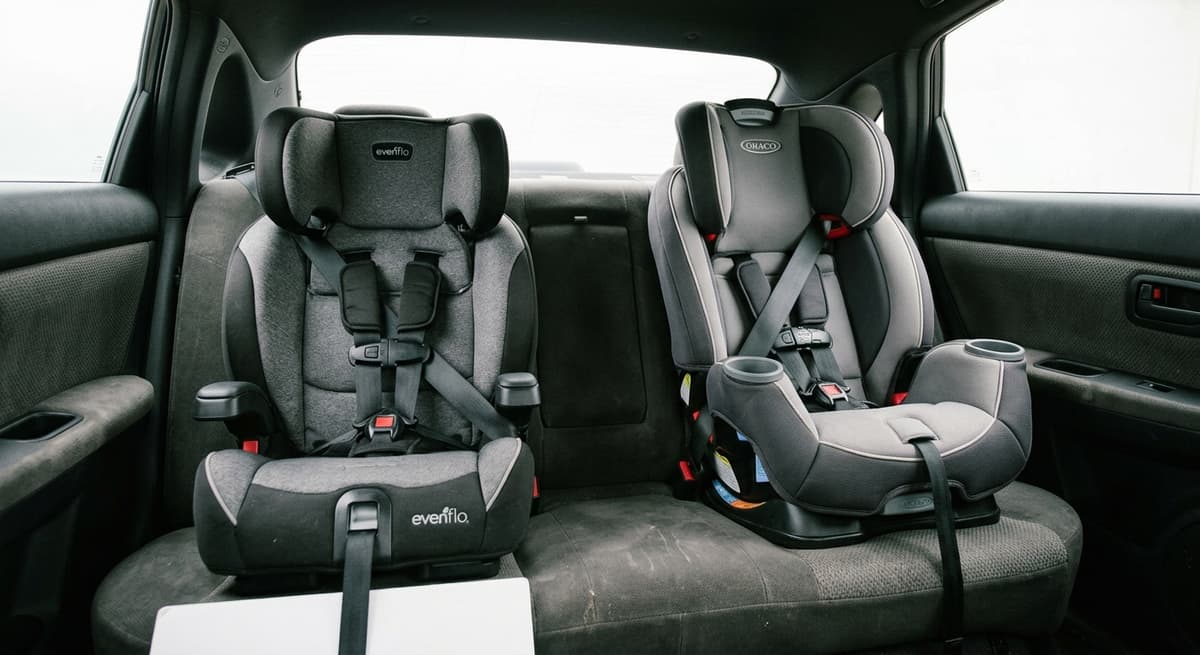
Article 397 of the CSR sets one binding test. In a moving vehicle, any child under 145 cm tall or under 9 years old must be installed in a restraint system or booster seat that complies with regulations made under the federal Motor Vehicle Safety Act, and that restraint must be adapted to the child's weight and height per the manufacturer's instructions and properly installed.
That is the entire mandate. The Code does not itself define separate rear-facing, forward-facing, and booster stages, does not set a minimum weight for moving into a booster, and does not prescribe a specific readiness test for using a seatbelt alone. It sets a single outer boundary (145 cm or age 9) and otherwise defers to the restraint's own manufacturer instructions. Compare that to a companion article, 396, which requires everyone else in the vehicle to wear a seatbelt properly, and expressly carves out any child covered by article 397.
Article 397 was restructured by 2018, chapter 7, article 101 (in force April 18, 2018), which built the current taxi and medical-exemption framework while the threshold was still the old 63 cm seated-height test. The threshold itself was then changed by 2019, chapter 18, article 238, moving the article from 63 cm of seated height to the current 145 cm or age 9 test, in force April 18, 2019. Quebec's own official law database confirms both the before and after text of the article side by side, so this is a verified change in the underlying statute, not a media paraphrase.
Law vs. SAAQ guidance: keep these separate
Quebec's statute is deliberately thin on staging, and SAAQ's own published safety materials draw the same line this article draws: SAAQ labels the 145 cm / 9-year rule « la loi » and labels its rear-facing recommendation « la littérature », meaning research-based guidance, not statute. The table below keeps the legal floor and the safety recommendation separate on purpose.
| What article 397 requires (law) | What SAAQ recommends (guidance, not law) | |
|---|---|---|
| When a restraint/booster is required | Until 145 cm tall or age 9, whichever first | N/A |
| Rear-facing minimum | Not specified in the statute | At least until age 2 |
| Booster minimum weight | Not specified in the statute | 18 kg (40 lb) |
| Harness seat vs. booster once a child could use either | Either is legally acceptable | SAAQ recommends staying in a 5-point harness seat until the seat's manufacturer-rated maximum weight |
| Readiness to use a seatbelt alone | Not specified beyond the 145 cm / age 9 threshold | SAAQ's 5-step test: back against the seatback, knees bent at the edge of the seat, belt crosses the collarbone rather than the neck, belt crosses the hip bones rather than the stomach |
SAAQ's guidance explicitly tells parents to keep using a booster past the legal minimum if a child still fails the 5-step test, meaning meeting article 397's floor and being genuinely ready to ride beltbelt-alone are not automatically the same thing.
The Canada Car Seat Checker applies article 397's own age and height test to a specific child, showing which restraint Quebec law requires and the penalty that applies.
Who has to comply, and the exemptions
Article 397 does not name who is penalized for a violation. It is written passively (a child "must be installed" in a restraint), unlike other CSR provisions that expressly say who commits the offence. By comparison to how the Code phrases adult seatbelt liability elsewhere, it is reasonable to expect the driver bears responsibility, but this is an inference rather than a fact stated in article 397 itself, and it should be read that way.
Three exemptions exist, all within articles 397 and 398:
- Manufacturer-unbelted seating positions. No restraint is required for a child in a seating position the vehicle manufacturer did not equip with a seatbelt, and only if no belted seat is available. This mechanism is the practical basis for why large school buses, most of which are not factory-equipped with seatbelts, do not require child seats, though the statute does not name buses specifically.
- SAAQ medical exemption (article 398). On written request, SAAQ may authorize an alternate restraint arrangement for exceptional medical reasons, for a period SAAQ sets.
- The taxi and police-vehicle fallback is conditional, not blanket. This clause only applies « à défaut de satisfaire aux conditions du premier alinéa », meaning only when the proper restraint requirement genuinely cannot be met. In that specific situation, a seatbelt alone is sufficient for a child in a taxi, a vehicle assimilated to a taxi, or a police vehicle, unless the child is manifestly unable to sit up straight or is otherwise covered by an article 398 exemption. In practice, this means Quebec does not require taxi operators to carry car seats and a parent without a portable seat can legally use a taxi with just the seatbelt, but the statute frames this as a fallback for an unmet condition, not as a standing carve-out for the entire taxi industry.
Penalties: what could and could not be verified
A violation of article 397 is a ticketable offence under the Code de la sécurité routière, but the specific fine amount and any demerit points that attach specifically to article 397 could not be verified against a primary penalty schedule that names article 397 by number. A search of the Code's own penalty provisions (articles 505 through 516) did not turn up any clause listing article 397 among the violations it covers.
The commonly circulated figure of an $80 to $100 fine plus 3 demerit points does not trace to article 397. Article 508 sets an $80 to $100 fine for violations of article 401 (a different seatbelt provision), and the demerit-points regulation separately maps article 396, the general adult seatbelt duty, to that same $80 to $100 band. But the Code's own article 510 lists article 396 under a different band entirely, $200 to $300, creating a conflict between two current, official Quebec legal sources over which fine applies even to article 396, let alone to the child-restraint article. Article 397 does not appear anywhere in the demerit-points regulation's penalty table.
Until that gap in the Code's own penalty machinery is resolved with a primary source naming article 397 specifically, this page will not publish a specific dollar figure or demerit-point count for a child-restraint violation. Readers who need a current, ticket-accurate number should confirm directly with the SAAQ or a Quebec courthouse.
Enforcement in practice
SAAQ's own 2022 safety fact sheet, using 2017 to 2021 annual averages, reports that children age 9 and under made up 14% of injured vehicle passengers, with an average of 4 deaths, 15 serious injuries, and 854 minor injuries per year among that age group. SAAQ states that when a car seat is used correctly, the odds of death or serious injury in a crash drop by up to 70%.
A separate INSPQ (Institut national de santé publique du Québec) source, using 2015 to 2020 annual averages, reports about 1,188 injured children age 9 and under per year, with 4 deaths, 19 seriously injured, and 1,169 lightly injured. These two figures use different time windows and likely different inclusion criteria, so they should not be averaged together, but both point the same direction.
A coroner's report into a fatal crash near Lac-au-Saumon (crash date August 5, 2021; report published May 3, 2022) found that of four children in the vehicle, two were properly restrained and two, ages 4 and 5 in a middle seating position, were not, sharing a single seatbelt that neither appeared to be wearing. Three people died in that crash, including the 5-year-old. The coroner issued no formal recommendations in that matter.
No dated SAAQ or police news release with actual ticket counts specifically for article 397 enforcement could be located. That absence reflects blocked or unavailable enforcement-statistics pages during this research, not a confirmed low enforcement rate, and it should not be read as either.
Beyond the legal minimum
Meeting article 397's 145 cm / age 9 floor is not the same as a child being safely secured. SAAQ's own published guidance, layered on top of the legal minimum, recommends keeping a child rear-facing until at least age 2, using a booster only once a child weighs at least 18 kg (40 lb), staying in a 5-point harness seat past the legal minimum until the seat's manufacturer-rated maximum weight, and applying the 5-step test before letting a child use a seatbelt alone. None of these recommendations are separately enforceable under the Code; they exist because SAAQ's safety research shows the legal floor is not always the safest choice for a given child's size.
The federal layer
Article 397 cross-references federal law directly: a restraint or booster must comply with regulations made under the federal Motor Vehicle Safety Act. That is the statutory hook for Canada's National Safety Mark requirement. Transport Canada has stated that a restraint sold or imported without the Mark would be considered illegal to use under a province or territory's traffic law. Practically, a seat bought in the United States and carrying only US certification, without the Canadian National Safety Mark, would not meet article 397's compliance requirement, making its use in Quebec legally questionable under this reading. This point is sourced to Transport Canada's general guidance rather than to a Quebec-specific SAAQ statement, since SAAQ's relevant web pages were not accessible during this research.
Consequences beyond a ticket
The strongest reason to comply with article 397 has nothing to do with enforcement. SAAQ's own data shows correctly used car seats cut the odds of death or serious injury by up to 70% in a crash, and the Lac-au-Saumon coroner's report is a documented example of what happens when two children shared one seatbelt in a crash that killed one of them. A low or unknown ticket count is not a safety endorsement, and the absence of published enforcement statistics is not evidence that non-compliance carries no real risk.
Information last verified August 14, 2026, against the current LégisQuébec consolidation of the Code de la sécurité routière and SAAQ-published safety documents. This is general legal information, not legal advice. Confirm current fine and demerit-point figures directly with the SAAQ before relying on them.
Frequently Asked Questions
What is the current car seat law in Quebec?
Under article 397 of the Code de la sécurité routière, any child under 145 cm tall or under 9 years old must ride in a restraint system or booster seat that complies with federal safety standards and is adapted to the child's weight and height.
When did Quebec change from the 63 cm rule to the 145 cm / age 9 rule?
The change took effect April 18, 2019, under 2019, chapter 18, article 238. Before that date, article 397 used a 63 cm seated-height test rather than the current 145 cm or age 9 test.
Is there a legal minimum weight for a booster seat in Quebec?
No. Article 397 does not set a booster weight minimum. SAAQ's guidance recommends waiting until a child weighs at least 18 kg (40 lb) before moving to a booster, but that is a safety recommendation, not a statutory requirement.
Are taxis exempt from car seat requirements in Quebec?
Not as a blanket rule. A seatbelt alone is legally sufficient in a taxi, a vehicle assimilated to a taxi, or a police vehicle only when the proper restraint requirement cannot be met, such as no suitable seat being available. It is a conditional fallback, not a standing exemption for the taxi industry.
What is the fine for not using a car seat in Quebec?
This could not be confirmed against a primary source naming article 397 specifically. The commonly repeated $80 to $100 and 3-point figures trace back to Quebec's general seatbelt articles, not to the child-restraint article, and even that attribution conflicts with the Code's own $200 to $300 listing for the general seatbelt duty.
Can I use a car seat bought in the United States in Quebec?
Article 397 requires a restraint that complies with regulations under the federal Motor Vehicle Safety Act, which in practice means it needs Canada's National Safety Mark. Transport Canada has stated that a seat without that mark is not considered legal to use in any province or territory, including Quebec.
When can a child stop using a rear-facing car seat in Quebec?
Article 397 does not set a rear-facing minimum age. SAAQ recommends keeping a child rear-facing until at least age 2 as safety guidance, separate from the legal requirement.
Who is legally responsible if a child isn't properly restrained in Quebec?
Article 397 does not explicitly name who is liable for a violation. Based on how the Code phrases similar seatbelt duties elsewhere, the driver is the most likely party responsible, but this is an inference rather than a fact stated directly in the article.
Updates
Independently fact-checked against the cited primary sources
Sources and References
- Code de la sécurité routière, RLRQ c. C-24.2, articles 396-398 (child restraint requirement, general seatbelt duty, medical exemption)(legisquebec.gouv.qc.ca).gov
- LégisQuébec point-in-time version tool showing article 397's text before and after the April 2019 threshold change(legisquebec.gouv.qc.ca).gov
- Règlement sur les points d'inaptitude, RLRQ c. C-24.2, r. 37 (demerit-points schedule)(legisquebec.gouv.qc.ca).gov
- Gazette officielle du Québec, Décret 978-2019, coming-into-force details for 2018, chapter 7(publicationsduquebec.gouv.qc.ca).gov
- SAAQ, Sièges d'auto pour enfants, Fiches sur la sécurité routière, édition 2022 (injury statistics, misuse patterns)(saaq.gouv.qc.ca).gov
- SAAQ, Siège d'appoint (booster seat guidance, 18 kg minimum, 5-step readiness test)(saaq.gouv.qc.ca).gov
- INSPQ, Dispositifs de retenue pour enfants (child restraint injury data, 2015-2020 averages)(inspq.qc.ca).gov
- Radio-Canada, coroner's report on the fatal Lac-au-Saumon crash involving unrestrained children(ici.radio-canada.ca)
- Transport Canada, on the illegality of using a car seat imported without the National Safety Mark(tc.canada.ca).gov
- Transport Canada, child car seat cross-border shopping advisory(tc.canada.ca).gov