California Grandparent Visitation: No Attorney Fees Under 7605
Independently fact-checked against primary sources (last audited November 13, 2026). · 6 primary sources cited on this page. How we verify our legal content
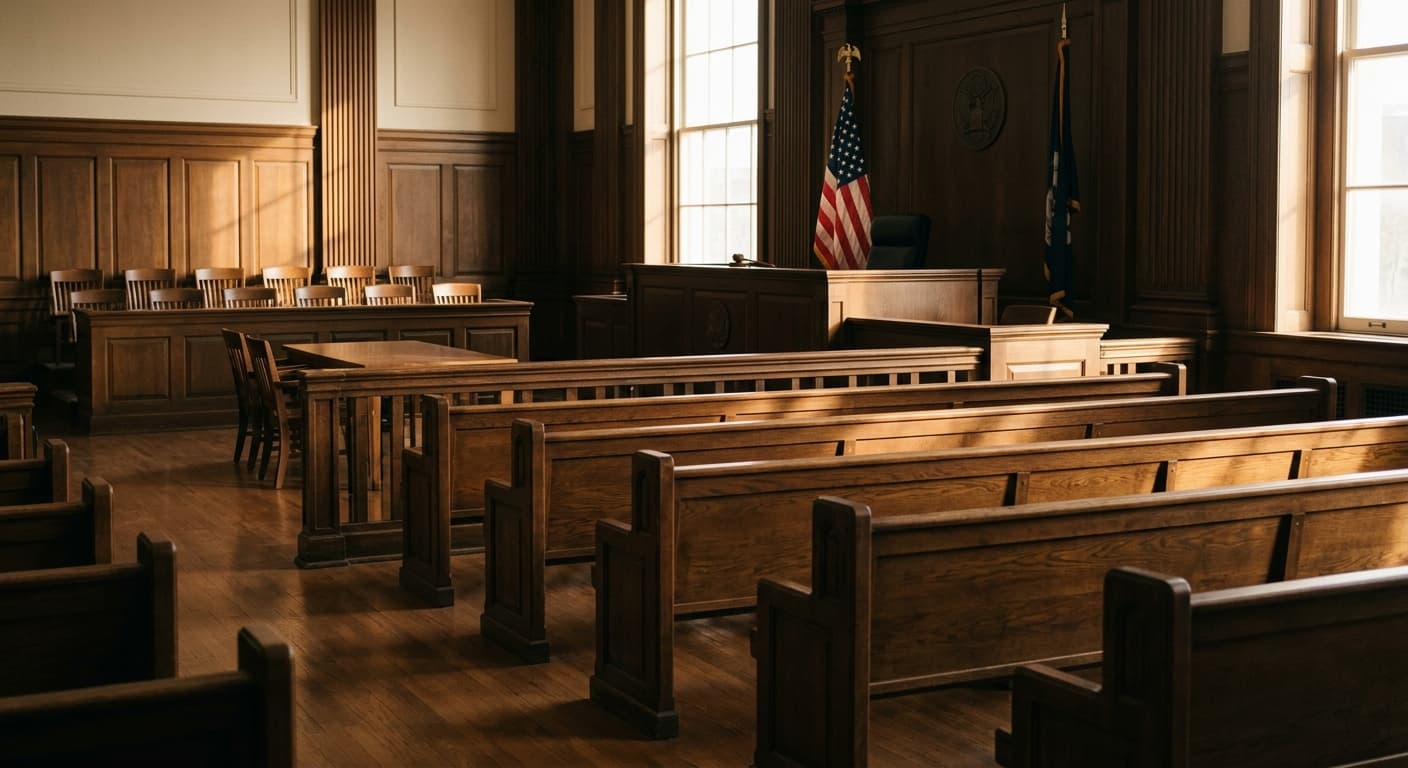
A California appeals court has ruled that a mother who spent thousands opposing a grandfather's visitation petition cannot use the Uniform Parentage Act's fee-shifting statute to make him pay her legal bills. The published decision, filed November 3, 2026, holds that the Uniform Parentage Act fee statute does not reach Family Code section 3104 cases.
Information last verified on November 13, 2026. This is a developing story; we update it as the record changes.
Status: The opinion was certified for publication when it was filed. Under California Rules of Court, rule 8.264(b)(1), a Court of Appeal decision in a civil appeal becomes final in that court 30 days after filing, which places finality in early December 2026. No modification, rehearing, or depublication order appeared on the California Courts published opinions index as of November 13, 2026, and no official reporter citation had been assigned.
Jurisdiction scope: California only. This is a decision of one district of the California Court of Appeal, interpreting two California statutes. It says nothing about grandparent visitation or fee-shifting rules in any other state, and it does not interpret federal law.
What Happened
The two children were born to their mother, Sarah H., and their father in 2018 and 2021. The parents were never married. In September 2019, when the older child was roughly 17 months old, the county removed her from her parents' custody and placed her with her paternal grandfather, Timothy S., and his wife. The mother regained custody in August 2021.
When the juvenile court ended its jurisdiction it entered final custody and visitation orders, in 2021 for the younger child and in 2022 for the older one. Those orders noted that the juvenile court had declared the father the presumed father in 2019 and 2021. The mother received sole physical custody and shared legal custody with the father, who received supervised visitation.
In April 2024, the grandfather filed a petition under Family Code section 3104 asking for one weekend and two dinnertime visits each month plus weekly video calls. He alleged the mother refused to let him see the children even though he had what he described as a very established relationship with the older child, having cared for her for almost two years. The mother opposed, alleging he had no substantial relationship with either child. The trial court entered an interim order allowing a five-minute phone call with the children once a month and set a trial date on a long-term order.
The mother then asked the court to order the grandfather to pay $17,193 in attorney fees and costs for opposing his petition. That figure combined $7,193 she had already paid as of the date of her request with an estimated $10,000 more she expected to incur preparing the case.
Judge Natalie Lough of the Riverside County Superior Court denied the request, concluding the court lacked statutory authority to order attorney fees in a grandparent visitation petition. The trial court explained that Family Code sections 2030, 2031, and 7605 did not apply, and reasoned that the absence of a comparable fee provision in the statutes governing grandparent visitation showed the Legislature did not intend to provide for fees in those petitions.
On appeal, the Fourth Appellate District, Division One, affirmed. Justice Bermúdez wrote the opinion; Acting Presiding Justice Do and Justice Rubin concurred. The panel also denied the grandfather's motion to dismiss the appeal as moot. He had argued that a stipulation and order in which the parties agreed to a visitation schedule resolved all issues between them, including the appeal. The court was unpersuaded, writing in a footnote that because the stipulation and order "is silent on fees and costs and does not mention this appeal, we are not convinced the issue presented in this appeal is moot."
The disposition is two sentences: "The order is affirmed. The parties are to bear their own costs on appeal."

What the Law Actually Says
Two statutes do the work here, and they sit in different parts of the Family Code.
Family Code section 3104 is the grandparent visitation statute. It lives in Division 8, Part 2, Chapter 5 of the Family Code. Subdivision (a) says that on petition by a grandparent of a minor child, a court may grant reasonable visitation rights if it does both of the following: "(1) Finds that there is a preexisting relationship between the grandparent and the grandchild that has engendered a bond such that visitation is in the best interest of the child. (2) Balances the interest of the child in having visitation with the grandparent against the right of the parents to exercise their parental authority."
Subdivision (b) bars filing "while the natural or adoptive parents are married," subject to six listed exceptions, one of which is that the child is not residing with either parent. The section also carries two rebuttable presumptions against visitation. Subdivision (e) creates "a rebuttable presumption that the visitation of a grandparent is not in the best interest of a minor child if the natural or adoptive parents agree that the grandparent should not be granted visitation rights." Subdivision (f) creates "a rebuttable presumption affecting the burden of proof" to the same effect where the parent who holds sole legal and physical custody from another proceeding, or the parent the child lives with if no custody order is operative, objects. The text quoted here is the version enacted by Assembly Bill 1628, chaptered as Chapter 328, Statutes of 2014, and the November 2026 opinion quotes subdivision (b) in that same wording.
What section 3104 does not contain is an attorney fee provision. Its only money provision is subdivision (i), which lets a court that orders grandparental visitation allocate the percentage of that visitation between the parents for child support guideline purposes and order a parent or grandparent to pay the other an amount for the support of the child or grandchild. The statute defines that support as costs related to visitation, naming transportation and basic expenses such as medical costs and day care. Those are the costs of making visits happen, not the costs of litigating over them. Readers working through the broader framework can start with our guide to visitation petitions under section 3104.
Family Code section 7605 is the fee statute the mother invoked. It sits inside the Uniform Parentage Act, which the opinion identifies as Family Code sections 7600 through 7730. As quoted in the opinion, subdivision (a) provides that "[i]n any proceeding to establish physical or legal custody of a child or a visitation order under this part, and in any proceeding subsequent to entry of a related judgment, the court shall ensure that each party has access to legal representation to preserve each party's rights by ordering, if necessary based on the income and needs assessments, one party . . . to pay to the other party . . . for attorney's fees and for the cost of maintaining or defending the proceeding during the pendency of the proceeding."
The phrase the panel leaned on is "under this part." Because section 3104 is not part of the UPA, the panel wrote, "[b]ecause Timothy's petition is under section 3104, the underlying proceedings to establish visitation with his grandchildren were not under the UPA."
The standard of review came from N.S. v. D.M. (2018) 21 Cal.App.5th 1040: denial of fees under section 7605 is reviewed for abuse of discretion, but questions of statutory interpretation are reviewed de novo. The mother relied on N.S. and on Robert J. v. Catherine D. (2005) 134 Cal.App.4th 1392 for the proposition that for unmarried parents a UPA petition is the only method of resolving custody, visitation, and support. The panel distinguished both. Those cases concerned parents, and the existence of a separate statutory vehicle for grandparents refutes the argument that the UPA is the only route.
The second argument took longer to dispatch. The mother contended the petition was a proceeding subsequent to earlier UPA judgments entered in the dependency case. The panel gave four reasons for rejecting that. First, the dependency proceedings were not initiated under the UPA; a dependency action begins when the state files a Welfare and Institutions Code section 300 petition. Second, the exit orders issue under Welfare and Institutions Code section 362.4, subdivision (a), and the Legislature did not write the UPA into that section. Third, the juvenile court's authority to find presumed father status comes from Welfare and Institutions Code section 316.2, which directs the court to ask whether a man qualifies as a presumed father under Family Code section 7611. As the opinion puts it, "simply because a juvenile court borrows the UPA framework to identify a presumed parent does not mean the resulting parentage finding is a UPA judgment within the meaning of section 7605." Fourth, presumed father status in dependency serves a different purpose, identifying legal parents so they receive notice, counsel, and a meaningful opportunity to be heard in a case that could end in termination of parental rights.
Two limits in the opinion are worth marking. The trial court had also rejected sections 2030 and 2031, the fee-shifting provisions for nullity, dissolution, and legal separation proceedings, and the opinion notes the mother did not assert any error relating to them. And in its final footnote the panel declined to address whether policy arguments might support a different result, because it found the statutory language clear.

Analysis: Why This Matters
The following is analysis from the Recording Law Editorial Team.
The temptation with a case like this is to read it as a decision about grandparents and grandchildren. It is not. It is a decision about who pays for the fight, and the two are easy to conflate because fee exposure is one of the quieter forces shaping whether a family law dispute gets litigated at all.
Need-based fee shifting exists in California family law so that a party with less money can still be heard. Sections 2030 and 2031 do that work in dissolution cases; section 7605 does it in parentage cases. The published result here is that a parent named as a respondent in a grandparent visitation petition, who may well be the party with fewer resources, cannot reach for section 7605, and section 3104 itself contains no fee provision of its own. It is worth being precise about how the panel got there. The trial court had reasoned from legislative omission, treating the absence of a fee provision in the grandparent visitation statutes as evidence of intent. The Court of Appeal affirmed on a narrower footing: section 7605 says "under this part," section 3104 is not in that part, and that ends the inquiry.
That is a gap a reader can see and a legislature can close if it chooses. It is not a gap this court filled, and the panel was explicit about why, saying it would go no further than the plain language.
The reasoning also has reach beyond fees. The four-part discussion of why a dependency exit order and a juvenile court presumed father finding are not UPA judgments restates a boundary California courts have policed for years: dependency proceedings are special proceedings governed by their own rules, and Family Code provisions do not apply unless the Welfare and Institutions Code expressly brings them in. Families who move from a dependency case into a later family court dispute often assume the earlier orders carry their whole legal character forward. This opinion says that for section 7605 purposes they do not, even where the juvenile court borrowed the Family Code's own definition of a presumed parent. Anyone tracing how an exit order interacts with later proceedings will want to read it alongside the state's general custody rules.
Finally, the mootness footnote is a small practice note with real consequences. A stipulation resolving a visitation schedule did not sweep away a live fee dispute, because it said nothing about fees, costs, or the appeal. The scope of a settlement is the scope of its text.
How This Affects You
This is a California decision, and its direct effect is on California cases. Because the opinion is certified for publication, it is citable in California courts, subject to the finality and review timelines noted above.
It does not change the substantive test for grandparent visitation. The preexisting-bond finding and the balancing against parental authority in subdivision (a) stand exactly as written, as do the rebuttable presumptions in subdivisions (e) and (f). A reader trying to understand what a court actually weighs should start there, and with our overview of when grandparents can seek more than visits, since custody and visitation are different requests governed by different rules.
It also does not resolve every fee question that could arise in such a case. The appeal tested one statute. Sections 2030 and 2031 were not challenged, and the panel expressly declined to reach policy arguments. Whether some other provision could supply a basis for fees in a grandparent visitation matter was not before the court and was not decided.
For a grandparent considering a petition or a parent responding to one, the plain reading is that the fee landscape in these cases is narrower than in a dissolution or a parentage action. What that means in any particular case depends on facts this article cannot know. The primary sources are linked with this piece, and our grandparents' rights library collects the state-by-state background. A licensed California family law attorney is the right person to apply any of it to a specific situation.
What Happens Next
The opinion was filed on November 3, 2026 and certified for publication the same day, so it is citable in California courts now. What remains is the ordinary post-filing sequence.
Under California Rules of Court, rule 8.264(b)(1), a Court of Appeal decision in a civil appeal is final in that court 30 days after filing, which places finality here on December 3, 2026. Until that date the Court of Appeal may modify its own decision. Under rule 8.500(e)(1), a petition for review in the California Supreme Court must be served and filed within 10 days after the Court of Appeal decision becomes final in that court.
As of November 13, 2026, the Judicial Council's published opinions index listed D087153 as a published opinion filed 11/3/26 out of the Fourth District, Division One, with no modification, rehearing or depublication notation, and no official reporter citation had yet been assigned. If no petition for review is filed and the Supreme Court takes no action on its own, the opinion stands as published authority that section 7605 does not reach a section 3104 grandparent visitation petition.
The fee question was the only issue on appeal, so the decision settles that and nothing else. The trial court had set a trial date on a long-term visitation order when it denied the fee request, and the parties afterward entered a stipulation and order agreeing to a visitation schedule. The panel held that stipulation did not moot the appeal, because it was silent on fees, costs and the appeal itself. Nothing in the opinion decides what visitation the grandfather ultimately receives.
This is general legal information, not legal advice. Reading it does not create an attorney-client relationship. Court decisions can be modified, rehearing can be granted, and review can be sought; statutes change. For guidance about your own circumstances, consult a licensed attorney in your jurisdiction.
Related articles
- California Grandparents' Rights: Visitation Law Under Family Code 3104
- Grandparents' Rights by State
- Can Grandparents Get Custody?
- California Child Custody Laws
- Child Custody Laws by State
Last updated: 2026-11-13. Details verified as of 2026-11-13.
Frequently Asked Questions
What did the California Court of Appeal actually decide in Timothy S. v. Sarah H.?
It decided one fee question. Family Code section 7605, the fee-shifting provision in the Uniform Parentage Act, does not authorize an attorney fee award in a grandparent visitation petition brought under Family Code section 3104. The court affirmed the Riverside County trial court's order denying the mother's fee request and ordered each side to bear its own costs on appeal.
Does this ruling make it harder for grandparents to get visitation in California?
The opinion does not address that question. The test for granting grandparent visitation lives in Family Code section 3104, subdivision (a), which requires a finding of a preexisting bond such that visitation is in the child's best interest and a balancing of the child's interest against the parents' right to exercise parental authority. The Court of Appeal did not interpret that subdivision or the rebuttable presumptions in subdivisions (e) and (f).
Why did the mother argue that the Uniform Parentage Act fee statute applied?
She made two arguments. First, that where parents were never married, a UPA petition is the only method of resolving visitation. Second, that the grandfather's petition was a proceeding subsequent to earlier UPA judgments, meaning the juvenile court orders declaring the children's father a presumed father and the final custody and visitation orders entered when the dependency case ended. The panel rejected both.
What is a juvenile court exit order, and why did it matter here?
When a juvenile court ends its jurisdiction over a dependent child, Welfare and Institutions Code section 362.4, subdivision (a), lets it issue an order determining custody of or visitation with the child. Those orders are commonly called exit orders, and section 302, subdivision (d), of the same code makes them final judgments that survive the end of juvenile jurisdiction. The court held they are not UPA judgments, because they are made under juvenile law and the Legislature did not write the UPA into section 362.4.
Did the court rule out every possible attorney fee award in a grandparent visitation case?
No. The question decided was whether section 7605 applies. The trial court had also found Family Code sections 2030 and 2031 inapplicable, and the opinion notes the mother did not assert any error relating to those sections, so the appeal did not test them. The panel also declined to reach policy arguments, stating that because the statutory language is clear and unambiguous it would not address whether policy considerations might support a different conclusion.
Is the decision final, and can it be cited?
It was certified for publication when filed on November 3, 2026, and appears on the California Courts published opinions index with no modification, rehearing, or depublication notation as of November 13, 2026. Under California Rules of Court, rule 8.264(b)(1), a Court of Appeal decision in a civil appeal is final in that court 30 days after filing, and under rule 8.500(e)(1) a petition for review must be served and filed within 10 days after that. No official reporter citation had been assigned as of this writing. Justice Bermúdez wrote the opinion; Acting Presiding Justice Do and Justice Rubin concurred.
Updates
Independently fact-checked against the cited primary sources
Sources and References
- Timothy S. v. Sarah H., No. D087153 (Cal. Ct. App., 4th Dist., Div. One, filed Nov. 3, 2026), certified for publication, slip opinion (appeal from Riverside Super. Ct. No. FLRI2402499)(courts.ca.gov).gov
- Judicial Council of California, Published and Citable Slip Opinions index (listing D087153, Timothy S. v. Sarah H., November 3, 2026, 4th District, Division One, Published Opinion)(courts.ca.gov).gov
- Assembly Bill 1628 (2013-2014 Reg. Sess.), enrolled text, an act to amend Section 3104 of the Family Code, relating to visitation rights (full text of Family Code section 3104, subdivisions (a) through (j))(leginfo.ca.gov).gov
- Assembly Bill 1628 current bill status, chaptered by Secretary of State as Chapter 328, Statutes of 2014(leginfo.ca.gov).gov
- California Rules of Court, rule 8.264(b)(1) (a Court of Appeal decision in a civil appeal is final in that court 30 days after filing)(courts.ca.gov).gov
- California Rules of Court, rule 8.500(e)(1) (a petition for review must be served and filed within 10 days after the Court of Appeal decision is final in that court)(courts.ca.gov).gov