
Canada
Window Tint Laws in Saskatchewan: An Outright Ban, Not a Percentage
Independently fact-checked against primary sources (last audited August 16, 2026). · 3 primary sources cited on this page. How we verify our legal content
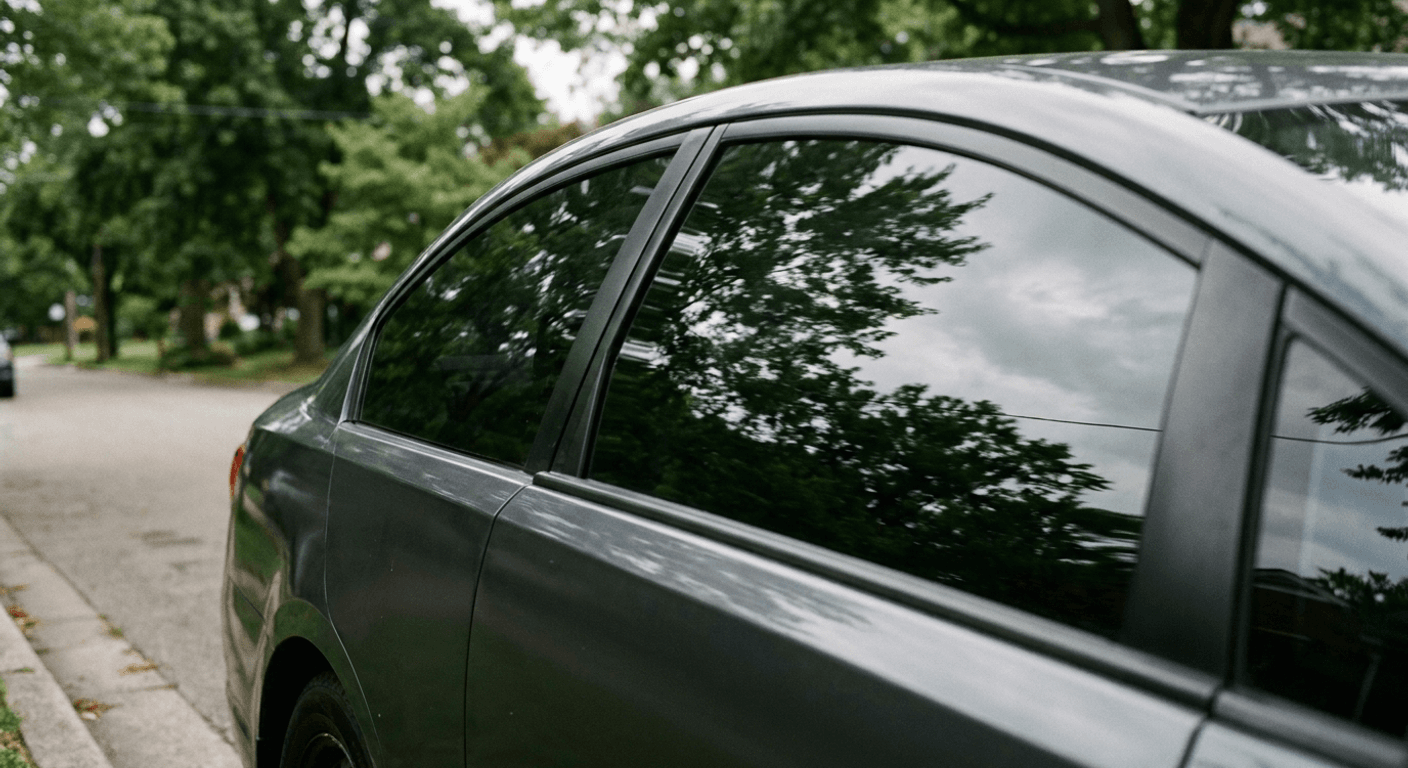
Saskatchewan bans aftermarket tint outright on both front side windows and on the windshield below a 75 millimetre top strip, with no percentage anywhere in either provision, while the rear window and rear side windows carry no tint-darkness restriction at all and no condition tying that allowance to dual outside mirrors.
Information last verified on 2026-08-16. This article has not yet been reviewed by a licensed lawyer.
A Ban, Not a Percentage
Saskatchewan's tint rules sit in the Vehicle Equipment Regulations, 1987, RRS c V-2.1 Reg 10, sections 64 through 66. The regulation was originally made under the now-repealed Vehicle Administration Act and continues in force under The Traffic Safety Act. Unlike provinces that set a minimum light transmission percentage for front glass, Saskatchewan's operative language for the windshield and front side windows is a flat prohibition: no coating of sunscreen or reflective material other than what the glass manufacturer applied, full stop. Neither provision names a number.
That structural difference matters more than any single figure. A percentage circulating for Saskatchewan front-window tint, however specific it sounds, is not supported by the regulation's text. For how the ban-versus-percentage split plays out across the rest of the country, see window tint laws in Canada.
The Windshield: A 75 Millimetre Strip, No Percentage of Its Own
Section 64(3)(c) bans any coating of sunscreen or reflective material on the windshield other than what the manufacturer applied. Section 64(4), added to the regulation in 2021, carves out an exception: that ban does not apply to a coating of sunscreen if it does not extend more than 75 millimetres down from the top of the windshield.
That strip allowance is a position and size limit, not a darkness limit. The regulation does not set a minimum transmission percentage for what goes into those 75 millimetres, only how far down the glass it can run. Below that line, the windshield is fully off limits to aftermarket sunscreen or reflective coating.
One wording point is genuinely open. Section 64(4)'s exception text excuses a coating of sunscreen specifically. It does not repeat the phrase or reflective material from the parent ban in section 64(3)(c), and neither term is defined elsewhere in the regulation. Whether a reflective or mirrored top-strip product is covered by that exception, as opposed to a plain sunscreen film, is not resolved by the text. A driver installing a strip product marketed as reflective should treat its legality as uncertain rather than confirmed.
Front Side Windows: An Outright Ban
Section 66(3) states that the glass shall not have coatings of sunscreen or reflective material other than that applied by the glass manufacturer, covering the driver's and front passenger's windows. Unlike the windshield provision, section 66(3) carries no exception clause at all. There is no percentage threshold, no minimum transmission number, and no carve-out for a lighter film. The only tint legally present on a front side window is whatever the glass manufacturer built into the glass at the point of manufacture.
Saskatchewan Government Insurance's own Driver's Handbook independently confirms this reading in plain language: aftermarket tinting is not allowed on the windshield or front side windows. That is a separate government body's own publication, not a copy of the same regulation text, stating the same conclusion.
Rear Windows: Fully Unrestricted, No Mirror Condition
Section 66(4) covers every other passenger compartment window, meaning the rear doors and the back glass, and imposes only a general safety-glass standard rather than any tint-darkness rule. The sunscreen and reflective-coating ban in section 66(3) simply does not extend to these windows.
This is a genuine structural difference from some neighboring provinces. A rear-window tint allowance conditioned on the vehicle carrying two exterior mirrors is a pattern found elsewhere in western Canadian equipment regulations, but Saskatchewan's regulation does not use it. Section 67 requires at least two rear-view mirrors on every vehicle unconditionally, aside from narrow carve-outs for modified vintage vehicles and pre-1970 models that have nothing to do with tint, and nothing in sections 66 or 67 ties that mirror requirement to the rear-window tint allowance. A Saskatchewan vehicle can run rear side windows and the rear window to any darkness, including fully blacked out aftermarket film, without a rule linking that choice to how many mirrors the vehicle has.
Reflectivity
There is no separate reflectivity, or mirror-finish, percentage standard anywhere in this regulation. Reflective coatings are addressed by the same clauses that ban sunscreen coatings: section 64(3)(c) for the windshield, subject to the 75 millimetre strip's open wording question above, and section 66(3) for front side windows, where it is banned outright with the rest of that subsection. Because section 66(3) does not reach rear glass at all, there is likewise no reflectivity limit on the rear side windows or rear window. No numeric reflectivity percentage exists anywhere in this regulation.
Factory Glass vs. Aftermarket Film
Both operative bans use identical language to draw this line: sections 64(3)(c) and 66(3) each exempt a coating applied by the glass manufacturer. Tint baked into the glass at the point of manufacture, such as OEM privacy glass, is exempt from the prohibition by definition. Anything applied afterward, window film, spray-on tint, or aftermarket sunscreen, is what the regulation targets. This is the operative test for both the windshield and the front side windows; there is no separate percentage carve-out for factory tint, it simply falls outside the definition of what is prohibited.
Fines and Enforcement
The set fine schedule sits in The Summary Offences Procedure Regulations, 1991, RRS c S-63.1 Reg 2. Table 3 of Part 3 of that regulation's Appendix lists item 17, the windshield offence tied to section 64, at $75 for a vehicle under 11,000 kilograms registered gross vehicle weight, or $100 at or above that weight. Section 66, the side window ban, has no dedicated line item in that table. It falls instead to the catch-all default set fine under section 13(3)(c) of the same regulation, which lands on the identical $75 or $100 figures.
A surcharge under the Victims of Crime Regulations, 1997 applies on top of those set fines, but the specific dollar amount was not independently verified in the research behind this article, so no all-in ticket total is given here. If contested in court rather than paid as a set fine, section 275 of The Traffic Safety Act sets the statutory ceiling at not more than $1,000 for an individual and not more than $2,000 for a corporation.
Enforcement runs on a separate track from the ticket itself. Section 279(5) of the Traffic Safety Act lets a peace officer order a vehicle removed from the highway until a contravention like illegal tint is eliminated, independent of and in addition to any ticket issued. Section 279(7) makes driving the vehicle again before compliance is confirmed a separate offence on its own.
Medical Exemptions: None
This is a documented negative rather than an assumption. Both the current Vehicle Equipment Regulations, 1987 consolidation and The Traffic Safety Act were searched in full text for the word medical, and neither returned a single match. No mechanism exists in Saskatchewan law for a darker than legal tint on medical or photosensitivity grounds, unlike Alberta, which does publish a formal exemption process for exactly that situation.
Related Resources
For the national picture across all provinces and territories, see window tint laws in Canada. For Saskatchewan's roadside impaired-driving rules, see DUI and impaired driving in Saskatchewan. Manitoba runs the opposite structural rule, a percentage standard rather than an outright ban, at window tint laws in Manitoba. For contesting a ticket generally, see fighting a traffic ticket in Canada, and for a related equipment question, see dash cam laws in Canada.
Disclaimer
This article is informational only and is not legal advice. Two figures here are genuinely unresolved by any primary source located during research: the Victims of Crime Regulations surcharge added to the $75 or $100 set fines, and whether the windshield strip's exception for sunscreen also covers a reflective or mirrored product. Confirm current fees and requirements directly with SGI, the Ministry of Highways, or a licensed lawyer, particularly before installing a reflective product in the windshield strip or contesting a ticket in court.
Frequently Asked Questions
Can I tint the front windows of my car in Saskatchewan at all?
No aftermarket sunscreen or reflective film is allowed on the front side windows in any darkness, unless it was applied by the vehicle's glass manufacturer. Section 66(3) of the Vehicle Equipment Regulations, 1987 prohibits it outright rather than setting a percentage limit.
Is there a legal tint percentage for Saskatchewan windows?
No. Saskatchewan's regulation does not set a minimum light transmission percentage anywhere, for the windshield strip or the front side windows. Both provisions instead ban aftermarket coatings outright, with only a position and size limit on the windshield strip.
How dark can I tint the rear windows in Saskatchewan?
The regulation does not restrict rear side window or rear window tint darkness at all. Only a general safety-glass standard applies, and there is no separate condition requiring dual outside mirrors for that allowance.
Is there a medical exemption for darker tint in Saskatchewan?
No. A full search of both the Vehicle Equipment Regulations and the Traffic Safety Act found no medical or hardship exemption for window tint.
What is the fine for illegal window tint in Saskatchewan?
The set fine is $75 for most passenger vehicles, or $100 for a vehicle registered at 11,000 kilograms or more, for either a windshield or side window violation. Contesting it in court exposes an individual to a fine of up to $1,000, and an officer can also order the vehicle off the road until the tint is removed.
Can I put a tinted strip at the top of my windshield in Saskatchewan?
Yes, up to 75 millimetres down from the top edge. This is a position and size limit rather than a darkness percentage, and whether it covers a reflective product as opposed to a plain sunscreen film is not entirely resolved by the regulation's wording.
Updates
Independently fact-checked against the cited primary sources
Sources and References
- The Vehicle Equipment Regulations, 1987, RRS c V-2.1 Reg 10 (current consolidation, amendments through SR 68/2024)(pubsaskdev.blob.core.windows.net).gov
- The Summary Offences Procedure Regulations, 1991, RRS c S-63.1 Reg 2 (set-fine schedule, Table 3)(pubsaskdev.blob.core.windows.net).gov
- The Traffic Safety Act, SS 2004, c T-18.1 (general offence and penalty, vehicle removal powers)(hcsas.sk.ca)
- SGI Driver's Handbook - Rules Related to Vehicles(sgi.sk.ca).gov