
Canada
Window Tint Laws in Canada by Province (2026 Guide)
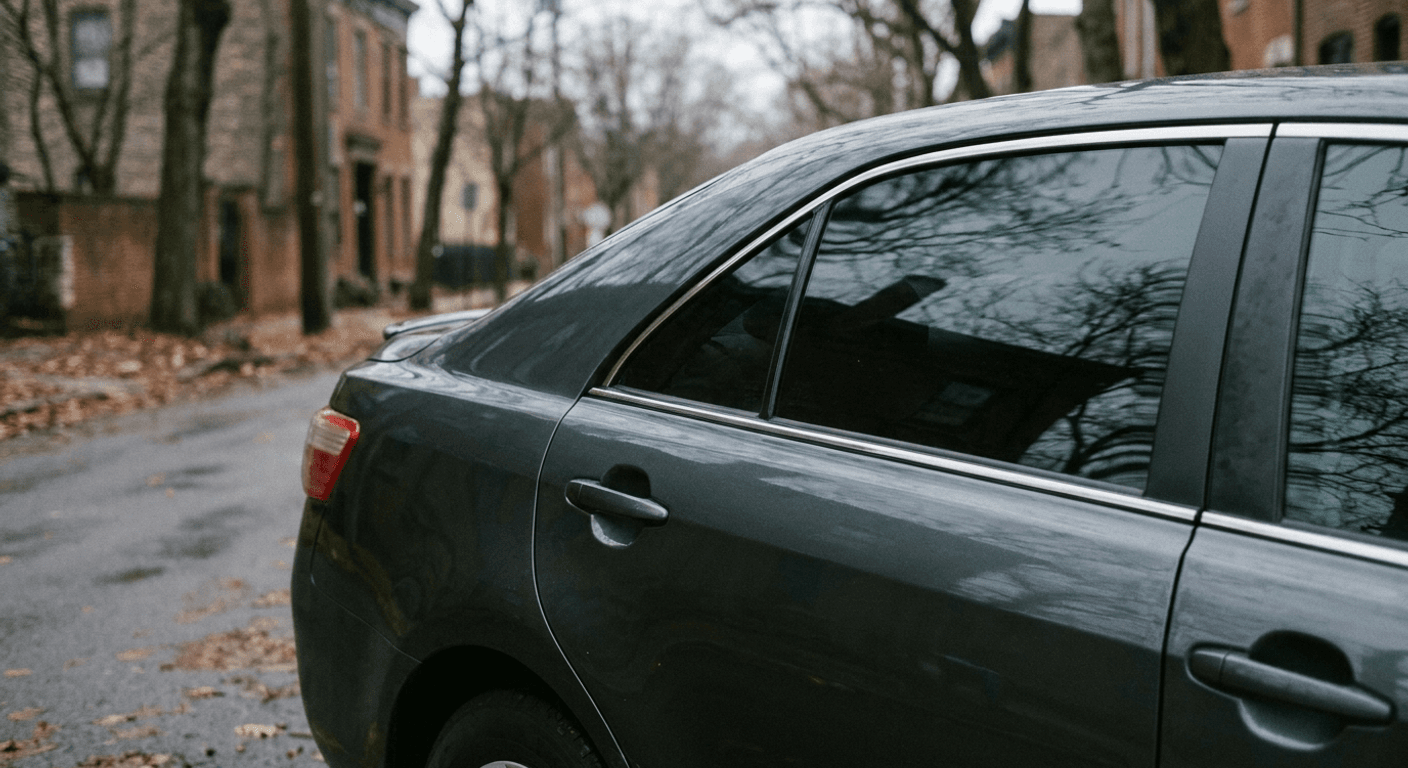
In Ontario, front side windows must let in at least 70 percent of light and the windshield cannot carry any aftermarket tint at all below the factory sun strip, but every Canadian province sets its own window tint rule, so the exact percentage and what counts as legal changes the moment you cross a provincial border.
Understanding VLT: The Number That Actually Matters
Every provincial tint rule in Canada is built around Visible Light Transmission, usually shortened to VLT. VLT measures the percentage of visible light that passes through a piece of glass, including any film applied to it, from the outside to the inside of the vehicle.
This trips people up constantly because the logic runs backward from how tint is marketed. A "30% tint" film sold at a shop generally means the film itself blocks 70% of light, which combined with the glass itself often lands close to a 70% VLT reading, the minimum most provinces require on front windows. A "20% tint" is darker and blocks more light, landing well under most legal front-window minimums. Provincial law cares about the VLT reading of the finished window, not the marketing number printed on the film box.
Because the windshield and front side windows are what an officer, and a police stop, needs to see through clearly, every province treats those windows far more strictly than the windows behind the driver.
Province Comparison Table
| Province | Windshield | Front side windows | Rear side windows / rear window |
|---|---|---|---|
| Ontario | No aftermarket tint below the factory AS-1 line strip (max ~75 mm from the top) | Minimum 70% VLT | Unrestricted (with left + right side mirrors) |
| British Columbia | No aftermarket tint except a strip within 75 mm of the top | No aftermarket tint permitted at all | Unrestricted (with left + right side mirrors) |
| Alberta | No aftermarket tint below the factory AS-1 line strip | No aftermarket tint permitted (medical exemption available) | Unrestricted |
| Quebec | Strip limited to 15 cm (about 6 inches) from the top | Minimum 70% VLT | Unrestricted |
Treat this table as a starting point, not a substitute for checking the current regulation yourself. Manitoba, Saskatchewan, the Atlantic provinces and the territories each set their own rules that are not covered in depth here, and provincial regulations are amended periodically.
Ontario
Ontario's tint rules sit in Ontario Regulation 596 (Equipment), made under the Highway Traffic Act. Since a 2017 tightening of the rule, the windshield itself cannot carry any aftermarket tint film below the factory-applied AS-1 line, the manufacturer's marking that sits roughly 75 mm (3 inches) down from the top edge. Above that line, only the vehicle's original factory sun strip is permitted; there is no legal aftermarket percentage for the windshield glass itself.
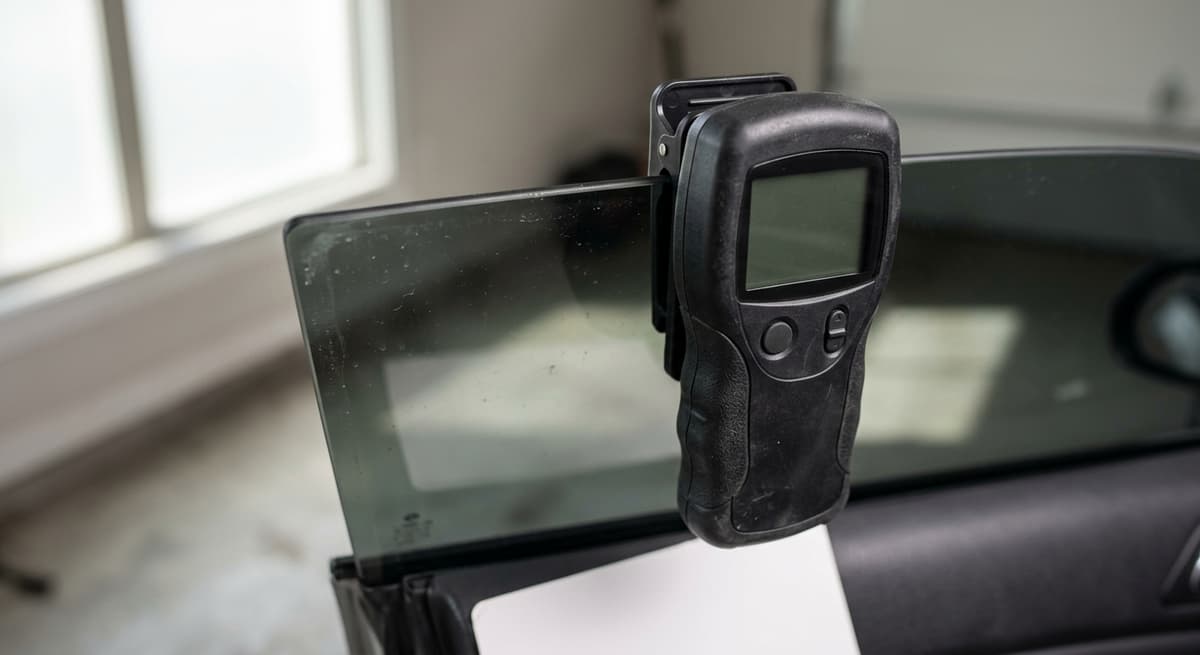
Front side windows, the driver's window and the front passenger window, must allow at least 70% VLT. In practice this means the darkest legal aftermarket film on a front side window is one that still leaves the overall window at 70% VLT or higher; anything that pushes the reading below that threshold is illegal, regardless of what percentage the tint shop advertised.
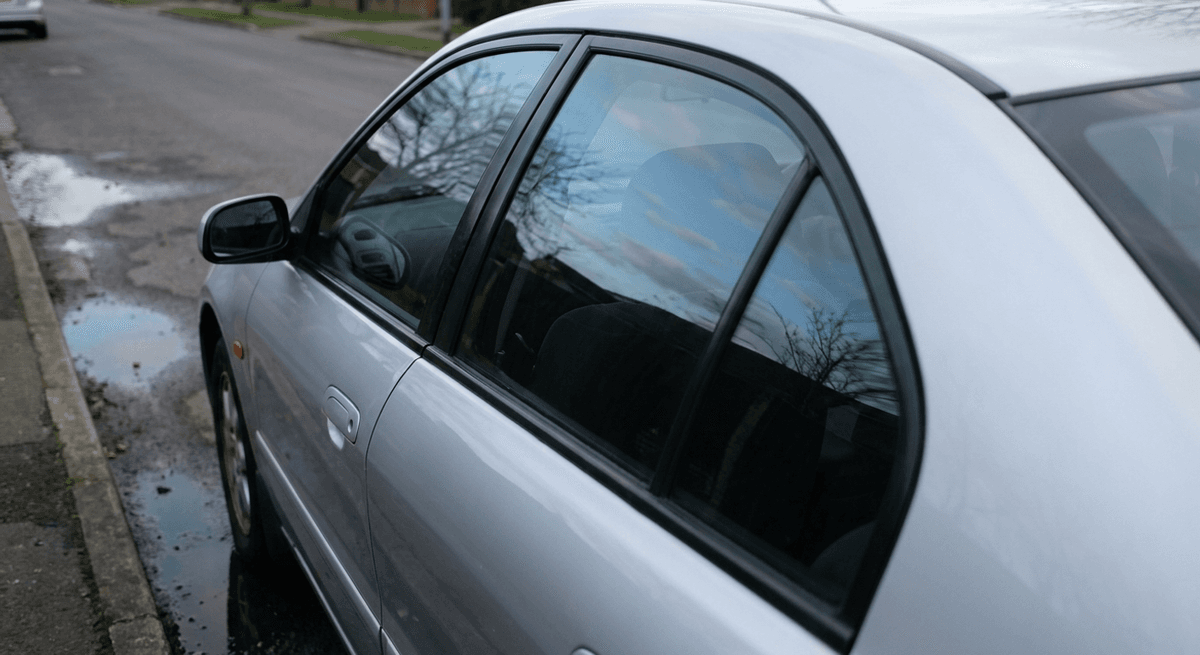
Rear side windows and the rear windshield are not restricted by VLT at all in Ontario, provided the vehicle has both a left and a right exterior side mirror so the driver retains a rear view without needing to see through the tinted glass.
British Columbia
British Columbia, under the Motor Vehicle Act Regulations, takes the strictest approach of the four provinces compared here. No aftermarket solar control film or tint of any kind is permitted on the windshield beyond the same narrow strip near the top, and critically, no aftermarket tint is permitted on either front side window at all, not even a light film that would technically still clear 70% VLT elsewhere.
ICBC road test examiners check for this directly: a vehicle showing up for a road test with any film on the front driver or passenger windows can have the test refused outright. A narrow medical exemption process exists for drivers who need extra sun protection for a documented medical condition, but outside that process, front windows in BC are meant to stay as manufactured.
Rear side windows and the rear window remain open to any level of darkness, again conditioned on the vehicle retaining both exterior side mirrors so the driver is not relying on visibility through the tinted rear glass.
Alberta
Alberta's Vehicle Equipment Regulation, made under the Traffic Safety Act, similarly prohibits applying aftermarket film to the windshield or to the front side windows, with the same narrow exception for a factory sun-visor strip above the AS-1 line on the windshield.
What sets Alberta apart is a formal medical exemption program. A driver with a documented medical condition requiring extra protection from sunlight can apply for an exemption that, if approved, permits tint meeting a minimum VLT (the province specifies the applicable threshold in the approval) on the windshield and the driver's row of windows. Outside an approved exemption, front windows in Alberta are expected to remain clear.
Rear side windows and the rear windshield carry no VLT restriction in Alberta, the same pattern seen in Ontario and BC.
Quebec
Quebec's rule, enforced by the SAAQ under the Code de la sécurité routière, allows a windshield strip of up to 15 cm (about 6 inches) from the top, somewhat wider than the roughly 75 mm allowance in Ontario, BC and Alberta, but still limited and still not extending down the full windshield.

Front side windows must allow at least 70% VLT, matching Ontario's threshold, measured with a photometer at roadside or at an SAAQ-authorized inspection centre. Quebec does not offer a medical exemption from this rule; the 70% minimum and the 15 cm windshield strip apply regardless of a driver's medical circumstances.
Rear side windows and the rear window are, as in the other provinces, not subject to Quebec's tinting rules at all.
Penalties and Vehicle Inspections
Getting caught with illegal window tint typically means a fine rather than demerit points in most of these provinces, though the exact amount varies. An officer who believes a window is tinted beyond the legal limit can issue a ticket on the spot, and in several provinces can also issue a notice requiring the vehicle to be brought in for inspection at an authorized facility within a set number of days.
A vehicle that fails that inspection, or that shows up to a routine safety or used-vehicle inspection with non-compliant tint, generally cannot pass until the illegal film is removed. Failing to comply with an inspection order can escalate to a larger fine and, in some provinces, vehicle impoundment until the tint is corrected. Illegal front-window tint is also a documented reason a road test can be refused outright in BC.
Because fine amounts and inspection procedures change and differ by province, always confirm the current figures with your provincial transport ministry, SAAQ, or ICBC before assuming a specific dollar amount applies to you.
Medical Exemptions
Alberta runs a formal application process for drivers who need darker front-window tint for a documented medical condition involving light sensitivity, and BC has a narrower exemption pathway as well. Quebec does not offer a medical exemption at all. Ontario's rule does not include a general medical exemption for VLT thresholds either, so a driver with a light-sensitivity condition in Ontario or Quebec should look at other options, such as UV-blocking films that do not reduce VLT below the legal minimum, rather than assuming a doctor's note will excuse non-compliant tint.
Anyone considering a medical exemption anywhere in Canada should apply through the official provincial process before having tint installed, not after, since retrofitting compliant film is far cheaper than removing illegal film following a ticket.
Aftermarket Tint, Traffic Stops and Recording the Interaction
Illegal window tint is one of the more common reasons for a routine traffic stop in every province covered here, alongside speeding and equipment defects. If you plan to fight a tint-related ticket, understanding your province's exact VLT threshold and inspection process matters more than the general principle that tint laws exist.
Many drivers in Canada also run a dash cam, which is legal to use in every province. If you are recording a traffic stop over a tint violation, Canada's one-party consent rule under the Criminal Code generally permits recording audio of your own conversation with an officer; see our overview of Canada's recording laws for the audio-consent framework that applies during a recorded stop, and the Canada driving laws hub for related provincial rules like demerit points and graduated licensing.
Provincial and Territorial Tint Guides
Each guide below covers that jurisdiction's exact rule from the regulation text, including whether it uses an outright ban or a percentage standard, the real fine schedule, and any medical exemption process:
- Window Tint Laws in Ontario
- Window Tint Laws in British Columbia
- Window Tint Laws in Alberta
- Window Tint Laws in Saskatchewan
- Window Tint Laws in Manitoba
- Window Tint Laws in Quebec
- Window Tint Laws in Nova Scotia
- Window Tint Laws in New Brunswick
- Window Tint Laws in Prince Edward Island
- Window Tint Laws in Newfoundland and Labrador
- Window Tint Laws in Yukon, NWT and Nunavut
Disclaimer: This article provides general information about window tint laws across Canada and is not legal advice. Requirements, VLT thresholds and penalties change over time and vary by province and territory; always confirm current rules with your provincial transport ministry, ICBC, or SAAQ before installing or modifying vehicle window tint.
Frequently Asked Questions
What is VLT and why does it matter for window tint?
VLT stands for Visible Light Transmission, the percentage of light that passes through a window including any tint film. A higher VLT percentage means a lighter, more permissive tint. Most provinces set a MINIMUM VLT for front windows, meaning the tint cannot block more light than the threshold allows.
Can you legally tint your windshield in Canada?
Only within a narrow strip at the top, and the exact allowance varies by province. Ontario, BC and Alberta limit it to roughly 75 mm (3 inches) from the top and generally restrict it to the factory-applied strip rather than aftermarket film; Quebec allows up to 15 cm (about 6 inches). No province allows tinting the full windshield.
Which province has the strictest window tint law?
British Columbia is generally considered the strictest, since it prohibits any aftermarket tint film on the front side windows at all, rather than allowing a minimum VLT percentage the way Ontario and Quebec do.
Is there a medical exemption for window tint in Canada?
It depends on the province. Alberta has a formal medical exemption application process, and BC has a narrower exemption pathway. Quebec does not offer a medical exemption for its tint rules, and Ontario's regulation does not include a general medical exemption either.
Are rear windows restricted by tint laws in Canada?
Generally no. Ontario, BC, Alberta and Quebec all leave rear side windows and the rear windshield essentially unrestricted, provided the vehicle keeps both left and right exterior side mirrors so the driver is not relying on visibility through the tinted rear glass.
What happens if you get caught with illegal window tint?
Typically a fine, and in several provinces, an order to have the vehicle inspected within a set number of days. A vehicle with non-compliant tint generally cannot pass inspection until the illegal film is removed, and BC examiners can refuse a road test outright over illegal front-window tint. Exact fine amounts vary by province and change over time, so confirm the current figure with your provincial authority.
Updates
This page reflects current provincial window tint regulations as of early 2026 for Ontario, British Columbia, Alberta and Quebec; always verify current VLT thresholds and penalties directly with your provincial transport ministry, ICBC or SAAQ before installing aftermarket tint.
Sources and References
- Ontario: O. Reg. 596 (Equipment), R.R.O. 1990, under the Highway Traffic Act(ontario.ca).gov
- BC Laws: Motor Vehicle Act Regulations, Division 7 (Equipment)(bclaws.gov.bc.ca).gov
- ICBC: Modified Vehicles(icbc.com)
- Alberta King's Printer: Vehicle Equipment Regulation, Alta. Reg. 122/2009(kings-printer.alberta.ca).gov
- Alberta.ca: Vehicle Window Tint Exemption(alberta.ca).gov
- SAAQ: Tinted Windows, Modified Cars(saaq.gouv.qc.ca).gov