
Canada
How to Fight a Traffic Ticket in Canada
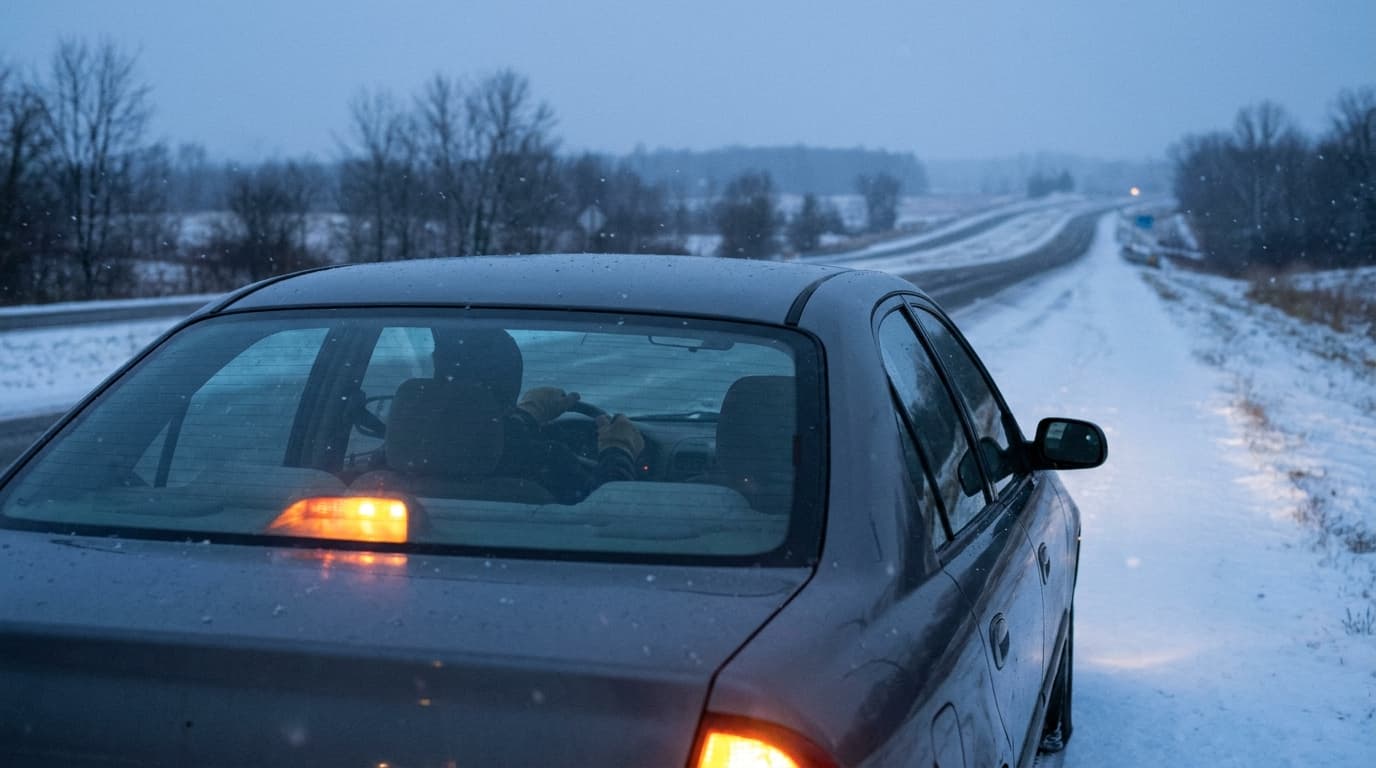
You generally have three options on a Canadian traffic ticket: pay it as a guilty plea, plead guilty with an explanation for a reduced penalty, or dispute the charge and request a trial, and the right choice depends on whether it is the fine or the demerit points and insurance hit you are trying to avoid.
Your Three Options When a Ticket Arrives
Most Canadian traffic tickets, whether issued under Ontario's Highway Traffic Act, British Columbia's Motor Vehicle Act, Alberta's Traffic Safety Act, or Quebec's Code de la securite routiere, boil down to the same three choices.
Pay the ticket. Paying the fine amount printed on the ticket is treated as a guilty plea. The conviction is entered, demerit points apply where relevant, and the matter is closed. There is no going back once payment is submitted.
Plead guilty with an explanation. Where this option is offered, you appear before a justice of the peace or judicial officer, admit the offence, but ask for a reduced fine or more time to pay based on your circumstances. This does not remove the conviction or the demerit points, it only affects the penalty.
Dispute the ticket. You plead not guilty and request a trial (or, in Ontario, request early resolution first). This is the only path that can result in the charge being withdrawn, reduced, or dismissed. It takes more time, and unlike the other two options, there is no guarantee of a better outcome.
How Long You Have to Respond
Every province prints a response deadline on the ticket itself, and missing it has real consequences, up to a conviction being registered without you ever appearing.
| Province | Typical response window | Where to respond |
|---|---|---|
| Ontario | About 15 days | Court office named on the ticket, or online where available |
| British Columbia | About 30 days | tickets.gov.bc.ca, an ICBC office, or a Provincial Court registry |
| Alberta | About 30 days | Traffic Tickets Digital Service (TTDS), by mail, or in person |
| Quebec | About 30 days | Address printed on the constat d'infraction |
These windows are approximate, and the ticket itself controls, so always check the exact deadline printed on your own notice rather than relying on a general rule.
Fighting a Ticket in Ontario: The Provincial Offences Act Process
Ontario handles traffic tickets under the Provincial Offences Act (POA), and its process has more built-in steps than most other provinces.
Early resolution meeting
Before a trial date is set, many Ontario municipalities let you request an early resolution meeting with the prosecutor. This is an informal conversation where the prosecutor can agree to reduce the charge to a lower point or lower fine offence, or occasionally withdraw it, in exchange for a guilty plea to something less serious. It is faster than trial and worth requesting even if you plan to go to trial if no acceptable resolution is offered.
Requesting disclosure
Anyone charged with a provincial offence is entitled to disclosure, meaning all the information the prosecutor has that is relevant to the charge. In a speeding case this typically means the officer's notes, and where applicable the radar or lidar device's make, model, and calibration or testing record. You have to ask for it, usually in writing to the court office named on your ticket, and reviewing it before your resolution meeting or trial is how most successful defences get built. If the notes are inconsistent with the ticket, incomplete, or the device testing record is missing, that becomes the basis for challenging the charge.
If your ticket concerns a moving violation with recording implications, such as a dispute over dash cam footage submitted as evidence, our companion guide on Canada's recording consent laws explains when a dash cam or bystander video can be used in a provincial offence hearing.
Trial and what happens if the officer doesn't show
At trial, the prosecutor bears the burden of proving the offence, and the officer who issued the ticket is normally required to attend as the prosecution's witness. If the officer does not show up on the trial date, the Crown usually has no evidence to offer, and the charge is commonly withdrawn or dismissed for want of prosecution, though the prosecutor may instead ask the court for an adjournment to a later date. An officer's non-attendance is not an automatic win, but it is one of the more common ways POA charges end favorably for the defendant.
The section 11(b) Charter delay argument
Section 11(b) of the Canadian Charter of Rights and Freedoms guarantees a trial within a reasonable time, and the Supreme Court of Canada's framework from R v Jordan has been applied to Part I provincial offence prosecutions, including traffic tickets. Ontario courts have recognized a presumptive ceiling, and once the total delay from the charge to the end of trial, minus delay caused by the defendant, crosses that ceiling, the delay is presumed unreasonable unless the prosecution can show exceptional circumstances. Where a POA case has dragged on for well over a year without a valid reason, an 11(b) application to stay the charge can succeed. This is a technical argument that usually needs paralegal or legal help to run properly, since the timeline calculation is fact-specific.
How Disputing Works Outside Ontario
British Columbia
BC issues Violation Tickets under the Motor Vehicle Act. You can start a dispute online at tickets.gov.bc.ca for tickets that only involve Motor Vehicle Act charges, or dispute by mail or in person at an ICBC driver licensing office or a Provincial Court registry. When you dispute, you choose whether you are disputing the allegation itself or only the fine amount and asking for time to pay, and only the former requires you to appear for a hearing. The Provincial Court will mail you a court date once your dispute is registered.
Alberta
Alberta traffic matters move through the Traffic Tickets Digital Service (TTDS) or the local Provincial Court. Entering a not guilty plea by the deadline opens a file, a first appearance sets a trial date, the Crown must then provide disclosure, and many matters are resolved in a discussion with the Crown once disclosure is reviewed rather than going all the way to trial. As in Ontario, the Crown must prove every element of the offence beyond a reasonable doubt at trial.
Quebec
Quebec issues a constat d'infraction. To contest it, you check the "not guilty" box on the reply portion, and it is worth explicitly requesting disclosure of the evidence in writing rather than volunteering your version of events on the form, since anything you write there can be used by the prosecutor. Do not pay the fine if you intend to contest, since payment is treated as a final guilty plea. The file is then transferred either to municipal court or the district courthouse depending on which police force issued the ticket, and a hearing notice follows by mail, sometimes many months later.
Fine vs. Demerit Points vs. Insurance: Why Fighting Can Matter Even If You Can Pay
The printed fine is often the smallest part of what a ticket actually costs. A speeding or careless driving conviction also adds demerit points, which stay on your driving record for about two years from the offence date in Ontario, BC, Alberta, and Quebec, and can trigger a licence suspension if enough accumulate within that window. See our guide to Ontario's demerit point system for how the thresholds work.
Separately, and often more expensive, most insurers raise premiums after a moving conviction, and that increase typically persists for around three years even after the demerit points themselves have expired. For a driver who can easily afford a $200 fine, the real financial exposure is frequently the insurance increase, which can run into the thousands of dollars over the following renewal cycles. That gap between the fine and the downstream cost is the single most common reason to fight a ticket you could otherwise just pay.
Photo Radar and Red Light Camera Tickets Are Different
Automated enforcement tickets, whether from a photo radar van or a red light camera at an intersection, work differently from an officer-issued ticket. They are owner liability offences: the ticket is mailed to the registered owner of the vehicle regardless of who was actually driving. Because no one can identify or cross-examine the driver from a photograph alone, these tickets typically carry no demerit points and are not reported to insurers in most provinces, even though the fine itself must still be paid.
You can still dispute an automated ticket, usually on grounds like the camera's accuracy, signage, or signal timing, but you cannot cross-examine a camera the way you can question a live officer about their observations, so the available defences are narrower. Non-payment can still affect licence plate renewal even though it will not touch your driving record.
When Hiring a Paralegal or Agent Is Worth It
In Ontario, licensed paralegals regularly represent drivers on POA traffic matters, and in other provinces a lawyer or, in some cases, a traffic ticket agent can appear for you. Hiring help tends to make the most sense when the stakes go beyond the fine, for example a charge carrying enough demerit points to risk a licence suspension, a charge like Ontario's stunt driving offence or careless driving that carries a criminal-adjacent record risk, or a commercial driver whose licence is their livelihood. For a minor first ticket with a small fine and few points, the cost of representation may exceed what you would save. No outcome, including a full win or dismissal, can ever be guaranteed by anyone representing you.
A ticket is a prosecution by the government, not a dispute with another private party, so it does not go through civil court. If your situation instead involves a dispute with an insurer, a body shop, or another driver over damages, that is a separate civil matter better suited to our guide on small claims court in Canada. For the rest of our Canadian driving and traffic coverage, start at the Canada driving laws hub.
Disclaimer: This article provides general legal information about traffic ticket procedures in Canada and is not legal advice. Ticket procedures, deadlines, and demerit point rules vary by province and change over time. Consult the official source cited for your province or a licensed paralegal or lawyer for advice on your specific ticket.
Frequently Asked Questions
How many days do I have to dispute a traffic ticket in Canada?
It varies by province and is printed on the ticket itself. Ontario generally gives about 15 days to respond, while British Columbia, Alberta, and Quebec generally give about 30 days. Missing the deadline can result in a conviction being registered without a hearing.
Does fighting a ticket remove demerit points automatically?
No. Demerit points and any conviction are only avoided if the charge is withdrawn, reduced to a non-demerit offence, or dismissed. Simply requesting a trial does not change the points; the outcome of the trial or resolution meeting does.
What happens if the police officer does not show up to my trial?
The prosecution usually has no witness to prove the ticket, so the charge is commonly withdrawn or dismissed, though the prosecutor can instead request an adjournment to another date. It is a common favorable outcome but not an automatic win.
Can I fight a photo radar or red light camera ticket?
Yes, but the grounds are narrower since there is no officer to cross-examine. Common arguments involve camera calibration, signage, or signal timing. These tickets generally carry no demerit points regardless of the outcome.
Is it worth hiring a paralegal to fight a speeding ticket?
It depends on the stakes. Representation tends to be worth it when a conviction would push you toward a demerit-based suspension, involves a stunt driving or careless driving charge, or affects a commercial licence. For a small, low-point ticket, the cost may outweigh the benefit.
Can a ticket be thrown out for taking too long to get to trial?
Yes. Section 11(b) of the Charter guarantees a trial within a reasonable time, and the Jordan framework's presumptive ceilings have been applied to provincial offence prosecutions. An unreasonably delayed case can be stayed, which has an effect similar to an acquittal.
Sources and References
- Ontario.ca: Check the status of traffic tickets and fines online, or request a meeting to resolve your case(ontario.ca).gov
- Ontario Court of Justice: Guide for Defendants in Provincial Offences Cases(ontariocourts.ca).gov
- Ontario.ca Crown Prosecution Manual, D.10: Disclosure(ontario.ca).gov
- Department of Justice Canada, Charterpedia: Section 11(b), Trial within a reasonable time(justice.gc.ca).gov
- ICBC: Disputing a ticket(icbc.com)
- Province of British Columbia: Dispute a Provincial Violation Ticket(www2.gov.bc.ca).gov
- Province of British Columbia: Dispute an intersection safety (red light) camera ticket(www2.gov.bc.ca).gov
- Government of Alberta: Traffic Tickets Digital Service(traffictickets.alberta.ca).gov
- Alberta Courts: Traffic Court(albertacourts.ca).gov
- Gouvernement du Québec: Offences and fines(quebec.ca).gov
- SAAQ: Contester une décision(saaq.gouv.qc.ca).gov
- City of Toronto: Red Light Cameras(toronto.ca).gov