
Quebec
Quebec Demerit Points (Points d'Inaptitude) Guide
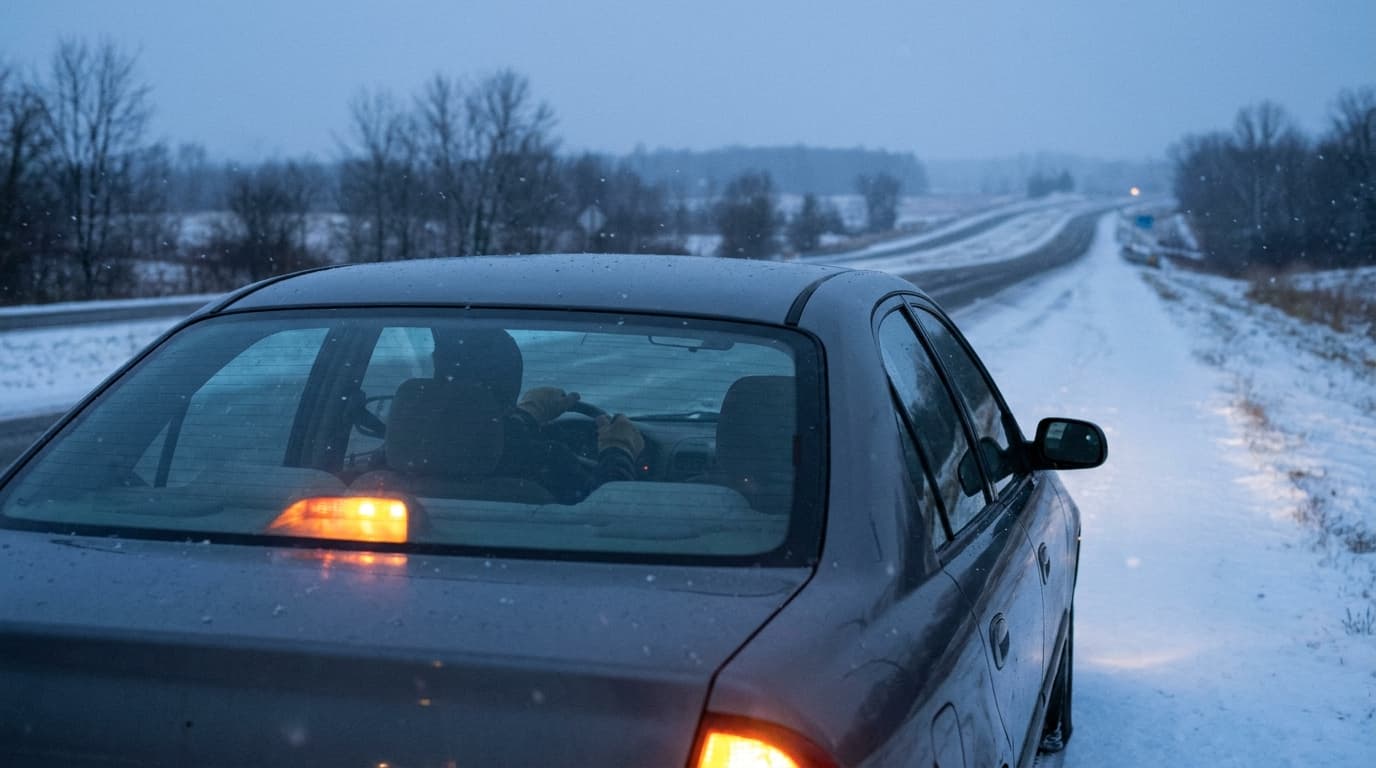
In Quebec, reaching your demerit-point threshold does not just suspend your licence, it revokes it, and the threshold itself shifts depending on your age and licence class.
What Are Points d'Inaptitude?
Quebec does not use the phrase demerit points on its official forms. The Société de l'assurance automobile du Québec (SAAQ) calls them points d'inaptitude, and they work under the Code de la sécurité routière. A police officer issuing a ticket does not add points to your record on the spot; points are only added once a court registers a conviction or you pay the fine, since paying is treated as an admission of guilt.
This distinction matters because a contested ticket still before the courts has not yet added anything to your dossier de conduite (driving record). Once a conviction or payment is recorded, the corresponding points appear, and the clock for the 2-year retention period starts running from that date, not from the date of the original offence.
The biggest structural difference from most other provinces is what happens once you hit your limit. Ontario and Alberta suspend a licence at the top of their scale. Quebec revokes it. A revocation is a harder reset than a suspension: it can require the driver to requalify and, depending on the case, may involve additional conditions before driving privileges return.
Your Threshold Depends on Age and Licence Class
Unlike a single province-wide ceiling, Quebec's SAAQ splits drivers into four brackets, and each bracket has its own point ceiling before a revocation is triggered.
| Regime | Who It Applies To | Point Threshold |
|---|---|---|
| Learner and probationary bracket | Apprentice permit holders, probationary permit holders, unlicensed individuals, and Class 6D (moped/scooter) or Class 8 (tractor) holders with under 5 years of experience | 4 points |
| Young full-licence holders | Full licence holders under age 23 | 8 points |
| Early-adult full-licence holders | Full licence holders aged 23 to 24 | 12 points |
| Experienced full-licence holders | Full licence holders aged 25 and older | 15 points |
Reaching the ceiling for your bracket triggers a licence revocation of at least 3 months. The exact length depends on your bracket, how many points you accumulated, and whether you have had a previous penalty within the last 2 years; SAAQ can extend a revocation to 6 or 12 months on that basis. An unlicensed person who reaches the 4-point threshold instead has their right to obtain a licence suspended for 3, 6, or 12 months.
After a first demerit-point revocation, a driver who needs a vehicle for their main employment can petition a Court of Québec judge for a restricted licence covering only work-related driving. Eligibility requires holding a valid licence at the time of the offence, having no recent Criminal Code driving convictions, and having no other active suspension. A restricted licence keeps the same classes as the original licence and can be granted for 3, 6, or 12 months.
How Long Points Stay on Your Record
Every point d'inaptitude, whether from a routine speeding ticket or a major offence, stays on your driving record for 2 years from the date of the conviction or the date you paid the fine. Points do not stack forever: once the 2-year window on a given offence closes, that offence's points drop off, even if you were never revoked.
This means the number that matters at any moment is not your lifetime total, it is the sum of everything still inside its own rolling 2-year window. A driver who slows down after a bad year can watch their total fall back down as older offences age out.
Speeding: Points Climb Fast, and the Curve Depends on the Zone
Quebec's speeding penalty schedule is set out article by article in the Code de la sécurité routière and published by SAAQ in a detailed fine and points table. In a zone posted at 60 km/h or less, which covers most city and residential streets, the schedule works out roughly like this.
| Km/h Over the Posted Limit | Points d'Inaptitude | Approximate Fine |
|---|---|---|
| 1 to 10 | 0 | $30 to $50 |
| 11 to 20 | 1 | $50 to $70 |
| 21 to 30 | 2 | $90 to $120 |
| 31 to 39 | 3 | $150 to $170 |
| 40 to 45 (grand excès de vitesse begins) | 6 | $380 to $420 |
| 46 to 60 | 10 | $510 to $650 |
| 61 to 80 | 14 | $700 to $1,000 |
| 81 to 100 | 18 | $1,100 to $1,400 |
| 101 to 120 | 24 | $1,500 to $2,000 |
| 121 and up | 30 or more | $2,000 and up |
The overage that flips a ticket into a grand excès de vitesse is not the same in every zone. It is 40 km/h or more over the limit in a zone posted at 60 km/h or less, 50 km/h or more over in a zone posted above 60 and up to 90 km/h, and 60 km/h or more over in a zone posted at 100 km/h or higher. A highway driver has more room before crossing that line than a driver on a city street does.
Grand Excès de Vitesse: Escalating Sanctions
Since April 1, 2008, a conviction for a grand excès de vitesse stays relevant for 10 years, not the usual 2, for the purpose of deciding how severely a repeat offence is punished, though the points themselves still drop off the driving record after 2 years. Each further grand excès de vitesse within that 10-year window is punished more harshly than the last.
| Offence Within 10 Years | Immediate Roadside Suspension | Vehicle Impoundment | On Conviction |
|---|---|---|---|
| 1st | 7 days | None | Points doubled, fine doubled |
| 2nd | 30 days | 30 days, if this offence and at least one other happened in a 60 km/h or less zone | Points doubled, fine doubled |
| 3rd | 30 days (60 days if all three offences were in a 60 km/h or less zone) | 30 days, if applicable | Points doubled, fine doubled |
| 4th or more | 30 days (60 days if applicable) | 30 days, if applicable | Points doubled, fine tripled |
The roadside suspension and vehicle impoundment happen at the traffic stop itself, before any court date. SAAQ's own published examples show how quickly this adds up: driving 95 km/h in a 50 zone brings 6 points and roughly a $420 fine; 145 km/h in a 90 zone brings 10 points and about $610; 180 km/h in a 100 zone brings 14 points and about $1,020. A single grand excès de vitesse conviction, especially a repeat one, can be enough on its own to push a driver over their revocation threshold.
Other Common Offences and Their Points
Speeding is not the only route to a revocation. Several everyday violations carry meaningful point values under the same schedule.
| Offence | Points d'Inaptitude |
|---|---|
| Racing or driving for a wager | 12 |
| Failing to stop for a school bus | 9 |
| Duty to remain at an accident scene (hit and run) | 9 |
| Using a handheld device while driving | 5 |
| Careless or reckless driving | 4 |
| Failing to wear a seatbelt | 3 |
| Tailgating | 2 |
Because these points count toward the same age-and-class threshold as speeding points, a driver who is already close to their limit from a couple of speeding tickets can be pushed into revocation by something as ordinary as a handheld-device charge.
How Quebec's System Differs from Ontario's
Ontario's demerit-point system, covered in our Ontario demerit points guide, suspends rather than revokes, and it uses one fixed ceiling per licence class (15 points for a full G licence, 9 for a novice G1/G2). Quebec instead layers four different ceilings on top of age and licence type, and treats reaching any of them as a revocation rather than a suspension. A driver moving between provinces should not assume the number that mattered at home still applies once they hold a Quebec licence.
Check Your Own Point Total
If you have a recent Quebec ticket or conviction and want to see roughly where you stand against your bracket's threshold, use our Canada demerit points lookup tool. For the full picture of how demerit points, licence suspensions, and impaired-driving rules work across every province, start at our Canada driving laws hub.
Dash Cams and Recording Traffic Stops in Quebec
A grand excès de vitesse stop or a roadside suspension is often the moment drivers wish they had video evidence. Dash cams are legal to use anywhere in Quebec, and audio recording during a traffic stop is governed by the same one-party-consent rule that applies across Canada. For the details on what you can record and how footage can be used, see our Canada recording laws guide.
Disclaimer: This article provides general information about Quebec's demerit-points system and is not legal advice. Consult the Code de la sécurité routière, the SAAQ, or a licensed Quebec lawyer for guidance on a specific situation.
Frequently Asked Questions
How many demerit points can I have before my licence is revoked in Quebec?
It depends on your licence type and age. Apprentice, probationary, and unlicensed drivers reach the limit at 4 points. Full-licence holders under 23 reach it at 8 points, those 23 to 24 at 12 points, and drivers 25 and older at 15 points.
Does Quebec suspend or revoke a licence for demerit points?
Quebec revokes the licence rather than suspending it once a driver reaches their bracket's threshold. Revocation is a minimum of 3 months and can extend to 6 or 12 months depending on the driver's points and history within the last 2 years.
How long do demerit points stay on a Quebec driving record?
Points stay on the record for 2 years from the date of conviction or the date the fine was paid, since paying a ticket is treated as equivalent to a guilty verdict.
What counts as a grand excès de vitesse in Quebec?
It is driving 40 km/h or more over the limit in a zone posted at 60 km/h or less, 50 km/h or more over in a zone posted above 60 up to 90 km/h, or 60 km/h or more over in a zone posted at 100 km/h or higher. A first offence brings an immediate 7-day roadside licence suspension, and a conviction doubles both the points and the fine.
Can I get a restricted licence after a demerit-point revocation in Quebec?
After a first demerit-point revocation, a driver who needs a vehicle for their main job can petition a Court of Québec judge for a restricted licence limited to work-related driving, provided they have no recent Criminal Code driving convictions and no other active suspension.
How many points is using a phone while driving in Quebec?
Using a handheld portable electronic device while driving carries 5 demerit points under the Code de la sécurité routière, in addition to the applicable fine.
Updates
Corrected September 26, 2026: a grand excès de vitesse doubles the points and the fine on every conviction, not only on a repeat, and a repeat within 10 years brings a licence suspension of at least 30 days.
Sources and References
- SAAQ - Demerit Points(saaq.gouv.qc.ca).gov
- SAAQ - Offences and Demerit Points(saaq.gouv.qc.ca).gov
- SAAQ - Restricted Licence Related to an Accumulation of Demerit Points(saaq.gouv.qc.ca).gov
- SAAQ - Accumulation of Demerit Points(saaq.gouv.qc.ca).gov
- SAAQ - Excès de vitesse: amendes et points d'inaptitude (PDF)(saaq.gouv.qc.ca).gov
- SAAQ - Grands excès de vitesse: des sanctions plus sévères (PDF)(saaq.gouv.qc.ca).gov