
Canada
Careless Driving vs Dangerous Driving in Canada
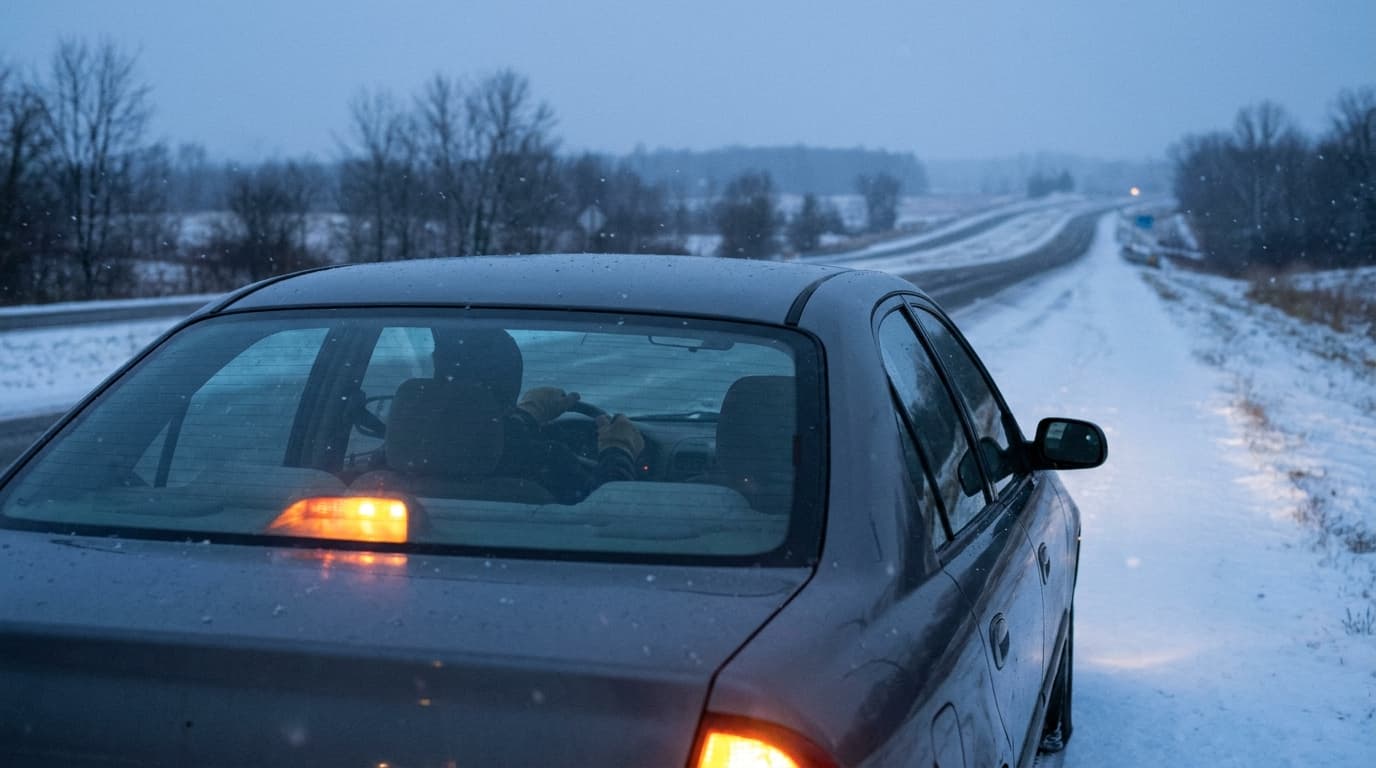
Careless driving is a provincial offence that brings a fine and demerit points, while dangerous driving is a federal Criminal Code offence that brings a criminal record and possible prison time.
Two Different Legal Systems
"Careless driving" and "dangerous driving" sound similar, but they come from two completely different legal systems. Careless driving is created by each province's own highway traffic legislation, for example Ontario's Highway Traffic Act (HTA), RSO 1990, c H.8, s 130. It is a provincial regulatory offence, prosecuted in provincial offences or traffic court, and a conviction does not create a criminal record.
Dangerous driving, formally called "dangerous operation" of a conveyance, is created by the federal Criminal Code, RSC 1985, c C-46, s 320.13. It applies the same way in every province, is prosecuted in criminal court, and a conviction is a criminal record that can appear on a background check.
Knowing which one applies to a given situation matters, because the consequences are very different: a fine and demerit points on one side, a criminal record and possible prison time on the other.
What Is Careless Driving?
Careless driving is the far more common of the two charges. In Ontario, HTA s 130 makes it an offence to drive a vehicle "without due care and attention or without reasonable consideration for other persons using the highway." Every other province has an equivalent offence in its own traffic legislation, sometimes under a different name.
The Legal Test for Careless Driving
The test for careless driving is objective, and it is relatively easy for the Crown to meet. A court asks whether the driver's conduct fell below the standard of a reasonably prudent driver, given the road, weather, traffic, and visibility at the time. A single moment of inattention, such as glancing at a phone, misjudging a following distance, or failing to check a mirror before a lane change, can be enough. Careless driving does not require intent or recklessness, only a failure to meet the ordinary standard of care that a reasonable driver would show.
Careless Driving Penalties in Ontario
A careless driving conviction under HTA s 130 carries:
- A fine of $400 to $2,000
- Up to 6 months in jail (rarely imposed for a first offence)
- A licence suspension of up to 2 years, at the court's discretion
- 6 demerit points added to the driver's record
The demerit points stay on the driver's record for 2 years from the date of the offence. Enough points from careless driving and other convictions can trigger a separate suspension under Ontario's demerit point system. See our Ontario demerit points guide for the full warning-letter and suspension thresholds.
Careless Driving Causing Bodily Harm or Death (Enhanced Offence)
Ontario's HTA also creates an enhanced, more serious version of the offence where careless driving causes bodily harm or death, at HTA s 130(3). This is still a provincial offence, not a Criminal Code charge, but the penalties are much steeper:
- A fine of $2,000 to $50,000
- Up to 2 years in jail
- A licence suspension of up to 5 years
Ontario added this enhanced offence to the HTA in 2017, after public concern that fatal or injury-causing collisions were sometimes being resolved with the modest penalties of an ordinary careless driving ticket. Prosecutors can use it as a middle option between a routine careless driving charge and a full Criminal Code dangerous driving prosecution, though the two are not the same charge and do not carry a criminal record in the same way.
Careless Driving Rules in Other Provinces
Every province has its own version of the careless driving offence, with similar wording and a similar mix of fines and demerit points, though the exact numbers and even the name of the offence differ.
| Province | Legislation | Offence Name | Demerit Points |
|---|---|---|---|
| Ontario | Highway Traffic Act s 130 | Careless driving | 6 |
| British Columbia | Motor Vehicle Act s 144 | Driving without due care and attention | 6 |
| Alberta | Traffic Safety Act | Careless driving | 6 |
| Quebec | Code de la securite routiere | Conduite avec negligence | Varies by licence class and age |
British Columbia is a useful example of the naming difference: the province does not have an offence formally called "careless driving." Instead, Motor Vehicle Act s 144 covers driving without due care and attention, without reasonable consideration for others, or at a speed that is excessive for the conditions. It works the same way in practice as Ontario's careless driving offence. Fine ranges, suspension lengths, and point thresholds change periodically, so always check the current schedule for your province.
What Is Dangerous Driving?
Dangerous driving, or "dangerous operation" under Criminal Code s 320.13, is a federal criminal offence that applies identically across Canada, regardless of province. It is a hybrid (dual-procedure) offence, meaning the Crown can proceed either by indictment or by summary conviction depending on the seriousness of the conduct and any prior record.
The Legal Test for Dangerous Driving
The test for dangerous driving is stricter than for careless driving. A court must find that the manner of operating the vehicle was dangerous to the public, having regard to all the circumstances, including the nature and condition of the place, the amount of traffic, and anything else relevant at the time. Canadian courts have held that the conduct must amount to a marked departure from the standard of care a reasonable driver would show in the same circumstances, not simply a momentary lapse in attention. That is a meaningfully higher bar than the careless driving test, which is one reason most at-fault collisions are handled as provincial careless driving matters rather than criminal charges.
Dangerous Driving Penalties Under the Criminal Code
Criminal Code s 320.13 sets out three tiers of the offence, with penalties in s 320.19:
- Dangerous operation, no injury: on indictment, up to 10 years in prison; on summary conviction, up to 2 years less a day
- Dangerous operation causing bodily harm: an indictable offence, up to 14 years in prison
- Dangerous operation causing death: an indictable offence, up to life imprisonment
Unlike a careless driving conviction, a dangerous driving conviction is a criminal record. It typically also comes with a federal driving prohibition on top of any prison sentence, and provinces layer their own administrative licence consequences on top of that.
Careless Driving vs Dangerous Driving at a Glance
| Careless Driving | Dangerous Driving | |
|---|---|---|
| Source of law | Provincial (for example, Ontario HTA s 130) | Federal Criminal Code s 320.13 |
| Type of offence | Provincial regulatory offence | Criminal offence (hybrid) |
| Legal test | Fell below the standard of a reasonable driver | Marked departure from that standard, dangerous to the public |
| Criminal record | No | Yes |
| Court | Provincial offences or traffic court | Criminal court |
| Typical penalty (base offence) | Fine $400 to $2,000, up to 6 months jail, up to 2 year suspension, 6 demerit points (Ontario) | Up to 10 years in prison; more if injury or death |
| Enhanced version | Causing bodily harm or death: fine $2,000 to $50,000, up to 2 years jail, up to 5 year suspension (HTA s 130(3)) | Causing bodily harm: up to 14 years. Causing death: up to life |
Which Charge Applies to a Given Situation?
Police and Crown prosecutors decide which charge to lay based on how far the driving departed from a reasonable standard, not just on how serious the resulting crash was. A serious collision does not automatically mean a dangerous driving charge, and a minor-looking incident does not automatically mean only a careless driving ticket.
Factors that push a case toward a dangerous driving charge include extreme speed for the conditions, deliberately running red lights or stop signs, racing, or a sustained pattern of reckless behaviour rather than a single lapse. Following too closely, an unsafe lane change, or misjudging a turn is more typically treated as careless driving, even where it results in a serious crash.
It is also possible, though less common, for a single incident to lead to both a provincial ticket and a separate criminal investigation, or for the Crown to proceed only on the more serious Criminal Code charge. Anyone facing a dangerous driving charge should get legal advice quickly, since a conviction carries a permanent criminal record.
Demerit Points, Licence Suspension, and Insurance
Provincial demerit points from a careless driving conviction feed into each province's own licence suspension system. In Ontario, for example, a fully licensed driver who accumulates 15 or more points within 2 years faces a 30 day licence suspension. Our Ontario demerit points guide breaks down the warning letters, interview thresholds, and suspension levels in detail, and the demerit points lookup tool lets you check point values by offence and province.
A dangerous driving conviction, by contrast, leads to a federal driving prohibition set by the sentencing judge, separate from any provincial demerit point system, on top of its own insurance consequences. Both a careless driving conviction and a dangerous driving conviction raise insurance premiums significantly, but only a dangerous driving conviction leaves a criminal record. Impaired driving is another Criminal Code offence with its own mandatory minimum penalties; see our impaired driving in Canada guide for how it compares to dangerous driving.
Dash Cam Footage as Evidence
Dash cam footage is commonly used as evidence in both careless driving and dangerous driving cases, whether it comes from the driver's own vehicle, another driver, or a nearby business camera. Dash cams are legal to use in every province. If a dash cam also records audio, Canada's one-party-consent rule under Criminal Code s 184 applies, meaning the recording is generally lawful as long as one party to any recorded conversation, including the person operating the camera, consents to it. See our Canada recording laws guide for the full rules on audio and video recording consent.
For a broader overview of driving offences and licence rules across the country, visit our Canada driving laws hub.
Disclaimer: This article provides general legal information about Canadian driving law and is not legal advice. Consult a licensed lawyer or paralegal in your province for advice about your specific situation.
Frequently Asked Questions
Is careless driving a criminal offence in Canada?
No. Careless driving is a provincial offence under each province's own highway traffic law, for example Ontario's Highway Traffic Act s 130. It does not create a criminal record, though it can bring a fine, demerit points, and a licence suspension.
What is the penalty for dangerous driving in Canada?
Dangerous operation under Criminal Code s 320.13 is a hybrid offence. On indictment it carries up to 10 years in prison for the basic offence, rising to up to 14 years if it causes bodily harm and up to life imprisonment if it causes death.
Can careless driving be upgraded to a criminal charge?
Yes. If the standard of driving is bad enough to be a marked departure from what a reasonable driver would do, rather than a simple lapse in attention, police and Crown prosecutors can lay a Criminal Code dangerous driving charge instead of, or alongside, a provincial careless driving ticket.
How many demerit points is careless driving in Ontario?
A careless driving conviction under HTA s 130 adds 6 demerit points in Ontario, on top of the fine and any licence suspension the court imposes.
Does a dangerous driving conviction show up on a criminal record check?
Yes. Because dangerous operation is charged under the Criminal Code, a conviction is a criminal record that can appear on background checks, unlike a careless driving conviction, which is a provincial offence, not a crime.
What is the legal test for dangerous driving in Canada?
Courts ask whether the manner of driving was dangerous to the public, having regard to all the circumstances, including the road and traffic conditions, and whether it amounted to a marked departure from the standard of care a reasonable driver would show in the same situation.
The Law Behind This Article
This article rests on the statutory provisions below, held in our own legal record and retrieved from the official source. Tap a section to read the operative text.
Highway Traffic Act (Ontario)
s. 130Careless drivingIn forcecited in 3 of our articles
(1) Every person is guilty of the offence of driving carelessly who drives a vehicle or street car on a highway or in a specified place without due care and attention or without reasonable consideration for other persons using the highway or specified place. 2024, c. 27, Sched. 8, s. 11 (1). Penalty
Official text (excerpt) · last checked 2026-08-13 · Read the full text in our law library · Verify at ontario.ca
Also relied on in: Ontario Demerit Points: How the System Works (2026)
Criminal Code
s. 320.13Dangerous operationIn forcecited in 4 of our articles
(1) Everyone commits an offence who operates a conveyance in a manner that, having regard to all of the circumstances, is dangerous to the public. (2) Everyone commits an offence who operates a conveyance in a manner that, having regard to all of the circumstances, is dangerous to the public and, as a result, causes bodily harm to another person. (3) Everyone commits an offence who operates a conveyance in a manner that, having regard to all of the circumstances, is dangerous to the public and, as a result, causes the death of another person.
Official text (excerpt) · last checked 2026-08-12 · Read the full text in our law library · Verify at laws-lois.justice.gc.ca
Cited in 5 court opinions in our collectionLatest citing opinion in our collection: 2026
Opinions citing this section in our collection:
- R. v. Wolfe (Supreme Court of Canada 2024, 2024 SCC 34)
- R. v. Calderon (Court Martial Appeal Court of Canada 2026, 2026 CMAC 2)
- Lin v. Canada (Citizenship and Immigration) (Federal Court 2021, 2021 FC 1329)
Identified automatically from the court opinions citing this section — not a ranking of which case controls.
s. 320.19PunishmentIn forcecited in 8 of our articles
(1) Every person who commits an offence under subsection 320.14(1) or 320.15(1) is guilty of (a) an indictable offence and liable to imprisonment for a term of not more than 10 years and to a minimum punishment of, (i) for a first offence, a fine of $1,000, (ii) for a second offence, imprisonment for a term of 30 days, and (iii) for each subsequent offence, imprisonment for a term of 120 days; or (b) an offence punishable on summary conviction and liable to a fine of not more than $5,000 or to imprisonment for a term of not more than two years less a day, or to both, and to a minimum punishment of, (i) for a first offence, a fine of $1,000, (ii) for a second offence, imprisonment for a term of 30 days, and (iii) for each subsequent offence, imprisonment for a term of 120 days. (2) Everyone who commits an offence under subsection 320.14(4) is liable on summary conviction to a fine of not more than $1,000.
Official text (excerpt) · last checked 2026-08-12 · Read the full text in our law library · Verify at laws-lois.justice.gc.ca
Cited in 1 court opinions in our collectionLatest citing opinion in our collection: 2025
Opinions citing this section in our collection:
- Douhaya v. Canada (Citizenship and Immigration) (Federal Court 2025, 2025 FC 874)
Identified automatically from the court opinions citing this section — not a ranking of which case controls.
Also relied on in: Alberta Hit and Run Laws: Duties, Penalties & MVAC, DUI Penalties in Canada: Fines, Jail Time, and Bans, Impaired Driving Laws in Canada: The Federal Rules
s. 320.2Punishment in case of bodily harmIn forcecited in 4 of our articles
Every person who commits an offence under subsection 320.13(2), 320.14(2), 320.15(2) or 320.16(2) is guilty of (a) an indictable offence and liable to imprisonment for a term of not more than 14 years and to a minimum punishment of, (i) for a first offence, a fine of $1,000, (ii) for a second offence, imprisonment for a term of 30 days, and (iii) for each subsequent offence, imprisonment for a term of 120 days; or (b) an offence punishable on summary conviction and liable to a fine of not more than $5,000 or to imprisonment for a term of not more than two years less a day, or to both, and to the minimum punishments set out in subparagraphs (a)(i) to (iii).
Official text (excerpt) · last checked 2026-08-12 · Read the full text in our law library · Verify at laws-lois.justice.gc.ca
s. 320.21Punishment in case of deathIn forcecited in 22 of our articles
Everyone who commits an offence under subsection 320.13(3), 320.14(3), 320.15(3) or 320.16(3) is liable on conviction on indictment to imprisonment for life and to a minimum punishment of, (a) for a first offence, a fine of $1,000; (b) for a second offence, imprisonment for a term of 30 days; and (c) for each subsequent offence, imprisonment for a term of 120 days.
Official text (excerpt) · last checked 2026-08-12 · Read the full text in our law library · Verify at laws-lois.justice.gc.ca
Cited in 1 court opinions in our collectionLatest citing opinion in our collection: 2021
Opinions citing this section in our collection:
- Lin v. Canada (Citizenship and Immigration) (Federal Court 2021, 2021 FC 1329)
Identified automatically from the court opinions citing this section — not a ranking of which case controls.
Also relied on in: Manitoba Hit and Run Laws: Penalties and MPI Claims, New Brunswick Hit and Run Laws: Penalties and Duties, Northwest Territories Hit and Run Laws (2025)
Search our full record of Canadian federal law — every consolidated Act, in English and French →
Sources and References
- Highway Traffic Act, RSO 1990, c H.8, s 130 (careless driving)(ontario.ca).gov
- Criminal Code, RSC 1985, c C-46, s 320.13 (dangerous operation)(laws-lois.justice.gc.ca).gov
- Criminal Code, RSC 1985, c C-46, s 320.19 (punishment)(laws-lois.justice.gc.ca).gov
- Ontario demerit point schedule (Ministry of Transportation)(ontario.ca).gov
- Motor Vehicle Act, RSBC 1996, c 318(bclaws.gov.bc.ca).gov
- Alberta Traffic Safety Act overview(alberta.ca).gov
- SAAQ, demerit points and offences(saaq.gouv.qc.ca).gov
- Criminal Code, RSC 1985, c C-46, s 320.2 (dangerous operation causing bodily harm, up to 14 years)(laws-lois.justice.gc.ca).gov
- Criminal Code, RSC 1985, c C-46, s 320.21 (operation causing death, up to life imprisonment)(laws-lois.justice.gc.ca).gov