
Saskatchewan
Saskatchewan Hit-and-Run Laws: Penalties and SGI Claims
Independently fact-checked against primary sources (last audited June 18, 2026). · 8 primary sources cited on this page. How we verify our legal content
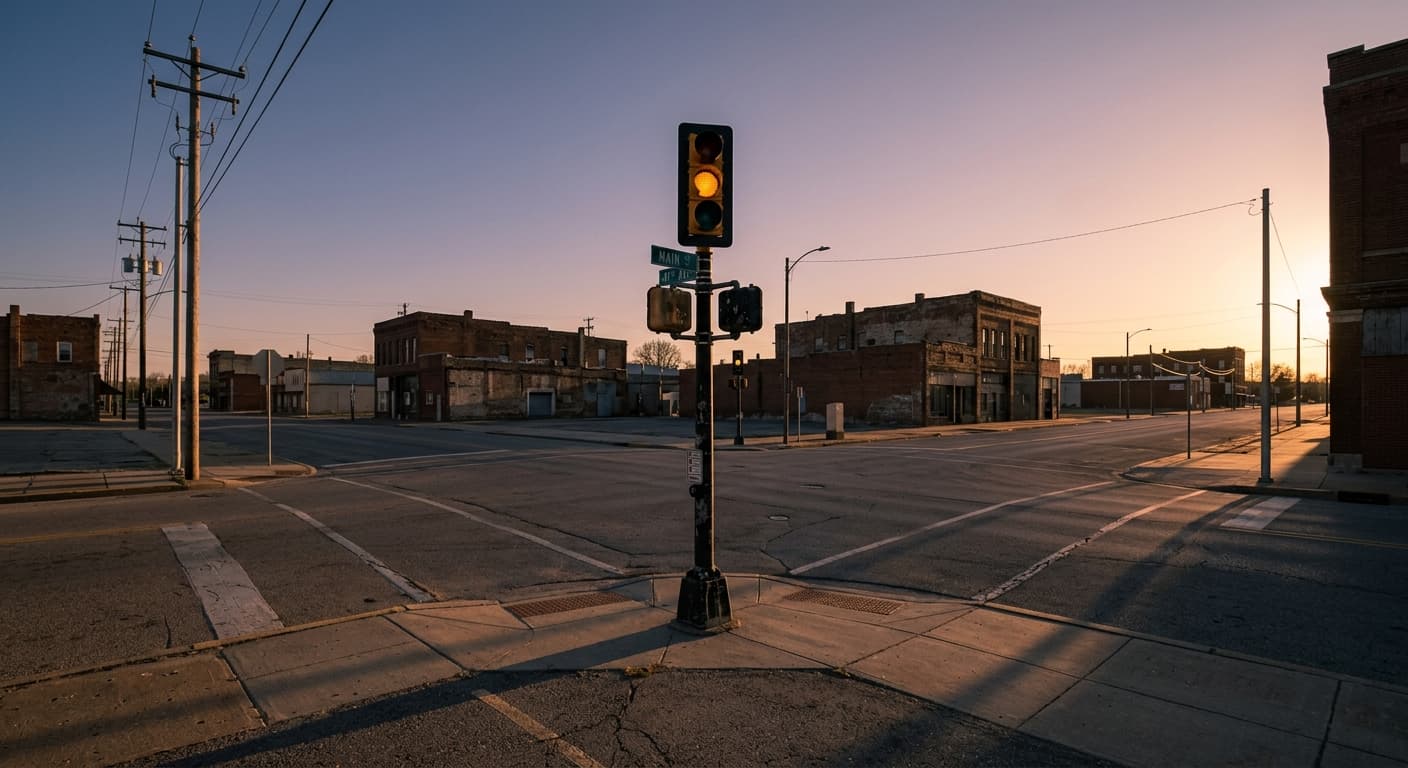
In Saskatchewan, leaving the scene of an accident is both a federal criminal offence under Criminal Code s. 320.16 and a provincial offence under The Traffic Safety Act, SS 2004, c T-18.1. Because Saskatchewan operates a public auto insurance fund through SGI (Saskatchewan Government Insurance), victims struck by an unidentified driver pursue compensation directly through SGI rather than through a private insurer or court action against an unknown party. A police report is required before SGI will process any unidentified-driver claim.
Federal law: Criminal Code s. 320.16
Every hit-and-run collision in Saskatchewan is measured first against the federal Criminal Code. Section 320.16, which came into force on 18 December 2018 as part of SC 2018, c. 21 (formerly Bill C-46), is the operative provision. It replaced s. 252 of the Criminal Code, which was simultaneously repealed by s. 14 of the same Act. Any guide or legal resource that still cites s. 252 as the hit-and-run provision is out of date.
Section 320.16(1) sets out the basic duty. Everyone commits an offence who operates a conveyance and who, at the time of operating the conveyance, knows that, or is reckless as to whether, the conveyance has been involved in an accident with a person or another conveyance and who fails, without reasonable excuse, to stop the conveyance, give their name and address and, if any person has been injured or appears to require assistance, offer assistance.
Three obligations flow from that single subsection: stop, identify yourself, and offer assistance if anyone is hurt or appears to need help. Failing any one of them without a reasonable excuse constitutes the offence. The term "conveyance" is defined in s. 320.11 of the Criminal Code to include a motor vehicle, a vessel, an aircraft, or railway equipment. The provision is therefore broader than the former s. 252, which referred separately to vehicles, vessels, and aircraft.
One important change from the old law concerns the evidentiary presumption. The repealed s. 252(2) provided that failing to stop was, in the absence of evidence to the contrary, proof of an intent to escape civil or criminal liability. That presumption was abolished when s. 252 was repealed. Section 320.16 contains no equivalent presumption. The Crown must instead prove the knowledge or recklessness element directly. This is a meaningful difference: the Crown cannot rely on a statutory shortcut to establish the mens rea of the offence.
The defence of reasonable excuse is explicit in s. 320.16(1). What constitutes a reasonable excuse is fact-specific and assessed by the trier of fact. Examples that courts have considered across Canada include a genuine and reasonable belief that no collision occurred, stopping at a location that was safe rather than the precise point of impact, or an immediate and genuine medical emergency requiring the driver to seek help rather than remain at the scene.

Federal penalties
Section 320.16 is a tiered hybrid offence. The penalty depends on the outcome of the collision.
Where no bodily harm results (s. 320.16(1) alone), the Crown may proceed by indictment (up to 10 years imprisonment) or by summary conviction. No mandatory minimum applies to the s. 320.16(1) offence standing alone. A conviction at either level results in a criminal record.
Where the driver knows or is reckless that the accident caused bodily harm to another person (s. 320.16(2)), the offence carries up to 14 years imprisonment on indictment. Mandatory minimums under s. 320.2 apply: a first offence draws a $1,000 fine, a second offence draws 30 days imprisonment, and subsequent offences draw 120 days imprisonment. Summary conviction carries up to $5,000 or two years less a day, with the same mandatory minimums.
Where the driver knows or is reckless that the accident caused death, or caused bodily harm from which death ensued (s. 320.16(3)), the offence is a straight indictable offence carrying up to life imprisonment under s. 320.21. The same mandatory-minimum scale applies: first offence $1,000 fine, second offence 30 days, subsequent offences 120 days.
A conviction under s. 320.16 also exposes the driver to the driving-prohibition provisions of the Criminal Code. Courts routinely impose prohibitions from operating a conveyance following convictions for offences in Part VIII.1.

Provincial law: The Traffic Safety Act
Alongside the federal Criminal Code, The Traffic Safety Act, SS 2004, c T-18.1 imposes its own obligations on Saskatchewan drivers involved in a collision. The Traffic Safety Act operates as a provincial regulatory scheme, independent of and cumulative with the Criminal Code. A single hit-and-run incident can give rise to both a federal criminal prosecution and a provincial regulatory proceeding.
The Traffic Safety Act requires a driver involved in a collision to stop immediately at the scene or as close to it as possible without obstructing traffic. The driver must exchange information with any other involved parties: name, address, driver's licence number, vehicle registration, and insurance information. Where a collision results in injury, death, or property damage exceeding the provincial reporting threshold, the driver must also report the collision to a peace officer.
Failure to comply with these duties is a provincial offence carrying fines and demerit points under the Traffic Safety Act. The SGI demerit-point system assigns demerits for leaving the scene, and accumulation of demerits can trigger a licence suspension. Unlike a Criminal Code conviction, a provincial Traffic Safety Act conviction does not result in a criminal record, but the SGI consequences (demerits, premium surcharge, potential licence suspension) are immediate and tangible.
The Traffic Safety Act also authorises the Registrar of Motor Vehicles to suspend a licence where a driver fails to comply with accident-reporting requirements or fails to satisfy a civil judgment arising from a motor vehicle collision.
SGI: Saskatchewan's public auto insurer
Saskatchewan is one of four Canadian provinces (alongside British Columbia, Quebec, and Manitoba) that operates a public auto insurance fund. SGI administers the Saskatchewan Auto Fund under The Saskatchewan Government Insurance Act, RSS 1978, c S-19 and related regulations. All Saskatchewan-registered vehicles must carry basic SGI coverage, which is purchased as part of vehicle registration and cannot be waived or replaced with private insurance for the mandatory components.
The Saskatchewan Auto Fund provides no-fault accident benefits as the default framework for injury claims. No-fault means that injured parties receive compensation for medical expenses, rehabilitation, income replacement, and similar losses from SGI regardless of which driver was at fault for the collision. Fault is assessed and recorded, but it does not determine whether the injured person receives benefits under the basic plan.
For property damage, the SGI basic plan includes collision coverage (subject to a deductible) once fault has been determined. If the other driver is at fault and unidentified, different rules apply, described below.
Tort option
Saskatchewan drivers may purchase an optional tort endorsement in addition to their basic SGI coverage. The tort option reinstates the right to sue the at-fault driver for general damages, including pain and suffering, loss of enjoyment of life, and loss of future income beyond the no-fault benefits. Without the tort option, most serious injury claims are handled exclusively through the no-fault benefit structure and the right to sue for general damages is significantly limited.
Drivers considering whether to purchase the tort option should understand that in a hit-and-run where the driver remains unidentified, there is no defendant against whom to pursue a tort claim. The practical value of the tort option in hit-and-run scenarios is therefore limited unless the driver is later identified. For identified drivers who are at fault, the tort option can significantly increase the available compensation.
Hit-and-run claims through SGI
When you are struck by an unidentified driver in Saskatchewan, you pursue compensation through SGI rather than through a direct tort claim against the driver. The following steps are required.
Report to police first
SGI requires a police report before it will process a claim arising from an unidentified driver. You must contact your local police service or RCMP and file a collision report as soon as reasonably possible after the incident. The report should include the date, time, and location of the collision; the circumstances; the direction of travel of the unidentified vehicle; and any partial description of that vehicle (colour, make, model, or partial licence plate number) that you were able to observe.
Reporting to police serves two purposes. First, it creates an official record that supports the credibility of the claim and verifies that a collision actually occurred with an unidentified party. Second, it gives police an opportunity to investigate and potentially identify the driver, which would alter the claim pathway significantly.
Physical evidence and corroboration
Where the collision results in property damage only and no independent witness can confirm contact with another vehicle, SGI may require physical evidence that the damage was caused by an identifiable external vehicle rather than an unwitnessed single-car incident. Photographs of the damage, paint transfer, debris from the other vehicle, or independent witness statements all strengthen the claim. This is not a bureaucratic hurdle; it exists because property-damage hit-and-run claims are susceptible to misuse, and SGI must distinguish between a genuine unidentified-driver claim and other types of damage.
For injury claims under the no-fault framework, the medical evidence (emergency records, physician notes) will typically establish that a collision occurred and caused the injuries claimed.
Filing your claim
After filing the police report, contact SGI to open an auto claim. An SGI claims adjuster will review the collision circumstances, assess fault, and determine which coverages respond. For unidentified-driver collisions, SGI treats the matter similarly to how it handles claims against uninsured drivers: the Saskatchewan Auto Fund absorbs the cost that would otherwise be borne by the at-fault driver's insurance.
No-fault injury benefits are available through SGI regardless of whether the at-fault driver is identified. Medical and rehabilitation costs, income replacement (subject to the no-fault benefit maximums), and death benefits all flow from the Auto Fund under the no-fault framework.
Property damage coverage depends on whether your basic SGI plan includes collision coverage and whether you have satisfied the applicable deductible. Collision coverage responds when an identified at-fault party would otherwise be responsible for your property damage but is either uninsured or unidentified.
Claim deadlines
Saskatchewan's Limitations Act, SS 2004, c L-16.1 sets a general two-year limitation period for civil claims. For SGI no-fault benefit claims, there are specific notice and limitation deadlines within the Auto Fund's benefit structure. You should notify SGI and submit your claim as soon as possible after the collision. Delaying notification weakens the evidentiary record and may affect coverage for time-sensitive benefits such as income replacement.
If the hit-and-run driver is identified
When the driver is later identified (through a licence-plate tip, surveillance footage, police investigation, or witness evidence), the claim pathway changes. The identified driver faces both the Criminal Code and the Traffic Safety Act consequences described above, and their identity allows the insurance and civil processes to proceed as in a standard at-fault collision.
If you carry the tort option on your SGI policy and the identified driver is uninsured or underinsured, SGI's uninsured-motorist provisions will respond to top up your compensation to the level you would have recovered from an adequately insured defendant.
Reporting the identified driver to both police and SGI promptly is important. Criminal and provincial investigations benefit from timely evidence. SGI's fault-assessment process will be informed by police findings and any court outcome.
What to do immediately after a hit-and-run in Saskatchewan
The minutes after a hit-and-run are critical for both safety and your subsequent claim. The following steps apply whether or not the other driver can be identified at the scene.
Stop your vehicle in a safe location and remain at or near the scene. Saskatchewan law requires that you not flee the scene as the struck vehicle or pedestrian, and your presence supports your own account of events.
Check for injuries. Call 911 immediately if you or any passenger are injured or if there is any possibility that another person (including a pedestrian) was hurt. Emergency response establishes an independent record of the collision.
Document what you can about the other vehicle before it disappears from view: colour, make and model, body type, licence plate (full or partial), direction of travel, and any distinctive features. If there are bystanders nearby, ask whether anyone observed the incident.
Photograph the scene, your vehicle, any debris left by the other vehicle (paint, glass, plastic trim), and your own injuries before anything is moved.
Identify any independent witnesses and obtain their contact information.
File a police report. Do not delay. Earlier reports are taken more seriously and allow police to begin any investigation before evidence degrades.
Contact SGI to open your claim once the police report is filed.
Seek medical attention even if your injuries feel minor. Whiplash and soft-tissue injuries often manifest fully in the 24 to 72 hours after a collision. Medical documentation from the outset is important both for your health and for your claim.
Penalties summary
A Saskatchewan driver who leaves the scene of a collision faces consequences on three tracks simultaneously.
Under the Criminal Code, a conviction under s. 320.16 results in a criminal record and a potential driving prohibition in addition to the penalties described above (up to 10 years, 14 years, or life depending on the outcome of the collision).
Under the Traffic Safety Act, the driver faces provincial fines, demerit points, and potential licence suspension. The provincial proceeding is independent of the Criminal Code prosecution and can proceed even if no criminal charges are laid.
Under SGI's rating system, a fault determination for a hit-and-run will generate a premium surcharge at the driver's next renewal. The surcharge scale is based on fault assessments recorded against the driver's SGI file and compounds with additional at-fault incidents.
For the rules that apply across all Canadian provinces, see the Canadian hit-and-run laws hub. For a comparison with US state laws, see the US hit-and-run laws hub.
Related Canadian Guides
Frequently Asked Questions
What is the hit-and-run law in Saskatchewan?
Two laws apply simultaneously. Federally, Criminal Code s. 320.16 (in force since 18 December 2018, replacing the repealed s. 252) requires drivers to stop, give their name and address, and offer assistance if anyone is injured. Provincially, The Traffic Safety Act, SS 2004, c T-18.1 imposes parallel obligations to stop, exchange information, and report the collision to police where required. Conviction under either can result in criminal consequences (for the Code) or fines, demerits, and licence suspension (for the Act).
Does the old Criminal Code s. 252 still apply in Saskatchewan?
No. Section 252 was repealed by SC 2018, c. 21, s. 14, effective 18 December 2018. The current provision is s. 320.16. Importantly, the old s. 252(2) evidentiary presumption (failing to stop was proof of intent to escape liability) was also repealed and does not carry forward. Under s. 320.16, the Crown must prove that the driver knew or was reckless about the accident without relying on any statutory presumption.
What are the penalties for hit and run in Saskatchewan?
Federal penalties under s. 320.16 are tiered: no injury is a hybrid offence carrying up to 10 years on indictment; bodily harm carries up to 14 years (with mandatory minimums); death carries up to life imprisonment as a straight indictable offence. A provincial Traffic Safety Act conviction adds fines and demerit points. SGI also records a fault surcharge affecting premiums at renewal.
How do I claim insurance after a hit and run in Saskatchewan?
You claim through SGI, Saskatchewan's public auto insurer. The first step is filing a police report. SGI requires a police report before processing a claim involving an unidentified driver. Once the report is filed, contact SGI to open a claim. An adjuster will assess the collision and apply the appropriate coverages: no-fault injury benefits are available regardless of whether the other driver is identified; property damage coverage depends on your collision coverage and deductible.
Do I need a police report for an SGI hit-and-run claim in Saskatchewan?
Yes. SGI requires a police report when the other driver is unidentified before it will process the claim. You should file the report as soon as possible after the incident. For property-damage-only claims, corroborating physical evidence (paint transfer, debris, photographs) also supports your claim.
Does SGI Saskatchewan cover hit-and-run injuries?
Yes. The Saskatchewan Auto Fund (administered by SGI) provides no-fault accident benefits for injuries regardless of whether the at-fault driver is identified. Benefits include medical and rehabilitation costs and income replacement up to the no-fault plan maximums. If you have purchased the optional tort endorsement and the driver is later identified, you may also be able to pursue general damages.
What is the tort option in Saskatchewan auto insurance?
The tort option is an optional endorsement available through SGI that reinstates the right to sue an at-fault driver for general damages including pain and suffering. Without it, most injury claims are handled under the no-fault benefit structure and the right to sue for general damages is significantly restricted. In a hit-and-run where the driver is never identified, the tort option has limited practical effect since there is no identifiable defendant.
What should I do immediately after a hit and run in Saskatchewan?
Remain at or near the scene, call 911 if anyone is injured, and document the other vehicle (colour, make, partial plate, direction of travel) before it disappears from view. Photograph the damage, any debris from the other vehicle, and the scene. Collect witness contact information. File a police report as soon as possible. Then contact SGI to open a claim. Seek medical attention even if your injuries seem minor, as documentation is important for both your health and your SGI claim.
Updates
Independently fact-checked against the cited primary sources
The Law Behind This Article
This article rests on the statutory provisions below, held in our own legal record and retrieved from the official source. Tap a section to read the operative text.
Criminal Code
s. 252RepealedRepealedcited in 26 of our articles
Official text (excerpt) · last checked 2026-08-12 · Read the full text in our law library · Verify at laws-lois.justice.gc.ca
Cited in 4 court opinions in our collectionLatest citing opinion in our collection: 2016
Opinions citing this section in our collection:
- R. v. Noël (Supreme Court of Canada 2002, 2002 SCC 67)
- R. v. White (Supreme Court of Canada 1999, [1999] 2 SCR 417)
- Casimiro Santos v. Canada (Citizenship and Immigration) (Federal Court 2013, 2013 FC 425)
Identified automatically from the court opinions citing this section — not a ranking of which case controls.
Also relied on in: Alberta Hit and Run Laws: Duties, Penalties & MVAC, British Columbia Hit and Run Laws: Duties and Penalties, Manitoba Hit and Run Laws: Penalties and MPI Claims
s. 320.16Failure to stop after accidentIn forcecited in 26 of our articles
(1) Everyone commits an offence who operates a conveyance and who at the time of operating the conveyance knows that, or is reckless as to whether, the conveyance has been involved in an accident with a person or another conveyance and who fails, without reasonable excuse, to stop the conveyance, give their name and address and, if any person has been injured or appears to require assistance, offer assistance. (2) Everyone commits an offence who commits an offence under subsection (1) and who at the time of committing the offence knows that, or is reckless as to whether, the accident resulted in bodily harm to another person. (3) Everyone commits an offence who commits an offence under subsection (1) and who, at the time of committing the offence, knows that, or is reckless as to whether, the accident resulted in the death of another person or in bodily harm to another person whose death ensues.
Official text (excerpt) · last checked 2026-08-12 · Read the full text in our law library · Verify at laws-lois.justice.gc.ca
Cited in 2 court opinions in our collectionLatest citing opinion in our collection: 2023
Opinions citing this section in our collection:
- R. v. Tim (Supreme Court of Canada 2022, 2022 SCC 12)
- Shaikh v. Canada (Public Safety and Emergency Preparedness) (Federal Court 2023, 2023 FC 634)
Identified automatically from the court opinions citing this section — not a ranking of which case controls.
Also relied on in: New Brunswick Hit and Run Laws: Penalties and Duties, Newfoundland and Labrador Hit and Run Laws: Penalties, Northwest Territories Hit and Run Laws (2025)
s. 320.21Punishment in case of deathIn forcecited in 22 of our articles
Everyone who commits an offence under subsection 320.13(3), 320.14(3), 320.15(3) or 320.16(3) is liable on conviction on indictment to imprisonment for life and to a minimum punishment of, (a) for a first offence, a fine of $1,000; (b) for a second offence, imprisonment for a term of 30 days; and (c) for each subsequent offence, imprisonment for a term of 120 days.
Official text (excerpt) · last checked 2026-08-12 · Read the full text in our law library · Verify at laws-lois.justice.gc.ca
Cited in 1 court opinions in our collectionLatest citing opinion in our collection: 2021
Opinions citing this section in our collection:
- Lin v. Canada (Citizenship and Immigration) (Federal Court 2021, 2021 FC 1329)
Identified automatically from the court opinions citing this section — not a ranking of which case controls.
Also relied on in: Careless Driving vs Dangerous Driving in Canada, DUI Penalties in Canada: Fines, Jail Time, and Bans, Nunavut Hit and Run Laws (2025)
Search our full record of Canadian federal law — every consolidated Act, in English and French →
Sources and References
- Criminal Code, RSC 1985, c C-46, s 320.16: Failure to stop after accident (current federal hit-and-run provision, in force 18 December 2018)(laws-lois.justice.gc.ca).gov
- Criminal Code, RSC 1985, c C-46, s 320.11: Definition of conveyance (motor vehicle, vessel, aircraft, railway equipment)(laws-lois.justice.gc.ca).gov
- Criminal Code, RSC 1985, c C-46, s 320.19 and s 320.2: Punishment provisions (no-injury hybrid; bodily-harm penalties and mandatory minimums)(laws-lois.justice.gc.ca).gov
- Criminal Code, RSC 1985, c C-46, s 320.21: Punishment in case of death (up to life imprisonment, straight indictable)(laws-lois.justice.gc.ca).gov
- Criminal Code, RSC 1985, c C-46, s 252 (archived): repealed by SC 2018, c. 21, s. 14; confirms old s. 252(2) presumption no longer in force(laws-lois.justice.gc.ca).gov
- SC 2018, c 21: An Act to amend the Criminal Code (offences relating to conveyances); Royal Assent 21 June 2018; Part VIII.1 in force 18 December 2018(laws-lois.justice.gc.ca).gov
- The Traffic Safety Act, SS 2004, c T-18.1: Saskatchewan provincial duty to stop, exchange information, and report collisions(canlii.org)
- The Saskatchewan Government Insurance Act, RSS 1978, c S-19: legislative basis for SGI Auto Fund mandatory public coverage(canlii.org)
- SGI Saskatchewan: Auto claims (reporting a collision and filing a claim with the Saskatchewan Auto Fund)(sgi.sk.ca).gov
- Justice Canada: Legislative Background on Part VIII.1 (Bill C-46; failure to stop is one of the core transportation offences under the new Part)(justice.gc.ca).gov