
Saskatchewan
Saskatchewan Recording Laws: One-Party Consent Guide
Independently fact-checked against primary sources (last audited June 18, 2026). · 10 primary sources cited on this page. How we verify our legal content
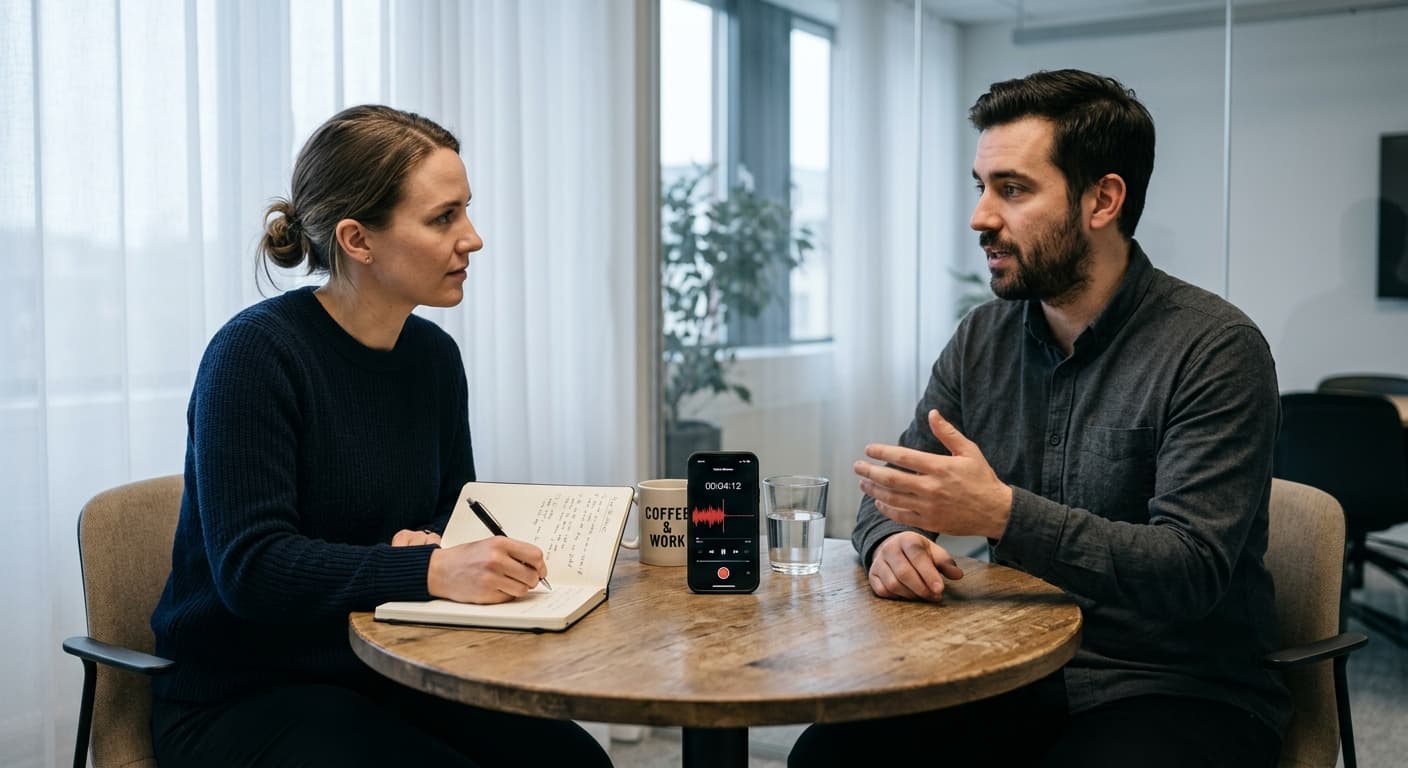
Yes, you can record a conversation you are part of in Saskatchewan. Canada operates under a one-party consent rule nationwide: Criminal Code s. 184(2)(a) permits any party to a private communication to record it without notifying anyone else. Recording a conversation you are not part of, without a party's consent, is a federal criminal offence. Saskatchewan also has its own statutory Privacy Act that creates a civil tort of violation of privacy, actionable without proof of financial damage, giving residents a powerful private right of action on top of the federal framework.
Is It Legal to Record in Saskatchewan?
Saskatchewan residents are governed by the same federal recording consent rule as every other Canadian province and territory. Section 184(1) of the Criminal Code makes intercepting a private communication an indictable offence. However, s. 184(2)(a) creates a broad one-party consent exception: the offence does not apply to a person who has the consent of the originator or intended recipient of the private communication, whether express or implied. If you are a participant in the conversation, you are by definition a party who has their own implied consent, so you may record it.
This federal rule is uniform. No province, including Saskatchewan, has enacted a stricter two-party or all-party consent requirement for audio recording. There is no Saskatchewan provincial statute that requires you to tell the other person you are recording a conversation. The Criminal Code governs this question exclusively.
Where Saskatchewan adds meaningful complexity is on the civil side: the province has a Privacy Act that creates a statutory cause of action. Someone who records another person in a way that violates their privacy, even where the recording is technically lawful under the Criminal Code, may face a civil claim under that provincial statute.
Recording Conversations You Are Part Of
When you are a party to a phone call, an in-person meeting, a video conference, or any other private communication, you may record it without telling anyone else. Section 184(2)(a) of the Criminal Code explicitly provides this protection.
Section 183.1 extends the one-party rule to multi-party communications. Where a private communication is originated by more than one person or intended to be received by more than one person, consent by any one of those persons is sufficient consent for all purposes under Part VI of the Criminal Code. A conference call among five people may be recorded by any one of them without the knowledge or consent of the others.
What counts as a "private communication" matters. Section 183 of the Criminal Code defines it as any oral communication or telecommunication made by an originator who reasonably expects it will not be intercepted by anyone other than the intended recipient. A conversation held in a quiet office or over a personal phone has that expectation. Remarks shouted across a crowded public square generally do not.
Recording Others and Private Communications
Recording a conversation or communication you are not a party to, without the consent of any participant, is a serious federal criminal offence. Section 184(1) of the Criminal Code provides that every person who, by means of any electro-magnetic, acoustic, mechanical or other device, knowingly intercepts a private communication is guilty of an indictable offence and liable to imprisonment for a term of not more than five years, or an offence punishable on summary conviction.
Placing a recording device in a room before a meeting you are not attending, tapping someone else's phone line, or activating a third party's microphone without a participant's consent are all offences under this provision. The consent of even one party (the originator or the intended recipient) removes the conduct from the offence, but if no party consents, criminal liability attaches.
Phone Calls
Phone calls are private communications within the meaning of s. 183 of the Criminal Code, and the one-party consent rule applies in full. If you are a party to the call, you may record it. If you are not a party to the call, you may not record it without a participant's consent. This applies equally to landlines, mobile calls, and internet-based voice communications such as VoIP or video call audio.
The lawfulness of recording the call does not mean you can freely share it. Section 193(1) of the Criminal Code creates a separate offence for any person who knowingly uses or discloses, or makes a disclosure of, or reveals the existence of a private communication that was intercepted without the consent of any party. Even if your recording was lawful under s. 184(2)(a), sharing it in ways that expose the content of others' communications may carry civil risk under Saskatchewan's Privacy Act.
Video Recording and Voyeurism
The one-party consent rule governs audio interception of private communications. It does not licence all forms of video recording. Section 162(1) of the Criminal Code creates a separate voyeurism offence that operates independently.
Section 162(1) prohibits surreptitious visual observation or recording of a person who is in circumstances giving rise to a reasonable expectation of privacy. The three prohibited circumstances are: (a) a private space where nudity or sexual exposure is reasonably expected, such as a bathroom, change room, or bedroom; (b) anywhere the person is actually nude or exposing themselves, where the purpose of the recording is to capture that state; and (c) any recording done for a sexual purpose. This offence carries up to five years imprisonment on indictment or summary conviction.
Section 162.1 separately addresses the non-consensual distribution of intimate images. Any person who knowingly publishes, distributes, transmits, sells, makes available, or advertises an intimate image of a person, knowing that person did not consent, or being reckless as to consent, is guilty of an indictable offence punishable by up to five years, or a summary conviction offence. This offence applies regardless of how the image was originally obtained: even a recording that was lawfully made cannot be distributed without consent once it qualifies as an intimate image.
In public spaces where no reasonable expectation of privacy exists, general video recording of scenes, crowds, or events is not prohibited by s. 162 because the threshold condition (reasonable expectation of privacy) is not met.
Workplace and Surreptitious Recording
In Saskatchewan workplaces, the Criminal Code one-party consent rule continues to apply: if you are a party to a conversation, you may record it without telling your employer, manager, or colleagues. There is no provincial statute that imposes a stricter standard.
However, criminal lawfulness is not the end of the analysis. Canadian courts and labour arbitrators have consistently held that covert recording in a workplace can constitute a breach of the duty of good faith and fidelity, a breach of employer policy, or a fundamental breach of the trust relationship, and can justify dismissal for cause, even when the recording was technically legal under the Criminal Code. The proportionality of the recording to its purpose, the manner in which it was made, and the use to which it is put are all relevant factors.
Employers who deploy recording systems, monitoring software, or surveillance cameras in the workplace must comply with PIPEDA if they are engaged in commercial activity. PIPEDA requires a legitimate purpose, notice to employees, and collection limited to what is necessary for that purpose. The Office of the Privacy Commissioner of Canada (priv.gc.ca) enforces PIPEDA for private-sector organisations in Saskatchewan.
Saskatchewan Privacy Law: The Privacy Act and PIPEDA
Saskatchewan has two distinct privacy frameworks that can affect recording conduct.
The Saskatchewan Privacy Act
The Privacy Act (RSS 1978, c P-24) is Saskatchewan's provincial statute creating a statutory civil tort of violation of privacy. Under this Act, it is a tort, actionable without proof of damage, for a person, wilfully and without a claim of right, to violate the privacy of another.
Several features of this tort are significant:
Actionable without proof of damage. Unlike most torts, a plaintiff does not need to show financial loss or quantifiable harm. The violation itself is sufficient to ground a cause of action. A court may award damages even where the plaintiff suffered no out-of-pocket loss.
Wilfulness required. The Act requires that the defendant acted wilfully. An accidental or unintentional recording (for example, a pocket dial that inadvertently captures a conversation) is less likely to satisfy this element than a deliberate covert recording.
Without a claim of right. A defendant who had a lawful basis or a reasonable belief of entitlement to record may have a defence. This could include, for example, a journalist investigating a matter of genuine public interest, or a person recording to preserve evidence of a threat to their own safety.
The statutory tort is relevant even where the Criminal Code permits the recording. A recording that is lawful under s. 184(2)(a) because you were a party to the conversation may still amount to a wilful violation of the other person's privacy in circumstances where they had a reasonable expectation that the conversation would remain private and the recording was made without any legitimate purpose. Saskatchewan courts have jurisdiction to award damages for violation of privacy under this Act without the plaintiff needing to prove financial harm.
This places Saskatchewan among four provinces (alongside British Columbia, Manitoba, and Newfoundland and Labrador) that have enacted statutory Privacy Act torts. This is a meaningfully stronger civil protection than Ontario's common-law intrusion upon seclusion tort (Jones v. Tsige, 2012 ONCA 32), which requires proof that a reasonable person would regard the invasion as highly offensive, and caps damages at approximately $20,000. Saskatchewan's statutory tort does not impose that cap in the same way.
Non-Consensual Distribution of Intimate Images: Section 7.3
The Privacy (Intimate Images: Additional Remedies) Amendment Act, 2022 (SS 2022, c 29) added s. 7.3 to the Privacy Act, creating a specific statutory civil tort for the non-consensual distribution or threatened distribution of intimate images. This tort is actionable without proof of damage and applies where a person distributes or threatens to distribute an intimate image knowing the depicted person did not consent, or being reckless as to whether consent was given.
The 2022 amendment also extended the definition of intimate image to cover digitally altered copies, and it empowers courts to order internet intermediaries and other parties to remove or de-index images of the plaintiff. This provincial civil remedy operates alongside the federal criminal offence in s. 162.1 of the Criminal Code, giving Saskatchewan residents both a criminal route and a civil cause of action for image-based abuse.
Saskatchewan courts have applied these provisions. In SB v DH, 2022 SKKB 216, the Court of King's Bench found a defendant liable for non-consensual distribution of intimate images under the Privacy Act and also recognised the common-law tort of public disclosure of private facts. The plaintiff was awarded $85,000 in general damages and $75,000 in aggravated damages for conduct that also resulted in a guilty plea to the corresponding federal criminal charge.
PIPEDA and Private-Sector Organisations
Saskatchewan does not have a general private-sector privacy statute that has been deemed substantially similar to PIPEDA. Unlike British Columbia, Alberta, and Quebec, which have their own provincial private-sector privacy laws that displace PIPEDA for intra-provincial commercial activity, Saskatchewan has no equivalent statute. As confirmed by the Office of the Privacy Commissioner of Canada, PIPEDA (Personal Information Protection and Electronic Documents Act, SC 2000, c 5) governs the collection, use, and disclosure of personal information by private-sector organisations in the course of commercial activity in Saskatchewan.
PIPEDA does not apply to individuals recording their own conversations for personal purposes. A person recording a conversation they are part of is outside PIPEDA's scope entirely. PIPEDA becomes relevant when an organisation (a business, employer, or service provider) deploys recording or surveillance systems in the course of commercial activity.
For public-sector organisations in Saskatchewan, the Freedom of Information and Protection of Privacy Act (FOIP) and the Local Authorities Freedom of Information and Protection of Privacy Act (LA FOIP) apply, overseen by the Office of the Information and Privacy Commissioner of Saskatchewan (oipc.sk.ca). The Saskatchewan Health Information Protection Act (HIPA) governs personal health information in the province.
Recording Police in Saskatchewan
Recording police officers and other public officials who are performing their duties in a publicly accessible space is generally lawful in Canada. No provision of the Criminal Code prohibits filming police. The right is grounded in s. 2(b) of the Canadian Charter of Rights and Freedoms, which guarantees freedom of expression and encompasses the gathering of information, including documenting the conduct of public officials.
The practical limits are few but real. Section 129 of the Criminal Code prohibits obstructing a peace officer in the lawful execution of their duties. A bystander who physically interferes with a police operation while recording may commit an offence under this provision. The act of recording itself, at a safe distance without interference, does not obstruct. Police officers cannot lawfully order bystanders to stop recording as a routine matter, and they cannot seize a device without a warrant or a recognised warrant exception.
Saskatchewan residents who are recording police should be aware that while the act is lawful, care in how a recording is shared afterwards is advisable. Disclosing a recording in a way that falsely portrays events could give rise to defamation claims; sharing intimate or identifying images of victims without consent raises s. 162.1 issues.
Penalties
Understanding the penalty framework helps illustrate why these rules matter.
Intercepting a private communication without consent (s. 184(1)): Indictable offence, up to five years imprisonment; or summary conviction.
Disclosing an intercepted communication (s. 193(1)): Indictable offence, up to two years imprisonment; or summary conviction.
Voyeurism (s. 162(1)): Indictable offence, up to five years imprisonment; or summary conviction.
Non-consensual distribution of intimate images (s. 162.1): Indictable offence, up to five years imprisonment; or summary conviction.
Obstructing a peace officer while recording (s. 129): Summary conviction offence.
Civil liability under the Saskatchewan Privacy Act (general tort): Damages for violation of privacy, actionable without proof of financial damage. Saskatchewan courts may award damages and other relief including injunctions.
Civil liability under the Saskatchewan Privacy Act, s. 7.3 (intimate images): Non-consensual distribution or threatened distribution of intimate images is a separate statutory tort, also actionable without proof of damage. Courts may additionally order internet intermediaries to remove or de-index images (SS 2022, c 29 amendment).
PIPEDA (organisations only): Orders to comply and recommended measures from the Privacy Commissioner of Canada; investigation and findings published.
Practical Tips for Saskatchewan Residents
If you need to record a conversation in Saskatchewan, keep the following guidance in mind:
Record only conversations you are part of. The one-party consent rule under Criminal Code s. 184(2)(a) protects you when you are a participant. It does not protect you if you are recording others who do not know you are listening.
Consider your purpose before recording covertly in a workplace. Even where recording is criminal-law-legal, Saskatchewan courts may treat a covert recording as a wilful violation of privacy under the Privacy Act if it is made without legitimate purpose and in circumstances where the other person had a reasonable expectation of privacy.
Never record video in private spaces. Section 162(1) applies regardless of whether you are a party to any conversation. Bathrooms, bedrooms, change rooms, and similar spaces are protected. Violations carry up to five years.
Do not share recordings carelessly. Section 193 creates criminal liability for disclosing an intercepted communication that was recorded without consent. Section 162.1 creates separate liability for sharing intimate images. Civil liability under the Privacy Act can arise from disclosure even where the original recording was lawful.
Organisations deploying recording must comply with PIPEDA. Businesses using call-recording systems, CCTV, or employee monitoring must have a legitimate purpose, provide notice, and limit collection under PIPEDA. The Office of the Privacy Commissioner of Canada is the enforcement body for Saskatchewan private-sector organisations.
This page covers Saskatchewan recording laws for informational purposes only and does not constitute legal advice. Laws may change; verify current statutes before acting.
Related pages: Canada Recording Laws | World Recording Laws | British Columbia Recording Laws | Manitoba Recording Laws
Related Canadian Guides
- Canadian law by province and topic
- Recording laws in Canada
- Saskatchewan Hit and Run laws
- Saskatchewan Child Support laws
- Saskatchewan Slip and Fall laws
Frequently Asked Questions
Is Saskatchewan a one-party or two-party consent province for recording?
Saskatchewan follows the federal one-party consent rule. Under Criminal Code s. 184(2)(a), any party to a private communication may record it without notifying or obtaining consent from the other participants. No Saskatchewan statute imposes a stricter two-party or all-party requirement. This rule is the same in every Canadian province and territory.
Can I record a phone call in Saskatchewan without telling the other person?
Yes, if you are a party to the call. The one-party consent exception in Criminal Code s. 184(2)(a) permits you to record a call you are participating in without disclosing that you are doing so. Recording a call you are not part of, without any participant's consent, is a criminal offence punishable by up to five years imprisonment.
What is the Saskatchewan Privacy Act, and how does it affect recording?
The Privacy Act (RSS 1978, c P-24) is a Saskatchewan provincial statute that creates a statutory civil tort of violation of privacy. It makes it a tort, actionable without proof of financial damage, to wilfully and without a claim of right violate another person's privacy. Even if a recording is lawful under the Criminal Code because you were a party to the conversation, a court could find a wilful privacy violation if the recording was made in circumstances where the other person had a genuine expectation of privacy and you had no legitimate purpose. A 2022 amendment (SS 2022, c 29) added s. 7.3, a specific civil tort for the non-consensual distribution or threatened distribution of intimate images, also actionable without proof of damage, with court powers to order removal of images.
Does PIPEDA apply in Saskatchewan?
Yes. Saskatchewan does not have a provincial private-sector privacy law deemed substantially similar to PIPEDA. Unlike British Columbia, Alberta, and Quebec, Saskatchewan has no equivalent statute. PIPEDA therefore governs private-sector organisations collecting, using, or disclosing personal information in the course of commercial activity in Saskatchewan. PIPEDA does not apply to individuals recording personal conversations for personal purposes.
Can I secretly record my employer or manager at work in Saskatchewan?
Legally, yes, under Criminal Code s. 184(2)(a), because you are a party to the conversation. However, covert workplace recording has been upheld as grounds for dismissal in Canadian labour law even when the recording was technically lawful. Courts and arbitrators assess whether the recording breached trust or employment duties. Under Saskatchewan's Privacy Act, a deliberately covert recording made without legitimate purpose may also expose you to a civil claim.
Is it legal to record police officers in Saskatchewan?
Yes, in public spaces. No Criminal Code provision prohibits recording police. The right flows from Charter s. 2(b) (freedom of expression). You must not physically obstruct officers, which is a criminal offence under s. 129. Police cannot lawfully demand you stop recording as a routine matter, and cannot seize your device without a warrant or a recognised exception.
Can I film someone in a changing room or bathroom in Saskatchewan?
No. Section 162(1) of the Criminal Code prohibits surreptitious visual recording of a person anywhere they have a reasonable expectation of privacy, including bathrooms, change rooms, and bedrooms. This is an indictable offence carrying up to five years imprisonment and applies regardless of whether you are a party to any conversation.
What is the penalty for illegally recording someone in Saskatchewan?
Intercepting a private communication without the consent of any party is an indictable offence under Criminal Code s. 184(1), punishable by up to five years imprisonment or summary conviction. Disclosing such a recording is a separate offence under s. 193(1), carrying up to two years. Voyeurism under s. 162(1) carries up to five years. A plaintiff may also sue under Saskatchewan's Privacy Act without needing to prove financial damage.
Can I share a recording I made of a conversation I was part of?
Sharing a recording you lawfully made under one-party consent is not itself a Criminal Code offence, since s. 193 targets disclosure of recordings that were intercepted without any consent. However, sharing such a recording could give rise to civil liability under Saskatchewan's Privacy Act if it amounts to a wilful violation of the other person's privacy, or to a defamation claim if the content is misleading. Always consider the purpose and context before disclosing.
Which provinces have a statutory right to sue for privacy violations?
British Columbia, Saskatchewan, Manitoba, and Newfoundland and Labrador each have statutory Privacy Act torts, actionable without proof of damage. Ontario recognises the common-law tort of intrusion upon seclusion (Jones v. Tsige, 2012 ONCA 32). Quebec provides the broadest protection through the Civil Code arts 35-41 and Quebec Charter s. 5. Nova Scotia, New Brunswick, and Prince Edward Island have no statutory privacy tort.
Updates
Independently fact-checked against the cited primary sources
The Law Behind This Article
This article rests on the statutory provisions below, held in our own legal record and retrieved from the official source. Tap a section to read the operative text.
Criminal Code
s. 162VoyeurismIn forcecited in 33 of our articles
(1) Every one commits an offence who, surreptitiously, observes — including by mechanical or electronic means — or makes a visual recording of a person who is in circumstances that give rise to a reasonable expectation of privacy, if (a) the person is in a place in which a person can reasonably be expected to be nude, to expose his or her genital organs or anal region or her breasts, or to be engaged in explicit sexual activity; (b) the person is nude, is exposing his or her genital organs or anal region or her breasts, or is engaged in explicit sexual activity, and the observation or recording is done for the purpose of observing or recording a person in such a state or engaged in such an activity; or (c) the observation or recording is done for a sexual purpose. (2) In this section, visual recording includes a photographic, film or video recording made by any means. (3) Paragraphs (1)(a) and (b) do not apply to a peace officer who, under the authority of a warrant issued under section 487.01, is carrying out any activity referred to in those paragraphs.
Official text (excerpt) · last checked 2026-08-12 · Read the full text in our law library · Verify at laws-lois.justice.gc.ca
Cited in 6 court opinions in our collectionLatest citing opinion in our collection: 2023
Opinions citing this section in our collection:
- R. v. Tim (Supreme Court of Canada 2022, 2022 SCC 12)
- R. v. Jarvis (Supreme Court of Canada 2019, 2019 SCC 10)
- Reference re Genetic Non‑Discrimination Act (Supreme Court of Canada 2020, 2020 SCC 17)
Identified automatically from the court opinions citing this section — not a ranking of which case controls.
Also relied on in: Canada Privacy Law: PIPEDA, Provincial Acts, and Recording Rules, Recording Phone Calls in Canada: One-Party Consent Rule, Security Camera & Doorbell Camera Laws in Canada
s. 162.1Publication, etc., of an intimate image without consentIn forcecited in 29 of our articles
(1) Everyone who knowingly publishes, distributes, transmits, sells, makes available or advertises an intimate image of a person knowing that the person depicted in the image did not give their consent to that conduct, or being reckless as to whether or not that person gave their consent to that conduct, is guilty (a) of an indictable offence and liable to imprisonment for a term of not more than five years; or (b) of an offence punishable on summary conviction. (2) In this section, intimate image means a visual recording of a person made by any means including a photographic, film or video recording, (a) in which the person is nude, is exposing his or her genital organs or anal region or her breasts or is engaged in explicit sexual activity; (b) in respect of which, at the time of the recording, there were circumstances that gave rise to a reasonable expectation of privacy; and (c) in respect of which the person depicted retains a reasonable expectation of privacy at the time the offence is committed.
Official text (excerpt) · last checked 2026-08-12 · Read the full text in our law library · Verify at laws-lois.justice.gc.ca
Also relied on in: Canada Bill C-16: Deepfake Intimate Images Are Now a Crime, Canada Recording Laws: One-Party Consent Rules and Penalties (2026), Alberta Recording Laws: One-Party Consent Rules (2026)
s. 183DefinitionsIn forcecited in 28 of our articles
In this Part, authorization means an authorization to intercept a private communication given under subsection 184.2(3), section 186 or subsection 188(2); ( autorisation ) electro-magnetic, acoustic, mechanical or other device means any device or apparatus that is used or is capable of being used to intercept a private communication, but does not include a hearing aid used to correct subnormal hearing of the user to not better than normal hearing; ( dispositif électromagnétique, acoustique, mécanique ou autre ) intercept includes listen to, record or acquire a communication or acquire the substance, meaning or purport thereof;
Official text (excerpt) · last checked 2026-08-12 · Read the full text in our law library · Verify at laws-lois.justice.gc.ca
Cited in 8 court opinions in our collectionLatest citing opinion in our collection: 2024
Opinions citing this section in our collection:
- R. v. Marakah (Supreme Court of Canada 2017, 2017 SCC 59)
- R. v. Mills (Supreme Court of Canada 2019, 2019 SCC 22)
- R. v. Campbell (Supreme Court of Canada 2024, 2024 SCC 42)
Identified automatically from the court opinions citing this section — not a ranking of which case controls.
Also relied on in: British Columbia Recording Laws: One-Party Consent & Privacy Act, Manitoba Recording Laws: One-Party Consent & Privacy Act, New Brunswick Recording Laws: One-Party Consent Guide
s. 183.1Consent to interceptionIn forcecited in 26 of our articles
Where a private communication is originated by more than one person or is intended by the originator thereof to be received by more than one person, a consent to the interception thereof by any one of those persons is sufficient consent for the purposes of any provision of this Part.
Official text (excerpt) · last checked 2026-08-12 · Read the full text in our law library · Verify at laws-lois.justice.gc.ca
Also relied on in: Newfoundland and Labrador Recording Laws, Northwest Territories Recording Laws: One-Party Consent, Nova Scotia Recording Laws: One-Party Consent Rules
s. 184InterceptionIn forcecited in 55 of our articles
(1) Every person who, by means of any electro-magnetic, acoustic, mechanical or other device, knowingly intercepts a private communication is guilty of (a) an indictable offence and liable to imprisonment for a term of not more than five years; or (b) an offence punishable on summary conviction. (2) Subsection (1) does not apply to (a) a person who has the consent to intercept, express or implied, of the originator of the private communication or of the person intended by the originator thereof to receive it; (b) a person who intercepts a private communication in accordance with an authorization or pursuant to section 184.4 or any person who in good faith aids in any way another person who the aiding person believes on reasonable grounds is acting with an authorization or pursuant to section 184.4;
Official text (excerpt) · last checked 2026-08-12 · Read the full text in our law library · Verify at laws-lois.justice.gc.ca
Cited in 5 court opinions in our collectionLatest citing opinion in our collection: 2023
Opinions citing this section in our collection:
- X (Re) (Federal Court 2017, 2017 FC 1047)
- Canada (Information Commissioner) v. Canada (Transportation Accident Investigation and Safety Board) (Federal Court 2005, 2005 FC 384)
- Morgan v. Alta Flights (Charters)Inc. (Federal Court 2005, 2005 FC 421)
Identified automatically from the court opinions citing this section — not a ranking of which case controls.
Also relied on in: Canadian Law by Province: Federal and Provincial Guide, Dash Cam Laws in Canada: Rules, Audio Consent, Evidence, Workplace Privacy and Employee Monitoring in Canada
s. 193Disclosure of informationIn forcecited in 28 of our articles
(1) If a private communication has been intercepted by means of an electro-magnetic, acoustic, mechanical or other device without the consent, express or implied, of the originator of that communication or of the person intended by the originator to receive it, every person commits an offence who, without the express consent of the originator of that communication or of the person intended to receive it, knowingly (a) uses or discloses the private communication or any part of it or the substance, meaning or purpose of it or of any part of it, or (b) discloses the existence of the private communication. (1.1) Every person who commits an offence under subsection (1) is guilty of (a) an indictable offence and liable to imprisonment for a term of not more than two years; or (b) an offence punishable on summary conviction.
Official text (excerpt) · last checked 2026-08-12 · Read the full text in our law library · Verify at laws-lois.justice.gc.ca
Cited in 79 court opinions in our collectionLatest citing opinion in our collection: 2026
Opinions citing this section in our collection:
- Blencoe v. British Columbia (Human Rights Commission) (Supreme Court of Canada 2000, 2000 SCC 44)
- Canada (Attorney General) v. Bedford (Supreme Court of Canada 2013, 2013 SCC 72)
- R. v. Sharpe (Supreme Court of Canada 2001, 2001 SCC 2)
Identified automatically from the court opinions citing this section — not a ranking of which case controls.
Also relied on in: Nunavut Recording Laws: One-Party Consent Rules, Ontario Recording Laws: Is It Legal to Record? (2026), PEI Recording Laws: One-Party Consent & Privacy Rights
Search our full record of Canadian federal law — every consolidated Act, in English and French →
Sources and References
- Criminal Code, RSC 1985, c C-46, s 184(1) and (2)(a):Interception offence and one-party consent exception(laws-lois.justice.gc.ca).gov
- Criminal Code, RSC 1985, c C-46, s 183:Definition of 'private communication'(laws-lois.justice.gc.ca).gov
- Criminal Code, RSC 1985, c C-46, s 183.1:One-party consent sufficient for multi-party communications(laws-lois.justice.gc.ca).gov
- Criminal Code, RSC 1985, c C-46, s 193(1):Offence: disclosing intercepted private communication (up to 2 years)(laws-lois.justice.gc.ca).gov
- Criminal Code, RSC 1985, c C-46, s 162(1):Voyeurism offence (up to 5 years)(laws-lois.justice.gc.ca).gov
- Criminal Code, RSC 1985, c C-46, s 162.1:Non-consensual distribution of intimate images (up to 5 years)(laws-lois.justice.gc.ca).gov
- The Privacy Act, RSS 1978, c P-24 (Saskatchewan):Statutory tort of violation of privacy, actionable without proof of damage(canlii.org)
- Office of the Privacy Commissioner of Canada:PIPEDA requirements in brief(priv.gc.ca).gov
- Office of the Privacy Commissioner of Canada:Provincial laws that may apply instead of PIPEDA (Saskatchewan not listed; PIPEDA governs SK private-sector)(priv.gc.ca).gov
- Office of the Information and Privacy Commissioner of Saskatchewan (OIPC):Oversees FOIP, LA FOIP, HIPA(oipc.sk.ca).gov
- Canadian Charter of Rights and Freedoms, s 2(b):Freedom of expression (basis for lawful filming of police in public)(laws-lois.justice.gc.ca).gov
- Jones v Tsige, 2012 ONCA 32 (CanLII): Ontario common-law intrusion upon seclusion (contrast with SK statutory tort)(canlii.org)
- The Privacy (Intimate Images: Additional Remedies) Amendment Act, 2022, SS 2022, c 29 (CanLII): adds s. 7.3 civil NCII tort to the Privacy Act, actionable without proof of damage, court may order removal of images(canlii.org)
- SB v DH, 2022 SKKB 216 (CanLII): Privacy Act s. 7.3 NCII tort applied; common-law public disclosure of private facts tort recognised; $85,000 general + $75,000 aggravated damages awarded(canlii.org)