
Canada
Photo Radar and Red Light Cameras Across Canada: Which Provinces Actually Run Them
Independently fact-checked against primary sources (last audited September 24, 2026). · 15 primary sources cited on this page. How we verify our legal content
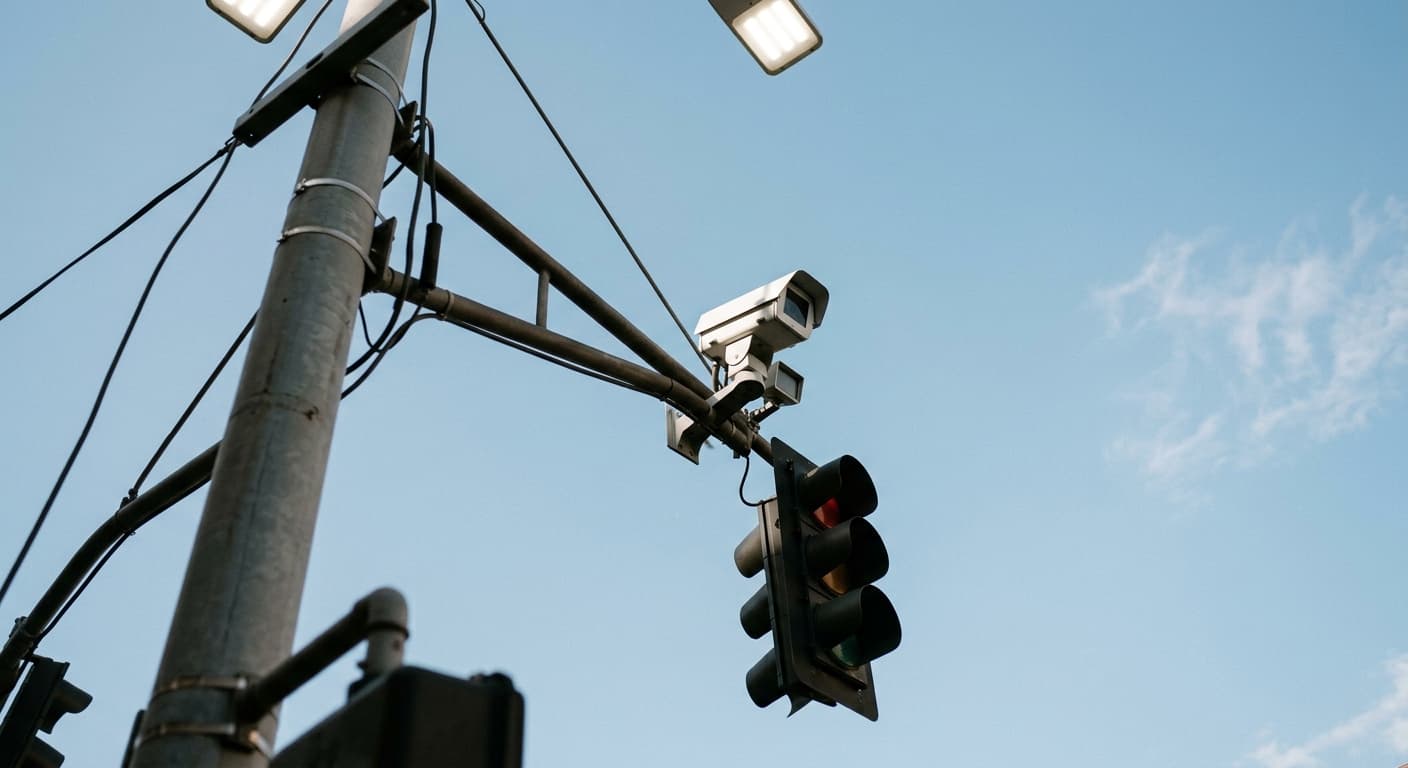
Automated traffic enforcement is not a single Canada-wide system: photo radar and red light or intersection cameras are live in some provinces, authorized but not yet operating in others, and entirely absent in the territories, with owner liability rules, demerit point treatment, and dispute deadlines that genuinely differ by jurisdiction.
Information last verified on 2026-09-24. This article has not yet been reviewed by a licensed lawyer.
This article compares automated traffic enforcement, photo radar (automated speed enforcement) and red light or intersection cameras, across all 10 provinces and 3 territories. It does not cover officer issued speeding tickets, which vary by jurisdiction on their own terms; for Ontario's speeding ticket fine structure specifically, see Ontario Speeding Tickets and Camera Laws, which this article cross-references rather than repeats. It also does not cover the general dispute process for a traffic ticket; see Fighting a Traffic Ticket in Canada for that.
National Status at a Glance
| Jurisdiction | Status | Owner liability | Demerit points | Dispute deadline |
|---|---|---|---|---|
| Ontario | Red light cameras operating; photo radar (ASE) repealed November 14, 2025 | Owner convicted as owner, separate from a driver conviction | No | About 15 days under the standard process, or 30 days where a municipality uses the newer administrative penalty system |
| Quebec | Operating (speed and red light) | Owner liable, with a defence if the vehicle was in a third person's possession without consent; the option to name a different actual driver was repealed in 2024 | No | 30 days |
| British Columbia | Operating (intersection safety cameras) | Owner liable, with a defence if driven without consent | No | 45 days by mail, 30 days if served in person |
| Alberta | Operating, restricted since 2025 to school, playground and construction zones for speed, and to red light enforcement at intersections | Owner liable, with a general no consent defence; a ticket cannot be reassigned to another driver | No | The date printed on the ticket, not a fixed day count |
| Manitoba | Operating, restricted since 2002 to construction, playground and school zones plus signal controlled intersections | Owner is billed through the ticketing process; the exact statutory clause was not located in the Act itself | No | Not confirmed in this research |
| Saskatchewan | Operating, relaunched August 2026 after a vendor transition | Owner or operator liable under a general provision, with a no consent defence | No | 30 days |
| New Brunswick | Enacted 2021, proclaimed October 2024, limited municipal deployment reported | Owner deemed guilty of the underlying offence unless they name the actual driver | Reported as no, but the statutory basis for that was not located in the Act | Not confirmed in this research |
| Newfoundland and Labrador | Operating (speed cameras, expanding toward red light and school bus stop arm cameras) | Owner liable | No | The date printed on the notice, not a fixed day count |
| Nova Scotia | New Traffic Safety Act passed October 2025, enacted but not yet in force; not confirmed operating | Not yet defined; left to regulations not yet located | Not applicable yet | Not applicable yet |
| Prince Edward Island | Enabling amendments since 2021; not confirmed operating as of the most recent reporting | General owner liability provision, same as for other unidentified driver offences | Not applicable yet | Not applicable yet |
| Yukon | No program under the current Motor Vehicles Act; a replacement Traffic Safety Act (S.Y. 2024, c. 10) that would allow cameras was enacted in October 2024 but was not confirmed in force | Not applicable | Not applicable | Not applicable |
| Northwest Territories | No program and no legislative proposal found | Not applicable | Not applicable | Not applicable |
| Nunavut | No program; the territory's largest city was still proposing its first traffic light in the most recent reporting found | Not applicable | Not applicable | Not applicable |
Ontario: Red Light Cameras Continue, Photo Radar Is Repealed
Ontario's automated speed enforcement program has no legal basis left as of November 14, 2025, when the Highway Traffic Act part that authorized it was repealed, and its enabling regulation was revoked the following month. Ontario's red light cameras sit under a different, unaffected part of the same Act and continue to operate, issuing tickets to the registered vehicle owner without demerit points. This article does not repeat that detail; see Ontario Speeding Tickets and Camera Laws for the fine structure, the repeal timeline, and the red light camera dispute process. See Ontario Demerit Points for how points work generally in the province.
Quebec: Owner Liability Tightened in 2024
Quebec's Code de la securite routiere groups photo radar and red light cameras under one statutory term, systeme de detection, and both are operating. The government states plainly that "the driver of an offending vehicle cannot be identified. Since the only link to be established is between the vehicle and its owner, that person is responsible for the offence," and that no demerit points are added because a camera identifies the vehicle, not the driver.

That owner liability became stricter in 2024. Quebec's Code previously let a registered owner formally name a different person as the actual driver to shift a camera ticket's liability to that person. An amending Act, 2024, c. 10, repealed that mechanism. News coverage places the change in force on July 1, 2024, though this exact date was not independently confirmed against the amending Act's own coming into force clause in this research; the repeal itself is confirmed directly in the Code's current text. The practical effect: Quebec now holds an owner responsible for a camera ticket more strictly than before mid-2024, though a government summary also describes a narrower defence if the actual driver is separately convicted of the same offence. The general no-consent defence survives: under art. 592, the owner can still avoid conviction by proving that, at the time of the offence, the vehicle was in the possession of a third person without the owner's consent.
Dispute deadline: 30 days from receiving the statement of offence to enter a plea.
British Columbia: Owner Liable, With a Real Defence
British Columbia's Motor Vehicle Act makes an owner liable for a speeding or red light violation detected by a prescribed device, but that liability is not absolute. The Act gives an owner a defence if the vehicle was not entrusted to the person driving it, or if the owner exercised reasonable care and diligence in entrusting it to that person, essentially a stolen vehicle or unauthorized use defence. An owner is also cleared if the actual driver is separately convicted of the same or an included offence.
Fines scale clearly with the amount over the limit. Government figures show a red light violation totalling $167 (or $142 with early payment), rising through the speeding bands to $483 total for exceeding the limit by more than 60 km/h. No demerit points are issued on an intersection safety camera ticket, per the government's own program page, though a WebSearch-sourced note (not independently confirmed against the National Safety Code Regulation) suggests commercial carrier points may be an exception worth checking separately for commercial vehicles.
Dispute deadline: 45 days if the ticket arrived by mail, 30 days if served in person, a distinction worth noting since a flat "30 days" assumption would be wrong for a mailed ticket.
Alberta: Announced December 2024, In Effect April 1, 2025
Alberta narrowed where automated enforcement can be used through a Ministerial Guideline dated March 27, 2025, a policy instrument the Minister can reissue without a legislative session. The province announced the changes on December 2, 2024, with a transition period running to April 1, 2025. The Guideline's effective-date table gives the same date, April 1, 2025, to all three core restrictions:
- speed enforcement cameras confined to school zones, playground zones and construction zones;
- intersection safety devices used exclusively for red light enforcement;
- automated enforcement removed from provincial highways and connector routes (s.3.3), apart from construction zones and school or playground zones located on those highways.
The only later date in that table, May 16, 2025, applies to a separate requirement to wrap intersection safety devices under the Guideline's public awareness and transparency schedule. It does not change where cameras may operate. The Guideline also sets out a narrow business case exemption process a municipality can apply for.
No demerit points are issued for Alberta automated traffic enforcement tickets, per Calgary Police Service, and unlike British Columbia or Quebec, Alberta tickets cannot be reassigned to a different named driver. Dispute is through a ticket specific response date rather than a uniform day count, via Alberta's Traffic Tickets Digital Service.
Manitoba and Saskatchewan
Manitoba has restricted image capturing enforcement to construction zones, playground zones, school zones and signal controlled intersections since the scheme was first enacted in 2002, a long-standing statutory limit rather than a recent reform, unlike Alberta's near-identical 2025 policy change. A surplus revenue rule requires a municipality to spend any fine revenue that exceeds its camera program costs on safety or policing purposes. No demerit points are assessed, per Winnipeg Police Service's public photo enforcement information, though the specific Highway Traffic Act clause deeming a registered owner liable for a camera offence was not located in the Act's text during this research; the mechanism may sit in Manitoba's separate ticketing process instead.
Saskatchewan's automated speed enforcement program had a rocky 2026: its prior camera vendor, Redflex Traffic Systems, ended its contract with SGI early and removed its equipment around the end of May 2026, leaving camera housings empty across the province for roughly three months. A new vendor, Global Traffic Group Ltd., won a competitive procurement and relaunched the program in August 2026, reportedly with no change to camera locations or fine amounts, though the cameras are now pole mounted rather than housed in the previous roadside boxes. Given how recently that transition happened relative to this article, a reader relying on a specific Saskatchewan camera location should confirm it is currently active. The dispute deadline is 30 days.
New Brunswick: A Different Legal Structure
New Brunswick's image-capturing enforcement law, in force since October 1, 2024 after being enacted in 2021, works differently from every other province covered here. Rather than creating a separate owner-liability offence, the Motor Vehicle Act deems the registered owner guilty of the underlying substantive offence itself, unless the owner establishes that someone else was driving. That driver-naming option is closer to Quebec's pre-2024 approach than to British Columbia's or Alberta's consent-based defence. Reporting describes no demerit points being assessed on an owner conviction, but the specific regulatory basis for that outcome was not located in the Act's text during this research, and reported municipal uptake of the technology has so far been limited.
Newfoundland and Labrador: A Clear, Scaling Fine Table
Newfoundland and Labrador's DriveSmartNL speed camera program publishes one of the clearest fine schedules found across the country, scaling directly with how far over the limit a vehicle was travelling: $65 for 1 to 10 km/h over, $260 for 11 to 20 km/h over, $390 for 21 to 30 km/h over, $520 for 31 to 50 km/h over, and $650 for 51 km/h or more over, with construction and school zones carrying higher penalties. The registered owner is liable even if not driving, and the province states demerit points can only be issued to a driver, so none attach to an owner conviction from camera evidence. The program is reported to be expanding toward red light and school bus stop arm cameras in addition to its current speed enforcement. Disputes are handled through a due date printed on the ticket rather than a fixed day count.
Authorized but Not Yet Operating: Nova Scotia, Prince Edward Island, and Yukon
Three jurisdictions have taken legislative steps toward automated enforcement without a confirmed live camera as of the most recent reporting available, and treating "authorized" as the same thing as "operating" is a common and specific error for these three.
Nova Scotia passed a new Traffic Safety Act through third reading in October 2025, and the province's own page states it "will come into effect in 2026." That page, checked on 2026-09-24, says the Act is "not currently in effect" and tells drivers to "Continue to follow the Motor Vehicle Act until then." The Act's automated enforcement content is a bare skeleton, an "electronic enforcement system" defined only as whatever future regulations prescribe, with no such regulations located yet. Halifax has formally requested photo radar and red light cameras under the incoming framework, but no camera was confirmed live anywhere in the province during this research.
Prince Edward Island added statutory definitions for red light cameras and speed monitoring devices to its Highway Traffic Act back in 2021, and owner liability would run through the same general provision the Act already uses for other unidentified-driver offences. The most recent reporting located, from November 2024, quoted a provincial minister saying there was no target rollout date, with ticketing mechanics under the Summary Proceedings Act still being worked out. No newer confirmation of a launch was found; given the gap since that reporting, a reader should check for a fresh update before assuming either way.
Yukon's current Motor Vehicles Act contains no photo radar or red light camera framework at all, confirmed by a full text search of the Act for camera-related terms. A replacement Traffic Safety Act, S.Y. 2024, c. 10, assented to October 29, 2024, contains an automated enforcement division (s.81) that allows a camera system only where regulations prescribe the system, the offences it enforces and its locations. Under s.247 the Act comes into force on a day or days to be fixed by the Commissioner in Executive Council, and this research did not confirm that the Act or any camera regulation has been brought into force.
No Program: Northwest Territories and Nunavut
The Northwest Territories' Motor Vehicles Act contains no automated enforcement provision, and no news coverage or legislative proposal for one was found during this research; this is a clean negative rather than a program in progress. Nunavut's current Traffic Safety Act likewise shows no camera provision in the consolidation reviewed, though the territory's own legislation portal flags that consolidation as not up to date, with several years of amendments not yet incorporated, so this negative carries a currency caveat. A further reason automated intersection enforcement is unlikely in Nunavut in the near term: reporting describes the territory's capital, its only city, as still in the process of proposing its first traffic light, and the territory has no public highway system beyond localized community roads.
The Owner Liability Trap: Not Always Liable
A camera ticket almost always goes to the registered owner rather than to whoever was actually driving, and it is tempting to describe owner liability as absolute. That overstates the law in several provinces:
- British Columbia, Alberta, Saskatchewan, Prince Edward Island and Quebec each give an owner a defence if the vehicle was being driven without the owner's consent, similar to a stolen vehicle scenario, with the burden of proving that resting on the owner.
- British Columbia, Saskatchewan and Prince Edward Island also clear the owner if the actual driver is separately convicted of the same offence.
- New Brunswick, and Quebec before its 2024 change, let an owner formally name the actual driver to shift liability to that person outright.
- Manitoba and Alberta's automated traffic enforcement processes are described in police sources as not allowing a ticket to be reassigned to another named driver, closer to a strict owner-liability model.
The result is that "who actually has to pay" for a camera ticket genuinely differs by province, and a page or ticket that states a single national rule for owner liability is very likely wrong for at least one jurisdiction it claims to describe.
How Long Do You Have to Dispute a Camera Ticket?
There is no single national dispute deadline, and assuming a flat 30 days everywhere is a trap. Confirmed deadlines in this research: Ontario, roughly 15 days under the standard process or 30 days where a municipality has adopted the newer administrative penalty system; Quebec, 30 days; British Columbia, 45 days by mail or 30 days if served in person; Saskatchewan, 30 days; Alberta and Newfoundland and Labrador, a date printed on the individual ticket rather than a fixed count. For the general step by step dispute process, including what a trial involves, see Fighting a Traffic Ticket in Canada.
Disclaimer: This article provides general information about automated traffic enforcement, photo radar and red light or intersection cameras, across Canadian provinces and territories, current as of September 2026. It is not legal advice. Several jurisdictions covered here, including Nova Scotia, Prince Edward Island, Yukon and New Brunswick, have laws in transition, and this article flags where an exact statutory basis, in-force date, or operational status was not independently confirmed against a primary source in the underlying research. Consult a lawyer licensed in your province, or that province's own transportation ministry or police service, for advice on a specific ticket.
Frequently Asked Questions
Does every Canadian province have photo radar or red light cameras?
No. Automated enforcement is operating in some form in Ontario (red light cameras only), Quebec, British Columbia, Alberta, Manitoba, Saskatchewan, New Brunswick on a limited municipal basis, and Newfoundland and Labrador. Nova Scotia, Prince Edward Island and Yukon have passed or are passing enabling legislation but had no camera confirmed operating as of the most recent reporting available. The Northwest Territories and Nunavut have no program and no legislative plan for one.
Is Ontario's photo radar still active?
No. Ontario's automated speed enforcement program was repealed province wide effective November 14, 2025, and its enabling regulation was revoked the following month. Ontario's red light cameras run under a separate, unaffected part of the Highway Traffic Act. See Ontario Speeding Tickets and Camera Laws for the full detail.
Do camera tickets add demerit points to my licence?
Generally no, in every province researched where a program is confirmed operating. Ontario, Quebec, British Columbia, Alberta, Manitoba, Saskatchewan and Newfoundland and Labrador all confirm no demerit points attach to a camera issued ticket, because the ticket goes to the registered owner rather than to an identified driver, and demerit points attach only to a convicted driver's licence record.
Is the registered owner of a vehicle always responsible for a camera ticket?
Not always. British Columbia, Alberta, Saskatchewan, Prince Edward Island and Quebec each let an owner avoid liability by showing the vehicle was being driven without their consent, similar to a stolen vehicle defence, and several of those provinces also clear the owner if the actual driver is separately convicted of the same offence. New Brunswick lets an owner name the actual driver to shift liability; Quebec removed that driver-naming option in 2024 but kept the no-consent defence.
What happened to Alberta's photo radar program in 2025?
Alberta announced the changes on December 2, 2024, and they took effect April 1, 2025, under a Ministerial Guideline. From that date, speed enforcement cameras are confined to school zones, playground zones and construction zones, intersection cameras are limited to red light enforcement, and automated enforcement is barred on provincial highways and connector routes except in construction, school and playground zones. The Guideline's later date, May 16, 2025, applies only to a requirement to wrap intersection safety devices, not to where cameras may operate.
Is Saskatchewan's photo radar program currently running?
As of the most recent reporting, yes. The program was reported temporarily inactive for roughly three months in 2026 after its prior vendor, Redflex Traffic Systems, ended its contract early around the end of May 2026. A new vendor, Global Traffic Group Ltd., relaunched the program in August 2026, reportedly with no change to camera locations or fine amounts. Given how recently that happened, confirm current operational status before relying on it for a specific location.
Do Nova Scotia, Prince Edward Island or Yukon have photo radar yet?
Not as confirmed operating cameras. All three have passed or are advancing legislation that would allow automated enforcement, but none had a live camera confirmed in the most recent reporting available. Nova Scotia's new Traffic Safety Act passed third reading in October 2025 and is described by the province as coming into effect in 2026 but not yet in effect as of 2026-09-24; Prince Edward Island's enabling amendments date to 2021 with no rollout date reported since; Yukon enacted a replacement Traffic Safety Act in October 2024 that would allow automated enforcement under future regulations, but it comes into force only on a day still to be fixed and was not confirmed in force.
Updates
Independently fact-checked against the cited primary sources
Sources and References
- Highway Traffic Act, RSO 1990, c. H.8, Part XIV.2 ss.205.15-207 (red light cameras) and Part XIV.1 repeal notes (Automated Speed Enforcement) (ontario.ca/laws)(ontario.ca).gov
- Code de la securite routiere, RLRQ c. C-24.2, Title VIII.3 arts. 519.79-519.82 (detection systems), art. 592 (owner liability and no-consent defence), Chapter II.1 arts. 602.1-602.8 (detection-system proceedings) (Legis Quebec)(legisquebec.gouv.qc.ca).gov
- Photo radar: offences detected, Government of Quebec(quebec.ca).gov
- Motor Vehicle Act, RSBC 1996, c. 318, s.83.1 (owner liability for speeding and red light violations)(bclaws.gov.bc.ca).gov
- Intersection Safety Cameras: How it works, RoadSafetyBC, Government of British Columbia(gov.bc.ca).gov
- Traffic Safety Act, RSA 2000, c. T-6, s.160 (owner liability), King's Printer for Alberta(kings-printer.alberta.ca).gov
- 2025 Automated Traffic Enforcement Technology Guideline, Government of Alberta (dated March 27, 2025)(open.alberta.ca).gov
- Automated Traffic Enforcement, Calgary Police Service(calgarypolice.ca).gov
- The Highway Traffic Act, CCSM c. H60, ss.257.1-257.4 (image capturing enforcement systems), Government of Manitoba(gov.mb.ca).gov
- The Traffic Safety Act, SS 2004, c. T-18.1, s.273 (liability of owner and operator), Government of Saskatchewan(publications.saskatchewan.ca).gov
- Motor Vehicle Act, RSNB 1973, c. M-17, Part IV.02 ss.265.06-265.091 (image-capturing enforcement systems), Government of New Brunswick(laws.gnb.ca).gov
- DriveSmartNL: Speed Camera Program, Government of Newfoundland and Labrador(gov.nl.ca).gov
- Changes to Traffic Safety Legislation, Government of Nova Scotia(novascotia.ca).gov
- Highway Traffic Act, RSPEI 1988, c. H-5, s.254 (owner liability), Government of Prince Edward Island(princeedwardisland.ca).gov
- Traffic Safety Act, S.Y. 2024, c. 10, s. 81 (automated enforcement) and s. 247 (coming into force) (Government of Yukon)(laws.yukon.ca).gov