
Canada
Squatters Rights in Prince Edward Island: The 20-Year Rule and Its Open Questions
Independently fact-checked against primary sources (last audited August 16, 2026). · 4 primary sources cited on this page. How we verify our legal content
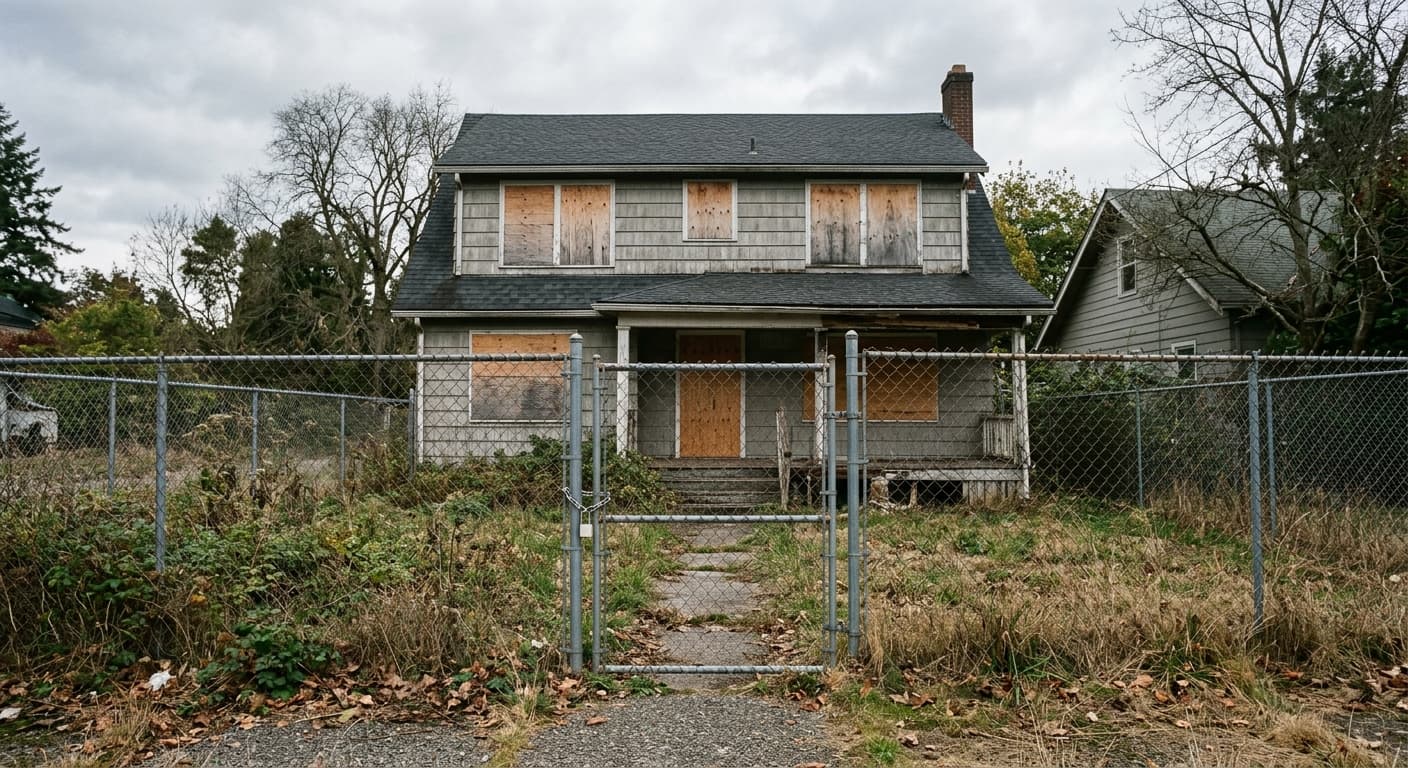
In Prince Edward Island, an owner who does nothing about someone occupying their private land for 20 straight years permanently loses the right to sue to get it back, under the Statute of Limitations, but no PEI statute states a separate period for Crown land, and until that 20-year period actually runs an occupant without permission is still trespassing and can be removed through the courts or reported to police.
Information last verified on 2026-08-15. This article has not yet been reviewed by a licensed lawyer.
The 20-Year Rule for Private Land
PEI has not converted to a Torrens-style land-titles registration system the way Nova Scotia and New Brunswick largely have. It remains a deed-registration province, and its adverse possession law reflects that: one statute, one flat period, no parcel-registration cutoff.
Under the Statute of Limitations, RSPEI 1988, c. S-7, section 16, a landowner has 20 years from the point their right to recover the land first accrues to bring a court action. If they let that period pass without acting, section 46 extinguishes their right and title outright. The Act does not grant the occupant anything; it simply removes the true owner's ability to sue.
The clock's starting point follows the same pattern used elsewhere in Atlantic Canada. Sections 17 and 18 start the period running from the moment the true owner is dispossessed or discontinues their own possession, or, where the owner has died, from the date of death for their successor's claim.
Disability Extends the Deadline, Differently Than Its Neighbours
If the true owner was under a legal disability, meaning a minor or a person of unsound mind, when their right to sue first accrued, section 48 gives them 6 years after that disability ends or the person dies to bring the claim anyway. That extension is not open-ended: it is capped at 30 years from when the right first accrued, regardless of the disability.
A writer or reader should not assume this matches a neighbouring province. Nova Scotia's equivalent grace period is 5 years with a 25-year outer cap, shorter on the grace period but tighter on the cap than PEI's 6-year grace and 30-year cap. The two provinces' disability rules do not track each other just because the headline 20-year figure happens to.
Crown Land: A Question PEI's Own Law Leaves Open
This is the single biggest unresolved point in PEI's adverse possession law, and it should be treated as open rather than assumed. Nova Scotia's Real Property Limitations Act states a 40-year period for Crown land in as many words. New Brunswick's Limitation of Actions Act states 60 years. PEI's Statute of Limitations states no Crown-specific land-recovery period anywhere in section 16 or elsewhere in the Act.
The Act's own definition section describes an "action" as including "any civil proceeding by or against the Crown," which could suggest the ordinary 20-year private-land period also governs Crown land in PEI. But that is an inference from a definitions clause, not a provision that says so directly the way Nova Scotia's and New Brunswick's statutes do. No PEI government policy page laying out a Crown-land adverse possession process, comparable to what Nova Scotia publishes, was found either. Anyone with a genuine Crown-land possession claim in PEI should not rely on the 20-year private figure without confirming it applies, and should raise the question directly with the province's Crown land authority or a lawyer before assuming any timeline.
PEI's Lands Protection Act, which limits how much land a person or corporation may hold, is a completely different piece of legislation and has nothing to do with adverse possession; it should not be confused with a Crown-land possession statute.
Getting an Actual Deed: The Quieting Titles Act
Running out the 20-year clock only extinguishes the former owner's right. It does not, by itself, give a long-term possessor a registrable title they can sell or mortgage. For that, PEI uses the Quieting Titles Act, RSPEI 1988, c. Q-2.
An owner in fee simple, or a person claiming an interest, can petition the Supreme Court to have title judicially investigated, supported by title deeds, copies of registered instruments, an abstract of title, and a solicitor's certificate confirming the investigation was done. Before a certificate of title can issue, a judge must direct that notice be published in the Gazette, and in newspapers if the judge sees fit, for at least 4 weeks, giving anyone with a competing claim a deadline to come forward. Where the land is shown to be worth no more than $10,000, the judge may skip newspaper publication and allow posted notice on the land itself instead; that dollar figure comes directly from the current statutory text, though it was last set in a 1994 amendment and may not reflect today's land values.
Once a certificate of title is sealed and registered, it is conclusive and indefeasible against the Crown and everyone else, subject only to any charges or encumbrances the certificate itself states. A certificate obtained by fraud or a knowingly false statement can still be voided, except against a later buyer who paid value in good faith without notice of the problem.
PEI's Act notably allows a Crown application to be brought by either the federal Attorney General or PEI's own Attorney General, a detail not found in Nova Scotia's equivalent statute. Why the federal Attorney General is named was not confirmed in research for this article.
Trespass Penalties and What an Owner Can Do
The Trespass to Property Act, RSPEI 1988, c. T-6, sets penal fines separate from any civil claim. General trespass offences, entering posted premises, ignoring a direction to leave, dumping material, or entering fenced or enclosed land meant to keep people out or animals in, carry a fine of not less than $500 and not more than $2,000. Removing a posted sign, or posting one without authority, carries $200 to $2,000, as does ignoring a court order to stay off the property after a conviction. A court can also bar a convicted person from a public place for up to 6 months and order restitution of up to $2,000 on top of any fine.

Section 12 of the Act preserves an owner's ordinary civil remedies alongside these penal fines; a prosecution under the Trespass to Property Act does not replace a civil trespass or injunction claim.
For how an owner actually gets a squatter off the property once the trespass is established, see squatters rights in Canada, which covers the national mechanics: an owner cannot lawfully force someone out themselves: the Criminal Code's forcible entry and forcible detainer offence, section 72, applies regardless of who actually owns the property, and is triggered by a likely breach of the peace or a reasonable apprehension of one rather than requiring actual violence. The practical route is a call to police for a straightforward trespass, or a civil court application for a possession order enforced by a sheriff where the occupant disputes the owner's right to remove them.
Squatter or Tenant? The PEI Line
PEI's Statute of Limitations does not separately define who counts as a trespasser versus a permitted occupant for adverse possession purposes. The operative mechanism is section 30's tenancy-at-will rule: a tenancy at will is deemed to have determined, legally ended, one year after it began, at which point the clock starts running against the landlord if the tenant simply stays on. That is the same structural mechanism Nova Scotia and New Brunswick use.
The practical distinction still matters for how someone is removed. A true trespasser, someone who was never given permission to be on the land, is dealt with through police and the courts as described above; PEI's residential tenancy framework has no jurisdiction over that situation. Someone who was let in as a tenant and has simply stayed past their agreement, or an overstaying guest, is a different legal category and belongs in front of PEI's residential tenancy process rather than being treated as a squatter. For the eviction process itself, see eviction notices in Canada, though PEI's specific notice periods are not covered on that page and should be confirmed directly with the province's rental office.
Related Resources
For the doctrinal and ownership-side detail behind PEI's numbers, including the province-by-province comparison table and the registry-versus-land-titles distinction that shapes why PEI has no conversion cutoff, see adverse possession and squatters in Canada. For boundary disputes between neighbours specifically, rather than a stranger occupying land outright, see property lines and fences in Canada and trespass laws in Canada. Court proceedings tied to a PEI Quieting Titles Act petition or a trespass matter run through the province's Supreme Court; see court records in Prince Edward Island for how those records work.
Disclaimer
This article is informational only and is not legal advice. Several points in this article are genuinely unresolved by PEI's own statute text as reviewed: whether the 20-year Statute of Limitations period applies to Crown land at all, whether PEI has any separate rule for acquiring an easement by long use, and whether the Quieting Titles Act's fraud-avoidance provision carries a time limit for challenging a certificate. The $10,000 land-value threshold for simplified notice under the Quieting Titles Act was last set in 1994 and may not reflect current land values even though it remains the current legislated figure. Anyone considering a possession claim, or trying to remove an occupant from their land, should speak with a lawyer before relying on any of the periods or procedures described here.

Frequently Asked Questions
Does Prince Edward Island have squatters rights?
PEI's Statute of Limitations bars a landowner from suing to recover private land after 20 years of someone else's continuous possession, after which the owner's right and title are extinguished. That is not the same as the occupant automatically becoming the registered owner; they still need to go through the Quieting Titles Act to get an actual certificate of title.
How long does someone have to occupy land in PEI before an owner loses the right to sue?
20 years, under section 16 of the Statute of Limitations, RSPEI 1988, c. S-7. PEI has no registration-based cutoff that could shorten or bar this the way Nova Scotia's and New Brunswick's converted land can, since PEI has not moved to a Torrens-style land-titles system.
Can someone claim Crown land in PEI through long possession?
This is genuinely unresolved. PEI's Statute of Limitations does not state a separate Crown-land period the way Nova Scotia's 40-year rule or New Brunswick's 60-year rule do, though the Act's definition of an action includes Crown proceedings, which may imply the ordinary 20-year period applies. Anyone with a real Crown-land possession question in PEI should confirm directly with the province's Crown land authority rather than relying on the 20-year private-land figure.
Does running out the clock automatically give a squatter title to the land in PEI?
No. Section 46 of the Statute of Limitations extinguishes the former owner's right and title once the 20-year period expires; it does not grant title to the possessor. A registrable certificate of title requires a separate petition under the Quieting Titles Act, including a court investigation and a published notice period.
What is the difference between a squatter and a tenant in PEI?
A squatter never had permission to be on the land and is a trespasser handled through police or the civil courts. A tenant who overstays a tenancy is a different legal category; under section 30, a tenancy at will is deemed to end one year after it began, and an overstaying tenant belongs in front of PEI's residential tenancy process rather than being treated as a trespasser.
What happens if you are caught trespassing in PEI?
The Trespass to Property Act sets a fine of not less than $500 and not more than $2,000 for general trespass offences, such as entering posted or enclosed premises without permission or ignoring a direction to leave. A court can also bar a convicted person from the property for up to 6 months and order restitution up to $2,000. These penal fines exist alongside, not instead of, an owner's civil remedies.
Can a property owner physically remove a squatter themselves in PEI?
No. Forcibly retaking property is itself a Criminal Code offence, forcible entry or forcible detainer under section 72, regardless of who actually owns the land, triggered by a likely breach of the peace or a reasonable apprehension of one. The lawful routes are a police trespass complaint or a civil court application for a possession order enforced by a sheriff.
Updates
Independently fact-checked against the cited primary sources
Sources and References
- Statute of Limitations, RSPEI 1988, c. S-7 (consolidated)(princeedwardisland.ca).gov
- Quieting Titles Act, RSPEI 1988, c. Q-2 (consolidated)(princeedwardisland.ca).gov
- Trespass to Property Act, RSPEI 1988, c. T-6 (consolidated)(princeedwardisland.ca).gov
- Criminal Code, R.S.C. 1985, c. C-46, section 72 (forcible entry and forcible detainer)(laws-lois.justice.gc.ca).gov