
Canada
Adverse Possession and Squatters' Rights in Canada
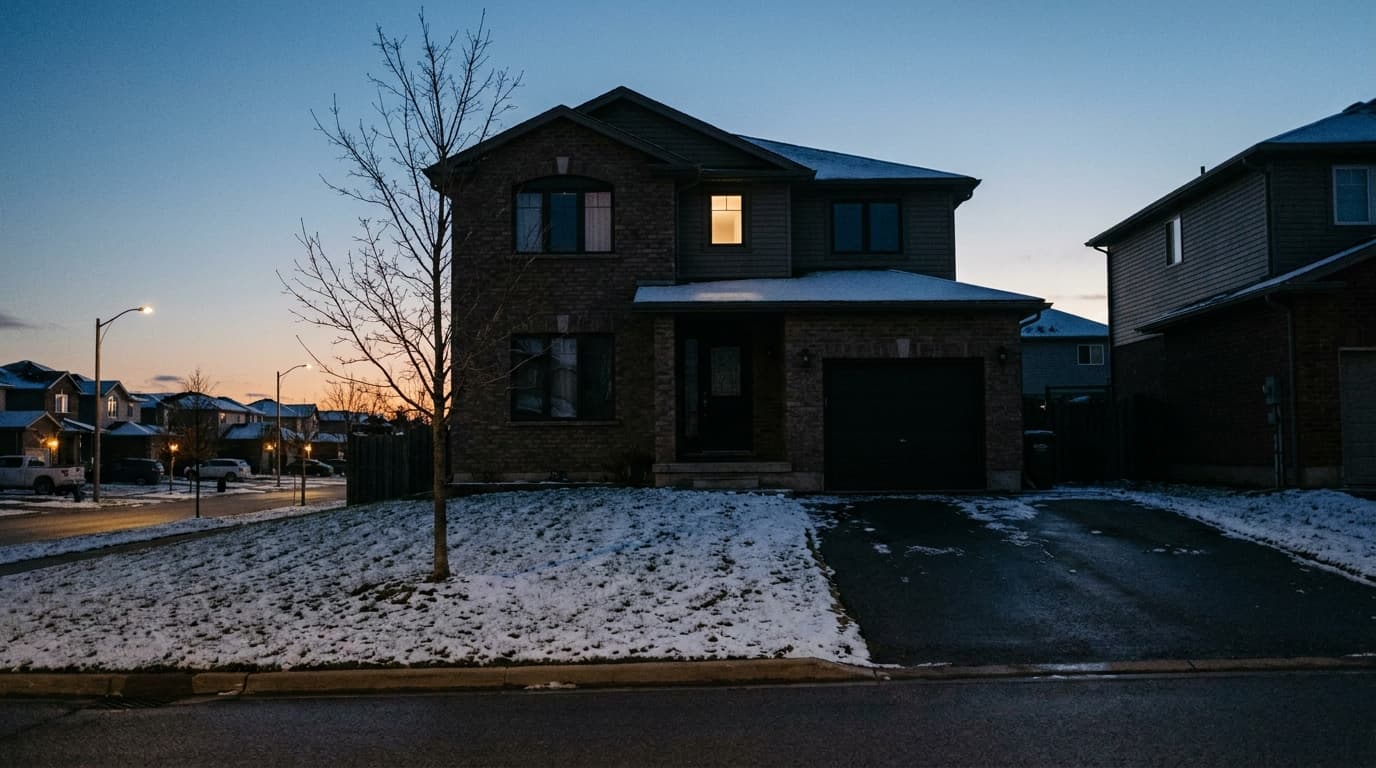
In almost all of Canada, land is now registered in a system that legally blocks adverse possession claims, so the fastest way to answer "can a squatter take my land" is to check which registration system your title falls under before anything else.
If you are dealing with someone actually occupying your property right now, rather than a boundary or title question, see Squatters Rights in Canada for how removal actually works.
This page is part of RecordingLaw's Canada property law hub, covering ownership, neighbour disputes, and condo issues by province.
Why Adverse Possession Depends on How Your Land Is Registered
Adverse possession is the legal doctrine that lets a long-term possessor acquire ownership of land that legally belongs to someone else, without paying for it and without the owner's permission. It sounds simple, but in most of Canada today it barely exists, because it depends entirely on a technical fact most owners never think about: which land registration system their title is under.
Ontario runs two parallel systems. The old Registry system records deeds and lets a court look behind the paper trail at who actually possessed the land. The modern Land Titles system guarantees the name on the title as the legally conclusive owner. Section 51 of Ontario's Land Titles Act says that once land is registered under that system, no one can acquire title to it "by any length of possession or by prescription," no matter how long they occupy it.
Ontario has spent decades converting Registry land to Land Titles, and the conversion is now nearly complete across the province. That means a new adverse possession claim in Ontario today is only theoretically possible on the shrinking pocket of land still under the old Registry system, and even then only if the 10 year clock finished running before the parcel converted. In practice, a genuinely successful modern claim is rare, and most reported Ontario cases involve possession that started decades ago.
The Classic Test, Where It Still Applies
Where adverse possession can still be argued in Ontario, courts apply the same core test under the Real Property Limitations Act. The claimant must show possession that is:
- Open and notorious - visible enough that a reasonably attentive owner would have noticed it
- Exclusive - the claimant, not the true owner, is the one using the land
- Continuous - unbroken for the full statutory period
- Adverse - without the owner's permission; a tenant, licensee, or anyone using the land with consent cannot later claim it was adverse
The statutory period is 10 years under section 4 of the Real Property Limitations Act. Once that period runs against the true owner without an action to recover the land, the owner's title is extinguished.
Ontario courts add a further hurdle known as the inconsistent use test, developed in a trilogy of Court of Appeal decisions: Keefer v Arillotta, Fletcher v Storoschuk, and Masidon Investments Ltd v Ham. Under this test, the claimant's use of the land must be inconsistent with the true owner's own present or reasonably foreseeable future use of it. In Keefer v Arillotta, parking on a strip of land did not defeat the true owner's title because the owner could still make the occasional or seasonal use he intended. In Masidon, by contrast, building and maintaining airport runways on land the owner was holding for future development was inconsistent enough to support a claim. This test makes many otherwise plausible-looking claims fail, because casual or intermittent use of a neighbour's spare land usually is not inconsistent with what the owner still plans to do with it.
Province by Province: Is a Claim Even Possible?
| Province / territory | Status of adverse possession |
|---|---|
| Ontario | Barred against Land Titles land (nearly all of the province) under Land Titles Act s 51. Only theoretically available against remaining Registry land, 10 year test plus inconsistent use. |
| Alberta | Abolished by statute. The Property Rights Statutes Amendment Act, 2022 repealed Land Titles Act s 74 effective December 15, 2022. Claims finalized before that date stand. |
| British Columbia | Barred against indefeasible title under Land Title Act s 23; s 24 also abolishes the common law doctrine of prescription. Applies to essentially all registered BC land. |
| Saskatchewan | Barred once land is brought under the province's Torrens-based land titles system, which is nearly all Saskatchewan land. |
| Manitoba | Same as Saskatchewan: a certificate of title defeats an adverse possession claim once land is under the Torrens system. |
| Nova Scotia, New Brunswick, PEI, Newfoundland and Labrador | Still Registry-based in significant part; adverse possession remains legally available in principle, subject to each province's own limitations statute and the same open, exclusive, continuous, adverse test. |
| Quebec | No adverse possession. Uses acquisitive prescription instead (see below). |
Quebec's Different Path: Acquisitive Prescription
Quebec is a civil law jurisdiction and does not use adverse possession at all. Instead, the Civil Code of Quebec provides for acquisitive prescription. A possessor who has held an immovable "as owner" peacefully, continuously, publicly and unequivocally for 10 years may acquire ownership of it, under articles 2910 through 2921 of the Civil Code.
The key practical difference from the rest of Canada is that Quebec's rule is not self-executing. The possessor must bring a judicial application, and the judgment that results is treated as merely confirming a right the passage of time already created, not the thing that creates it. Nobody in Quebec becomes an owner just by outlasting a limitation period on paper; a court has to say so.
Adverse Possession vs. Prescriptive Easement vs. a Squatter in a Home
These three situations get confused constantly, and they are resolved by completely different legal processes.
| Situation | What it is | Who decides it |
|---|---|---|
| Adverse possession | A claim to full ownership of land, based on long possession that meets the statutory test | The courts, and only where the land registration system permits it |
| Prescriptive easement | A claim to a limited right to use land for a specific purpose, most often a right of way, not ownership | The courts, under each province's property and limitations statutes; British Columbia has abolished this doctrine entirely under Land Title Act s 24 |
| Squatter in a residential unit | An occupancy and eviction question: someone living in a home or apartment without a lease or after a lease ended | The provincial residential tenancy board (for example Ontario's Landlord and Tenant Board) or the courts, not a property ownership claim at all |
If the issue is a person living in a rental unit, garage apartment, or house without permission, that is almost always a landlord and tenant matter, not a real property dispute. See RecordingLaw's Canada tenant rights hub for eviction and occupancy procedure by province.
The Real-World Scenario: Boundary Encroachments
The situation that actually comes up for most owners is nothing like a stranger moving onto vacant land. It is a boundary encroachment: a fence built a foot or two over the line, a driveway that clips the neighbouring lot, or a shed sitting partly on the wrong side, usually discovered when a survey is done for a sale, refinance, or building permit.
These are resolved in a fairly predictable order:
- Get a legal survey. Many "encroachments" turn out to be nothing once a licensed surveyor confirms where the boundary actually is, since old fences are notoriously unreliable evidence of the real line.
- Negotiate directly. Most neighbours resolve a small encroachment informally, or agree that the encroaching structure can stay for a defined period or until it needs replacement.
- Put it in writing. A boundary agreement, easement, or encroachment agreement registered on title protects both current owners and future buyers, and avoids the dispute resurfacing at the next sale.
- Apply to the court, if needed. Where agreement fails, an owner can bring an application under the relevant limitations or boundaries legislation to have the boundary or the encroachment's status determined.
For more on fence height rules, tree and hedge disputes, and who pays for a shared boundary fence, see RecordingLaw's property lines and fences in Canada guide.
Ontario's Line Fences Act: What It Does and Does Not Do
Ontario has a specific, little-known statute for fence disputes between neighbours: the Line Fences Act. Either owner can ask their municipality to appoint fence-viewers, typically local officials or approved individuals, who hold a hearing and issue an award.
It is important to be precise about what that award can and cannot do. Fence-viewers decide how the cost of building or repairing a line fence is divided between the two adjoining owners. They have no authority to determine where the property boundary actually runs. An owner who wants the boundary itself decided, not just the fence bill, needs a survey and, if necessary, a court application, not a fence-viewer hearing. Some municipalities, including the City of Toronto, have opted out of the Act entirely under their own bylaw authority, so it is worth confirming local availability before relying on it.
Beyond fences, most day-to-day neighbour friction, noise, tree branches, unkempt yards, is governed by municipal bylaws, not provincial or federal law. The right first call for most of these disputes is the local municipality, not a lawyer.
Squatting Is Not a Strategy
None of the above should be read as a guide to occupying land that belongs to someone else. Moving onto vacant land, an unoccupied house, or a construction site without the owner's permission is trespass, and in most provinces it exposes the occupant to removal and potential criminal liability, regardless of how long they stay. The narrow, technical circumstances in which possession can ever mature into ownership require a specific registration system, a specific length of time, and specific conduct that Canadian courts have made deliberately hard to satisfy. It is not a shortcut to a free home, and treating it as one is far more likely to end in an eviction and a trespass claim than in a deed.
This page is written for two audiences: owners who want to understand how to protect their title and respond if they discover someone else on their land, and neighbours trying to sort out an honest boundary or fence disagreement the right way. If the concern is a residential occupant who will not leave, that is a tenancy matter, not a property law one, and belongs with the provincial tenancy authority or the courts.
Disclaimer: This article is for general informational purposes only and is not legal advice. Adverse possession, prescriptive easement, and boundary disputes turn on the specific facts of a property and its registration history. Consult a real estate or property lawyer licensed in the relevant province before relying on any possession-based claim or defence.
Frequently Asked Questions
Can someone in Ontario really take my property just by living on it?
Almost never today. Ontario's Land Titles Act blocks new adverse possession claims against any parcel registered in the Land Titles system, and Ontario has converted nearly all its land to Land Titles. A claim can only succeed against the small amount of land still under the old Registry system, and only if the 10 year period of open, exclusive, continuous, adverse possession was completed. Genuinely occupying someone else's house without permission is trespass, and in most cases the owner or police can act on it well before any possession period matters.
What is the difference between adverse possession and squatters' rights?
They get used interchangeably, but they are different claims. Adverse possession is a legal doctrine that can transfer ownership of land after a long, specific kind of possession is proven, and only where the registration system allows it. Squatters' rights is the informal, popular name people use for the same idea, and it is also sometimes used loosely to describe someone occupying a residential unit without a lease, which is a tenancy and eviction issue, not a path to ownership.
Does adverse possession still exist anywhere in Canada?
It is narrow and shrinking. It can still apply to Ontario land that remains under the Registry system rather than Land Titles. Alberta abolished it by statute in December 2022. Saskatchewan and Manitoba block it once land is under their Torrens-based land titles systems, which is nearly all land in those provinces. Most British Columbia land is protected the same way under the Land Title Act. Quebec never had adverse possession; it has its own acquisitive prescription rule under the Civil Code, which requires a court judgment.
My neighbour's fence is a few feet onto my property. What are my options?
Get a legal survey first so the actual boundary is confirmed, since many disputes turn out to be about a fence that was never on the line to begin with. From there, most encroachments are resolved by direct negotiation, a written boundary or encroachment agreement registered on title, or in Ontario an application under the Real Property Limitations Act or Boundaries Act if agreement fails. Ontario's Line Fences Act lets either owner ask the municipality to appoint fence-viewers, but that process only apportions the cost of building or repairing a fence. It has no authority to determine where the boundary actually runs.
Someone is living in my rental unit and refusing to leave. Is this an adverse possession problem?
No. A squatter or holdover occupant in a residential unit is handled through the residential tenancy system, such as Ontario's Landlord and Tenant Board, or through the courts, not through property law. These are questions of lawful occupancy and eviction procedure. Adverse possession law deals with a stranger acquiring ownership of land over many years, which is a separate and much rarer situation.
What is a prescriptive easement and how is it different from adverse possession?
A prescriptive easement gives someone a right to use part of another person's land for a specific purpose, most often a right of way, after long uninterrupted use. It does not transfer ownership. Adverse possession, where it still applies, can transfer ownership of the land itself. British Columbia has abolished the common law doctrine of prescription outright, so the distinction matters less there than in Ontario, where both doctrines are narrow but still exist in principle.
Updates
Added a top-of-page pointer sending readers dealing with an actual occupant, rather than a boundary or title dispute, to the Squatters Rights in Canada removal-process page.
Alberta's Property Rights Statutes Amendment Act, 2022 received royal assent and repealed section 74 of the Land Titles Act, ending court-ordered adverse possession claims in the province going forward. Claims already finalized before that date were not undone.
The Law Behind This Article
This article rests on the statutory provisions below, held in our own legal record and retrieved from the official source. Tap a section to read the operative text.
Land Title Act (British Columbia)
s. 23Effect of indefeasible titleIn forcecited in 2 of our articles
1 In this section, court includes a person or statutory body having, by law or consent of parties, authority to hear, receive and examine evidence. 2 An indefeasible title, as long as it remains in force and uncancelled, is conclusive evidence at law and in equity, as against the Crown and all other
Official text (excerpt) · last checked 2026-08-13 · Read the full text in our law library · Verify at bclaws.gov.bc.ca
Land Titles Act (Ontario)
s. 51No title by adverse possession, etc.In forcecited in 4 of our articles
(1) Despite any provision of this Act, the Real Property Limitations Act or any other Act, no title to and no right or interest in land registered under this Act that is adverse to or in derogation of the title of the registered owner shall be acquired hereafter or be deemed to have been acquired he
Official text (excerpt) · last checked 2026-08-13 · Read the full text in our law library · Verify at ontario.ca
Also relied on in: Squatters Rights and Adverse Possession in Canada
Real Property Limitations Act (Ontario)
s. 4Limitation where the subject interestedIn forcecited in 4 of our articles
No person shall make an entry or distress, or bring an action to recover any land or rent, but within ten years next after the time at which the right to make such entry or distress, or to bring such action, first accrued to some person through whom the person making or bringing it claims, or if the
Official text (excerpt) · last checked 2026-08-13 · Read the full text in our law library · Verify at ontario.ca
Search our full record of US law — 2.1 million sections, every state + federal →
Sources and References
- Real Property Limitations Act, RSO 1990, c L.15, s 4 (ten year limitation to recover land)(ontario.ca).gov
- Land Titles Act, RSO 1990, c L.5, s 51 (no title acquired by length of possession against Land Titles land)(ontario.ca).gov
- Land Title Act, RSBC 1996, c 250, s 23 (indefeasible title defeats adverse possession)(bclaws.gov.bc.ca).gov
- Property Rights Statutes Amendment Act, 2022 (Alberta), repealing Land Titles Act s 74(alberta.ca).gov
- Civil Code of Quebec, CQLR c CCQ-1991, arts 2910 to 2921 (acquisitive prescription)(legisquebec.gouv.qc.ca).gov
- Line Fences Act, RSO 1990, c L.17(ontario.ca).gov
- Ontario government guide to the Line Fences Act(ontario.ca).gov
- Masidon Investments Ltd v Ham, 1984 CanLII 1968 (ON CA)(canlii.org)
- Keefer v Arillotta (1976), 13 OR (2d) 680 (ON CA)(canlii.org)