
Canada
Power of Sale vs Foreclosure in Canada
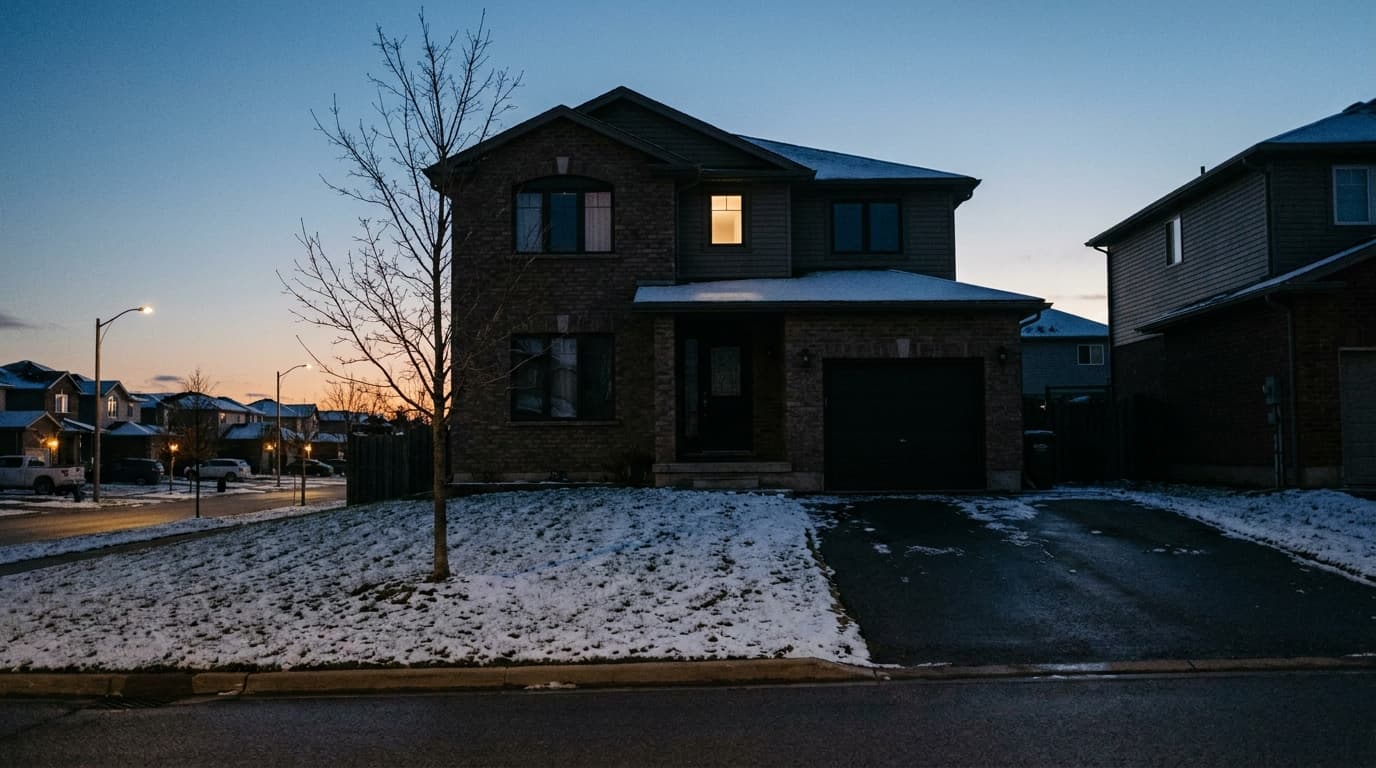
Canada does not have a single national process for a defaulted mortgage. Depending on the province, a lender either sells the property under a power of sale with no court order, or pursues a court-supervised judicial foreclosure, and which one applies changes whether you could still owe money after the property is gone.
Two Different Systems, Split by Province
Mortgage law in Canada is provincial, not federal, so the remedy a lender uses when a borrower defaults depends entirely on where the property sits. Two families of process exist across the country.
Power of sale lets the lender sell the property itself, without asking a court's permission, once statutory notice periods have passed. Judicial foreclosure requires a court to supervise the process from start to finish, through an application, a redemption period, and a final court order.
| Province or territory | Process | Court order required? | Can the lender sue for a shortfall? |
|---|---|---|---|
| Ontario | Power of sale | No | Yes, deficiency remains a personal debt |
| New Brunswick | Power of sale | No | Yes |
| Newfoundland and Labrador | Power of sale | No | Yes |
| Prince Edward Island | Power of sale | No | Yes |
| British Columbia | Judicial foreclosure | Yes | Possible, at the court's discretion |
| Alberta | Judicial foreclosure | Yes | Generally no, on a typical residential mortgage |
| Saskatchewan | Judicial foreclosure | Yes | Generally no, on a typical residential mortgage |
| Manitoba | Judicial foreclosure | Yes | Possible, at the court's discretion |
| Nova Scotia | Judicial foreclosure | Yes | Possible, at the court's discretion |
| Quebec | Hypothecary recourse | Yes, or by voluntary surrender | No, if the creditor takes the property in payment |
The rest of this guide walks through what each column actually means, because the deficiency question is the one that decides whether losing the home is the end of the financial story or the start of a second one.
Power of Sale: Ontario, New Brunswick, Newfoundland and Labrador, PEI
A power of sale is a right the standard mortgage document itself gives the lender. Once the borrower is in default, the lender can sell the property without first asking a court for permission. That does not mean no rules apply.
In Ontario, the Mortgages Act sets out the notice a lender must give before it can act. Generally, a lender must wait at least 15 days after default before it can serve a notice of sale, and then wait a further 35 days after that notice before completing a sale. The notice must be in the statutory form and served on the borrower and on other parties with an interest in the property, such as a second mortgage holder.
Throughout the process, the lender owes the borrower a duty to act in good faith and to take reasonable steps to get a proper price for the property, not simply the fastest sale. A borrower who believes the lender rushed the sale or accepted a low price can challenge it in court after the fact, though undoing a completed sale to a third-party buyer is difficult. The more realistic remedy is a claim against the lender for the difference.
New Brunswick, Newfoundland and Labrador, and Prince Edward Island each have their own property and mortgage legislation setting out notice periods and procedure for a power of sale. The core shape is the same in all four provinces: no court order is required, and the lender must still act in good faith and get a proper price.
The rule that changes lives is this: any surplus, meaning any amount left over once the debt, interest, and reasonable costs of sale are paid, must go to the borrower. But if the sale price does not cover what is owed, the shortfall, called a deficiency, remains the borrower's personal debt. The lender can sue for it like any other unpaid debt, and a resulting court judgment can lead to wage garnishment or a claim against other assets the borrower owns.
Judicial Foreclosure: BC, Alberta, Manitoba, Saskatchewan, Nova Scotia
In these provinces, a lender cannot simply sell on its own. It must apply to a court, and the court supervises the process to its conclusion.
British Columbia starts with an application for an order nisi, a court order that sets a redemption period, commonly around six months, though courts routinely shorten it where there is little equity in the property or the borrower is not engaging with the process. During that window, the borrower can redeem the mortgage by paying what is owed in full. If redemption does not happen, the court can grant an order absolute, transferring title to the lender, or, more commonly today, order a court-conducted sale of the property, with any surplus flowing to the borrower.
Alberta and Saskatchewan are the two provinces where protective legislation changes the outcome for most homeowners. Alberta's Law of Property Act and Saskatchewan's Limitation of Civil Rights Act limit a lender to the property itself in many cases, but the exceptions matter enormously. In Alberta, the protection does not apply to a CMHC-insured or privately-insured high-ratio mortgage (Law of Property Act s 43(4)), which is what most buyers with less than 20% down actually have, so those borrowers can face a deficiency judgment. In Saskatchewan, the protection applies only to a purchase money mortgage, so a refinance is generally not protected. The lender forecloses and takes the property, but generally cannot come back and sue the borrower personally for whatever the property did not cover. This is the single biggest practical difference between these two provinces and the rest of the country, and it exists because both legislatures decided decades ago that losing the home should be the end of it for an ordinary homeowner, not the start of a lawsuit.
Manitoba and Nova Scotia run their own court foreclosure processes, and while a deficiency judgment is possible in both, it is not automatic. A lender that wants one generally has to ask the court for it specifically and show what the property actually realized, and courts scrutinize whether the process obtained a fair price before granting a further judgment against the borrower.
Quebec: Hypothecary Recourses, a Different System Entirely
Quebec does not use foreclosure or power of sale. Mortgage default is handled through the Civil Code of Quebec's hypothecary recourses, and Quebec calls a mortgage a hypothec.
Before exercising any hypothecary recourse, the creditor must register a prior notice and generally give the debtor at least 60 days to remedy the default, a built-in window baked into the process itself. If the default is not cured, the creditor can choose among several recourses, including:
- Taking in payment (prise en paiement): the creditor takes ownership of the property in full satisfaction of the debt. This extinguishes the debt entirely, even if the property turns out to be worth less than what was owed. The creditor accepts that risk in exchange for a faster, simpler process.
- Sale by the creditor or sale under judicial authority: the property is sold, generally under court supervision, and the proceeds go to pay the debt, with any surplus returned to the debtor.
Because taking in payment wipes the debt regardless of the property's value, it functions as Quebec's own version of an anti-deficiency rule, just built differently than Alberta's or Saskatchewan's statutes.
Redemption: Paying Your Way Out of the Process
In every one of these systems, a borrower can stop the process by paying what is owed, called redemption. The mechanics differ by province.
In a power of sale province, redemption is available any time before the sale is actually completed, essentially up until the lender signs an agreement of purchase and sale with a buyer. In BC and the other judicial foreclosure provinces, the order nisi or equivalent court order sets a specific redemption period, and the court can extend or shorten it based on the circumstances. In Quebec, the 60-day prior notice period is itself the redemption window: paying the arrears and costs within that window stops the hypothecary recourse before it starts.
Redemption almost always requires paying the full arrears, interest, and the lender's reasonable legal and administration costs, not just the missed payments. The longer a default runs, the more expensive redemption becomes.
Timelines: How Long Does Each Process Take?
A power of sale can move faster than a court foreclosure simply because there is no court calendar to wait on. Ontario's statutory minimums add up to roughly seven weeks from a notice of sale to the earliest possible completion, though marketing and closing a sale typically add more time in practice.
Judicial foreclosure moves on the court's schedule. BC's default six-month redemption period alone is longer than the entire Ontario notice sequence, and getting a hearing date, an order nisi, and eventually an order absolute or a conduct of sale order can stretch the whole process past a year in a busy jurisdiction.
What This Means for You: Practical First Steps After a Missed Payment
Talk to the lender early, ideally before missing a second payment. Most lenders, and federally regulated banks in particular, would rather work out a solution than absorb the cost, delay, and reputational friction of a sale or foreclosure. Options can include a short-term deferral, a repayment plan added to future payments, or refinancing the arrears into the mortgage.
If the mortgage is CMHC-insured, ask about workout options specifically. Canada Mortgage and Housing Corporation expects lenders on CMHC-insured mortgages to consider reasonable alternatives, such as a temporary payment deferral or an extended amortization, before pursuing power of sale or foreclosure.
Get independent advice early, not after a notice of sale arrives. A lawyer can review the specific notice served, confirm the timeline that actually applies in that province, and flag whether a deficiency or a protective statute like Alberta's or Saskatchewan's is realistically in play. A licensed insolvency trustee can help if the mortgage default is one symptom of a wider debt problem.
Watch for mortgage rescue or debt-relief pitches that promise to stop a sale for an upfront fee. A default already in the notice stage is a matter for the lender, a lawyer, or, in a serious debt situation, a licensed insolvency trustee, not a company advertising a guaranteed fix.
This page explains the process, not how to avoid a legitimate mortgage obligation. For a separate property dispute with a neighbour or a contractor under a claim's dollar limit, see our Canada small claims court guide. For what happens when nobody has a legal right to be on a property at all, see our guide to adverse possession and squatters in Canada. For the rest of this cluster, start at Canada property law.
A buyer purchasing a power of sale or foreclosure property still owes the usual closing costs, including land transfer tax, which can be estimated in the Canada land transfer tax calculator.
Disclaimer: This article is general legal information about mortgage default processes in Canada, not legal advice. Power of sale, judicial foreclosure, and hypothecary recourse procedures involve strict statutory notice periods and deadlines that vary by province and by lender, and a missed step can have serious consequences for both sides. Anyone facing a notice of sale, a foreclosure application, or a hypothecary notice should speak with a lawyer licensed in their province immediately.
Frequently Asked Questions
What is the real difference between power of sale and foreclosure in Canada?
Power of sale lets a lender sell the property without going to court, used in Ontario, New Brunswick, Newfoundland and Labrador, and Prince Edward Island. Judicial foreclosure requires a court to supervise the process, used in British Columbia, Alberta, Manitoba, Saskatchewan, Nova Scotia, and, in a different form, Quebec.
Can a lender come after me for money after a power of sale in Ontario?
Yes. If the sale does not cover the debt, interest, and costs, the shortfall is a deficiency that remains the borrower's personal debt, and the lender can sue for it. If the sale brings in more than what is owed, the surplus must be paid to the borrower.
Does Alberta or Saskatchewan let a lender sue for a shortfall after foreclosure?
Often no, but not always, and the exceptions catch many ordinary homeowners. Alberta's Law of Property Act limits the lender to the property, except on a CMHC-insured or privately-insured high-ratio mortgage under s 43(4), where a deficiency judgment is possible. Saskatchewan's Limitation of Civil Rights Act protects only a purchase money mortgage, so a refinance is generally not covered. Check which category your mortgage falls into.
What happens if I fall behind on a mortgage in British Columbia?
The lender applies to court for an order nisi, which sets a redemption period, commonly around six months, though courts often shorten it. You can stop the process at any point in that window by paying what is owed in full.
What does taking in payment mean in Quebec?
Taking in payment, or prise en paiement, is a hypothecary recourse where the creditor takes ownership of the property as full satisfaction of the debt. The debt is extinguished entirely, even if the property is worth less than what was owed.
Can I stop a power of sale or foreclosure by paying what I owe?
Yes, this is called redemption and is available in every province. In a power of sale it lasts until the property is actually sold to a buyer; in a court foreclosure the court sets a specific redemption period; in Quebec the law gives at least 60 days notice before a hypothecary recourse can proceed.
Sources and References
- Mortgages Act, RSO 1990, c M.40 (Ontario power of sale: notice of default and notice of sale requirements before a lender may sell without a court order)(ontario.ca).gov
- Property Law Act, RSBC 1996, c 377 (British Columbia: court powers on default, including sale in lieu of foreclosure and redemption)(bclaws.gov.bc.ca).gov
- Supreme Court Civil Rules, BC Reg 168/2009, Rule 21-7 (British Columbia foreclosure procedure: order nisi and redemption period)(bclaws.gov.bc.ca).gov
- Law of Property Act, RSA 2000, c L-7 (Alberta: limits a mortgagee's remedy on a typical residential mortgage foreclosure, no personal deficiency judgment)(kings-printer.alberta.ca).gov
- The Limitation of Civil Rights Act, RSS 1978, c L-16 (Saskatchewan: restricts a mortgagee's remedy against a mortgagor on default of a typical mortgage)(canlii.org)
- Civil Code of Quebec, CCQ-1991, arts 2748-2794 (hypothecary recourses: prior notice, taking in payment, sale by the creditor, sale under judicial authority)(legisquebec.gouv.qc.ca).gov