
Canada
Neighbour Disputes in Canada: Your Options
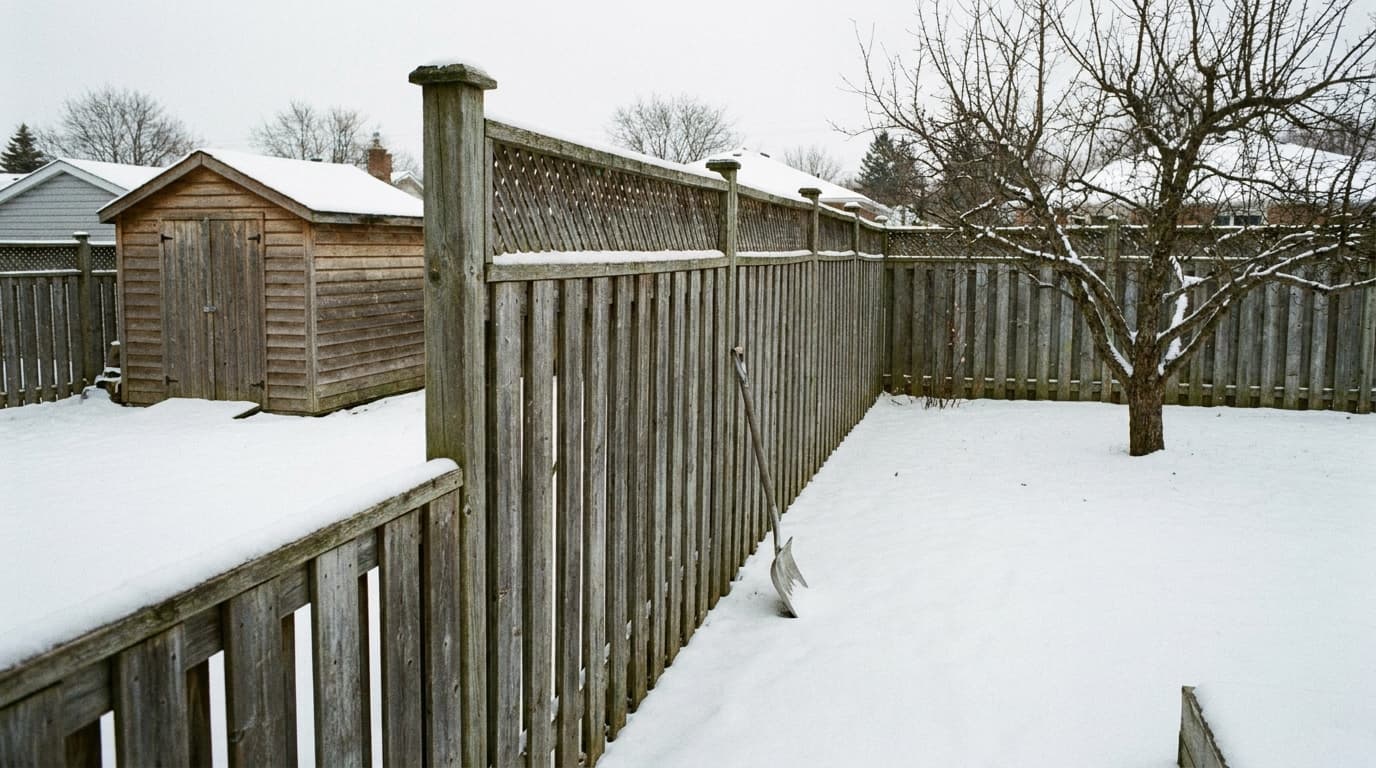
Most neighbour disputes in Canada are handled at the municipal level or through a small claim, not by calling a lawyer first, and picking the wrong forum is the single biggest reason these disputes drag on for months.
Start With: Who Actually Handles This?
The fastest way to lose months on a neighbour dispute is to bring it to the wrong forum. Canada has no single "neighbour law"; jurisdiction is split between municipalities, provincial tribunals, the civil courts and, in a narrow set of cases, the criminal law. The table below is a starting map. Use it to identify where your specific problem actually belongs before you write a letter, call anyone, or spend money on a lawyer.
| Issue | Who Handles It First | Next Step If Unresolved |
|---|---|---|
| Noise (parties, construction, barking) | Municipal bylaw enforcement | Tort of nuisance / small claims court |
| Boundary or fence dispute | Land survey; in Ontario, municipal fence-viewers under the Line Fences Act | Small claims or civil court (boundary itself is a court question, not a fence-viewer one) |
| Overhanging branches / tree roots | Self-help pruning to the property line; municipal tree bylaw if the tree is protected | Small claims for damage; consent needed to touch a boundary tree |
| Encroachment (structure, driveway, shed) | Survey, then negotiation or an encroachment agreement | Civil court for an order to remove or an easement dispute |
| Water, drainage, runoff | Municipal drainage bylaw; provincial drainage legislation (e.g., Ontario's Drainage Act) | Petition the municipality for a municipal drain; civil claim for damage from collected water |
| Dogs and other animals | Municipal animal control / bylaw officer | Civil claim under provincial dog-owner liability legislation (e.g., Ontario's Dog Owners' Liability Act) |
| Condo or strata issue | The corporation's own dispute process/bylaws | Condominium Authority Tribunal (Ontario) or Civil Resolution Tribunal (BC) |
| Landlord-tenant issue with a neighbour who is a tenant | Provincial residential tenancy tribunal | Varies by province |
| Harassment or threats | Police | Peace bond application under Criminal Code s 810 |
| Ongoing property damage or loss | Document and demand | Small claims court (nuisance or trespass) |
The rest of this page walks through each row, then covers the de-escalation steps that resolve most disputes before any forum gets involved.
Noise: Municipal Bylaw First, Nuisance Second
Noise complaints, whether it is a barking dog, a late-night party, early construction or a persistently loud heat pump, are governed by your municipality's noise bylaw, not by provincial or federal law. Most municipal noise bylaws set quiet hours and a general prohibition on noise that disturbs the peace, and enforcement is typically a call to bylaw services or, after hours, non-emergency police in some municipalities. Check your specific municipality's bylaw for its hours and complaint process, since these details vary by city and town across Canada.
If a bylaw complaint does not resolve a recurring problem, the civil law fallback is the tort of private nuisance: an unreasonable and substantial interference with the use or enjoyment of your property. Courts weigh the character of the neighbourhood, the severity and duration of the interference, and the sensitivity of the complaint against the everyday give-and-take expected between neighbours. A single loud party rarely qualifies; months of recurring, documented disruption might. For a deeper look at how municipal noise rules work across Canada, see noise bylaws in Canada.
Boundary and Fence Disputes: Get a Survey First
If you and a neighbour disagree about where your property line actually sits, or about a shared fence, the starting point is the same everywhere in Canada: a current survey from a licensed land surveyor. Older deeds, fence lines and "where the last owner said it was" are not reliable evidence of a legal boundary, and a fresh survey is usually the fastest way to settle a factual disagreement before it becomes a legal one.
Ontario has a statutory mechanism worth knowing about that most homeowners have never heard of: the Line Fences Act. Where neighbours cannot agree on building a new line fence or repairing an existing one, either owner can ask the local municipality to appoint fence-viewers, typically three people who inspect the property, hear both sides, and issue a binding award describing the fence to be built and how the cost is split. An owner who disagrees with the award has 15 days to appeal. The important limit: fence-viewers decide fence disputes only. They have no jurisdiction over where the boundary line itself actually is; that is a question for a survey and, if still contested, the courts.
Outside Ontario, boundary and fence disagreements that cannot be settled by agreement generally go to small claims or civil court, informed by a survey and, where applicable, the relevant provincial property or land titles legislation. See property lines and fences in Canada for a fuller province-by-province look.
Trees and Overhanging Branches
A branch or root that crosses onto your property from a neighbour's tree generally does not give you the right to enter their land, but it does generally let you prune what crosses your own boundary, without killing or seriously damaging the tree, and without stepping onto the neighbour's property to do it. If a healthy prune cannot be done from your own side, or the tree is large enough that the work is risky, get a professional arborist rather than attempting it yourself.
The important exception is a boundary tree, meaning a tree whose trunk grows directly on the property line. In Ontario, a boundary tree is treated as the common property of both adjoining owners, and neither owner can remove it or drastically alter it without the other's consent. Damaging a boundary tree without consent can carry real penalties in Ontario, separate from any civil claim for the value of the tree. Before doing anything to a tree that sits on or near the line, confirm which side of that distinction it falls on. Some municipalities also protect certain trees by size or species through a separate tree-protection bylaw, which can apply regardless of whose property the tree is on.
Encroachments: Survey, Then Negotiate or Go to Court
An encroachment is a structure, or part of one, a shed, a fence, a driveway, an addition, that physically extends past the property line onto a neighbour's land. As with boundary disputes generally, the first step is a survey to confirm whether an encroachment actually exists and by how much.
Once confirmed, most encroachments are resolved one of two ways: a negotiated encroachment agreement (sometimes registered on title) that lets the structure remain on agreed terms, or a court application if the parties cannot agree, which can result in an order to remove the encroaching structure or, in some cases, an easement. Encroachments are rarely simple, since removal can be expensive and disruptive on both sides, which is exactly why most are settled by agreement rather than by lawsuit once a survey establishes the facts.
Water, Drainage and Runoff
Water disputes between neighbours sit at the intersection of common law and provincial or municipal drainage legislation. As a general common-law principle recognized across Canada, a lower property has to accept the natural, uncollected flow of surface water from a higher property, and the higher owner cannot be sued just because water naturally runs downhill onto a neighbour's land. What changes the analysis is collecting water, for example through eavestroughs, downspouts or grading changes, and then discharging it somewhere that causes damage; that can create liability.
Where neighbours cannot agree on a drainage solution, Ontario's Drainage Act lets a property owner petition the municipality for a formal municipal drain, with costs shared among the benefiting properties according to a schedule. Other provinces have their own drainage legislation and municipal bylaws governing grading and stormwater; check your municipality's public works or engineering department for the applicable process where you live.
Dogs and Other Animals
A dog that repeatedly gets loose, barks excessively, or has bitten someone is first a matter for your municipality's animal control or bylaw office, which can issue orders, fines, or in serious cases require the animal be confined, muzzled or, rarely, ordered destroyed under local bylaw powers.
For an actual injury, several provinces have gone further than ordinary negligence law. Ontario's Dog Owners' Liability Act makes an owner strictly liable for damage or injury their dog causes, meaning a victim does not have to prove the owner knew the dog was dangerous or was otherwise careless. Liability applies whether the bite happens on public or private property, though a court can reduce damages if the victim provoked the dog. Confirm whether your province has similar legislation, since the standard is not identical everywhere in Canada.
Condo and Strata Disputes: Use the Tribunal, Not Court
If the "neighbour" is actually a fellow owner in the same condominium or strata building, most provinces now steer these disputes to a purpose-built tribunal instead of the regular civil courts.
In Ontario, the Condominium Authority Tribunal (CAT) hears disputes over condominium records, and, since its jurisdiction was expanded, a defined set of nuisance-type issues including pets and animals, vehicles/parking/storage, and noise, odour, vibration, light, smoke and vapour, plus compliance with CAT settlement agreements. The CAT generally cannot deal with disputes likely to cause property damage or personal injury; those still belong in court. Note: a further expansion of CAT's jurisdiction has been proposed by the Ontario government but is not yet in force, so confirm the tribunal's current scope before assuming it can hear a particular dispute.
In British Columbia, the Civil Resolution Tribunal (CRT) has mandatory jurisdiction over most strata property claims of any dollar amount, including disputes over bylaw enforcement (noise, pets, parking, rentals), repair cost responsibility, and meeting or voting irregularities. The CRT cannot decide claims about land itself, such as ordering a lot sold, and it cannot hear harassment, bullying or slander claims. Other provinces route condo and strata disputes through a mix of the corporation's own process and the regular civil courts; check your provincial condo or strata legislation for the applicable body.
Rental Issues With a Neighbour
If the disruptive neighbour is a tenant, and you are also a tenant or the shared building has a landlord, the relevant forum is usually your province's residential tenancy tribunal (for example, Ontario's Landlord and Tenant Board), which can address a landlord's failure to address a tenant causing a nuisance to other tenants. See tenant rights in Canada for the tribunal that applies in your province.
Harassment or Threats: Police, Then a Peace Bond
Where a dispute has crossed from an annoyance into threats, intimidation or genuine fear for your safety or property, this is no longer a civil property matter. Contact police. Where a criminal charge is not laid, or someone reasonably fears future harm, Canadian criminal law provides a preventive tool: a peace bond application under Criminal Code section 810. Any person who fears on reasonable grounds that another person will cause them personal injury or damage their property can lay an information before a justice. If the court is satisfied the fear is reasonable, it can order the other person to enter a recognizance to keep the peace, with conditions, for up to 12 months. A peace bond does not create a criminal record or a finding of guilt; it is preventive, and breaching its conditions is itself an offence. See peace bonds in Canada for how to apply.
When Nuisance or Small Claims Court Is Worth It
For an ongoing problem that has resisted every informal step, two civil options are worth understanding:
- The tort of nuisance applies when interference with your property is substantial and unreasonable, not just annoying. It can support an injunction (an order to stop) as well as damages, but courts weigh the neighbourhood's character and how long the problem has gone on, so a single incident rarely succeeds.
- Small claims court is the practical venue for modest, quantifiable losses, damaged property, the cost of remedial work, or a defined financial loss caused by a neighbour, without the cost of a full civil trial. Every province and territory has its own small claims court or tribunal, its own dollar limit, and its own filing process. See how to file a small claim in Canada for the general steps.
Both options work best when you already have a documented history: dated notes, photos, correspondence and, where the boundary is in dispute, a survey.
The De-Escalation Sequence That Actually Resolves Most Disputes
Most neighbour disputes never need any of the forums above, because they get resolved by a straightforward sequence of practical steps:
- Talk to your neighbour first, calmly and specifically, before involving any authority. Many disputes are the product of a misunderstanding that a short conversation clears up.
- Put it in writing once a conversation has not resolved things: a short, factual letter or email describing the problem, the impact, and what you are asking for.
- Keep a dated log of every incident, including dates, times, what happened, and any photos or recordings, so you have a real record if the dispute continues.
- Get a survey where the boundary itself is in question, before any negotiation about a fence, encroachment or tree.
- Use community mediation where it is available. Many municipalities and community justice organizations across Canada offer free or low-cost mediation for neighbour disputes, and a neutral mediator resolves far more of these cases, faster and more cheaply, than a lawsuit ever will.
- Escalate only after the above, to the appropriate forum identified in the table at the top of this page.
Recording a Dispute: Lawful, But Keep the Camera on Your Own Problem
Recording an incident involving a neighbour, a confrontation, an animal attack, an act of property damage, is generally lawful in Canada. Canada's federal wiretap law follows a one-party-consent rule: you can record a conversation you are a participant in without the other person's consent. See Canada's recording laws for the full rule and its narrow exceptions.
What is not the same question is a security camera or doorbell camera left running continuously and aimed at a neighbour's yard, windows or entryway. That kind of persistent surveillance can create its own separate privacy exposure, independent of whatever dispute prompted it, including under provincial privacy statutes in some provinces. If a dispute has you considering a camera as a long-term fix rather than a one-time recording of an incident, see security camera and doorbell laws in Canada before you install one aimed at a neighbour's property.
A related boundary question, someone entering or remaining on your land without permission, is covered separately at trespass laws in Canada.
Disclaimer: This article provides general legal information about resolving neighbour disputes in Canada and is not legal advice. Rules, tribunals and dollar limits vary by province, territory and municipality and change over time. For advice on a specific dispute, consult a lawyer or paralegal licensed in your province, or contact your municipality directly.
Frequently Asked Questions
Can I cut branches that hang over my property from my neighbour's tree?
Generally yes, up to your own property line, without entering the neighbour's land and without killing or seriously damaging the tree. If the tree's trunk actually sits on the boundary line itself, it is treated as jointly owned in Ontario and cannot be cut down or drastically altered without both owners' consent.
What is Ontario's Line Fences Act and when does it help?
It is a statutory process letting either neighbour ask the municipality to appoint fence-viewers to resolve a dispute over building or repairing a shared boundary fence, and to issue a binding award on the fence's specifications and cost split. It does not decide where the actual boundary line is, only fence disputes.
Is my neighbour automatically responsible if their dog bites me?
In Ontario, yes, the Dog Owners' Liability Act makes owners strictly liable for injuries their dog causes regardless of whether the owner knew the dog was dangerous. Other provinces have their own rules, some closer to ordinary negligence, so check your province's legislation.
Where do condo owners take a dispute with another owner in Ontario or BC?
Ontario routes a defined set of condo disputes, including pets, parking and certain nuisance issues, to the Condominium Authority Tribunal. British Columbia routes most strata disputes of any dollar value to the Civil Resolution Tribunal. Both are separate from the regular civil courts and generally faster and cheaper.
Can I get a peace bond against a neighbour who is threatening me?
Yes. Under Criminal Code section 810, anyone who reasonably fears a neighbour will cause them personal injury or damage their property can apply to a justice for a peace bond, which can order the neighbour to keep the peace under specific conditions for up to 12 months without a criminal conviction.
Is it legal to record my neighbour during a dispute?
Recording a conversation or incident you are personally part of is generally lawful in Canada under the one-party-consent rule. A continuous security camera pointed at a neighbour's private space is a different question and can raise separate privacy issues even though a one-time recording of an incident is fine.
Updates
British Columbia's Bill 44 came into force, eliminating strata rental-restriction bylaws and limiting age-restriction bylaws to 55-plus, a relevant backdrop for strata disputes over rentals.
The Law Behind This Article
This article rests on the statutory provisions below, held in our own legal record and retrieved from the official source. Tap a section to read the operative text.
Criminal Code
s. 810If injury or damage fearedIn forcecited in 7 of our articles
(1) An information may be laid before a justice by or on behalf of any person who fears on reasonable grounds that another person (a) will cause personal injury to them or to their intimate partner or child or will damage their property; or (b) will commit an offence under section 162.1. (2) A justice who receives an information under subsection (1) shall cause the parties to appear before him or before a summary conviction court having jurisdiction in the same territorial division. (3) If the justice or summary conviction court before which the parties appear is satisfied by the evidence adduced that the person on whose behalf the information was laid has reasonable grounds for the fear, the justice or court may order that the defendant enter into a recognizance, with or without sureties, to keep the peace and be of good behaviour for a period of not more than 12 months. (3.01) The justice or summary conviction court may commit the defendant to prison for a term of not more than 12 months if the defendant fails or refuses to enter into the recognizance.
Official text (excerpt) · last checked 2026-08-12 · Read the full text in our law library · Verify at laws-lois.justice.gc.ca
Also relied on in: Canadian Criminal Records & Everyday Criminal Law, Peace Bonds in Canada: Section 810 Explained, Domestic Violence Laws in Canada
Search our full record of Canadian federal law — every consolidated Act, in English and French →
Sources and References
- Ontario.ca, "Line Fences Act" (purpose, fence-viewers process, awards, 15-day appeal, no jurisdiction over the boundary line itself)(ontario.ca).gov
- Government of Ontario, A Guide to the Line Fences Act (2024 update) (three fence-viewers, examination and award procedure, appeal timelines)(amcto.com)
- Criminal Code, RSC 1985, c C-46, s 810 (peace bonds; reasonable fear of injury or property damage; recognizance up to 12 months)(laws-lois.justice.gc.ca).gov
- Government of Ontario, Forestry Act, RSO 1990, c F.26 (boundary trees are common property of adjoining owners; consent required to injure or destroy)(ontario.ca).gov
- City of Toronto, "Private property trees - pruning a neighbour's tree branches overhanging onto your property" (right to prune to the boundary without entering the neighbour's land)(toronto.ca).gov
- Government of Ontario, Dog Owners' Liability Act, RSO 1990, c D.16 (strict liability for damage caused by a dog regardless of the owner's knowledge or fault)(ontario.ca).gov
- Ontario.ca, "Surface water and drainage disputes" and "Drainage conflicts with your neighbour" (common-law rules on natural surface water flow versus collected water)(ontario.ca).gov
- Government of Ontario, Drainage Act, RSO 1990, c D.17 (petitioning a municipality for a municipal drain; cost-sharing among benefiting properties)(ontario.ca).gov
- Condominium Authority of Ontario, "Our Jurisdiction" (CAT's current subject-matter jurisdiction: records, pets/animals, vehicles/parking/storage, noise/odour/vibration/light/smoke/vapour, settlement-agreement compliance)(condoauthorityontario.ca)
- Province of British Columbia, "The Civil Resolution Tribunal and strata disputes" (mandatory CRT jurisdiction over most strata claims of any amount; bylaw enforcement, repair cost, meeting/voting disputes; exclusions for land claims and harassment)(gov.bc.ca).gov
- Government of British Columbia, Bill 44-2022, Building and Strata Statutes Amendment Act (in force November 24, 2022; eliminated rental-restriction bylaws; restricted age-restriction bylaws to 55-plus)(bclaws.gov.bc.ca).gov