
New Mexico
New Mexico Video Recording Laws: Surveillance, Filming, and Consent Rules (2026)
Independently fact-checked against primary sources (last audited August 15, 2026). · Reviewed by the RecordingLaw editorial team. · Law checked current as of August 15, 2026. · 4 primary sources cited on this page. How we verify our legal content
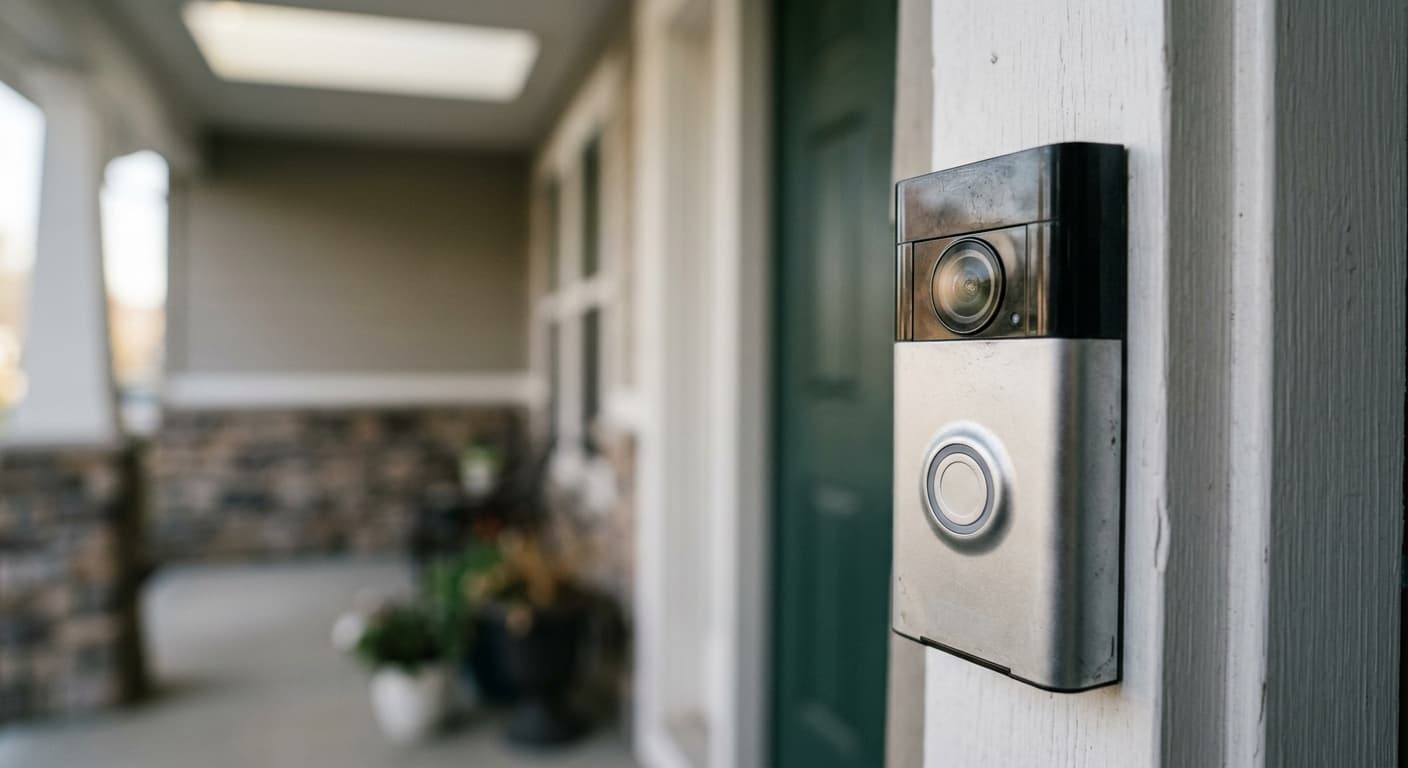
New Mexico has no general ban on video recording in public spaces, and the wiretapping statute under N.M. Stat. Ann. § 30-12-1 covers only telephone and wire communications, so it does not restrict in-person video. Voyeurism under N.M. Stat. Ann. § 30-9-20 prohibits recording in places with a reasonable expectation of privacy.
New Mexico places few restrictions on video recording in public spaces. The state has no general statute that prohibits filming people in public, and the wiretapping law under N.M. Stat. Ann. § 30-12-1 covers only telephone and wire communications rather than visual recording. However, New Mexico does enforce strong protections against voyeurism and unauthorized distribution of intimate images.
This guide explains New Mexico's video recording laws in detail, covering public filming rights, private property rules, voyeurism penalties, workplace surveillance, and how video evidence is treated in court.
Public Video Recording in New Mexico
Your Right to Film in Public
New Mexico recognizes broad rights to video record in public spaces. You can legally film:
- On public streets, sidewalks, and parks
- At public protests and demonstrations
- During public government meetings under the Open Meetings Act (N.M. Stat. Ann. § 10-15-1)
- At public events and gatherings
- From any location where you have a legal right to be
- Anything visible from a public vantage point, including building exteriors
The First Amendment protects your right to gather information in public spaces, including through video recording. The Tenth Circuit Court of Appeals, which has jurisdiction over New Mexico, formally recognized a First Amendment right to film police officers performing their duties in public in Irizarry v. Yehia, 38 F.4th 1282 (10th Cir. Jul. 11, 2022), clearly established as of May 26, 2019.
Limitations on Public Filming
While public filming is broadly protected, some restrictions apply:
- Military and federal installations may prohibit photography and video recording under federal law.
- Courthouses may restrict recording during judicial proceedings under court rules.
- Airport security areas regulated by the TSA have specific rules about filming checkpoints.
- You cannot block pedestrian or vehicle traffic while filming.
- You cannot trespass on private property to obtain a better camera angle.
Video Recording at Government Meetings
New Mexico's Open Meetings Act requires public bodies to make "reasonable efforts" to accommodate audio and video recording devices during open meetings. This means you can bring cameras to:
- City council meetings
- County commission meetings
- School board meetings
- State legislative proceedings
- Public hearings and committee meetings
Closed executive sessions are the exception. Public bodies may close meetings for limited purposes such as attorney-client discussions, personnel matters, and real estate negotiations.
Private Property Video Recording Rules
Property Owner Rights
On private property, the property owner or manager sets the rules about video recording. Businesses and homeowners can:
- Prohibit filming on their premises
- Ask you to stop recording and leave
- Call law enforcement if you refuse to stop recording after being asked
- Post signs stating that recording is not permitted
If you are asked to stop filming on private property and refuse, you may face trespass charges. The property owner does not need to give a reason for restricting video recording.
Video Surveillance on Your Own Property
New Mexico homeowners can install video surveillance cameras on their own property. Best practices include:
- Position cameras to capture your own property rather than a neighbor's private areas
- Do not aim cameras at windows or enclosed areas of neighboring properties
- Inform guests and visitors about visible security cameras
- Avoid recording areas where others have a reasonable expectation of privacy
For businesses, security cameras in common areas like lobbies, sales floors, and parking lots are standard practice. Cameras should not be placed in bathrooms, changing rooms, or other private areas.
Voyeurism Laws: N.M. Stat. Ann. § 30-9-20

What the Voyeurism Statute Prohibits
New Mexico's voyeurism law under N.M. Stat. Ann. § 30-9-20 makes it a crime to use a recording device to capture images of another person in a state of undress or engaged in sexual activity in a place where the person has a reasonable expectation of privacy.
The statute prohibits:
- Hidden cameras in private areas such as bathrooms, locker rooms, hotel rooms, and dressing rooms
- Upskirting and downblousing using concealed cameras to capture images under or through clothing
- Peeping through windows or other openings to view someone in a private setting
Penalties for Voyeurism
| Offense | Classification | Potential Penalty |
|---|---|---|
| Voyeurism (first offense) | Misdemeanor | Up to 364 days jail, fine |
| Voyeurism involving a minor | Enhanced penalties | Varies by circumstances |
| Distribution of voyeuristic images | Additional charges possible | Varies |
Voyeurism convictions can also trigger sex offender registration requirements depending on the circumstances, particularly when the victim is a minor.
Unauthorized Distribution of Intimate Images
N.M. Stat. Ann. § 30-37A-1 and the TAKE IT DOWN Act
New Mexico's unauthorized distribution of intimate images law under N.M. Stat. Ann. § 30-37A-1 makes it illegal to distribute intimate images of another person without their consent. This law covers what is commonly called "revenge porn." The federal TAKE IT DOWN Act (Pub. L. 119-12, signed May 19, 2025) supplements state law by requiring online platforms to remove non-consensual intimate images, including AI-generated deepfakes, within 48 hours of a victim's notice request; platform compliance with the removal process is required by May 19, 2026.
| Offense | Classification | Potential Penalty |
|---|---|---|
| First offense | Misdemeanor | Up to 364 days jail, fine |
| Subsequent offenses | Fourth-degree felony | Up to 18 months prison |
The law applies to images captured with consent that are later distributed without permission. It provides an important layer of protection beyond the voyeurism statute.
Video Recording and the Wiretap Statute
Why Video Does Not Trigger Wiretap Liability
New Mexico's wiretapping statute under N.M. Stat. Ann. § 30-12-1 covers only "telegraph or telephone" communications. This means:
- Silent video recording does not fall under the wiretap statute at all
- Video with in-person audio does not trigger wiretap liability because in-person conversations are not covered
- Video calls (Zoom, FaceTime, etc.) may be covered by the wiretap statute for their audio component, with one-party consent required
This creates a permissive environment for video recording in New Mexico, with the primary restrictions coming from voyeurism laws and property rights rather than the wiretapping statute.
Workplace Video Surveillance
Employer Rights
New Mexico employers can install video surveillance cameras in common work areas where employees do not have a reasonable expectation of privacy. Acceptable locations include:
- Lobbies and reception areas
- Sales floors and warehouse spaces
- Parking lots and exterior areas
- Hallways and common corridors
Prohibited Areas for Workplace Cameras
Employers cannot place video cameras in:
- Bathrooms and restrooms
- Locker rooms and changing areas
- Private offices where the door is closed (may be contested)
- Breakrooms with an expectation of privacy
Employee Rights
New Mexico employees can use personal video recording devices in the workplace. Since the wiretapping statute does not cover in-person communications, capturing video and audio of workplace interactions requires no consent. However, employers may enforce internal policies that restrict recording, and violating those policies can lead to disciplinary action.
The National Labor Relations Act protects employees who record as part of concerted activity, such as documenting unsafe working conditions or labor violations.
Using Video Recordings as Evidence
Admissibility in New Mexico Courts
Video recordings made lawfully are generally admissible as evidence in New Mexico courts. Courts evaluate video evidence based on:
- Authentication: The person who made the recording or an expert must verify it is genuine and unaltered.
- Relevance: The video must relate to an issue in the case.
- Chain of custody: The court may examine how the recording was stored and handled.
- Prejudicial vs. probative value: The video's evidentiary value must outweigh any potential for unfair prejudice.
Best Practices for Preserving Video Evidence
- Save the original file without editing.
- Record metadata including the date, time, and location.
- Back up the file to multiple locations immediately.
- Document the circumstances of the recording.
- Provide the video to your attorney early in any legal proceedings.
Drone and Aerial Video Recording
Drone operators in New Mexico must comply with FAA regulations for unmanned aircraft systems. Key rules include:
- Register drones weighing more than 0.55 pounds with the FAA
- Fly below 400 feet in uncontrolled airspace
- Maintain visual line of sight with the drone
- Do not fly over people or moving vehicles without proper authorization
- Respect privacy when capturing aerial video of residential areas
New Mexico does not have a specific state law governing drone video recording, so federal FAA rules and general state privacy principles apply.
More New Mexico Recording Laws
Audio Recording | Video Recording | Voyeurism & Hidden Cameras | Workplace Recording | Recording Police | Phone Call Recording | Security Cameras | Recording in Public | Landlord-Tenant | Dashcam Laws | Schools | Medical Recording
Back to New Mexico Recording Laws
More New Mexico Recording Topics
More New Mexico Laws
Frequently Asked Questions
Is it legal to video record someone in New Mexico without their knowledge?
In public spaces, yes. New Mexico has no general prohibition on video recording in public. However, recording someone in a place where they have a reasonable expectation of privacy, such as a bathroom or changing room, is illegal under the voyeurism statute N.M. Stat. Ann. § 30-9-20.
Can I film on private property in New Mexico?
Only with the property owner's permission. Property owners can prohibit filming and ask you to leave. If you refuse, you may face trespass charges. On your own property, you can install security cameras as long as they do not capture private areas of neighboring properties.
What is the penalty for voyeurism in New Mexico?
Voyeurism under N.M. Stat. Ann. § 30-9-20 is a misdemeanor for a first offense, punishable by up to 364 days in jail. Cases involving minors carry enhanced penalties. Sex offender registration may be required depending on the circumstances.
Does New Mexico have a revenge porn law?
Yes. N.M. Stat. Ann. § 30-37A-1 makes unauthorized distribution of intimate images a misdemeanor for a first offense (up to 364 days jail) and a fourth-degree felony for subsequent offenses (up to 18 months prison). The law covers images shared without consent.
Can video recordings be used as evidence in New Mexico courts?
Yes. Lawfully obtained video recordings are generally admissible in New Mexico courts. The recording must be authenticated as genuine and relevant to the case. Illegally obtained video, such as footage captured through voyeurism, is typically inadmissible.
Updates
Corrected the TAKE IT DOWN Act's enactment date (signed May 19, 2025, not 2026 -- 2026 is the platform-compliance deadline) and corrected the voyeurism and revenge-porn misdemeanor jail-time figures from 'up to 1 year' to the statute's actual cap of 364 days.
Independently fact-checked against the cited primary sources; governing law re-checked for recent changes
Governing law re-checked for recent changes
Reviewed and approved by an editor
The Law Behind This Article
This article rests on the statutory provisions below, held in our own legal record and retrieved from the official source. Tap a section to read the operative text.
New Mexico Statutes Annotated 1978, Chapter 30
§ 30-9-20Voyeurism prohibited; penaltiesIn forcecited in 26 of our articles
A. Voyeurism consists of intentionally using the unaided eye to view or intentionally using an instrumentality to view, photograph, videotape, film, webcast or record the intimate areas of another person without the knowledge and consent of that person: (1) while the person is in the interior of a bedroom, bathroom, changing room, fitting room, dressing room or tanning booth or the interior of any other area in which the person has a reasonable expectation of privacy; or (2) under circumstances where the person has a reasonable expectation of privacy, whether in a public or private place. B. Whoever commits voyeurism is guilty of a misdemeanor, except if the victim is less than eighteen years of age, the offender is guilty of a fourth degree felony. C. As used in this section: (1) "intimate areas" means the primary genital area, groin, buttocks, anus or breasts or the undergarments that cover those areas; and (2) "instrumentality" means a periscope, telescope, binoculars, camcorder, computer, motion picture camera, digital camera, telephone camera, photographic camera or electronic device of any type.
Official text (excerpt) · last checked 2026-08-31 · Read the full text in our law library · Verify at nmonesource.com
Cited in 10 court opinions in our collectionLatest citing opinion in our collection: 2026
In the courts (editorial summary, independently checked):The New Mexico cases citing Section 30-9-20 reach it as a charge rather than construing its elements. State v. Webb (2017) involved voyeurism counts under 30-9-20(A)(1) over hidden bathroom video of a minor but decided only mandatory joinder. State v. Myers (2009) noted the section was not enacted until 2007.
Opinions citing this section in our collection:
- Kerr v. Parsons (New Mexico Supreme Court 2016, 10 N.M. 227)“…llo, 23 charging him with counts of voyeurism, contrary to NMSA 1978, Section 30-9-20 24 (2007), possession of a controlled…”
- State v. Myers (New Mexico Court of Appeals 2009, 147 N.M. 574)✓Myers hid a camera in an office restroom in 2004 to record women and was convicted of child pornography. The court noted voyeurism under 30-9-20 was not a crime until 2007 and held that applying a later "voyeuristic quality" test to his 2004 conduct violated due process.
- State v. Webb (New Mexico Court of Appeals 2017, 2017 NMCA 77)“…dant with voyeurism (child under eighteen), in violation of NMSA 1978, Section 30-9-20(A)(1) (2007), attempted voyeurism (chil…”
Identified automatically from the court opinions citing this section — not a ranking of which case controls.
Also relied on in: New Mexico Smart Glasses Recording Laws (2026), New Mexico Recording Laws (2026): One-Party Consent Rules, New Mexico Audio Recording Laws: One-Party Consent Rules and Penalties (2026)
§ 30-12-1Interference with communications; exceptionIn forcecited in 37 of our articles
Interference with communications consists of knowingly and without lawful authority: A. displacing, removing, injuring or destroying any radio station, television tower, antenna or cable, telegraph or telephone line, wire, cable, pole or conduit belonging to another, or the material or property appurtenant thereto; B. cutting, breaking, tapping or making any connection with any telegraph or telephone line, wire, cable or instrument belonging to or in the lawful possession or control of another, without the consent of such person owning, possessing or controlling such property; C. reading, interrupting, taking or copying any message, communication or report intended for another by telegraph or telephone without the consent of a sender or intended recipient thereof; D. preventing, obstructing or delaying the sending, transmitting, conveying or delivering in this state of any message, communication or report by or through telegraph or telephone; or E. using any apparatus to do or cause to be done any of the acts hereinbefore mentioned or to aid, agree with, comply or conspire with any person to do or permit or cause to be done any of the acts hereinbefore mentioned.
Official text (excerpt) · last checked 2026-08-28 · Read the full text in our law library · Verify at nmonesource.com
Cited in 19 court opinions in our collectionLatest citing opinion in our collection: 2025
In the courts (editorial summary, independently checked):State v. Johnson (2010) held the consent exception in 30-12-1(E)(3) applies to jail calls where the caller impliedly consents by calling with knowledge the call is recorded. State v. Templeton (2007) found a call from the booking area, recorded with no notice, violated the Act, while a call placed after a recorded notice did not.
Opinions citing this section in our collection:
- State v. Johnson (New Mexico Supreme Court 2010, 148 N.M. 50)✓A jail inmate awaiting a murder retrial made recorded calls asking others to appear at trial and influence testimony; the court held the statute was not violated because an automated message warned both sides, so its prior consent exception applied.
- State v. Ocon (New Mexico Court of Appeals 2021, 493 P.3d 448)“…63); and interference with communications, in violation of NMSA 1978, Section 30-12-1 (1979). On those charges, the jury only…”
- State v. Templeton (New Mexico Court of Appeals 2007, 142 N.M. 369)✓Two of a jailed defendant's phone calls were recorded; the court held the statute was violated as to the booking-area call, where no notice was given and guarded speech did not imply consent, but not as to a later call from a phone that announced monitoring.
Identified automatically from the court opinions citing this section — not a ranking of which case controls.
Also relied on in: New Mexico Security Camera Laws: Home, Business, and HOA Rules (2026), New Mexico Voyeurism and Hidden Camera Laws: § 30-9-20 Penalties (2026), New Mexico Dashcam Laws: Windshield Mounting, Audio, and Evidence Rules (2026)
§ 30-37A-1Unauthorized distribution of sensitive images; penaltiesIn forcecited in 13 of our articles
A. Unauthorized distribution of sensitive images consists of distributing, publishing or otherwise making available, by an electronic communications device or other means, sensitive images of a person, with or without information identifying that person, without that person's consent: (1) with the intent to: (a) harass, humiliate or intimidate that person; (b) incite another to harass, humiliate or intimidate that person; (c) cause that person to reasonably fear for that person's own or family members' safety; (d) cause that person to suffer unwanted physical contact or injury; or (e) cause that person to suffer substantial emotional distress; and (2) where the conduct is such that it would cause a reasonable person to suffer substantial emotional distress. B.
Official text (excerpt) · last checked 2026-07-30 · Read the full text in our law library · Verify at nmonesource.com
Cited in 1 court opinions in our collectionLatest citing opinion in our collection: 2025
Opinions citing this section in our collection:
- State v. Valerio (New Mexico Court of Appeals 2025)“…n for the purpose of transfer to or use by a prisoner”); NMSA 1978, § 30-37A-1(B)(1) (2015) (prohibiting the unauthori…”
Identified automatically from the court opinions citing this section — not a ranking of which case controls.
Also relied on in: New Mexico Deepfake Laws: AI Images, Voice Cloning & Penalties (2026), New Mexico Sexting Laws: Legal Consequences and Penalties, New Mexico Surveillance Camera Laws (2026 Guide)
New Mexico Statutes Annotated 1978, Chapter 10
§ 10-15-1Formation of public policy; procedures for open meetings; exceptions and procedures for closed meetings.In forcecited in 10 of our articles
A. In recognition of the fact that a representative government is dependent upon an informed electorate, it is declared to be public policy of this state that all persons are entitled to the greatest possible information regarding the affairs of government and the official acts of those officers and employees who represent them. The formation of public policy or the conduct of business by vote shall not be conducted in closed meeting. All meetings of any public body except the legislature and the courts shall be public meetings, and all persons so desiring shall be permitted to attend and listen to the deliberations and proceedings. Reasonable efforts shall be made to accommodate the use of audio and video recording devices. B.
Official text (excerpt) · last checked 2026-07-30 · Read the full text in our law library · Verify at nmonesource.com
Cited in 44 court opinions in our collectionLatest citing opinion in our collection: 2025
Opinions citing this section in our collection:
- Anaya v. City of Albuquerque (New Mexico Court of Appeals 1996, 122 N.M. 326)“…eged private meetings between April 1990 and February 1991. NMSA 1978, §§ 10-15-1 to -4 (Repl.Pamp.1995). See generally G…”
- Chavez v. City of Albuquerque (New Mexico Court of Appeals 1997, 124 N.M. 479)“…ess of law), and violations of the Open Meetings Act (OMA), NMSA 1978, §§ 10-15-1 to -4 (1974) in the promulgation of the…”
- Trujillo v. Gonzales (New Mexico Supreme Court 1987, 106 N.M. 620)“…meeting held in accordance with the Open Meetings Act. See NMSA 1978, §§ 10-15-1 to 10-15-4 (Repl.Pamp.1983). Although S…”
Identified automatically from the court opinions citing this section — not a ranking of which case controls.
Also relied on in: New Mexico Public Recording Laws: Filming Rights in Public Spaces (2026), New Mexico School Recording Laws: Students, Parents, and Teacher Rights (2026)
Explore the law
The laws cited above reference these related sections in their own text:
- New Mexico Statutes Annotated 1978, Chapter 30 § 30-12-11 — Right of privacy; damages view in our statute record · read at the official source
- New Mexico Statutes Annotated 1978, Chapter 30 § 30-12-2 — Grounds for order of interception view in our statute record · read at the official source
Related law for further reading — not part of this article’s citations.
Search our full record of US law — 2.1 million sections, every state + federal →
Sources and References
- N.M. Stat. Ann. § 30-12-1(nmonesource.com).gov
- New Mexico Legislature(nmlegis.gov).gov
- FAA UAS(faa.gov).gov
- NLRA(nlrb.gov).gov
- N.M. Stat. Ann. § 30-9-20 - Voyeurism(law.justia.com)
- N.M. Stat. Ann. § 30-37A-1 - Unauthorized Distribution of Intimate Images(law.justia.com)
- N.M. Stat. Ann. § 10-15-1 - Open Meetings Act(law.justia.com)