
New Mexico
New Mexico Public Recording Laws: Filming Rights in Public Spaces (2026)
Independently fact-checked against primary sources (last audited August 15, 2026). · Reviewed by the RecordingLaw editorial team. · Law checked current as of August 15, 2026. · 3 primary sources cited on this page. How we verify our legal content
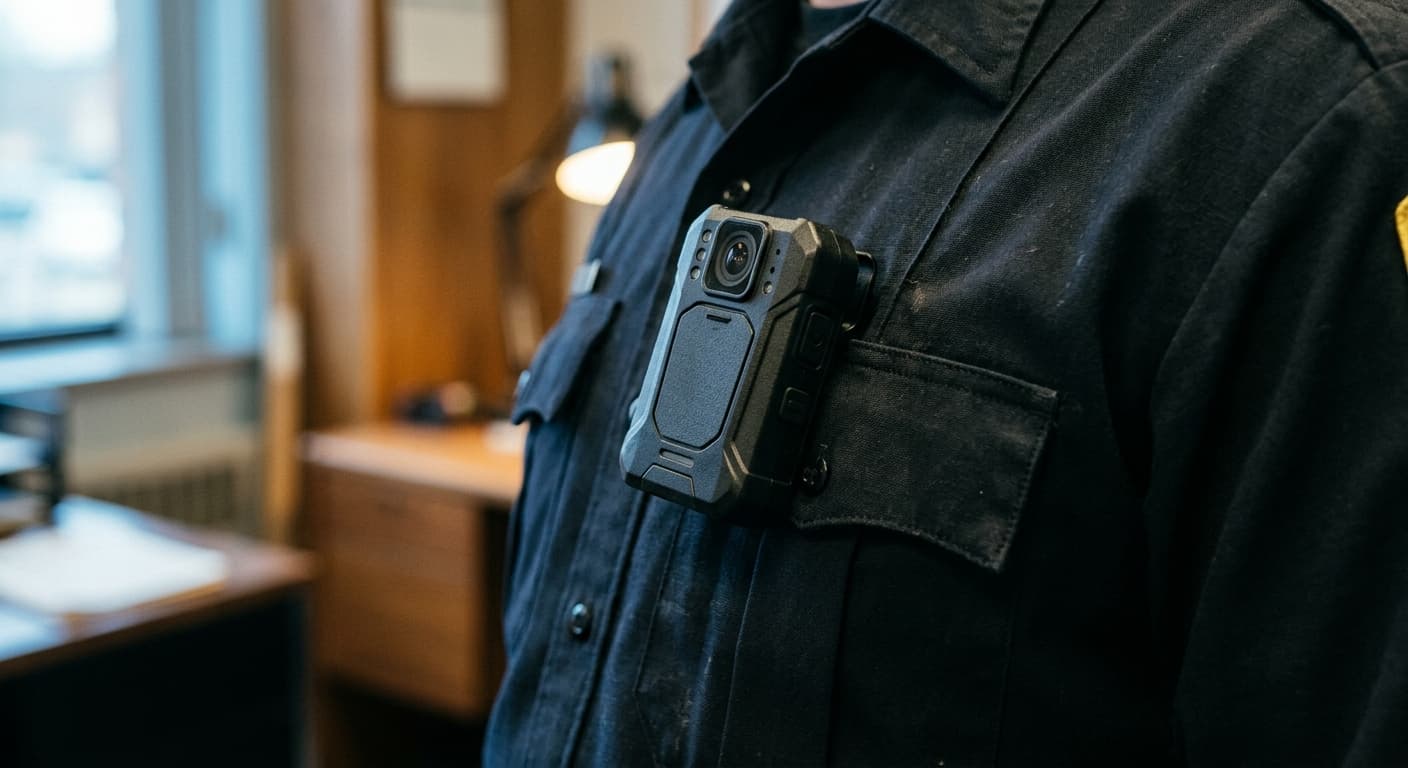
New Mexico law permits recording in public spaces without restriction. The First Amendment protects the right to film on public streets, sidewalks, and parks, and N.M. Stat. Ann. § 30-12-1 covers only telephone and wire communications, so in-person audio recording in public requires no consent from anyone.
New Mexico broadly protects your right to record in public. The state has no law that prohibits photography, video recording, or audio recording in public spaces. The wiretapping statute under N.M. Stat. Ann. § 30-12-1 covers only telephone and wire communications, leaving in-person audio in public spaces entirely unregulated. The First Amendment provides additional constitutional protection for recording activity in public.
This guide explains your public recording rights in New Mexico, including filming on streets and sidewalks, recording at government meetings, filming on private property open to the public, and the limits that apply.
First Amendment Recording Rights
The Constitutional Foundation
The First Amendment protects the right to gather information in public spaces, which includes recording through photography, video, and audio. Federal courts have consistently recognized that recording in public is a form of protected expression and newsgathering.
The Tenth Circuit Court of Appeals, which has jurisdiction over New Mexico, confirmed in Irizarry v. Yehia, 38 F.4th 1282 (10th Cir. Jul. 11, 2022) that there is a First Amendment right to film in public. While that case specifically addressed recording police officers, the underlying principle extends to all public recording.
What You Can Record in Public
In public spaces in New Mexico, you can record:
- People walking on streets and sidewalks
- Buildings, monuments, and public art
- Traffic, vehicles, and street activity
- Public protests, rallies, and demonstrations
- Street performers and public events
- Government buildings (exterior and open-access interior areas)
- Police officers performing their duties
- Anything visible from a public vantage point
Limits on Public Recording
Public recording rights are broad but not absolute:
- You cannot block pedestrian or vehicle traffic while recording
- You cannot trespass on private property to record
- You cannot use recording to facilitate another crime (stalking, harassment)
- Certain government facilities may restrict recording in secure areas
- Court rules may prohibit recording during judicial proceedings
Recording at Government Meetings
The Open Meetings Act
New Mexico's Open Meetings Act (N.M. Stat. Ann. § 10-15-1) requires that meetings of public bodies be open to the public and that "reasonable efforts shall be made to accommodate the use of audio and video recording devices."
This means you can bring recording equipment to:
- City council meetings
- County commission meetings
- School board meetings
- State legislative sessions and committee meetings
- Public hearings
- Meetings of any quorum of a public policymaking body
- Special district board meetings (water, fire, hospital)
What Qualifies as a "Meeting"
Under the Open Meetings Act, a "meeting" includes any gathering of a quorum of members of a public body at which they discuss or act on public business. This covers formal sessions, work sessions, retreats, and informal gatherings where a quorum is present and public business is discussed.
Closed Sessions
Public bodies can close portions of meetings for specific purposes:
- Attorney-client privileged discussions
- Personnel matters involving specific individuals
- Real estate acquisition or disposal negotiations
- Labor negotiations
- Matters subject to the attorney-client privilege
Recording is not permitted during properly closed sessions. However, the public body must vote in open session to close the meeting and state the specific reason.
Enforcement
If a public body violates the Open Meetings Act by refusing to allow recording or holding secret meetings, any person may bring an action in district court under N.M. Stat. Ann. § 10-15-3. The New Mexico Attorney General's office also provides guidance and enforcement support for Open Meetings Act violations.
Recording in Government Buildings

General Access Areas
Areas of government buildings open to the public, such as lobbies, hallways, and service counters, are generally available for recording. You can record:
- Interactions with government employees at service counters
- Conversations you participate in with government officials
- Public areas of courthouses (outside courtrooms)
- Public areas of police stations
- Motor vehicle offices, tax offices, and licensing offices
Restricted Areas
Some government areas may restrict recording:
- Courtrooms during proceedings (subject to court rules and judge's discretion)
- Secure areas of law enforcement facilities (booking areas, holding cells)
- Restricted areas of federal buildings and military installations
- Juvenile court proceedings are typically closed to the public
Recording on Private Property Open to the Public
The General Rule
Private property that is open to the public, such as shopping malls, restaurants, stores, and entertainment venues, presents a middle ground. While you are lawfully on the premises, you can generally record. However, the property owner or manager has the right to:
- Ask you to stop recording
- Ask you to leave the premises
- Call law enforcement if you refuse to leave (trespass)
Until you are asked to stop, recording on private property open to the public is generally not a crime in New Mexico.
Common Scenarios
- Recording in a store: Legal until the store manager asks you to stop
- Recording in a restaurant: Legal in the dining area; staff may ask you to stop
- Recording in a movie theater: Prohibited by federal law if recording the movie itself
- Recording in a hospital waiting room: Legal, but staff may restrict recording near patient care areas
Audio Recording in Public Spaces
No Consent Required for In-Person Audio
Because New Mexico's wiretapping statute covers only telephone and wire communications, in-person audio recording in public spaces requires no consent from anyone. You can:
- Record conversations you participate in
- Record conversations happening in public that you are not part of
- Capture ambient audio while video recording
- Use wearable recording devices with audio capability
This makes New Mexico one of the most permissive states for public audio recording. The primary limitations come from harassment and stalking laws rather than wiretapping restrictions.
When Public Audio Recording Becomes Problematic
Even though the wiretap statute does not apply, recording audio in public can cross legal lines if:
- It constitutes stalking or harassment under New Mexico law
- It is used to intimidate or threaten someone
- It captures audio in areas with a reasonable expectation of privacy (public restrooms, doctor's offices)
- It is part of a pattern of surveillance targeting a specific individual
Recording Public Events
Festivals, Parades, and Public Gatherings
Public events held on public property or in public spaces can be freely recorded. This includes parades, festivals, farmer's markets, concerts in public parks, and community gatherings. Event organizers on public property cannot prohibit recording.
Private Events in Public-Adjacent Spaces
Events held on private property, even if visible from public spaces, may have different rules. The event organizer can set recording policies on their private property. However, you can still record anything visible and audible from a public vantage point.
Sporting Events
Professional and collegiate sporting events typically have ticket terms that restrict recording. These restrictions are enforceable as conditions of entry on private property. Public high school sporting events held on public school property may have different rules based on school district policies.
More New Mexico Recording Laws
Audio Recording | Video Recording | Voyeurism & Hidden Cameras | Workplace Recording | Recording Police | Phone Call Recording | Security Cameras | Recording in Public | Landlord-Tenant | Dashcam Laws | Schools | Medical Recording
Back to New Mexico Recording Laws
More New Mexico Recording Topics
More New Mexico Laws
Frequently Asked Questions
Can I record video in public in New Mexico?
Yes. New Mexico has no law prohibiting video recording in public spaces. The First Amendment protects your right to film on public streets, sidewalks, parks, and other public areas. You can record anything visible from a public vantage point.
Can I record audio of conversations in public without consent in New Mexico?
Yes. New Mexico's wiretapping statute only covers telephone and wire communications. In-person conversations in public are not regulated by the wiretap law, so no consent is required to record audio in public spaces.
Can I record a city council meeting in New Mexico?
Yes. The Open Meetings Act (N.M. Stat. Ann. § 10-15-1) requires public bodies to accommodate audio and video recording devices during open meetings. This applies to city councils, county commissions, school boards, and all other public bodies.
Can a store manager tell me to stop recording in New Mexico?
Yes. While recording on private property open to the public is not illegal, the property owner or manager can ask you to stop and ask you to leave. If you refuse to leave after being asked, you may face trespass charges.
Can I film inside a New Mexico courthouse?
You can generally record in public areas of courthouses such as lobbies and hallways. Recording inside courtrooms during proceedings is subject to the judge's discretion and court rules. Always check with court staff before recording in a courtroom.
Updates
Replaced a dead New Mexico public-records office citation with the current live page.
Independently fact-checked against the cited primary sources; governing law re-checked for recent changes
Governing law re-checked for recent changes
Reviewed and approved by an editor
The Law Behind This Article
This article rests on the statutory provisions below, held in our own legal record and retrieved from the official source. Tap a section to read the operative text.
New Mexico Statutes Annotated 1978, Chapter 30
§ 30-12-1Interference with communications; exceptionIn forcecited in 37 of our articles
Interference with communications consists of knowingly and without lawful authority: A. displacing, removing, injuring or destroying any radio station, television tower, antenna or cable, telegraph or telephone line, wire, cable, pole or conduit belonging to another, or the material or property appurtenant thereto; B. cutting, breaking, tapping or making any connection with any telegraph or telephone line, wire, cable or instrument belonging to or in the lawful possession or control of another, without the consent of such person owning, possessing or controlling such property; C. reading, interrupting, taking or copying any message, communication or report intended for another by telegraph or telephone without the consent of a sender or intended recipient thereof; D. preventing, obstructing or delaying the sending, transmitting, conveying or delivering in this state of any message, communication or report by or through telegraph or telephone; or E. using any apparatus to do or cause to be done any of the acts hereinbefore mentioned or to aid, agree with, comply or conspire with any person to do or permit or cause to be done any of the acts hereinbefore mentioned.
Official text (excerpt) · last checked 2026-08-28 · Read the full text in our law library · Verify at nmonesource.com
Cited in 19 court opinions in our collectionLatest citing opinion in our collection: 2025
In the courts (editorial summary, independently checked):State v. Johnson (2010) held the consent exception in 30-12-1(E)(3) applies to jail calls where the caller impliedly consents by calling with knowledge the call is recorded. State v. Templeton (2007) found a call from the booking area, recorded with no notice, violated the Act, while a call placed after a recorded notice did not.
Opinions citing this section in our collection:
- State v. Johnson (New Mexico Supreme Court 2010, 148 N.M. 50)✓A jail inmate awaiting a murder retrial made recorded calls asking others to appear at trial and influence testimony; the court held the statute was not violated because an automated message warned both sides, so its prior consent exception applied.
- State v. Ocon (New Mexico Court of Appeals 2021, 493 P.3d 448)“…63); and interference with communications, in violation of NMSA 1978, Section 30-12-1 (1979). On those charges, the jury only…”
- State v. Templeton (New Mexico Court of Appeals 2007, 142 N.M. 369)✓Two of a jailed defendant's phone calls were recorded; the court held the statute was violated as to the booking-area call, where no notice was given and guarded speech did not imply consent, but not as to a later call from a phone that announced monitoring.
Identified automatically from the court opinions citing this section — not a ranking of which case controls.
New Mexico Statutes Annotated 1978, Chapter 10
§ 10-15-1Formation of public policy; procedures for open meetings; exceptions and procedures for closed meetings.In forcecited in 10 of our articles
A. In recognition of the fact that a representative government is dependent upon an informed electorate, it is declared to be public policy of this state that all persons are entitled to the greatest possible information regarding the affairs of government and the official acts of those officers and employees who represent them. The formation of public policy or the conduct of business by vote shall not be conducted in closed meeting. All meetings of any public body except the legislature and the courts shall be public meetings, and all persons so desiring shall be permitted to attend and listen to the deliberations and proceedings. Reasonable efforts shall be made to accommodate the use of audio and video recording devices. B.
Official text (excerpt) · last checked 2026-07-30 · Read the full text in our law library · Verify at nmonesource.com
Cited in 44 court opinions in our collectionLatest citing opinion in our collection: 2025
Opinions citing this section in our collection:
- Anaya v. City of Albuquerque (New Mexico Court of Appeals 1996, 122 N.M. 326)“…eged private meetings between April 1990 and February 1991. NMSA 1978, §§ 10-15-1 to -4 (Repl.Pamp.1995). See generally G…”
- Chavez v. City of Albuquerque (New Mexico Court of Appeals 1997, 124 N.M. 479)“…ess of law), and violations of the Open Meetings Act (OMA), NMSA 1978, §§ 10-15-1 to -4 (1974) in the promulgation of the…”
- Trujillo v. Gonzales (New Mexico Supreme Court 1987, 106 N.M. 620)“…meeting held in accordance with the Open Meetings Act. See NMSA 1978, §§ 10-15-1 to 10-15-4 (Repl.Pamp.1983). Although S…”
Identified automatically from the court opinions citing this section — not a ranking of which case controls.
§ 10-15-3Invalid actions; standingIn forcecited in 2 of our articles
A. No resolution, rule, regulation, ordinance or action of any board, commission, committee or other policymaking body shall be valid unless taken or made at a meeting held in accordance with the requirements of Section 10-15-1 NMSA 1978. Every resolution, rule, regulation, ordinance or action of any board, commission, committee or other policymaking body shall be presumed to have been taken or made at a meeting held in accordance with the requirements of Section 10-15-1 NMSA 1978. B. All provisions of the Open Meetings Act shall be enforced by the attorney general or by the district attorney in the county of jurisdiction. However, nothing in that act shall prevent an individual from independently applying for enforcement through the district courts, provided that the individual first provides written notice of the claimed violation to the public body and that the public body has denied or not acted on the claim within fifteen days of receiving it. A public meeting held to address a claimed violation of the Open Meetings Act shall include a summary of comments made at the meeting at which the claimed violation occurred. C.
Official text (excerpt) · last checked 2026-07-30 · Read the full text in our law library · Verify at nmonesource.com
Cross-referenced in the statute itself: § 10-15-1
Cited in 9 court opinions in our collectionLatest citing opinion in our collection: 2021
Opinions citing this section in our collection:
- Chavez v. City of Albuquerque (New Mexico Court of Appeals 1997, 124 N.M. 479)“…whether any statute or ordinance was invalid. I do not read NMSA 1978 Section 10-15-3(0 (1993), which gives the district cour…”
- Trujillo v. Gonzales (New Mexico Supreme Court 1987, 106 N.M. 620)“…y and, thus, not a valid act capable of binding the county. NMSA 1978, Section 10-15-3 provides that no action of any commissi…”
- Silva v. Town of Springer (New Mexico Court of Appeals 1996, 121 N.M. 428)“…ng the county.” Id. at 621 , 747 P.2d at 916 (citing NMSA 1978, Section 10-15-3 (Repl.Pamp.1983)). The Trujillo Court a…”
Identified automatically from the court opinions citing this section — not a ranking of which case controls.
United States Code Title 18
§ 2511Interception and disclosure of wire, oral, or electronic communications prohibitedIn forcecited in 422 of our articles
Except as otherwise specifically provided in this chapter any person who— intentionally intercepts, endeavors to intercept, or procures any other person to intercept or endeavor to intercept, any wire, oral, or electronic communication; intentionally uses, endeavors to use, or procures any other person to use or endeavor to use any electronic, mechanical, or other device to intercept any oral communication when— such device is affixed to, or otherwise transmits a signal through, a wire, cable, or other like connection used in wire communication; or such device transmits communications by radio, or interferes with the transmission of such communication; or such person knows, or has reason to know, that such device or any component thereof has been sent through the mail or transported in interstate or foreign commerce; or such use or endeavor to use (A) takes place on the premises of any business or other commercial establishment the operations of which affect interstate or foreign commerce; or (B) obtains or is for the purpose of obtaining information relating to the operations of any business or other commercial establishment the operations of which affect interstate or foreign…
Official text (excerpt) · last checked 2026-09-17 · Read the full text in our law library · Verify at uscode.house.gov
Cited in 2,045 court opinions in our collectionLatest citing opinion in our collection: 2026
In the courts (editorial summary, independently checked):Griggs-Ryan v. Smith (1990) applied the Section 2511(2)(d) prior-consent exception, treating a tenant repeatedly told that all incoming calls were taped as having impliedly consented. United States v. United States District Court (1972) read the then-current Section 2511(3) as conferring no presidential surveillance power.
Opinions citing this section in our collection:
- Mitchell v. Forsyth (Supreme Court of the United States 1985, 472 U.S. 511)✓The Attorney General authorized a warrantless 1970 national security wiretap that caught the plaintiff's calls; the Court held the since-repealed Section 2511(3) disclaimer left the tap lawful under Title III, and that Mitchell had qualified immunity.
- United States v. United States District Court for the Eastern District of Michigan (Supreme Court of the United States 1972, 407 U.S. 297)✓The Attorney General approved warrantless wiretaps on members of a domestic group accused of bombing a CIA office; the Court read Section 2511(3) as a congressional disclaimer conferring no surveillance power, then held the Fourth Amendment required prior judicial approval.
- Forsyth v. Barr (Court of Appeals for the Fifth Circuit 1994, 19 F.3d 1527)✓Dallas police used, in an internal affairs probe of an officer, calls private parties allegedly intercepted illegally; assuming that was unlawful, the Fifth Circuit held Section 2517(1) and (2) allowed the disclosure and use, defeating the Section 2511(1)(c) and (d) claims.
Identified automatically from the court opinions citing this section — not a ranking of which case controls.
Explore the law
The laws cited above reference these related sections in their own text:
- New Mexico Statutes Annotated 1978, Chapter 30 § 30-12-11 — Right of privacy; damages view in our statute record · read at the official source
- New Mexico Statutes Annotated 1978, Chapter 30 § 30-12-2 — Grounds for order of interception view in our statute record · read at the official source
Related law for further reading — not part of this article’s citations.
Search our full record of US law — 2.1 million sections, every state + federal →
Sources and References
- N.M. Stat. Ann. § 30-12-1(nmonesource.com).gov
- NM AG Open Government(nmdoj.gov).gov
- NM Legislature(nmlegis.gov).gov
- N.M. Stat. Ann. § 10-15-1 - Open Meetings Act(law.justia.com)
- 18 U.S.C. § 2511 - Federal Wiretap Act(law.cornell.edu)