
New Mexico
New Mexico Security Camera Laws: Home, Business, and HOA Rules (2026)
Independently fact-checked against primary sources (last audited August 15, 2026). · Reviewed by the RecordingLaw editorial team. · Law checked current as of August 15, 2026. · 4 primary sources cited on this page. How we verify our legal content
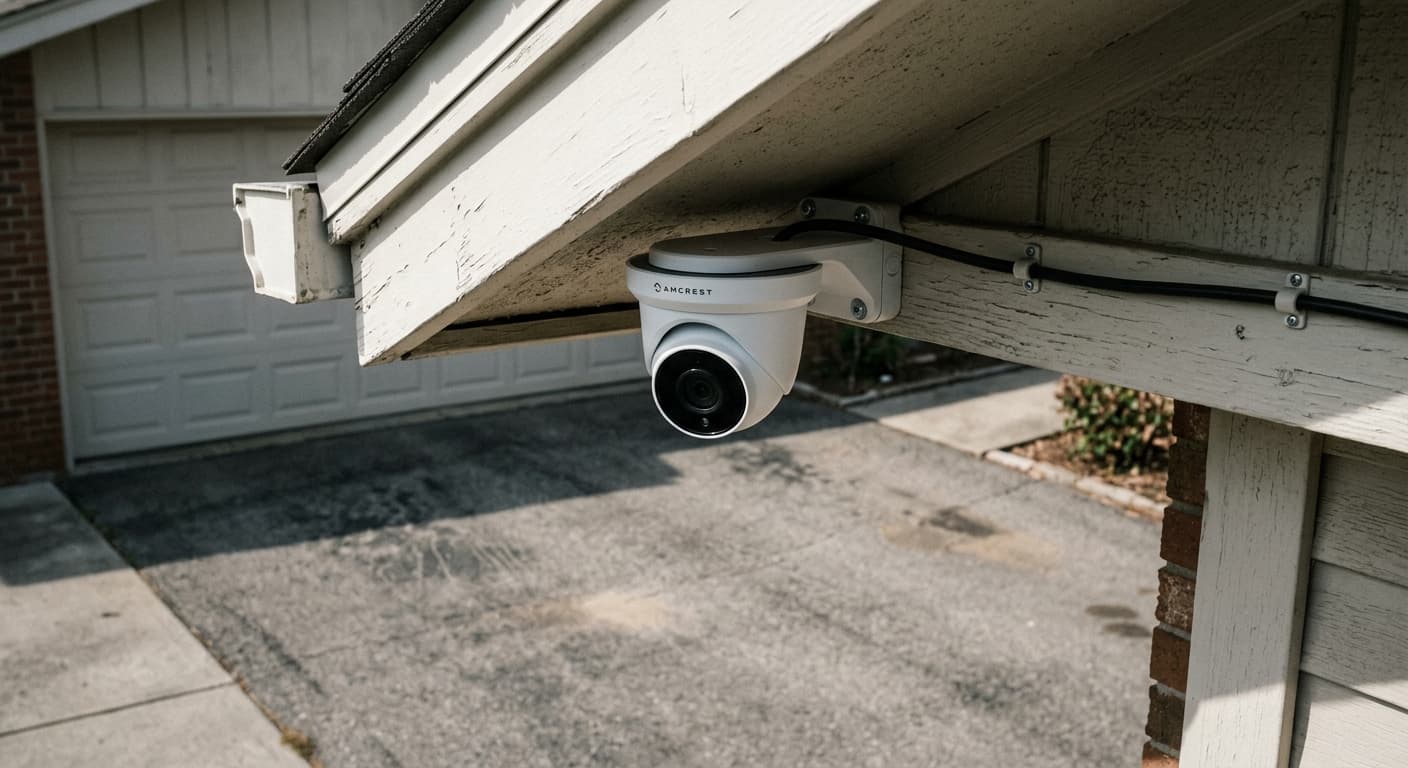
New Mexico allows homeowners and businesses to install security cameras on their own property without permits or registration. Silent video surveillance of your own property is generally legal, but cameras may not record areas where others have a reasonable expectation of privacy under N.M. Stat. Ann. § 30-9-20.
New Mexico does not have a comprehensive state statute specifically regulating the installation and use of security cameras. Residents and businesses can install surveillance systems without obtaining permits or registering with any government agency. However, other laws, including the voyeurism statute under N.M. Stat. Ann. § 30-9-20 and general privacy principles, place limits on where cameras can be aimed and what they can record.
This guide covers everything you need to know about security camera laws in New Mexico, including residential camera rules, business surveillance requirements, audio recording by security cameras, HOA restrictions, and neighbor dispute resolution.
Residential Security Cameras
Your Right to Install Cameras on Your Property
New Mexico homeowners can install security cameras on their own property without government permission. You can place cameras:
- On the exterior of your home (doorbell cameras, porch cameras, driveway cameras)
- In interior common areas (living rooms, kitchens, hallways, garages)
- Aimed at your own yard, driveway, and walkways
- Covering entry points (front door, back door, windows, gates)
Where You Cannot Aim Cameras
Security cameras must respect the privacy of others. You should not:
- Aim cameras directly into a neighbor's windows, bedrooms, or bathrooms
- Position cameras to capture private areas of adjacent properties (pools with privacy fencing, enclosed patios)
- Install cameras in guest bathrooms or guest bedrooms without disclosure
- Use cameras with powerful zoom capabilities to surveil neighboring properties
Cameras aimed at areas where others have a reasonable expectation of privacy may violate the voyeurism statute under N.M. Stat. Ann. § 30-9-20 or give rise to civil invasion of privacy claims.
Nanny Cams and Indoor Cameras
Nanny cameras and indoor security cameras are legal in New Mexico in common areas of your home. You can use hidden or visible cameras in:
- Living rooms and family rooms
- Kitchens and dining areas
- Playrooms and nurseries
- Home offices
- Garages and basements
You should not place cameras in bathrooms, guest bedrooms, or any area where a caregiver or visitor would reasonably expect privacy.
Audio Recording on Security Cameras
Many modern security cameras include audio recording capabilities. Under New Mexico's wiretapping statute (N.M. Stat. Ann. § 30-12-1), only "telegraph or telephone" communications are covered. In-person conversations captured by security cameras are not regulated by the wiretap statute.
This means security camera audio recording of face-to-face conversations in New Mexico does not require consent from the people being recorded. However, best practice is to post signs informing visitors that audio and video recording is in progress.
Business Security Cameras
Employer and Business Owner Rights
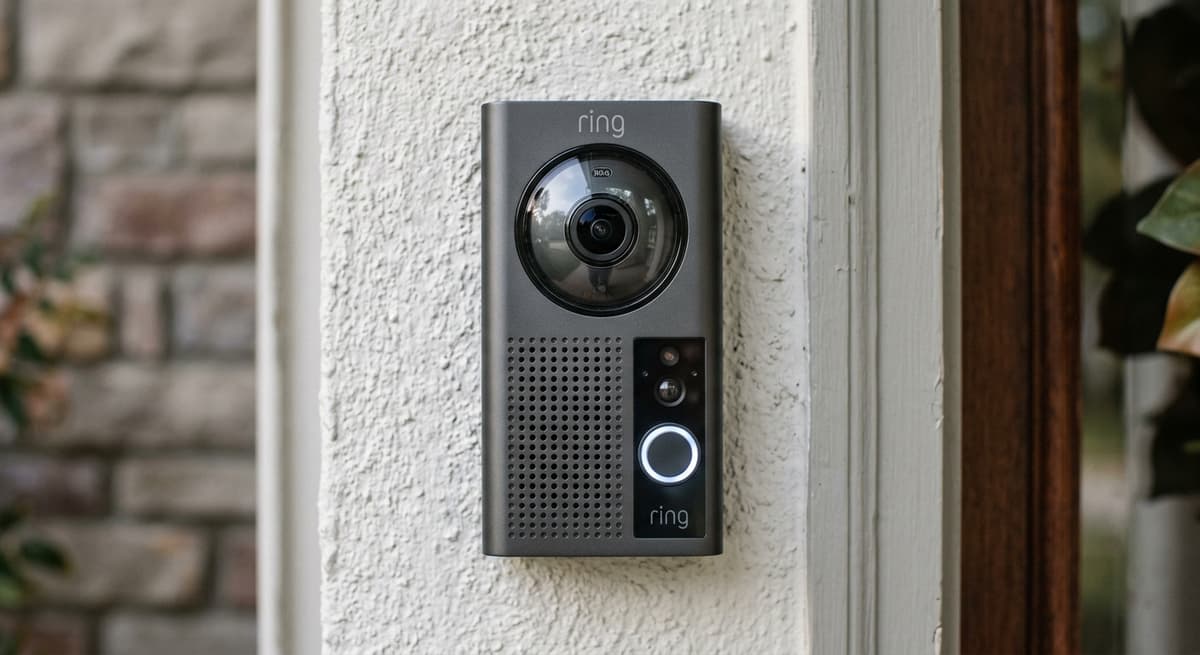
New Mexico businesses can install security cameras in areas where employees and customers do not have a reasonable expectation of privacy:
- Retail floors and sales areas for theft prevention
- Cash registers and checkout areas for transaction monitoring
- Warehouses and loading docks for inventory control
- Parking lots and exterior areas for safety
- Lobbies and reception areas for visitor management
- Hallways and common corridors for general security
Areas Where Business Cameras Are Prohibited
Businesses cannot install cameras in:
- Employee bathrooms and restrooms
- Locker rooms and changing areas
- Nursing and lactation rooms
- Customer dressing rooms and fitting rooms
- Medical examination areas
Placing cameras in these locations violates the voyeurism statute and can result in criminal charges and civil liability.
Signage and Notification
New Mexico does not require businesses to post signs about security cameras. However, posting "Premises under video surveillance" signs is recommended because it:
- Deters theft and vandalism
- Provides notice to employees and customers
- Strengthens the legal position if footage is needed as evidence
- Demonstrates good faith in privacy practices
HOA and Community Rules
HOA Restrictions on Security Cameras
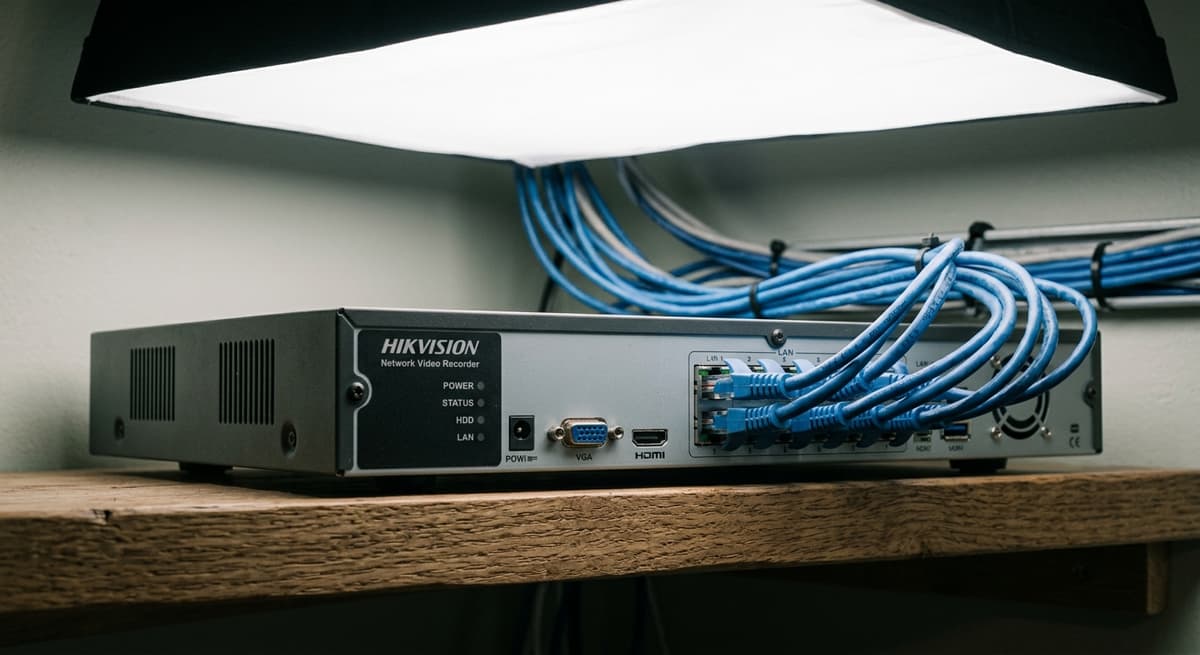
Homeowners' associations in New Mexico can establish rules about security camera installation in common areas and on the exteriors of homes within the community. Common HOA restrictions include:
- Limits on the size and visibility of exterior cameras
- Requirements for camera placement that does not affect community aesthetics
- Prohibitions on cameras aimed at common areas managed by the HOA
- Rules about camera mounting locations on building exteriors
Review your HOA's covenants, conditions, and restrictions (CC&Rs) before installing exterior cameras. Violations of CC&Rs can result in fines or mandatory removal of cameras.
HOA Common Area Surveillance
HOAs can install security cameras in community common areas such as:
- Pool areas (exterior, not changing rooms)
- Clubhouses and fitness centers
- Parking garages and lots
- Entry gates and lobby areas
- Mail rooms and package delivery areas
Neighbor Disputes Over Security Cameras
Common Conflicts
Security camera disputes between neighbors typically involve:
- Cameras aimed at a neighbor's yard, windows, or private areas
- Cameras that record a neighbor's driveway or front door
- Audio recording that captures neighbor conversations
- Bright infrared lights that disturb neighbors at night
Resolution Steps
- Talk to your neighbor directly about your concerns
- Review local ordinances for any municipal camera regulations
- Request mediation through a local dispute resolution service
- Consult the New Mexico Attorney General's office for guidance on privacy rights
- File a civil lawsuit for invasion of privacy if cameras clearly record private areas
- Contact law enforcement if cameras constitute voyeurism under § 30-9-20
What Courts Consider
New Mexico courts evaluating security camera disputes consider:
- Whether the camera captures areas where the plaintiff has a reasonable expectation of privacy
- Whether the camera serves a legitimate security purpose
- Whether the camera could be repositioned to address security needs without invading privacy
- The severity of the privacy intrusion
Ring Doorbells and Smart Cameras
Legal Status in New Mexico
Ring doorbells, Nest cameras, Arlo cameras, and similar smart home devices are legal in New Mexico. These devices typically record the area immediately around your front door, porch, and walkway.
Law Enforcement Access
Law enforcement in New Mexico can request security camera footage from homeowners, but homeowners are not required to provide it without a warrant or court order. Some smart camera companies have policies about law enforcement data requests. Review your device manufacturer's privacy policy to understand how they handle government requests.
Data Storage and Privacy
Smart security cameras that store footage in the cloud are subject to the terms of service of the cloud provider. Consider:
- How long footage is retained
- Who has access to stored footage
- Whether footage can be shared with law enforcement without your consent
- Encryption and security measures for stored data
Using Security Camera Footage as Evidence
Security camera footage is commonly used as evidence in New Mexico courts for:
- Property crime cases (burglary, theft, vandalism)
- Personal injury claims (slip and fall, dog bites)
- Domestic disputes and protective order proceedings
- Traffic accidents captured by exterior cameras
- Insurance claims
To maximize the evidentiary value of security camera footage, preserve the original file, document the camera's location and settings, and provide footage to law enforcement or your attorney promptly.
More New Mexico Recording Laws
Audio Recording | Video Recording | Voyeurism & Hidden Cameras | Workplace Recording | Recording Police | Phone Call Recording | Security Cameras | Recording in Public | Landlord-Tenant | Dashcam Laws | Schools | Medical Recording
Back to New Mexico Recording Laws
More New Mexico Recording Topics
See Also
- New Mexico Surveillance Camera Laws covers home, HOA, neighbor, workplace, and landlord camera rules in New Mexico.
More New Mexico Laws
Frequently Asked Questions
Do I need a permit to install security cameras in New Mexico?
No. New Mexico does not require permits or registration for residential or commercial security cameras. You can install cameras on your own property without government approval, though HOA rules may impose additional requirements.
Can my neighbor point a security camera at my house in New Mexico?
A neighbor can have a camera that incidentally captures parts of your property visible from their property. However, cameras specifically aimed at your windows, bedrooms, or private areas may violate the voyeurism statute or give rise to civil invasion of privacy claims.
Do security cameras with audio violate New Mexico wiretapping laws?
No. New Mexico's wiretapping statute only covers telephone and wire communications. In-person conversations captured by security camera audio are not regulated by the wiretap law. However, posting notice of audio recording is recommended as a best practice.
Can my landlord install cameras inside my apartment in New Mexico?
No. Tenants have a reasonable expectation of privacy inside their rental units. Landlords can install cameras in common areas like hallways, lobbies, and parking lots, but not inside individual units. Hidden cameras in rental units can result in voyeurism charges.
Can police access my security camera footage without a warrant?
Police can ask for your footage, but you are not required to provide it without a warrant or court order. You can voluntarily share footage with law enforcement. Review your smart camera provider's privacy policy regarding law enforcement data requests.
Updates
Replaced a dead FTC home-security-camera citation with the FTC's current live article on the topic.
Independently fact-checked against the cited primary sources; governing law re-checked for recent changes
Governing law re-checked for recent changes
Reviewed and approved by an editor
The Law Behind This Article
This article rests on the statutory provisions below, held in our own legal record and retrieved from the official source. Tap a section to read the operative text.
New Mexico Statutes Annotated 1978, Chapter 30
§ 30-9-20Voyeurism prohibited; penaltiesIn forcecited in 26 of our articles
A. Voyeurism consists of intentionally using the unaided eye to view or intentionally using an instrumentality to view, photograph, videotape, film, webcast or record the intimate areas of another person without the knowledge and consent of that person: (1) while the person is in the interior of a bedroom, bathroom, changing room, fitting room, dressing room or tanning booth or the interior of any other area in which the person has a reasonable expectation of privacy; or (2) under circumstances where the person has a reasonable expectation of privacy, whether in a public or private place. B. Whoever commits voyeurism is guilty of a misdemeanor, except if the victim is less than eighteen years of age, the offender is guilty of a fourth degree felony. C. As used in this section: (1) "intimate areas" means the primary genital area, groin, buttocks, anus or breasts or the undergarments that cover those areas; and (2) "instrumentality" means a periscope, telescope, binoculars, camcorder, computer, motion picture camera, digital camera, telephone camera, photographic camera or electronic device of any type.
Official text (excerpt) · last checked 2026-08-31 · Read the full text in our law library · Verify at nmonesource.com
Cited in 10 court opinions in our collectionLatest citing opinion in our collection: 2026
In the courts (editorial summary, independently checked):The New Mexico cases citing Section 30-9-20 reach it as a charge rather than construing its elements. State v. Webb (2017) involved voyeurism counts under 30-9-20(A)(1) over hidden bathroom video of a minor but decided only mandatory joinder. State v. Myers (2009) noted the section was not enacted until 2007.
Opinions citing this section in our collection:
- Kerr v. Parsons (New Mexico Supreme Court 2016, 10 N.M. 227)“…llo, 23 charging him with counts of voyeurism, contrary to NMSA 1978, Section 30-9-20 24 (2007), possession of a controlled…”
- State v. Myers (New Mexico Court of Appeals 2009, 147 N.M. 574)✓Myers hid a camera in an office restroom in 2004 to record women and was convicted of child pornography. The court noted voyeurism under 30-9-20 was not a crime until 2007 and held that applying a later "voyeuristic quality" test to his 2004 conduct violated due process.
- State v. Webb (New Mexico Court of Appeals 2017, 2017 NMCA 77)“…dant with voyeurism (child under eighteen), in violation of NMSA 1978, Section 30-9-20(A)(1) (2007), attempted voyeurism (chil…”
Identified automatically from the court opinions citing this section — not a ranking of which case controls.
Also relied on in: New Mexico Smart Glasses Recording Laws (2026), New Mexico Recording Laws (2026): One-Party Consent Rules, New Mexico Audio Recording Laws: One-Party Consent Rules and Penalties (2026)
§ 30-12-1Interference with communications; exceptionIn forcecited in 37 of our articles
Interference with communications consists of knowingly and without lawful authority: A. displacing, removing, injuring or destroying any radio station, television tower, antenna or cable, telegraph or telephone line, wire, cable, pole or conduit belonging to another, or the material or property appurtenant thereto; B. cutting, breaking, tapping or making any connection with any telegraph or telephone line, wire, cable or instrument belonging to or in the lawful possession or control of another, without the consent of such person owning, possessing or controlling such property; C. reading, interrupting, taking or copying any message, communication or report intended for another by telegraph or telephone without the consent of a sender or intended recipient thereof; D. preventing, obstructing or delaying the sending, transmitting, conveying or delivering in this state of any message, communication or report by or through telegraph or telephone; or E. using any apparatus to do or cause to be done any of the acts hereinbefore mentioned or to aid, agree with, comply or conspire with any person to do or permit or cause to be done any of the acts hereinbefore mentioned.
Official text (excerpt) · last checked 2026-08-28 · Read the full text in our law library · Verify at nmonesource.com
Cited in 19 court opinions in our collectionLatest citing opinion in our collection: 2025
In the courts (editorial summary, independently checked):State v. Johnson (2010) held the consent exception in 30-12-1(E)(3) applies to jail calls where the caller impliedly consents by calling with knowledge the call is recorded. State v. Templeton (2007) found a call from the booking area, recorded with no notice, violated the Act, while a call placed after a recorded notice did not.
Opinions citing this section in our collection:
- State v. Johnson (New Mexico Supreme Court 2010, 148 N.M. 50)✓A jail inmate awaiting a murder retrial made recorded calls asking others to appear at trial and influence testimony; the court held the statute was not violated because an automated message warned both sides, so its prior consent exception applied.
- State v. Ocon (New Mexico Court of Appeals 2021, 493 P.3d 448)“…63); and interference with communications, in violation of NMSA 1978, Section 30-12-1 (1979). On those charges, the jury only…”
- State v. Templeton (New Mexico Court of Appeals 2007, 142 N.M. 369)✓Two of a jailed defendant's phone calls were recorded; the court held the statute was violated as to the booking-area call, where no notice was given and guarded speech did not imply consent, but not as to a later call from a phone that announced monitoring.
Identified automatically from the court opinions citing this section — not a ranking of which case controls.
Also relied on in: New Mexico Video Recording Laws: Surveillance, Filming, and Consent Rules (2026), New Mexico Voyeurism and Hidden Camera Laws: § 30-9-20 Penalties (2026), New Mexico Dashcam Laws: Windshield Mounting, Audio, and Evidence Rules (2026)
Explore the law
The laws cited above reference these related sections in their own text:
- New Mexico Statutes Annotated 1978, Chapter 30 § 30-12-11 — Right of privacy; damages view in our statute record · read at the official source
- New Mexico Statutes Annotated 1978, Chapter 30 § 30-12-2 — Grounds for order of interception view in our statute record · read at the official source
Related law for further reading — not part of this article’s citations.
Search our full record of US law — 2.1 million sections, every state + federal →
Sources and References
- N.M. Stat. Ann. § 30-12-1(nmonesource.com).gov
- NM Attorney General(nmag.gov).gov
- NM Legislature(nmlegis.gov).gov
- FTC Home Security(consumer.ftc.gov).gov
- N.M. Stat. Ann. § 30-9-20 - Voyeurism(law.justia.com)