
New Mexico
New Mexico School Recording Laws: Students, Parents, and Teacher Rights (2026)
Independently fact-checked against primary sources (last audited August 15, 2026). · Reviewed by the RecordingLaw editorial team. · Law checked current as of August 15, 2026. · 5 primary sources cited on this page. How we verify our legal content
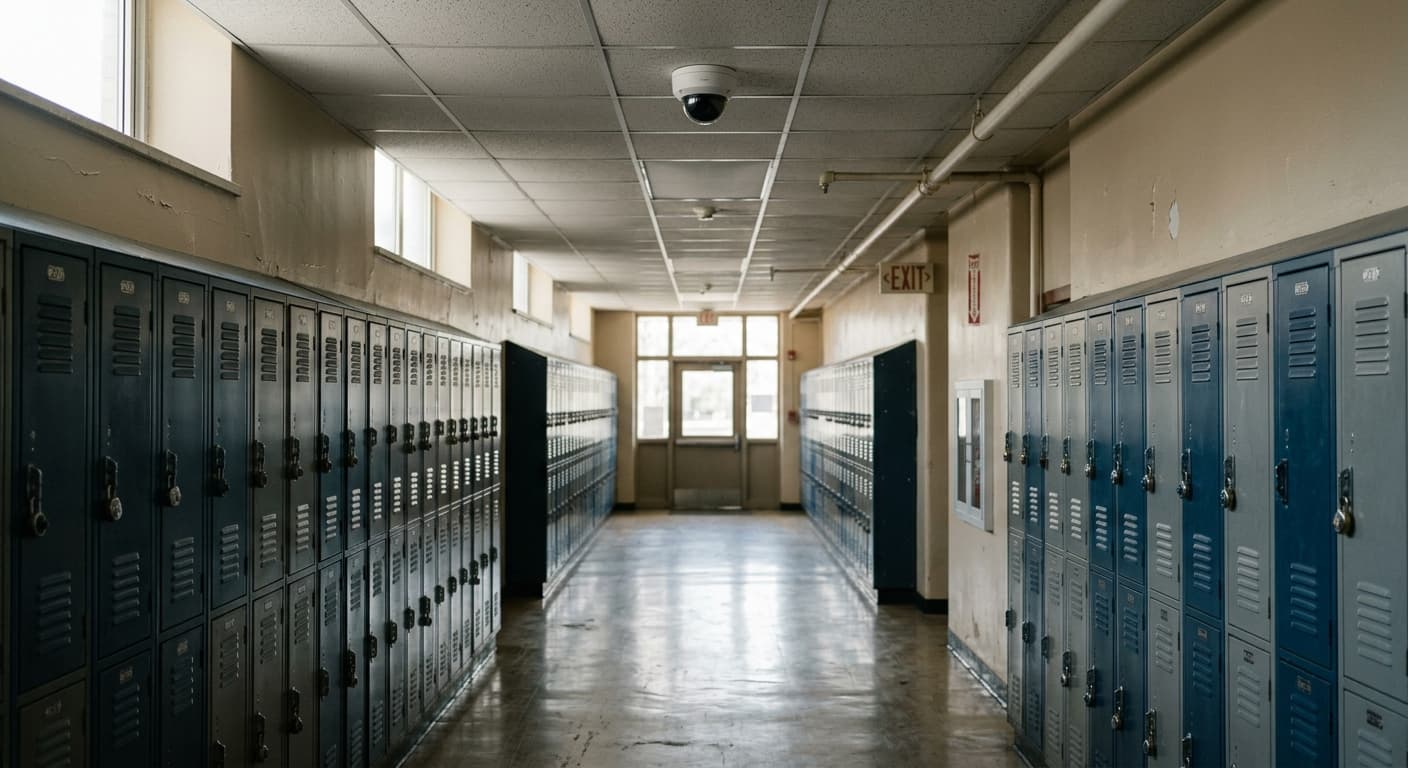
In New Mexico, students and parents may record in-person school conversations without consent because N.M. Stat. Ann. § 30-12-1 applies only to telephone and wire communications, not face-to-face interactions. FERPA separately governs the privacy of student education records held by schools.
Recording in New Mexico schools involves a balance between student privacy, parent rights, school security, and federal education privacy laws. New Mexico's wiretapping statute under N.M. Stat. Ann. § 30-12-1 covers only telephone and wire communications, so in-person conversations in school settings can be recorded without consent. However, schools can set their own policies, and federal laws like FERPA add additional privacy layers.
This guide covers student recording rights, parent recording at school events and meetings, school surveillance cameras, IEP and special education meeting recording, and the interaction between state and federal law.
Student Recording Rights
Can Students Record in School?
Under New Mexico state law, students can record in-person conversations they participate in without consent from teachers, administrators, or other students. The wiretapping statute does not apply to face-to-face communications.
However, school district policies may restrict recording on campus. Districts have authority to set rules about student conduct, including use of electronic devices. Common restrictions include:
- No phone or recording device use during class time
- Recording prohibited during tests and examinations
- No recording in locker rooms, bathrooms, or changing areas
- Prior approval required for recording school events
Students who violate school recording policies may face disciplinary consequences (detention, suspension) but not criminal charges under the wiretapping statute.
Recording to Document Bullying
Students who experience bullying may want to record incidents as evidence. Under New Mexico's Safe Schools for All Students Act (N.M. Stat. Ann. § 22-35-3), which replaced the former anti-bullying statute, every local school board must adopt and enforce policies to prevent bullying. Recordings can help:
- Document incidents for school administrators
- Support complaints to the school board
- Provide evidence for legal proceedings if bullying rises to criminal conduct
- Create a record of the school's response to reports
Recording for Disability Accommodations
Students with disabilities may have recording accommodations built into their Individualized Education Programs (IEPs) or Section 504 plans. The New Mexico Public Education Department (PED) oversees special education compliance. Common accommodations include:
- Permission to audio record lectures and class discussions
- Use of recording devices as assistive technology
- Note-taking accommodations that include recording
Parent Recording Rights

Recording Conversations with School Staff
Parents can record in-person conversations with teachers, principals, counselors, and other school staff without consent. The wiretapping statute does not apply to face-to-face conversations. Common situations where parents record include:
- Parent-teacher conferences
- Meetings about student discipline
- Conversations about academic concerns
- Discussions about bullying or safety issues
- Enrollment and registration meetings
For phone calls with school staff, one-party consent applies under § 30-12-1, and the parent satisfies the requirement as a participant.
Recording IEP and 504 Meetings
Parents have a strong interest in recording Individualized Education Program (IEP) meetings and Section 504 plan meetings. Federal law under the Individuals with Disabilities Education Act (IDEA) does not explicitly address recording of IEP meetings, and the U.S. Department of Education has stated that recording decisions should be made at the state or local level.
In New Mexico:
- State law permits recording because in-person conversations are not covered by the wiretapping statute
- School district policies may require advance notice that a parent intends to record
- The school may also record if the parent records, to maintain equal documentation
- Recordings that capture other students' information may be subject to FERPA restrictions on sharing
Best practice: Notify the school in advance that you plan to record the IEP meeting. This helps maintain a cooperative relationship with the IEP team.
Recording School Board Meetings
School board meetings are public meetings subject to the Open Meetings Act (N.M. Stat. Ann. § 10-15-1). The law requires public bodies to make "reasonable efforts" to accommodate audio and video recording devices. Parents and community members can record open school board sessions.
School Surveillance Cameras
Where Schools Can Place Cameras
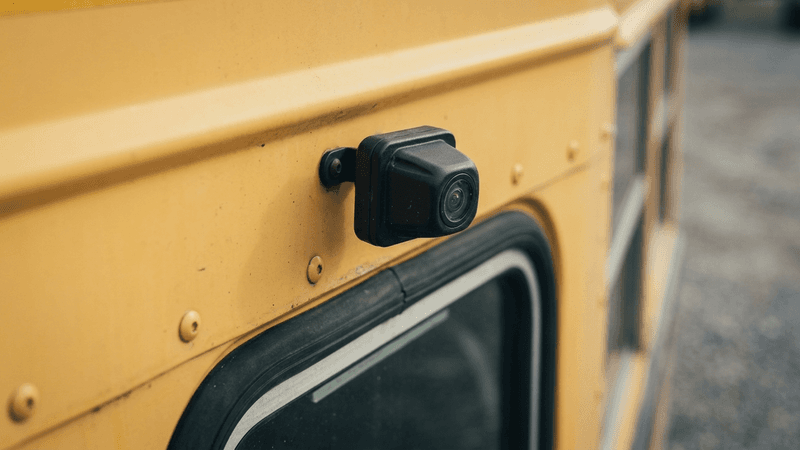
New Mexico school districts routinely install surveillance cameras for safety and security. Appropriate locations include:
- Hallways and corridors for monitoring student movement
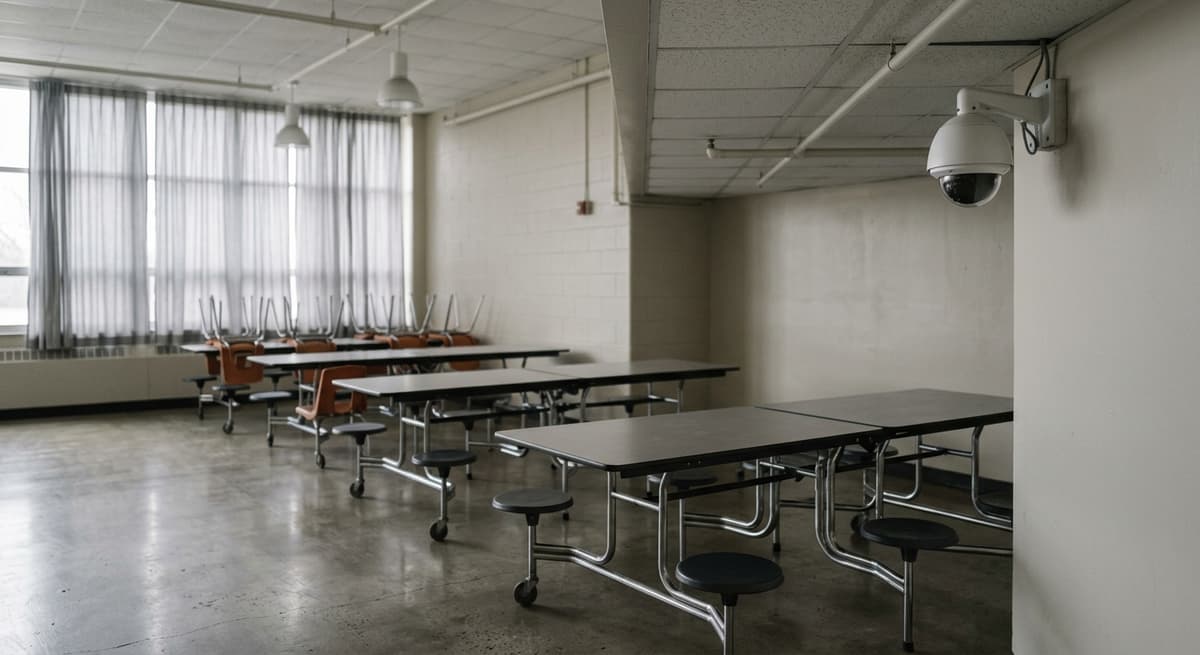
- Cafeterias and common areas for general safety
- School entrances and exits for visitor management
- Parking lots and bus loading areas for vehicle safety
- Gymnasiums during open hours (not during changing)
- Library and media center areas
- School buses for student conduct monitoring
Where Schools Cannot Place Cameras
Schools cannot install cameras in areas where students have a reasonable expectation of privacy:
- Bathrooms and restrooms
- Locker rooms and changing areas
- Shower areas
- Nurse's offices during examinations
- Counselor's offices during confidential sessions (may vary by district)
Cameras in locations involving undress, such as bathrooms, locker rooms, and shower areas, would violate the voyeurism statute under N.M. Stat. Ann. § 30-9-20 and could expose the school district to criminal and civil liability. Cameras in nurse's or counselor's offices raise separate confidentiality concerns under FERPA and school policy, even though they would not independently trigger the voyeurism statute unless they captured a student's intimate areas.
Audio Recording on School Cameras
Some school security systems include audio recording. Since in-person conversations are not covered by New Mexico's wiretapping statute, audio recording in school common areas does not violate state wiretap law. However, schools should consider the privacy implications and notify students and staff about audio surveillance.
FERPA and Student Privacy
What FERPA Requires
The Family Educational Rights and Privacy Act (FERPA) protects the privacy of student education records. Under FERPA:
- Schools cannot release education records without parent consent (or student consent if over 18)
- Recordings that become part of a student's education file are protected
- Surveillance footage showing identifiable students may be considered an education record if maintained by the school
How FERPA Affects Recording
- Parent recordings of their own child's meetings are not restricted by FERPA because the parent made the recording
- Sharing recordings that identify other students may raise FERPA concerns
- School surveillance footage requested through public records laws may need to be redacted to protect other students' identities
- Recordings of classroom activities showing multiple students should be handled carefully
Teacher Recording Rights and Restrictions
Can Teachers Record in the Classroom?
Yes. Teachers can record in-person interactions in their classrooms without consent under New Mexico law. This can be useful for:
- Documenting classroom management incidents
- Recording evidence of disruptive behavior
- Self-evaluation and professional development
- Protecting against false accusations
Teacher Surveillance by Schools
School administrators can observe and record in common areas where teachers work. However, constant surveillance of individual teachers may raise labor relations concerns. Teachers' unions may negotiate provisions about surveillance in collective bargaining agreements.
Recording at School Events
Public Events
Parents and attendees can generally record at public school events:
- Graduation ceremonies
- Athletic competitions
- Concerts and performances
- Science fairs and academic competitions
- Open houses and school tours
Event-Specific Restrictions
Some school events may have recording restrictions:
- Standardized testing environments
- Disciplinary hearings (may be closed to the public)
- Confidential student meetings
- Events with copyright-protected performances
Cyberbullying and Digital Recording
New Mexico's anti-bullying law addresses cyberbullying, including the misuse of recordings. Students who record and share embarrassing, harassing, or intimate recordings of other students may face:
- School disciplinary action under the bullying policy
- Criminal charges if the recording constitutes voyeurism or harassment
- Civil liability for invasion of privacy or intentional infliction of emotional distress
The New Mexico Public Education Department provides guidance to districts on addressing cyberbullying.
More New Mexico Recording Laws
Audio Recording | Video Recording | Voyeurism & Hidden Cameras | Workplace Recording | Recording Police | Phone Call Recording | Security Cameras | Recording in Public | Landlord-Tenant | Dashcam Laws | Schools | Medical Recording
Back to New Mexico Recording Laws
More New Mexico Recording Topics
More New Mexico Laws
Frequently Asked Questions
Can parents record IEP meetings in New Mexico?
Yes. New Mexico's wiretapping statute does not cover in-person conversations, so parents can record IEP meetings they attend. Some school districts may request advance notice. The school may also record if the parent does.
Can students record teachers in New Mexico?
Under state law, yes. In-person conversations are not covered by the wiretapping statute. However, school district policies may restrict recording during class, and students who violate these policies may face disciplinary action.
Can schools put cameras in locker rooms in New Mexico?
No. Cameras in locker rooms, bathrooms, and changing areas violate the voyeurism statute under N.M. Stat. Ann. § 30-9-20. Schools can place cameras in hallways, cafeterias, parking lots, and other common areas.
Can I record a school board meeting in New Mexico?
Yes. School board meetings are subject to the Open Meetings Act, which requires public bodies to accommodate audio and video recording devices. You can bring recording equipment to open sessions of school board meetings.
Does FERPA prevent me from recording at my child's school?
FERPA does not prevent you from making recordings. However, recordings that capture other students' identifiable information should be handled carefully when shared. FERPA restricts schools from sharing education records, not parents from making their own recordings.
Updates
Independently fact-checked against the cited primary sources; governing law re-checked for recent changes
Corrected an overstatement that cameras in any listed private-office location, including nurse's and counselor's offices, would violate the voyeurism statute — the statute requires recording a person's intimate areas, which a fully-clothed confidential conversation would not necessarily involve.
Governing law re-checked for recent changes
Reviewed and approved by an editor
The Law Behind This Article
This article rests on the statutory provisions below, held in our own legal record and retrieved from the official source. Tap a section to read the operative text.
New Mexico Statutes Annotated 1978, Chapter 30
§ 30-12-1Interference with communications; exceptionIn forcecited in 37 of our articles
Interference with communications consists of knowingly and without lawful authority: A. displacing, removing, injuring or destroying any radio station, television tower, antenna or cable, telegraph or telephone line, wire, cable, pole or conduit belonging to another, or the material or property appurtenant thereto; B. cutting, breaking, tapping or making any connection with any telegraph or telephone line, wire, cable or instrument belonging to or in the lawful possession or control of another, without the consent of such person owning, possessing or controlling such property; C. reading, interrupting, taking or copying any message, communication or report intended for another by telegraph or telephone without the consent of a sender or intended recipient thereof; D. preventing, obstructing or delaying the sending, transmitting, conveying or delivering in this state of any message, communication or report by or through telegraph or telephone; or E. using any apparatus to do or cause to be done any of the acts hereinbefore mentioned or to aid, agree with, comply or conspire with any person to do or permit or cause to be done any of the acts hereinbefore mentioned.
Official text (excerpt) · last checked 2026-08-28 · Read the full text in our law library · Verify at nmonesource.com
Cited in 19 court opinions in our collectionLatest citing opinion in our collection: 2025
In the courts (editorial summary, independently checked):State v. Johnson (2010) held the consent exception in 30-12-1(E)(3) applies to jail calls where the caller impliedly consents by calling with knowledge the call is recorded. State v. Templeton (2007) found a call from the booking area, recorded with no notice, violated the Act, while a call placed after a recorded notice did not.
Opinions citing this section in our collection:
- State v. Johnson (New Mexico Supreme Court 2010, 148 N.M. 50)✓A jail inmate awaiting a murder retrial made recorded calls asking others to appear at trial and influence testimony; the court held the statute was not violated because an automated message warned both sides, so its prior consent exception applied.
- State v. Ocon (New Mexico Court of Appeals 2021, 493 P.3d 448)“…63); and interference with communications, in violation of NMSA 1978, Section 30-12-1 (1979). On those charges, the jury only…”
- State v. Templeton (New Mexico Court of Appeals 2007, 142 N.M. 369)✓Two of a jailed defendant's phone calls were recorded; the court held the statute was violated as to the booking-area call, where no notice was given and guarded speech did not imply consent, but not as to a later call from a phone that announced monitoring.
Identified automatically from the court opinions citing this section — not a ranking of which case controls.
Also relied on in: New Mexico Recording Laws (2026): One-Party Consent Rules, New Mexico Smart Glasses Recording Laws (2026), New Mexico Audio Recording Laws: One-Party Consent Rules and Penalties (2026)
§ 30-9-20Voyeurism prohibited; penaltiesIn forcecited in 26 of our articles
A. Voyeurism consists of intentionally using the unaided eye to view or intentionally using an instrumentality to view, photograph, videotape, film, webcast or record the intimate areas of another person without the knowledge and consent of that person: (1) while the person is in the interior of a bedroom, bathroom, changing room, fitting room, dressing room or tanning booth or the interior of any other area in which the person has a reasonable expectation of privacy; or (2) under circumstances where the person has a reasonable expectation of privacy, whether in a public or private place. B. Whoever commits voyeurism is guilty of a misdemeanor, except if the victim is less than eighteen years of age, the offender is guilty of a fourth degree felony. C. As used in this section: (1) "intimate areas" means the primary genital area, groin, buttocks, anus or breasts or the undergarments that cover those areas; and (2) "instrumentality" means a periscope, telescope, binoculars, camcorder, computer, motion picture camera, digital camera, telephone camera, photographic camera or electronic device of any type.
Official text (excerpt) · last checked 2026-08-31 · Read the full text in our law library · Verify at nmonesource.com
Cited in 10 court opinions in our collectionLatest citing opinion in our collection: 2026
In the courts (editorial summary, independently checked):The New Mexico cases citing Section 30-9-20 reach it as a charge rather than construing its elements. State v. Webb (2017) involved voyeurism counts under 30-9-20(A)(1) over hidden bathroom video of a minor but decided only mandatory joinder. State v. Myers (2009) noted the section was not enacted until 2007.
Opinions citing this section in our collection:
- Kerr v. Parsons (New Mexico Supreme Court 2016, 10 N.M. 227)“…llo, 23 charging him with counts of voyeurism, contrary to NMSA 1978, Section 30-9-20 24 (2007), possession of a controlled…”
- State v. Myers (New Mexico Court of Appeals 2009, 147 N.M. 574)✓Myers hid a camera in an office restroom in 2004 to record women and was convicted of child pornography. The court noted voyeurism under 30-9-20 was not a crime until 2007 and held that applying a later "voyeuristic quality" test to his 2004 conduct violated due process.
- State v. Webb (New Mexico Court of Appeals 2017, 2017 NMCA 77)“…dant with voyeurism (child under eighteen), in violation of NMSA 1978, Section 30-9-20(A)(1) (2007), attempted voyeurism (chil…”
Identified automatically from the court opinions citing this section — not a ranking of which case controls.
Also relied on in: New Mexico Landlord-Tenant Recording Laws: Rights for Renters and Landlords (2026), New Mexico Medical Recording Laws: Patient Rights and HIPAA Rules (2026), New Mexico Workplace Recording Laws: Employee and Employer Rights (2026)
New Mexico Statutes Annotated 1978, Chapter 10
§ 10-15-1Formation of public policy; procedures for open meetings; exceptions and procedures for closed meetings.In forcecited in 10 of our articles
A. In recognition of the fact that a representative government is dependent upon an informed electorate, it is declared to be public policy of this state that all persons are entitled to the greatest possible information regarding the affairs of government and the official acts of those officers and employees who represent them. The formation of public policy or the conduct of business by vote shall not be conducted in closed meeting. All meetings of any public body except the legislature and the courts shall be public meetings, and all persons so desiring shall be permitted to attend and listen to the deliberations and proceedings. Reasonable efforts shall be made to accommodate the use of audio and video recording devices. B.
Official text (excerpt) · last checked 2026-07-30 · Read the full text in our law library · Verify at nmonesource.com
Cited in 44 court opinions in our collectionLatest citing opinion in our collection: 2025
Opinions citing this section in our collection:
- Anaya v. City of Albuquerque (New Mexico Court of Appeals 1996, 122 N.M. 326)“…eged private meetings between April 1990 and February 1991. NMSA 1978, §§ 10-15-1 to -4 (Repl.Pamp.1995). See generally G…”
- Chavez v. City of Albuquerque (New Mexico Court of Appeals 1997, 124 N.M. 479)“…ess of law), and violations of the Open Meetings Act (OMA), NMSA 1978, §§ 10-15-1 to -4 (1974) in the promulgation of the…”
- Trujillo v. Gonzales (New Mexico Supreme Court 1987, 106 N.M. 620)“…meeting held in accordance with the Open Meetings Act. See NMSA 1978, §§ 10-15-1 to 10-15-4 (Repl.Pamp.1983). Although S…”
Identified automatically from the court opinions citing this section — not a ranking of which case controls.
Also relied on in: New Mexico Public Recording Laws: Filming Rights in Public Spaces (2026), New Mexico Video Recording Laws: Surveillance, Filming, and Consent Rules (2026)
New Mexico Statutes Annotated 1978, Chapter 22
§ 22-35-3Bullying prevention policies; adoption and enforcementIn forcecited in 2 of our articles
A. By January 1, 2020, each local school board shall adopt and enforce policies to: (1) prevent bullying: (a) on its property, including electronic communication on or with the use of its property; (b) at sponsored functions; and (c) on its to-and-from-school transportation or any school-sponsored transportation; and (2) prohibit electronic communication directed at a student, that is published with the intent that it be seen by or disclosed to that student and that substantially interferes with the student's ability to participate in or benefit from the services, activities or privileges provided by the public school. B.
Official text (excerpt) · last checked 2026-07-30 · Read the full text in our law library · Verify at nmonesource.com
Explore the law
The laws cited above reference these related sections in their own text:
- New Mexico Statutes Annotated 1978, Chapter 30 § 30-12-11 — Right of privacy; damages view in our statute record · read at the official source
- New Mexico Statutes Annotated 1978, Chapter 30 § 30-12-2 — Grounds for order of interception view in our statute record · read at the official source
Related law for further reading — not part of this article’s citations.
Search our full record of US law — 2.1 million sections, every state + federal →
Sources and References
- N.M. Stat. Ann. § 30-12-1(nmonesource.com).gov
- FERPA(studentprivacy.ed.gov).gov
- IDEA(sites.ed.gov).gov
- NM PED(webnew.ped.state.nm.us).gov
- N.M. Stat. Ann. § 10-15-1 - Open Meetings Act(law.justia.com)
- N.M. Stat. Ann. § 22-35-3 - Bullying prevention policies (Safe Schools for All Students Act)(nmonesource.com).gov