New Mexico Audio Recording Laws: One-Party Consent Rules and Penalties (2026)
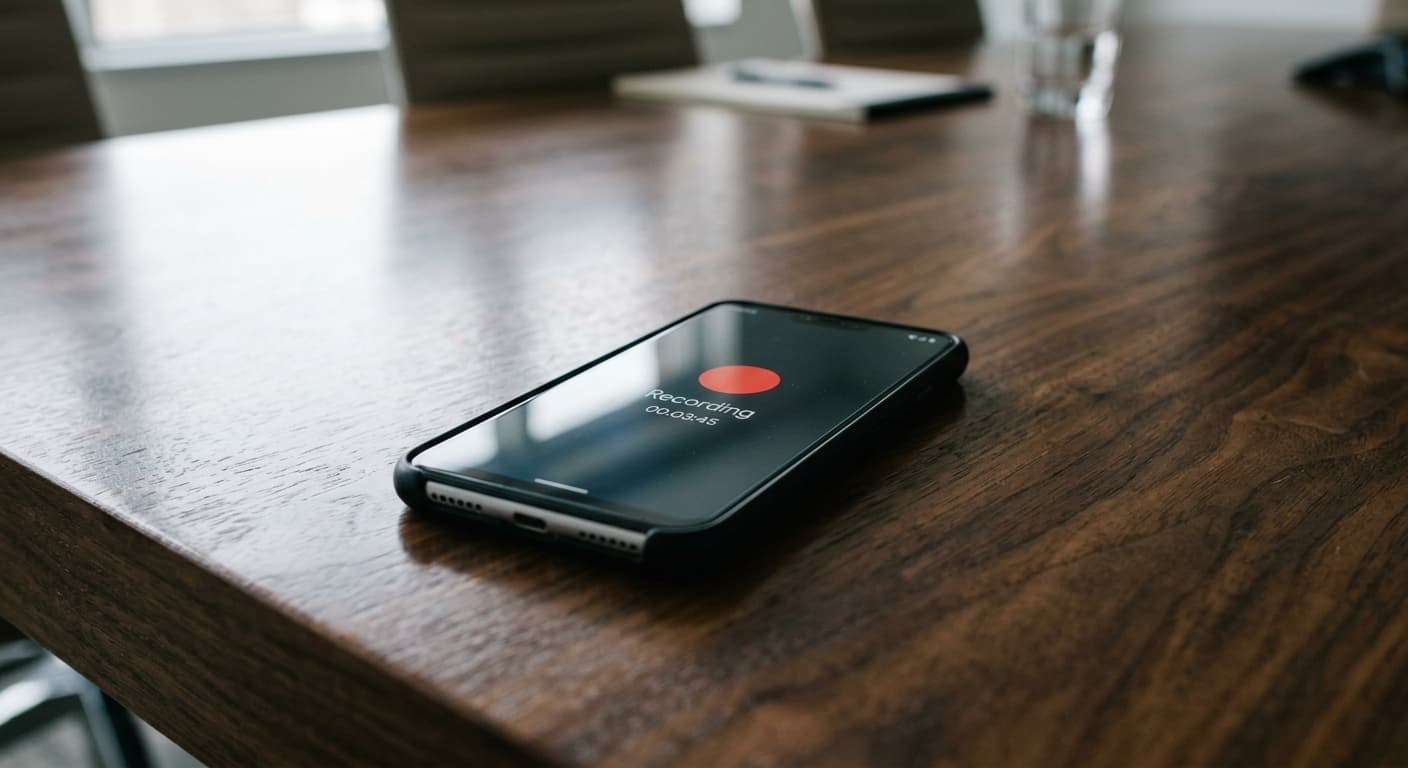
New Mexico is a one-party consent state for audio recording of telephone and wire communications. Under N.M. Stat. Ann. § 30-12-1, you can legally record any phone call you participate in without notifying or getting permission from other participants. What makes New Mexico unusual is that in-person conversations fall entirely outside the wiretapping statute, meaning face-to-face audio recordings require no consent at all.
This guide covers everything you need to know about audio recording laws in New Mexico, including when you can record, how the statute treats different types of communication, penalties for violations, and practical guidance for common situations.
How New Mexico's Audio Recording Law Works
The Statutory Framework
New Mexico's audio recording rules are found in Chapter 30, Article 12 of the New Mexico Statutes, titled "Abuse of Privacy." The key statutes that govern audio recording are:
- N.M. Stat. Ann. § 30-12-1 establishes the criminal offense of interference with communications, covering telegraph and telephone communications.
- N.M. Stat. Ann. § 30-12-2 sets the grounds for court-ordered interception of communications.
- N.M. Stat. Ann. § 30-12-11 creates a civil cause of action for victims of illegal interception, titled "Right of privacy; damages."
Under § 30-12-1(C), it is illegal to knowingly and without lawful authority read, interrupt, take, or copy any message, communication, or report intended for another by telegraph or telephone without the consent of the sender or intended recipient. The statute only covers communications transmitted by "telegraph or telephone."
What "One-Party Consent" Means in Practice
One-party consent means exactly one person involved in the communication must know about and agree to the recording. That person can be you. If you are on a phone call, you satisfy the consent requirement simply by being a participant who chooses to record.
Here are common audio recording scenarios in New Mexico:
- Recording a phone call you are on. Legal under one-party consent. You can use your phone's built-in recorder, a third-party app, or an external recording device.
- Recording an in-person conversation you participate in. Legal without any consent requirement because the wiretapping statute does not cover face-to-face audio.
- Having someone else record a phone call on your behalf. Legal if you, as a party to the call, authorize the recording in advance.
The Critical Distinction: Telephone vs. In-Person Audio
New Mexico's wiretapping statute has a narrower scope than most other states. The law specifically references "telegraph or telephone" communications. In-person, face-to-face conversations are not covered by § 30-12-1. This creates a two-tier system for audio recording:
| Type of Audio | Consent Required | Governing Law |
|---|---|---|
| Telephone/wire calls | One-party consent | N.M. Stat. Ann. § 30-12-1 |
| In-person conversations | No consent required | Not covered by wiretap statute |
| VoIP calls (Zoom, Teams) | One-party consent (best practice) | N.M. Stat. Ann. § 30-12-1 |
| Video call audio | One-party consent (best practice) | N.M. Stat. Ann. § 30-12-1 |
This distinction gives New Mexico residents more audio recording freedom than residents of most other states, particularly for documenting face-to-face interactions.
What One-Party Consent Does NOT Allow
Even with one-party consent, there are limits on audio recording in New Mexico:
- You cannot tap a phone line to record a conversation between two other people. You must be a party to the call or have consent from at least one participant.
- You cannot use intercepted audio for blackmail or extortion. Other criminal statutes apply to misuse of recordings.
- You cannot record in places where voyeurism laws apply. While the wiretap statute does not cover in-person audio, recording audio in bathrooms, locker rooms, or other private areas may trigger violations of N.M. Stat. Ann. § 30-9-20 (voyeurism).
Recording Phone Calls in New Mexico
Personal Phone Calls
You can record any personal phone call you participate in under New Mexico's one-party consent rule. This applies to:
- Cell phone calls
- Landline calls
- VoIP calls through Zoom, Microsoft Teams, Google Meet, or similar platforms
- Video call audio (FaceTime, WhatsApp video, etc.)
- Calls made through messaging apps like Signal or Telegram
You do not need to play a beep tone, announce the recording, or get permission from the other party. Being a participant in the call satisfies the consent requirement.
The "Telegraph or Telephone" Language
New Mexico's statute specifically references "telegraph or telephone line, wire, cable or instrument." This language predates modern wireless technology. Some legal scholars argue it may not cover purely wireless cellular communications that never travel over a physical wire.
Courts in New Mexico have not definitively ruled on whether the statute extends to all wireless communications. As a practical matter, treat all phone and electronic audio communications as requiring one-party consent. This approach keeps you on the safe side of the law regardless of how courts eventually interpret the statutory language.
Business Phone Call Recording
New Mexico businesses can record audio of phone calls for quality assurance, training, compliance, and dispute resolution. An employee who participates in the call provides the necessary one-party consent. Many businesses still announce recording as a best practice, using phrases like "This call may be recorded for quality assurance purposes."
The federal FCC regulations on recording telephone conversations also apply to businesses, particularly for telemarketing calls and calls to consumers.
Interstate Phone Calls
When you are in New Mexico calling someone in another state, the recording laws of both states may apply. If the other person is in a two-party consent state, the stricter law typically controls.
States with stricter audio recording rules:
- California, Connecticut, Florida, Illinois, Maryland, Massachusetts, Montana, Nevada (for phone calls), New Hampshire, Pennsylvania, and Washington
If you regularly record phone call audio with people in these states, the safest approach is to inform all parties or get explicit consent before recording.
Recording In-Person Audio in New Mexico
When Audio Recording Is Legal
Because New Mexico's wiretapping statute only covers "telegraph or telephone" communications, in-person audio recording operates in a space that favors the recorder. You can record face-to-face audio in New Mexico when:
- You are a direct participant in the conversation
- You are in a public place where no reasonable expectation of privacy exists
- You are on your own property
- The conversation takes place outside of telephone or wire communication channels
Even if you are not participating in the conversation, the wiretapping statute technically does not prohibit recording in-person audio. However, other laws may restrict your ability to record.
When In-Person Audio Recording May Be Restricted
Although the wiretapping statute does not cover face-to-face audio, other New Mexico laws may apply:
- Voyeurism laws (N.M. Stat. Ann. § 30-9-20) prohibit recording in places where someone has a reasonable expectation of privacy, such as bathrooms and changing rooms. While this statute focuses on visual recording, audio captured alongside video in these locations creates legal risk.
- Trespass laws prohibit recording on private property without permission to be on the premises.
- Harassment and stalking laws may apply if recording is part of a pattern of behavior intended to harass or intimidate someone.
- Unauthorized distribution of sensitive images (N.M. Stat. Ann. § 30-37A-1) covers intimate recordings shared without consent.
Recording Audio in Your Own Home
You can freely record audio of conversations in your own home. Since in-person conversations are not covered by the wiretapping statute, no consent is needed. However, you should avoid:
- Recording guests in bathrooms or bedrooms where they have a privacy expectation
- Recording intimate activities without consent
- Using recordings for illegal purposes like blackmail or harassment
Types of Audio Communications Under New Mexico Law
Wire Communications
Wire communications include traditional telephone calls, cell phone calls, and any audio communication that travels over a wire, cable, or similar connection. New Mexico's one-party consent rule under § 30-12-1 governs all wire communications.
Oral Communications
Oral communications are spoken, face-to-face conversations. Under New Mexico law, these are not covered by the wiretapping statute. This is a significant departure from most other states, where oral communications are explicitly included in wiretapping laws.
The New Mexico Legislature has not amended the statute to extend coverage to oral communications, and the language remains focused on telegraph and telephone transmissions.
Electronic Communications
Electronic communications include emails, text messages, instant messages, and data transmissions. While New Mexico's wiretapping statute may not explicitly address all forms of electronic communication, the federal Electronic Communications Privacy Act (18 U.S.C. § 2511) provides a parallel framework that covers these communications under a one-party consent standard.
Penalties for Illegal Audio Recording in New Mexico
Criminal Penalties Under N.M. Stat. Ann. § 30-12-1
Illegal interception of telephone or wire audio communications is a misdemeanor in New Mexico:
| Offense | Classification | Maximum Jail | Maximum Fine |
|---|---|---|---|
| Interference with communications | Misdemeanor | 1 year | $1,000 |
| Physical interference with communication lines | Misdemeanor | 1 year | $1,000 |
New Mexico's penalties are notably lighter than many other states. For comparison, the federal Wiretap Act carries up to 5 years in prison for willful violations, and neighboring states impose felony-level penalties.
Civil Liability Under N.M. Stat. Ann. § 30-12-11
Victims of illegal audio interception can sue under N.M. Stat. Ann. § 30-12-11 for:
- Actual damages suffered as a result of the illegal interception
- Liquidated damages of $100 per day of violation, or $1,000, whichever is greater
- Punitive damages for willful or egregious violations
- Reasonable attorney fees and litigation costs
A civil lawsuit can be filed regardless of whether the defendant has been convicted of a criminal offense. A defendant who relied in good faith on a court order has a complete defense to both civil and criminal liability.
Federal Penalties
The federal Wiretap Act (18 U.S.C. § 2511) also applies to audio recordings in New Mexico. Federal law is a one-party consent statute, aligning with New Mexico's approach for telephone communications. Federal penalties include:
- Up to 5 years in federal prison for willful violations
- Civil damages including actual damages, punitive damages, and attorney fees
- Minimum statutory damages of $10,000 per violation under 18 U.S.C. § 2520
Using Audio Recordings as Evidence in New Mexico
Admissibility Standards
Audio recordings made lawfully under New Mexico law are generally admissible as evidence in both criminal and civil courts. Under N.M. Stat. Ann. § 30-12-8, the contents of lawfully intercepted communications may be received as evidence in any trial, hearing, or other court proceeding.
Courts evaluate audio recordings based on:
- Authentication: Can you prove the recording is genuine and has not been altered?
- Relevance: Does the recording relate to an issue in the case?
- Hearsay rules: Some recorded statements may be excluded unless an exception applies.
- Prejudicial vs. probative value: Does the recording's evidentiary value outweigh any unfair prejudice?
Best Practices for Preserving Audio Recordings
To maximize the evidentiary value of your audio recordings:
- Use a reliable recording device or app with clear audio quality.
- Do not edit, splice, or alter the recording in any way.
- Back up the recording immediately to cloud storage and a separate device.
- Note the date, time, location, and participants as soon as possible after recording.
- Store the recording securely and protect it from accidental deletion.
- Provide the recording to your attorney as early as possible in any legal proceedings.
Illegally Obtained Audio Recordings
Audio recordings made in violation of New Mexico's wiretapping law are generally inadmissible in court. A motion to suppress can be filed under § 30-12-8. Using an illegally obtained recording can also expose you to both criminal prosecution and civil liability.
Common Audio Recording Scenarios in New Mexico
Can I Audio Record My Landlord?
Yes. In-person conversations with your landlord can be recorded without any consent because the wiretapping statute does not cover face-to-face audio. Phone calls with your landlord require one-party consent, which you satisfy as a participant. Recording is useful for documenting verbal agreements about repairs, lease disputes, or instances of harassment.
Can I Audio Record My Doctor?
Yes. You can record audio of your medical appointments. Since in-person conversations are not covered by the wiretapping statute, no consent is needed for face-to-face appointments. For telemedicine calls, one-party consent applies and your participation satisfies it. Many patients find this helpful for remembering treatment instructions and documenting informed consent discussions.
Can I Audio Record My Boss at Work?
Yes. Under New Mexico law, you can record audio of workplace conversations you participate in. In-person workplace conversations require no consent. Phone calls with your employer require one-party consent, which you provide by being a participant. Be aware that your employer may have internal policies against recording, and violating those policies could result in disciplinary action even though the recording itself is legal.
Can I Audio Record Government Officials?
Yes. You can record audio of conversations with government employees you participate in. New Mexico's Open Meetings Act (N.M. Stat. Ann. § 10-15-1) also requires public bodies to accommodate audio and video recording devices during open meetings.
Can I Audio Record My Ex-Spouse or Co-Parent?
Yes, during conversations you are part of. In-person conversations require no consent under New Mexico's wiretapping statute. Phone calls require one-party consent. However, do not record your children's private conversations without being present, and do not use children to secretly record the other parent.
Audio Recording Technology and New Mexico Law
Smartphones and Recording Apps
Using your smartphone's built-in voice recorder or a third-party recording app is legal in New Mexico for both in-person and telephone audio. Popular options include the native voice memo apps on iOS and Android, as well as dedicated call recording apps. The choice of technology does not change the legal analysis.
AI Voice Recorders and Wearable Devices
AI-powered voice recorders that transcribe and summarize conversations are legal to use in New Mexico. Since in-person conversations are not covered by the wiretapping statute, wearable audio recorders can capture face-to-face conversations without consent. For phone calls made through the device, one-party consent applies and your participation satisfies it.
Digital Recording vs. Analog Recording
New Mexico's statute does not distinguish between digital and analog recording methods. Whether you use a digital recorder, a smartphone app, or an older analog tape recorder, the same legal rules apply. The statute's references to "telegraph or telephone" instruments have been broadly interpreted to cover modern communication technology.
More New Mexico Recording Laws
Audio Recording | Video Recording | Voyeurism & Hidden Cameras | Workplace Recording | Recording Police | Phone Call Recording | Security Cameras | Recording in Public | Landlord-Tenant | Dashcam Laws | Schools | Medical Recording
Sources and References
- N.M. Stat. Ann. § 30-12-1(nmonesource.com).gov
- New Mexico Legislature(nmlegis.gov).gov
- FCC Recording Guide(fcc.gov).gov
- 18 U.S.C. § 2511(law.cornell.edu)