Nevada Laws on Recording Police: Your Rights Under NRS 171.1233 (2026)
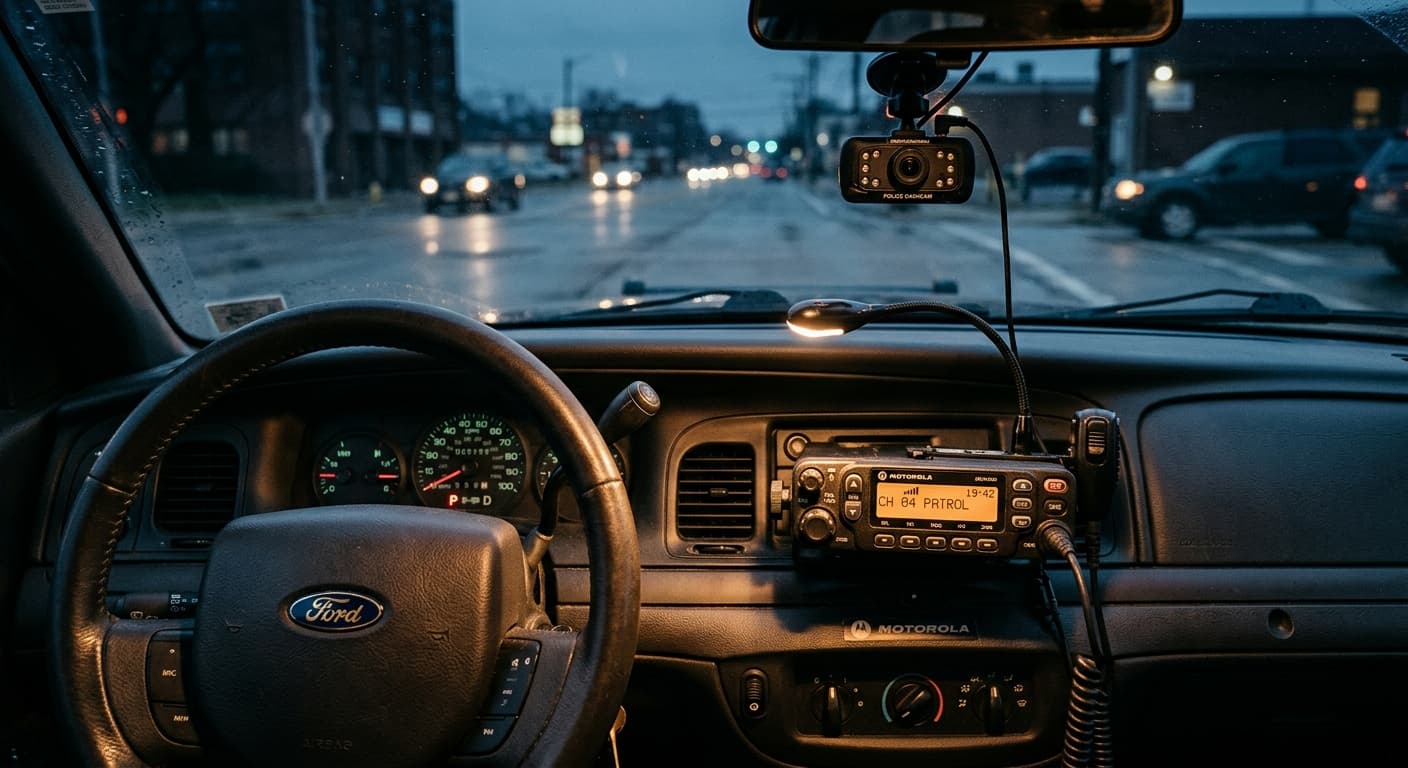
Nevada is one of the clearest states in the country when it comes to your right to record police. NRS 171.1233 explicitly states that any person may use a device to record law enforcement activity, and officers are prohibited from interfering with that right. This statutory protection, combined with Ninth Circuit case law recognizing a First Amendment right to record police, gives Nevadans strong legal ground to film and audio record police encounters.
This guide covers the scope of your recording rights, the limits of those rights, how Nevada's split consent framework applies to police interactions, body camera requirements, and what to do if an officer tries to stop you from recording.
Your Statutory Right to Record Police (NRS 171.1233)
What the Statute Says
NRS 171.1233 provides that:
- Any person who is not under arrest may use any lawful device to capture moving or still images, sound, or other impressions of a law enforcement officer performing official duties
- Law enforcement officers are prohibited from interfering with a person who is lawfully exercising this right
- Being under arrest does not automatically forfeit the right to record, though the circumstances of the arrest may affect whether recording is practical
- This right does not authorize a person to engage in actions that interfere with or obstruct law enforcement activity
The statute is unusually clear. Many states rely on case law and constitutional interpretations to protect the right to record police. Nevada codified this right directly in statute, removing ambiguity.
Who Can Record
The right to record police under NRS 171.1233 extends to:
- Bystanders witnessing a police encounter
- Participants in a traffic stop or police interaction
- Journalists and media representatives
- Individuals being detained or questioned (with practical limitations)
- Passengers in a vehicle during a traffic stop
There is no requirement that you be a member of the press. Any person with any lawful recording device can exercise this right.
What You Can Record
You can record any law enforcement activity that you can observe, including:
- Traffic stops
- Arrests and detentions
- Police interactions with civilians on the street
- Protests and crowd control activities
- Accident investigations on public roads
- Police executing search warrants (from a public vantage point)
- DUI checkpoints and sobriety checks
How Nevada's Split Consent Framework Applies to Police Recording
In-Person Recording: One-Party Consent
When you record police officers in person, whether by video or audio, the recording falls under NRS 200.650, Nevada's one-party consent rule for in-person conversations. If you are a participant in the interaction (the officer is speaking to you or you are speaking to the officer), your own consent is sufficient.
Even if you are a bystander recording from a distance, the conversation between the officer and another person on a public street typically does not carry a reasonable expectation of privacy, meaning the recording does not require consent at all.
Phone Calls to Police: All-Party Consent
If you call 911 or a police non-emergency line, the phone call is a wire communication subject to NRS 200.620. Recording a phone call with police requires all-party consent.
However, Nevada provides a statutory exception for emergency call facilities. Under NRS 200.620(4), law enforcement agencies may record calls to emergency lines, provided they inform the caller that the conversation is being recorded. Most 911 calls in Nevada are recorded by the dispatch center.
If you want to record your own 911 call, the safest approach is to announce at the start that you are recording.
Limits on Your Right to Record
Physical Interference
NRS 171.1233 specifically states that the right to record does not authorize interfering with or obstructing law enforcement. You cannot:
- Physically obstruct an officer making an arrest
- Enter a crime scene to get a better angle
- Stand so close that you impede an officer's movement
- Refuse to comply with lawful orders that are unrelated to recording (such as being asked to step back for safety)
Interfering with a police officer is a separate offense under NRS 197.190, which makes it a misdemeanor to willfully resist, delay, or obstruct a public officer in discharging any legal duty.
Safe Distance
While Nevada does not specify an exact distance you must maintain from police, courts generally require that recording be done from a distance that does not interfere with police operations. A reasonable guideline is to stay far enough away that officers can perform their duties without having to navigate around you, but close enough that your recording device can capture the events.
Lawful Orders
Officers can issue lawful orders related to safety, crowd control, and crime scene management. If an officer orders you to move back from a dangerous situation, you must comply even though you have a right to record. The order to move is lawful; an order to stop recording is not.
Private Property
Your right to record police on public property is well-established. Recording police activity that occurs on private property (such as inside someone's home during a search) is more limited. You cannot enter private property without permission to record police activity. If you are the property owner or resident, you have the right to record within your own home.
Body Camera Requirements (NRS 289.830)
What the Law Requires
NRS 289.830 requires most Nevada law enforcement agencies to equip uniformed officers who routinely interact with the public with body-worn cameras. Key requirements include:
- Officers must activate body cameras when responding to calls for service
- Officers must activate cameras when initiating any law enforcement encounter
- Agencies must retain body camera footage for at least 15 days
- Footage of critical incidents (use of force, complaints) must be retained longer
Accessing Body Camera Footage
Members of the public can request body camera footage through Nevada's public records laws. Under NRS 239.010, government records are presumed to be public records. However, law enforcement may withhold footage under specific exemptions:
- Active criminal investigations
- Footage that would compromise officer or informant safety
- Recordings in locations where there is a reasonable expectation of privacy (such as inside a private home)
- Footage involving minors
Agencies may charge reasonable fees for producing copies of footage.
When Officers Fail to Activate Body Cameras
NRS 289.830 requires activation during law enforcement encounters. If an officer fails to activate their camera, the agency's internal policies govern the consequences. Some agencies treat failure to activate as a policy violation subject to discipline.
In court proceedings, the absence of body camera footage when it should exist may be relevant. Defense attorneys can argue that missing footage creates an adverse inference about what occurred.
What to Do If an Officer Tries to Stop You From Recording
Know Your Rights
If a police officer orders you to stop recording, you should be aware that:
- NRS 171.1233 explicitly prohibits officers from interfering with lawful recording
- The Ninth Circuit, which has jurisdiction over Nevada, recognizes a First Amendment right to record police in public (Askins v. Dep't of Homeland Sec., 899 F.3d 1035, 9th Cir. 2018)
- Officers cannot confiscate your device without a warrant
Practical Steps
If confronted by an officer who demands you stop recording:
- Stay calm. Do not argue aggressively.
- State clearly: "I am exercising my right to record under NRS 171.1233. I am not interfering with your duties."
- Comply with lawful orders such as stepping back for safety.
- Do not physically resist if an officer attempts to take your device. Verbal objection is appropriate; physical resistance can lead to arrest.
- Note the officer's name, badge number, and agency.
- File a complaint afterward with the agency's internal affairs division.
- Consult an attorney if your recording was confiscated or deleted, as you may have civil rights claims under 42 U.S.C. Section 1983.
Legal Remedies for Interference
If an officer illegally interferes with your right to record:
- Criminal complaint: The officer may have violated NRS 171.1233
- Internal affairs complaint: Most agencies have formal complaint procedures
- Civil rights lawsuit: Under 42 U.S.C. Section 1983, you can sue state actors who violate your constitutional rights
- State civil claim: Depending on the circumstances, claims for false arrest, assault, or property damage may be available
Recording Police During Protests
Nevada has seen significant protest activity, and recording police during demonstrations is protected under both NRS 171.1233 and the First Amendment. During protests:
- You can record police from any location where you are legally present
- Officers cannot single out people with cameras for dispersal orders
- Mass arrest scenarios do not automatically eliminate your recording rights
- Journalists receive the same protections as any other person under NRS 171.1233
The Ninth Circuit has been particularly protective of the right to record police activity during protests, and Nevada's statutory protection adds an additional layer of security.
Police Recording of Civilians
During Encounters
Police officers routinely record civilians through body cameras, dashcams, and handheld devices. This recording is authorized under NRS 289.830 (body cameras) and general law enforcement authority. You do not have the right to demand that an officer stop recording you during an official encounter.
Wiretaps and Surveillance
For investigative wiretaps and electronic surveillance, law enforcement must obtain a court order under NRS 179.410 through 179.515. This requires a showing of probable cause and approval by a district court judge. Warrantless wiretaps are permitted only in emergency situations, and judicial ratification must be sought within 72 hours.
Ninth Circuit Case Law
The Ninth Circuit Court of Appeals, which covers Nevada, has issued several decisions recognizing the right to record law enforcement:
- Askins v. Dep't of Homeland Sec., 899 F.3d 1035 (9th Cir. 2018): Recognized a First Amendment right to photograph and record matters of public interest, including law enforcement performing duties in public
- Fordyce v. City of Seattle, 55 F.3d 436 (9th Cir. 1995): Established that the First Amendment protects the right to film matters of public interest
These federal court decisions provide constitutional protections that supplement Nevada's statutory protections under NRS 171.1233.
More Nevada Recording Laws
Audio Recording | Video Recording | Voyeurism & Hidden Cameras | Workplace Recording | Recording Police | Phone Call Recording | Security Cameras | Recording in Public | Landlord-Tenant | Dashcam Laws | Schools | Medical Recording
Sources and References
- NRS 171.1233 - Right to Record Law Enforcement(leg.state.nv.us).gov
- NRS 200.650 - Surreptitious Intrusion of Privacy(leg.state.nv.us).gov
- NRS 200.620 - Interception of Wire Communications(leg.state.nv.us).gov
- NRS 289.830 - Body-Worn Camera Requirements(leg.state.nv.us).gov
- NRS 197.190 - Obstructing a Public Officer(leg.state.nv.us).gov
- NRS 239.010 - Public Records(leg.state.nv.us).gov
- 42 U.S.C. Section 1983(law.cornell.edu)