
New Mexico
New Mexico Recording Laws (2026): One-Party Consent Rules
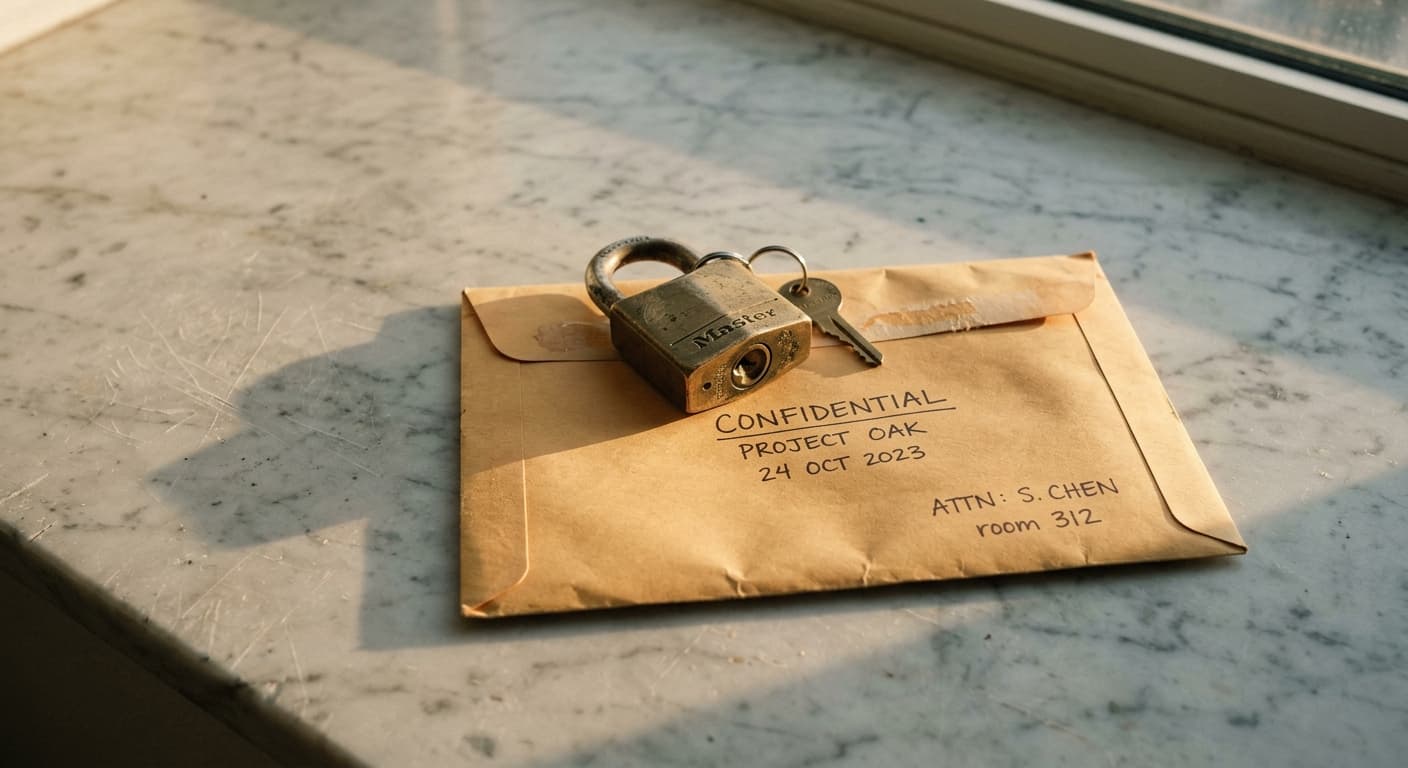
New Mexico is a one-party consent state for telephone and telegraph communications under NMSA 1978 section 30-12-1. If you are a party to a call, your own consent is enough to record it legally. Recording a call you are not part of, without any participant's consent, is a misdemeanor and a civil wrong under NMSA section 30-12-11. The state's unique wrinkle: the wiretap statute does not reach in-person face-to-face conversations at all, per State v. Hogervorst, 1977-NMCA-057, 90 N.M. 580, 566 P.2d 828.
New Mexico recording law at a glance
| Question | Answer |
|---|---|
| Consent rule | One-party consent (telephone and telegraph only) |
| Main statute | NMSA 1978 section 30-12-1 |
| When recording is illegal | Recording a call without the consent of any participant |
| Criminal penalty | Misdemeanor: up to 364 days jail, up to $1,000 fine |
| Civil penalty | Greater of actual damages, $100/day, or $1,000 min; punitive damages; attorney fees |
| Hidden cameras / voyeurism | NMSA 30-9-20: misdemeanor (adult victim); 4th-degree felony (victim under 18) |
| Recording police | First Amendment right recognized by the Tenth Circuit (Irizarry v. Yehia, 2022) |
For in-depth treatment of each rule, see the New Mexico recording laws in depth section below.
Recording in-person conversations in New Mexico
The most important New Mexico-specific rule on this page: section 30-12-1 does not reach in-person face-to-face conversations. Every prong of the statute ties the prohibited conduct to a "telegraph or telephone line, wire, cable, or instrument." The phrases "oral communication" and "in-person conversation" do not appear in the statute.
The New Mexico Court of Appeals confirmed this in State v. Hogervorst, 1977-NMCA-057, 90 N.M. 580, 566 P.2d 828, 834. A defendant was convicted of bribery based on a face-to-face conversation monitored through a concealed body-worn device. The court held that section 30-12-1 reaches only "telegraph or telephone" communications, and that a face-to-face conversation recorded by a device worn by one of the participants is not criminalized by the wiretap statute. Hogervorst remains good law. SB 127 of the 2013 session, which would have added "confidential communication" language to extend the statute to in-person conversations, died in the Senate Public Affairs Committee.
The carve-out is not a license. Three bodies of law still apply to in-person recording. First, federal ECPA at 18 U.S.C. section 2511 reaches oral communications uttered with a justified expectation of privacy whenever federal jurisdiction is engaged. Second, common-law intrusion upon seclusion is recognized in New Mexico under Andrews v. Stallings, 1995-NMCA-015, with a three-year limitations period under NMSA section 37-1-8. Third, voyeurism under NMSA section 30-9-20 covers any surreptitious capture of intimate areas regardless of whether audio is involved.
One practical consequence: the NMSA section 30-12-11 statutory damages remedy is unavailable for in-person recording because no section 30-12-1 violation can be proved on those facts. An in-person victim must plead common-law intrusion upon seclusion and prove actual damages.
Recording phone calls in New Mexico
Phone calls are governed by the one-party rule under section 30-12-1. As a participant in any landline, cellular, VoIP, Zoom, or Teams call, you may record without notifying the other party. The statute references a "telephone line, wire, cable, or instrument," and the "instrument" language most naturally covers the cellphone handset. No New Mexico appellate court has resolved whether wireless transmission across cell towers is within the statute's scope, but federal ECPA at 18 U.S.C. section 2511(2)(d) covers wireless interception. Cellphone calls are functionally one-party consent under either framework.
For interstate calls, apply the stricter state's rule. If the other party is in California, Connecticut, Delaware, Florida, Illinois, Maryland, Massachusetts, Montana, New Hampshire, Oregon, Pennsylvania, or Washington, get all-party consent before recording. Federal ECPA sets a one-party floor but does not preempt stricter state statutes.
Businesses may record calls for quality assurance or training through verbal announcement, a pre-call recorded notice, or a beep tone. For calls routed into all-party consent states, configure systems to capture all-party consent by default. For more detail, see New Mexico Phone Call Recording Laws.
Hidden cameras, doorbells, and nanny cams
New Mexico has no general prohibition on video recording in public spaces. The risk areas are voyeurism (intimate areas), trespass (filming on private property without permission), and stalking statutes (targeted course of conduct).
NMSA 1978 section 30-9-20, the voyeurism statute, prohibits intentionally using the unaided eye or any instrumentality to view, photograph, videotape, film, or record the intimate areas of another person without consent in two settings: enclosed private spaces (bedrooms, bathrooms, changing rooms, tanning booths), and any place where the person has a reasonable expectation of privacy, including public places for up-skirt and down-blouse photography. "Intimate areas" means the primary genital area, groin, buttocks, anus, breasts, or the undergarments covering those areas. "Instrumentality" is defined broadly and includes smartphones, action cameras, drone cameras, and smart-glasses video capture.
Voyeurism is a misdemeanor for adult victims (up to 364 days and a $1,000 fine under NMSA section 31-19-1). It is a fourth-degree felony when the victim is under 18, with a basic 18-month sentence and up to $5,000 fine under NMSA section 31-18-15.
In your own home, security cameras in common areas are legal. Do not record guests in bathrooms or bedrooms. Ring doorbells, Nest cameras, and similar cloud platforms are lawful when monitoring a homeowner's own property. The audio mode on doorbell cameras is governed by the in-person Hogervorst carve-out for face-to-face audio. The FTC v. Ring (May 2023; $5.8 million consumer refund) settlement established that cloud-camera vendors must obtain express informed consent before human review of customer footage.
Dashcams are legal in New Mexico. Under NMSA section 66-3-846, drivers must not place nontransparent material on the front windshield that interferes with visibility. Audio capture inside the vehicle cabin falls under the Hogervorst in-person carve-out.
For more detail, see New Mexico Security Camera Laws and New Mexico Voyeurism and Hidden Camera Laws.
Penalties for illegal recording in New Mexico
Criminal. Violation of section 30-12-1 is a misdemeanor. Under NMSA section 31-19-1, a New Mexico misdemeanor is punishable by up to 364 days in county jail and a fine of up to $1,000. There is no felony tier under the state wiretap statute itself. The federal Wiretap Act ceiling is five years and $250,000.
Civil. NMSA 1978 section 30-12-11 provides a private civil cause of action. A plaintiff may recover the greater of actual damages, $100 per day of violation, or a flat $1,000 minimum, plus punitive damages for willful violations and a reasonable attorney's fee. The civil action proceeds whether or not the defendant has been criminally convicted. Good-faith reliance on a court order is a complete defense.
Federal parallel. 18 U.S.C. section 2520 provides a $10,000 statutory minimum (ten times New Mexico's) when federal jurisdiction applies, such as interstate or wireless calls.
| Track | Offense | Max penalty |
|---|---|---|
| Criminal | Misdemeanor (NMSA 31-19-1) | 364 days jail / $1,000 fine |
| Civil | NMSA 30-12-11 | $1,000 min / $100/day / actual + punitives + fees |
| Voyeurism (adult) | Misdemeanor (NMSA 30-9-20) | 364 days jail / $1,000 fine |
| Voyeurism (under 18) | 4th-degree felony (NMSA 31-18-15) | 18 months / $5,000 fine |
| Federal (ECPA) | Felony | 5 years / $250,000 |
Note: the civil remedy under section 30-12-11 is unavailable for surreptitious in-person recording, because no section 30-12-1 violation can be proved on those facts under Hogervorst. In-person victims must plead common-law intrusion upon seclusion.
Recording the police in New Mexico
The Tenth Circuit, which has appellate jurisdiction over New Mexico, affirmatively recognizes a First Amendment right to record police performing official duties in public. In Irizarry v. Yehia, 38 F.4th 1282 (10th Cir. 2022), the court held the right exists and was clearly established as of May 26, 2019, making the Tenth Circuit the seventh federal circuit to recognize it.
Frasier v. Evans, 992 F.3d 1003 (10th Cir. 2021), cert. denied, 142 S. Ct. 427 (2021), does not negate this. Frasier involved August 2014 conduct, before the right was clearly established. Irizarry settled both questions: the right exists, and it was clearly established by May 26, 2019. Qualified immunity remains fact-specific and turns on the date of conduct at issue.
Practical guidance: you may film traffic stops, record arrests in public, and livestream encounters with officers. Do not interfere with operations or trespass. An officer cannot lawfully order you to stop recording or delete footage in a public place, though a damages claim under 42 U.S.C. section 1983 may be defeated by qualified immunity for pre-2019 conduct.
New Mexico law also requires officers to wear body cameras. NMSA 1978 section 29-1-18, enacted by SB 8 of the 2020 First Special Session and signed July 8, 2020, requires every law enforcement agency employing peace officers who routinely interact with the public to mandate body-worn cameras while on duty, activate them on all calls for service or investigative encounters, and retain recordings for at least 120 days.
For more detail, see New Mexico Laws on Recording Police.
Special topics in New Mexico
Open Meetings Act recording right
NMSA 1978 section 10-15-1 is the unique New Mexico angle. The Open Meetings Act expressly requires public bodies to make "reasonable efforts to accommodate the use of audio and video recording devices" at all open public meetings. This gives citizens an affirmative statutory recording right at meetings of any state board, commission, county commission, city council, school board, or similar policymaking body. Properly noticed closed sessions under section 10-15-1(H) (personnel matters, attorney-client, real-estate negotiations) are excepted. The legislature and courts are excluded and have separate rules. The New Mexico Attorney General's Open Government Division enforces the Act and publishes a compliance guide.
Workplace recording
Workplace recording follows the same one-party rule for phone calls and the Hogervorst carve-out for in-person meetings. A blanket employer no-recording policy is presumptively unlawful under the NLRB's Stericycle, Inc., 372 NLRB No. 113 (Aug. 2, 2023) standard unless narrowly tailored and justified by a substantial business interest. NLRB GC 25-07 (June 25, 2025) is narrowly scoped to surreptitious recording of bargaining sessions and does not govern general workplace recording. For more, see New Mexico Workplace Recording Laws.
AI and deepfake legislation
New Mexico HB 182 (signed March 5, 2024; effective May 15, 2024) amended the Campaign Reporting Act at NMSA section 1-19-26.4 to require a clear disclaimer on any "materially deceptive" political advertisement produced in whole or in part with artificial intelligence. The scope is narrow: political ads only. HB 401 of 2025 (Artificial Intelligence Synthetic Content Accountability Act) did not become law. The Artificial Intelligence Accountability Act announced January 15, 2026 by Attorney General Raul Torrez has not yet been introduced as a numbered bill. New Mexico has no general AI-voice or AI-image criminal statute as of 2026.
Federal overlay
Federal ECPA at 18 U.S.C. sections 2510-2522 covers oral communications uttered in a face-to-face setting with a justified expectation of privacy, unlike section 30-12-1, and applies whenever interstate or wireless communications are involved. The TAKE IT DOWN Act, Public Law 119-12 (signed May 19, 2025), criminalizes knowing publication of nonconsensual intimate visual depictions and deepfakes; platform notice-and-removal compliance is required by May 19, 2026. FCC Order 24-24 (one-to-one consent rule) was vacated by the Eleventh Circuit in Insurance Marketing Coalition Ltd. v. FCC, 127 F.4th 303 (11th Cir. 2025); do not cite it as live law.

Recent legal developments
- May 2025: TAKE IT DOWN Act (Pub. L. 119-12) signed, criminalizing nonconsensual intimate deepfakes; platform compliance deadline May 19, 2026.
- April 2025: FCC Order 24-24 vacated by the Eleventh Circuit (mandate April 30, 2025); no longer live federal law.
- February 2025: NLRB GC 25-05 narrowed enforcement priorities but did not overrule Stericycle.
- May 2024 (eff.): HB 182 AI-disclosure disclaimer requirement for deceptive political ads took effect.
- June 2022: Irizarry v. Yehia, 38 F.4th 1282 (10th Cir. 2022), held First Amendment right to record police clearly established as of May 26, 2019 in the Tenth Circuit.
- 2020: SB 8 (NMSA section 29-1-18) enacted mandatory body-worn cameras for New Mexico peace officers with 120-day retention.
New Mexico recording laws in depth
Want to know more? Each guide below covers a specific New Mexico recording-law context in full depth.
By type of recording
- New Mexico Audio Recording Laws: One-Party Consent Rules and Penalties (2026)
- New Mexico Phone Call Recording Laws: One-Party Consent Guide (2026)
- New Mexico Video Recording Laws: Surveillance, Filming, and Consent Rules (2026)
- New Mexico Voyeurism and Hidden Camera Laws: Section 30-9-20 Penalties (2026)
- New Mexico Dashcam Laws: Windshield Mounting, Audio, and Evidence Rules (2026)
By place or relationship
- New Mexico Laws on Recording Police: Your First Amendment Rights (2026)
- New Mexico Workplace Recording Laws: Employee and Employer Rights (2026)
- New Mexico Public Recording Laws: Filming Rights in Public Spaces (2026)
- New Mexico Security Camera Laws: Home, Business, and HOA Rules (2026)
- New Mexico Landlord-Tenant Recording Laws: Rights for Renters and Landlords (2026)
- New Mexico Medical Recording Laws: Patient Rights and HIPAA Rules (2026)
- New Mexico School Recording Laws: Students, Parents, and Teacher Rights (2026)
More New Mexico laws
- New Mexico Alimony Laws
- New Mexico At-Will Employment Laws
- New Mexico Child Custody Laws
- New Mexico Data Privacy Laws
- New Mexico Landlord-Tenant Laws
This article is general legal information, not legal advice. Recording laws change and apply differently to each situation. For advice about your situation, consult a licensed New Mexico attorney.
More New Mexico Laws
Frequently Asked Questions
Is New Mexico a one-party or two-party consent state for recording?
New Mexico is a one-party consent state for telephone and telegraph communications under NMSA 1978 section 30-12-1. A sender or intended recipient may record a phone call without notifying the other parties. The state wiretap statute does not cover in-person face-to-face conversations at all, per State v. Hogervorst, 1977-NMCA-057, 90 N.M. 580, 566 P.2d 828, 834 (Ct. App. 1977).
Can I record an in-person conversation in New Mexico?
Section 30-12-1 does not reach in-person face-to-face conversations. State v. Hogervorst confirmed that recording a face-to-face conversation through a body-worn device does not violate the statute. Federal ECPA and common-law intrusion upon seclusion still apply, however, so the carve-out is not a green light for surreptitious recording in private settings.
What are the penalties for illegal recording in New Mexico?
Violation of NMSA section 30-12-1 is a misdemeanor: up to 364 days in county jail and a fine up to $1,000 under NMSA section 31-19-1. Civil damages under NMSA section 30-12-11 are the greater of actual damages, $100 per day of violation, or a $1,000 minimum, plus punitive damages and attorney fees. Voyeurism under section 30-9-20 is a misdemeanor for adult victims and a fourth-degree felony when the victim is under 18.
Can I record a phone call from New Mexico to someone in California or Florida?
Apply the stricter state rule. California, Florida, and several other states require all-party consent. If the other party is in one of those states, get consent from every party before recording. Federal ECPA sets a one-party floor but does not override stricter state statutes.
Can I record an HR meeting or conversation with my boss in New Mexico?
If the meeting is by phone or VoIP and you are a participant, NMSA section 30-12-1 one-party consent allows you to record without telling the others. If the meeting is face-to-face, the wiretap statute does not reach it at all per Hogervorst. A blanket employer no-recording rule is presumptively unlawful under the NLRB Stericycle standard unless narrowly tailored.
Are Ring doorbells and nanny cams legal in New Mexico?
Yes, generally. Plain video of a porch or common area does not trigger NMSA section 30-9-20, which covers only surreptitious capture of intimate areas in private spaces or under a reasonable expectation of privacy. Nanny cams in common areas of your own home are lawful; voyeurism still applies in bathrooms or private bedrooms.
Can I record New Mexico police during a traffic stop?
Yes. The Tenth Circuit held in Irizarry v. Yehia, 38 F.4th 1282 (10th Cir. 2022), that the First Amendment right to record police in public exists and was clearly established as of May 26, 2019. You may film traffic stops and public encounters. Do not interfere with police operations or trespass. New Mexico officers are also required by law to wear body cameras under NMSA section 29-1-18.
Can I record a city council or school board meeting in New Mexico?
Yes. NMSA section 10-15-1, the Open Meetings Act, expressly requires public bodies to make reasonable efforts to accommodate audio and video recording devices at all open public meetings. The legislature itself and the courts are excluded; properly noticed closed sessions under section 10-15-1(H) are also excluded.
Updates
Restructured for readability: added AEO lede, at-a-glance table, and section-by-section format following recording-redo spec. Condensed in-person/Hogervorst carve-out, phone calls, penalties, police, and special topics. Added in-depth index linking all 12 sub-pages. Refreshed FAQ (8 Qs) and preserved all primary-source statutes and case citations. Re-verified NMSA 30-12-1 one-party consent rule, NMSA 30-9-20 voyeurism penalties, NMSA 29-1-18 body-camera mandate, and Irizarry v. Yehia (10th Cir. 2022) against primary sources; all confirmed correct. No fact corrections.
Refresh: Anchored the in-person-not-covered quirk via State v. Hogervorst, 1977-NMCA-057, 90 N.M. 580, 566 P.2d 828, 834, with NMSA section 30-12-1 textually limited to 'telegraph or telephone' in every prong. Added NMSA section 10-15-1 Open Meetings Act recording right with the 'reasonable efforts shall be made to accommodate the use of audio and video recording devices' language. Corrected the body-camera citation to NMSA section 29-1-18 (was incorrectly section 29-1-16). Added HB 182 of 2024 political-ad AI disclosure (signed March 5, 2024; effective May 15, 2024; codified at NMSA section 1-19-26.4). Reframed Frasier v. Evans, 992 F.3d 1003 (10th Cir. 2021), as DECLINED to recognize, not affirmative recognition. Removed Irizarry v. Yehia (Eleventh Circuit, not Tenth Circuit). Added persuasive sister-circuit consensus from Glik, Fields, Turner, Alvarez, Fordyce, and Smith. Updated FCC 24-24 status to vacated by the Eleventh Circuit in Insurance Marketing Coalition Ltd. v. FCC (mandate April 30, 2025). Removed stale 47 C.F.R. section 64.501. Added NLRB Stericycle, Inc., 372 NLRB No. 113, plus GC 25-05 and GC 25-07. Added federal TAKE IT DOWN Act (Pub. L. 119-12; platform compliance May 19, 2026). Replaced commercial-codifier URLs with nmlegis.gov, nmcourts.gov, nmag.gov, uscode.house.gov, and other primary sources.
Refresh: Anchored the in-person-not-covered quirk via State v. Hogervorst, 1977-NMCA-057, 90 N.M. 580, 566 P.2d 828, 834, with NMSA section 30-12-1 textually limited to 'telegraph or telephone' in every prong. Added NMSA section 10-15-1 Open Meetings Act recording right. Corrected body-camera citation to NMSA section 29-1-18 (was incorrectly section 29-1-16). Added HB 182 of 2024 political-ad AI disclosure. Reframed Irizarry v. Yehia, 38 F.4th 1282 (10th Cir. 2022) as controlling Tenth Circuit authority. Updated FCC 24-24 status to vacated. Added NLRB Stericycle plus GC 25-05 and GC 25-07. Added federal TAKE IT DOWN Act. Replaced commercial-codifier URLs with primary sources.
Added wearable recording devices section and 2 FAQs
Sources and References
- nmlegis.gov.gov
- courtlistener.com
- nmlegis.gov.gov
- nmag.gov.gov
- nmlegis.gov.gov
- ca10.uscourts.gov.gov
- ca10.uscourts.gov.gov
- nmlegis.gov.gov
- nmlegis.gov.gov
- nmdoj.gov.gov
- uscode.house.gov.gov
- docs.fcc.gov.gov
- media.ca11.uscourts.gov.gov
- federalregister.gov.gov
- nlrb.gov.gov
- ftc.gov.gov
- congress.gov.gov
- justice.gov.gov
- nmcourts.gov.gov
- Irizarry v. Yehia, 38 F.4th 1282 (10th Cir. 2022)(ca10.uscourts.gov).gov
- nlrb.gov.gov