Louisiana Recording Laws: Consent Rules and Penalties
Quick Answer
Louisiana is a one-party consent state. You can legally record phone calls and in-person conversations as long as you are a party to the conversation or have consent from at least one participant. Louisiana treats illegal recording as a serious felony, with penalties that include hard labor imprisonment.
| Key Point | Answer |
|---|---|
| Consent Type | One-Party |
| Can you record your own calls? | Yes |
| Must you inform others? | No |
| Primary Statute | La. R.S. 15:1303 |
| Maximum Fine | $10,000 |
| Maximum Prison Time | 10 years at hard labor |
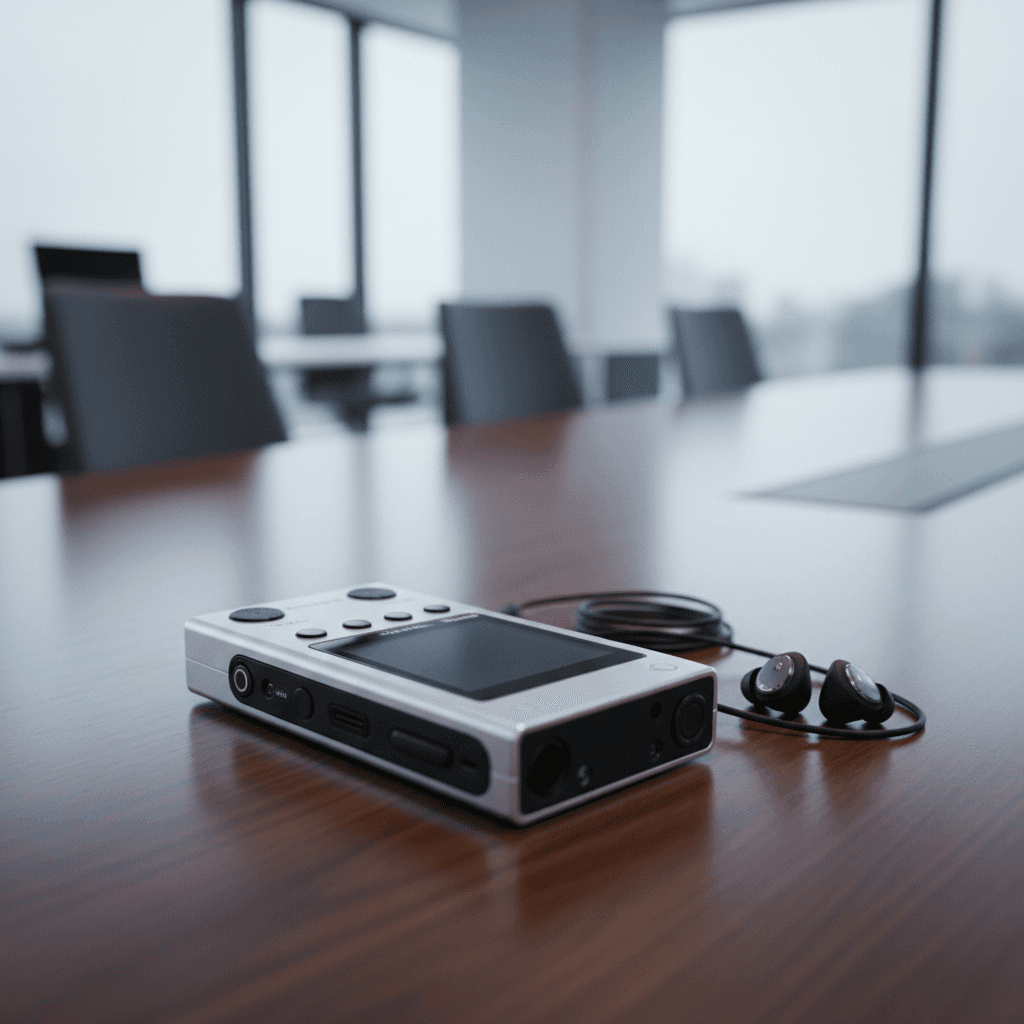
Our recommended Digital Voice Recorder.
Understanding Louisiana's Recording Laws
The Legal Foundation
Louisiana's electronic surveillance laws are found in Title 15, Sections 1301 through 1312 of the Louisiana Revised Statutes. The key statutes are:
- La. R.S. 15:1303 -- Interception and disclosure of wire, electronic, or oral communications
- La. R.S. 15:1302 -- Definitions
- La. R.S. 15:1312 -- Recovery of civil damages authorized
Under La. R.S. 15:1303, it is unlawful to willfully intercept, attempt to intercept, or procure any other person to intercept any wire, electronic, or oral communication. The law provides an important exception: recording is lawful when at least one party to the communication consents.
The statute also prohibits willfully using or attempting to use the contents of any communication when you know or have reason to know that the information was obtained through unlawful interception.
One-Party vs. Two-Party Consent Explained
In a one-party consent state like Louisiana, only one person in the conversation needs to know about and consent to the recording. That person can be you. You do not need to announce "this call is being recorded" or get anyone else's permission before you start.
In contrast, two-party (or all-party) consent states like California and Florida require every person in the conversation to agree to be recorded.
What Counts as a Protected Communication?
Louisiana's statute only protects communications where the parties have a reasonable expectation of privacy. Conversations in public places where others can easily overhear are generally not protected. This means you do not need consent to record conversations happening openly in parks, restaurants, sidewalks, or other public settings.
Recording Phone Calls in Louisiana
Can You Record Phone Calls in Louisiana?
Yes. Under La. R.S. 15:1303, you can record any phone call you are participating in without informing the other party. This applies to:
- Landline calls
- Cell phone calls
- VoIP calls (Zoom, Teams, Google Meet, etc.)
- Video calls
Recording Calls Across State Lines
If you are in Louisiana calling someone in a two-party consent state, the stricter law typically applies. States requiring all-party consent include:
- California
- Connecticut
- Florida
- Illinois
- Maryland
- Massachusetts
- Montana
- Nevada (for phone calls)
- New Hampshire
- Pennsylvania
- Washington
Best practice: If you are recording calls with people in other states, either inform them or get all-party consent to stay safe.
Business Call Recording
Louisiana businesses can record calls for quality assurance, training, or compliance purposes. Consent can be obtained through:
- Verbal consent before the call begins
- A recorded announcement ("This call may be recorded...")
- A periodic beep tone during the call
Federal law under 18 U.S.C. 2511 also permits one-party consent recording, which aligns with Louisiana's approach.
Recording In-Person Conversations
When Is It Legal?
You can record in-person conversations in Louisiana when:
- You are participating in the conversation
- You are in a public place where there is no reasonable expectation of privacy
- You have consent from at least one party (which can be yourself)
When Is It Illegal?
It is illegal to record conversations when:
- You are not a party to the conversation and do not have consent from any participant
- You are intercepting communications in places where parties have a reasonable expectation of privacy
- You are using illegally obtained recordings for any purpose
What About Recording in Your Own Home?
You can record conversations in your own home if you are participating in them. However, you cannot:
- Plant a hidden device and leave to record others without being present
- Record guests in areas with privacy expectations (bathrooms, guest bedrooms)
- Record intimate activities without consent

Louisiana Video Recording Laws

Public Spaces
Louisiana has no general prohibition on video recording in public spaces. You can:
- Film on public streets, parks, and sidewalks
- Record public meetings and government proceedings
- Use dashcams in your vehicle
- Film public protests or demonstrations
Video Voyeurism (La. R.S. 14:283)
Louisiana's video voyeurism statute under La. R.S. 14:283 prohibits using any camera or image recording device to observe or record a person without consent in a place where that person has a reasonable expectation of privacy.
Penalties for video voyeurism:
| Offense | Fine | Imprisonment |
|---|---|---|
| First conviction | Up to $2,000 | Up to 2 years |
| Second or subsequent | Up to $2,000 | 6 months to 3 years at hard labor (no parole) |
| Involving a child under 17 | Up to $10,000 | 2 to 10 years at hard labor (no parole) |
A conviction for video voyeurism also requires sex offender registration under Louisiana law.
Nonconsensual Disclosure of Intimate Images (La. R.S. 14:283.2)
Louisiana also criminalizes the nonconsensual disclosure of private intimate images under La. R.S. 14:283.2. This law makes it illegal to intentionally share intimate images of an identifiable person without their consent when you know or should know it could cause harm. Penalties include fines up to $10,000, imprisonment up to 2 years, or both.
If you are recording someone's likeness for business purposes, you should ensure that you gain proper consent by having them fill out a photo or video consent form.
Recording in the Workplace
Can Your Employer Record You?
Louisiana employers can generally record in common work areas where employees do not have a privacy expectation. However, employers cannot record in:
- Bathrooms
- Locker rooms
- Changing areas
Can You Record Your Employer?
Yes. As a one-party consent state, you can record conversations with your boss, HR representatives, coworkers, or anyone else at work as long as you are part of the conversation. This can be valuable for:
- Documenting harassment or discrimination
- Recording performance reviews
- Protecting yourself in employment disputes
- Preserving important verbal instructions
Caution: Your employer may have internal policies against recording. While recording is legal under Louisiana state law, violating company policy could result in termination or other disciplinary action.
Recording Police and Government Officials
Can You Record Police Officers in Louisiana?
Yes. The First Amendment protects your right to record law enforcement officers performing their duties in public. The U.S. Court of Appeals for the Fifth Circuit, which covers Louisiana, has recognized this right, subject to reasonable time, place, and manner restrictions.
Important limitations:
- Do not interfere with police operations
- Do not trespass to get a better angle
- Follow lawful orders to step back (within reason)
- Do not obstruct the officer's duties
Louisiana's Police Buffer Zone Law (2024)
In 2024, Louisiana enacted a law making it a misdemeanor to intentionally remain within 25 feet of a law enforcement officer after being ordered to move back. The law carried penalties of up to $500 in fines and 60 days in jail.
However, in January 2025, U.S. District Judge John deGravelles blocked enforcement of this law. The court found the statute unconstitutionally vague under the Fourteenth Amendment, stating it "allows for arbitrary and discriminatory enforcement" because it lacks clear standards for when an officer can issue a retreat order. The court also found the law likely impairs First Amendment rights to gather news.
As of early 2025, Louisiana has appealed this ruling to the Fifth Circuit Court of Appeals, and the law remains unenforceable while the appeal is pending.
Recording Government Meetings
Louisiana's Open Meetings Law (La. R.S. 42:11-28) requires most government meetings to be open to the public. The law explicitly states that all proceedings in a public meeting may be video or tape recorded, filmed, or broadcast live. You can record:
- City council meetings
- Parish council meetings
- School board meetings
- State legislative proceedings
- Public hearings
Certain public bodies in parishes and municipalities with larger populations are even required to broadcast their meetings live.
Specific Situations
Can I Record My Landlord in Louisiana?
Yes, if you are part of the conversation. Recording interactions with landlords can help document:
- Verbal agreements about repairs
- Harassment or illegal entry
- Disputes about lease terms
- Evidence for tenant rights cases
Can I Record My Doctor in Louisiana?
Yes, you can record medical appointments you attend. This can be helpful for:
- Remembering complex medical instructions
- Documenting informed consent discussions
- Having a record of diagnoses
- Sharing information with family caregivers
Note that while Louisiana law permits this recording, some medical offices may have their own policies. The legal right to record as a one-party participant overrides private policies, but being transparent can help maintain a good patient-provider relationship.
Can I Record DCFS Workers?
Yes. Department of Children and Family Services (DCFS) workers are government employees, and you can record your interactions with them as long as you are participating in the conversation.
Can I Record My Ex-Spouse or Co-Parent?
Yes, during conversations you are part of. This is common in custody disputes. However:
- Do not record your children's private conversations without being present
- Do not use children to secretly record the other parent
- Consider how recordings may be viewed by family courts
Can I Use a Dashcam in Louisiana?
Yes. Dashcams are legal in Louisiana. There are no specific state laws restricting their use, but you should:
- Mount the camera so it does not obstruct your view
- Be aware that audio recording follows one-party consent rules
- Check if your insurance offers dashcam discounts
Using Recordings as Evidence in Louisiana
Are Recordings Admissible in Court?
Recordings made legally under Louisiana's one-party consent law are generally admissible as evidence. However, courts may consider:
- Authentication -- Can you prove the recording is genuine and unaltered?
- Relevance -- Does the recording matter to the case?
- Hearsay rules -- Some statements on a recording may be excluded under hearsay objections
- Prejudicial vs. probative value -- Does the recording's persuasive impact unfairly outweigh its factual value?
Criminal Cases vs. Civil Cases
- Criminal cases: Illegally obtained recordings are typically inadmissible and may result in separate felony charges against the person who made the recording
- Civil cases: Rules can be more flexible, but illegally obtained evidence may still be excluded and could expose you to civil liability
Penalties for Illegal Recording in Louisiana

Criminal Penalties (La. R.S. 15:1303)
Unlawful interception of communications is a serious felony in Louisiana:
| Penalty | Amount |
|---|---|
| Prison time | 2 to 10 years at hard labor |
| Fine | Up to $10,000 |
These penalties apply to anyone who willfully intercepts a communication, willfully discloses the contents of an illegally intercepted communication, or willfully uses the contents of an illegally intercepted communication.
Civil Liability (La. R.S. 15:1312)
Victims of illegal recording may file a civil lawsuit under La. R.S. 15:1312 and recover:
- Actual damages suffered as a result of the violation
- Statutory damages of $100 per day or $1,000, whichever is greater
- Punitive damages in appropriate cases
- Attorney's fees and litigation costs
The statute of limitations for civil claims is two years from the date the claimant first discovered or had a reasonable opportunity to discover the violation.
2025 Legislative Update
During the 2025 Regular Session, the Louisiana Legislature passed Senate Bill 53, which amended provisions related to law enforcement electronic surveillance warrants under La. R.S. 15:1310. The bill refined definitions and procedures for how law enforcement agencies obtain warrants to intercept communications, including establishing standards for "monitoring posts." This legislation affects law enforcement surveillance procedures and does not change the one-party consent rules for private citizens.
More Louisiana Laws
Sources and References
- La. R.S. 15:1303 - Interception and disclosure of wire, electronic, or oral communications(legis.la.gov).gov
- La. R.S. 15:1302 - Definitions(law.justia.com)
- La. R.S. 15:1312 - Recovery of civil damages authorized(law.justia.com)
- La. R.S. 14:283 - Video voyeurism; penalties(legis.la.gov).gov
- La. R.S. 14:283.2 - Nonconsensual disclosure of a private image(legis.la.gov).gov
- Louisiana Open Meetings Law (La. R.S. 42:11-28)(legis.la.gov).gov
- 18 U.S.C. 2511 - Federal Wiretap Act(law.cornell.edu)
- Louisiana SB 53 (2025) - Electronic Surveillance Warrants(legis.la.gov).gov
- RCFP Reporters Recording Guide - Louisiana(rcfp.org)
- Federal Court Blocks Louisiana Police Buffer Zone Law (2025)(rcfp.org)