
Washington
Leyes de Atropello y Fuga en Washington: Penas y Qué Hacer
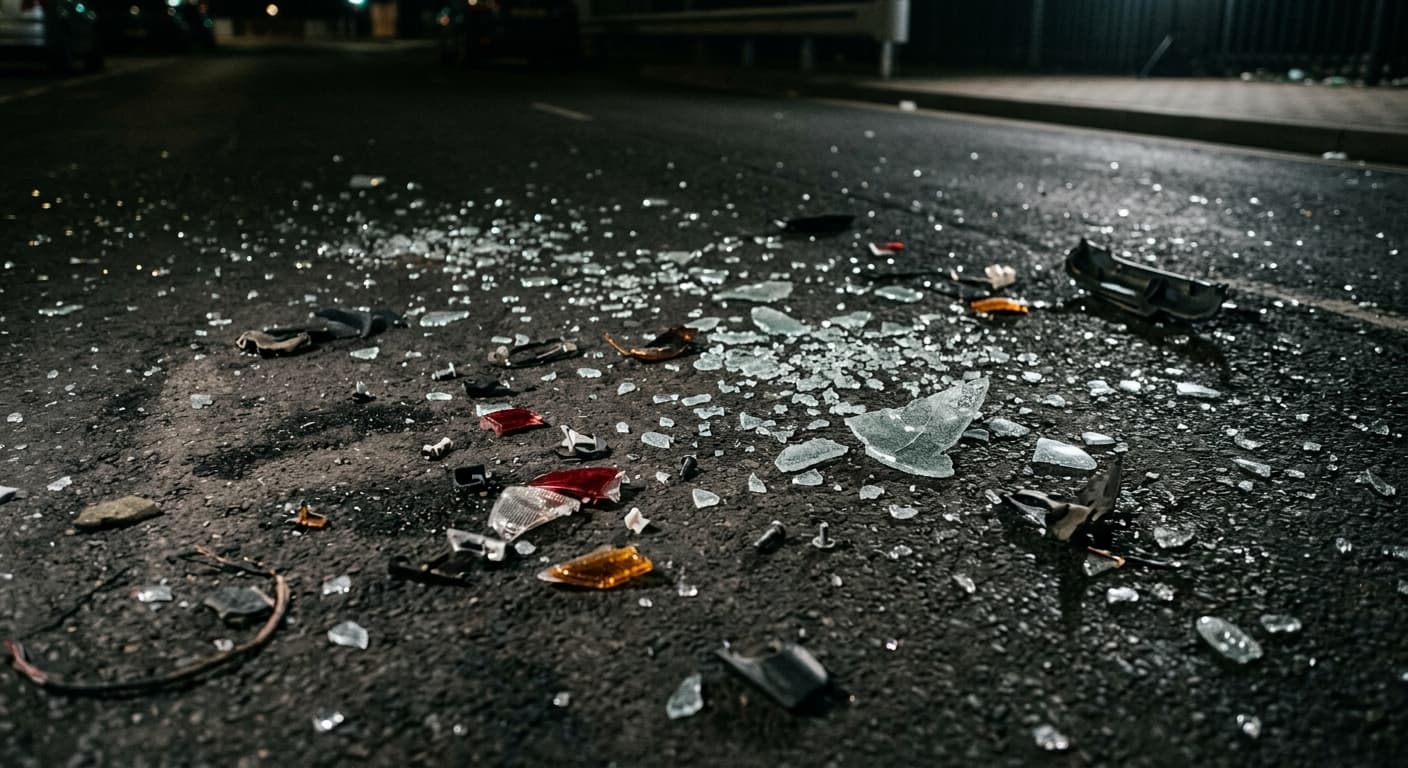
Según el RCW 46.52.020, Washington exige que los conductores involucrados en cualquier accidente se detengan, proporcionen su información de identificación y ayuden a las personas lesionadas. Las penas van desde un delito menor por incidentes que solo causan daños materiales hasta un delito grave de Clase B que conlleva hasta 10 años de prisión y una multa de $20,000 cuando el accidente resulta en la muerte de una persona.
¿Resultó lesionado en un atropello y fuga? Si el conductor que lo golpeó huyó o no tenía seguro, su propia cobertura de motorista sin seguro o con seguro insuficiente (UM/UIM) podría cubrir su reclamo por lesiones. Calcule cuánto podría valer con nuestra Calculadora gratuita de Acuerdos por Accidentes de Auto en Washington.
Resumen de las Leyes de Atropello y Fuga en Washington
Última verificación: marzo de 2026. Esta página refleja el RCW 46.52.010, el RCW 46.52.020 vigentes, y las clasificaciones de penas aplicables según el RCW 9A.20.021.
El estado de Washington toma muy en serio los delitos de atropello y fuga. Según el RCW 46.52.020, todo conductor involucrado en un accidente debe detenerse de inmediato, proporcionar su información de identificación y prestar la asistencia razonable a cualquier persona lesionada.
La ley traza una línea clara entre los accidentes que solo causan daños materiales y aquellos que involucran lesiones o la muerte. Las penas van desde un delito menor simple por golpear un vehículo desatendido hasta un delito grave de Clase B por darse a la fuga después de un accidente fatal.
Washington es un estado de responsabilidad por culpa (tort) que sigue una regla de negligencia comparativa pura. El conductor responsable del accidente paga los daños, y las víctimas lesionadas pueden recuperar una compensación incluso si comparten parte de la culpa. La compensación se reduce en proporción al porcentaje de culpa de la víctima.
Obligaciones del Conductor Después de un Accidente
El RCW 46.52.020 detalla las obligaciones específicas que todo conductor debe cumplir después de un accidente. Usted debe:
- Detenerse de inmediato en el lugar del accidente o lo más cerca posible sin bloquear el tráfico.
- Permanecer en el lugar hasta haber cumplido con todos los requisitos que exige la ley.
- Proporcionar su información al otro conductor, a los pasajeros o al propietario de la propiedad. Esto incluye su nombre, dirección, compañía de seguros, número de póliza y número de placa del vehículo.
- Mostrar su licencia de conducir si alguien en el lugar se la solicita.
- Ayudar a las personas lesionadas organizando el transporte a un hospital o centro médico cuando sea necesario.
Si el accidente solo involucra daños materiales, el inciso (2) del estatuto le exige mover su vehículo fuera de la calzada, los carriles de la autopista, los acotamientos y los camellones hacia un lugar seguro, como una rampa de salida o una calle transversal. Mover su vehículo no afecta la determinación de culpa.
Excepción importante: La ley no se aplica a los conductores que quedan lesionados o incapacitados por el accidente al punto de no poder cumplir físicamente con estos requisitos.
Choque contra un Vehículo o Propiedad Desatendidos
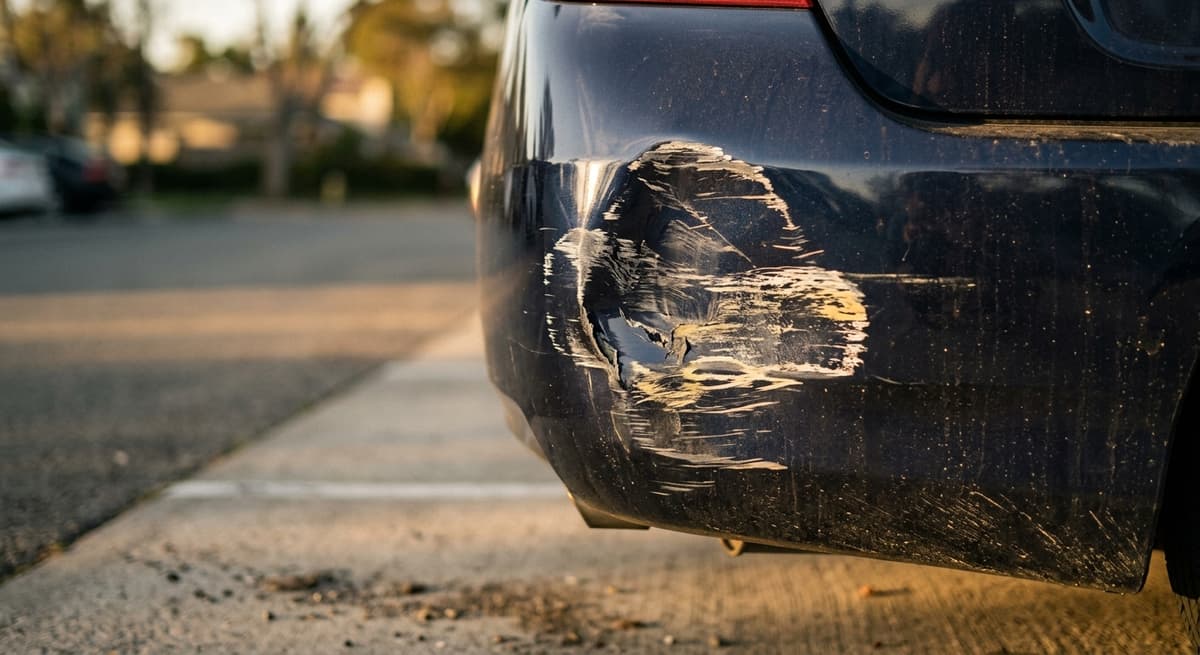
Según el RCW 46.52.010, si usted golpea un vehículo desatendido u otra propiedad, debe hacer un esfuerzo razonable por localizar al propietario. Si no puede localizarlo, debe dejar una nota escrita en un lugar visible del vehículo o la propiedad. La nota debe incluir su nombre y dirección. No hacerlo constituye un delito menor.
Requisitos de Reporte
Según el RCW 46.52.030, usted debe presentar un reporte escrito del accidente dentro de cuatro días si el accidente involucra:
- Muerte o lesión corporal de cualquier persona
- Daños materiales a la propiedad de una sola persona iguales o superiores al umbral establecido por la Patrulla Estatal de Washington, actualmente $1,000 según el WAC 446-85-010
Presente el reporte ante el jefe de policía si el accidente ocurrió dentro de los límites de la ciudad, o ante el alguacil del condado o la Patrulla Estatal de Washington si ocurrió fuera de los límites de la ciudad. Si nadie en el lugar puede recibir su información y no hay ningún oficial de policía presente, reporte el accidente de inmediato a la autoridad policial más cercana.
Cuándo el Atropello y Fuga Es un Delito Menor
La ley de Washington clasifica el atropello y fuga como delito menor en dos situaciones:
| Situación | Clasificación | Tiempo Máximo en la Cárcel | Multa Máxima |
|---|---|---|---|
| Choque contra un vehículo o propiedad desatendidos sin dejar una nota | Delito Menor Simple | 90 días | $1,000 |
| Darse a la fuga tras un accidente con un vehículo ocupado que solo causa daños materiales | Delito Menor Agravado | 364 días | $5,000 |
| Darse a la fuga después de golpear el cuerpo de una persona fallecida | Delito Menor Agravado | 364 días | $5,000 |
Un delito menor simple se aplica cuando usted golpea un auto desatendido o un buzón y se aleja sin dejar su información. Las penas son hasta 90 días en la cárcel y una multa de $1,000, según el RCW 9A.20.021.
Un delito menor agravado se aplica cuando usted se da a la fuga después de un accidente que involucra un vehículo ocupado o atendido en el que solo se dañó la propiedad. Las penas aumentan hasta 364 días en la cárcel y una multa de $5,000. La misma clasificación se aplica si usted se da a la fuga después de golpear el cuerpo de una persona fallecida.
Cuándo el Atropello y Fuga Es un Delito Grave
Según el RCW 46.52.020(4), darse a la fuga se convierte en un delito grave cuando el accidente involucra lesiones o la muerte:
| Situación | Clasificación | Tiempo Máximo de Prisión | Multa Máxima |
|---|---|---|---|
| Accidente que causa lesiones | Delito Grave de Clase C | 5 años | $10,000 |
| Accidente que resulta en la muerte | Delito Grave de Clase B | 10 años | $20,000 |
Estas penas están establecidas por el RCW 9A.20.021, que fija las sentencias máximas para las clasificaciones de delitos graves en Washington.
Una condena por atropello y fuga como delito grave también conlleva la revocación obligatoria de la licencia por parte del Departamento de Licencias de Washington. Según el RCW 46.20.285, el período de revocación es de un año. Después de que termine el período de revocación, usted debe presentar prueba de responsabilidad financiera (seguro SR-22) durante tres años antes de que su licencia pueda ser reinstalada.
Evasión de la Policía
Según el RCW 46.61.024, intentar evadir o eludir a un oficial de policía es un delito grave de Clase C independiente. La condena resulta en la revocación obligatoria de la licencia. Existe una defensa afirmativa: si una persona razonable no habría creído que la señal provenía de un oficial de policía y la decisión de seguir conduciendo fue razonable dadas las circunstancias.
Homicidio Vehicular
Según el RCW 46.61.520, el homicidio vehicular ocurre cuando la muerte se produce dentro de un plazo de tres años como resultado directo de conducir un vehículo bajo cualquiera de estas tres circunstancias:
- Bajo la influencia de licor o drogas embriagantes (según lo define el RCW 46.61.502)
- De manera imprudente (operar un vehículo de forma temeraria o descuidada, sin importar las consecuencias)
- Con desprecio por la seguridad de los demás
El homicidio vehicular es un delito grave de Clase A castigado con hasta cadena perpetua y una multa de $50,000. En las condenas relacionadas con manejar bajo la influencia (DUI), se añaden dos años adicionales a la sentencia por cada delito previo relacionado con DUI.
Revocación de Licencia y Consecuencias Administrativas
Además de las penas criminales, una condena por atropello y fuga conlleva consecuencias administrativas a través del Departamento de Licencias de Washington (DOL):
- Revocación obligatoria de la licencia por cualquier condena de atropello y fuga que involucre un vehículo atendido
- Período de revocación de un año según el RCW 46.20.285
- Requisito de seguro SR-22 durante tres años después de que su licencia sea elegible para reinstalación
- Conducir con la licencia revocada durante el período de revocación es un delito penal independiente según el RCW 46.20.342
La revocación del DOL es independiente de cualquier pena impuesta por el tribunal. Incluso si usted evita ir a la cárcel, sus privilegios de conducir seguirán siendo revocados.
Plazo de Prescripción
Washington establece diferentes plazos para que los fiscales presenten cargos de atropello y fuga, según la gravedad del delito. Según el RCW 9A.04.080:
| Nivel del Delito | Plazo para Presentar Cargos |
|---|---|
| Delito Menor Simple (vehículo desatendido) | 1 año desde la fecha del incidente |
| Delito Menor Agravado (vehículo atendido, daños materiales) | 2 años desde la fecha del incidente |
| Delito Grave de Clase C (lesiones) | 3 años desde la fecha del incidente |
| Delito Grave de Clase B (muerte) | Sin límite si resulta en la muerte |
El plazo de prescripción se pausa durante cualquier período en que el acusado no resida de manera habitual y pública en el estado de Washington.
En cuanto a los reclamos civiles, las víctimas lesionadas tienen tres años para presentar una demanda por lesiones personales, muerte injusta o daños materiales en Washington.
Desvío Previo al Juicio
Washington no tiene una ley estatal de desvío para los cargos de atropello y fuga. Algunos fiscales de condado administran sus propios programas de desvío para delitos graves, y si un caso califica depende del fiscal de ese condado.
Las reglas de elegibilidad, condiciones como la restitución, y el efecto en su historial varían de condado a condado. Consulte con un abogado defensor criminal si el fiscal a cargo de su caso ofrece desvío y si su cargo califica.
Implicaciones de Seguro para las Víctimas de Atropello y Fuga
Si usted es víctima de un atropello y fuga en Washington y no se puede identificar al conductor responsable, aún tiene opciones para recuperar una compensación.
Según el RCW 48.22.030, Washington exige que todas las pólizas de seguro de responsabilidad civil automotriz incluyan cobertura de motorista sin seguro (UM), a menos que usted la rechace específicamente por escrito. El estatuto extiende esta cobertura a las lesiones y daños causados por vehículos que se dan a la fuga y por vehículos «fantasma», lo cual cubre el escenario típico de atropello y fuga.
Se aplican condiciones adicionales a un vehículo fantasma, es decir, un vehículo que causó el accidente sin tener contacto físico con usted o con el vehículo en el que viajaba. Según el RCW 48.22.030(8), un reclamo por vehículo fantasma requiere que:
- El accidente se haya reportado a las autoridades dentro de las 72 horas
- Los hechos puedan corroborarse con evidencia competente distinta al testimonio del asegurado u otro reclamante
Esas dos condiciones legales están escritas para vehículos fantasma, no para un conductor de atropello y fuga que lo haya golpeado a usted. De cualquier manera, reporte el accidente a la policía de inmediato y notifique a su compañía de seguros según lo exija su póliza.
Washington también exige que las aseguradoras ofrezcan cobertura de motorista con seguro insuficiente (UIM). Si el conductor del atropello y fuga es identificado posteriormente pero cuenta con un seguro insuficiente, la cobertura UIM puede cubrir la diferencia.
Resumen Completo de las Penas
| Delito | Clasificación | Cárcel/Prisión Máx. | Multa Máx. | Impacto en la Licencia |
|---|---|---|---|---|
| Vehículo desatendido (sin nota) | Delito Menor Simple | 90 días | $1,000 | Ninguno |
| Vehículo atendido (daños materiales) | Delito Menor Agravado | 364 días | $5,000 | Revocada 1 año |
| Golpear el cuerpo de una persona fallecida | Delito Menor Agravado | 364 días | $5,000 | No aparece en el RCW 46.20.285 |
| Accidente con lesiones | Delito Grave Clase C | 5 años | $10,000 | Revocada 1 año |
| Accidente con muerte | Delito Grave Clase B | 10 años | $20,000 | Revocada 1 año |
| Homicidio vehicular (DUI/imprudencia) | Delito Grave Clase A | Cadena perpetua | $50,000 | Revocada |
| Evadir a la policía | Delito Grave Clase C | 5 años | $10,000 | Revocada |
Consecuencia adicional: Todas las condenas de atropello y fuga que involucren vehículos atendidos requieren prueba de responsabilidad financiera SR-22 durante tres años después de que la licencia sea elegible para reinstalación.
Estadísticas de Accidentes en Washington
Según la Comisión de Seguridad del Tráfico de Washington (WTSC):
- 731 muertes de tráfico ocurrieron en Washington en 2024, una disminución del 10% respecto a las 809 muertes de 2023.
- 2023 marcó el nivel más alto en 33 años de muertes de tráfico en Washington, el mayor número desde 1990.
- 348 muertes (48%) en 2024 involucraron deterioro del conductor por alcohol o drogas.
- 247 muertes (34%) en 2024 involucraron exceso de velocidad.
- Los condados de King, Pierce, Snohomish, Spokane y Yakima representaron juntos más de la mitad de todos los accidentes fatales en todo el estado.
La disminución de 2024 representó la primera baja en cinco años. A pesar de la mejora, las muertes de tráfico siguen siendo considerablemente más altas que hace una década. Los incidentes de atropello y fuga siguen siendo una preocupación en áreas urbanas como Seattle, Tacoma y Spokane.
Más Leyes de Washington
- Leyes de Washington sobre Grabación de Reuniones con IA
- Leyes de Washington sobre Pensión Alimenticia Conyugal
- Leyes de Washington sobre Empleo a Voluntad
- Leyes de Washington sobre Accidentes de Auto
- Leyes de Washington sobre Asientos de Auto para Niños
- Leyes de Washington sobre Custodia de Menores
- Leyes de Washington sobre Manutención de Menores
- Leyes de Washington sobre Matrimonio de Hecho
- Leyes de Washington sobre Privacidad de Datos
- Leyes de Washington sobre Deepfakes
- Leyes de Washington sobre Divorcio
- Leyes de Washington sobre Mordeduras de Perro
- Leyes de Washington sobre Emancipación de Menores
- Leyes de Washington sobre Eliminación de Antecedentes Penales
- Leyes de Washington sobre Arrendador e Inquilino
- Leyes de Washington sobre Vehículos Defectuosos (Lemon Law)
Leyes Relacionadas de Washington
- Leyes de Washington sobre Grabación
- Leyes de Washington sobre Asientos de Auto para Niños
- Leyes de Washington sobre Manutención de Menores
- Ley de Vehículos Defectuosos de Washington (Lemon Law)
- Leyes de Washington sobre Sexting
- Plazo de Prescripción de Washington
- Leyes de Washington sobre Denunciantes (Whistleblower)
- Leyes de Washington sobre Mordeduras de Perro
- Guías de Sentencias por Homicidio por Estado
Preguntas frecuentes
¿Qué debo hacer inmediatamente después de un atropello y fuga en Washington?
Detenga su vehículo en el lugar del accidente o lo más cerca posible de manera segura. Proporcione su nombre, dirección, información del seguro y número de placa al otro conductor, a los pasajeros o al propietario de la propiedad. Muestre su licencia de conducir si se la solicitan. Preste la asistencia razonable a cualquier persona lesionada, incluyendo organizar el transporte a un hospital. Reporte el accidente a la policía, especialmente si involucra lesiones, muerte o daños materiales de $1,000 o más.
¿Es Washington un estado sin culpa (no-fault) para accidentes de auto?
No. Washington es un estado de responsabilidad por culpa (tort) que sigue una regla de negligencia comparativa pura. El conductor que causó el accidente es responsable de pagar los daños. Las víctimas lesionadas pueden recuperar una compensación incluso si comparten parte de la responsabilidad, pero su compensación se reduce en proporción a su porcentaje de culpa.
¿Cuál es el plazo de prescripción para los cargos de atropello y fuga en Washington?
Depende de la gravedad. Los cargos de delito menor simple (vehículo desatendido) deben presentarse dentro de 1 año. Los cargos de delito menor agravado (vehículo atendido, daños materiales) deben presentarse dentro de 2 años. Los cargos de delito grave de Clase C (lesiones) deben presentarse dentro de 3 años. No existe límite de tiempo para presentar cargos cuando un atropello y fuga resulta en la muerte. Para las demandas civiles, las víctimas lesionadas tienen 3 años para presentar un reclamo por lesiones personales o daños materiales.
¿Puedo usar mi propio seguro después de ser víctima de un atropello y fuga?
Sí. Según el RCW 48.22.030, Washington exige que las aseguradoras de autos incluyan cobertura de motorista sin seguro (UM) en cada póliza, a menos que usted la rechace por escrito. La cobertura se extiende a los vehículos que se dan a la fuga. Si el otro vehículo nunca tuvo contacto físico (un vehículo fantasma), el estatuto también exige un reporte policial dentro de 72 horas y evidencia que corrobore el hecho más allá de su propio testimonio.
¿Qué pasa si no pude detenerme físicamente después del accidente?
La ley de Washington exime específicamente a las personas que quedan lesionadas o incapacitadas por el accidente al punto de no poder cumplir físicamente con los requisitos de detenerse y reportar. Si usted perdió el conocimiento o sufrió lesiones que le impidieron detenerse, esto puede servir como una defensa válida. Los registros médicos que documenten su condición en el momento del accidente respaldarían esta defensa.
Actualizaciones
Se corrigió el período de revocación de la licencia, se aclaró que las condiciones de reporte en 72 horas y evidencia corroborante aplican a los reclamos de vehículo fantasma, se reemplazó la descripción de un programa estatal de desvío por información a nivel de condado, y se citó el umbral de $1,000 para reportar accidentes.
La ley detrás de este artículo
Este artículo se apoya en las disposiciones legales a continuación, conservadas en nuestro propio registro jurídico y obtenidas de la fuente oficial. Toque una sección para leer el texto vigente.
Revised Code of Washington
§ 46.52.020Duty in case of personal injury or death or damage to attended vehicle or other property—Penalties.Vigente
(1) A driver of any vehicle involved in an accident resulting in the injury to or death of any person or involving striking the body of a deceased person shall immediately stop such vehicle at the scene of such accident or as close thereto as possible but shall then forthwith return to, and in every event remain at, the scene of such accident until he or she has fulfilled the requirements of subsection (3) of this section; every such stop shall be made without obstructing traffic more than is necessary. (2)(a) The driver of any vehicle involved in an accident resulting only in damage to a vehicle which is driven or attended by any person or damage to other property must move the vehicle as soon as possible off the roadway or freeway main lanes, shoulders, medians, and adjacent areas to a location on an exit ramp shoulder, the frontage road, the nearest suitable cross street, or other suitable location. The driver shall remain at the suitable location until he or she has fulfilled the requirements of subsection (3) of this section. Moving the vehicle in no way affects fault for an accident.
Texto oficial (extracto) · verificado el 2026-09-24 · Lea el texto completo en nuestra biblioteca legal · Verifique en app.leg.wa.gov
Citada en 99 resoluciones judiciales de nuestra colecciónResolución más reciente que la cita en nuestra colección: 2026
Resoluciones que citan esta sección en nuestra colección:
- State v. Keller (Washington Supreme Court 2001, 143 Wash. 2d 267)“…der former RCW 46.61.522(1)(b) and felony hit and run under RCW 46.52.020. 1 Petitioner was determined to be a p…”
- In Re the Personal Restraint of Williams (Washington Supreme Court 1988, 111 Wash. 2d 353)“…riving (RCW 46.61.500), or hit-and-run an attended vehicle (RCW 46.52.020(5)); or " (b) Any federal, out-of-sta…”
- State v. Martin (Washington Supreme Court 1968, 73 Wash. 2d 616)“…g, a misdemeanor, and with the gross misdemeanor defined in RCW 46.52.020, generally referred to as the hit and r…”
Identificado automáticamente a partir de las opiniones judiciales que citan esta sección; no es un ranking de qué caso prevalece.
§ 46.52.010Duty on striking unattended car or other property—Penalty.Vigente
(1) The operator of any vehicle which collided with any other vehicle which is unattended shall immediately stop and shall then and there either locate and notify the operator or owner of such vehicle of the name and address of the operator and owner of the vehicle striking the unattended vehicle or shall leave in a conspicuous place in the vehicle struck a written notice, giving the name and address of the operator and of the owner of the vehicle striking such other vehicle. (2) The driver of any vehicle involved in an accident resulting only in damage to property fixed or placed upon or adjacent to any public highway shall take reasonable steps to locate and notify the owner or person in charge of such property of such fact and of the name and address of the operator and owner of the vehicle striking such property, or shall leave in a conspicuous place upon the property struck a written notice, giving the name and address of the operator and of the owner of the vehicle so striking the property, and such person shall further make report of such accident as in the case of other accidents upon the public highways of this state.
Texto oficial (extracto) · verificado el 2026-07-29 · Lea el texto completo en nuestra biblioteca legal · Verifique en app.leg.wa.gov
Citada en 20 resoluciones judiciales de nuestra colecciónResolución más reciente que la cita en nuestra colección: 2025
Resoluciones que citan esta sección en nuestra colección:
- State v. Apodaca (Court of Appeals of Washington 1992, 67 Wash. App. 736)“…e he had notified the owner of the vehicle of the incident. RCW 46.52.010. In reviewing a trial court's fi…”
- State v. Johnson (Washington Supreme Court 1992, 119 Wash. 2d 167)“…different from the nature of permitting prostitution. Under RCW 46.52.010 or .020, one must be involved in a coll…”
- State v. Reding (Washington Supreme Court 1992, 119 Wash. 2d 685)“…striking an unattended car or property (a misdemeanor under RCW 46.52.010); falling to take the necessary steps w…”
Identificado automáticamente a partir de las opiniones judiciales que citan esta sección; no es un ranking de qué caso prevalece.
§ 46.52.030Accident reports.Vigentecitada en 2 de nuestros artículos
(1) Unless a report is to be made by a law enforcement officer under subsection (3) of this section, the driver of any vehicle involved in an accident resulting in injury to or death of any person or damage to the property of any one person to an apparent extent equal to or greater than the minimum amount established by rule adopted by the chief of the Washington state patrol in accordance with subsection (5) of this section, shall, within four days after such accident, make a written report of such accident to the chief of police of the city or town if such accident occurred within an incorporated city or town or the county sheriff or state patrol if such accident occurred outside incorporated cities and towns. Nothing in this subsection prohibits accident reports from being filed by drivers where damage to property is less than the minimum amount or where a law enforcement officer has submitted a report. (2) The original of the report shall be immediately forwarded by the authority receiving the report to the chief of the Washington state patrol at Olympia, Washington. The Washington state patrol shall give the department of licensing full access to the report.
Texto oficial (extracto) · verificado el 2026-07-29 · Lea el texto completo en nuestra biblioteca legal · Verifique en app.leg.wa.gov
Citada en 11 resoluciones judiciales de nuestra colecciónResolución más reciente que la cita en nuestra colección: 2022
Resoluciones que citan esta sección en nuestra colección:
- Guillen v. Pierce County (Washington Supreme Court 2001, 181 A.L.R. Fed. 741)“…ts” in RCW 46.52.080 refers to reports prepared pursuant to RCW 46.52.030(1) or .040 by persons involved in the a…”
- Gendler v. Batiste (Washington Supreme Court 2012, 174 Wash. 2d 244)“…o prepare accident reports for accidents on state highways. RCW 46.52.030 (Laws of 1937, ch. 189, § 135). Drivers…”
- Brown v. Pro West Transport Ltd. (Court of Appeals of Washington 1995, 76 Wash. App. 412)“…417 Failure to Comply With RCW 46.52.020 and RCW 46.52.030 We first decide whether there ex…”
Identificado automáticamente a partir de las opiniones judiciales que citan esta sección; no es un ranking de qué caso prevalece.
§ 46.20.285Offenses requiring revocation.Vigente
The department shall revoke the license of any driver for the period of one year unless otherwise provided in this section, upon receiving a record of the driver's conviction of any of the following offenses, when the conviction has become final: (1) For vehicular homicide the period of revocation shall be two years. The revocation period shall be tolled during any period of total confinement for the offense; (2) Vehicular assault. The revocation period shall be tolled during any period of total confinement for the offense; (3) Driving a motor vehicle while under the influence of intoxicating liquor or a narcotic drug, or under the influence of any other drug to a degree that renders the driver incapable of safely driving a motor vehicle, for the period prescribed in RCW 46.61.5055; (4) Any felony where the sentencing court determines that in the commission of the offense a motor vehicle was used in a manner that endangered persons or property; (5) Failure to stop and give information or render aid as required under the laws of this state in the event of a motor vehicle accident resulting in the death or personal injury of another or resulting in damage to a vehicle that is…
Texto oficial (extracto) · verificado el 2026-07-29 · Lea el texto completo en nuestra biblioteca legal · Verifique en app.leg.wa.gov
Citada en 38 resoluciones judiciales de nuestra colecciónResolución más reciente que la cita en nuestra colección: 2025
Resoluciones que citan esta sección en nuestra colección:
- State v. Dykstra (Court of Appeals of Washington 2005, 127 Wash. App. 1)“…red the mandatory driver’s license revocation provisions of RCW 46.20.285. 3 DISCUSSION Admission of Mr. Dyk…”
- State v. Batten (Washington Supreme Court 2000, 140 Wash. 2d 362)“…David, Deputy, Vancouver, for Respondent. ALEXANDER, J. RCW 46.20.285(4) requires revocation of the driver's…”
- State v. R.L.D. (Court of Appeals of Washington 2006, 132 Wash. App. 699)“…nt of Licensing to revoke his driver’s license under former RCW 46.20.285 (2004). 5 He appeals. 6 ANALYSIS…”
Identificado automáticamente a partir de las opiniones judiciales que citan esta sección; no es un ranking de qué caso prevalece.
§ 9A.20.021Maximum sentences for crimes committed July 1, 1984, and after.Vigentecitada en 6 de nuestros artículos
(1) Felony. Unless a different maximum sentence for a classified felony is specifically established by a statute of this state, no person convicted of a classified felony shall be punished by confinement or fine exceeding the following: (a) For a class A felony, by confinement in a state correctional institution for a term of life imprisonment, or by a fine in an amount fixed by the court of fifty thousand dollars, or by both such confinement and fine; (b) For a class B felony, by confinement in a state correctional institution for a term of ten years, or by a fine in an amount fixed by the court of twenty thousand dollars, or by both such confinement and fine; (c) For a class C felony, by confinement in a state correctional institution for five years, or by a fine in an amount fixed by the court of ten thousand dollars, or by both such confinement and fine. (2) Gross misdemeanor.
Texto oficial (extracto) · verificado el 2026-07-29 · Lea el texto completo en nuestra biblioteca legal · Verifique en app.leg.wa.gov
Citada en 505 resoluciones judiciales de nuestra colecciónResolución más reciente que la cita en nuestra colección: 2026
Resoluciones que citan esta sección en nuestra colección:
- State v. Manussier (Washington Supreme Court 1996, 129 Wash. 2d 652)“…93 violates this constitutional provision because it amends RCW 9A.20.021, the section of the criminal code provi…”
- State v. Ritchie (Washington Supreme Court 1995, 126 Wash. 2d 388)“…tence for this class A felony offense is life imprisonment. RCW 9A.20.021(1)(a). The trial court imposed an excep…”
- State v. Anderson (Washington Supreme Court 2000, 141 Wash. 2d 357)“…t a *1252 maximum term of five years' imprisonment ( see RCW 9A.20.021) is clearly a factor that weighs in fav…”
Identificado automáticamente a partir de las opiniones judiciales que citan esta sección; no es un ranking de qué caso prevalece.
§ 46.61.024Attempting to elude police vehicle—Defense—License revocation.Vigente
(1) Any driver of a motor vehicle who willfully fails or refuses to immediately bring his or her vehicle to a stop and who drives his or her vehicle in a reckless manner while attempting to elude a pursuing police vehicle, after being given a visual or audible signal to bring the vehicle to a stop, shall be guilty of a class C felony. The signal given by the police officer may be by hand, voice, emergency light, or siren. The officer giving such a signal shall be in uniform and the vehicle shall be equipped with lights and sirens. (2) It is an affirmative defense to this section which must be established by a preponderance of the evidence that: (a) A reasonable person would not believe that the signal to stop was given by a police officer; and (b) driving after the signal to stop was reasonable under the circumstances. (3) The license or permit to drive or any nonresident driving privilege of a person convicted of a violation of this section shall be revoked by the department of licensing.
Texto oficial (extracto) · verificado el 2026-07-29 · Lea el texto completo en nuestra biblioteca legal · Verifique en app.leg.wa.gov
Citada en 185 resoluciones judiciales de nuestra colecciónResolución más reciente que la cita en nuestra colección: 2025
Resoluciones que citan esta sección en nuestra colección:
- State v. Thomas (Washington Supreme Court 1987, 109 Wash. 2d 222)“…sel's failure to offer it did not prejudice Thomas. Under RCW 46.61.024, the State is required to prove that th…”
- State v. Hoffman (Washington Supreme Court 1991, 116 Wash. 2d 51)“…es that probable cause existed to arrest for a violation of RCW 46.61.024, "Attempting to Elude Pursuing Police V…”
- State v. Brett (Washington Supreme Court 1995, 126 Wash. 2d 136)“…jury may never have considered the subjective component of RCW 46.61.024 [the felony flight statute]. Thus, we b…”
Identificado automáticamente a partir de las opiniones judiciales que citan esta sección; no es un ranking de qué caso prevalece.
§ 46.61.520Vehicular homicide—Penalty.Vigente
(1) When the death of any person ensues within three years as a proximate result of injury proximately caused by the driving of any vehicle by any person, the driver is guilty of vehicular homicide if the driver was operating a motor vehicle: (a) While under the influence of intoxicating liquor or any drug, as defined by RCW 46.61.502; or (b) In a reckless manner; or (c) With disregard for the safety of others. (2) Vehicular homicide is a class A felony punishable under chapter 9A.20 RCW, except that, for a conviction under subsection (1)(a) of this section, an additional two years shall be added to the sentence for each prior offense as defined in RCW 46.61.5055.
Texto oficial (extracto) · verificado el 2026-07-29 · Lea el texto completo en nuestra biblioteca legal · Verifique en app.leg.wa.gov
Citada en 234 resoluciones judiciales de nuestra colecciónResolución más reciente que la cita en nuestra colección: 2026
Resoluciones que citan esta sección en nuestra colección:
- State v. Roggenkamp (Washington Supreme Court 2005, 153 Wash. 2d 614)“…r” is not defined in either the vehicular homicide statute, RCW 46.61.520, or the vehicular assault statute, RCW…”
- State v. Elgin (Washington Supreme Court 1992, 118 Wash. 2d 551)“…lony-class crimes within RCW 46.61 are: vehicular homicide (RCW 46.61.520), vehicular assault (RCW 46.61.522), an…”
- State v. Rivas (Washington Supreme Court 1995, 126 Wash. 2d 443)“…g and of the injuries to HEATHER M. NIHOUL, in violation of RCW 46.61.520, said crime being a Class "B” felony; c…”
Identificado automáticamente a partir de las opiniones judiciales que citan esta sección; no es un ranking de qué caso prevalece.
§ 46.61.502Driving under the influence.Vigentecitada en 3 de nuestros artículos
(1) A person is guilty of driving while under the influence of intoxicating liquor, cannabis, or any drug if the person drives a vehicle within this state: (a) And the person has, within two hours after driving, an alcohol concentration of 0.08 or higher as shown by analysis of the person's breath or blood made under RCW 46.61.506; or (b) The person has, within two hours after driving, a THC concentration of 5.00 or higher as shown by analysis of the person's blood made under RCW 46.61.506; or (c) While the person is under the influence of or affected by intoxicating liquor, cannabis, or any drug; or (d) While the person is under the combined influence of or affected by intoxicating liquor, cannabis, and any drug. (2) The fact that a person charged with a violation of this section is or has been entitled to use a drug under the laws of this state shall not constitute a defense against a charge of violating this section.
Texto oficial (extracto) · verificado el 2026-09-05 · Lea el texto completo en nuestra biblioteca legal · Verifique en app.leg.wa.gov
Citada en 458 resoluciones judiciales de nuestra colecciónResolución más reciente que la cita en nuestra colección: 2026
Resoluciones que citan esta sección en nuestra colección:
- State v. Thomas (Washington Supreme Court 1987, 109 Wash. 2d 222)“…er influence of intoxicating liquor or drug in violation of RCW 46.61.502. Thomas pleaded guilty to the DWI charg…”
- State v. Franco (Washington Supreme Court 1982, 96 Wash. 2d 816)“…ast one of the alternative theories by which a violation of RCW 46.61.502 might occur. I The analytical struc…”
- State v. Wittenbarger (Washington Supreme Court 1994, 124 Wash. 2d 467)“…has been widely challenged in recent DWI prosecutions under RCW 46.61.502, Washington’s driving while under the i…”
Identificado automáticamente a partir de las opiniones judiciales que citan esta sección; no es un ranking de qué caso prevalece.
§ 48.22.030Underinsured, hit-and-run, phantom vehicle coverage to be provided—Purpose—Definitions—Exceptions—Conditions—Deductibles—Information on motorcycle or motor-driven cycle coverage—Intended victims.Vigentecitada en 2 de nuestros artículos
(1) "Underinsured motor vehicle" means a motor vehicle with respect to the ownership, maintenance, or use of which either no bodily injury or property damage liability bond or insurance policy applies at the time of an accident, or with respect to which the sum of the limits of liability under all bodily injury or property damage liability bonds and insurance policies applicable to a covered person after an accident is less than the applicable damages which the covered person is legally entitled to recover.
Texto oficial (extracto) · verificado el 2026-07-29 · Lea el texto completo en nuestra biblioteca legal · Verifique en app.leg.wa.gov
Citada en 280 resoluciones judiciales de nuestra colecciónResolución más reciente que la cita en nuestra colección: 2026
Resoluciones que citan esta sección en nuestra colección:
- Clements v. Travelers Indemnity Co. (Washington Supreme Court 1993, 121 Wash. 2d 243)“…to meet the statutory requirement for written waivers under RCW 48.22.030(4). *249 Discussion…”
- Touchette v. Northwestern Mutual Insurance (Washington Supreme Court 1972, 80 Wash. 2d 327)“…ghn E. Evans, for respondent. HALE, J. Is the statute (RCW 48.22.030) relating to uninsured motorist coverag…”
- Britton v. Safeco Insurance Co. of America (Washington Supreme Court 1985, 104 Wash. 2d 518)“…ctive coverages. Laws of 1980, ch. 117, § 1, p. 361 (RCW 48.22.030). Under this 1980 enactment,…”
Identificado automáticamente a partir de las opiniones judiciales que citan esta sección; no es un ranking de qué caso prevalece.
§ 46.20.342Driving while license invalidated—Penalties—Extension of invalidation.Vigente
(1) It is unlawful for any person to drive a motor vehicle in this state while that person is in a suspended or revoked status or when his or her privilege to drive is suspended or revoked in this or any other state. Any person who has a valid Washington driver's license is not guilty of a violation of this section. (a) A person found to be a habitual offender under chapter 46.65 RCW, who violates this section while an order of revocation issued under chapter 46.65 RCW prohibiting such operation is in effect, is guilty of driving while license suspended or revoked in the first degree, a gross misdemeanor. Upon the first such conviction, the person shall be punished by imprisonment for not less than 10 days. Upon the second conviction, the person shall be punished by imprisonment for not less than 90 days. Upon the third or subsequent conviction, the person shall be punished by imprisonment for not less than 180 days. If the person is also convicted of the offense defined in RCW 46.61.502 or 46.61.504, when both convictions arise from the same event, the minimum sentence of confinement shall be not less than 90 days.
Texto oficial (extracto) · verificado el 2026-07-29 · Lea el texto completo en nuestra biblioteca legal · Verifique en app.leg.wa.gov
Citada en 118 resoluciones judiciales de nuestra colecciónResolución más reciente que la cita en nuestra colección: 2026
Resoluciones que citan esta sección en nuestra colección:
- State v. Jasper (Washington Supreme Court 2012, 174 Wash. 2d 96)“…furnish proof of financial responsibility for the future,” RCW 46.20.342(1)(c)(ii), or he “failed to respond to…”
- State v. Smith (Washington Supreme Court 2005, 155 Wash. 2d 496)“…ant here, one count of DWLS in the first degree pursuant to RCW 46.20.342(1)(a). Specifically, the amended inform…”
- State v. Potter (Washington Supreme Court 2006, 156 Wash. 2d 835)“…cers in the present case arrested petitioners for violating RCW 46.20.342(l)(c). This statute makes it unlawful f…”
Identificado automáticamente a partir de las opiniones judiciales que citan esta sección; no es un ranking de qué caso prevalece.
§ 9A.04.080Limitation of actions.Vigentecitada en 2 de nuestros artículos
(1) Prosecutions for criminal offenses shall not be commenced after the periods prescribed in this section. (a) The following offenses may be prosecuted at any time after their commission: (i) Murder; (ii) Homicide by abuse; (iii) Arson if a death results; (iv) Vehicular homicide; (v) Vehicular assault if a death results; (vi) Hit-and-run injury-accident if a death results (RCW 46.52.020(4)); (vii) Rape in the first degree (RCW 9A.44.040) if the victim is under the age of sixteen; (viii) Rape in the second degree (RCW 9A.44.050) if the victim is under the age of sixteen; (ix) Rape of a child in the first degree (RCW 9A.44.073); (x) Rape of a child in the second degree (RCW 9A.44.076); (xi) Rape of a child in the third degree (RCW 9A.44.079); (xii) Sexual misconduct with a minor in the first degree (RCW 9A.44.093); (xiii) Custodial sexual misconduct in the first degree (RCW 9A.44.160); (xiv) Child molestation in the first degree (RCW 9A.44.083); (xv) Child molestation in the second degree (RCW 9A.44.086); (xvi) Child molestation in the third degree (RCW 9A.44.089); (xvii) Sexual exploitation of a minor (RCW 9.68A.040); (xviii) Rape in the first degree (RCW…
Texto oficial (extracto) · verificado el 2026-07-29 · Lea el texto completo en nuestra biblioteca legal · Verifique en app.leg.wa.gov
Citada en 104 resoluciones judiciales de nuestra colecciónResolución más reciente que la cita en nuestra colección: 2025
Resoluciones que citan esta sección en nuestra colección:
- State v. Dennison (Washington Supreme Court 1990, 115 Wash. 2d 609)“…ison cites no authority for this contention. [10] Neither RCW 9A.04.080, which sets out various statutes of lim…”
- State v. Hodgson (Washington Supreme Court 1987, 108 Wash. 2d 662)“…2 See footnote 1. 3 Former RCW 9A.04.080; Laws of 1975, 1st Ex. Sess., ch. 260,…”
- State v. Ansell (Court of Appeals of Washington 1984, 36 Wash. App. 492)“…ngton tolled the statute. The statute of limitation, RCW 9A.04.080, is tolled during the time the person c…”
Identificado automáticamente a partir de las opiniones judiciales que citan esta sección; no es un ranking de qué caso prevalece.
Fuentes y referencias
- RCW 46.52.020: Obligación en caso de lesión personal, muerte o daño a un vehículo atendido u otra propiedad(app.leg.wa.gov).gov
- RCW 46.52.010: Obligación al golpear un vehículo desatendido u otra propiedad(app.leg.wa.gov).gov
- RCW 46.52.030: Reportes de accidentes(app.leg.wa.gov).gov
- RCW 9A.20.021: Sentencias máximas para delitos cometidos a partir del 1 de julio de 1984(app.leg.wa.gov).gov
- RCW 46.20.285: Delitos que requieren revocación(app.leg.wa.gov).gov
- RCW 9A.04.080: Plazo de prescripción de acciones(app.leg.wa.gov).gov
- RCW 46.61.520: Homicidio vehicular(app.leg.wa.gov).gov
- RCW 46.61.024: Intento de eludir un vehículo policial(app.leg.wa.gov).gov
- RCW 48.22.030: Cobertura por motorista con seguro insuficiente, atropello y fuga y vehículo fantasma(app.leg.wa.gov).gov
- RCW 46.20.342: Conducir con la licencia invalidada(app.leg.wa.gov).gov
- DOL de Washington: Atropello y fuga de un vehículo ocupado(dol.wa.gov).gov
- WTSC: Cifras preliminares de muertes de tráfico de 2024(wtsc.wa.gov).gov
- WAC 446-85-010: Umbral de reporte de accidentes(app.leg.wa.gov)
Referencia pagada a abogados. RecordingLaw puede recibir compensación cuando usted usa un enlace de ayuda legal. RecordingLaw no es un bufete de abogados. Enviar una solicitud no garantiza que un abogado acepte su caso y no crea una relación abogado-cliente.