
District of Columbia
District of Columbia Audio Recording Laws: Complete Legal Guide
Independently fact-checked against primary sources (last audited August 15, 2026). · Reviewed by the RecordingLaw editorial team. · Law checked current as of August 15, 2026. · 8 primary sources cited on this page. How we verify our legal content
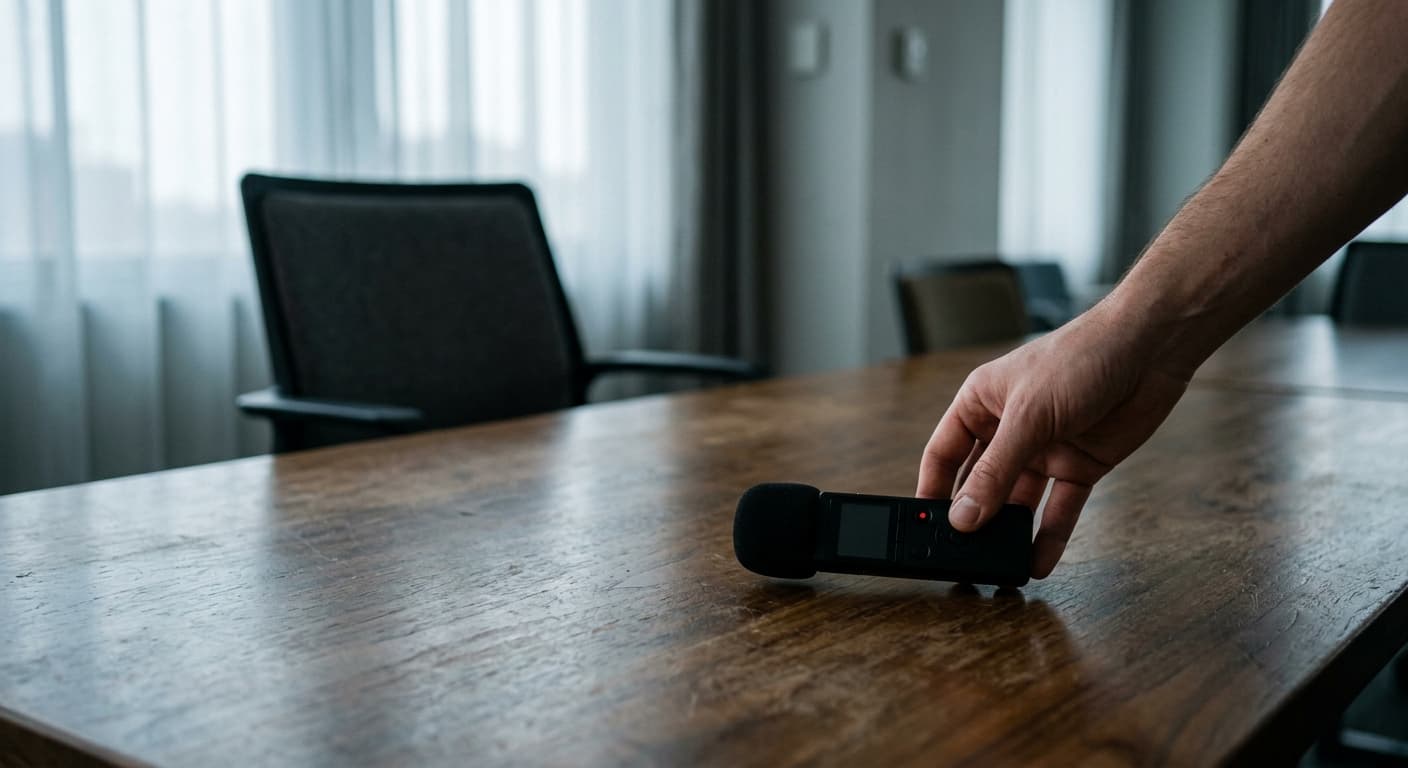
The District of Columbia follows one-party consent for audio recording under D.C. Code Section 23-542, so you can legally record any conversation you participate in without notifying the other parties. Recording a conversation you are not part of, without consent from a participant, is a criminal offense.
The District of Columbia permits audio recording under a one-party consent framework. Under D.C. Code Section 23-542, you can legally record any conversation you are a participant in without informing or obtaining permission from the other parties. This rule applies equally to in-person conversations and telephone calls.
However, D.C.'s recording laws carry significant penalties for violations. Anyone who records a conversation without proper authorization faces up to 5 years in prison, fines up to $12,500, and civil liability. Understanding the specific rules, exceptions, and limitations is essential before pressing record in the nation's capital.
D.C. Audio Recording Law: The Legal Framework
D.C. Code Section 23-542 Explained
The primary statute governing audio recording in the District of Columbia is D.C. Code Section 23-542. This law makes it a crime to willfully intercept, disclose, or use any wire or oral communication without authorization.
Section 23-542(a) establishes three distinct offenses:
- Illegal interception (Section 23-542(a)(1)): Willfully intercepting or attempting to intercept any wire or oral communication
- Illegal disclosure (Section 23-542(a)(2)): Knowingly disclosing or using the contents of any illegally intercepted communication
- Illegal use (Section 23-542(a)(3)): Using the contents of any illegally intercepted communication while knowing or having reason to know the information was obtained illegally
Each of these offenses carries the same maximum penalty: a fine of up to $12,500 under D.C. Code Section 22-3571.01, imprisonment for up to 5 years, or both.
The One-Party Consent Exception
Section 23-542(b)(3) provides the critical exception that makes D.C. a one-party consent jurisdiction for private citizens. Under this provision, it is not unlawful for a person not acting under color of law to intercept a wire or oral communication when that person is a party to the communication or has received prior consent from one of the parties.
A separate provision, Section 23-542(b)(2), covers persons acting under color of law on similar terms. The (b)(3) exception is the one that applies to private individuals: you can record a conversation as long as you participate in it, and the consenting party does not need to announce or disclose the recording to anyone else involved.
Key Definitions Under D.C. Code Section 23-541
D.C. Code Section 23-541 defines the terms that shape how D.C. audio recording law works in practice:
- Wire communication: Any aural transfer made through wire, cable, or similar connection between the point of origin and the point of reception. This covers landline phone calls, VoIP calls, and similar technologies.
- Oral communication: Any oral communication uttered by a person exhibiting an expectation that the communication is not subject to interception, under circumstances justifying that expectation. This covers in-person conversations where the speaker reasonably expects privacy.
- Intercept: The aural or other acquisition of the contents of any wire or oral communication through the use of any electronic, mechanical, or other device.
The distinction between "wire" and "oral" communication matters because the expectation of privacy analysis differs. Wire communications are protected regardless of setting, while oral communications require that the speaker had a reasonable expectation of privacy.
When Audio Recording Is Legal in D.C.
Recording Your Own Conversations
As a participant in a conversation, you can record it in any of these common situations:
- Phone calls with anyone (landline, cell, or VoIP)
- Face-to-face conversations in your home, office, or any location
- Video calls that include audio (Zoom, Teams, FaceTime, Google Meet)
- Meetings you attend in person or remotely
- Conversations with government officials, landlords, employers, or service providers
The law does not require you to use any particular recording method. You can use a smartphone app, a dedicated voice recorder, or any other device.
Third-Party Recording With Consent
Even if you are not a party to a conversation, you can still legally record it if at least one participant gives you prior consent. For example, if a friend asks you to record their phone conversation while they are driving, and they consent to the recording, you may legally do so.
The consent must be given before the recording begins. Retroactive consent after a recording has already been made does not cure an illegal interception.
Recording in Public Places
Audio recording in public places where people have no reasonable expectation of privacy is generally permissible. Public speeches, street performances, protests, and conversations conducted openly in crowded areas typically fall outside the protection of D.C.'s wiretapping statute because the speakers cannot reasonably expect their words to remain private.
However, even in public settings, a private conversation between two people speaking quietly enough that they clearly intend to keep the discussion between themselves may still be protected as an "oral communication" under the statute.
When Audio Recording Is Illegal in D.C.

Recording Without Being a Party
The most straightforward violation occurs when someone records a conversation they are not part of and have no consent from any participant. Common examples include:
- Planting a hidden microphone in someone else's office or home
- Using a baby monitor or listening device to eavesdrop on conversations in another room
- Recording a phone call between two other people without either person's knowledge
- Installing recording software on someone else's phone or computer
The "Injurious Purpose" Limitation
D.C.'s one-party consent exception contains an important restriction. Under D.C. Code Section 23-542(b), the exception does not apply when the recording is made for the purpose of committing any criminal act, any tortious act in violation of the law, or any other "injurious act."
This means that even as a participant in a conversation, your recording becomes illegal if your intent is to use it for harmful or unlawful purposes. Examples include:
- Recording a conversation to facilitate blackmail or extortion
- Recording for the purpose of stalking or harassment
- Recording a conversation to gain an unfair advantage in illegal activity
- Recording with the intent to commit fraud
The injurious purpose exception is evaluated based on the intent at the time of recording. A recording made for legitimate purposes (such as documenting a dispute) does not become illegal simply because it is later used in an adversarial proceeding.
Prohibited Devices
D.C. Code Section 23-543 separately prohibits the possession, sale, distribution, manufacture, or assembly of any electronic, mechanical, or other device that is primarily designed for the surreptitious interception of wire or oral communications. Violating this section carries the same penalties as illegal interception: up to $12,500 in fines and up to 5 years in prison.
Devices that are seized under this section may be forfeited under D.C. Code Section 23-544.
Criminal Penalties for Illegal Audio Recording
D.C. imposes serious criminal penalties for all categories of illegal recording:
| Offense | Statute | Maximum Fine | Maximum Prison Time |
|---|---|---|---|
| Illegal interception | D.C. Code Section 23-542(a)(1) | $12,500 | 5 years |
| Illegal disclosure | D.C. Code Section 23-542(a)(2) | $12,500 | 5 years |
| Illegal use of contents | D.C. Code Section 23-542(a)(3) | $12,500 | 5 years |
| Illegal device possession/sale | D.C. Code Section 23-543 | $12,500 | 5 years |
The maximum fine of $12,500 is set by D.C. Code Section 22-3571.01, which establishes a fine classification system for criminal offenses in the District.
Civil Liability for Illegal Audio Recording
Statutory Damages Under D.C. Code Section 23-554(c)
D.C. Code Section 23-554 provides a private right of action for victims of illegal interception. The operative civil-remedies subsection is subsection (c), which both authorizes the civil claim and waives the District's sovereign immunity. Under § 23-554(c), any person whose wire or oral communication is intercepted, disclosed, or used in violation of D.C. law can recover:
- The greater of: actual damages, or statutory damages of $100 per day of violation, or a $1,000 floor;
- Punitive damages: additional damages to punish the offender and deter future violations;
- Reasonable attorney fees and litigation costs.
The District of Columbia itself is a "person" within the meaning of § 23-554(c), so victims may sue the District directly for the conduct of its employees, not just the individual officer. Good-faith reliance on a court order is a complete affirmative defense for the recording party under § 23-554.
The Section 23-542(b)(3) Carve-Out
D.C.'s one-party consent statute incorporates a carve-out at D.C. Code Section 23-542(b)(3): the one-party-consent defense does not apply when the recording is made "for the purpose of committing any criminal, tortious, or any other injurious act." This carve-out is materially broader than the federal Wiretap Act analog at 18 U.S.C. Section 2511(2)(d) (which only excepts criminal or tortious purposes). The D.C. "any other injurious act" language has been read by D.C. courts to cover a wider band of conduct than the federal Wiretap Act would.
Statute of Limitations
Civil claims under D.C. Code Section 23-554 must be filed within the applicable statute of limitations. The general civil statute of limitations under D.C. Code Section 12-301(a)(8) is 3 years, though the specific period may vary depending on the nature of the claim and when the plaintiff discovered the violation.
Audio Recording Across Borders: D.C., Maryland, and Virginia
The Interstate Challenge
The District of Columbia's geographic position creates unique complications for audio recording law. D.C. shares borders with Maryland (a two-party consent state) and Virginia (a one-party consent state).
When you make a phone call from D.C. to someone in another jurisdiction, the question of which state's law applies becomes critical:
- D.C. to Virginia: Both jurisdictions follow one-party consent. You can record the call as a participant without informing the Virginia party.
- D.C. to Maryland: Maryland requires all-party consent under Md. Code, Courts and Judicial Proceedings Section 10-402. Courts generally apply the stricter law, meaning you may need consent from all parties when someone on the call is in Maryland.
Federal Government Considerations
D.C. hosts the federal government, and many conversations involve federal employees or take place on federal property. Federal wiretap law under 18 U.S.C. Section 2511 follows a one-party consent standard, which aligns with D.C. law. However, specific federal agencies may have internal policies that impose additional restrictions on recording.
Recording inside certain federal buildings, including courthouses and secure facilities, is prohibited regardless of consent. Always check posted rules and follow security personnel instructions when recording near federal property.
Audio Recording in Specific D.C. Settings

Government Meetings and Public Proceedings
D.C.'s Open Meetings Act (D.C. Code Section 2-575) requires that all meetings of public bodies be open to the public and recorded by electronic means. You can bring your own recording equipment to:
- D.C. Council sessions and hearings
- Advisory Neighborhood Commission (ANC) meetings
- Public board and commission meetings
- Other open government proceedings
Under D.C. Code Section 2-578, agencies must make a full record of each meeting available for public inspection within 7 business days.
Courts and Legal Proceedings
Audio recording is prohibited inside D.C. Superior Court and all federal courts within the District. This ban covers audio recording, video recording, and photography. Violating court recording rules can result in contempt of court charges, fines, or removal from the courtroom.
The prohibition applies at both the trial and appellate levels. Court-authorized recordings by law enforcement under a valid wiretap order are a separate matter governed by D.C. Code Section 23-546.
Police Interactions
The First Amendment protects your right to audio record police officers performing their duties in public, and eight federal circuits have squarely recognized that right (1st, 3d, 4th, 5th, 7th, 9th, 10th, 11th). The D.C. Circuit has not issued a published civilian-recording holding; its closest in-circuit authority is Price v. Garland, 45 F.4th 1059 (D.C. Cir. 2022), cert. denied, 143 S. Ct. 1797 (2023), which addressed NPS commercial-filming permits and applied a more restrictive analytic mode. In practice, you may record MPD and federal officers in public spaces and federal district courts in D.C. have allowed Section 1983 claims to proceed on right-to-record theories, but the in-circuit civilian-recording rule is technically unsettled.
Officers cannot order you to stop recording, delete your recordings, or confiscate your device simply because you are filming or recording audio. If a recording is illegally intercepted or seized, the victim can sue under D.C. Code Section 23-554(c) (the sovereign-immunity-waiving civil-damages subsection), recovering the greater of actual damages or $100/day or $1,000, plus punitive damages and attorney fees.
Using Audio Recordings as Evidence in D.C.
Admissibility Standards
Audio recordings made in compliance with D.C.'s one-party consent law are generally admissible as evidence in both criminal and civil proceedings. Courts evaluate recordings based on:
- Authentication: You must demonstrate the recording is genuine and has not been altered or tampered with
- Relevance: The recording must relate to an issue in the case
- Hearsay considerations: Statements captured on a recording may be subject to hearsay objections unless an exception applies
- Prejudice vs. probative value: The court may exclude a recording if its prejudicial effect substantially outweighs its probative value
Illegally Obtained Recordings
Recordings made in violation of D.C. Code Section 23-542 face serious evidentiary consequences:
- In criminal cases, illegally intercepted communications are generally inadmissible, and the person who made the recording may face separate criminal charges
- In civil cases, courts can exclude illegally obtained evidence, and the recorder faces potential civil liability under D.C. Code Section 23-554
Best Practices for Preserving Recordings
To maximize the admissibility of your recordings:
- Keep the original recording file intact and unedited
- Note the date, time, location, and participants at the start of the recording if possible
- Store recordings in a secure location with backup copies
- Maintain a chain of custody showing who has handled the recording
- If you plan to use the recording in litigation, consult an attorney about proper preservation protocols
Federal Wiretap Law and D.C. Audio Recording
Federal law under 18 U.S.C. Section 2511 establishes a baseline one-party consent standard for the entire country. Because D.C. also follows one-party consent, there is no conflict between federal and local law for recordings made entirely within the District.
A quirk worth noting: under 18 U.S.C. Section 2510(3), the District of Columbia is treated as a "State" for purposes of the federal Wiretap Act (ECPA). This means D.C. interception law operates within the same federal-state preemption framework as a state statute, and federal causes of action under 18 U.S.C. Section 2520 can run in parallel with D.C. Code Section 23-554(c) claims.
Federal penalties for illegal wiretapping are severe: up to 5 years in federal prison and fines under the federal sentencing guidelines. Federal law also provides a private right of action under 18 U.S.C. Section 2520, which allows victims to recover the greater of actual damages, statutory damages of $100 per day (minimum $10,000), or $10,000 in liquidated damages, plus attorney fees.
In situations involving federal employees, federal property, or interstate communications, both D.C. law and federal law may apply simultaneously. The stricter standard governs when there is a conflict.
Common Questions About Audio Recording in D.C.
Can I Record My Employer in D.C.?
Yes. As a one-party consent jurisdiction, D.C. allows you to record workplace conversations you participate in without telling your employer or coworkers. This can help document harassment, discrimination, verbal agreements, or performance reviews. Be aware that while the recording is legal under D.C. law, your employer may have internal policies prohibiting recording, and violating those policies could result in disciplinary action.
Can I Record My Landlord in D.C.?
Yes. You can record conversations with your landlord, property manager, or maintenance staff as long as you participate in the conversation. Many tenants use recordings to document disputes about repairs, lease terms, or potential violations of tenant rights.
Can I Record Calls With Doctors or Healthcare Providers?
Yes. Patients can record their own medical appointments in D.C. without informing the healthcare provider. This is often helpful for remembering complex medical instructions, documenting informed consent discussions, or sharing information with family members involved in care decisions. HIPAA does not prohibit patients from recording their own appointments.
Can I Record My Ex-Spouse or Co-Parent?
Yes, during conversations you participate in. This is common in custody disputes and family law matters. However, you should not record your children's private conversations without being present, and you should not use children to secretly record the other parent. Courts may also question recordings that appear designed to provoke or entrap the other party.
Explore More D.C. Recording Laws
Audio Recording | Video Recording | Voyeurism & Hidden Cameras | Workplace Recording | Recording Police | Phone Call Recording | Security Cameras | Recording in Public | Landlord-Tenant | Dashcam Laws | Schools | Medical Recording
Back to District of Columbia Recording Laws
More District of Columbia Recording Topics
More District of Columbia Laws
Frequently Asked Questions
Is the District of Columbia a one-party or two-party consent jurisdiction for audio recording?
The District of Columbia is a one-party consent jurisdiction. Under D.C. Code Section 23-542(b), you can legally record any conversation you participate in without informing or obtaining permission from the other parties. Only one person in the conversation needs to consent, and that person can be you.
What are the penalties for illegally recording audio in D.C.?
Illegal audio recording in D.C. carries criminal penalties of up to 5 years in prison and fines up to $12,500 under D.C. Code Section 23-542. Victims can also file a civil lawsuit under D.C. Code Section 23-554 and recover statutory damages of $100 per day (minimum $1,000), punitive damages, and attorney fees.
Can I record a phone call from D.C. to someone in Maryland without their consent?
This is legally risky. Maryland is a two-party consent state, and courts generally apply the stricter law when a call crosses jurisdictions. If you call someone in Maryland from D.C., you may need consent from all parties to comply with Maryland law. The safest approach is to inform the other person that you are recording.
Does D.C. law protect audio recordings made for injurious purposes?
No. D.C. Code Section 23-542(b) specifically excludes recordings made for the purpose of committing any criminal act, tortious act, or other injurious act. Even if you are a party to the conversation, the one-party consent exception does not apply if your intent is to use the recording for harmful or unlawful purposes.
Are audio recordings admissible as evidence in D.C. courts?
Audio recordings made in compliance with D.C. one-party consent law are generally admissible in court. The recording must be authenticated as genuine and unaltered, relevant to the case, and not substantially more prejudicial than probative. Illegally obtained recordings are generally inadmissible and may result in separate criminal charges.
Updates
Fixed an inverted description of D.C.'s one-party consent exception: D.C. Code section 23-542(b)(3), the provision that lets private citizens record conversations they are part of, applies to a person NOT acting under color of law, not a person acting under color of law as the page previously stated. Also added the specific statute of limitations citation for civil claims.
Independently fact-checked against the cited primary sources; governing law re-checked for recent changes
Governing law re-checked for recent changes
Corrected the Maryland cross-border consent citation from 'Maryland Criminal Law Section 10-402' (which is actually Maryland's burial-remains-removal statute) to the correct Md. Code, Courts and Judicial Proceedings Section 10-402, Maryland's actual wiretapping/interception-of-communications statute.
Governing law re-checked for recent changes
Reviewed and approved by an editor
The Law Behind This Article
This article rests on the statutory provisions below, held in our own legal record and retrieved from the official source. Tap a section to read the operative text.
Code of the District of Columbia, Title 23: Criminal Procedure. - Chapter 5: Warrants and Arrests. - Subchapter III: Wire Interception and Interception of Oral Communications.
§ 23-542Interception, disclosure, and use of wire or oral communications prohibited.In forcecited in 22 of our articles
(a) Except as otherwise specifically provided in this subchapter, any person who in the District of Columbia — (1) willfully intercepts, endeavors to intercept, or procures any other person to intercept or endeavor to intercept any wire or oral communication; (2) willfully discloses or endeavors to disclose to any other person the contents of any wire or oral communication, or evidence derived therefrom, knowing or having reason to know that the information was obtained through the interception of a wire or oral communication; or (3) willfully uses or endeavors to use the contents of any wire or oral communication, or evidence derived therefrom, knowing or having reason to know, that the information was obtained through the interception of a wire or oral communication; shall be fined not more than the amount set forth in [§ 22-3571.01] or imprisoned not more than five years, or both; except that paragraphs (2) and (3) of this subsection shall not apply to the contents of any wire or oral communication, or evidence derived therefrom, that has become common knowledge or public information.
Official text (excerpt) · last checked 2026-08-31 · Read the full text in our law library · Verify at github.com
Cited in 16 court opinions in our collectionLatest citing opinion in our collection: 2024
In the courts (editorial summary, independently checked):District of Columbia courts have construed the one-party consent provision of D.C. Code 23-542(b)(2). United States v. Sell (1985) held the consent must be voluntary, the government meeting its burden by showing the party cooperated knowing what officers were doing. Thomas v. United States (2017) applied it to an interstate call.
Opinions citing this section in our collection:
- United States v. Sell (District of Columbia Court of Appeals 1985, 487 A.2d 225)✓Police recorded a woman's calls with an officer she accused of coercing sex acts. Construing the one-party consent provision for the first time, the court held the government need only show she cooperated knowing what police were doing, and reversed the suppression order.
- David Thomas v. United States (District of Columbia Court of Appeals 2017)“…s. & .lud. Proc. § 10- 402 [c)(.'£)(ii) (West 2015). Under D.C. Code § 23-542." the legislature has clearly defined w…”
- Thomas v. United States (District of Columbia Court of Appeals 2017, 171 A.3d 151)✓Police in the District recorded a call between a voyeurism victim and the defendant, who was in Maryland and did not consent. The court held this section governs admissibility in District courts and does not incorporate Maryland's two-party rule, so suppression was denied.
Identified automatically from the court opinions citing this section — not a ranking of which case controls.
Also relied on in: District of Columbia Recording Laws (2026): One-Party Consent Rules, One-Party Consent States: Complete 2026 Guide, District of Columbia Laws on Recording Police: Your Rights and Limits
§ 23-541Definitions.In forcecited in 5 of our articles
As used in this subchapter — (1) the term “wire communication” means any communication made in whole or in part through the use of facilities for the transmission of communications by the aid of wire, cable, or other like connection between the point of origin and the point of reception furnished or operated by any person engaged as a common carrier in providing or operating such facilities; (2) the term “oral communication” means any oral communication uttered by a person exhibiting an expectation that the communication is not subject to interception under circumstances justifying the expectation; (3) the term “intercept” means the aural acquisition of the contents of any wire or oral communication through the use of any intercepting device; (4) the term “intercepting device” means any electronic, mechanical, or other device or apparatus which can be used to intercept a wire or oral communication other than — (A) any telephone or telegraph instrument, equipment, or facility, or any component thereof, (i) furnished to the subscriber or user by a communications common carrier in the ordinary course of its business and being used by the subscriber or user in the ordinary course…
Official text (excerpt) · last checked 2026-07-30 · Read the full text in our law library · Verify at github.com
Cited in 8 court opinions in our collectionLatest citing opinion in our collection: 2023
Opinions citing this section in our collection:
- United States v. Sell (District of Columbia Court of Appeals 1985, 487 A.2d 225)“…itution because she had not recanted her statement. . D.C.Code §§ 23-541, -556 (1981). . Section 23-542(b)…”
- United States v. Gerald F. Johnson, United States of America v. Thomas Johnson, United States of America v. Edward T. Wooten (Court of Appeals for the D.C. Circuit 1982, 696 F.2d 115)“…conceded, D.C.Code Ann. § 23-547 (1981), read together with D.C.Code Ann. § 23-541(7) (1981), explicitly authorizes the is…”
- Democracy Partners, LLC v. Project Veritas Action Fund (District Court, District of Columbia 2018)“…against all defendants (id. ¶¶ 78-85); (4) violation of D.C. Code § 23-541 et seq. (“D.C. Wiretap Act”) against al…”
Identified automatically from the court opinions citing this section — not a ranking of which case controls.
Also relied on in: Washington DC Ring Doorbell Laws: What You Need to Know in 2026
§ 23-543Possession, sale, distribution, manufacture, assembly, and advertising of wire or oral communication intercepting devices prohibited.In forcecited in 2 of our articles
(a) Except as otherwise specifically provided in subsection (b) of this section, any person who in the District of Columbia — (1) willfully possesses, sells, distributes, manufactures, or assembles an intercepting device, the design of which renders it primarily useful for the purpose of the surreptitious interception of a wire or oral communication; or (2) willfully places in any newspaper, magazine, handbill, or other publication any advertisement of — (A) any intercepting device, the design of which renders it primarily useful for the purpose of the surreptitious interception of a wire or oral communication; or (B) any intercepting device where such advertisement promotes the use of such device for the purpose of the surreptitious interception of a wire or oral communication; shall be fined not more than the amount set forth in [§ 22-3571.01] or imprisoned not more than five years, or both.
Official text (excerpt) · last checked 2026-07-30 · Read the full text in our law library · Verify at github.com
Also relied on in: District of Columbia Surveillance Camera Laws (2026 Guide)
§ 23-554Authorization for recovery of civil damages.In forcecited in 14 of our articles
(a) Any person whose wire or oral communication is intercepted, disclosed, or used in violation of this subchapter shall — (1) have a civil cause of action against any person who intercepts, discloses, or uses, or procures any other person to intercept, disclose, or use, such communications; and (2) be entitled to recover from any such person — (A) actual damages, but not less than liquidated damages computed at the rate of $100 a day for each day of violation, or $1,000 whichever is higher; (B) punitive damages; and (C) a reasonable attorney’s fee and other litigation costs reasonably incurred. (b) Good faith reliance on a court order or legislative authorization shall constitute a complete defense to an action brought under this section or any other law. (c) As used in this section, the term “person” includes the District of Columbia. The District of Columbia shall not assert any governmental immunity to avoid liability under this section. Judgment against the District of Columbia shall not constitute a bar to action against any other person.
Official text (excerpt) · last checked 2026-07-30 · Read the full text in our law library · Verify at github.com
Cited in 3 court opinions in our collectionLatest citing opinion in our collection: 2022
Opinions citing this section in our collection:
- Democracy Partners, LLC v. Project Veritas Action Fund (District Court, District of Columbia 2020)“…each day of violation, or $1,000, whichever is higher. See D.C. Code § 23-554(a)(2)(A). Both statutes also allow for…”
- Council on American-Islamic Relations Action Network, Inc. v. Gaubatz (District Court, District of Columbia 2022)“…oral or wire communication.” D.C. Code § 23-542(a)(2)-(3); D.C. Code § 23-554(a)(1) (authorizing civil action for re…”
Identified automatically from the court opinions citing this section — not a ranking of which case controls.
Also relied on in: DC Dashcam Laws: Recording Rules, Windshield Mounting, and Legal Limits (2026), DC Landlord-Tenant Recording Laws: Cameras, Privacy Rights, and Disputes (2026), DC Medical Recording Laws: Patient Rights, HIPAA, and One-Party Consent (2026)
Code of the District of Columbia, Title 2: Government Administration. - Chapter 5: Administrative Procedure. - Subchapter IV: Open Meetings.
§ 2-575Open meetings.In forcecited in 2 of our articles
(a) Except as provided in subsection (b) of this section, a meeting shall be open to the public. A meeting shall be deemed open to the public if: (1) The public is permitted to be physically present; (2) The news media, as defined by § 16-4701, is permitted to be physically present; or (3) The meeting is televised. (b) A meeting, or portion of a meeting, may be closed for the following reasons: (1) A law or court order requires that a particular matter or proceeding not be public; (2) To discuss, establish, or instruct the public body’s staff or negotiating agents concerning the position to be taken in negotiating the price and other material terms of a contract, including an employment contract, if an open meeting would adversely affect the bargaining position or negotiating strategy of the public body; (3) To discuss, establish, or instruct the public body’s staff or negotiating agents concerning the position to be taken in negotiating incentives relating to the location or expansion of industries or other businesses or business activities in the District; (A) To consult with an attorney to obtain legal advice and to preserve the attorney-client privilege between an…
Official text (excerpt) · last checked 2026-07-30 · Read the full text in our law library · Verify at github.com
Also relied on in: District of Columbia Laws on Recording in Public: Complete Legal Guide
§ 2-578Record of meetings.In forcecited in 2 of our articles
(a) All meetings of public bodies, whether open or closed, shall be recorded by electronic means, and the recording shall be preserved for a minimum of 5 years; provided, that if a recording is not feasible, detailed minutes of the meeting shall be taken and preserved for a minimum of 5 years. (b) Copies of records shall be made available for public inspection according to the following schedule; provided, that a record, or a portion of a record, may be withheld under the standard established for closed meetings pursuant to § 2-575(b): (1) A copy of the minutes of a meeting shall be made available for public inspection as soon as practicable, but no later than 3 business days after the meeting, or in the case of a board of trustees for a public charter school, no later than 30 business days after the meeting. (2) A copy of the full record, including any recording or transcript, shall be made available for public inspection as soon as practicable, but no later than 7 business days after the meeting.
Official text (excerpt) · last checked 2026-07-30 · Read the full text in our law library · Verify at github.com
Code of the District of Columbia, Title 22: Criminal Offenses and Penalties. - Chapter 35B: Fines for Criminal Offenses.
§ 22-3571.01Fines for criminal offenses.In forcecited in 9 of our articles
(a) Notwithstanding any other provision of the law, and except as provided in § 22-3571.02, a defendant who has been found guilty of an offense under the District of Columbia Official Code punishable by imprisonment may be sentenced to pay a fine as provided in this section. (b) An individual who has been found guilty of such an offense may be fined not more than the greatest of: (1) $100 if the offense is punishable by imprisonment for 10 days or less; (2) $250 if the offense is punishable by imprisonment for 30 days, or one month, or less but more than 10 days; (3) $500 if the offense is punishable by imprisonment for 90 days, or 3 months, or less but more than 30 days; (4) $1,000 if the offense is punishable by imprisonment for 180 days, or 6 months, or less but more than 90 days; (5) $2,500 if the offense is punishable by imprisonment for one year or less but more than 180 days; (6) $12,500 if the offense is punishable by imprisonment for 5 years or less but more than one year; (7) $25,000 if the offense is punishable by imprisonment for 10 years or less but more than 5 years; (8) $37,500 if the offense is punishable by imprisonment for 15 years or less but more than…
Official text (excerpt) · last checked 2026-07-30 · Read the full text in our law library · Verify at github.com
Cited in 5 court opinions in our collectionLatest citing opinion in our collection: 2025
Opinions citing this section in our collection:
- Gilberto Lopez-Ramirez v. United States (District of Columbia Court of Appeals 2017, 171 A.3d 169)“…dardized the maximum fine for 180-day crimes at 31,000. See D.C. Code § 22-3571.01 ibi (2012 Repi. a supp. 2014); 60 D.C.R…”
- Mario Giovani Valendzuela-Castillo v. United States (District of Columbia Court of Appeals 2018, 180 A.3d 74)“…eamlining Act set maximum fines for misdemeanors at $1000); D.C. Code § 22-3571.01 (2013 Repl.) (standardizing $1000 as th…”
- Tornero v. United States (District of Columbia Court of Appeals 2025)“…onment may be sentenced to pay a fine as provided” therein. D.C. Code § 22-3571.01(a). The provision also enumerates the s…”
Identified automatically from the court opinions citing this section — not a ranking of which case controls.
Also relied on in: District of Columbia Phone Call Recording Laws: Consent Rules and Interstate Calls, District of Columbia Voyeurism Laws: Hidden Camera Penalties and Privacy Rights, D.C. Smart Glasses Recording Laws: One-Party Consent Guide
Maryland Code, Courts and Judicial Proceedings Article
§ 10-402In forcecited in 26 of our articles
§10–402. (a) Except as otherwise specifically provided in this subtitle it is unlawful for any person to: (1) Willfully intercept, endeavor to intercept, or procure any other person to intercept or endeavor to intercept, any wire, oral, or electronic communication; (2) Willfully disclose, or endeavor to disclose, to any other person the contents of any wire, oral, or electronic communication, knowing or having reason to know that the information was obtained through the interception of a wire, oral, or electronic communication in violation of this subtitle; or (3) Willfully use, or endeavor to use, the contents of any wire, oral, or electronic communication, knowing or having reason to know that the information was obtained through the interception of a wire, oral, or electronic communication in violation of this subtitle. (b) Any person who violates subsection (a) of this section is guilty of a felony and is subject to imprisonment for not more than 5 years or a fine of not more than $10,000, or both.
Official text (excerpt) · last checked 2026-08-31 · Read the full text in our law library · Verify at mgaleg.maryland.gov
Cited in 12 court opinions in our collectionLatest citing opinion in our collection: 2026
In the courts (editorial summary, independently checked):Applying section 10-402, Fearnow v. Chesapeake & Potomac Telephone Co. (1995) held that liability under the Maryland Wiretap Act requires proof the defendant acted willfully, an intentional violation or reckless disregard of a known legal duty; an employee's failure to check for a court order was only a jury factor on willfulness.
Opinions citing this section in our collection:
- Fearnow v. Chesapeake & Potomac Telephone Co. (Court of Special Appeals of Maryland 1995, 104 Md. App. 1)✓Police hid a tape recorder on an officer's headquarters phone line with a phone company employee's help and no court order; the court held a section 10-402(a) claim requires proof of willful interception, and failing to ask about a court order went only to willfulness.
- Maryland Attorney General Opinion 110OAG60 (Maryland Attorney General Reports 2025)“…or wire communications without the consent of all parties. Md. Code Ann., Cts. & Jud. Proc. § 10-402(a). However, the Wiretap Act contains e…”
- Boehner, John A. v. McDermott, James A. (Court of Appeals for the D.C. Circuit 1999, 191 F.3d 463)“…1992); Me.Rev.Stat. Ann. tit. 15, §§ 710, 711 (West 1998); Md.Code Ann., Cts & Jud. Proc. § 10-402 (1998); Mass. Gen. Laws Ann. ch. 272,…”
Identified automatically from the court opinions citing this section — not a ranking of which case controls.
Also relied on in: US Recording Laws by State (2026): All 50 States Explained, Is Plaud HIPAA Compliant? Kind Of. Here's What to Know (2026), Maryland Audio Recording Laws: Two-Party Consent Rules and Penalties (2026)
United States Code Title 18
§ 2511Interception and disclosure of wire, oral, or electronic communications prohibitedIn forcecited in 422 of our articles
Except as otherwise specifically provided in this chapter any person who— intentionally intercepts, endeavors to intercept, or procures any other person to intercept or endeavor to intercept, any wire, oral, or electronic communication; intentionally uses, endeavors to use, or procures any other person to use or endeavor to use any electronic, mechanical, or other device to intercept any oral communication when— such device is affixed to, or otherwise transmits a signal through, a wire, cable, or other like connection used in wire communication; or such device transmits communications by radio, or interferes with the transmission of such communication; or such person knows, or has reason to know, that such device or any component thereof has been sent through the mail or transported in interstate or foreign commerce; or such use or endeavor to use (A) takes place on the premises of any business or other commercial establishment the operations of which affect interstate or foreign commerce; or (B) obtains or is for the purpose of obtaining information relating to the operations of any business or other commercial establishment the operations of which affect interstate or foreign…
Official text (excerpt) · last checked 2026-09-17 · Read the full text in our law library · Verify at uscode.house.gov
Cited in 2,045 court opinions in our collectionLatest citing opinion in our collection: 2026
In the courts (editorial summary, independently checked):Griggs-Ryan v. Smith (1990) applied the Section 2511(2)(d) prior-consent exception, treating a tenant repeatedly told that all incoming calls were taped as having impliedly consented. United States v. United States District Court (1972) read the then-current Section 2511(3) as conferring no presidential surveillance power.
Opinions citing this section in our collection:
- Mitchell v. Forsyth (Supreme Court of the United States 1985, 472 U.S. 511)✓The Attorney General authorized a warrantless 1970 national security wiretap that caught the plaintiff's calls; the Court held the since-repealed Section 2511(3) disclaimer left the tap lawful under Title III, and that Mitchell had qualified immunity.
- United States v. United States District Court for the Eastern District of Michigan (Supreme Court of the United States 1972, 407 U.S. 297)✓The Attorney General approved warrantless wiretaps on members of a domestic group accused of bombing a CIA office; the Court read Section 2511(3) as a congressional disclaimer conferring no surveillance power, then held the Fourth Amendment required prior judicial approval.
- Forsyth v. Barr (Court of Appeals for the Fifth Circuit 1994, 19 F.3d 1527)✓Dallas police used, in an internal affairs probe of an officer, calls private parties allegedly intercepted illegally; assuming that was unlawful, the Fifth Circuit held Section 2517(1) and (2) allowed the disclosure and use, defeating the Section 2511(1)(c) and (d) claims.
Identified automatically from the court opinions citing this section — not a ranking of which case controls.
Also relied on in: Connecticut Recording Laws (2026): Hybrid Consent Rules Explained, Oregon Recording Laws (2026): Hybrid One-Party and All-Party Rules, Hawaii Recording Laws (2026): Hybrid Consent State Rules
§ 2520Recovery of civil damages authorizedIn forcecited in 115 of our articles
Except as provided in section 2511(2)(a)(ii), any person whose wire, oral, or electronic communication is intercepted, disclosed, or intentionally used in violation of this chapter may in a civil action recover from the person or entity, other than the United States, which engaged in that violation such relief as may be appropriate. In an action under this section, appropriate relief includes— such preliminary and other equitable or declaratory relief as may be appropriate; damages under subsection (c) and punitive damages in appropriate cases; and a reasonable attorney’s fee and other litigation costs reasonably incurred.
Official text (excerpt) · last checked 2026-07-28 · Read the full text in our law library · Verify at uscode.house.gov
Cited in 860 court opinions in our collectionLatest citing opinion in our collection: 2026
In the courts (editorial summary, independently checked):Walker v. Darby (1990) held a 2520 plaintiff need not prove the contents of intercepted conversations, only interception and a justified expectation against it. Bartnicki v. Vopper (2001) barred 2520 damages against defendants who took no part in the interception, obtained the tape lawfully, and disclosed a matter of public concern.
Opinions citing this section in our collection:
- Jessie Walker v. Thomas E. Darby, Hugh L. Robinson, Jr., and Kenneth Day (Court of Appeals for the Eleventh Circuit 1990, 911 F.2d 1573)✓A postal letter carrier said three supervisors wired an intercom near his workstation to listen in. Reversing summary judgment, the Eleventh Circuit held a section 2520 plaintiff can show interception without proving the contents of specific conversations.
- Gelbard v. United States (Supreme Court of the United States 1972, 408 U.S. 41)“…disclosure, or use is entitled to recover civil damages, 18 U. S. C. § 2520 . Title III also bars the use as eviden…”
- DirecTV, Inc. v. Hoa Huynh (Court of Appeals for the Ninth Circuit 2007, 503 F.3d 847)“…7 U.S.C. § 605 (e)(4), or alternatively, for violations of 18 U.S.C. § 2520 (a), or alternatively, for violations o…”
Identified automatically from the court opinions citing this section — not a ranking of which case controls.
Also relied on in: Alabama Audio Recording Laws: Consent Rules and Penalties, Alabama Phone Call Recording Laws: What You Need to Know, Alaska Phone Call Recording Laws: Rules for Landline, Cell, and VoIP (2026)
Search our full record of US law — 2.1 million sections, every state + federal →
Sources and References
- D.C. Code Section 23-542 - Interception, Disclosure, and Use of Wire or Oral Communications Prohibited(code.dccouncil.gov).gov
- D.C. Code Section 23-541 - Definitions(code.dccouncil.gov).gov
- D.C. Code Section 23-543 - Possession, Sale, Distribution of Intercepting Devices Prohibited(code.dccouncil.gov).gov
- D.C. Code Section 23-554 - Authorization for Recovery of Civil Damages(code.dccouncil.gov).gov
- D.C. Code Section 22-3571.01 - Fines for Criminal Offenses(code.dccouncil.gov).gov
- D.C. Code Section 2-575 - Open Meetings Act(code.dccouncil.gov).gov
- D.C. Code Section 2-578 - Record of Meetings(code.dccouncil.gov).gov
- 18 U.S.C. Section 2511 - Federal Wiretap Act(law.cornell.edu)
- 18 U.S.C. Section 2520 - Federal Civil Remedies for Wiretap Violations(law.cornell.edu)
- Md. Code, Courts and Judicial Proceedings Section 10-402 - Interception of Communications(mgaleg.maryland.gov).gov