
Maryland
Maryland Recording Laws (2026): All-Party Consent Rules
Independently fact-checked against primary sources (last audited August 22, 2026). · Reviewed by the RecordingLaw editorial team. · Law checked current as of August 22, 2026. · 19 primary sources cited on this page. How we verify our legal content
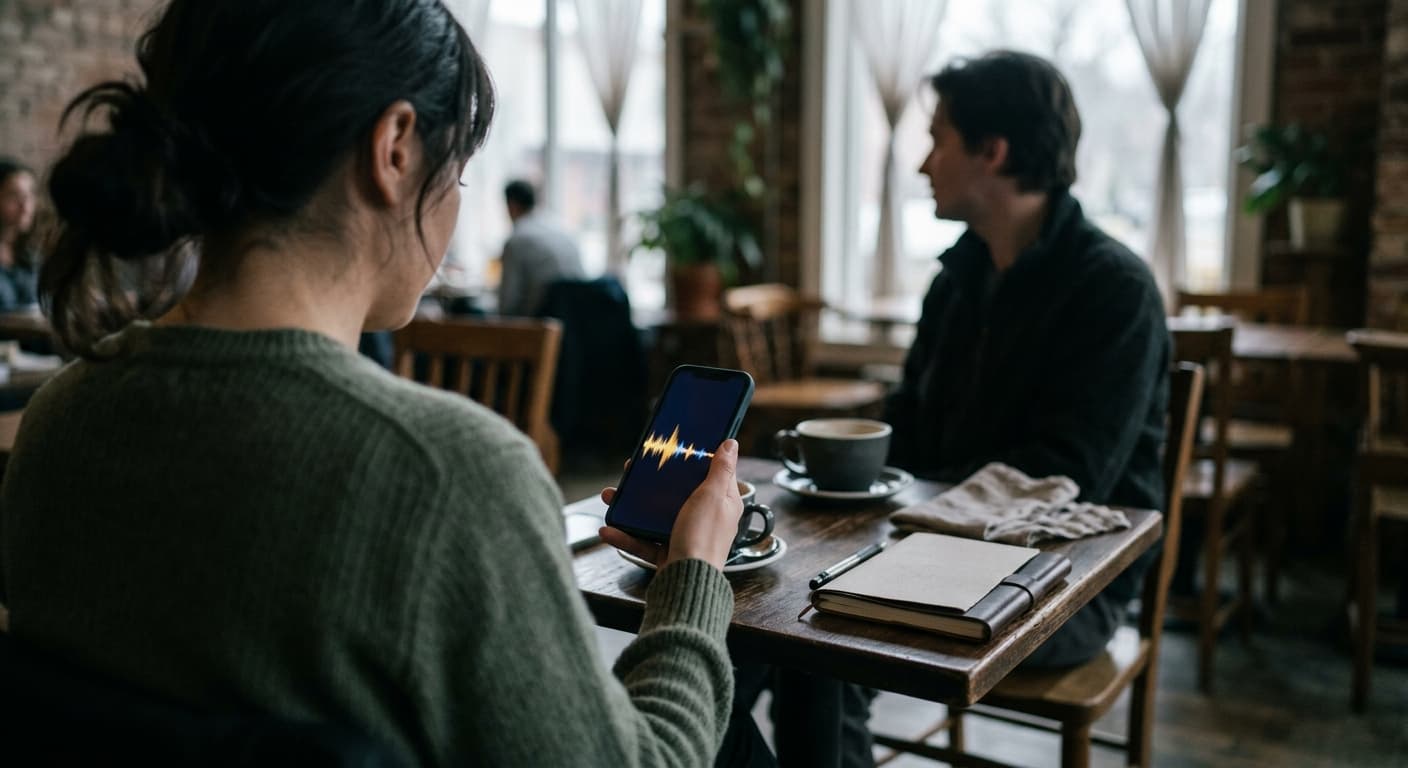
Maryland requires all-party consent before recording any private conversation. Under Md. Code, Cts. & Jud. Proc. § 10-402, recording without the consent of every participant is a felony punishable by up to five years in prison and a $10,000 fine. The person recorded can also sue for civil damages, punitive damages, and attorney fees.
Maryland recording law at a glance
| Question | Answer |
|---|---|
| Consent rule | All-party (every participant must consent) |
| Controlling statute | Md. Code, Cts. & Jud. Proc. §§ 10-401 to 10-410 |
| When recording is illegal | Any wire, oral, or electronic communication recorded without all parties' prior consent |
| Criminal penalty | Felony: up to 5 years prison, up to $10,000 fine per count |
| Civil remedy | Min. $100/day or $1,000 (whichever is greater) + punitive damages + attorney fees |
| Hidden cameras | Misdemeanor under Crim. Law §§ 3-902, 3-903 (up to 1 year, $2,500 fine); audio capture also triggers § 10-402 |
| Recording police | First Amendment right to openly record in public; confirmed by Maryland courts in the Graber case (2010) |
For a deeper dive into how these rules apply in specific situations, see the Maryland recording laws in depth section below.
Recording in-person conversations in Maryland
Maryland's Wiretap Act (Title 10, Subtitle 4 of the Courts and Judicial Proceedings Article) covers oral communications, which § 10-401(13) defines as "any conversation or words spoken to or by any person in private conversation." The statute does not reach every utterance in every setting; courts apply a reasonable-expectation-of-privacy analysis when deciding whether a particular communication qualifies.
The core rule is strict: you must obtain prior consent from every person in the conversation before you begin recording. This applies whether the conversation is face-to-face, in a meeting room, or at a private gathering.
The most common misunderstanding involves § 10-402(c)(3). That subsection does not authorize secret recording simply because you are a participant. It confirms that a party to the conversation can consent on their own behalf, but all other participants must also consent. Your presence in the room is a necessary condition, not a sufficient one.
Maryland is stricter than its federal counterpart. The federal Wiretap Act (18 U.S.C. § 2511(2)(d)) allows one-party consent for both intrastate and interstate private-party recordings. Maryland's § 10-402(c)(3) requires all-party consent for private parties, and that stricter state standard governs any recording made in Maryland.
Good faith reliance on a valid court order or express legislative authorization is a complete defense to both criminal and civil liability under the Act.
Recording phone calls in Maryland
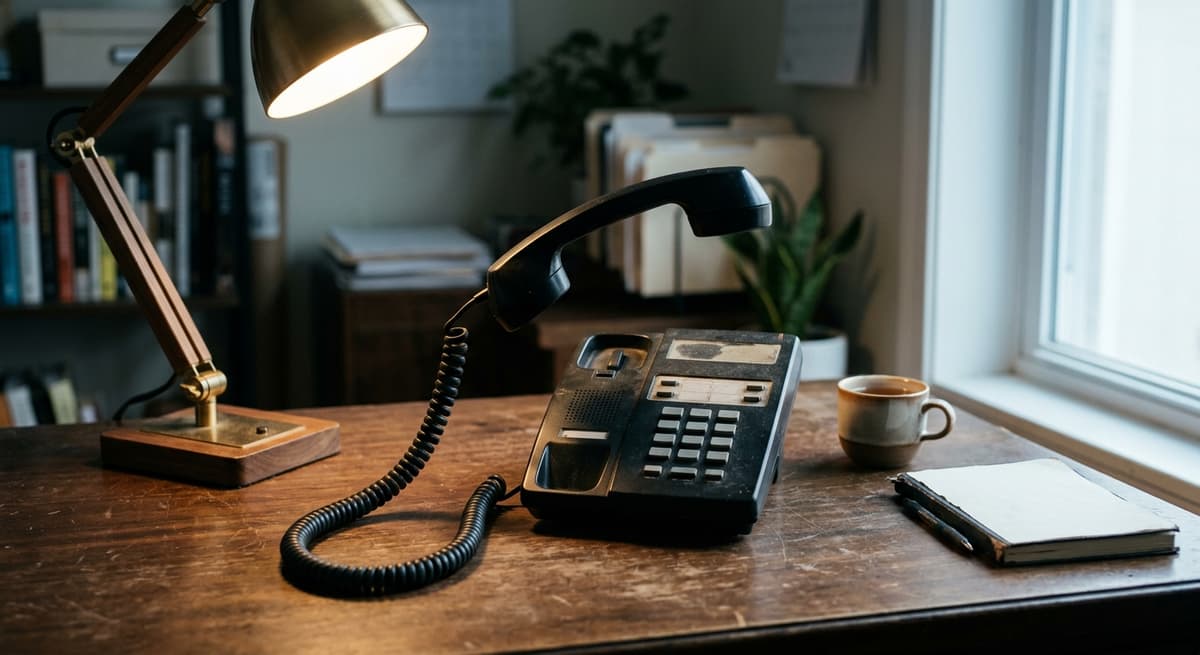
The all-party consent rule applies equally to telephone calls: landline, mobile, and VoIP. You must tell every person on the call that you are recording and get their agreement before the recording starts. Maryland recognizes both express and implied consent: a person who is clearly told the call is being recorded and keeps talking can be found to have impliedly consented, but because that is harder to prove after the fact, getting an affirmative yes from everyone is still the safer practice.
Interstate calls follow the stricter-state rule. If you are in a one-party consent state calling a Maryland resident, Maryland's all-party standard applies to protect that resident. The safest practice is to follow the stricter law whenever any party is in Maryland.
For consent scripts, business call recording requirements, and interstate call guidance, see Maryland Phone Call Recording Laws.
Hidden cameras, doorbells, and nanny cams
Video surveillance on your own property is generally permitted where people do not have a reasonable expectation of privacy. The problem arises in two ways: (1) audio capture, and (2) cameras pointed at private spaces.
Audio capture. Maryland's § 10-402 reaches any device that intercepts wire, oral, or electronic communications. If your Ring doorbell, Arlo camera, or nanny cam records audio of visitors, delivery workers, or passersby who have not consented, that audio capture may violate the wiretapping statute. There is no home security camera exception in current law; SB 61 (2025) proposed one and died in committee in April 2025 without re-introduction in 2026.
Video voyeurism. Crim. Law § 3-902 prohibits using a camera with prurient intent to observe someone in a "private place" (bathroom, dressing room, bedroom, or similar space where disrobing is expected) or to capture their "private area" (genitals, pubic area, buttocks, or female breast) where a reasonable person would expect privacy. Violations are a misdemeanor: up to 1 year in prison and a $2,500 fine. Victims may also sue for actual damages and attorney fees.
Crim. Law § 3-903 separately prohibits placing a camera on real property to conduct surreptitious observation inside a private residence. Same misdemeanor penalties apply.
Practical guidance: disable audio recording on home security devices if the setting is available in Maryland. For placement rules, HOA restrictions, and business surveillance requirements, see Maryland Security Camera Laws and Maryland Voyeurism and Hidden Camera Laws.
Penalties for illegal recording in Maryland
Violating Maryland's Wiretap Act is among the most seriously penalized recording offenses in the country. Each act of interception, disclosure, or use is a separate count.
Criminal penalties (§ 10-402):
| Type | Maximum |
|---|---|
| Imprisonment | 5 years per count |
| Fine | $10,000 per count |
| Offense class | Felony |
Civil remedy (§ 10-410):
The person whose communication was illegally recorded may sue for: actual damages with a statutory floor of $100 per day of violation or $1,000 (whichever is greater); punitive damages for willful or egregious conduct; and reasonable attorney fees and litigation costs.
Evidentiary consequence (§ 10-405):
Recordings made in violation of § 10-402 are inadmissible in any legal proceeding. This suppression applies to the recording itself and any evidence derived from it, whether in a criminal prosecution, civil suit, divorce proceeding, or custody dispute.
Maryland's felony standard contrasts with neighboring states: Virginia and Pennsylvania treat non-consensual recording as a misdemeanor. HB 688 (2026), which would have reclassified the offense as a misdemeanor, passed the House 96-36 but died in the Senate at the April 13, 2026 sine die adjournment. The felony penalty remains in force.

Recording the police in Maryland
You have a First Amendment right to openly record police officers performing their duties in public. A Maryland court confirmed this in the Graber case (2010), dismissing wiretapping charges against a motorcyclist who recorded a plainclothes officer during a traffic stop with a helmet-mounted camera. The court held that officers have no reasonable expectation of privacy in their on-duty public conduct.
Three limits apply: you must record openly, not secretly; you cannot interfere with or obstruct police activities; and audio recording in a private setting still requires all-party consent under § 10-402.
Body-worn camera mandate. The July 1, 2025 deadline for Maryland county law enforcement agencies to require body-worn cameras for officers who regularly interact with the public has passed. That mandate comes from Md. Code, Pub. Safety § 3-511, not from the Wiretap Act. Separately, § 10-402(c)(11)(ii) makes it lawful for an officer to intercept an oral communication with a body-worn digital recording device without the subject's affirmative consent, but only if all five of its numbered conditions are satisfied: (1) the officer is in uniform or prominently displaying a badge or other insignia; (2) the officer is making reasonable efforts to conform to standards adopted under Pub. Safety § 3-511 or Correctional Services § 8-211; (3) the officer is a party to the oral communication; (4) the officer notifies the individual that they are being recorded as soon as is practicable, unless it is unsafe, impractical, or impossible to do so; and (5) the oral interception is made as part of a videotape or digital recording. An officer who does not meet all five conditions is outside the exception.
Surreptitious police recording. Maryland AG Opinion 110 Op. Att'y Gen. 40 (2025) holds that the law enforcement exception in § 10-402(c)(2) is limited to investigations involving crimes the statute expressly enumerates in § 10-402(c)(2)(ii)(1), including but not limited to murder, kidnapping, rape and other sexual offenses, child abuse, child pornography, drug dealing, robbery, bribery, extortion, human trafficking, gambling, insurance fraud, and firearms offenses. Recordings made in connection with an offense not on that list are inadmissible. This opinion is persuasive but not binding court precedent.
For full analysis of your rights at traffic stops, protest settings, and court proceedings, see Maryland Laws on Recording Police.
Special topics in Maryland
Domestic violence survivors
Under current law, a domestic violence victim who secretly records their abuser to document threats or physical abuse has committed a felony under § 10-402, and the recording is inadmissible in court, protective order hearings, and custody cases. SB 661 (2026) passed the Senate 36-2 and would have created an admissibility exception for victim-made recordings in criminal proceedings. It died in the House at sine die on April 13, 2026. The gap remains; consult a Maryland attorney about lawful evidence-gathering strategies before recording.
Workplace recording
Secret recording of colleagues, supervisors, or meetings is a felony under § 10-402, even if you are documenting harassment or discrimination, and even if you are a participant. Separately, NLRB GC Memo 25-07 (2025) treats surreptitious recording of collective bargaining sessions as a per se unfair labor practice. See Maryland Workplace Recording Laws.
Healthcare and telehealth
Maryland providers recording patient calls must comply with § 10-402's all-party consent requirement in addition to HIPAA's separate authorization requirement (45 CFR § 164.508) for communications containing protected health information. Both regimes apply independently. See Maryland Medical Recording Laws.
Debt collection calls
Maryland debt collectors must obtain all-party consent under § 10-402 before recording any collection call. CFPB Regulation F (12 CFR § 1006.100(b)) adds a federal requirement to retain call recordings for three years from the date of the call, independently of the state consent obligation.
Schools and FERPA
Audio or video recordings of students maintained by a Maryland educational institution are FERPA education records under 20 U.S.C. § 1232g. Disclosing them without written consent violates federal law (34 CFR § 99.30), layered on top of § 10-402's all-party consent rule. See Maryland School Recording Laws.
Federal overlay
The federal Wiretap Act (18 U.S.C. § 2511) sets a one-party consent floor for private parties; Maryland's stricter all-party standard governs. The former FCC telephone-monitoring rule at 47 CFR § 64.501 was removed effective November 20, 2017 and is not operative law. The FCC's One-to-One TCPA Consent Rule (FCC 24-24) was vacated by the Eleventh Circuit in Insurance Marketing Coalition v. FCC, No. 24-10277 (Jan. 24, 2025, mandate Apr. 30, 2025); it has no operative national effect. Maryland's § 10-402 is entirely independent of TCPA consent rules.
Recent legal developments
- April 13, 2026: Maryland General Assembly adjourned sine die. Four reform bills failed: SB 661 (admissibility exception for victim recordings, passed Senate 36-2, died in House committee); HB 802 (House companion to SB 661); HB 132 (identical title, died in committee); HB 688 / SB 680 (felony-to-misdemeanor reclassification, passed House 96-36, died in Senate). Law is unchanged.
- July 1, 2025: Statewide body-worn camera mandate for Maryland county law enforcement took full effect under Md. Code, Pub. Safety § 3-511 and the MPCTC model policy.
- 2025: Maryland AG Opinion 110 Op. Att'y Gen. 40 issued, limiting the § 10-402(c)(2) law enforcement surreptitious recording exception to enumerated-crime investigations only.
- April 8, 2025: SB 61 (2025), which would have created a home security camera audio exception, died in committee.
Maryland recording laws in depth
The pages below apply § 10-402's all-party consent framework to specific recording situations in Maryland.
By type of recording
- Maryland Audio Recording Laws - phone calls, in-person conversations, consent procedure
- Maryland Phone Call Recording Laws - interstate calls, business call recording, consent scripts
- Maryland Video Recording Laws - video surveillance, audio-video interaction, hidden camera rules
- Maryland Dashcam Laws - dashcam audio rules, traffic stop recordings, evidence use
By place or relationship
- Maryland Security Camera Laws - home cameras, HOA rules, business surveillance, Ring/Nest audio gap
- Maryland Laws on Recording in Public - First Amendment recording rights, expectation of privacy in public spaces
- Maryland Laws on Recording Police - First Amendment rights, Graber case, body-worn camera rights
- Maryland Workplace Recording Laws - employer monitoring, employee rights, union bargaining
- Maryland Medical Recording Laws - patient consent, telehealth, HIPAA interaction
- Maryland School Recording Laws - student recordings, FERPA, campus security cameras
- Maryland Landlord-Tenant Recording Laws - rental property cameras, tenant privacy rights
- Maryland Voyeurism and Hidden Camera Laws - Crim. Law §§ 3-902, 3-903, hidden camera prohibitions
More Maryland laws
- Maryland AI Meeting Recording Laws
- Maryland Alimony Laws
- Maryland At-Will Employment Laws
- Maryland Child Custody Laws
- Maryland Data Privacy Laws
- Maryland Divorce Laws
This article is general legal information, not legal advice. Recording laws change and apply differently to each situation. For advice about your situation, consult a licensed Maryland attorney.
More Maryland Laws
Frequently Asked Questions
Is Maryland a two-party consent state?
Yes. Maryland requires all-party consent before recording any wire, oral, or electronic communication under Md. Code, Cts. & Jud. Proc. § 10-402. Every participant must agree before recording begins, either by saying so or, in some cases, by continuing the conversation after being clearly told it is being recorded (implied consent). Getting an affirmative yes from everyone is always the safer practice.
Can I record a phone call in Maryland without telling the other person?
No. Recording a phone call without all parties' consent is a felony under § 10-402, punishable by up to five years in prison and a $10,000 fine. You must tell every person on the call that you are recording and get their affirmative agreement before you start.
Can I record a conversation I am part of in Maryland?
Not without the other parties' consent. Section 10-402(c)(3) requires consent from all parties, not just you. Being a participant in the conversation is a necessary condition for recording, but your consent alone is not sufficient. Everyone present must agree.
Is recording someone in Maryland a felony?
Yes. Illegal interception under § 10-402 is a felony with up to five years in prison and a $10,000 fine per count. Each separate act of interception, disclosure, or use of an illegally recorded communication is a separate count.
What can I sue for if someone records me illegally in Maryland?
You can sue for actual damages with a statutory floor of $100 per day of violation or $1,000 (whichever is greater), punitive damages for willful or egregious conduct, and reasonable attorney fees and litigation costs under § 10-410.
Does my Ring doorbell violate Maryland law?
Potentially yes, for audio. Maryland has no home security camera exception to § 10-402. If your Ring doorbell or similar device records audio of visitors or passersby who have not consented, that audio capture may violate the wiretapping statute. Video-only recording in areas without a reasonable expectation of privacy is generally permissible.
Can I record my boss or an HR meeting in Maryland?
Not without everyone's consent. Secret recording of supervisors, colleagues, or meetings is a felony under § 10-402, even when you are documenting harassment or discrimination. Consult a Maryland employment attorney about lawful evidence-gathering strategies instead.
Can I record the police in Maryland?
Yes. You have a First Amendment right to openly record police performing their duties in public, confirmed by Maryland courts in the Graber case (2010). You must record openly, not interfere with police activities, and maintain a safe distance. Audio recording in a genuinely private setting still requires all-party consent.
Updates
Corrected the body-worn camera discussion: § 10-402(c)(11)(ii) imposes five conditions on the officer recording exception rather than three, and the July 1, 2025 statewide body-worn camera mandate comes from Md. Code, Pub. Safety § 3-511, not from the Wiretap Act exception.
Fixed a dead Maryland Attorney General citation link (the marylandattorneygeneral.gov domain now redirects to the homepage; replaced with a working mirror) and clarified that the enumerated-crimes list limiting the law enforcement wiretap exception in § 10-402(c)(2) is a partial excerpt, not the complete statutory list.
Independently fact-checked against the cited primary sources; governing law re-checked for recent changes
Governing law re-checked for recent changes
Reviewed and approved by an editor
Restructured to spec: rewrote with AEO lede, at-a-glance table, and dedicated sections for in-person, phone, hidden cameras, penalties, police, and special topics. Condensed federal overlay, workplace, healthcare, debt collection, and FERPA into tight subsections. Added in-depth spoke index. Verified load-bearing facts (§ 10-402 felony 5yr/$10k, § 10-410 civil minimum, § 3-902/3-903 misdemeanor 1yr/$2,500, § 10-401 oral communication definition) against mgaleg.maryland.gov. No corrections required; all prior facts confirmed accurate.
Factual corrections: (1) Removed false statement that 47 CFR § 64.501 implements a telephone-monitoring prohibition; Subpart E is reserved and that rule was removed effective Nov. 20, 2017. (2) Corrected SB 313 (2024): the bill was withdrawn by sponsor on Feb. 5, 2024 and never enacted; no workgroup was established. (3) Corrected the § 10-401 oral communication definition to use Maryland's actual statutory language, 'private conversation,' rather than the federal reasonable-expectation formulation. (4) Corrected 18 U.S.C. § 2511(2)(d) scope: federal one-party consent applies to both intrastate and interstate recordings, not intrastate only. Eliminated all prose double-hyphens throughout.
Full refresh: corrected reform bills section to reflect all four 2026 bills (SB 661, HB 802, HB 132, HB 688) failed at sine die April 13, 2026. Added dedicated Ring doorbell audio section and domestic violence survivor recording section. Added 110 Op. Att'y Gen. 40 (2025) AG opinion on § 10-402(c)(2) scope. Updated MPCTC body-worn camera mandate as completed July 1, 2025 rollout. Added federal law overlay section and special contexts section. Replaced third-party aggregator citations with mgaleg.maryland.gov primary sources. Added Topic Index for 13 MD subtopic spokes. Corrected § 10-402(c)(11) subsection reference for body-worn cameras.
Previous version: reform bills incorrectly framed as pending consideration as of March 2026.
Added Wearable Recording Devices in Maryland section and 2 wearable-related FAQs
The Law Behind This Article
This article rests on the statutory provisions below, held in our own legal record and retrieved from the official source. Tap a section to read the operative text.
Maryland Code, Courts and Judicial Proceedings Article
§ 10-402In forcecited in 26 of our articles
§10–402. (a) Except as otherwise specifically provided in this subtitle it is unlawful for any person to: (1) Willfully intercept, endeavor to intercept, or procure any other person to intercept or endeavor to intercept, any wire, oral, or electronic communication; (2) Willfully disclose, or endeavor to disclose, to any other person the contents of any wire, oral, or electronic communication, knowing or having reason to know that the information was obtained through the interception of a wire, oral, or electronic communication in violation of this subtitle; or (3) Willfully use, or endeavor to use, the contents of any wire, oral, or electronic communication, knowing or having reason to know that the information was obtained through the interception of a wire, oral, or electronic communication in violation of this subtitle. (b) Any person who violates subsection (a) of this section is guilty of a felony and is subject to imprisonment for not more than 5 years or a fine of not more than $10,000, or both.
Official text (excerpt) · last checked 2026-08-31 · Read the full text in our law library · Verify at mgaleg.maryland.gov
Cited in 12 court opinions in our collectionLatest citing opinion in our collection: 2026
In the courts (editorial summary, independently checked):Applying section 10-402, Fearnow v. Chesapeake & Potomac Telephone Co. (1995) held that liability under the Maryland Wiretap Act requires proof the defendant acted willfully, an intentional violation or reckless disregard of a known legal duty; an employee's failure to check for a court order was only a jury factor on willfulness.
Opinions citing this section in our collection:
- Fearnow v. Chesapeake & Potomac Telephone Co. (Court of Special Appeals of Maryland 1995, 104 Md. App. 1)✓Police hid a tape recorder on an officer's headquarters phone line with a phone company employee's help and no court order; the court held a section 10-402(a) claim requires proof of willful interception, and failing to ask about a court order went only to willfulness.
- Maryland Attorney General Opinion 110OAG60 (Maryland Attorney General Reports 2025)“…or wire communications without the consent of all parties. Md. Code Ann., Cts. & Jud. Proc. § 10-402(a). However, the Wiretap Act contains e…”
- Boehner, John A. v. McDermott, James A. (Court of Appeals for the D.C. Circuit 1999, 191 F.3d 463)“…1992); Me.Rev.Stat. Ann. tit. 15, §§ 710, 711 (West 1998); Md.Code Ann., Cts & Jud. Proc. § 10-402 (1998); Mass. Gen. Laws Ann. ch. 272,…”
Identified automatically from the court opinions citing this section — not a ranking of which case controls.
Also relied on in: US Recording Laws by State (2026): All 50 States Explained, Is Plaud HIPAA Compliant? Kind Of. Here's What to Know (2026), Maryland Audio Recording Laws: Two-Party Consent Rules and Penalties (2026)
§ 10-401In forcecited in 4 of our articles
§10–401. As used in this subtitle the following terms have the meanings indicated: (1) “Aggrieved person” means a person who was a party to any intercepted wire, oral, or electronic communication or a person against whom the interception was directed. (2) “Aural transfer” means a transfer containing the human voice at any point between and including the point of origin and the point of reception. (3) “Communications common carrier” means any person engaged as a common carrier for hire in the transmission of wire or electronic communications. (4) “Contents”, when used with respect to any wire, oral, or electronic communication, includes any information concerning the identity of the parties to the communication or the existence, substance, purport, or meaning of that communication. (5) (i) “Electronic communication” means any transfer of signs, signals, writing, images, sounds, data, or intelligence of any nature transmitted in whole or in part by a wire, radio, electromagnetic, photoelectronic, or photooptical system. (ii) “Electronic communication” does not include: 1. Any wire or oral communication; 2. Any communication made through a tone–only paging device; or 3.
Official text (excerpt) · last checked 2026-07-29 · Read the full text in our law library · Verify at mgaleg.maryland.gov
Cited in 10 court opinions in our collectionLatest citing opinion in our collection: 2026
Opinions citing this section in our collection:
- Davis v. State (Court of Appeals of Maryland 2012, 426 Md. 211)“…f the Maryland Wiretapping and Electronic Surveillance Act, Md.Code Ann. Cts. & Jud. Proc. § 10-401, et seq.? *218 As foretold earlier i…”
- Fearnow v. Chesapeake & Potomac Telephone Co. (Court of Special Appeals of Maryland 1995, 104 Md. App. 1)“…ctronic Surveillance Act (Maryland Wiretap Act or the Act), Md.Code Ann., Cts. & Jud.Proc. § 10-401 et seq. (1989 Replacement Volume & 19…”
- Project Veritas v. Michael Schmidt (Court of Appeals for the Ninth Circuit 2023, 72 F.4th 1043)“…Maine: 15 Me. Rev. Stat. §§ 709(4), (5), 710(1) Maryland: Md. Code Ann., Cts. & Jud. Proc. §§ 10-401(13), 10-402(a)(1), (c)(3); Agnew v. Mar…”
Identified automatically from the court opinions citing this section — not a ranking of which case controls.
Also relied on in: Maryland Phone Call Recording Laws: Consent Rules for Calls (2026), Maryland Smart Glasses Recording Laws 2026
§ 10-410In forcecited in 10 of our articles
§10–410. (a) Any person whose wire, oral, or electronic communication is intercepted, disclosed, or used in violation of this subtitle shall have a civil cause of action against any person who intercepts, discloses, or uses, or procures any other person to intercept, disclose, or use the communications, and be entitled to recover from any person: (1) Actual damages but not less than liquidated damages computed at the rate of $100 a day for each day of violation or $1,000, whichever is higher; (2) Punitive damages; and (3) A reasonable attorney’s fee and other litigation costs reasonably incurred. (b) A good faith reliance on a court order or legislative authorization shall constitute a complete defense to any civil or criminal action brought under this subtitle or under any other law.
Official text (excerpt) · last checked 2026-07-29 · Read the full text in our law library · Verify at mgaleg.maryland.gov
Cited in 2 court opinions in our collectionLatest citing opinion in our collection: 2023
In the courts (editorial summary, independently checked):Fearnow v. Chesapeake & Potomac Telephone Co. (1995) held that punitive damages under section 10-410(a) require malice, meaning a knowing and deliberate violation of the Maryland Wiretap Act, and that a reckless disregard of a known legal duty does not supply it. It also rejected reputational damages not caused by the interception itself.
Opinions citing this section in our collection:
- Fearnow v. Chesapeake & Potomac Telephone Co. (Court of Special Appeals of Maryland 1995, 104 Md. App. 1)✓A police chief had an officer's headquarters phone extension tapped with a telephone technician's help; the court held liability under section 10-410 requires proof the technician acted wilfully, a jury question, and that punitive damages require a showing of malice.
- Think Tank, Inc. v. ITegrity, Inc. (District Court, D. Maryland 2023)“…against Bawa and [Tegrity under the Maryland Wiretap Act, Md. Code Ann., Cts. & Jud. Proc. § 10-410 (West 2022), also related to Bawa’s use…”
Identified automatically from the court opinions citing this section — not a ranking of which case controls.
Also relied on in: Maryland Dashcam Laws: Legality, Audio Rules, and Evidence Use (2026), Maryland Landlord-Tenant Recording Laws: Cameras, Audio, and Privacy (2026), Maryland Medical Recording Laws: Patient Rights, HIPAA, and Consent (2026)
Maryland Code, Criminal Law Article
§ 3-902In forcecited in 6 of our articles
§3–902. (a) (1) In this section the following words have the meanings indicated. (2) “Camera” includes any electronic device that can be used surreptitiously to observe an individual. (3) “Female breast” means a portion of the female breast below the top of the areola. (4) “Private area of an individual” means the naked or undergarment–clad genitals, pubic area, buttocks, or female breast of an individual. (5) (i) “Private place” means a room in which a person can reasonably be expected to fully or partially disrobe and has a reasonable expectation of privacy, in: 1. an office, business, or store; 2. a recreational facility; 3. a restaurant or tavern; 4. a hotel, motel, or other lodging facility; 5. a theater or sports arena; 6. a school or other educational institution; 7. a bank or other financial institution; 8. any part of a family child care home used for the care and custody of a child; 9. a residence; or 10. another place of private or public use or accommodation. (ii) “Private place” includes a tanning room, dressing room, bedroom, or restroom. (6) (i) “Visual surveillance” means the deliberate, surreptitious observation of an individual by any means.
Official text (excerpt) · last checked 2026-08-31 · Read the full text in our law library · Verify at mgaleg.maryland.gov
Cited in 1 court opinions in our collectionLatest citing opinion in our collection: 2026
Opinions citing this section in our collection:
- United States v. Watkins (Court of Appeals for the Tenth Circuit 2026)“…nn. tit. 17-A, § 511;1,3 Md. Code Ann., Crim. Law § 3-901;3 Md. Code Ann., Crim. Law § 3-902;2,3 Md. Code Ann., Crim. Law § 6-408;1…”
Identified automatically from the court opinions citing this section — not a ranking of which case controls.
Also relied on in: Maryland Ring Doorbell Laws: What You Need to Know in 2026, Maryland Voyeurism and Hidden Camera Laws: Penalties and Protections (2026), Maryland Surveillance Camera Laws: What You Need to Know (2026)
§ 3-903In forcecited in 9 of our articles
§3–903. (a) In this section, “camera” includes any electronic device that can be used surreptitiously to observe an individual. (b) This section does not apply to: (1) an adult resident of the private residence where a camera is placed; (2) a person who places or procures another to place a camera on real property without the intent to conduct deliberate surreptitious observation of an individual inside the private residence; (3) a person who has obtained the consent of an adult resident, or the adult resident’s legal guardian, to place a camera on real property to conduct deliberate surreptitious observation of an individual inside the private residence; (4) any otherwise lawful observation with a camera conducted by a law enforcement officer while performing official duties; (5) filming conducted by a person by or for the print or broadcast media through use of a camera that is not secreted from view; (6) any part of a private residence used for business purposes, including any part of a private residence used as a family child care home for the care and custody of a child; (7) filming of a private residence by a person through use of a camera that is not located on the…
Official text (excerpt) · last checked 2026-07-29 · Read the full text in our law library · Verify at mgaleg.maryland.gov
Cited in 1 court opinions in our collectionLatest citing opinion in our collection: 2021
Opinions citing this section in our collection:
- Lancaster v. Baltimore County Maryland (District Court, D. Maryland 2021)“…t VII); and Violation of Maryland Camera Surveillance Act, Md. Code Ann., Crim. Law § 3-903 (Count VIII). (Am. Compl. ¶¶ 231–46).…”
Identified automatically from the court opinions citing this section — not a ranking of which case controls.
Also relied on in: Maryland Video Recording Laws: Surveillance Rules and Privacy Limits (2026), Maryland School Recording Laws: Students, Teachers, and Campus Rules (2026), Maryland Security Camera Laws: Home, Business, and HOA Rules (2026)
United States Code Title 18
§ 2511Interception and disclosure of wire, oral, or electronic communications prohibitedIn forcecited in 422 of our articles
Except as otherwise specifically provided in this chapter any person who— intentionally intercepts, endeavors to intercept, or procures any other person to intercept or endeavor to intercept, any wire, oral, or electronic communication; intentionally uses, endeavors to use, or procures any other person to use or endeavor to use any electronic, mechanical, or other device to intercept any oral communication when— such device is affixed to, or otherwise transmits a signal through, a wire, cable, or other like connection used in wire communication; or such device transmits communications by radio, or interferes with the transmission of such communication; or such person knows, or has reason to know, that such device or any component thereof has been sent through the mail or transported in interstate or foreign commerce; or such use or endeavor to use (A) takes place on the premises of any business or other commercial establishment the operations of which affect interstate or foreign commerce; or (B) obtains or is for the purpose of obtaining information relating to the operations of any business or other commercial establishment the operations of which affect interstate or foreign…
Official text (excerpt) · last checked 2026-08-28 · Read the full text in our law library · Verify at uscode.house.gov
Cited in 2,045 court opinions in our collectionLatest citing opinion in our collection: 2026
In the courts (editorial summary, independently checked):Griggs-Ryan v. Smith (1990) applied the Section 2511(2)(d) prior-consent exception, treating a tenant repeatedly told that all incoming calls were taped as having impliedly consented. United States v. United States District Court (1972) read the then-current Section 2511(3) as conferring no presidential surveillance power.
Opinions citing this section in our collection:
- Mitchell v. Forsyth (Supreme Court of the United States 1985, 472 U.S. 511)✓The Attorney General authorized a warrantless 1970 national security wiretap that caught the plaintiff's calls; the Court held the since-repealed Section 2511(3) disclaimer left the tap lawful under Title III, and that Mitchell had qualified immunity.
- United States v. United States District Court for the Eastern District of Michigan (Supreme Court of the United States 1972, 407 U.S. 297)✓The Attorney General approved warrantless wiretaps on members of a domestic group accused of bombing a CIA office; the Court read Section 2511(3) as a congressional disclaimer conferring no surveillance power, then held the Fourth Amendment required prior judicial approval.
- Forsyth v. Barr (Court of Appeals for the Fifth Circuit 1994, 19 F.3d 1527)✓Dallas police used, in an internal affairs probe of an officer, calls private parties allegedly intercepted illegally; assuming that was unlawful, the Fifth Circuit held Section 2517(1) and (2) allowed the disclosure and use, defeating the Section 2511(1)(c) and (d) claims.
Identified automatically from the court opinions citing this section — not a ranking of which case controls.
Also relied on in: Connecticut Recording Laws (2026): Hybrid Consent Rules Explained, Oregon Recording Laws (2026): Hybrid One-Party and All-Party Rules, Hawaii Recording Laws (2026): Hybrid Consent State Rules
Code of Federal Regulations Title 12
§ 1006.100Record retention.In forcecited in 7 of our articles
(a) In general. Except as provided in paragraph (b) of this section, a debt collector must retain records that are evidence of compliance or noncompliance with the FDCPA and this part starting on the date that the debt collector begins collection activity on a debt until three years after the debt collector's last collection activity on the debt. (b) Special rule for telephone call recordings. If a debt collector records telephone calls made in connection with the collection of a debt, the debt collector must retain the recording of each such telephone call for three years after the date of the call.
Official text (excerpt) · last checked 2026-07-28 · Read the full text in our law library · Verify at ecfr.gov
Also relied on in: Delaware Recording Laws (2026): Two-Statute Consent Conflict, Florida Recording Laws (2026): All-Party Consent Rules, Illinois Recording Laws (2026): All-Party Consent Rules
Code of Federal Regulations Title 34
§ 99.30Under what conditions is prior consent required to disclose information?In force
(a) The parent or eligible student shall provide a signed and dated written consent before an educational agency or institution discloses personally identifiable information from the student's education records, except as provided in § 99.31. (b) The written consent must: (1) Specify the records that may be disclosed; (2) State the purpose of the disclosure; and (3) Identify the party or class of parties to whom the disclosure may be made. (c) When a disclosure is made under paragraph (a) of this section: (1) If a parent or eligible student so requests, the educational agency or institution shall provide him or her with a copy of the records disclosed; and (2) If the parent of a student who is not an eligible student so requests, the agency or institution shall provide the student with a copy of the records disclosed. (d) “Signed and dated written consent” under this part may include a record and signature in electronic form that— (1) Identifies and authenticates a particular person as the source of the electronic consent; and (2) Indicates such person's approval of the information contained in the electronic consent.
Official text (excerpt) · last checked 2026-07-28 · Read the full text in our law library · Verify at ecfr.gov
Cited in 25 court opinions in our collectionLatest citing opinion in our collection: 2026
Opinions citing this section in our collection:
- Webster Groves School District v. Pulitzer Publishing Company (Court of Appeals for the Eighth Circuit 1990, 898 F.2d 1371)“…withholding of federal funds. 20 U.S.C. § 1232g(b) (1988); 34 C.F.R. § 99.30 (1988). FERPA applies to T.B., and Con…”
- United States v. Miami University (District Court, S.D. Ohio 2000, 91 F. Supp. 2d 1132)“…ation records,” except as otherwise allowed under the Act. 34 C.F.R. § 99.30 (a). 16 The issue befo…”
- John Doe v. Roe (District Court, E.D. Virginia 2018, 295 F. Supp. 3d 664)“…'s education record. See 20 U.S.C. § 1232g ; see also 34 C.F.R. § 99.30 ("The parent or eligible student shal…”
Identified automatically from the court opinions citing this section — not a ranking of which case controls.
Code of Federal Regulations Title 45
§ 164.508Uses and disclosures for which an authorization is required.In forcecited in 9 of our articles
(a) Standard: Authorizations for uses and disclosures —(1) Authorization required: General rule. Except as otherwise permitted or required by this subchapter, a covered entity may not use or disclose protected health information without an authorization that is valid under this section. When a covered entity obtains or receives a valid authorization for its use or disclosure of protected health information, such use or disclosure must be consistent with such authorization. (2) Authorization required: Psychotherapy notes.
Official text (excerpt) · last checked 2026-07-28 · Read the full text in our law library · Verify at ecfr.gov
Cited in 199 court opinions in our collectionLatest citing opinion in our collection: 2026
Opinions citing this section in our collection:
- Glen Murphy v. Aldolfo C. Dulay (Court of Appeals for the Eleventh Circuit 2014, 768 F.3d 1360)“…ility Act (“HIPAA”), and its accompanying regulations, see 45 C.F.R. §§ 164.508, 164.512. That authorization form—requ…”
- Kenneth Wilson v. UnitedHealthcare Insurance Co (Court of Appeals for the Fourth Circuit 2022, 27 F.4th 228)“…to identify his authority to do so as required by 45 C.F.R. § 164.508(c)(vi). Either way, United argues…”
- United States v. Deleon (District Court, D. New Mexico 2018, 323 F. Supp. 3d 1273)“…re information without the patient's authorization. See 45 C.F.R. § 164.508 (a)(1) ("Except as otherwise permitted…”
Identified automatically from the court opinions citing this section — not a ranking of which case controls.
Also relied on in: Alaska Medical Recording Laws: Patient Rights, HIPAA, and One-Party Consent (2026), Arkansas Medical Recording Laws: Patient Rights, HIPAA, and One-Party Consent (2026), Delaware Medical Recording Laws: Patient Rights, HIPAA, and Consent Rules (2026)
United States Code Title 20
§ 1232gFamily educational and privacy rightsIn forcecited in 29 of our articles
No funds shall be made available under any applicable program to any educational agency or institution which has a policy of denying, or which effectively prevents, the parents of students who are or have been in attendance at a school of such agency or at such institution, as the case may be, the right to inspect and review the education records of their children. If any material or document in the education record of a student includes information on more than one student, the parents of one of such students shall have the right to inspect and review only such part of such material or document as relates to such student or to be informed of the specific information contained in such part of such material. Each educational agency or institution shall establish appropriate procedures for the granting of a request by parents for access to the education records of their children within a reasonable period of time, but in no case more than forty-five days after the request has been made.
Official text (excerpt) · last checked 2026-09-03 · Read the full text in our law library · Verify at uscode.house.gov
Cited in 981 court opinions in our collectionLatest citing opinion in our collection: 2026
In the courts (editorial summary, independently checked):Courts have held Section 1232g is enforced by the Secretary of Education, not by suit. Gonzaga University v. Doe (2002) held FERPA's nondisclosure provisions create no personal rights enforceable under 42 U.S.C. 1983. Kate Frazier v. Fairhaven School Committee (2002) held FERPA confers no private right of action, express or implied.
Opinions citing this section in our collection:
- Goss v. Lopez (Supreme Court of the United States 1975, 419 U.S. 565)“…ucation Amendments of 1974, Pub. L. 93-380, 88 Stat. 571, 20 U. S. C. § 1232g (1970 ed., Supp. IV), adding § 438 to t…”
- Gonzaga University v. Doe (Supreme Court of the United States 2002, 536 U.S. 273)✓A university official told the state teacher-licensing agency about sexual misconduct allegations against a student, who then lost the affidavit he needed to teach; the Supreme Court held FERPA's nondisclosure provisions create no personal rights enforceable under section 1983.
- Foster Children v. Jeb Bush, Kathleen Kearney, Chuck Bates, Robert Williams, Ester Tibbs (Court of Appeals for the Eleventh Circuit 2003, 329 F.3d 1255)“…Family Educational Rights and Privacy Act of 1974 (FERPA), 20 U.S.C. § 1232g. In FERPA Congress directed the Secreta…”
Identified automatically from the court opinions citing this section — not a ranking of which case controls.
Also relied on in: Alaska School Recording Laws: Student Privacy, FERPA, and Classroom Rules (2026), Arkansas School Recording Laws: Student Privacy, FERPA, and Classroom Rules (2026), DC School Recording Laws: Student Privacy, FERPA, and Classroom Rules (2026)
Search our full record of US law — 2.1 million sections, every state + federal →
Sources and References
- FCC 24-24; 47 CFR § 64.1200(f)(9) (amended Dec. 13, 2023); Insurance Marketing Coalition v. FCC, No. 24-10277 (11th Cir. Jan. 24, 2025), mandate Apr. 30, 2025(docs.fcc.gov).gov
- SB 61, 2025 Md. Reg. Sess. (died in committee April 8, 2025; testimony Jan. 15, 2025)(mgaleg.maryland.gov).gov
- HB 132, 2026 Md. Reg. Sess. (died in committee, sine die April 13, 2026)(mgaleg.maryland.gov).gov
- HB 802, 2026 Md. Reg. Sess. (died in House Judiciary Committee, sine die April 13, 2026)(mgaleg.maryland.gov).gov
- SB 313, 2024 Md. Reg. Sess. (withdrawn by sponsor Feb. 5, 2024; never enacted)(mgaleg.maryland.gov).gov
- SB 661, 2026 Md. Reg. Sess. (died in House Judiciary Committee, sine die April 13, 2026)(mgaleg.maryland.gov).gov
- HB 688 / SB 680, 2026 Md. Reg. Sess. (HB 688 passed House 96-36 on 3/18/2026; died in Senate at sine die April 13, 2026)(mgaleg.maryland.gov).gov
- Md. Code, Courts & Jud. Proc. § 10-402(c)(11); Md. Code, Pub. Safety § 3-511; MPCTC Body-Worn Camera Model Policy (DPSCS)(mpctc.dpscs.maryland.gov).gov
- FERPA, 20 U.S.C. § 1232g; 34 CFR §§ 99.3, 99.30; USDOE Student Privacy Policy Office guidance(studentprivacy.ed.gov).gov
- 12 CFR § 1006.100(b) (CFPB Regulation F)(consumerfinance.gov).gov
- HHS OCR, Guidance on HIPAA Rules and Audio-Only Telehealth (2022); 45 CFR §§ 164.508, 164.530(hhs.gov).gov
- DOJ Justice Manual § 9-7.302; A.G. Memorandum of May 30, 2002(justice.gov).gov
- 110 Op. Att'y Gen. 40 (Md. AG 2025), via CourtListener mirror(storage.courtlistener.com)
- NLRB GC Memo 25-07 (2025)(nlrb.gov).gov
- Primary statute(mgaleg.maryland.gov).gov
- Primary statute: definitions(mgaleg.maryland.gov).gov
- Civil remedy(mgaleg.maryland.gov).gov
- Voyeurism / hidden camera prohibition(mgaleg.maryland.gov).gov
- Residential camera prohibition(mgaleg.maryland.gov).gov
- Failed 2026 bill: felony-to-misdemeanor reclassification(mgaleg.maryland.gov).gov
- Md. Code, Pub. Safety § 3-511 (body-worn camera requirement; § 3-511(c)(2) sets the July 1, 2025 county deadline)(mgaleg.maryland.gov)