
Maryland
Maryland Voyeurism and Hidden Camera Laws: Penalties and Protections (2026)
Independently fact-checked against primary sources (last audited November 1, 2026). · Reviewed by the RecordingLaw editorial team. · Law checked current as of November 1, 2026. · 5 primary sources cited on this page. How we verify our legal content
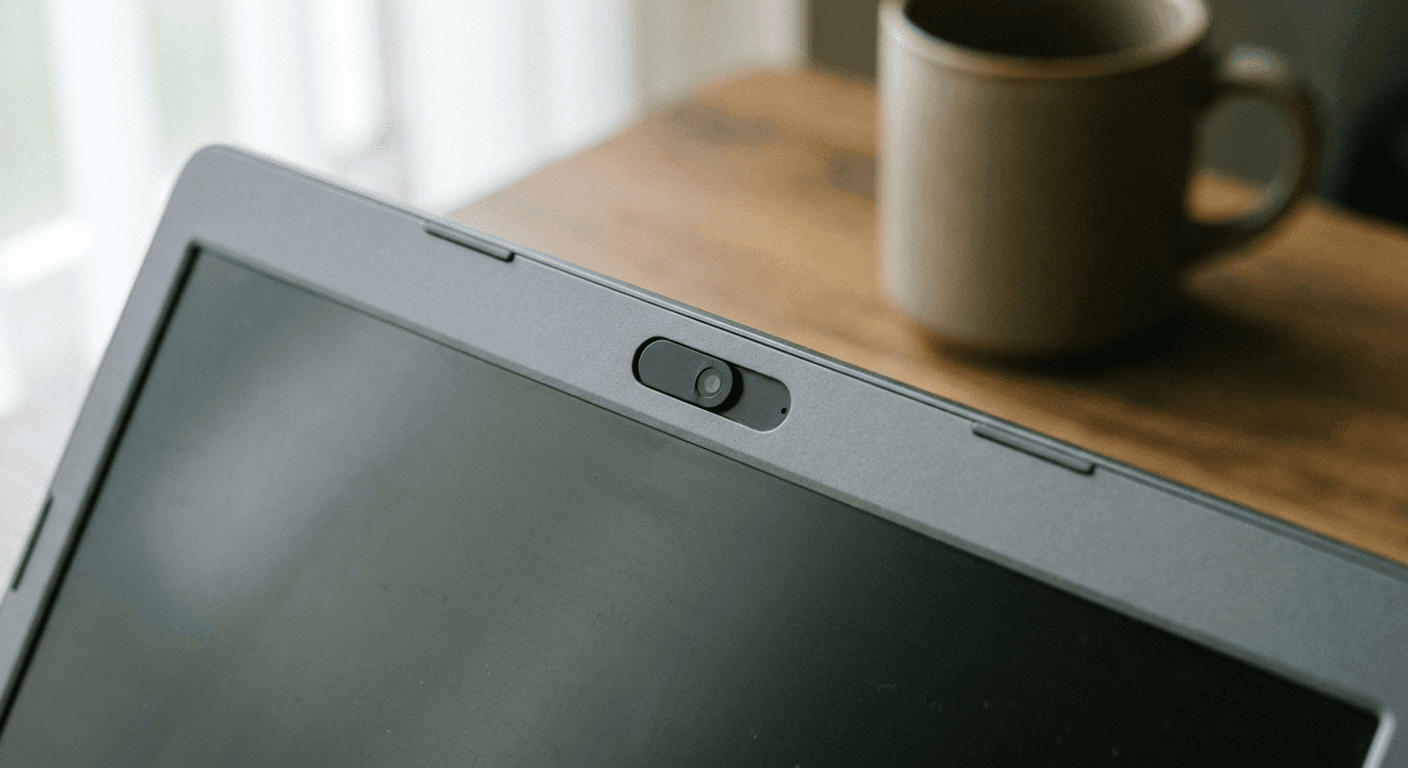
Maryland prohibits voyeurism and hidden camera surveillance under Md. Code Crim. Law 3-902 and 3-903. Section 3-902 bans visual surveillance of a person in a private place, such as a restroom or changing room, with prurient intent, while 3-903 bars placing a camera to secretly observe someone inside a private residence, regardless of sexual intent, though it exempts an adult resident of that residence and anyone acting with an adult resident's consent. Both offenses are misdemeanors under state law. A third statute, 3-901, makes any visual surveillance of a person in a retail store's dressing room or restroom without consent a misdemeanor, with no intent requirement.
Maryland takes voyeurism and hidden camera offenses seriously. Multiple statutes work together to protect people from unauthorized visual surveillance in private settings. These laws address everything from peeping and hidden cameras to the nonconsensual sharing of intimate images online.
The primary statutes are found in Maryland Criminal Law Title 3, Subtitle 9, which covers visual surveillance crimes. When hidden cameras also capture audio of private conversations, the state's wiretapping statute under Md. Code, Cts. & Jud. Proc. ss 10-402 adds additional felony liability.
Maryland's Core Voyeurism Statutes
Criminal Law ss 3-902: Visual Surveillance
Maryland Criminal Law ss 3-902 targets the act of conducting visual surveillance of another person without their knowledge or consent. The statute applies when:

- The person being observed is in a private place
- The surveillance is conducted with prurient intent (for purposes of sexual arousal or gratification)
- The person observed has a reasonable expectation of privacy
This law covers both direct observation (peeping through windows, looking over bathroom stalls) and technology-assisted surveillance (using cameras, binoculars, or other devices to observe someone). The statute does not require that a recording be made. Simply viewing another person in a private place with prurient intent is sufficient to violate the law. The statute's list of private places expressly includes a residence, so ss 3-902 can apply inside a home as well as in a business, hotel, or other facility.
Penalties: Violations of ss 3-902 are classified as misdemeanors, punishable by up to 1 year in prison and/or a $2,500 fine. The statute does not set a separate, enhanced tier for repeat offenses.
Criminal Law ss 3-903: Camera Surveillance Inside a Private Residence
Maryland Criminal Law ss 3-903 is narrower than ss 3-902 in one important way and broader in another. It applies only to a camera placed on real property where a private residence is located, to conduct deliberate surreptitious observation of an individual inside that residence -- it does not reach restrooms, offices, hospitals, or other non-residential spaces.
Unlike ss 3-902, this statute does not require prurient intent. A camera placed to secretly observe someone inside a private residence can violate ss 3-903 regardless of any sexual purpose, so a landlord or other non-resident who hides a camera to secretly watch a tenant or guest inside the home can be charged under ss 3-903 even absent any sexual motive. The statute does not apply, however, to an adult resident of the residence where the camera is placed, or to a person who has the consent of an adult resident (or that resident's legal guardian) to place the camera; ss 3-903(b) lists these and other exemptions, including any part of a residence used for business purposes. An adult resident who hides a camera in their own home is instead judged under ss 3-902, which requires prurient intent, and other laws. Because the statute is residence-specific, secretly monitoring an employee in a workplace office is not covered by ss 3-903; it would instead need to satisfy ss 3-902's prurient-intent element, or fall under a different law entirely.
Criminal Law ss 3-901: Retail Store Dressing Rooms and Restrooms
Maryland Criminal Law ss 3-901 makes it a misdemeanor to conduct visual surveillance, including by camera, of a person in a dressing room or restroom in a retail store without that person's consent. It has no prurient-intent element, so a store's loss-prevention camera in a fitting room is covered, and it is not a defense that the defendant owns the premises. The penalty is up to 30 days in jail and a $1,000 fine, and the person watched can sue for actual damages and attorney's fees.
What Qualifies as a "Private Place"?
For purposes of ss 3-902, Maryland law defines "private place" broadly as a room where a person can reasonably be expected to disrobe and has a reasonable expectation of privacy. Locations covered include:
- Bathrooms and restrooms (both residential and commercial)
- Changing rooms and fitting rooms (retail stores, gyms, pools)
- Bedrooms (including hotel and motel rooms)
- Shower areas and locker rooms
- Medical examination rooms
- Tanning booths and similar enclosed spaces
- Any other room where a person can reasonably be expected to undress and has a reasonable expectation of privacy
The key test is whether a reasonable person in the observed person's position would expect to be free from visual surveillance. Courts look at the totality of the circumstances, including the nature of the space, whether it is enclosed, and whether the person took steps to ensure privacy.
Revenge Porn: Nonconsensual Distribution of Intimate Images

Criminal Law ss 3-809
Maryland Criminal Law ss 3-809 criminalizes the nonconsensual distribution of private intimate images. This statute addresses what is commonly called "revenge porn" but covers a broader range of conduct than the term suggests.
Under ss 3-809, it is illegal to intentionally distribute, publish, or transmit an image depicting another person in an intimate state when:
- The depicted person did not consent to the distribution
- The person had a reasonable expectation that the image would remain private
- The distribution was made with the intent to harm, harass, intimidate, threaten, or coerce the person depicted
What Counts as an "Intimate Image"?
The statute covers images showing:
- Nudity or partial nudity
- Sexual acts or sexual contact
- Any depiction of intimate body parts that the person intended to keep private
The law applies to photographs, videos, digital images, and any visual representation, regardless of the medium or platform used for distribution.
Criminal Penalties for Revenge Porn
| Offense | Classification | Maximum Penalty |
|---|---|---|
| Nonconsensual distribution of intimate images (ss 3-809) | Misdemeanor | 2 years prison, $5,000 fine |
Civil Remedies for Victims
Beyond criminal prosecution, ss 3-809(f) provides victims with a civil cause of action for defamation per se or invasion of privacy against the person who distributed the images. The statute does not itemize a separate list of recoverable damages; the victim's remedies are whatever those two common-law torts allow, and the court may additionally award reasonable attorney's fees to a prevailing plaintiff.
The civil remedy exists independently of criminal prosecution. A victim can pursue both paths simultaneously.
Upskirting and Downblousing

Maryland law addresses technology-assisted voyeurism, including "upskirting" (using a camera to photograph under a person's clothing) and similar acts. These offenses fall under ss 3-902's prohibition on using a camera to capture a person's private area with prurient intent, which applies regardless of location. Section 3-903 reaches this conduct only if it happens inside a private residence; it does not independently cover upskirting in a public place like a store or sidewalk.
Using a hidden camera, phone camera, or other device with prurient intent to capture images under or through a person's clothing without their consent, where a reasonable person would believe that area is not visible to the public, violates ss 3-902 regardless of whether the act occurs in a public or private place. The violation arises from the invasion of a person's bodily privacy, which exists even in public settings.
When Hidden Cameras Trigger the Wiretapping Statute

The Audio Component
A hidden camera inside a private residence that records only silent video may violate ss 3-903 (unless an exemption such as the adult-resident exemption applies) or, if placed with prurient intent, ss 3-902, which covers private places both inside and outside a residence, but when the camera also captures audio, the offense escalates significantly. The audio recording triggers Md. Code, Cts. & Jud. Proc. ss 10-402, Maryland's wiretapping statute.
Under ss 10-402, recording a private conversation without the consent of all parties is a felony punishable by:
- Up to 5 years in prison
- Up to $10,000 in fines
This means a person who places a hidden camera with audio capability inside a private residence can face:
- Misdemeanor charges under ss 3-903 for the hidden camera itself
- Felony charges under ss 10-402 for the unauthorized audio recording
- Additional misdemeanor charges under ss 3-902 if prurient intent is present
- Potential federal charges under 18 U.S.C. ss 1801 (video voyeurism on federal property)
Outside a private residence, two statutes apply. In a retail store, Criminal Law ss 3-901 makes any visual surveillance of a person in a dressing room or restroom without consent a misdemeanor (up to 30 days and $1,000), with no intent requirement, even for the store's owner, and the person watched can sue. Anywhere else, such as an office, gym, or hotel, a hidden camera in a restroom or changing room is charged under ss 3-902, which requires prurient intent.
Stacking of Charges
Maryland prosecutors can bring multiple charges for a single hidden camera incident. Each statute protects a different interest (visual privacy, audio privacy, and bodily autonomy), so charges under multiple statutes do not constitute double jeopardy.
Specific Scenarios and Legal Analysis
Hidden Cameras in Rental Properties
Landlords who place hidden cameras in rental units face serious criminal liability. Because a tenant's unit is their private residence, recording tenants in bedrooms, bathrooms, or other areas of the unit violates ss 3-903. If the cameras capture audio, felony wiretapping charges under ss 10-402 also apply.
Even in common areas of a rental property, hidden cameras that are not disclosed to tenants may violate the tenant's reasonable expectation of privacy, depending on the circumstances.
Hidden Cameras in the Workplace
A workplace is not a private residence, so ss 3-903 does not reach an employer's cameras. An employer who hides a camera in a workplace restroom or changing area instead risks a misdemeanor under ss 3-902, but only if the camera was placed with prurient intent -- that statute does not criminalize a hidden camera installed for loss-prevention or monitoring purposes without a sexual motive. The exception is a retail store: in a store's restrooms or dressing rooms, ss 3-901 makes any visual surveillance without consent a misdemeanor regardless of intent. Employers should still avoid cameras in these spaces regardless of intent: beyond the criminal exposure ss 3-902 can create, hidden surveillance of employees undressing or using the restroom exposes an employer to civil invasion-of-privacy claims and severe reputational harm. Cameras in common work areas are generally permissible if employees receive notice.
Nanny Cameras
Parents who install cameras to monitor childcare providers operate in a legal gray area under Maryland law. Silent nanny cameras placed in common areas of the home (living rooms, kitchens) are generally permissible. However:
- Section 3-903 does not apply to an adult resident of the home, so a parent's camera is judged instead under ss 3-902, which can reach a camera in a bathroom or bedroom where the caregiver changes clothes if it is placed with prurient intent, and such a camera can still invite civil invasion-of-privacy claims
- Audio-enabled nanny cameras trigger the wiretapping statute's all-party consent requirement
- The safest approach is to disclose the presence of cameras to the caregiver
Intimate Partner Surveillance
Using hidden cameras to monitor an intimate partner without their consent can violate Maryland law. Because ss 3-903 does not apply to an adult resident of the home, a partner who lives there is judged under other statutes, such as ss 3-902 (if there is prurient intent) and the wiretapping statute (if audio is captured). This behavior may also constitute evidence of domestic abuse and stalking. Maryland's domestic violence statutes provide additional protections and remedies for victims of surveillance by intimate partners.
Federal Voyeurism Law
18 U.S.C. ss 1801: Video Voyeurism Prevention Act
The federal Video Voyeurism Prevention Act applies specifically to federal property and the special maritime and territorial jurisdiction of the United States. This statute makes it a crime to capture an image of a person's private area without consent in circumstances where the person has a reasonable expectation of privacy.
This federal law becomes relevant when voyeurism occurs on:
- Military bases in Maryland
- Federal government buildings
- National parks and federal lands
- Other areas under exclusive federal jurisdiction
Federal penalties include fines and up to one year in prison.
Reporting Voyeurism and Hidden Camera Crimes
How to Report
If you discover a hidden camera or believe you are a victim of voyeurism in Maryland:
- Contact local law enforcement immediately by calling 911 or your local police non-emergency number
- Do not disturb the camera if possible, as it is evidence
- Document the location and circumstances of the discovery
- Preserve any evidence including photographs of the camera's location
- Contact an attorney to discuss both criminal prosecution and civil remedies
Victim Resources
Maryland provides several resources for victims of privacy crimes:
- Your county State's Attorney's Office handles prosecution, and the Maryland Attorney General's Office has victim resources
- Legal aid organizations can help victims who cannot afford private attorneys
- Domestic violence organizations can assist when hidden camera use occurs in an intimate partner context
Penalties Summary
| Offense | Statute | Classification | Maximum Penalty |
|---|---|---|---|
| Visual surveillance with prurient intent | ss 3-902 | Misdemeanor | Up to 1 year prison and/or $2,500 fine |
| Hidden camera inside a private residence | ss 3-903 | Misdemeanor | Up to 1 year prison and/or $2,500 fine |
| Visual surveillance in a retail store dressing room or restroom | ss 3-901 | Misdemeanor | Up to 30 days jail and/or $1,000 fine |
| Revenge porn (any offense) | ss 3-809 | Misdemeanor | 2 years prison, $5,000 fine |
| Hidden camera with audio | ss 10-402 | Felony | 5 years prison, $10,000 fine |
| Federal video voyeurism | 18 U.S.C. ss 1801 | Federal crime | 1 year prison, fines |
More Maryland Recording Laws
Audio Recording | Video Recording | Voyeurism & Hidden Cameras | Workplace Recording | Recording Police | Phone Call Recording | Security Cameras | Recording in Public | Landlord-Tenant | Dashcam Laws | Schools | Medical Recording
Back to Maryland Recording Laws
More Maryland Recording Topics
More Maryland Laws
- Maryland AI Meeting Recording Laws
- Maryland Dashcam Laws
- Maryland Data Privacy Laws
- Maryland Deepfake Laws
- Maryland Employee Monitoring Laws
- Maryland GPS Tracking Laws
- Maryland Police Bodycam Laws
- Maryland Smart Glasses Recording Laws
Frequently Asked Questions
What is the penalty for hidden cameras in Maryland?
It depends on where the camera is. Placing a hidden camera inside a private residence, such as a bathroom or bedroom in someone's home, can violate Maryland Criminal Law ss 3-903, a misdemeanor, regardless of sexual intent, unless the person placing it is an adult resident of that home or has an adult resident's consent. In a retail store's dressing room or restroom, ss 3-901 makes any visual surveillance without consent a misdemeanor (up to 30 days and $1,000) with no intent requirement. In a bathroom or changing room at another business, such as a gym or office, a hidden camera falls under ss 3-902, which applies only if the camera was placed with prurient intent; ss 3-902 can also apply inside a residence. If the hidden camera also records audio of a private conversation, the person faces additional felony charges under the wiretapping statute (ss 10-402) with up to 5 years in prison and a $10,000 fine. Multiple charges can stack for a single incident.
Is revenge porn illegal in Maryland?
Yes. Maryland Criminal Law ss 3-809 makes it illegal to distribute intimate images of someone without their consent when done to harm, harass, or intimidate them. It is a misdemeanor with up to 2 years in prison and a $5,000 fine; the statute does not set a higher penalty tier for repeat offenses. Victims can also bring a civil cause of action for defamation per se or invasion of privacy, plus recoverable attorney's fees, under ss 3-809(f).
Can I use a nanny cam in Maryland?
Silent video nanny cameras in common areas of your home (living room, kitchen) are generally permissible. However, cameras in bathrooms or bedrooms where the caregiver might change clothes carry legal risk: ss 3-903 exempts an adult resident of the home, but ss 3-902 applies if the camera is placed with prurient intent, and civil privacy claims are possible. If the camera records audio, you need all-party consent under the wiretapping statute. The safest approach is to tell the caregiver about the cameras.
What should I do if I find a hidden camera in Maryland?
Contact local law enforcement immediately. Do not disturb the camera, as it is evidence. Document the location with photographs if possible. Preserve any other evidence of the surveillance. Then consult an attorney to discuss criminal prosecution and civil remedies. If the hidden camera was placed by a landlord or employer, additional legal protections may apply.
Does Maryland's voyeurism law require sexual intent?
It depends on the statute. Criminal Law ss 3-902 (visual surveillance of a private place, such as a restroom or changing room) requires prurient intent, meaning the surveillance was done for sexual arousal or gratification. Criminal Law ss 3-903 (camera surveillance inside a private residence) does not require prurient intent, but it is narrower in scope -- it only reaches a camera placed to secretly observe someone inside a residence, not a business, office, or other non-residential space, and it does not apply to an adult resident of the home or someone with an adult resident's consent. Criminal Law ss 3-901, which covers only dressing rooms and restrooms in retail stores, also requires no sexual intent.
Updates
We corrected this page to add Maryland Criminal Law 3-901, which makes camera surveillance in a retail store's dressing room or restroom a misdemeanor without any sexual-intent requirement, to state that the federal TAKE IT DOWN Act is a criminal and platform-removal law with no private right to sue (the civil claim is 15 U.S.C. 6851), to restore the undressing element of the private-place definition, and to fix the victim-resources link. We added the prurient-intent and not-visible-to-the-public elements to the upskirting statement, clarified that the added wiretap felony applies when a hidden camera records a private conversation, and removed a nonexistent "first offense" tier from the federal video voyeurism penalty.
Independently fact-checked against the cited primary sources; governing law re-checked for recent changes
Corrected our description of Maryland's hidden-camera law to note that Criminal Law ss 3-903 does not apply to an adult resident of the home or someone with a resident's consent, and that ss 3-902 can apply inside a residence.
Corrected the TAKE IT DOWN Act's signing date from 2026 to its actual date, May 19, 2025 (its platform-removal deadline has already passed and is now in force). Fixed two broken statute links and added the exact 1-year/$2,500 penalty for hidden-camera and prurient-intent surveillance, which had been listed as "varies" in three places. Corrected the description of the civil remedy for nonconsensual intimate-image distribution, which the statute grants as a defamation-per-se/invasion-of-privacy claim plus attorney's fees, not the itemized damages list the page had described.
Independently fact-checked against the cited primary sources; governing law re-checked for recent changes
Corrected a systemic statute misattribution throughout the page: it repeatedly described Criminal Law 3-903 as reaching 'any private place' (bathrooms, changing rooms, offices, workplaces) without a residence requirement. Section 3-903 only bars a camera placed to secretly observe someone inside a private residence. Rewrote 13 passages, including the intro, KeyTakeaways, the 3-903 section header and body, the upskirting section (correctly attributed to 3-902(c)(2)), the workplace-camera section (previously asserted unconditional criminal liability under the wrong statute), the penalties table, and two FAQ answers, plus fixed broken statute-link URL parameters.
Governing law re-checked for recent changes
Corrected a fabricated second-offense penalty tier for Maryland's revenge-porn statute (Crim. Law ss 3-809): the statute sets one flat penalty (up to 2 years, $5,000 fine) with no enhanced tier for repeat offenses. Fixed in KeyTakeaways, both penalties tables, and the FAQ.
Governing law re-checked for recent changes
Reviewed and approved by an editor
The Law Behind This Article
This article rests on the statutory provisions below, held in our own legal record and retrieved from the official source. Tap a section to read the operative text.
Maryland Code, Criminal Law Article
§ 3-902In forcecited in 6 of our articles
§3–902. (a) (1) In this section the following words have the meanings indicated. (2) “Camera” includes any electronic device that can be used surreptitiously to observe an individual. (3) “Female breast” means a portion of the female breast below the top of the areola. (4) “Private area of an individual” means the naked or undergarment–clad genitals, pubic area, buttocks, or female breast of an individual. (5) (i) “Private place” means a room in which a person can reasonably be expected to fully or partially disrobe and has a reasonable expectation of privacy, in: 1. an office, business, or store; 2. a recreational facility; 3. a restaurant or tavern; 4. a hotel, motel, or other lodging facility; 5. a theater or sports arena; 6. a school or other educational institution; 7. a bank or other financial institution; 8. any part of a family child care home used for the care and custody of a child; 9. a residence; or 10. another place of private or public use or accommodation. (ii) “Private place” includes a tanning room, dressing room, bedroom, or restroom. (6) (i) “Visual surveillance” means the deliberate, surreptitious observation of an individual by any means.
Official text (excerpt) · last checked 2026-08-31 · Read the full text in our law library · Verify at mgaleg.maryland.gov
Cited in 1 court opinions in our collectionLatest citing opinion in our collection: 2026
Opinions citing this section in our collection:
- United States v. Watkins (Court of Appeals for the Tenth Circuit 2026)“…nn. tit. 17-A, § 511;1,3 Md. Code Ann., Crim. Law § 3-901;3 Md. Code Ann., Crim. Law § 3-902;2,3 Md. Code Ann., Crim. Law § 6-408;1…”
Identified automatically from the court opinions citing this section — not a ranking of which case controls.
Also relied on in: Maryland Recording Laws (2026): All-Party Consent Rules, Maryland Video Recording Laws: Surveillance Rules and Privacy Limits (2026), Maryland Smart Glasses Recording Laws 2026
§ 3-809In forcecited in 5 of our articles
§3–809. (a) (1) In this section the following words have the meanings indicated. (2) “Distribute” means to give, sell, transfer, disseminate, publish, upload, circulate, broadcast, make available, allow access to, or engage in any other form of transmission, electronic or otherwise. (3) “Harm” means: (i) physical injury; (ii) serious emotional distress; or (iii) economic damages. (4) “Intimate parts” means the naked genitals, pubic area, buttocks, or female nipple. (5) “Sexual activity” means: (i) sexual intercourse, including genital–genital, oral–genital, anal–genital, or oral–anal; (ii) masturbation; or (iii) sadomasochistic abuse. (6) (i) “Visual representation” of an identifiable person means: 1. an unaltered image of the person; or 2. an image created with or without using other existing depictions of the person that is indistinguishable from the person, from the perspective of an ordinary person. (ii) “Visual representation” includes a computer–generated image. (iii) “Visual representation” does not include an image or depiction that is: 1. a drawing; 2. a cartoon; 3. a sculpture; or 4. a painting.
Official text (excerpt) · last checked 2026-08-30 · Read the full text in our law library · Verify at mgaleg.maryland.gov
Also relied on in: Maryland Deepfake Laws: AI Images, Voice Cloning & Penalties (2026), Maryland Sexting Laws: Legal Consequences and Penalties, Maryland Pornography Laws (2026): Legal Status & Penalties
§ 3-901In forcecited in 5 of our articles
§3–901. (a) (1) In this section the following words have the meanings indicated. (2) “Private place” means a dressing room or rest room in a retail store. (3) “Visual surveillance” means surveillance by: (i) direct sight; (ii) the use of mirrors; (iii) the use of cameras; or (iv) the use of an electronic device that can be used surreptitiously to observe an individual. (b) This section does not apply to any otherwise lawful surveillance conducted by a law enforcement officer while performing official duties. (c) A person may not conduct or procure another to conduct visual surveillance of an individual in a private place without the consent of that individual. (d) A person who violates this section is guilty of a misdemeanor and on conviction is subject to imprisonment not exceeding 30 days or a fine not exceeding $1,000 or both. (e) It is not a defense to a prosecution under this section that the defendant owns the premises where the private place is located. (f) (1) An individual who was under visual surveillance in violation of this section has a civil cause of action against any person who conducted or procured a person to conduct the visual surveillance.
Official text (excerpt) · last checked 2026-07-29 · Read the full text in our law library · Verify at mgaleg.maryland.gov
Cited in 3 court opinions in our collectionLatest citing opinion in our collection: 2026
Opinions citing this section in our collection:
- 110OAG40 (Maryland Attorney General Reports 2025)“…her statutes impose restrictions on video surveillance. See Md. Code Ann., Crim. Law § 3-901(c) (prohibiting “visual surveillance,”…”
- Maryland Attorney General Opinion 110OAG40 (Maryland Attorney General Reports 2025)“…her statutes impose restrictions on video surveillance. See Md. Code Ann., Crim. Law § 3-901(c) (prohibiting “visual surveillance,”…”
- United States v. Watkins (Court of Appeals for the Tenth Circuit 2026)“…at. Ann. § 14:284; Me. Rev. Stat. Ann. tit. 17-A, § 511;1,3 Md. Code Ann., Crim. Law § 3-901;3 Md. Code Ann., Crim. Law § 3-902;2,3…”
Identified automatically from the court opinions citing this section — not a ranking of which case controls.
Also relied on in: Maryland Employee Monitoring Laws: Passwords, Cameras & GPS, Maryland Ring Doorbell Laws: What You Need to Know in 2026, Maryland Surveillance Camera Laws: What You Need to Know (2026)
§ 3-903In forcecited in 10 of our articles
§3–903. (a) In this section, “camera” includes any electronic device that can be used surreptitiously to observe an individual. (b) This section does not apply to: (1) an adult resident of the private residence where a camera is placed; (2) a person who places or procures another to place a camera on real property without the intent to conduct deliberate surreptitious observation of an individual inside the private residence; (3) a person who has obtained the consent of an adult resident, or the adult resident’s legal guardian, to place a camera on real property to conduct deliberate surreptitious observation of an individual inside the private residence; (4) any otherwise lawful observation with a camera conducted by a law enforcement officer while performing official duties; (5) filming conducted by a person by or for the print or broadcast media through use of a camera that is not secreted from view; (6) any part of a private residence used for business purposes, including any part of a private residence used as a family child care home for the care and custody of a child; (7) filming of a private residence by a person through use of a camera that is not located on the…
Official text (excerpt) · last checked 2026-07-29 · Read the full text in our law library · Verify at mgaleg.maryland.gov
Cited in 1 court opinions in our collectionLatest citing opinion in our collection: 2021
Opinions citing this section in our collection:
- Lancaster v. Baltimore County Maryland (District Court, D. Maryland 2021)“…t VII); and Violation of Maryland Camera Surveillance Act, Md. Code Ann., Crim. Law § 3-903 (Count VIII). (Am. Compl. ¶¶ 231–46).…”
Identified automatically from the court opinions citing this section — not a ranking of which case controls.
Also relied on in: Maryland Landlord-Tenant Recording Laws: Cameras, Audio, and Privacy (2026), Maryland Medical Recording Laws: Patient Rights, HIPAA, and Consent (2026), Maryland School Recording Laws: Students, Teachers, and Campus Rules (2026)
Maryland Code, Courts and Judicial Proceedings Article
§ 10-402In forcecited in 26 of our articles
§10–402. (a) Except as otherwise specifically provided in this subtitle it is unlawful for any person to: (1) Willfully intercept, endeavor to intercept, or procure any other person to intercept or endeavor to intercept, any wire, oral, or electronic communication; (2) Willfully disclose, or endeavor to disclose, to any other person the contents of any wire, oral, or electronic communication, knowing or having reason to know that the information was obtained through the interception of a wire, oral, or electronic communication in violation of this subtitle; or (3) Willfully use, or endeavor to use, the contents of any wire, oral, or electronic communication, knowing or having reason to know that the information was obtained through the interception of a wire, oral, or electronic communication in violation of this subtitle. (b) Any person who violates subsection (a) of this section is guilty of a felony and is subject to imprisonment for not more than 5 years or a fine of not more than $10,000, or both.
Official text (excerpt) · last checked 2026-09-23 · Read the full text in our law library · Verify at mgaleg.maryland.gov
Cited in 12 court opinions in our collectionLatest citing opinion in our collection: 2026
In the courts (editorial summary, independently checked):Applying section 10-402, Fearnow v. Chesapeake & Potomac Telephone Co. (1995) held that liability under the Maryland Wiretap Act requires proof the defendant acted willfully, an intentional violation or reckless disregard of a known legal duty; an employee's failure to check for a court order was only a jury factor on willfulness.
Opinions citing this section in our collection:
- Fearnow v. Chesapeake & Potomac Telephone Co. (Court of Special Appeals of Maryland 1995, 104 Md. App. 1)✓Police hid a tape recorder on an officer's headquarters phone line with a phone company employee's help and no court order; the court held a section 10-402(a) claim requires proof of willful interception, and failing to ask about a court order went only to willfulness.
- Maryland Attorney General Opinion 110OAG60 (Maryland Attorney General Reports 2025)“…or wire communications without the consent of all parties. Md. Code Ann., Cts. & Jud. Proc. § 10-402(a). However, the Wiretap Act contains e…”
- Boehner, John A. v. McDermott, James A. (Court of Appeals for the D.C. Circuit 1999, 191 F.3d 463)“…1992); Me.Rev.Stat. Ann. tit. 15, §§ 710, 711 (West 1998); Md.Code Ann., Cts & Jud. Proc. § 10-402 (1998); Mass. Gen. Laws Ann. ch. 272,…”
Identified automatically from the court opinions citing this section — not a ranking of which case controls.
Also relied on in: Is Plaud HIPAA Compliant? Kind Of. Here's What to Know (2026), Maryland Audio Recording Laws: Two-Party Consent Rules and Penalties (2026), Maryland Dashcam Laws: Legality, Audio Rules, and Evidence Use (2026)
United States Code Title 18
§ 1801Video voyeurismIn forcecited in 81 of our articles
Whoever, in the special maritime and territorial jurisdiction of the United States, has the intent to capture an image of a private area of an individual without their consent, and knowingly does so under circumstances in which the individual has a reasonable expectation of privacy, shall be fined under this title or imprisoned not more than one year, or both. In this section— the term “capture”, with respect to an image, means to videotape, photograph, film, record by any means, or broadcast; the term “broadcast” means to electronically transmit a visual image with the intent that it be viewed by a person or persons; the term “a private area of the individual” means the naked or undergarment clad genitals, pubic area, buttocks, or female breast of that individual; the term “female breast” means any portion of the female breast below the top of the areola; and the term “under circumstances in which that individual has a reasonable expectation of privacy” means— circumstances in which a reasonable person would believe that he or she could disrobe in privacy, without being concerned that an image of a private area of the individual was being captured; or circumstances in which a…
Official text (excerpt) · last checked 2026-07-28 · Read the full text in our law library · Verify at uscode.house.gov
Cited in 53 court opinions in our collectionLatest citing opinion in our collection: 2026
In the courts (editorial summary, independently checked):Courts have applied 18 U.S.C. 1801 mainly at its edges. United States v. Johnson (2010) read it as Congress's answer to secretly filming nudity on federal property, acquitting on a child exploitation charge instead. EPIC v. Department of Homeland Security (2011) applied the Section 1801(c) law enforcement exception to a TSA scanner claim.
Opinions citing this section in our collection:
- United States v. Anthony Helton (Court of Appeals for the Fourth Circuit 2019, 944 F.3d 198)“…from this list of federal offenses is video voyeurism under 18 U.S.C. § 1801. Rather than list this statute as an enu…”
- United States v. Johnson (District Court, W.D. Missouri 2010, 719 F. Supp. 2d 1059)✓A weightlifting coach hid a camera to film minors weighing in nude; acquitting him under the child exploitation statute, the court called that conduct plain video voyeurism under section 1801, but noted the section reaches only federal maritime and territorial jurisdiction.
- Electronic Privacy Information Center v. United States Department of Homeland Security (Court of Appeals for the D.C. Circuit 2011, 653 F.3d 1)✓Privacy groups challenged TSA body scanners under the Video Voyeurism Prevention Act; the D.C. Circuit held the statute's exception for lawful law enforcement, correctional, or intelligence activity applied to airport screening, so the section 1801 claim failed.
Identified automatically from the court opinions citing this section — not a ranking of which case controls.
Also relied on in: Is It Illegal to Video Record Someone Without Their Consent? (2026), California Voyeurism and Hidden Camera Laws: Penalties and Protections (2026), Delaware Voyeurism Laws: Hidden Cameras, Penalties, and Privacy Protections (2026)
Sources and References
- Maryland Criminal Law ss 3-901 - Visual Surveillance in Retail Store Dressing Rooms and Restrooms(mgaleg.maryland.gov).gov
- Maryland Criminal Law ss 3-903 - Camera Surveillance in Private Places(mgaleg.maryland.gov).gov
- Maryland Criminal Law ss 3-809 - Nonconsensual Distribution of Intimate Images(mgaleg.maryland.gov).gov
- Md. Code, Cts. & Jud. Proc. ss 10-402 - Wiretapping Statute(mgaleg.maryland.gov).gov
- 18 U.S.C. ss 1801 - Video Voyeurism Prevention Act(law.cornell.edu)
- Maryland Office of the Attorney General(oag.maryland.gov).gov