
Delaware
Delaware Voyeurism Laws: Hidden Cameras, Penalties, and Privacy Protections (2026)
Independently fact-checked against primary sources (last audited August 22, 2026). · Reviewed by the RecordingLaw editorial team. · Law checked current as of August 22, 2026. · 5 primary sources cited on this page. How we verify our legal content
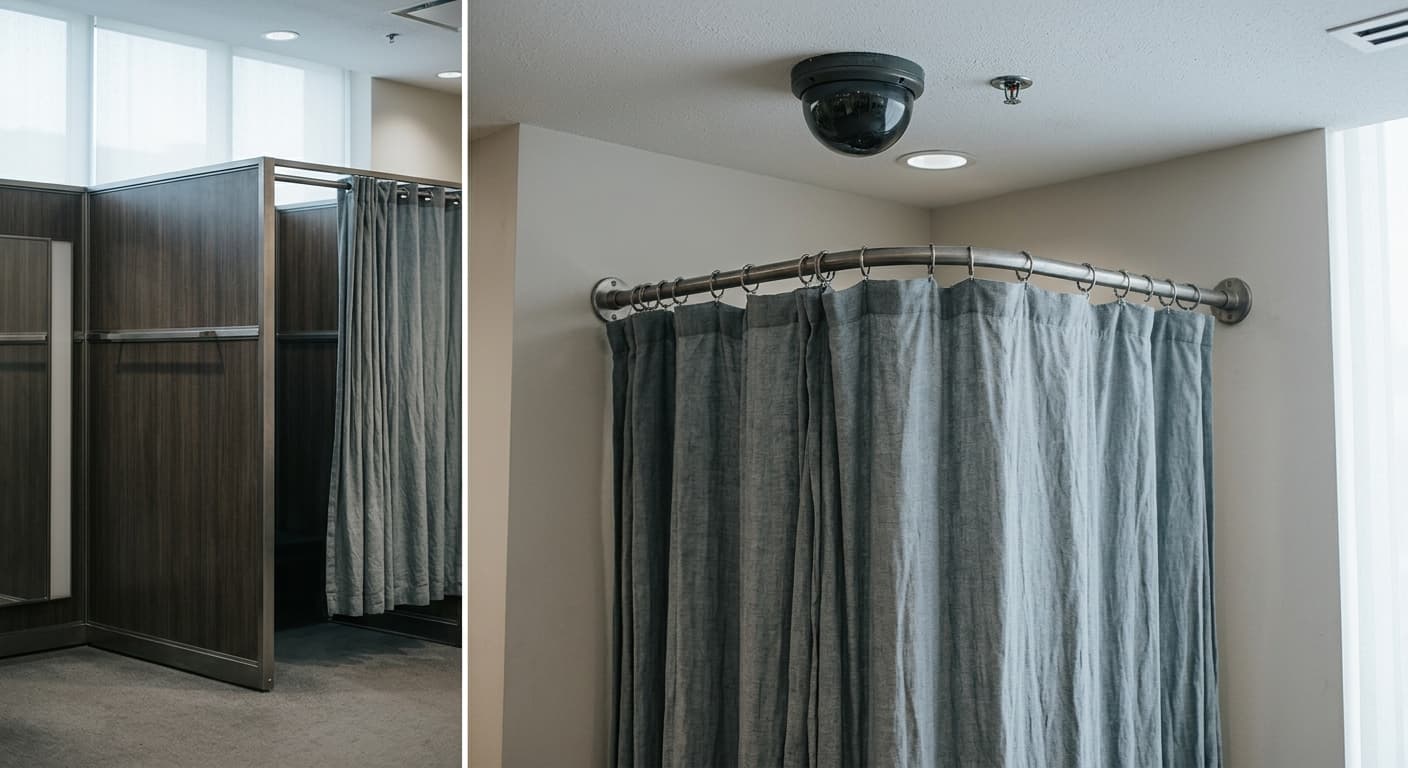
Delaware classifies voyeurism as a Class G felony under 11 Del. C. Section 1335, prohibiting secret recording or observation of people in private spaces where they have a reasonable expectation of privacy. Violations carry up to two years in prison, a stiffer penalty than the one-year maximum for general privacy offenses under the same statute.
Voyeurism is a serious criminal offense in Delaware that carries felony-level penalties. The state's primary anti-voyeurism protections are found in 11 Del. C. Section 1335, the same privacy statute that governs recording consent. While general violations of the privacy statute are Class A misdemeanors, voyeurism-related offenses receive enhanced treatment as Class G felonies, reflecting the legislature's recognition that secret recording in intimate settings causes particularly severe harm to victims.
This guide covers what constitutes voyeurism under Delaware law, the specific penalties, how the law applies to modern technology including hidden cameras and smartphone recording, and the legal remedies available to victims.
What Is Voyeurism Under Delaware Law?
The Statutory Framework
Delaware's voyeurism prohibitions are contained within 11 Del. C. Section 1335, the broader violation of privacy statute. The law addresses voyeurism through several subsections that target different forms of intrusive observation and recording.
Section 1335(a)(1) makes it a crime to trespass on private property for the purpose of eavesdropping or conducting surveillance. This provision covers situations where someone physically enters another person's property to observe or record them without permission.
Section 1335(a)(4) prohibits intercepting private communications without the consent of all parties. When applied to voyeurism contexts, this includes secretly recording people in settings where they have a reasonable expectation of privacy.
The statute's voyeurism provisions specifically target the act of secretly recording or observing another person in circumstances where the victim has a reasonable expectation of being free from such observation, particularly in spaces associated with nudity, undressing, or intimate activities.
Key Elements of a Voyeurism Charge
For prosecutors to secure a voyeurism conviction in Delaware, they generally must prove:
- The defendant recorded or observed another person without their knowledge or consent
- The victim was in a location where they had a reasonable expectation of privacy
- The recording or observation was conducted secretly or through deceptive means
- The defendant acted intentionally, not accidentally
What "Reasonable Expectation of Privacy" Means
The concept of reasonable expectation of privacy is central to Delaware voyeurism law. A person has this expectation when they are in a location or situation where a reasonable person would believe they are not being observed or recorded.
Locations where this expectation is strongest include:
- Bathrooms and restrooms in homes, businesses, and public facilities
- Bedrooms in private residences, hotels, and motels
- Changing rooms and fitting rooms in retail stores, gyms, and recreational facilities
- Locker rooms and showers in schools, gyms, pools, and workplaces
- Medical examination rooms in hospitals, clinics, and doctors' offices
- Hotel and motel rooms rented by guests
- Tanning booths and salons where clients undress
Types of Voyeurism Covered by Delaware Law

Hidden Camera Voyeurism
The most commonly prosecuted form of voyeurism involves placing hidden cameras in private locations. This includes:
- Bathroom cameras: Placing recording devices in bathrooms, whether in private homes, workplaces, or public restrooms
- Bedroom cameras: Installing hidden cameras in bedrooms, including in rental properties, hotels, and Airbnb-type accommodations
- Changing room cameras: Concealing recording devices in retail fitting rooms, gym locker rooms, or similar spaces
- Upskirt and downblouse recording: Using hidden cameras to capture images under clothing or down shirts in public or private settings
Delaware law does not require that the hidden camera actually capture images of nudity or intimate activity. The act of placing the camera in a location where such images could reasonably be expected is sufficient for prosecution.
Peeping Tom Offenses
Traditional "peeping Tom" behavior, where someone physically looks into windows, through holes, or over barriers to observe people in private spaces, is covered under Section 1335(a)(1)'s trespass-to-eavesdrop provision. This applies whether the person uses their own eyes, binoculars, or other visual aids.
Digital and Technology-Enabled Voyeurism
Modern technology has expanded the methods available for voyeuristic conduct. Delaware law covers:
- Smartphones used to record under clothing or in private areas
- Drones equipped with cameras flown to capture images through windows or over private fenced areas
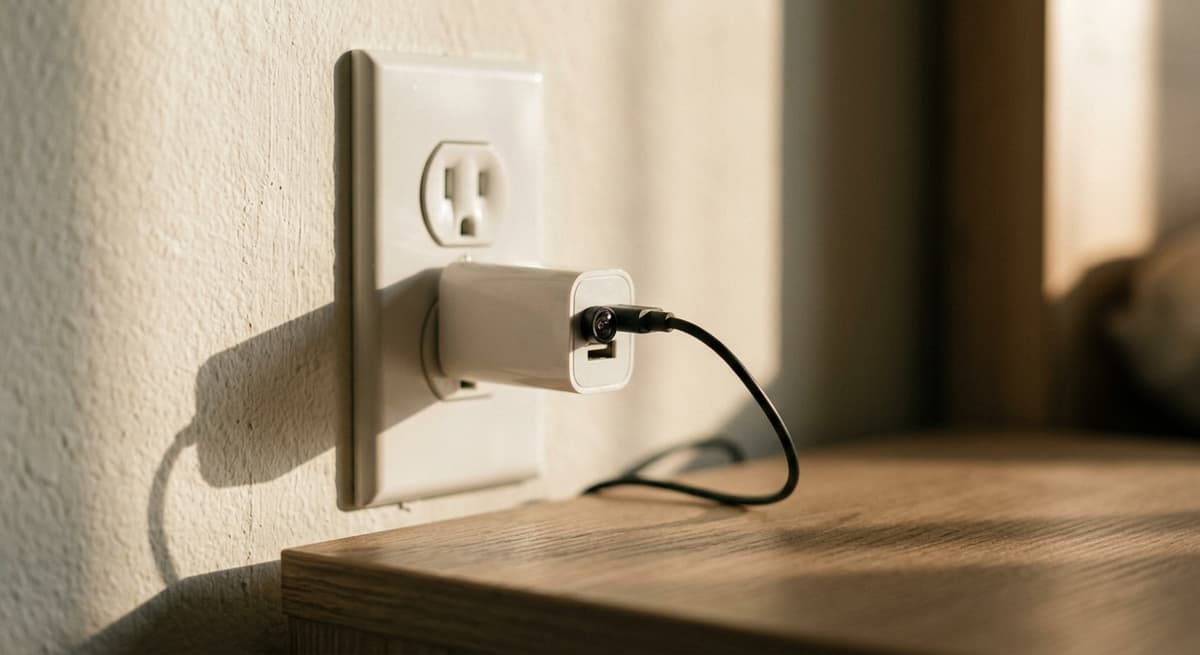
- Wi-Fi enabled hidden cameras disguised as everyday objects (clocks, smoke detectors, electrical outlets)
- Hacking security cameras to view private spaces without authorization
- Screen recording or intercepting private video calls or video chat sessions
Non-Consensual Intimate Image Distribution
Delaware addresses the non-consensual dissemination of intimate images within 11 Del. C. Section 1335(a)(9), which prohibits knowingly reproducing, distributing, or disseminating a visual depiction of another person's nude or sexually conducted body without consent. This provision is part of the same privacy statute that covers voyeurism, providing dedicated statutory coverage for image-sharing offenses alongside the general privacy protections of Section 1335. Federal law also provides protection through the Video Voyeurism Prevention Act.
Criminal Penalties for Voyeurism in Delaware
Class G Felony for Voyeurism Offenses
Voyeurism-related violations of 11 Del. C. Section 1335 are classified as a Class G felony in Delaware. Under 11 Del. C. Section 4205, Class G felony sentencing includes:
- Up to 2 years in prison
- Fines as determined by the court
- A permanent felony record
- Potential sex offender registration requirements
Enhanced Penalties for Aggravating Factors
Voyeurism penalties may be enhanced when aggravating factors are present:
- Victims are minors: Recording minors in voyeuristic contexts can result in additional charges under child exploitation statutes, including federal charges under 18 U.S.C. Section 2251 (sexual exploitation of children)
- Distribution of recordings: Sharing or distributing voyeuristic images or video adds separate counts to the criminal charges
- Multiple victims: Each victim constitutes a separate count, and penalties can be imposed consecutively
- Pattern of conduct: Repeat offenders face the possibility of habitual offender enhancements
Comparison of Penalty Levels
| Offense Type | Classification | Max Prison | Key Factor |
|---|---|---|---|
| General privacy violation | Class A Misdemeanor | 1 year | Recording private conversation |
| Voyeurism (Section 1335) | Class G Felony | 2 years | Recording in intimate private space |
| Wiretapping (Section 2402) | Class E Felony | 5 years | Intercepting communications |
| Child exploitation (federal) | Federal Felony | 15-30 years | Minor victim |
Federal Voyeurism Laws That Apply in Delaware
Video Voyeurism Prevention Act (18 U.S.C. Section 1801)
The federal Video Voyeurism Prevention Act applies to voyeurism committed on federal property within Delaware, including federal courthouses, military installations, and national parks. This law makes it a federal crime to photograph or record a private area of an individual without their consent when that individual has a reasonable expectation of privacy.
Federal penalties include:
- Fines under federal sentencing guidelines
- Up to 1 year in federal prison for a first offense
TAKE IT DOWN Act (May 2025)
Congress enacted the TAKE IT DOWN Act, signed into law on May 19, 2025. The Act creates a federal cause of action and criminal penalties for the non-consensual publication of intimate visual depictions, including AI-generated (deepfake) intimate images. It requires online platforms to remove reported non-consensual intimate images within 48 hours of a valid takedown notice. For Delaware voyeurism victims whose images have been shared online, the TAKE IT DOWN Act provides a federal pathway for rapid removal and civil or criminal recourse that operates alongside Delaware's state-law remedies under 11 Del. C. Section 1335(a)(9) and Section 1335.
PROTECT Act and Child-Related Voyeurism
When voyeurism involves minors, federal laws including the PROTECT Act and 18 U.S.C. Section 2252 may apply alongside Delaware state law. Federal prosecution is particularly likely when:
- Images cross state lines through the internet or electronic transmission
- The conduct occurs on federal property
- The case involves organized or commercial distribution
Civil Remedies for Voyeurism Victims
Lawsuits Under 11 Del. C. Section 2409
Victims of voyeurism in Delaware can file civil lawsuits under 11 Del. C. Section 2409. The statute provides for:
- Actual damages with a minimum of $100 per day of violation or $1,000, whichever is greater
- Punitive damages to punish particularly egregious conduct
- Attorney fees and litigation costs
Additional Civil Claims
Beyond the statutory remedy, voyeurism victims may pursue additional common-law claims:
- Invasion of privacy (intrusion upon seclusion): A tort claim for intentionally intruding on someone's private affairs in a manner that would be highly offensive to a reasonable person
- Intentional infliction of emotional distress: When the voyeuristic conduct is so outrageous that it causes severe emotional harm
- Negligent security: Against property owners (such as hotels, gyms, or landlords) who failed to protect against foreseeable voyeurism on their premises
Protective Orders
Victims can also seek protective orders (restraining orders) against voyeurism perpetrators through the Delaware Family Court or Court of Common Pleas, depending on the relationship between the parties.
Voyeurism in Specific Settings
Rental Properties and Airbnb Accommodations
Landlords and property hosts who install hidden cameras in rental units commit voyeurism under Delaware law. Tenants and guests have a reasonable expectation of privacy in rented spaces. This applies to:
- Long-term rental apartments and houses
- Short-term vacation rentals listed on Airbnb, VRBO, and similar platforms
- Hotel and motel rooms
- Bed and breakfast establishments
Property owners may use security cameras in common areas (lobbies, parking lots, building entrances) but never in private living spaces. For more information, see our guide on Delaware landlord-tenant recording laws.
Workplace Voyeurism
Employers who install hidden cameras in employee restrooms, changing areas, or other private spaces violate Delaware's voyeurism laws. The Title 19 Section 705 notice requirement does not authorize surveillance in areas where employees have a privacy expectation. Workplace voyeurism by supervisors, coworkers, or employers can result in both criminal prosecution and civil liability.
Schools and Educational Facilities
Voyeurism in school settings is treated with particular severity. Hidden cameras in student restrooms, locker rooms, or other private areas can result in felony charges under state law and federal charges if minors are involved. School staff, students, and visitors are all subject to these prohibitions. For more details, see our guide on Delaware school recording laws.
How to Detect Hidden Cameras
Physical Inspection
If you suspect a hidden camera in a private space, look for:
- Small holes in walls, ceilings, or objects at eye level or above
- Unusual objects that seem out of place (clocks, smoke detectors, electrical outlets, phone chargers)
- Tiny LED lights, especially those that glow in the dark
- Objects positioned to face areas where you undress or use the bathroom
Technology-Based Detection
- RF detectors: Radio frequency detectors can identify wireless cameras that transmit signals
- Infrared scanners: Many cameras use infrared LEDs for night vision that can be detected with a smartphone camera
- Network scanners: Apps that scan Wi-Fi networks can reveal connected camera devices
- Professional sweeps: Security professionals can conduct thorough electronic sweeps of spaces
What to Do If You Find a Hidden Camera
If you discover a hidden camera in Delaware:
- Do not touch or remove the camera, as it is evidence
- Document its location with photos from your own device
- Contact local law enforcement immediately to file a police report
- Preserve any evidence of who had access to the space
- Consult with an attorney about your civil remedies
Reporting Voyeurism in Delaware
Law Enforcement
To report voyeurism, contact:
- Local police: For incidents occurring in cities and towns
- Delaware State Police: For incidents in unincorporated areas or when local police are unavailable
- FBI: For incidents involving minors, interstate distribution, or federal property
Delaware Department of Justice
The Delaware Attorney General's office investigates and prosecutes serious privacy crimes. Victims can file complaints through the AG's website or by calling the Consumer Protection Unit.
Explore More Delaware Recording Laws
Audio Recording | Video Recording | Voyeurism Laws | Workplace Recording | Recording Police | Phone Call Recording | Security Cameras | Recording in Public | Landlord-Tenant Recording | Dashcam Laws | School Recording | Medical Recording
Back to Delaware Recording Laws
More Delaware Recording Topics
More Delaware Laws
Frequently Asked Questions
Is voyeurism a felony in Delaware?
Yes. Voyeurism-related violations of 11 Del. C. Section 1335 are classified as a Class G felony, punishable by up to 2 years in prison. This is a more serious penalty than general privacy violations, which are Class A misdemeanors carrying up to 1 year in jail.
Are hidden cameras illegal in Delaware?
Hidden cameras are illegal in Delaware when placed in locations where people have a reasonable expectation of privacy, such as bathrooms, bedrooms, changing rooms, and locker rooms. Video-only cameras in public areas or common spaces of a property are generally legal, but hidden cameras in private spaces constitute voyeurism under 11 Del. C. Section 1335.
Can a landlord install hidden cameras in a rental property in Delaware?
No. Landlords cannot install hidden cameras in areas where tenants have a reasonable expectation of privacy, including bedrooms, bathrooms, and living spaces within the rental unit. Doing so constitutes voyeurism and is a Class G felony. Landlords may only use visible security cameras in common areas such as lobbies, parking lots, and building entrances.
What should I do if I find a hidden camera in a hotel or Airbnb in Delaware?
Do not touch or remove the camera, as it is evidence. Take photos documenting its location, then contact local law enforcement to file a police report. You should also notify the hotel management or platform (such as Airbnb) and consult with an attorney about pursuing civil damages under 11 Del. C. Section 2409.
Can I sue someone for voyeurism in Delaware?
Yes. Victims of voyeurism can file civil lawsuits under 11 Del. C. Section 2409 and recover at least $100 per day of violation or $1,000, whichever is greater, plus punitive damages and attorney fees. Additional claims for invasion of privacy and intentional infliction of emotional distress may also be available.
Updates
Corrected the TAKE IT DOWN Act's signing date (May 19, 2025, not 2026), replaced a fabricated '11 Del. C. Section 1335A' citation with the real provision at Section 1335(a)(9), fixed a dead Section 4205 sentencing-table link, and replaced a dead Attorney General domain with the live one.
Independently fact-checked against the cited primary sources; governing law re-checked for recent changes
Governing law re-checked for recent changes
Spoke-propagation audit. Added TAKE IT DOWN Act (signed May 19, 2025): federal 48-hour takedown requirement for non-consensual intimate images including AI-generated deepfakes. Removed duplicate sentence in NCII section. Corrected the non-consensual dissemination of intimate images cite from a fabricated Section 1335A to 11 Del. C. Section 1335(a)(9) in the SourcesList and body. No wrong 19 Del. C. 1335 cites found.
Reviewed and approved by an editor
The Law Behind This Article
This article rests on the statutory provisions below, held in our own legal record and retrieved from the official source. Tap a section to read the operative text.
Delaware Code, Title 11 (Crimes and Criminal Procedure), Chapter 005 (SPECIFIC OFFENSES)
§ 1335Violation of privacy; class A misdemeanor; class G felony.In forcecited in 19 of our articles
(a) A person is guilty of violation of privacy when, except as authorized by law, the person: (1) Trespasses on property intending to subject anyone to eavesdropping or other surveillance in a private place; or (2) Installs in any private place, without consent of the person or persons entitled to privacy there, any device for observing, photographing, recording, amplifying or broadcasting sounds or events in that place; or (3) Installs or uses outside a private place any device for hearing, recording, amplifying or broadcasting sounds originating in that place which would not ordinarily be audible or comprehensible outside, without the consent of the person or persons entitled to privacy there; or (4) Intercepts without the consent of all parties thereto a message by telephone, telegraph, letter or other means of communicating privately, including private conversation; or (5) Divulges without the consent of the sender and the receiver the existence or contents of any message by telephone, telegraph, letter or other means of communicating privately if the accused knows that the message was unlawfully intercepted or if the accused learned of the message in the course of…
Official text (excerpt) · last checked 2026-08-31 · Read the full text in our law library · Verify at delcode.delaware.gov
Cited in 15 court opinions in our collectionLatest citing opinion in our collection: 2026
In the courts (editorial summary, independently checked):State v. Pulgini (1976) held 11 Del. C. 1335 does not reach police acts covered by sections 1336 and 1431, so a police interception made with one party's consent was lawful. State of Delaware v. Steven Wu (2026) construed 1335(a)(9)(b) as protecting confidentiality from third parties regardless of whether the relationship has ended.
Opinions citing this section in our collection:
- State v. Pulgini (Superior Court of Delaware 1976, 366 A.2d 1198)✓Police recorded a call between the defendant and an informant with the informant's consent but no court order. The court held section 1335 does not apply to police acts covered by sections 1336 and 1431, and one-party consent made the interception lawful.
- State of Delaware v. Steven Wu (Delaware Court of Common Pleas 2026)✓Charged after leaving printed intimate photos from a past affair in the woman's shared mailbox, a man sought a pretrial ruling on section 1335(a)(9)(b). On uncontested facts, the court read beyond that relationship as disclosure outside the private relationship, ended or not.
- Duffy v. State (Supreme Court of Delaware 2019)“…er 2017, Duffy was indicted for Violation of Privacy under 11 Del. C. § 1335(a)(7). The charges arose from Duffy tak…”
Identified automatically from the court opinions citing this section — not a ranking of which case controls.
Also relied on in: Delaware GPS Tracking Laws: Is It Legal to Put a Tracker on a Car? (2026), Delaware Video Recording Laws: Consent Rules, Surveillance, and Penalties (2026), Federal Wiretap Act and ECPA: The Complete Guide (2026)
United States Code Title 18
§ 1801Video voyeurismIn forcecited in 79 of our articles
Whoever, in the special maritime and territorial jurisdiction of the United States, has the intent to capture an image of a private area of an individual without their consent, and knowingly does so under circumstances in which the individual has a reasonable expectation of privacy, shall be fined under this title or imprisoned not more than one year, or both. In this section— the term “capture”, with respect to an image, means to videotape, photograph, film, record by any means, or broadcast; the term “broadcast” means to electronically transmit a visual image with the intent that it be viewed by a person or persons; the term “a private area of the individual” means the naked or undergarment clad genitals, pubic area, buttocks, or female breast of that individual; the term “female breast” means any portion of the female breast below the top of the areola; and the term “under circumstances in which that individual has a reasonable expectation of privacy” means— circumstances in which a reasonable person would believe that he or she could disrobe in privacy, without being concerned that an image of a private area of the individual was being captured; or circumstances in which a…
Official text (excerpt) · last checked 2026-07-28 · Read the full text in our law library · Verify at uscode.house.gov
Cited in 53 court opinions in our collectionLatest citing opinion in our collection: 2026
In the courts (editorial summary, independently checked):Courts have applied 18 U.S.C. 1801 mainly at its edges. United States v. Johnson (2010) read it as Congress's answer to secretly filming nudity on federal property, acquitting on a child exploitation charge instead. EPIC v. Department of Homeland Security (2011) applied the Section 1801(c) law enforcement exception to a TSA scanner claim.
Opinions citing this section in our collection:
- United States v. Anthony Helton (Court of Appeals for the Fourth Circuit 2019, 944 F.3d 198)“…from this list of federal offenses is video voyeurism under 18 U.S.C. § 1801. Rather than list this statute as an enu…”
- United States v. Johnson (District Court, W.D. Missouri 2010, 719 F. Supp. 2d 1059)✓A weightlifting coach hid a camera to film minors weighing in nude; acquitting him under the child exploitation statute, the court called that conduct plain video voyeurism under section 1801, but noted the section reaches only federal maritime and territorial jurisdiction.
- Electronic Privacy Information Center v. United States Department of Homeland Security (Court of Appeals for the D.C. Circuit 2011, 653 F.3d 1)✓Privacy groups challenged TSA body scanners under the Video Voyeurism Prevention Act; the D.C. Circuit held the statute's exception for lawful law enforcement, correctional, or intelligence activity applied to airport screening, so the section 1801 claim failed.
Identified automatically from the court opinions citing this section — not a ranking of which case controls.
Also relied on in: Alaska Voyeurism and Hidden Camera Laws: AS 11.61.123 Explained (2026), Arizona Surreptitious Recording & Voyeurism Laws: ARS 13-3019 Penalties (2026), Arkansas Voyeurism Laws: Hidden Cameras, Penalties, and Defenses (2026)
§ 2251Sexual exploitation of childrenIn forcecited in 7 of our articles
Any person who employs, uses, persuades, induces, entices, or coerces any minor to engage in, or who has a minor assist any other person to engage in, or who transports any minor in or affecting interstate or foreign commerce, or in any Territory or Possession of the United States, with the intent that such minor engage in, any sexually explicit conduct for the purpose of producing any visual depiction of such conduct or for the purpose of transmitting a live visual depiction of such conduct, shall be punished as provided under subsection (e), if such person knows or has reason to know that such visual depiction will be transported or transmitted using any means or facility of interstate or foreign commerce or in or affecting interstate or foreign commerce or mailed, if that visual depiction was produced or transmitted using materials that have been mailed, shipped, or transported in or affecting interstate or foreign commerce by any means, including by computer, or if such visual depiction has actually been transported or transmitted using any means or facility of interstate or foreign commerce or in or affecting interstate or foreign commerce or mailed.
Official text (excerpt) · last checked 2026-07-28 · Read the full text in our law library · Verify at uscode.house.gov
Cited in 2,812 court opinions in our collectionLatest citing opinion in our collection: 2026
Opinions citing this section in our collection:
- United States v. Irey (Court of Appeals for the Eleventh Circuit 2010, 612 F.3d 1160)“…iled on December 13, 2006, Irey was charged with violating 18 U.S.C. § 2251 (c). The indictment alleged that he “di…”
- Ashcroft v. Free Speech Coalition (Supreme Court of the United States 2002, 535 U.S. 234)“…ether the Child Pornography Prevention Act of 1996 (CPPA), 18 U. S. C. § 2251 et seq., abridges the freedom of sp…”
- United States v. X-Citement Video, Inc. (Supreme Court of the United States 1994, 513 U.S. 64)“…But as in the criminalization of pornography production at 18 U. S. C. § 2251 , see infra, at 76, n. 5, the perpetr…”
Identified automatically from the court opinions citing this section — not a ranking of which case controls.
Also relied on in: Kentucky Voyeurism and Hidden Camera Laws: Offenses, Penalties, and Protections, Montana Sexting Laws: Legal Consequences and Penalties, Arkansas Sexting Laws: Legal Consequences and Penalties
Search our full record of US law — 2.1 million sections, every state + federal →
Sources and References
- Delaware Code Title 11, Section 1335 - Violation of Privacy(delcode.delaware.gov).gov
- Delaware Code Title 11, Section 2402 - Interception of Communications(delcode.delaware.gov).gov
- Delaware Code Title 11, Section 4205 - Felony Sentencing(delcode.delaware.gov).gov
- Delaware Code Title 19, Section 705 - Employer Monitoring(delcode.delaware.gov).gov
- 18 U.S.C. Section 1801 - Video Voyeurism Prevention Act(law.cornell.edu)
- Delaware Attorney General - Consumer Protection Unit(attorneygeneral.delaware.gov).gov
- 18 U.S.C. Section 2251 - Sexual Exploitation of Children(law.cornell.edu)