
Delaware
Delaware Recording Laws (2026): Two-Statute Consent Conflict
Independently fact-checked against primary sources (last audited August 22, 2026). · Reviewed by the RecordingLaw editorial team. · Law checked current as of August 22, 2026. · 19 primary sources cited on this page. How we verify our legal content
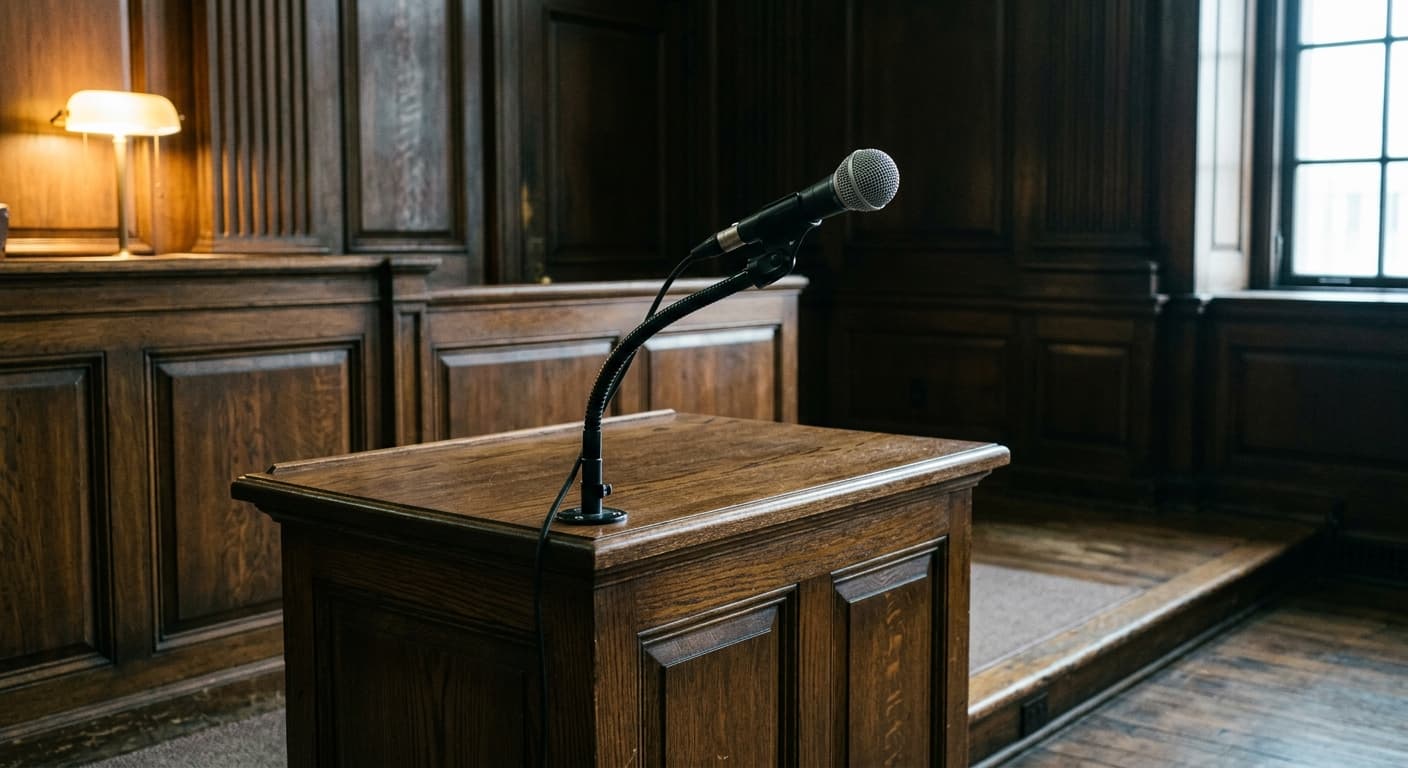
Delaware is effectively an all-party consent state for recording private conversations and phone calls. Two statutes conflict: 11 Del. C. § 2402(c)(4) permits one-party consent recording, while 11 Del. C. § 1335(a)(4) independently requires the consent of every party. No court has resolved the conflict, and illegal recording is both a crime and a civil wrong.
Delaware recording law at a glance
| Question | Answer |
|---|---|
| Consent rule in practice | All-party consent required |
| Wiretapping statute | 11 Del. C. § 2402(c)(4) (one-party consent exception) |
| Privacy statute | 11 Del. C. § 1335(a)(4) (all-party consent required) |
| Conflict resolved by courts? | No |
| Conflict resolved by legislature? | No |
| Criminal penalty: § 2402 violation | Class E felony, up to $10,000 fine |
| Criminal penalty: § 1335(a)(4) violation | Class A misdemeanor, up to 1 year / $2,300 |
| Civil damages: § 2409 | Min. $100/day or $1,000, plus punitive damages and attorney fees |
| Hidden cameras in private spaces | Class G felony under § 1335 voyeurism subsections |
| Recording police in public | Yes, protected by First Amendment (Third Circuit) |
The two-statute conflict is the defining feature of Delaware recording law. For full treatment of each topic, see the in-depth index below.
Recording in-person conversations in Delaware
When you record a face-to-face conversation you are part of, § 2402(c)(4) offers a one-party consent defense: your own participation satisfies it. But § 1335(a)(4) simultaneously prohibits intercepting "a message by telephone, telegraph, letter or other means of communicating privately, including private conversation" without the consent of all parties.
The phrase "including private conversation" covers in-person oral communication directly. Neither statute repeals the other, and they sit in different chapters of the Delaware Criminal Code, so a person who secretly records their own in-person meeting is arguably protected under § 2402(c)(4) yet simultaneously exposed to Class A misdemeanor liability under § 1335(a)(4). The only safe approach is to obtain consent from every person present before recording.

Recording phone calls in Delaware
The same conflict applies to telephone calls. Section 2402(c)(4) permits recording if you are a party or at least one party consents, provided the recording is not for a criminal or tortious purpose. Section 1335(a)(4) independently prohibits intercepting any telephone message without the consent of all parties.
For interstate calls, the more protective state's law generally governs. If you are in Delaware calling someone in a one-party state, Delaware's all-party default still applies to you; if the other party is in another all-party state (California, Florida, Pennsylvania), that state's law also applies. Announcing the recording at the start of the call and receiving verbal confirmation from every participant before recording begins is the safe rule and standard Delaware practice. See Delaware Phone Call Recording Laws for interstate scenarios.
Hidden cameras, doorbells, and nanny cams
Video recording on your own property is generally permissible when aimed at areas with no reasonable expectation of privacy: front doors, driveways, common hallways, and similar spaces. The legal risk rises sharply when a camera is aimed at a space where people reasonably expect to be unobserved.
Section 1335(a)(2) separately makes it a Class A misdemeanor to install any device for observing, photographing, recording, amplifying, or broadcasting sounds or events in a private place without the consent of the person entitled to privacy there, whether or not the footage is voyeuristic. A hidden camera or microphone installed in a guest bedroom, bathroom, or other private space triggers this offense even when it captures no undressing. Section 1335 also contains voyeurism-specific Class G felony subsections: § 1335(a)(6) prohibits secretly recording a person in a state of undress in a private space such as a bathroom, bedroom, or dressing room, and § 1335(a)(7) prohibits secretly recording under or through a person's clothing. These carry up to two years of imprisonment.
The audio caveat matters for any camera: if the device captures audio of a private conversation, § 1335(a)(4)'s all-party consent requirement applies to the audio even if the video is lawful. A nanny cam recording audio of a private conversation in a home requires the consent of all parties.
For full treatment of security cameras, doorbells, and HOA rules, see Delaware Security Camera Laws and Delaware Voyeurism Laws.

Penalties for illegal recording in Delaware
Counterintuitively, the statute that contains the one-party consent exception (§ 2402) carries the higher criminal penalty.
| Violation | Classification | Max Prison | Max Fine |
|---|---|---|---|
| Wiretapping interception (§ 2402) | Class E Felony | 5 years | $10,000 |
| Disclosing intercepted communications (§ 2402) | Class F Felony | 3 years | $10,000 |
| Recording without all-party consent (§ 1335(a)(4)) | Class A Misdemeanor | 1 year | $2,300 |
| Trespass to eavesdrop (§ 1335(a)(1)) | Class A Misdemeanor | 1 year | $2,300 |
| Voyeurism recording in private spaces (§ 1335(a)(6), (a)(7)) | Class G Felony | 2 years | Varies |
Per 11 Del. C. § 1335(c), the § 1335(a)(4) recording offense is a Class A misdemeanor with no prior-conviction felony enhancement; the Class G felony classification applies to the voyeurism subsections (a)(6), (a)(7), (a)(9)c., and (a)(9)d. Subsection (a)(9)d. is itself a recidivism aggravator: it makes the fact that the offense was committed within 5 years of a prior (a)(9) conviction an aggravating factor for sentencing purposes only, not a separate charged element. Do not treat the lower § 1335 baseline as a safer statute to violate, as both expose real criminal liability.
Civil liability under 11 Del. C. § 2409 lets victims of unlawful interception recover actual damages (minimum $100 per day or $1,000, whichever is higher), punitive damages for willful conduct, and reasonable attorney fees. Section 2409(b) provides that good-faith reliance on a court order or legislative authorization "shall constitute a complete defense to any civil or criminal action brought under this chapter or under any other law," so by its own terms the defense is not confined to Chapter 24. It is a narrow defense in practice: it requires reliance on a court order or a legislative authorization, which is rarely the position of a private person recording a conversation.

Recording the police in Delaware
You have a First Amendment right to record police officers performing official duties in public in Delaware. The controlling authority is Fields v. City of Philadelphia, 862 F.3d 353 (3d Cir. 2017), in which the Third Circuit held the First Amendment protects photographing and recording police conducting official duties in a public place; Delaware is within the Third Circuit, so that ruling applies directly.
To exercise the right safely, record from a public space where you have a lawful right to be, do not interfere, maintain a reasonable distance, and comply with any lawful order that does not itself require you to stop recording. If told to stop in a public space, you may calmly state you are exercising your First Amendment right, but always prioritize your safety.
Delaware's body-worn camera law, 11 Del. C. § 8402A (Title 11, Chapter 84A), requires officers to wear and use body cameras during public interactions on duty. The prohibition on altering or erasing recordings is set out in the implementing regulation, 1 Del. Admin. Code 801-26.0, not in the statute itself. Delaware's Freedom of Information Act, 29 Del. C. Chapter 100, guarantees public access to government meetings, and recording open public meetings under 29 Del. C. § 10004 is generally permitted.
See the Delaware Laws on Recording Police spoke for full detail.
Special topics in Delaware
The two-statute conflict: why § 2402 does not override § 1335
The only court decision addressing the conflict is United States v. Vespe, 389 F. Supp. 1359 (D. Del. 1975), which held a party may record their own conversation without all-party consent. That 51-year-old, non-binding federal district court opinion is legally unreliable: no Delaware Supreme Court or Superior Court decision has adopted or distinguished it, so relying on it gambles against Class A misdemeanor exposure under § 1335(a)(4). Practitioner guidance points the same practical way, though the two leading sources do not say the same thing. Kilpatrick Townsend's July 2024 50-state wiretap survey lists Delaware among the all-party consent states. The Reporters Committee for Freedom of the Press (Reporters Recording Guide, October 2019) does not state an all-party rule: it describes a conflict in the state's laws, notes that the wiretapping law permits a party to record and that a federal court has read the privacy law the same way, and advises following the stricter law and obtaining consent from all parties first. The Delaware 153rd General Assembly (2025-2026) has introduced no bill amending either statute.
Employer monitoring: 19 Del. C. § 705
Delaware employers must give prior notice before monitoring employee telephone calls, electronic mail, or internet use on employer-provided systems under 19 Del. C. § 705, either as a one-time written acknowledgment or as a daily electronic notice; the civil penalty for non-compliance is $100 per violation. That notice does not substitute for all-party consent under § 1335 when calls are recorded, so employers who record (not merely monitor) calls should also obtain affirmative written consent.
See Delaware Workplace Recording Laws.
Federal overlay: Wiretap Act, TCPA, and FCC rules
The federal Wiretap Act, 18 U.S.C. § 2511(2)(d), permits one-party consent recording using essentially the same language as § 2402(c)(4), but does not preempt a stricter state standard, so a single recording can be lawful federally and unlawful under Delaware § 1335 simultaneously. FCC Declaratory Ruling FCC 24-17 (February 8, 2024) classified AI-generated voice calls as "artificial or prerecorded voice" calls under the TCPA, 47 U.S.C. § 227, requiring prior express consent. The FCC One-to-One Consent Rule was vacated by the Eleventh Circuit on January 24, 2025, in Insurance Marketing Coalition v. FCC, No. 24-10277 (FCC declined to challenge it in April 2025 and formally eliminated it in September 2025), restoring the prior blanket-consent regime; the FCC beep-tone regulation at 47 C.F.R. § 64.501 applies to common carriers and operates independently of Delaware law.
HIPAA, FERPA, and NLRB
HIPAA's Privacy Rule (45 C.F.R. §§ 164.502, 164.508) bars recording that captures protected health information without authorization, so Delaware providers must satisfy both HIPAA and § 1335 (see Delaware Medical Recording Laws). FERPA (20 U.S.C. § 1232g; 34 C.F.R. Part 99) restricts disclosure of education records at federally funded institutions, so recordings that are education records require FERPA-compliant consent in addition to state-law compliance (see Delaware School Recording Laws).
The NLRB's Stericycle standard (372 NLRB No. 113, Aug. 2, 2023) treats workplace no-recording policies as potentially unlawful where they tend to chill protected concerted activity, and NLRB GC Memorandum 25-07 (June 25, 2025) directs regions to treat surreptitious recording of collective-bargaining sessions as a per se NLRA violation (Acting GC prosecutorial policy, not adjudicated Board law). CFPB Regulation F, 12 C.F.R. § 1006.100(b)(3), requires debt collectors to retain call recordings for three years; Delaware collectors must still obtain all-party consent under § 1335 first.
Recent legal developments
- January 24, 2025: Eleventh Circuit vacated the FCC's One-to-One Consent Rule in Insurance Marketing Coalition v. FCC, No. 24-10277, restoring the prior blanket-consent regime (FCC declined to challenge it, April 2025; final repeal rule, September 2025).
- June 25, 2025: NLRB Acting GC issued Memo 25-07 treating surreptitious recording of collective-bargaining sessions as a per se NLRA violation.
- No change to § 2402 or § 1335: The Delaware 153rd General Assembly (2025-2026) has introduced no bill resolving the consent conflict.
Delaware recording laws in depth
The following sub-pages provide detailed treatment of specific recording contexts in Delaware. All are published.
By type of recording
- Delaware Audio Recording Laws
- Delaware Video Recording Laws
- Delaware Phone Call Recording Laws
- Delaware Dashcam Laws
By place or relationship
- Delaware Laws on Recording Police
- Delaware Laws on Recording in Public
- Delaware Workplace Recording Laws
- Delaware Landlord-Tenant Recording Laws
- Delaware Security Camera Laws
- Delaware Voyeurism Laws
- Delaware Medical Recording Laws
- Delaware School Recording Laws
More Delaware laws
- Delaware Alimony Laws
- Delaware At-Will Employment Laws
- Delaware Child Custody Laws
- Delaware Data Privacy Laws
- Delaware Divorce Laws
This article is general legal information, not legal advice. Recording laws change and apply differently to each situation. For advice about your situation, consult a licensed Delaware attorney.
More Delaware Laws
Frequently Asked Questions
Is Delaware a one-party or two-party consent state?
Delaware is effectively all-party consent in practice. The wiretapping statute, 11 Del. C. § 2402(c)(4), has a one-party consent exception, but it conflicts with 11 Del. C. § 1335(a)(4), which independently requires the consent of all parties. No court has resolved the conflict, so practitioners treat Delaware as all-party consent.
Can I record a phone call in Delaware without telling the other person?
No, not safely. Section 1335(a)(4) independently criminalizes intercepting a telephone call without all-party consent, regardless of § 2402(c)(4). Announce the recording at the start of the call and get verbal confirmation from every participant before proceeding.
Is recording someone a felony in Delaware?
It can be. Violating the wiretapping statute, 11 Del. C. § 2402, is a Class E felony (up to a $10,000 fine). Recording without all-party consent under § 1335(a)(4) is a Class A misdemeanor (up to 1 year and $2,300), with no felony enhancement for repeat offenses. Voyeurism recording in private spaces under § 1335(a)(6) or (a)(7) is a Class G felony.
What can I sue for if someone illegally recorded me in Delaware?
Under 11 Del. C. § 2409, a victim may recover actual damages (minimum $100 per day or $1,000, whichever is higher), punitive damages for willful conduct, and reasonable attorney fees and litigation costs. Section 2409(b) makes good-faith reliance on a court order or legislative authorization a complete defense to any civil or criminal action brought under that chapter or under any other law.
Are Ring doorbells and nanny cams legal in Delaware?
Video-only cameras aimed at public-facing or common areas of your property are generally legal, but audio triggers § 1335(a)(4): capturing audio of a private conversation requires all-party consent. Hidden cameras in spaces where people expect privacy, such as bathrooms or bedrooms, violate § 1335's voyeurism provisions as a Class G felony.
Can I record my boss or an HR meeting in Delaware?
Not without the consent of everyone present, because § 1335(a)(4) requires all-party consent for private conversations and workplace meetings count as private communications. Employer monitoring notice under 19 Del. C. § 705 does not substitute for that consent when an employee wants to record the meeting.
Can I record the police in Delaware?
Yes. Fields v. City of Philadelphia, 862 F.3d 353 (3d Cir. 2017) recognizes a First Amendment right to record police performing official duties in public, and Delaware is in the Third Circuit. Record from a public location, do not interfere, and maintain a safe distance.
Does Delaware recording law apply if I call someone in another state?
Yes, if you are in Delaware when you make the call, § 1335(a)(4) applies to your conduct, and if the other party is in another all-party state such as California or Pennsylvania, that state's law also applies. Use the stricter standard: get all-party consent for any call that touches Delaware.
Updates
Corrected the scope of the good-faith reliance defense in 11 Del. C. § 2409(b), which by its own terms applies to any action brought under the wiretapping chapter or under any other law, and restated what the Reporters Committee recording guide actually says about Delaware's conflicting statutes.
Independently fact-checked against the cited primary sources; governing law re-checked for recent changes
Governing law re-checked for recent changes
Corrected the description of 11 Del. C. Section 1335's felony structure: subsection (a)(9)d is a Class G felony recidivism aggravator (offense repeated within 5 years), not a minor-victim aggravator excluded from the felony classification.
Corrected a mis-citation of 11 Del. C. section 1335's recidivism-aggravator language as a standalone '(d) subsection; section 1335 has only top-level (a), (b), and (c), and the aggravator is actually subsection (a)(9)d.
Governing law re-checked for recent changes
Reviewed and approved by an editor
Restructured to the recording-redo template (AEO lede, condensed at-a-glance table, dedicated H2 sections, in-depth index, 8-question FAQ, inline images, UpdatesLog). All load-bearing facts (§ 2402, § 1335, § 2409, § 705, § 8402A, Fields, Vespe) re-verified against delcode.delaware.gov and law.cornell.edu; no factual corrections required.
Factual corrections: removed the incorrect felony-enhancement claim for § 1335(a)(4) (per § 1335(c) it is a Class A misdemeanor with no recidivism enhancement; Class G felony applies only to voyeurism subsections (a)(6), (a)(7), (a)(9)c., (a)(9)d.); fixed the FCC 24-17 citation URL; clarified § 8402A sits in Title 11, Chapter 84A.
Full refresh. Corrected the privacy statute citation from Title 19 to Title 11 (11 Del. C. § 1335). Added the § 2402 vs. § 1335 conflict section, the federal overlay, HIPAA/FERPA/NLRB/Reg F contexts, the Fields police-recording section, and a 12-spoke topic index. Replaced Justia URLs with delcode.delaware.gov canonical URLs.
Added wearable recording devices section and 2 new FAQs
The Law Behind This Article
This article rests on the statutory provisions below, held in our own legal record and retrieved from the official source. Tap a section to read the operative text.
Delaware Code, Title 11 (Crimes and Criminal Procedure), Chapter 024 (WIRETAPPING, ELECTRONIC SURVEILLANCE AND INTERCEPTION OF COMMUNICATIONS)
§ 2402Interception of communications generally; divulging contents of communications, violations of chapter.In forcecited in 17 of our articles
(a) Prohibited acts. — Except as specifically provided in this chapter or elsewhere in this Code no person shall: (1) Intentionally intercept, endeavor to intercept, or procure any other person to intercept or endeavor to intercept any wire, oral or electronic communication; (2) Intentionally disclose or endeavor to disclose to any other person the contents of any wire, oral or electronic communication, knowing or having reason to know that the information was obtained through the interception of a wire, oral or electronic communication in violation of this chapter; or (3) Intentionally use or endeavor to use the contents of any wire, oral or electronic communication, knowing or having reason to know that the information was obtained through the interception of a wire, oral or electronic communication in violation of this chapter. (b) Penalties for violation of subsection (a) of this section. — Any person who violates subsection (a) of this section shall be guilty of a class E felony and be fined not more than $10,000. (c) Lawful acts.
Official text (excerpt) · last checked 2026-08-28 · Read the full text in our law library · Verify at delcode.delaware.gov
Cited in 4 court opinions in our collectionLatest citing opinion in our collection: 2023
In the courts (editorial summary, independently checked):Dayton v. Collison (2020) applied 11 Del. C. 2402(a)(1), finding neighbors intercepted a homeowner's backyard conversations with a motion-activated video camera, an intrusion upon seclusion. State v. Hunt (2023) said in the alternative that police access to a consenting owner's phone, if an interception, was lawful under 2402(c)(3).
Opinions citing this section in our collection:
- Dayton v. Collison (Superior Court of Delaware 2020)✓Neighbors aimed a motion-activated audio and video camera at a man's backyard and recorded his conversations there; after trial the court found they intentionally intercepted oral communications in violation of section 2402(a), and that this was an intrusion on his seclusion.
- Everett v. State (Supreme Court of Delaware 2018, 186 A.3d 1224)“…d or a location was bugged, and a host of other details.”); 11 Del. C. § 2402(c)(3) (authorizing government wiretappi…”
- State v. Hunt (Superior Court of Delaware 2023)✓Police read and answered texts on a cooperating witness's phone with his permission; rejecting a postconviction claim, the court found no interception occurred and reasoned in the alternative that any interception in the drug investigation was lawful under section 2402(c)(3).
Identified automatically from the court opinions citing this section — not a ranking of which case controls.
Also relied on in: Federal Wiretap Act and ECPA: The Complete Guide (2026), Delaware Phone Call Recording Laws: Consent Rules, Interstate Calls, and Penalties (2026), Delaware AI Meeting Recording Laws (2026)
Delaware Code, Title 11 (Crimes and Criminal Procedure), Chapter 005 (SPECIFIC OFFENSES)
§ 1335Violation of privacy; class A misdemeanor; class G felony.In forcecited in 19 of our articles
(a) A person is guilty of violation of privacy when, except as authorized by law, the person: (1) Trespasses on property intending to subject anyone to eavesdropping or other surveillance in a private place; or (2) Installs in any private place, without consent of the person or persons entitled to privacy there, any device for observing, photographing, recording, amplifying or broadcasting sounds or events in that place; or (3) Installs or uses outside a private place any device for hearing, recording, amplifying or broadcasting sounds originating in that place which would not ordinarily be audible or comprehensible outside, without the consent of the person or persons entitled to privacy there; or (4) Intercepts without the consent of all parties thereto a message by telephone, telegraph, letter or other means of communicating privately, including private conversation; or (5) Divulges without the consent of the sender and the receiver the existence or contents of any message by telephone, telegraph, letter or other means of communicating privately if the accused knows that the message was unlawfully intercepted or if the accused learned of the message in the course of…
Official text (excerpt) · last checked 2026-08-31 · Read the full text in our law library · Verify at delcode.delaware.gov
Cited in 15 court opinions in our collectionLatest citing opinion in our collection: 2026
In the courts (editorial summary, independently checked):State v. Pulgini (1976) held 11 Del. C. 1335 does not reach police acts covered by sections 1336 and 1431, so a police interception made with one party's consent was lawful. State of Delaware v. Steven Wu (2026) construed 1335(a)(9)(b) as protecting confidentiality from third parties regardless of whether the relationship has ended.
Opinions citing this section in our collection:
- State v. Pulgini (Superior Court of Delaware 1976, 366 A.2d 1198)✓Police recorded a call between the defendant and an informant with the informant's consent but no court order. The court held section 1335 does not apply to police acts covered by sections 1336 and 1431, and one-party consent made the interception lawful.
- State of Delaware v. Steven Wu (Delaware Court of Common Pleas 2026)✓Charged after leaving printed intimate photos from a past affair in the woman's shared mailbox, a man sought a pretrial ruling on section 1335(a)(9)(b). On uncontested facts, the court read beyond that relationship as disclosure outside the private relationship, ended or not.
- Duffy v. State (Supreme Court of Delaware 2019)“…er 2017, Duffy was indicted for Violation of Privacy under 11 Del. C. § 1335(a)(7). The charges arose from Duffy tak…”
Identified automatically from the court opinions citing this section — not a ranking of which case controls.
Also relied on in: Delaware GPS Tracking Laws: Is It Legal to Put a Tracker on a Car? (2026), Delaware Video Recording Laws: Consent Rules, Surveillance, and Penalties (2026), Delaware Employee Monitoring Laws: Notice, GPS, and Privacy Rules (2026)
Delaware Code, Title 19 (Labor), Chapter 007 (EMPLOYMENT PRACTICES)
§ 705Notice of monitoring of telephone transmissions, electronic mail and Internet usage.In forcecited in 10 of our articles
(a) As used in this section, “employer” includes any individual, corporation, partnership, firm or association with a place of business in Delaware and the State of Delaware or any agency or political subdivision thereof. (b) No employer, nor any agent or any representative of any employer, shall monitor or otherwise intercept any telephone conversation or transmission, electronic mail or transmission, or Internet access or usage of or by a Delaware employee unless the employer either: (1) Provides an electronic notice of such monitoring or intercepting policies or activities to the employee at least once during each day the employee accesses the employer-provided e-mail or Internet access services; or (2) Has first given a 1-time notice to the employee of such monitoring or intercepting activity or policies. The notice required by this paragraph shall be in writing, in an electronic record, or in another electronic form and acknowledged by the employee either in writing or electronically. The notice required by this subsection shall not apply to activities of any law-enforcement officer acting under the order of a court issued pursuant to Chapter 24 of Title 11.
Official text (excerpt) · last checked 2026-08-31 · Read the full text in our law library · Verify at delcode.delaware.gov
Cited in 1 court opinions in our collectionLatest citing opinion in our collection: 2013
Opinions citing this section in our collection:
- In re Information Management Services, Inc. Derivative Litigation (Court of Chancery of Delaware 2013, 81 A.3d 278)“…r (ii) obtain written consent from the monitored employees. 19 Del. C. § 705(b). Although the court need not reach t…”
Identified automatically from the court opinions citing this section — not a ranking of which case controls.
Also relied on in: Surveillance Camera Laws by State (2026 Guide), Workplace Surveillance Camera Laws: Employee Guide, Security Camera Sign Laws by State: Notice Rules
United States Code Title 18
§ 2511Interception and disclosure of wire, oral, or electronic communications prohibitedIn forcecited in 422 of our articles
Except as otherwise specifically provided in this chapter any person who— intentionally intercepts, endeavors to intercept, or procures any other person to intercept or endeavor to intercept, any wire, oral, or electronic communication; intentionally uses, endeavors to use, or procures any other person to use or endeavor to use any electronic, mechanical, or other device to intercept any oral communication when— such device is affixed to, or otherwise transmits a signal through, a wire, cable, or other like connection used in wire communication; or such device transmits communications by radio, or interferes with the transmission of such communication; or such person knows, or has reason to know, that such device or any component thereof has been sent through the mail or transported in interstate or foreign commerce; or such use or endeavor to use (A) takes place on the premises of any business or other commercial establishment the operations of which affect interstate or foreign commerce; or (B) obtains or is for the purpose of obtaining information relating to the operations of any business or other commercial establishment the operations of which affect interstate or foreign…
Official text (excerpt) · last checked 2026-08-28 · Read the full text in our law library · Verify at uscode.house.gov
Cited in 2,045 court opinions in our collectionLatest citing opinion in our collection: 2026
In the courts (editorial summary, independently checked):Griggs-Ryan v. Smith (1990) applied the Section 2511(2)(d) prior-consent exception, treating a tenant repeatedly told that all incoming calls were taped as having impliedly consented. United States v. United States District Court (1972) read the then-current Section 2511(3) as conferring no presidential surveillance power.
Opinions citing this section in our collection:
- Mitchell v. Forsyth (Supreme Court of the United States 1985, 472 U.S. 511)✓The Attorney General authorized a warrantless 1970 national security wiretap that caught the plaintiff's calls; the Court held the since-repealed Section 2511(3) disclaimer left the tap lawful under Title III, and that Mitchell had qualified immunity.
- United States v. United States District Court for the Eastern District of Michigan (Supreme Court of the United States 1972, 407 U.S. 297)✓The Attorney General approved warrantless wiretaps on members of a domestic group accused of bombing a CIA office; the Court read Section 2511(3) as a congressional disclaimer conferring no surveillance power, then held the Fourth Amendment required prior judicial approval.
- Forsyth v. Barr (Court of Appeals for the Fifth Circuit 1994, 19 F.3d 1527)✓Dallas police used, in an internal affairs probe of an officer, calls private parties allegedly intercepted illegally; assuming that was unlawful, the Fifth Circuit held Section 2517(1) and (2) allowed the disclosure and use, defeating the Section 2511(1)(c) and (d) claims.
Identified automatically from the court opinions citing this section — not a ranking of which case controls.
Also relied on in: Connecticut Recording Laws (2026): Hybrid Consent Rules Explained, Oregon Recording Laws (2026): Hybrid One-Party and All-Party Rules, US Recording Laws by State (2026): All 50 States Explained
Code of Federal Regulations Title 12
§ 1006.100Record retention.In forcecited in 7 of our articles
(a) In general. Except as provided in paragraph (b) of this section, a debt collector must retain records that are evidence of compliance or noncompliance with the FDCPA and this part starting on the date that the debt collector begins collection activity on a debt until three years after the debt collector's last collection activity on the debt. (b) Special rule for telephone call recordings. If a debt collector records telephone calls made in connection with the collection of a debt, the debt collector must retain the recording of each such telephone call for three years after the date of the call.
Official text (excerpt) · last checked 2026-07-28 · Read the full text in our law library · Verify at ecfr.gov
Also relied on in: Illinois Recording Laws (2026): All-Party Consent Rules, Maryland Recording Laws (2026): All-Party Consent Rules, Montana Recording Laws (2026): Announcement Exception and Penalties
Code of Federal Regulations Title 45
§ 164.502Uses and disclosures of protected health information: General rules.In forcecited in 14 of our articles
(a) Standard. A covered entity or business associate may not use or disclose protected health information, except as permitted or required by this subpart or by subpart C of part 160 of this subchapter. (1) Covered entities: Permitted uses and disclosures. A covered entity is permitted to use or disclose protected health information as follows: (i) To the individual; (ii) For treatment, payment, or health care operations, as permitted by and in compliance with § 164.506; (iii) Incident to a use or disclosure otherwise permitted or required by this subpart, provided that the covered entity has complied with the applicable requirements of §§ 164.502(b), 164.514(d), and 164.530(c) with respect to such otherwise permitted or required use or disclosure; (iv) Except for uses and disclosures prohibited under § 164.502(a)(5)(i), pursuant to and in compliance with a valid authorization under § 164.508; (v) Pursuant to an agreement under, or as otherwise permitted by, § 164.510; and (vi) As permitted by and in compliance with any of the following: (A) This section. (B) Section 164.512 and, where applicable, § 164.509. (C) Section 164.514(e), (f), or (g).
Official text (excerpt) · last checked 2026-07-28 · Read the full text in our law library · Verify at ecfr.gov
Cited in 290 court opinions in our collectionLatest citing opinion in our collection: 2026
In the courts (editorial summary, independently checked):Section 164.502 is the Privacy Rule's general bar on using or disclosing protected health information. Opis Management Resources, LLC (2013) held it preempted a Florida law compelling release of deceased residents' records to a spouse or named representative; Disability Rights Texas v. Hollis (2024) applied the required-by-law exception.
Opinions citing this section in our collection:
- Northwestern Memorial Hospital v. John Ashcroft, Attorney General of the United States (Court of Appeals for the Seventh Circuit 2004, 362 F.3d 923)“…sub-part or by subpart C of part 160 of this subchapter.” 45 C.F.R. § 164.502 (a). Before looking to the various exce…”
- Opis Management Resources, LLC v. Secretary, Florida Agency for Health Care Administration (Court of Appeals for the Eleventh Circuit 2013, 713 F.3d 1291)✓Nursing homes refused to give deceased residents' records to spouses who were not personal representatives under 45 CFR 164.502(g); the Eleventh Circuit held Florida's statute compelling those blanket disclosures was preempted as an obstacle to HIPAA's privacy objectives.
- United States ex rel. Baltazar v. Warden (District Court, N.D. Illinois 2014, 302 F.R.D. 256)“…nduct was protected under HIPAA’s whistleblower exception, 45 C.F.R. § 164.502 (j)(l). 2 Regardless of whether Baltaz…”
Identified automatically from the court opinions citing this section — not a ranking of which case controls.
Also relied on in: Michigan Recording Laws (2026): Consent Rules and Participant Exception, California Recording Laws (2026): All-Party Consent Rules, Is It Illegal to Video Record Someone Without Their Consent? (2026)
United States Code Title 20
§ 1232gFamily educational and privacy rightsIn forcecited in 29 of our articles
No funds shall be made available under any applicable program to any educational agency or institution which has a policy of denying, or which effectively prevents, the parents of students who are or have been in attendance at a school of such agency or at such institution, as the case may be, the right to inspect and review the education records of their children. If any material or document in the education record of a student includes information on more than one student, the parents of one of such students shall have the right to inspect and review only such part of such material or document as relates to such student or to be informed of the specific information contained in such part of such material. Each educational agency or institution shall establish appropriate procedures for the granting of a request by parents for access to the education records of their children within a reasonable period of time, but in no case more than forty-five days after the request has been made.
Official text (excerpt) · last checked 2026-09-03 · Read the full text in our law library · Verify at uscode.house.gov
Cited in 981 court opinions in our collectionLatest citing opinion in our collection: 2026
In the courts (editorial summary, independently checked):Courts have held Section 1232g is enforced by the Secretary of Education, not by suit. Gonzaga University v. Doe (2002) held FERPA's nondisclosure provisions create no personal rights enforceable under 42 U.S.C. 1983. Kate Frazier v. Fairhaven School Committee (2002) held FERPA confers no private right of action, express or implied.
Opinions citing this section in our collection:
- Goss v. Lopez (Supreme Court of the United States 1975, 419 U.S. 565)“…ucation Amendments of 1974, Pub. L. 93-380, 88 Stat. 571, 20 U. S. C. § 1232g (1970 ed., Supp. IV), adding § 438 to t…”
- Gonzaga University v. Doe (Supreme Court of the United States 2002, 536 U.S. 273)✓A university official told the state teacher-licensing agency about sexual misconduct allegations against a student, who then lost the affidavit he needed to teach; the Supreme Court held FERPA's nondisclosure provisions create no personal rights enforceable under section 1983.
- Foster Children v. Jeb Bush, Kathleen Kearney, Chuck Bates, Robert Williams, Ester Tibbs (Court of Appeals for the Eleventh Circuit 2003, 329 F.3d 1255)“…Family Educational Rights and Privacy Act of 1974 (FERPA), 20 U.S.C. § 1232g. In FERPA Congress directed the Secreta…”
Identified automatically from the court opinions citing this section — not a ranking of which case controls.
Also relied on in: Alaska School Recording Laws: Student Privacy, FERPA, and Classroom Rules (2026), Arkansas School Recording Laws: Student Privacy, FERPA, and Classroom Rules (2026), DC School Recording Laws: Student Privacy, FERPA, and Classroom Rules (2026)
United States Code Title 47
§ 227Restrictions on use of telephone equipmentIn forcecited in 37 of our articles
As used in this section— The term “automatic telephone dialing system” means equipment which has the capacity— to store or produce telephone numbers to be called, using a random or sequential number generator; and to dial such numbers. The term “established business relationship”, for purposes only of subsection (b)(1)(C)(i), shall have the meaning given the term in section 64.1200 of title 47, Code of Federal Regulations, as in effect on January 1, 2003, except that— such term shall include a relationship between a person or entity and a business subscriber subject to the same terms applicable under such section to a relationship between a person or entity and a residential subscriber; and an established business relationship shall be subject to any time limitation established pursuant to paragraph (2)(G)).1 So in original. Second closing parenthesis probably should not appear.
Official text (excerpt) · last checked 2026-07-28 · Read the full text in our law library · Verify at uscode.house.gov
Cited in 3,209 court opinions in our collectionLatest citing opinion in our collection: 2026
In the courts (editorial summary, independently checked):Facebook, Inc. v. Duguid (2021) held that to qualify as an automatic telephone dialing system under Section 227(a)(1), equipment must have the capacity to use a random or sequential number generator to store or produce the numbers it dials. Nicole Blow v. Bijora, Inc. (2017) applied the prior express consent defense to promotional texts.
Opinions citing this section in our collection:
- Campbell-Ewald Co. v. Gomez (Supreme Court of the United States 2016, 577 U.S. 153)✓A marketing firm hired by the Navy had a subcontractor text a recruiting message to 100,000 phones, reaching a man who never consented; the Supreme Court held a contractor gets no derivative sovereign immunity from TCPA suit when it violates the Act and the Navy's orders.
- Auto-Owners Insurance Company v. Stevens & Ricci Inc (Court of Appeals for the Third Circuit 2016, 835 F.3d 388)✓An insured let an advertiser send 18,879 unsolicited fax ads, drawing a $2 million TCPA class judgment; the Third Circuit read the TCPA as protecting seclusion, not secrecy, so the faxes were no covered 'advertising injury' and the insurer need not pay the judgment.
- Facebook, Inc. v. Duguid (Supreme Court of the United States 2021, 592 U.S. 395)✓Facebook texted login alerts to a man who had no account and never gave it his number; the Supreme Court held a device is an autodialer under 227(a)(1) only if it uses a random or sequential number generator to store or produce numbers, excluding Facebook's system.
Identified automatically from the court opinions citing this section — not a ranking of which case controls.
Also relied on in: Massachusetts Recording Laws (2026): Two-Party Consent Rules, New Hampshire Recording Laws (2026): All-Party Consent Rules, Arkansas Phone Call Recording Laws: Landline, Cell, and VoIP Rules (2026)
Search our full record of US law — 2.1 million sections, every state + federal →
Sources and References
- 11 Del. C. § 2402(c)(4)(delcode.delaware.gov).gov
- 11 Del. C. § 1335(a)(4)(delcode.delaware.gov).gov
- 11 Del. C. § 2402(c)(4); 11 Del. C. § 1335(a)(4)(delcode.delaware.gov).gov
- Delaware Courts: Opinions Index (Supreme Court, Superior Court, Court of Chancery) 2025-2026(courts.delaware.gov).gov
- United States v. Vespe, 389 F. Supp. 1359 (D. Del. 1975)
- Delaware 153rd General Assembly (2025-2026): All Legislation(legis.delaware.gov).gov
- 11 Del. C. § 2402; 11 Del. C. § 1335(delcode.delaware.gov).gov
- 19 Del. C. § 705: Notice of Monitoring of Telephone Transmissions, Electronic Mail and Internet Usage(delcode.delaware.gov).gov
- 19 Del. C. § 705; 11 Del. C. § 1335(delcode.delaware.gov).gov
- 18 U.S.C. § 2511(2)(d): Federal Wiretap Act(law.cornell.edu)
- FCC Declaratory Ruling, FCC 24-17, In re Implications of Artificial Intelligence Technologies on Protecting Consumers Under the TCPA (Feb. 8, 2024)(docs.fcc.gov).gov
- Insurance Marketing Coalition v. FCC, No. 24-10277 (11th Cir. Jan. 24, 2025), vacating FCC Order FCC-23-107; FCC Final Rule formally eliminating rule (Sept. 2025)(consumerfinancialserviceslawmonitor.com)
- 47 C.F.R. § 64.501: Telephone Monitoring and Recording(ecfr.gov).gov
- Fields v. City of Philadelphia, 862 F.3d 353 (3d Cir. 2017)
- 45 C.F.R. §§ 164.502, 164.508: HIPAA Privacy Rule; HHS OCR enforcement guidance(hhs.gov).gov
- 20 U.S.C. § 1232g (FERPA); 34 C.F.R. §§ 99.3, 99.30(ed.gov).gov
- Stericycle, Inc., 372 NLRB No. 113 (Aug. 2, 2023)(nlrb.gov).gov
- NLRB GC Memorandum 25-07, Surreptitious Recordings of Collective-Bargaining Sessions as a Per Se Violation of the NLRA (June 25, 2025)(nlrb.gov).gov
- 12 C.F.R. § 1006.100(b)(3): Debt Collection Practices (Regulation F); CFPB Debt Collection Rule (Oct. 2020)(ecfr.gov).gov
- Reporters Committee for Freedom of the Press, Reporters Recording Guide: Delaware (last updated October 2019)(rcfp.org)
- Kilpatrick Townsend, Wiretap Laws in the United States (July 2024)(ktslaw.com)
- Delaware Attorney General Opinions (2024-2026)(attorneygeneral.delaware.gov).gov
- DOJ Justice Manual § 9-7.302: Consensual Monitoring(justice.gov).gov
- delcode.delaware.gov.gov
- delcode.delaware.gov.gov
- 11 Del. C. § 2409: Civil liability; defense to civil or criminal action(delcode.delaware.gov)